Self-Care Practices
You probably brush your teeth daily and visit the doctor when sick. Yet when stress overwhelms you or anxiety keeps you awake, do you treat your emotional health with the same urgency? Most people ignore psychological wellbeing until crisis hits, but research shows this backwards approach costs us dearly in both health and happiness.
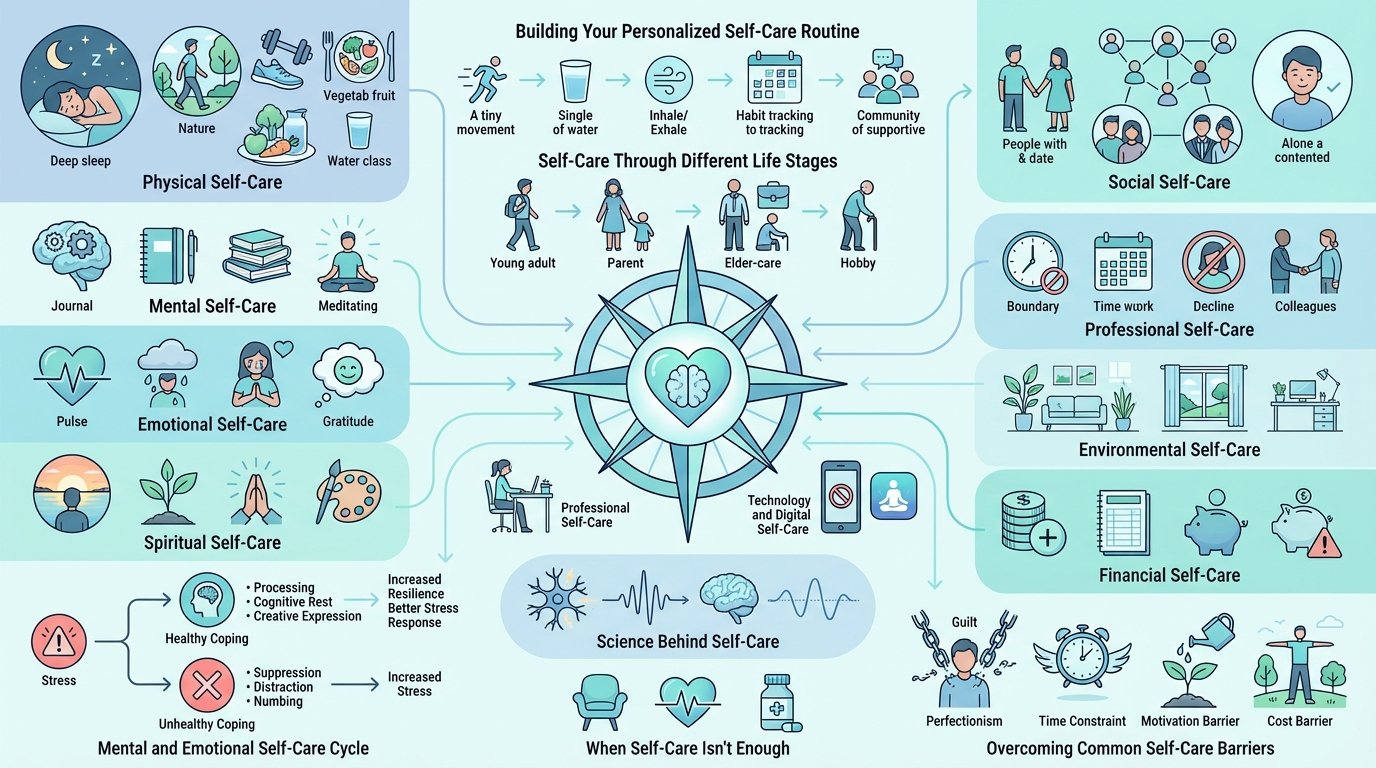
According to the World Health Organization, self-care represents the ability of individuals, families, and communities to promote health, prevent disease, maintain health, and cope with illness. The American Psychological Association calls self-care an ethical imperative, defining it as providing adequate attention to one's own physical and psychological wellness.
This comprehensive guide reveals the eight dimensions of self-care that research confirms actually work. You will discover how small daily practices compound into profound wellbeing improvements, why self-care prevents burnout more effectively than any other intervention, and which specific routines mental health professionals use to maintain their own resilience.
What Are Self-Care Practices? Understanding True Wellness
Self-care practices encompass intentional actions you take to care for your mental, emotional, and physical health. These practices extend far beyond occasional bubble baths or spa days into systematic approaches for maintaining wellbeing across multiple life dimensions.
Surprising Insight: Surprising Insight: Self-care is not selfish indulgence but preventive medicine. Research shows self-care interventions reduce healthcare costs, lower mortality rates, and decrease the need for assisted living by maintaining functional independence as we age.
The WHO distinguishes between self-care actions, which include habits, practices, and lifestyle choices, and self-care interventions, which encompass medicines, devices, diagnostics, and digital tools that support self-care. Both work together to create comprehensive wellness strategies.
Self-care differs fundamentally from self-indulgence. True self-care sometimes involves difficult choices like saying no to social invitations when you need rest, or having uncomfortable conversations to maintain healthy boundaries. These decisions serve long-term wellbeing even when they feel challenging in the moment.
Mental health professionals who practice regular self-care report significantly lower burnout rates and greater career longevity. The same principles that protect caregivers from compassion fatigue apply equally to anyone managing stress, relationships, work demands, or health challenges.
The Eight Dimensions of Self-Care
Research identifies eight interconnected dimensions that together create comprehensive self-care. Neglecting any single dimension creates vulnerabilities that stress exploits, while strengthening all eight builds robust resilience.
The Eight Dimensions of Self-Care
🔍 Click to enlarge
Physical self-care includes nutrition, exercise, sleep, and medical care. Your body serves as the foundation for everything else you do. When physical health deteriorates, mental clarity, emotional stability, and spiritual connection all suffer.
Mental self-care involves intellectual stimulation, learning, creativity, and cognitive rest. Your mind needs both challenge and recovery. Reading, puzzles, learning new skills, and simply allowing your thoughts to wander all contribute to mental wellness.
Emotional self-care means acknowledging feelings, processing experiences, and developing healthy coping strategies. Suppressing emotions creates psychological pressure that eventually erupts as anxiety, depression, or physical illness. Healthy emotional self-care creates space to feel without being overwhelmed.
Spiritual self-care connects you to meaning, purpose, and something larger than yourself. This dimension does not require religious belief. Meditation, nature walks, art, music, or service to others all provide spiritual nourishment that transcends material concerns.
Social self-care nurtures relationships and community connections. Humans evolved as social creatures. Isolation damages health as severely as smoking or obesity. Quality relationships buffer stress and contribute more to happiness than wealth or achievement.
Professional self-care establishes boundaries between work and personal life while finding meaning in your career. Burnout results not from hard work but from depletion without recovery. Sustainable professional practices prevent exhaustion while maintaining excellence.
Environmental self-care creates physical spaces that support wellbeing. Your surroundings constantly affect mood, focus, and stress levels. Cluttered, chaotic environments drain energy while organized, pleasant spaces restore it.
Financial self-care builds security through budgeting, saving, and reducing money-related stress. Financial anxiety undermines all other self-care dimensions. Taking control of finances eliminates a major source of chronic stress.
Physical Self-Care Practices That Transform Health
Physical self-care forms the foundation upon which all other wellness dimensions rest. When your body functions optimally, you have energy and capacity for emotional regulation, mental clarity, and meaningful relationships.
Sleep Optimization
Sleep represents the most powerful self-care practice most people neglect. Adults require seven to nine hours of quality sleep for optimal health. Chronic sleep deprivation increases risk for obesity, diabetes, cardiovascular disease, depression, and cognitive decline.
Create consistent sleep and wake times, even on weekends. Your circadian rhythm thrives on regularity. Expose yourself to bright light immediately upon waking to reset your biological clock. Dim lights and avoid screens for two hours before bed to allow melatonin production.
Keep your bedroom cool, dark, and quiet. Temperature between 60 and 67 degrees Fahrenheit promotes deep sleep. Blackout curtains or eye masks eliminate light pollution. White noise machines mask disruptive sounds.
Movement and Exercise
The CDC recommends at least 150 minutes of moderate aerobic activity or 75 minutes of vigorous activity weekly, plus muscle-strengthening activities twice per week. Regular exercise reduces anxiety and depression as effectively as medication for mild to moderate cases.
Walking represents the most accessible exercise with profound health benefits. A 30-minute daily walk reduces all-cause mortality, improves cardiovascular health, strengthens bones, and enhances mood through endorphin release.
Strength training becomes increasingly important with age. After 30, adults lose three to eight percent of muscle mass per decade. Resistance exercise reverses this decline, improves metabolism, increases bone density, and maintains functional independence.
Nutrition as Self-Care
What you eat directly affects brain function, energy levels, and disease risk. Mediterranean-style eating patterns rich in vegetables, fruits, whole grains, legumes, nuts, fish, and olive oil consistently show superior health outcomes across multiple studies.
Prioritize protein at breakfast to stabilize blood sugar and reduce afternoon cravings. Include fiber-rich foods to support digestive health and sustained energy. Stay hydrated by drinking water throughout the day rather than waiting until you feel thirsty.
Meal planning transforms nutrition from daily stress into sustainable self-care. Dedicate time weekly to plan meals, shop intentionally, and prepare components in advance. This preparation removes decision fatigue and makes healthy eating effortless.
Mental and Emotional Self-Care Strategies
Your psychological health determines how you experience life. Mental and emotional self-care practices build resilience, clarity, and the capacity to navigate challenges without breaking down.
Mental and Emotional Self-Care Cycle
🔍 Click to enlarge
Mindfulness and Meditation
Mindfulness meditation reduces anxiety, depression, and stress while improving attention, emotional regulation, and self-awareness. Eight weeks of daily mindfulness practice produces measurable changes in brain regions associated with memory, sense of self, empathy, and stress.
Start with five minutes daily rather than attempting unrealistic meditation marathons. Sit comfortably, focus on your breath, and gently return attention to breathing when your mind wanders. The practice lies in noticing distraction and returning focus, not in achieving perfect concentration.
Informal mindfulness brings meditation into daily activities. Eat one meal per day with full attention to taste, texture, and sensation. Shower mindfully, noticing water temperature and scent. These micro-practices accumulate into significant stress reduction.
Journaling for Emotional Processing
Expressive writing helps process difficult emotions and experiences. Research shows writing about traumatic events for 15 minutes daily over four days improves immune function, reduces doctor visits, and enhances psychological wellbeing for months afterward.
Morning pages, popularized by Julia Cameron, involve writing three pages of stream-of-consciousness thoughts immediately upon waking. This practice clears mental clutter, surfaces creative insights, and identifies patterns in thinking that might otherwise remain unconscious.
Gratitude journaling shifts focus toward positive aspects of life without denying difficulties. Write three specific things you appreciate daily. This practice rewires neural pathways toward noticing good experiences, gradually building optimism and life satisfaction.
Setting Boundaries
Boundaries protect your energy, time, and wellbeing. Many people struggle with boundaries because they confuse being kind with being available. True kindness includes treating yourself with the same respect you extend to others.
Practice saying no to requests that drain you or misalign with your priorities. You need not justify or over-explain. A simple, kind no protects your capacity to say yes to what truly matters.
Establish technology boundaries by designating phone-free times and spaces. Constant connectivity fragments attention and prevents the deep rest necessary for creativity and problem-solving. Your relationships and work both improve when you can focus fully rather than remaining partially available to everyone simultaneously.
Social and Relational Self-Care
Connection with others profoundly affects health and happiness. The Harvard Study of Adult Development, which followed subjects for over 80 years, found that quality relationships predict health and happiness better than wealth, fame, or achievement.
| Practice | Frequency | Primary Benefit | Research Support |
|---|---|---|---|
| Deep conversations with close friends | Weekly | Emotional support and belonging | Strong - reduces cortisol, increases oxytocin |
| Quality time with family | Weekly | Secure attachment and identity | Strong - protective against depression |
| Community involvement or volunteering | Monthly | Purpose and perspective | Moderate - enhances wellbeing and longevity |
| Professional networking | Monthly | Career support and growth | Moderate - reduces professional isolation |
| Joining interest-based groups | Weekly | Shared joy and new friendships | Moderate - combats loneliness |
| Scheduling alone time | Daily | Self-reflection and recharging | Strong - essential for introverts |
| Limiting toxic relationships | Ongoing | Reduced stress and drama | Strong - protects mental health |
| Regular date nights with partner | Weekly | Relationship maintenance | Strong - predicts relationship satisfaction |
Prioritize quality over quantity in relationships. One authentic friendship provides more support than dozens of superficial connections. Schedule regular time with people who energize rather than drain you.
Communicate needs clearly rather than expecting others to guess. Unspoken expectations create resentment. Direct, kind communication about what you need strengthens relationships while reducing misunderstanding.
Protect yourself from toxic relationships that consistently leave you feeling worse. You cannot fix or change another person. Reducing contact or ending relationships that harm your wellbeing represents legitimate self-care, not selfishness.
Spiritual Self-Care for Meaning and Purpose
Spiritual self-care connects you to something beyond daily concerns, providing perspective, meaning, and resilience during difficulties. This dimension transcends religious affiliation, though religious practice certainly qualifies as spiritual self-care for those it resonates with.
Nature immersion offers accessible spiritual nourishment. Studies show 120 minutes per week in nature significantly boosts health and wellbeing. Forest bathing, the Japanese practice of mindful time among trees, reduces stress hormones, lowers blood pressure, and improves immune function.
Creative expression through art, music, dance, or writing connects you to flow states where self-consciousness dissolves into absorption. These experiences provide respite from analytical thinking while accessing intuitive wisdom.
Service to others creates meaning while shifting focus from personal problems to contribution. Volunteering reduces depression, increases life satisfaction, and even predicts lower mortality rates. Helping others helps yourself.
Contemplative practices like meditation, prayer, or yoga cultivate inner stillness and self-awareness. These practices reveal that you are more than your thoughts and emotions, creating space to observe rather than identify with mental noise.
Professional Self-Care to Prevent Burnout
Work occupies substantial portions of life, making professional self-care essential for overall wellbeing. Burnout results from chronic workplace stress characterized by exhaustion, cynicism, and reduced effectiveness.
Work-Life Integration
The concept of work-life balance implies equal time distribution, which proves unrealistic for most people. Work-life integration acknowledges that work and personal life interweave while ensuring neither completely dominates.
Establish clear start and end times for work, especially when working from home. Transitional rituals like changing clothes, taking a walk, or shutting your computer help signal shifts between work mode and personal time.
Use vacation time without guilt. Americans forfeit hundreds of millions of vacation days annually, yet research shows time off boosts productivity, creativity, and job satisfaction upon return. Rest is not laziness but necessary recovery.
Managing Workload and Expectations
Communicate capacity honestly rather than over-committing and under-delivering. When requests exceed bandwidth, negotiate deadlines, delegate tasks, or decline additional work. Chronic overcommitment guarantees mediocre results and eventual breakdown.
Schedule focused work blocks for deep tasks requiring concentration. Protect this time from meetings and interruptions. Most people vastly overestimate how much they accomplish through constant multitasking and underestimate the power of sustained focus.
Cultivate relationships with colleagues who support rather than undermine your wellbeing. Work friendships buffer stress and make difficult jobs tolerable. Conversely, toxic work relationships accelerate burnout regardless of how much you enjoy the actual work.
Environmental Self-Care: Creating Supportive Spaces
Your physical environment constantly affects mood, productivity, and stress levels. Intentionally designing spaces that support wellbeing represents powerful yet often overlooked self-care.
Environmental Self-Care Impact Chain
🔍 Click to enlarge
Declutter regularly to reduce visual noise and decision fatigue. Keep only items that serve a purpose or bring genuine joy. Excess possessions create mental burden through maintenance requirements and reminder of unfinished projects.
Optimize lighting by maximizing natural light exposure during daytime and minimizing blue light at night. Position your workspace near windows when possible. Use warm-toned lighting in evening spaces to support melatonin production.
Incorporate plants into living and working spaces. Indoor plants improve air quality, reduce stress, and enhance mood. Even photos of nature provide measurable stress reduction when actual plants are impractical.
Create designated zones for different activities. Separate work areas from relaxation spaces, even in small homes. This spatial differentiation helps your brain shift between focus modes and prevents work from invading rest time.
Financial Self-Care for Peace of Mind
Financial stress undermines physical health, mental wellbeing, and relationships. Taking control of finances eliminates a major chronic stressor while building security and options.
Create a realistic budget that tracks income and expenses. Most people vastly underestimate spending in categories like dining out, subscriptions, and impulse purchases. Awareness precedes change.
Build an emergency fund covering three to six months of essential expenses. This buffer transforms financial anxiety into security, allowing you to handle unexpected expenses or job loss without crisis.
Automate savings by transferring set amounts to savings accounts immediately when income arrives. Paying yourself first ensures savings happen before discretionary spending consumes available funds.
Address financial avoidance by scheduling regular money dates to review finances. Many people avoid looking at accounts out of shame or fear, which only worsens problems. Regular check-ins catch issues early while building confidence.
Building Your Personalized Self-Care Routine
Sustainable self-care requires personalization rather than following generic prescriptions. What restores one person might drain another. Introverts need solitude while extroverts need social connection. Morning people thrive on dawn routines while night owls excel with evening practices.
- Step 1: Assess current self-care across all eight dimensions. Rate each dimension from one to ten. Low-scoring areas need immediate attention as they represent vulnerabilities stress will exploit.
- Step 2: Identify which dimension needs most urgent attention. You cannot overhaul everything simultaneously. Choose the area where small improvements would create largest wellbeing gains.
- Step 3: Select one tiny practice to implement in your priority dimension. Start ridiculously small. Five minutes of morning stretching, one glass of water upon waking, or five deep breaths before bed. Consistency matters more than intensity.
- Step 4: Anchor new practices to existing routines through implementation intentions. Use the formula when I do X, then I will do Y. When I start my coffee, then I will write three gratitude items. When I close my laptop, then I will take ten deep breaths.
- Step 5: Track completion without judgment for 30 days. Miss a day? Simply resume the next day. The goal is building identity as someone who practices self-care, not achieving perfection.
- Step 6: Gradually add practices in other dimensions as initial habits become automatic. Layer new routines onto established ones. This incremental approach builds comprehensive self-care without overwhelming yourself.
- Step 7: Schedule weekly self-care planning sessions to assess what works and adjust what does not. Treat this appointment with yourself as seriously as you would a doctor's visit. Your wellbeing depends on it.
- Step 8: Build in flexibility and self-compassion. Life disrupts routines. Travel, illness, or crisis will interrupt practices. View these as temporary pauses rather than failures. Resume when possible without self-criticism.
- Step 9: Involve supportive people in your self-care journey. Share goals with friends who encourage rather than sabotage healthy changes. Consider joining groups focused on specific practices like meditation, exercise, or creative pursuits.
- Step 10: Reassess and evolve practices as needs change. Self-care that served you during one life phase might not fit another. Regularly evaluate whether current routines still serve your wellbeing and adjust accordingly.
Overcoming Common Self-Care Barriers
Despite knowing self-care benefits, many people struggle to maintain consistent practices. Understanding common obstacles helps you navigate challenges rather than abandoning self-care when difficulties arise.
The Guilt Barrier
Many people feel selfish prioritizing their own needs, especially those socialized to prioritize others. This guilt intensifies for parents, caregivers, and helping professionals who dedicate themselves to others' wellbeing.
Reframe self-care as responsibility rather than indulgence. You cannot sustainably care for others while depleting yourself. Self-care preserves your capacity to show up for people and purposes you value. Think of it as maintaining the vehicle that carries you through life.
The Time Constraint Barrier
Busy schedules leave many feeling they lack time for self-care. Yet the same people somehow find time for social media scrolling, television watching, or other activities that do not truly restore them.
Audit how you actually spend time for one week. Most people discover pockets of time currently consumed by activities they would not miss. Redirecting even 15 minutes daily from low-value activities to intentional self-care creates measurable benefits.
The Perfectionism Barrier
Perfectionists often avoid starting self-care because they cannot do it perfectly. They envision elaborate routines, then abandon efforts when reality falls short of ideals.
Progress beats perfection every time. Five minutes of imperfect meditation surpasses zero minutes of perfect meditation you never start. Lower the bar until consistency becomes possible, then gradually expand practices.
The Motivation Barrier
Waiting for motivation before practicing self-care guarantees inconsistency. Motivation fluctuates while habits persist through systems and structures.
Build environmental cues and triggers that prompt self-care automatically. Lay out exercise clothes the night before. Set meditation cushion in visible location. Place water bottle on nightstand. These cues reduce friction and prompt action regardless of motivation levels.
The Cost Barrier
Some people believe effective self-care requires expensive gym memberships, therapy sessions, or wellness retreats. While these can help, cost should never prevent basic self-care.
Most powerful self-care practices cost nothing. Walking outside is free. Breathing exercises require no equipment. Library books provide free reading material. YouTube offers countless free guided meditations. Prioritize free or low-cost practices before assuming money creates barriers.
Practical Self-Care Examples for Different Situations
Concrete examples help translate self-care concepts into actionable practices for specific life situations.
Self-Care for Busy Professionals
Wake 15 minutes earlier for quiet coffee before household chaos begins. Take actual lunch breaks away from desk. Walk meetings when possible. Create hard stop time for work, even working from home. Schedule exercise like important meetings. Practice one-minute breathing resets between tasks.
Self-Care for Stay-at-Home Parents
Swap childcare with friends for weekly alone time. Wake before children for quiet morning routine. Use naptime for genuine rest, not just chores. Join parent groups for adult conversation. Practice mindfulness during routine tasks like folding laundry. Lower housekeeping standards to preserve energy for what matters.
Self-Care for Students
Maintain consistent sleep schedule despite late-night study temptations. Build movement into campus life by walking to classes. Use study breaks for actual rest, not more screen time. Join clubs aligned with interests, not just resume building. Practice saying no to social events when truly exhausted.
Self-Care for Caregivers
Accept respite care without guilt. Join support groups with people facing similar challenges. Maintain medical appointments for your own health. Set boundaries around care responsibilities when possible. Acknowledge caregiving as legitimate work worthy of breaks. Seek counseling to process complicated emotions.
Self-Care During Major Life Transitions
Lower expectations during moves, job changes, relationship shifts, or loss. Focus on absolute essentials like sleep, basic nutrition, and minimal movement. Reach out to support systems rather than isolating. Journal to process change. Allow emotions without judgment. Remember transitions are temporary even when they feel endless.
Seasonal Self-Care Adjustments
Self-care needs shift with seasons, both literal and metaphorical. Adapting practices to seasonal challenges maintains wellbeing year-round.
Winter Self-Care
Combat shorter days with bright morning light exposure. Maintain social connections despite inclination to hibernate. Continue outdoor activity with appropriate clothing. Consider vitamin D supplementation after consulting healthcare provider. Create cozy indoor environments. Schedule enjoyable activities to counter winter blues.
Spring Self-Care
Increase outdoor time as weather improves. Spring clean living spaces for fresh start feeling. Start new movement practices while motivation runs high. Plant garden or tend indoor plants. Reassess goals and routines for alignment with current values.
Summer Self-Care
Stay hydrated in heat. Protect skin from sun damage. Maintain routines despite vacation schedules. Balance social activities with rest time. Enjoy seasonal foods and outdoor activities. Practice saying no to overcommitment during busy social season.
Fall Self-Care
Establish sustainable routines as schedules regulate after summer. Prepare for winter by boosting immune system. Process seasonal transitions and changes. Create cozy home environment. Set realistic goals for final months of year. Practice gratitude as year winds down.
Self-Care Assessment and Tracking
Regular assessment helps identify which practices actually improve wellbeing versus those you maintain from habit or obligation.
Rate your wellbeing weekly across the eight dimensions on a scale of one to ten. Notice patterns between specific practices and wellbeing scores. This data reveals which activities genuinely restore you versus those that seem like self-care but do not actually help.
Track energy levels throughout the day to identify natural peaks and valleys. Schedule demanding tasks during high-energy periods and gentler activities during low-energy times. This alignment with natural rhythms reduces friction and improves performance.
Journal briefly about self-care experiences. What helped today? What drained energy? What would you do differently tomorrow? These reflections surface insights that might otherwise remain unconscious.
Use apps or simple checkboxes to monitor habit consistency without perfectionism. The goal is noticing patterns, not achieving perfect adherence. Some weeks will show more consistency than others, and that variability contains valuable information.
Common Self-Care Myths and Misconceptions
Misunderstanding self-care leads to practices that feel good temporarily but fail to build lasting wellbeing. Recognizing these myths helps you distinguish authentic self-care from counterfeits.
Myth: Self-Care Equals Indulgence
Bubble baths and face masks represent pleasant activities but constitute only tiny fractions of comprehensive self-care. True self-care often involves difficult choices like declining invitations to protect rest time, ending draining relationships, or having uncomfortable conversations about needs and boundaries.
Myth: Self-Care Is Selfish
You cannot pour from an empty cup. Depleting yourself to serve others eventually leaves you with nothing to give. Self-care sustains capacity to show up fully for people and purposes you value. Airlines instruct adults to secure their own oxygen masks before helping others for good reason.
Myth: Self-Care Requires Time You Don't Have
Micro-practices woven into existing routines create cumulative benefits without requiring additional time. Mindful breathing during your commute, stretching while coffee brews, or gratitude reflection while brushing teeth all represent accessible self-care moments.
Myth: Self-Care Fixes Everything
Self-care complements but does not replace professional mental health treatment. Chronic depression, severe anxiety, trauma, or other mental health conditions require qualified therapeutic support. Self-care practices support recovery but cannot substitute for proper treatment.
The Science Behind Self-Care Effectiveness
Psychologist Guy Winch explains why we need to practice emotional first aid with the same diligence we apply to physical health. His research-backed approach demonstrates how small self-care interventions prevent minor psychological injuries from becoming chronic conditions.
Research across multiple disciplines confirms self-care's effectiveness. Neuroscience shows meditation literally rewires brain regions associated with stress regulation. Exercise physiology demonstrates how movement produces neurotransmitters that regulate mood. Sleep science reveals how rest consolidates memory and clears metabolic waste from brain tissue.
The cumulative effect matters more than any single practice. Small consistent actions compound over time through mechanisms neuroscientists call neuroplasticity. Your daily choices literally shape brain structure and function, either reinforcing patterns of stress and reactivity or building resilience and regulation.
Studies of healthcare workers, teachers, and other high-stress professions show those who maintain regular self-care practices experience significantly lower burnout rates, greater job satisfaction, and longer careers. The investment in self-care pays dividends in sustained performance and wellbeing.
Self-Care Through Different Life Stages
Self-care needs evolve as life circumstances change. What works during your twenties might not fit your forties. Parents of young children face different challenges than empty nesters. Adapting practices to current reality ensures self-care remains relevant and sustainable.
Self-Care for Young Adults
Early adulthood involves establishing identity, relationships, and career direction. Self-care during this phase focuses on building healthy foundations in sleep, nutrition, exercise, and stress management before patterns become entrenched.
Self-Care for Parents
Parenting demands often eclipse personal needs entirely. Yet maintaining your own wellbeing models healthy behavior for children while preserving capacity for patient, present parenting. Micro-practices that fit into existing routines become essential when time feels impossibly scarce.
Self-Care for Midlife
Middle age often brings competing demands from aging parents, growing children, and peak career responsibilities. Self-care prevents the sandwich generation squeeze from leading to breakdown. Saying no becomes increasingly important as requests multiply.
Self-Care for Older Adults
Later life offers opportunities for deeper self-care as career and child-rearing responsibilities ease. Physical self-care maintains function and independence. Social connections combat isolation. Mental engagement prevents cognitive decline. Spiritual practices provide meaning and legacy perspective.
Self-Care in Relationships and Community
Individual self-care practices gain power when supported by relationships and community. Conversely, toxic relationships undermine even the most diligent self-care efforts.
Communicating Self-Care Needs to Loved Ones
Many people struggle to explain self-care needs to partners, family, or friends who view such practices as selfish or unnecessary. Clear communication prevents misunderstanding and builds support.
Explain self-care as maintaining capacity to be present and engaged rather than withdrawing from relationships. When you take evening walk to decompress, you return more patient and available. When you protect sleep schedule, you show up less irritable. Self-care enables better relationships, not worse ones.
Invite loved ones to practice self-care alongside you when appropriate. Couples who exercise together, families who share meals, or friends who meditate in parallel all build connection while practicing self-care. Shared practices strengthen relationships while normalizing wellness priorities.
Creating Accountability and Support Systems
Accountability dramatically increases self-care consistency. Share specific goals with trusted friend who checks in regularly. Join groups focused on practices you want to build. Work with therapist or coach for professional accountability.
Online communities provide support when local options prove limited. Reddit forums, Facebook groups, or dedicated apps connect you with people pursuing similar practices. These connections offer encouragement, troubleshooting, and reminder that you are not alone in prioritizing wellbeing.
Protecting Self-Care from Relationship Sabotage
Some people unconsciously or deliberately undermine your self-care efforts. Partners who mock meditation, friends who pressure you to skip exercise for social events, or family members who guilt trip boundary-setting all sabotage wellness.
Recognize sabotage for what it is, whether intentional or not. Set firm boundaries around non-negotiable practices. Reduce time with people who consistently undermine your wellbeing. Seek relationships with people who support rather than sabotage your health.
Modeling Self-Care for Children
Parents who practice visible self-care teach children that wellbeing matters and deserves prioritization. Children learn more from what you do than what you say.
Explain self-care practices in age-appropriate ways. Tell children you are taking quiet time to feel calm. Show them how you handle stress through breathing rather than yelling. Involve them in practices like nature walks, cooking healthy meals, or gratitude sharing.
Normalize rest and recovery by modeling these behaviors. When you honor your own needs without guilt, children learn they too deserve care and rest. This lesson proves invaluable throughout their lives.
Self-Care and Productivity: The Sustainable Performance Connection
Self-care and productivity are not opposing forces but complementary practices. Sustainable high performance requires regular recovery, not constant exertion.
Research on ultradian rhythms shows humans naturally cycle between high focus and need for rest approximately every 90 minutes. Working with these rhythms through strategic breaks maintains performance throughout day. Fighting natural rhythms through constant pushing leads to diminishing returns and eventual burnout.
Peak performers across domains, from athletes to artists to executives, prioritize recovery as intensely as they pursue achievement. They understand rest enables performance rather than detracting from it. Strategic recovery prevents breakdown while supporting sustained excellence.
The most productive people are not those who work longest hours but those who work strategically with full focus during work time and genuinely rest during recovery time. This clear delineation prevents the exhausting middle ground of half-working while half-resting that characterizes chronic burnout.
Technology and Digital Self-Care
Technology presents both opportunities and challenges for self-care. While apps can support wellness practices, constant connectivity often undermines the rest and presence essential for wellbeing.
Helpful Technology for Self-Care
Meditation apps like Headspace or Calm provide structured guidance for beginners. Fitness trackers monitor activity and sleep patterns. Habit tracking apps maintain accountability. Therapy apps expand access to mental health support. These tools remove barriers and provide structure when used intentionally.
Technology Boundaries as Self-Care
Establish phone-free zones in bedroom and during meals. Turn off non-essential notifications to reduce constant interruption. Use app timers to limit social media consumption. Designate technology sabbath periods for complete digital disconnection.
Replace mindless scrolling with intentional technology use. Before opening phone, ask yourself what you specifically intend to accomplish. This pause prevents falling into scroll holes that consume time without providing rest or restoration.
Notice how different technology use affects your wellbeing. Does Instagram leave you feeling inspired or inadequate? Does news consumption inform or simply raise anxiety? Adjust technology habits based on actual impact rather than assumed benefits.
When Self-Care Isn't Enough
Self-care supports mental health but cannot treat serious psychological conditions. Recognize when to seek professional help rather than relying solely on self-care practices.
Seek professional support when depression persists despite self-care efforts, when anxiety interferes with daily functioning, when intrusive thoughts or flashbacks occur, when substance use becomes coping mechanism, or when thoughts of self-harm arise.
Therapy provides tools and perspective that self-help cannot match. A skilled therapist identifies patterns you cannot see, teaches evidence-based coping strategies, and creates safe space to process difficult emotions and experiences.
Medication sometimes represents necessary medical intervention for conditions like clinical depression, anxiety disorders, or bipolar disorder. Self-care complements medication by supporting overall health but does not replace appropriate medical treatment.
Crisis resources provide immediate support when self-care and routine care prove insufficient. National crisis hotlines, emergency mental health services, and crisis text lines offer confidential assistance during acute episodes.
Your First Micro Habit
Start Your Self-Care Journey
Today's action: Each evening before bed, spend two minutes doing a body scan. Lie down, close your eyes, and mentally scan from toes to head, noticing any tension without trying to change it. End by taking three deep breaths.
This simple practice builds body awareness, signals to your nervous system that you are safe, and creates a buffer between daily stress and sleep. The habit anchors to your existing bedtime routine, making it automatic. Over time, this awareness helps you notice stress earlier and respond before it accumulates.
Track your evening body scan habit and receive personalized self-care recommendations across all eight wellness dimensions with our AI mentor.
Quick Assessment
Discover your self-care personality with these reflection questions. Your answers reveal which practices will feel most natural and sustainable for you.
When you feel stressed or overwhelmed, what do you naturally gravitate toward?
Your stress response reveals your primary self-care need. Honor this natural inclination while gradually developing other dimensions for comprehensive resilience.
Which statement best describes your current approach to taking care of yourself?
Your current patterns indicate whether you need permission to start self-care, help expanding beyond one dimension, or support maintaining existing practices.
What would make self-care feel more doable for you?
Your preferences guide which implementation strategies will work best. Some people need efficiency, others need meaning, still others need pleasure or community.
Take our comprehensive assessment to get personalized self-care recommendations across all eight wellness dimensions.
Discover Your Complete Wellbeing Profile →Next Steps on Your Self-Care Journey
You now understand the eight dimensions of self-care and why comprehensive wellness requires attention to physical, mental, emotional, spiritual, social, professional, environmental, and financial health. This knowledge empowers you to build personalized practices that actually restore rather than merely distract.
Start with the evening body scan micro habit this week. This simple practice builds self-awareness while signaling to your nervous system that you prioritize your own wellbeing. Notice how even two minutes of intentional self-care shifts your experience.
Explore related topics like holistic wellness for integrated health approaches, mental wellness for psychological resilience strategies, emotional wellbeing for understanding and regulating feelings, and mind-body connection for how physical and mental health interrelate.
Remember that self-care represents investment, not indulgence. Every moment you dedicate to replenishing yourself expands your capacity to live fully, love deeply, and contribute meaningfully. Your wellbeing matters not just for its own sake but for everything it enables you to do and be.
Author Bio
Research Sources
This article is based on peer-reviewed research and authoritative sources. Below are the key references we consulted:
Related Glossary Articles
Frequently Asked Questions
How much time should I spend on self-care daily?
Quality matters more than quantity. Five minutes of genuine self-care beats hours of distraction disguised as self-care. Start with just five to ten minutes daily across a few dimensions, then expand as practices become habitual. Most people find 30 to 60 minutes daily across multiple small practices creates sustainable wellbeing without overwhelming schedules.
Is self-care different from self-indulgence?
Yes, fundamentally. Self-care serves long-term wellbeing even when uncomfortable in the moment, like setting boundaries or choosing sleep over late-night entertainment. Self-indulgence prioritizes immediate pleasure regardless of long-term consequences. The distinction lies in whether actions truly restore you or merely distract from what you need.
What if I feel guilty taking time for self-care?
Guilt around self-care often stems from messages that caring for yourself is selfish. Reframe self-care as stewarding your capacity to show up for people and purposes you value. You serve others better from a place of replenishment rather than depletion. Self-care enables sustainable giving rather than preventing it.
Can self-care help with diagnosed mental health conditions?
Self-care supports mental health treatment but does not replace it. Think of self-care as complementary to therapy and medication when needed, not alternative to professional care. Consistent self-care practices enhance treatment effectiveness while building resilience, but serious mental health conditions require qualified professional support.
How do I maintain self-care during busy or stressful periods?
Precisely when life gets most demanding, self-care becomes most essential. Focus on micro-practices woven into existing routines rather than adding separate activities. Mindful breathing during transitions, brief movement breaks, or moments of gratitude require minimal time but maintain wellbeing during high-stress periods. Lower your standards temporarily rather than abandoning practices entirely.
Take the Next Step
Ready to improve your wellbeing? Take our free assessment to get personalized recommendations based on your unique situation.
- Discover your strengths and gaps
- Get personalized quick wins
- Track your progress over time
- Evidence-based strategies