Wellness
Wellness is your proactive journey toward optimal health and fulfillment. Unlike health, which is simply the absence of disease, wellness is an active pursuit of balance across every dimension of your life. It combines physical vitality, mental clarity, emotional resilience, and social connection into one integrated approach to living well. Right now, in 2026, more people than ever are recognizing that true health comes from treating your mind, body, and spirit as interconnected parts of a single system. This article will show you how to build genuine wellness in your life.
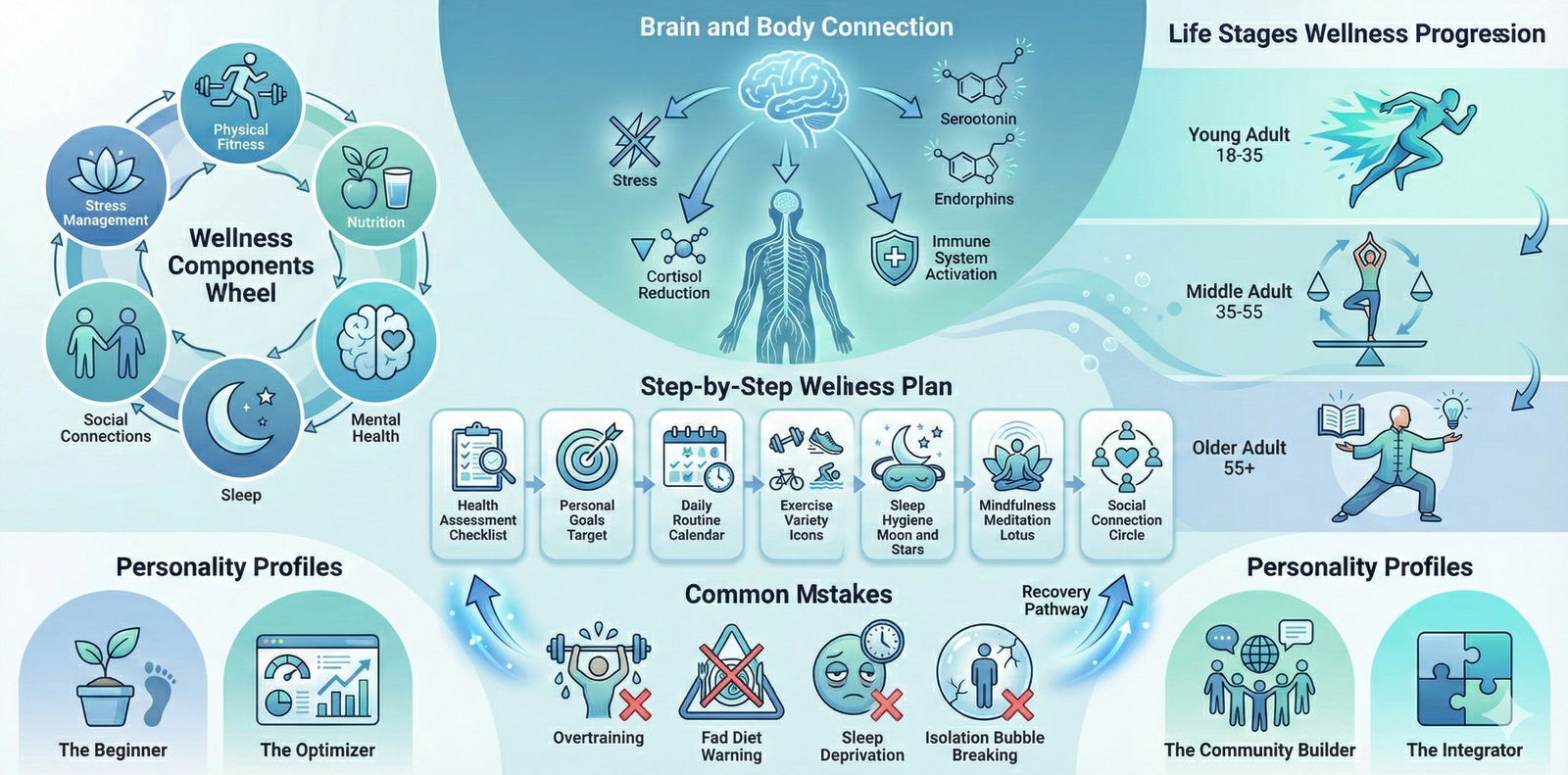
The best part? You don't need to overhaul everything at once.
Wellness builds momentum through small, consistent choices that compound over time.
What Is Wellness?
Wellness is a holistic and multidimensional concept that goes beyond the traditional medical definition of health. While the World Health Organization defines health as a state of complete physical, mental, and social well-being, wellness takes this further. Wellness represents an ongoing, intentional pursuit of a balanced and fulfilling life. It's salutogenic—focused on what makes people well—rather than just pathogenic, which addresses disease. Unlike the absence of disease, wellness is the active presence of vitality, purpose, and flourishing across multiple life domains.
Not medical advice.
Wellness encompasses the active choices you make daily to optimize your physical strength, mental clarity, emotional stability, and social connections. It's not a destination but a continuous process. Think of wellness as the difference between treating a symptom after it appears versus building the resilience to prevent problems from developing. A person without diagnosed illness can still lack wellness; conversely, someone managing a chronic condition can be highly well through their choices and perspective.
Modern wellness integrates eight interconnected dimensions that form an integrated system. These dimensions constantly influence one another. Improved physical health provides energy for social engagement. Stronger relationships reduce stress and support mental health. Spiritual purpose creates motivation for physical self-care. Financial stability reduces anxiety and supports mental wellness. The beauty of this interconnected model is that improvement in any dimension tends to create positive ripples across others.
Wellness is deeply personal. What brings wellness to one person—perhaps quiet solitude and reflection—might not serve another who needs community and social stimulation. The frameworks and principles in this article provide tools, but your job is to adapt them to your unique life, values, constraints, and goals. Sustainable wellness comes from self-knowledge, not from following prescriptive rules.
Surprising Insight: Surprising Insight: Research shows that psychological well-being directly influences cardiovascular health, with positive emotional states associated with lower risk of heart disease and mortality. Your mindset literally shapes your physiology.
The Eight Dimensions of Wellness
Wellness encompasses eight interconnected dimensions that together create a complete approach to living well. Each dimension influences and supports the others, creating a holistic system of health and flourishing.
🔍 Click to enlarge
Why Wellness Matters in 2026
In 2026, we face unprecedented pressures on our health. Sedentary lifestyles, digital overload, economic uncertainty, and social fragmentation create a perfect storm of stress. The average adult spends nine hours daily engaging with screens. Remote work blurs boundaries between career and personal time. Social media creates comparison and isolation despite connection. Mental health disorders continue rising across all age groups. Traditional healthcare, though improving, focuses primarily on treating illness after it develops. Wellness offers a fundamentally different approach: building resilience before problems emerge.
Research demonstrates that people who pursue wellness report significantly higher life satisfaction, better disease prevention, improved productivity at work, stronger relationships, and greater resilience during adversity. The COVID-19 pandemic revealed that those with established wellness practices—particularly strong social connections, stress management skills, and physical fitness—weathered the crisis with measurably better mental and physical health outcomes. Wellness isn't about having perfect health; it's about developing the practices and mindset that help you navigate whatever challenges life brings.
The business case is compelling. Organizations that invest in employee wellness see reduced healthcare costs by 25-30%, lower absenteeism by 10-15%, and measurably improved engagement and productivity. On a personal level, wellness isn't a luxury—it's an investment in your future self. The small practices you build now compound into dramatic health improvements over years and decades. Someone who exercises regularly at age 30 has dramatically lower disease risk at age 60. Someone who builds strong relationships in midlife has better health outcomes and greater life satisfaction in later years.
Wellness in 2026 is also increasingly holistic. Research shows that Americans now prioritize not just physical health (81%) but also mental (74%), emotional (71%), spiritual (52%), and social health (46%). This shift reflects a deeper understanding that health isn't compartmentalized. A stressful job affects your sleep. Poor sleep impairs immune function. A weakened immune system drains your motivation. Isolation increases depression and impairs decision-making. Wellness interrupts these negative cycles by addressing root causes across all dimensions. It's systems-thinking applied to your own life.
The timing is also critical. Life expectancy has increased, but more importantly, people want healthspan—not just lifespan. Living to 85 is only valuable if those years include vitality, engagement, purpose, and quality relationships. Wellness practices determine whether your additional years are filled with activity and meaning or marked by decline and isolation. The good news: it's never too late to start. People who begin wellness practices even in their 60s or 70s see measurable improvements in health, cognition, and life satisfaction within weeks.
The Science Behind Wellness
Neuroscience and behavioral research have revealed how wellness practices literally rewire your brain and body. Physical exercise, for example, increases serotonin, dopamine, and endorphins—the brain chemicals that regulate mood, motivation, and stress resilience. A single 30-minute workout can elevate mood for hours by increasing these neurotransmitters. Over time, regular exercise enhances neuroplasticity, the brain's ability to form new neural connections, which improves learning, memory, and emotional regulation. Exercise also stimulates brain-derived neurotrophic factor (BDNF), a protein essential for brain health and cognitive function. People who exercise regularly have larger hippocampi—the brain region responsible for memory—and better cognitive performance as they age.
The mind-body connection operates in both directions. Chronic stress triggers the release of cortisol and adrenaline, your body's stress hormones. While useful for immediate threats, prolonged elevation of these hormones suppresses immune function, increases inflammation, impairs digestion, disrupts sleep, and accelerates aging. Mindfulness and meditation practices activate the parasympathetic nervous system—your body's relaxation response—lowering cortisol, reducing inflammation, and boosting immune markers. Research shows that regular meditation practitioners have measurably lower stress hormones and stronger immune function compared to non-practitioners. Brain imaging shows that meditation strengthens connections in regions associated with emotional regulation and attention.
The effects compound in powerful ways. Reduced stress improves sleep quality, which further strengthens immunity, which improves stress resilience, which allows for better relationships, which reduces isolation and depression, which improves health behaviors, which strengthens physical health. Wellness builds positive spirals instead of negative ones. This is why addressing wellness holistically is so powerful—you're not trying to change one behavior in isolation; you're creating an interconnected system where improvements in one dimension support improvements in others.
Sleep is particularly central to wellness. During sleep, your brain consolidates memories, clears metabolic waste including amyloid-beta (implicated in Alzheimer's disease), and regulates hormones that control appetite, stress, and immune function. Sleep deprivation impairs immune function, increases inflammation, disrupts appetite regulation, impairs decision-making, and accelerates cognitive decline. Yet many people sacrifice sleep for productivity, not realizing that sleep itself is productivity. Getting adequate sleep is not a luxury; it's a foundational wellness practice that enables everything else.
Social connection has emerged as one of the most powerful health factors discovered by modern science. Loneliness and social isolation have health effects comparable to smoking, obesity, and physical inactivity. Conversely, people with strong social connections have lower rates of anxiety and depression, higher self-esteem, greater empathy, more trusting and cooperative relationships, and live longer with better quality of life. This isn't sentimentality—it's biology. Social connection activates your parasympathetic nervous system, reduces stress hormones, strengthens immune function, and even influences gene expression. Wellness without relationship is incomplete.
The Wellness Cascade: How Practices Create Compounding Benefits
When you commit to even one wellness practice, it triggers a cascade of benefits across multiple dimensions of health. Small actions create expanding positive effects over time.
🔍 Click to enlarge
Key Components of Wellness
Physical Wellness
Physical wellness includes regular movement, adequate sleep, nutritious eating, and preventive care. It's not about achieving aesthetic goals or extreme fitness. Physical wellness means building a body that serves you—one with strength, flexibility, cardiovascular resilience, and energy for the activities you value. Movement is essential: the sedentary lifestyle is among the most significant health risks in modern society. Even light activity like walking, gardening, or dancing triggers the cascade of health benefits. The goal isn't marathons or six-pack abs; it's functional fitness that allows you to do the activities that bring joy and purpose.
Quality sleep is foundational to physical wellness. Sleep deprivation impairs immune function, emotional regulation, decision-making, and metabolic health. Adults need 7-9 hours nightly for optimal health. Sleep isn't negotiable; it's as essential as air and water. Nutrition provides the building blocks for cellular health, brain function, energy, and longevity. This doesn't mean rigid dieting or deprivation; it means choosing foods most of the time that truly nourish your body. Preventive care—regular health screenings, dental care, vision checks, vaccinations—catches problems early when they're most treatable. Physical wellness is proactive, not reactive.
Mental and Emotional Wellness
Mental wellness encompasses cognitive health, emotional resilience, and psychological flexibility. It includes managing stress, processing emotions, maintaining focus, building self-awareness, and developing resilience. Emotional wellness means experiencing a full spectrum of emotions while maintaining stability. Rather than suppressing difficult emotions, emotional wellness means acknowledging them, understanding what they're signaling, and responding skillfully. This includes developing emotional intelligence—the ability to recognize, understand, and work skillfully with emotions in yourself and others.
Practices that support mental-emotional wellness include mindfulness meditation, which trains attention and emotional regulation; journaling, which externalizes thoughts and clarifies thinking; therapy, which provides professional support for processing experiences; and creative expression through art, music, movement, or writing. Building these capacities creates psychological flexibility: the ability to stay present with difficult emotions while maintaining contact with what matters to you. You can be anxious and still take action toward your goals. You can feel grief and still experience joy. This flexibility is what resilience really is.
Social and Relational Wellness
Humans are deeply social beings. Loneliness and isolation are as harmful to health as smoking. Social wellness means cultivating meaningful relationships, practicing communication skills, contributing to community, and feeling a sense of belonging. This includes being vulnerable with trusted others, actively listening, expressing appreciation, and resolving conflict constructively. Even introverts need quality social connection; the difference is that introverts gain energy from deeper one-on-one connection rather than large group settings. Adjust the format, but don't eliminate the connection.
Social wellness reduces depression, strengthens immunity, increases longevity, and provides meaning and purpose. Research on the longest-lived, healthiest populations consistently shows that strong relationships are central to health and happiness. It's not superficial networking but genuine, reciprocal relationships where you're known and valued. Contribution to community—volunteering, mentoring, supporting friends—also enhances social wellness. You don't have to be good at socializing; you just need to prioritize connection and practice vulnerability.
Spiritual and Purpose-Driven Wellness
Spiritual wellness doesn't require religion. It means connecting with something larger than yourself—whether that's nature, art, service, family, belief systems, or personal values. It's about having a sense of purpose and meaning that motivates your choices and provides direction. Research shows that people with a strong sense of purpose live longer, recover faster from illness, and maintain better mental health. Purpose is protective: people with clear purpose have better stress resilience, lower inflammation, and stronger immune function.
Spiritual wellness involves asking meaningful questions: What matters most to me? How do I want to contribute? What brings me joy? What would I do if I weren't afraid? What legacy do I want to leave? These aren't luxury concerns—they're central to comprehensive health. People who lack purpose often experience depression, low motivation, and poor health outcomes. Conversely, people engaged in meaningful work, contribution, or personal growth experience greater vitality and resilience. Your purpose doesn't need to be grand; it just needs to be authentically yours and meaningful to you.
| Dimension | Focus Area | Key Practices |
|---|---|---|
| Physical | Movement, sleep, nutrition, energy | Exercise, sleep schedule, whole foods, preventive care |
| Intellectual | Learning, creativity, mental stimulation | Reading, courses, creative projects, problem-solving |
| Emotional | Feelings, resilience, self-awareness | Mindfulness, journaling, therapy, emotional expression |
| Social | Connection, relationships, community | Quality time, communication, service, belonging |
| Spiritual | Purpose, meaning, values alignment | Reflection, nature, meditation, contribution |
| Vocational | Work satisfaction, career purpose | Alignment with values, growth, contribution |
| Financial | Security, abundance, wise choices | Budgeting, saving, sustainable earning |
| Environmental | Safe spaces, natural world connection | Green spaces, clean living spaces, nature access |
How to Apply Wellness: Step by Step
- Step 1: Assess your current wellness baseline: Rate yourself 1-10 on each of the eight dimensions. Where are you strongest? Where do you have the most room for growth? Be honest; this isn't about judgment but clarity. Notice which low areas feel most important to you.
- Step 2: Choose one dimension to start with: Don't try to overhaul everything. Pick the area where you see the biggest gap or where improvement would have the most impact on your life satisfaction. Small wins build momentum and confidence. Success in one dimension often catalyzes improvement in others.
- Step 3: Identify one specific practice in that dimension: If you chose physical wellness, maybe it's a 20-minute daily walk. If emotional wellness, perhaps a 5-minute daily journaling practice. Make it small enough to fit into your life without disruption. Specificity matters; vague goals don't work.
- Step 4: Build the habit gradually with a tracking system: Start with just two weeks of consistent practice. Track it visually—a simple calendar checkmark works wonders. The first phase is establishing the behavior, not perfecting it. Two weeks of consistency begins to rewire neural pathways.
- Step 5: Layer in a second practice once the first is stable: After 3-4 weeks of consistency, add a complementary practice. This might be a nutritional change paired with movement, or sleep hygiene paired with evening meditation. Strategic layering creates synergy rather than overwhelming yourself.
- Step 6: Create a weekly wellness review ritual: Every Sunday, spend 10 minutes reflecting on how each dimension feels. Use simple questions: How's my energy? My mood? My relationships? My sense of purpose? Notice patterns. Did sleep affect your emotional stability? Did social time boost your energy? These connections deepen your self-awareness.
- Step 7: Expand gradually across dimensions: Once two habits are solid, systematically build practices in other dimensions. You're not aiming for perfection in each; you're building an integrated system. Think of this as concentric circles expanding outward from your center.
- Step 8: Join a community or find an accountability partner: Humans change better together. Find someone pursuing wellness and check in weekly. Share wins and challenges. This dramatically increases adherence and provides motivation when your own runs low.
- Step 9: Adjust based on what actually works for you: Some people thrive with structure and schedules; others need flexibility and intuition. Some love group fitness; others prefer solo practices. Some need external accountability; others are self-motivated. Your wellness practice is deeply personal. Honor your preferences and adjust accordingly.
- Step 10: Revisit and deepen your practice quarterly: Every three months, reassess the eight dimensions. Celebrate progress—you likely made more than you realize. Notice what's slipped during stressful periods. Adjust practices to stay engaged and challenged. Wellness evolves as your life changes.
Wellness Across Life Stages
Young Adulthood (18-35)
This phase is about building the foundation for lifelong health. Your immune system is strong, recovery is fast, and you have time to establish habits that will serve you for decades. Yet this is also when many people develop stress patterns, sleep deprivation, sedentary habits, or unhealthy coping mechanisms that later become entrenched. You have the biological advantage now; the choices you make during these years determine your health trajectory for life.
The wellness investment now is foundational. Establish regular movement—whatever you enjoy enough to sustain. Build sleep consistency; your circadian rhythm and sleep debt affect you for years. Develop stress management practices before stress becomes overwhelming. Invest in meaningful relationships; the friends you make and relationships you nurture now provide the foundation for social wellness for decades. Don't wait until health problems develop; build your wellness infrastructure while your biological advantage is greatest. The habits you establish now become your baseline for life.
Middle Adulthood (35-55)
This phase often brings professional success, family responsibilities, and the beginning of preventable disease signs. It's critical to maintain the wellness practices from young adulthood while addressing emerging issues proactively. This is when regular health screening becomes important—blood pressure, cholesterol, blood sugar, cancer screening—because early detection of disease signs allows for prevention or early intervention. Energy management becomes essential; not everyone operates on eight hours of sleep anymore, so you might need better stress management or recovery practices.
The wellness focus shifts from building new habits to deepening existing ones and addressing emerging challenges. Prevention becomes increasingly valuable. Managing a borderline cholesterol level now through diet, exercise, and stress management prevents medication dependency later. Maintaining cardiovascular fitness prevents heart disease. Preserving muscle mass through strength training prevents the decline that accelerates after 40. This is the critical period where prevention saves not just years of life but quality of life.
Later Adulthood (55+)
Wellness practices preserve quality of life, functional independence, cognitive health, and social connection. The research is clear: physically active older adults have significantly better cognition, lower depression, higher life satisfaction, and better overall health than sedentary peers. Strength training maintains muscle mass and bone density, preventing falls and maintaining independence. Cognitive engagement—learning, problem-solving, creative pursuits—preserves memory and mental acuity. Social connection becomes even more critical; isolation accelerates physical and cognitive decline.
Wellness in this phase emphasizes strength maintenance (to prevent falls and maintain independence), cognitive engagement (to preserve memory and mental acuity), and social involvement (to maintain purpose and reduce depression). The payoff is profound: wellness practices literally determine the difference between vibrant aging and decline. A 70-year-old who has maintained wellness practices has better health, mobility, cognition, and happiness than a sedentary 60-year-old. It's never too late to start, and the benefits are immediate and dramatic.
Building Your Personal Wellness Plan
Creating a personalized wellness plan requires honest self-assessment. Start by rating yourself 1-10 on each of the eight wellness dimensions. Physical: How do you feel about your energy, strength, flexibility, and health? Intellectual: Are you learning, growing, mentally stimulated? Emotional: Do you handle stress well? Can you process difficult emotions? Social: Do you have meaningful relationships? Feel connected? Spiritual: Do you have purpose and meaning? Vocational: Does your work feel meaningful? Financial: Do you feel secure and able to meet your needs? Environmental: Does your living and working environment support wellbeing?
Where you score lowest reveals your wellness gaps. This isn't about judgment; it's about clarity. Someone with excellent physical health but low social wellness is still incomplete in their wellness. Someone with strong relationships but poor physical health and high stress will struggle. The goal is balance across dimensions. You don't need to excel in all areas simultaneously; rather, you identify where improvement would have the most impact on your overall wellbeing and life satisfaction.
The most successful wellness practices are those that address multiple dimensions simultaneously. A walking group addresses physical wellness, social wellness, and often spiritual wellness through nature connection. Cooking healthy meals addresses physical wellness and can address social wellness if done with others, and vocational wellness if it becomes a meaningful creative outlet. The key is identifying practices that feel genuinely nourishing rather than obligatory. Sustainable wellness comes from integration and joy, not willpower and denial.
Profiles: Your Wellness Approach
The Beginner
- Simplicity and quick wins
- Clear structure to follow
- Encouragement and gentle pace
Common pitfall: Trying to do too much too fast and burning out within weeks
Best move: Choose ONE wellness practice and commit to it for 30 days before adding anything else. Track it visibly. Celebrate every completion.
The Optimizer
- Data and evidence
- Systematic approaches
- Clear metrics and progress measures
Common pitfall: Getting so focused on perfect tracking that wellness becomes joyless and exhausting
Best move: Track the practices that matter most, but balance metrics with intuition. Ask regularly: Does this practice still feel nourishing or just like another obligation?
The Community Builder
- Social connection and shared purpose
- Group experiences
- Accountability from others
Common pitfall: Depending entirely on external motivation and struggling when circumstances change
Best move: Build community around wellness while also developing solo practices. This creates resilience when external factors shift.
The Integrator
- Holistic systems thinking
- Connection between practices
- Long-term vision
Common pitfall: Creating so complex a system that it becomes hard to maintain during busy seasons
Best move: Design your wellness system with clear tiers. Core practices maintain it during chaos; additional practices deepen it during calm seasons.
Common Wellness Mistakes
The most common mistake is pursuing wellness through shame, willpower, and deprivation. This approach triggers resistance and burnout. You've probably experienced this: vowing to overhaul your entire life, trying to do everything perfectly, getting exhausted, and abandoning the whole project. Effective wellness is built on self-compassion, understanding your actual needs and constraints, and designing practices that feel genuinely nourishing, not punishing. You're not forcing yourself into wellness; you're building a life that naturally supports wellbeing. This shift from coercion to cultivation changes everything.
Another common error is treating wellness as a luxury requiring hours of time. People think wellness requires a gym membership, meal prep on Sundays, meditation retreats, and life coaching. In reality, the highest-impact practices take 20-30 minutes daily: movement, quality sleep, connection, and reflection. Walking is free. Sleep costs nothing. Meaningful conversation is available to everyone. Wellness is accessible regardless of income, location, or ability level. You don't need expensive equipment, fancy facilities, or gurus. You just need clarity and consistency. This removes the barrier of cost and access.
The third major mistake is all-or-nothing thinking. You think wellness means perfect adherence to practices every single day. This perfectionism sets you up for failure. Real life involves busy seasons, illness, unexpected challenges, loss, and transitions. A resilient wellness practice has tiers: core practices you maintain even during chaos (maybe just a walk and adequate sleep), and additional practices you add during calmer seasons. You're building a system that survives real life, not a fragile structure that collapses at first difficulty.
A fourth mistake is neglecting one dimension while perfecting others. Someone might be physically fit and mentally healthy but deeply isolated and lacking purpose. Or spiritually fulfilled but neglecting physical health. The eight dimensions work together; weakness in one limits wellness overall. Balance doesn't mean equal time in each area; it means acknowledging all dimensions and addressing gaps systematically.
Finally, many people wait for perfect conditions to start. You don't need the perfect gym, perfect partner, perfect schedule, or perfect health to begin. You start where you are, with what you have, right now. The person who takes a 10-minute walk daily makes more progress than the person planning to train like an athlete once circumstances improve. Progress, not perfection, is the path. Perfectionism is the enemy of wellness; consistency is the ally.
Wellness Misconceptions vs. Reality
Common myths about wellness create barriers to getting started. Here's what actually works.
🔍 Click to enlarge
Science and Studies
Research consistently demonstrates that holistic wellness practices produce measurable health improvements across all dimensions. A landmark meta-analysis in the International Journal of Behavioral Nutrition and Physical Activity identified 12 key mechanisms through which physical activity improves mental health: through effects on affect, self-esteem, self-efficacy, physical self-worth, body image, resilience, social support, social connection, physical health, pain reduction, fatigue management, and overall wellbeing. This shows that exercise isn't just about physical fitness; it's a fundamental mental health intervention.
The World Health Organization identifies mental health as central to overall health and wellbeing, recognizing that health is inseparable from mental and emotional wellbeing. Studies consistently show that people engaged in wellness practices experience significantly lower rates of depression, anxiety, cardiovascular disease, and chronic illness while reporting higher life satisfaction, meaning, purpose, and quality of life. Perhaps most compelling, wellness practitioners live longer and experience better health in their later years compared to those who don't pursue wellness.
Research on the longest-living, healthiest populations reveals common themes: strong social connections, regular physical activity, meaningful work or purpose, access to nutritious food, and spiritual or community engagement. These aren't populations with access to cutting-edge medical technology or wealth; they're groups that naturally practice the eight dimensions of wellness. The Harvard Study of Adult Development, which tracked individuals for over 80 years, found that the single strongest predictor of health and happiness was not wealth, education, or genetics—it was relationship quality.
Longitudinal studies on wellness practices show remarkable consistency. Meditation practitioners have lower stress hormones, better immune function, and better emotional regulation. People who exercise regularly have lower disease risk, better cognitive function, and better mental health. Those with strong social connections have better health outcomes at every age. These aren't small effects; they're among the largest health effects scientists have identified. Yet these practices are accessible to nearly everyone, regardless of resources.
- UC Davis Health Office of Wellness Education: Comprehensive research on eight dimensions of wellness and their integration into daily life
- PMC (National Institutes of Health): Meta-analyses demonstrating the mechanisms through which exercise improves mental health across multiple pathways
- WHO (World Health Organization): Guidelines on health and well-being emphasizing the indivisibility of physical, mental, and social health
- Global Wellness Institute: Definition and frameworks for understanding wellness as distinct from traditional health care models
- Psychology Today: Research on the five cornerstones of holistic mental wellness and evidence-based approaches to building wellbeing
Your First Micro Habit
Start Small Today
Today's action: Spend 5 minutes daily on one wellness practice. This could be a morning walk, evening journaling, conscious breathing, or a brief meditation. Choose something that takes five minutes and requires nothing but your attention.
Micro habits overcome the biggest barrier to wellness: starting. Five minutes is so small it feels easy, which means you'll actually do it. Once the behavior is established (2-3 weeks), it naturally expands. Consistency builds trust in yourself, which strengthens motivation. Over time, small daily actions create remarkable transformations.
Track your micro habits and get personalized AI coaching with our app. The Bemooore app helps you establish wellness practices without perfectionism or shame, providing reminders, tracking, and feedback that keep you consistent and motivated.
Quick Assessment
Where are you in your wellness journey?
Your current stage helps determine which approaches will feel most accessible. Beginners benefit from simplicity and quick wins. Those with partial practices often need to deepen consistency. Those with established routines may be ready to integrate across more dimensions.
Which dimension of wellness feels most urgent to address?
Starting with the dimension that feels most pressing creates momentum and motivation. Success in one area often inspires improvements in others, so focus on where you see the greatest gap or potential impact.
What's your ideal wellness approach?
Understanding your style helps you build practices you'll actually maintain. Your wellness system should feel aligned with how you naturally operate, not like fighting your personality. Sustainability comes from matching the approach to the person, not forcing the person to fit the approach.
Take our full assessment to get personalized recommendations for your wellness path.
Discover Your Style →Next Steps
Your wellness journey starts where you are, right now, with what you have. You don't need perfect conditions, perfect knowledge, or perfect motivation. You need one clear practice and the willingness to show up consistently. Choose that practice today. Write it down. Do it tomorrow. Build from there.
Wellness is the most reliable investment you can make in your future. Unlike external circumstances that shift beyond your control, the practices you build—movement, connection, rest, purpose—create a foundation that sustains you through all of life's changes. Start small. Start now. Trust the process.
Get personalized guidance and track your wellness practices with AI coaching.
Start Your Journey →Research Sources
This article is based on peer-reviewed research and authoritative sources. Below are the key references we consulted:
Related Glossary Articles
Frequently Asked Questions
Is wellness the same as fitness?
No. Fitness is one component of physical wellness, but wellness is much broader. You can be fit but burned out at work (low vocational wellness), isolated (low social wellness), or spiritually empty (low spiritual wellness). True wellness integrates all eight dimensions. An elite athlete who lacks purpose and connection is not well.
How long does it take to see results from wellness practices?
You can feel improvements in mood, energy, and sleep quality within days of starting consistent practices. Measurable health changes (like blood pressure or cholesterol improvements) typically appear within weeks to months. The most profound transformations—in how you experience life, your resilience, your relationships—develop over years. But yes, real benefits start immediately. Consistency matters more than duration.
Do I need to do all eight dimensions at once?
No. Start with one or two dimensions where you see the biggest gap or where improvement would most impact your life. As those practices stabilize, add others. Over a year or so, you can build an integrated wellness practice that touches all dimensions. Progress, not perfection. Many successful people start with physical wellness, which often catalyzes improvements in other areas.
What if I don't have time for wellness practices?
Wellness doesn't require hours. A 20-minute daily walk covers physical movement, can include time in nature (environmental wellness), and provides space for reflection (spiritual wellness). Quality sleep is pure wellness. A 5-minute conversation with a loved one addresses social wellness. You already have the time; it's about redirecting attention, not adding hours. Most people have time they spend on passive activities; wellness replaces that time with nourishing activities.
Can wellness replace medical treatment?
No. Wellness practices support health and prevent many diseases, but they don't replace necessary medical care. A person with diabetes benefits tremendously from wellness practices like movement and stress reduction, but still needs appropriate medical management. Wellness and medicine work together synergistically. Always consult healthcare providers about medical concerns. Wellness is preventive and complementary, not a replacement for treatment.
Take the Next Step
Ready to improve your wellbeing? Take our free assessment to get personalized recommendations based on your unique situation.
- Discover your strengths and gaps
- Get personalized quick wins
- Track your progress over time
- Evidence-based strategies