Sleep Hygiene
You spend roughly one-third of your life sleeping, yet most people rarely think about their sleep environment, routines, or habits until problems develop. Sleep hygiene—the practices and behaviors that promote consistent, quality sleep—holds the key to better health, sharper thinking, stronger immunity, and improved emotional resilience. Whether you struggle with insomnia, wake frequently during the night, or simply want to sleep deeper and longer, mastering sleep hygiene can transform your relationship with rest. The good news: you don't need expensive supplements or medications. Small changes in light exposure, temperature, caffeine timing, and your bedtime routine can yield dramatic improvements in both sleep quantity and quality.
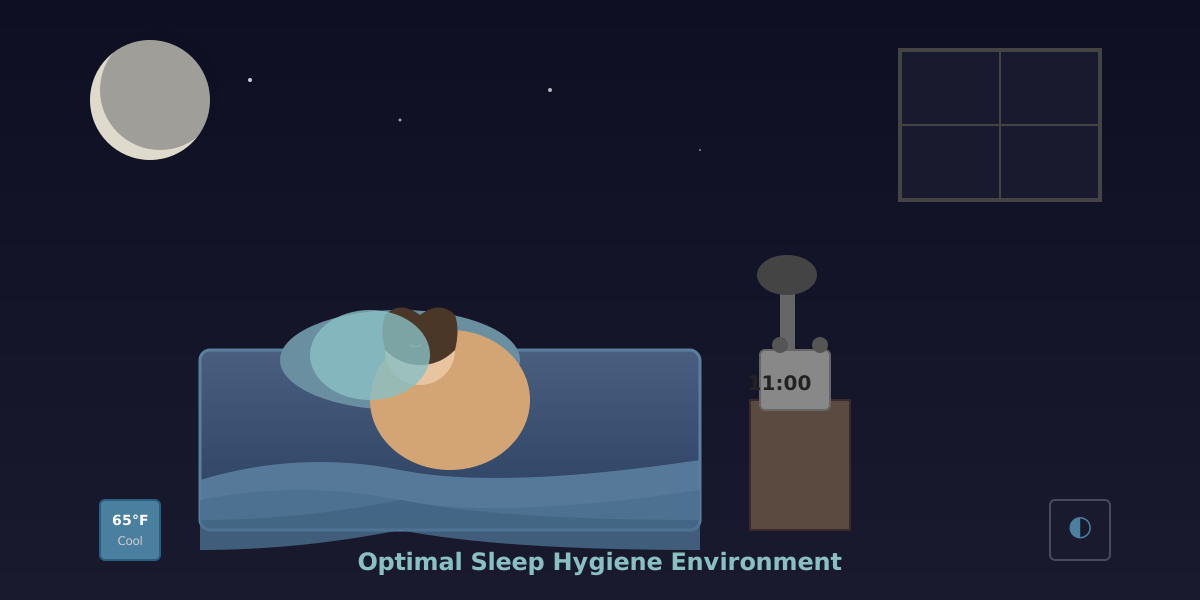
Recent advances in sleep science reveal that your sleep isn't just about being tired—it's governed by powerful biological systems that respond to light, temperature, activity level, and daily rhythms. When you align your behaviors with these natural systems, sleep becomes effortless and restorative.
This guide walks you through the evidence-based fundamentals of sleep hygiene, showing you exactly what to do at different times of day to maximize sleep quality and optimize your waking performance. You'll learn actionable strategies proven to work, mistakes most people make, and how to customize approaches for your life stage and personality.
What Is Sleep Hygiene?
Sleep hygiene refers to a set of behavioral and environmental practices that promote consistent, quality sleep. Unlike medical sleep disorders that require professional diagnosis and treatment, sleep hygiene is about optimizing the conditions and habits that naturally support better sleep. These include managing light exposure, controlling bedroom temperature, timing your caffeine and alcohol consumption, establishing consistent sleep schedules, and creating calming pre-sleep routines. Sleep hygiene is based on how your brain and body actually work—specifically how they respond to light, temperature, activity, food, and social cues throughout the day and night.
Not medical advice.
The concept of sleep hygiene emerged from sleep medicine research in the 1970s and has since become the foundational recommendation from organizations including the American Academy of Sleep Medicine, the National Institutes of Health, the CDC, and the Sleep Research Society. It's not a treatment for sleep disorders, but rather a set of evidence-based guidelines that create an environment where healthy sleep can naturally occur. Think of sleep hygiene as creating the conditions for sleep to happen, rather than forcing sleep to happen.
Surprising Insight: Surprising Insight: Most people focus only on bedtime routines, but sleep hygiene is actually a 24-hour practice. What you do in the morning—especially light exposure—has more impact on that night's sleep than what you do at bedtime.
The Sleep Hygiene Cycle: 24-Hour Rhythm
Shows how behaviors throughout the day (morning light, afternoon exercise, evening wind-down, night sleep) create a complete cycle that reinforces healthy sleep patterns
🔍 Click to enlarge
Why Sleep Hygiene Matters in 2026
Sleep deprivation has become epidemic in modern life. Long work hours, constant digital connectivity, artificial lighting, irregular schedules, and rising stress levels have fundamentally disrupted how humans sleep. Studies show that average sleep duration has dropped from 8-9 hours in the early 1900s to 6-7 hours today. This widespread sleep loss correlates with increases in obesity, diabetes, cardiovascular disease, depression, anxiety, and cognitive decline. The irony is stark: we have more health knowledge than ever before, yet we sleep less and worse.
In 2026, as mental health concerns, metabolic disorders, and cognitive health challenges continue rising, sleep emerges as one of the most cost-effective interventions available. You cannot think clearly, regulate emotions, maintain healthy metabolism, or build immune resilience on inadequate sleep. Yet most people invest more time optimizing their gym routine than optimizing their sleep. The accessibility of sleep hygiene—requiring no medication, no expensive devices, and no special equipment—makes it uniquely valuable for anyone seeking better health. Even more compelling: unlike some health practices that take months to show benefits, sleep improvements often appear within days or weeks of implementing key changes.
Sleep hygiene also addresses one of the biggest challenges in modern medicine: many people resort to sleeping pills before trying behavioral approaches. Research shows that cognitive behavioral therapy for insomnia (CBT-I), which centers on sleep hygiene principles, produces results equivalent to medication with no side effects and lasting improvements even after treatment ends. For this reason, the American Academy of Sleep Medicine now recommends sleep hygiene and behavioral approaches as first-line treatment before considering medication.
The Science Behind Sleep Hygiene
Sleep hygiene works because it aligns with how your circadian rhythm—your body's master internal clock—actually functions. Your circadian rhythm is primarily entrained (synchronized) by light exposure, particularly bright light in the morning hours. When light hits your eyes, it travels via the retinohypothalamic tract to your suprachiasmatic nucleus, which acts as your body's CEO for all time-dependent functions. This region orchestrates the release of hormones like cortisol and melatonin, the timing of body temperature fluctuations, and thousands of other circadian-dependent processes. When your circadian rhythm is strong and well-synchronized to your environment, everything from sleep onset to sleep depth to morning alertness improves automatically.
Sleep also depends on two biological systems working together: circadian rhythm (your internal 24-hour timer) and sleep pressure (the buildup of adenosine, a neurochemical that signals your brain to rest). Sleep pressure builds throughout the day and dissipates during sleep. The stronger your sleep pressure at bedtime, the more easily you fall asleep and the deeper you sleep. Sleep hygiene practices like daytime exercise, morning light exposure, afternoon caffeine avoidance, and maintaining a consistent sleep schedule all work by either strengthening your circadian rhythm or building appropriate sleep pressure at the right times. When these two systems align perfectly, sleep becomes nearly automatic.
How Circadian Rhythm & Sleep Pressure Combine
Illustration showing the interaction between the circadian rhythm curve and the sleep pressure curve throughout the day, showing optimal window for sleep when pressure peaks and circadian rhythm dips
🔍 Click to enlarge
Key Components of Sleep Hygiene
Light Exposure Timing
Light is the most powerful regulator of your circadian rhythm. Getting bright light exposure—ideally 10-30 minutes of natural sunlight—early in the morning (within the first hour of waking) sets your circadian rhythm forward and signals your brain to suppress melatonin throughout the day. This same action increases melatonin production 14-16 hours later, making falling asleep much easier. Morning light exposure also boosts cortisol and alertness at the right time. Conversely, bright light exposure—particularly blue light from screens—in the evening suppresses melatonin production and delays sleep onset. The CDC recommends at least 30 minutes of safe sunlight exposure during the daytime, ideally in the morning. In contrast, dimming lights and avoiding bright screens 30-60 minutes before bed supports melatonin production and sets the stage for easy sleep onset.
Temperature Control
Core body temperature drops by 2-3 degrees Fahrenheit during sleep, and initiating this drop is a prerequisite for sleep onset. Your bedroom temperature should be cool—most sleep experts recommend between 60-67 degrees Fahrenheit (15-19 degrees Celsius), though individual preferences vary. A cool room facilitates the temperature drop your body needs. For this reason, some people benefit from a warm bath or shower 90 minutes before bed: the subsequent drop in core body temperature as you cool down signals sleep onset. Similarly, wearing socks to bed (which dilates blood vessels in your feet and promotes heat loss) can improve sleep onset. The relationship between room temperature and sleep quality is so strong that even modest overheating can fragment sleep and reduce deep sleep stages.
Sleep Schedule Consistency
Your body thrives on predictability. Maintaining a consistent sleep schedule—going to bed and waking at approximately the same time every day, including weekends—strengthens your circadian rhythm and sleep pressure patterns. The American Academy of Sleep Medicine recommends consistent sleep-wake schedules as foundational to sleep hygiene. When you sleep at irregular times, your circadian rhythm destabilizes, sleep pressure doesn't build appropriately, and both sleep onset and quality suffer. Consistency matters more than absolute bedtime; a person sleeping 11 PM-7 AM every day will sleep better than someone sleeping 10 PM-6 AM one day and 1 AM-9 AM the next, even if the total duration is similar. Research from the National Sleep Foundation suggests that after one week with insufficient sleep, some catch-up sleep on weekends is beneficial, but the core recommendation remains: consistency is more powerful than compensation.
Caffeine & Alcohol Management
Caffeine is a adenosine receptor antagonist, meaning it blocks the very signal that creates sleep pressure. A single cup of coffee in the morning has minimal impact on night sleep, but caffeine consumed after lunch or mid-afternoon can persist in your system for 8-10 hours and substantially disrupt that night's sleep. The AASM recommends limiting caffeine to fewer than two servings daily and avoiding caffeine after noon. Alcohol, conversely, sedates initially but significantly disrupts sleep architecture: it suppresses REM sleep (when most dreams occur), fragments sleep throughout the night, and causes early morning awakening. Even moderate alcohol consumption 4-6 hours before bed disrupts sleep quality, despite the common misconception that alcohol helps sleep. For optimal sleep hygiene, limit alcohol consumption and avoid drinking within 4-6 hours of bedtime. Avoid alcohol entirely if you're struggling with sleep issues.
| Component | Key Practice | Timing |
|---|---|---|
| Light Exposure | Get 10-30 min bright morning sunlight | Within 1 hour of waking |
| Evening Light Control | Dim lights and reduce screen time | 30-60 minutes before bed |
| Temperature | Keep bedroom cool (60-67°F) | Before and during sleep |
| Sleep Schedule | Same bedtime and wake time daily | Every day including weekends |
| Caffeine Cutoff | Limit to <2 servings, none after noon | Earlier in the day |
| Alcohol Avoidance | Minimal use, none 4-6 hours before bed | Evening and night |
| Exercise | 30+ minutes, but not near bedtime | Daytime, end by 2-3 hours before sleep |
| Bedroom Environment | Dark, quiet, comfortable, clutter-free | Before sleep |
How to Apply Sleep Hygiene: Step by Step
- Step 1: Establish your wake time: Choose a consistent wake time and commit to it every single day for at least 4 weeks. This is your anchor point for your entire circadian rhythm. Set an alarm if needed, and avoid hitting snooze. Your consistency with wake time matters more than your consistency with bedtime initially.
- Step 2: Get morning bright light exposure within one hour of waking: Go outside and get natural sunlight on your eyes for 10-30 minutes. Cloudy days work; full darkness (indoors without opening blinds) does not. This single practice has the most powerful effect on nighttime sleep. If morning sun isn't available (night shift workers, winter locations with minimal daylight), use a 10,000 lux light therapy device.
- Step 3: Time your caffeine strategically: If you drink coffee, have it within 30 minutes of waking—when cortisol is naturally rising anyway. Never have caffeine after 2 PM. If you struggle with sleep, consider caffeine-free alternatives entirely. Check all sources: coffee, tea, chocolate, energy drinks, and some medications contain caffeine.
- Step 4: Exercise daily, but time it correctly: Aim for 20-30 minutes of moderate to vigorous exercise during the day. Exercise builds sleep pressure and strengthens circadian rhythm. However, avoid intense exercise within 2-3 hours of bedtime, as the stimulation and elevated body temperature will interfere with sleep onset. Morning or afternoon exercise is ideal.
- Step 5: Limit alcohol significantly or eliminate it: If you drink alcohol, do so in moderation and only with meals, never close to bedtime. Alcohol's sedating effect is offset by profound sleep fragmentation and reduced REM sleep. The healthiest choice for sleep is eliminating alcohol entirely.
- Step 6: Prepare your bedroom environment: Make your bedroom dark (blackout curtains help), quiet (earplugs or white noise machine if needed), and cool (60-67°F is ideal). Remove work materials, screens, and clutter. Your bedroom should be associated exclusively with sleep and intimacy, not work or worry. Consider adding a comfortable pillow and high-quality bedding.
- Step 7: Establish a wind-down routine 30-60 minutes before bed: Dim the lights in your home. Put away screens or enable blue light filters. Try calming activities: reading, gentle stretching, meditation, journaling, or listening to music or nature sounds. This isn't about forcing sleep; it's about signaling to your body that rest is coming. Choose activities you genuinely enjoy, not ones that feel like chores.
- Step 8: Avoid large meals, spicy foods, and excess fluids close to bedtime: Eat your last substantial meal 2-3 hours before bed. A full stomach can cause discomfort and reflux. Similarly, limit fluid intake in the hour before bed to avoid nighttime bathroom trips that fragment sleep. A small, light snack containing carbs and protein (like whole grain toast with almond butter) an hour before bed is fine and can actually improve sleep.
- Step 9: Keep your bedroom cool and consider temperature tools if needed: Set your thermostat to 60-67°F before sleep. If it's hot or you run warm, use lighter bedding, cooling mattress pads, or breathable pajamas. Some people benefit from wearing socks to enhance blood vessel dilation in the feet. Experiment to find what works for you.
- Step 10: Use your bed exclusively for sleep and intimacy: Don't work, check email, or watch TV from bed. This builds a strong mental association between bed and sleep. If you're not asleep within 15-20 minutes of lying down, get up and do a calming activity in dim light until you feel sleepy, then return to bed.
Sleep Hygiene Across Life Stages
Young Adulthood (18-35)
Young adults often battle irregular sleep schedules from late nights, shift work, social activities, and erratic routines. This is the critical period when establishing consistent sleep habits creates lifelong benefits. Young adults' circadian rhythms are naturally shifted slightly later (called chronotype difference), meaning they may feel more alert at night and less alert in early morning. Rather than fighting this, work with it: if possible, start work or school slightly later and end later. However, if your schedule requires early mornings, use bright light exposure in the first hour of waking to shift your rhythm earlier. Young adults also often use alcohol and late-night screens, both of which devastate sleep quality. The recommendation: establish basic sleep hygiene now—consistent schedule, morning light, caffeine cutoff—and sleep will be deep and restorative. This foundation protects you against future sleep problems.
Middle Adulthood (35-55)
Middle adults often struggle with sleep due to work stress, caregiving responsibilities (children and aging parents), and hormonal changes (particularly perimenopause in women). Sleep becomes more fragmented, and the luxury of sleeping in on weekends disappears when managing family schedules. Stress directly suppresses deep sleep stages, and many middle adults report waking multiple times per night. For this group, sleep hygiene is particularly powerful because it addresses biological causes rather than treating stress symptoms. Consistency becomes even more critical—middle adults with the worst sleep typically have the most irregular schedules. Practical strategies: guard your wake time fiercely (this is your anchor), get morning light exposure even if rushed, and create a non-negotiable wind-down routine even 20-30 minutes counts. Some middle adults benefit from limiting screen work in the evening and setting work boundaries (no emails after 7 PM). Managing stress through meditation, journaling, or therapy directly improves sleep quality.
Later Adulthood (55+)
Older adults often experience shorter sleep duration, fragmentation, and earlier wake times—patterns sometimes assumed to be inevitable aging. However, research shows that sleep problems in aging are often caused by modifiable behavioral factors, not solely aging itself. Light exposure becomes even more critical because older adults' eyes transmit less light and produce lower circadian signals. Many older adults spend their days indoors, which directly worsens sleep. The intervention: even more aggressive morning light exposure—20-30 minutes of bright natural light is ideal. Older adults should also be particularly careful with caffeine and alcohol, as their bodies take longer to metabolize these substances. Consistent sleep schedule remains foundational. Many older adults benefit from afternoon naps (20-30 minutes max), which are not contradictory to nighttime sleep if morning light exposure is strong. Sleep medications, while tempting, often worsen sleep quality and carry fall risks in older adults; sleep hygiene is safer and more effective.
Profiles: Your Sleep Hygiene Approach
The Inconsistent Sleeper (Variable schedules)
- One non-negotiable anchor time (like wake time)
- Light exposure protocol even on variable days
- Portable wind-down ritual that works anywhere
Common pitfall: Trying to follow a rigid schedule when life circumstances prevent it, then giving up entirely
Best move: Pick ONE consistency anchor (wake time ideally) and protect it fiercely. Everything else can vary, but this one anchor rebuilds circadian rhythm. Even 2-3 days of consistency shows benefits.
The Early Riser (Wakes too early)
- Light exposure timed properly to shift rhythm earlier
- Sleep pressure tools (exercise timing, caffeine cutoff)
- Acceptance that forcing sleep doesn't work
Common pitfall: Going to bed earlier to catch more sleep, which destabilizes the circadian rhythm further
Best move: Don't move bedtime earlier. Instead, use morning light exposure strategically (slightly later if you wake too early) and build sleep pressure through exercise in the afternoon. Your wake time is already solid; work with it.
The Late Sleeper (Can't fall asleep)
- Earlier morning light exposure to shift circadian rhythm
- Evening light dimming protocol
- Cognitive techniques for racing thoughts
Common pitfall: Avoiding bright light in evening but also not getting morning light, leaving circadian rhythm completely destabilized
Best move: Get 20-30 minutes of bright morning light within one hour of waking, without fail. This single practice often resolves late sleep onset in 3-7 days. Pair with evening light dimming and an early wind-down routine.
The Fragmented Sleeper (Wakes in night)
- Room temperature optimization
- Stress management and bedroom association strengthening
- Nighttime bathroom management
Common pitfall: Using alcohol as a sleep aid, which initially helps sleep onset but causes fragmentation later in the night
Best move: Implement temperature control (cool room), consistent wake time, and stress reduction practices. If nighttime bathroom trips are the issue, reduce evening fluids. Keep the bedroom exclusively for sleep and intimacy.
Common Sleep Hygiene Mistakes
The most common mistake is assuming sleep hygiene is just a bedtime routine. In reality, sleep hygiene is a 24-hour practice. What you do in the morning (light exposure) has more impact on that night's sleep than what you do at bedtime. Many people spend weeks optimizing their wind-down routine while maintaining an irregular wake time or avoiding morning light, then wonder why sleep doesn't improve. The fix: prioritize morning light exposure and sleep schedule consistency above all else.
Another common mistake is attempting to change everything simultaneously. Sleep hygiene works, but only if you actually maintain it. It's far better to implement one or two practices perfectly than to halfheartedly attempt all of them. Start with wake time consistency and morning light exposure. Once those feel automatic (usually 2-4 weeks), add temperature control or caffeine cutoff. This gradual approach ensures you stick with changes long-term.
A third mistake is using screens in bed or using your bedroom as a work/entertainment space. Your brain needs a strong association between bed and sleep. When you work, watch TV, or scroll through your phone in bed, you train your brain that bed is for stimulation, not sleep. The result: when you try to sleep, your brain is activated. The solution is simple but requires discipline: use your bed exclusively for sleep and intimacy. Do everything else—work, entertainment, eating—elsewhere. If you're not asleep within 15-20 minutes, get up and return when sleepy.
Sleep Hygiene Mistakes & Corrections
Visual showing common mistakes (irregular schedule, no morning light, screens in bed, late caffeine, hot room) paired with simple corrections
🔍 Click to enlarge
Science and Studies
Sleep hygiene has been extensively researched across multiple scientific disciplines, from neurobiology to psychology to clinical medicine. The evidence consistently shows that behavioral approaches—centered on sleep hygiene principles—are effective for both sleep quality improvement and insomnia treatment. Particularly compelling is research comparing sleep hygiene alone versus medication, showing that behavioral approaches produce results equivalent to or better than pharmaceutical interventions. Furthermore, the benefits of sleep hygiene persist long after intervention ends, unlike medication which often shows rebound insomnia when discontinued. Organizations including the American Academy of Sleep Medicine, the National Institutes of Health (NHLBI), the CDC, the Sleep Research Society, and Harvard Medical School all endorse sleep hygiene as the first-line intervention for sleep problems.
- American Academy of Sleep Medicine position statement: 'Sleep is essential to health' (2017) - Documents the bidirectional relationship between sleep and health across cardiovascular, metabolic, immune, and cognitive domains
- Cognitive Behavioral Therapy for Insomnia (CBT-I) meta-analysis: Shows CBT-I (which centers on sleep hygiene) produces average 19-minute reduction in time to fall asleep and 26-minute reduction in nighttime awakening, with improvements persisting 6+ months after treatment
- NHLBI Healthy Sleep Guidelines: Recommend 7+ hours nightly for adults, with consistent sleep schedules as foundational. Provide evidence that sleep deprivation increases disease risk across multiple domains
- CDC Sleep Resources: Recommend 30+ minutes daily sunlight exposure, consistent sleep schedules, limiting caffeine and alcohol, regular exercise, and cool/dark/quiet sleep environment
- Sleep Medicine Reviews (2003): Comprehensive review establishing that sleep hygiene practices, particularly circadian rhythm regularization through consistent schedule and light exposure, enhance sleep quality and reduce sleep onset latency
Your First Micro Habit
Start Small Today
Today's action: Tomorrow morning, spend 10 minutes in bright sunlight within one hour of waking. No sunglasses. Go outside, look toward the sky (not the sun directly), and let light hit your eyes. If weather prevents it, use a 10,000 lux light therapy device next to you while you eat breakfast.
Morning light exposure is the single most powerful sleep hygiene tool. It synchronizes your circadian rhythm, increases daytime alertness, and most importantly, triggers melatonin production 14-16 hours later, making that night's sleep deeper and more natural. This tiny habit takes 10 minutes but creates cascading benefits: better sleep that night, better alertness the next day, and over time, better sleep quality overall. You'll notice changes within 3-7 days.
Track your morning light exposure habit and get personalized AI coaching with our app.
Quick Assessment
How would you describe your current sleep consistency?
Your sleep consistency level reveals whether circadian rhythm destabilization might be your primary issue. Those with highly variable schedules often see the biggest improvements from simply anchoring one consistent time (ideally wake time). Consistency is more important than achieving a 'perfect' bedtime—pick what works for your life and stick to it.
What's your current morning light exposure pattern?
Morning light exposure drives your entire circadian rhythm and sleep quality. If you're not getting it consistently in the first hour of waking, this is likely your highest-impact intervention. Moving this to the top of your priority list typically produces sleep improvements within days.
Which sleep hygiene factor challenges you most currently?
Your biggest challenge reveals where to focus first. If schedule consistency is the issue, start there—even partial consistency helps. If caffeine or alcohol is the obstacle, gradual reduction often works better than quitting abruptly. If environment is the problem, simple fixes like blackout curtains and a fan produce immediate improvements. If wind-down is the challenge, try one calming practice you actually enjoy rather than forcing a routine that feels like homework.
Take our full assessment to get personalized sleep optimization recommendations.
Discover Your Sleep Style →Next Steps
Begin with this simple action: tomorrow morning, spend 10 minutes in bright sunlight within one hour of waking. This single practice is the highest-leverage sleep hygiene intervention and produces measurable improvements quickly. Once morning light becomes automatic (usually 1-2 weeks), add a second practice: establish your sleep schedule and protect your wake time with the same consistency you'd protect an important appointment. After 2-4 weeks, add your third change: either bedroom temperature control, caffeine cutoff, or evening wind-down routine—whichever feels most impactful for your life.
This gradual approach works because it's sustainable. People who try to change everything at once often fail within weeks. People who master one change, then add another, often maintain practices long-term. Remember: sleep hygiene is not about perfection—it's about consistency and alignment with your biology. You're not fighting sleep; you're creating conditions where sleep naturally happens. This is one of the few health practices where small daily actions create profound, lasting benefits.
Get personalized guidance with our AI sleep coaching app.
Start Your Sleep Journey →Research Sources
This article is based on peer-reviewed research and authoritative sources. Below are the key references we consulted:
Related Glossary Articles
Frequently Asked Questions
How long does it take for sleep hygiene changes to work?
Most people notice improvements within 3-7 days of implementing a single major change (like morning light exposure or schedule consistency). Substantial improvements typically appear within 2-4 weeks. However, the improvement trajectory varies: some people sleep dramatically better immediately, while others see gradual improvements over weeks. The key is consistency—the practices work only if you maintain them. Expect sleep quality to continue improving for 8-12 weeks as your circadian rhythm fully synchronizes.
Can I use artificial light instead of natural sunlight for morning light exposure?
Natural sunlight is optimal because it contains the full spectrum needed for circadian regulation. However, if natural light isn't available (nighttime workers, extreme winter climates, physical limitations), a 10,000 lux light therapy device positioned 16-24 inches from your eyes works well. Use it for 20-30 minutes early in your biological morning. Avoid lower-lux devices (like typical desk lamps) as they're insufficient for circadian regulation.
What if my work schedule is irregular or changes frequently?
Irregular schedules make sleep hygiene harder but not impossible. Pick ONE consistency anchor—ideally your wake time—and protect it fiercely even when schedule shifts. Getting light exposure at the time you wake (whenever that is) also helps. If true consistency is impossible, focus on maximizing light exposure, maintaining the coolest bedroom temperature you can, and avoiding stimulants close to sleep. Some people with shift work find a short nap (20-30 minutes) before their 'night shift' helpful. If shift work is chronic, consult a sleep specialist.
Is it bad to nap? Will it ruin my nighttime sleep?
Short naps (20-30 minutes) taken in the early afternoon typically don't interfere with nighttime sleep and can boost afternoon alertness and cognitive function. Longer naps (60+ minutes) or late-afternoon naps are more likely to reduce nighttime sleep pressure and delay sleep onset. If you're sleep-restricted overall, improving nighttime sleep first is the priority. If you're getting adequate nighttime sleep and want to nap, a brief early-afternoon nap is fine.
What if I've tried sleep hygiene and still can't sleep?
If you've genuinely implemented sleep hygiene practices consistently for 4+ weeks with minimal improvement, consult a sleep specialist or physician. Underlying sleep disorders (sleep apnea, restless leg syndrome, circadian rhythm disorders) require professional diagnosis and treatment. Additionally, some people benefit from cognitive behavioral therapy for insomnia (CBT-I), which extends sleep hygiene principles with specific cognitive and behavioral techniques. Sleep medications are also appropriate in some cases, particularly when combined with behavioral approaches. The key: sleep hygiene is first-line treatment, but it's not the only treatment.
Take the Next Step
Ready to improve your wellbeing? Take our free assessment to get personalized recommendations based on your unique situation.
- Discover your strengths and gaps
- Get personalized quick wins
- Track your progress over time
- Evidence-based strategies