Sleep Environment
Your bedroom is more than just a room—it's your personal sleep sanctuary, and the conditions you create there can make the difference between restless nights and restorative deep sleep. The quality of your sleep environment directly impacts your ability to fall asleep, stay asleep, and wake refreshed. From the temperature of your room to the darkness of your space, every element plays a crucial role in your sleep quality. Research shows that optimizing your sleep environment can improve sleep efficiency by up to 30%, enhance memory consolidation, boost immune function, and improve daily mood and cognitive performance. This guide explores the science-backed strategies to transform your bedroom into an ideal sleep environment that supports your natural circadian rhythm.
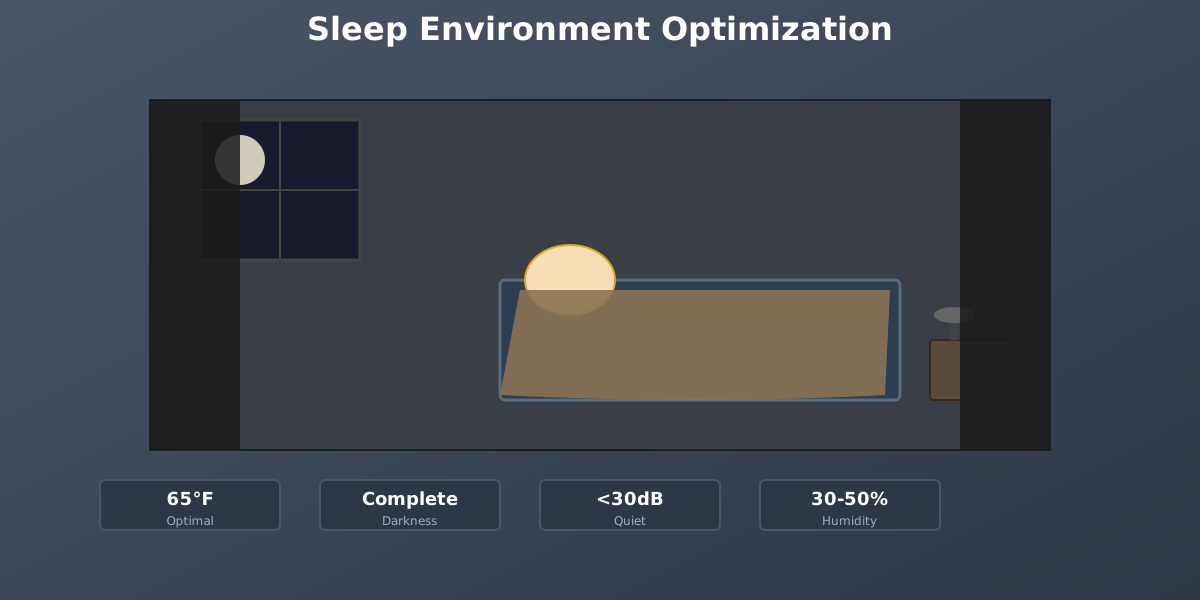
Did you know that your body actively works to lower its core temperature by about 2-3 degrees Fahrenheit as you prepare for sleep? This physiological shift is why a cool room is essential for quality rest.
The average person spends about 26 years of their life sleeping, making your sleep environment one of the most important spaces you'll ever invest in. Yet most people neglect optimizing the conditions that make sleep possible.
What Is Sleep Environment?
Your sleep environment refers to all the physical and sensory conditions in your bedroom and the space where you sleep. This includes temperature, humidity, light exposure, noise levels, air quality, bedding comfort, and even the color and design of your room. A healthy sleep environment is one that supports your natural circadian rhythm, prevents sleep disruptions, and creates conditions where your body can easily transition into restorative sleep stages including light sleep, deep sleep, and REM sleep.
Not medical advice.
Your sleep environment acts as the foundation for all sleep quality improvements. While many people focus on sleep duration or bedtime routines, the actual space where sleep happens often receives less attention. Yet research consistently shows that environmental optimization is one of the most cost-effective ways to improve sleep outcomes. Whether you're struggling with insomnia, shallow sleep, or simply want deeper rest, creating an optimal sleep environment is where transformation begins.
Surprising Insight: Surprising Insight: Studies show that sleeping in a room that's just 2 degrees warmer than optimal can reduce your REM sleep duration by up to 45 minutes per night, significantly impacting memory consolidation and emotional processing.
The Sleep Environment Framework
A visual representation of the five critical environmental factors that influence sleep quality, showing how each element affects your sleep stages and recovery process.
🔍 Click to enlarge
Why Sleep Environment Matters in 2026
In our increasingly connected world, sleep deprivation has become an epidemic. The Sleep Cycle analysis of 105 million nights shows global sleep quality declined in 2024, and environmental disruptions are a major contributing factor. More people than ever work from home, have 24/7 access to artificial lighting and screens, experience increased noise pollution, and live in suboptimal housing conditions. Understanding and optimizing your sleep environment has never been more critical for maintaining cognitive function, emotional resilience, and physical health.
The pandemic fundamentally shifted how we live and work. Many people now maintain irregular schedules, face constant blue light exposure from devices, and struggle with seasonal darkness changes. Your sleep environment became simultaneously more flexible and more chaotic. Learning to master your bedroom conditions is essential for protecting sleep quality when external circumstances are constantly changing. Research from the CDC shows only 23% of high school students achieved recommended sleep, largely due to environmental and behavioral factors within their control.
Your sleep environment directly impacts your performance in ways science is only now fully understanding. Deep sleep is when your brain consolidates memories, flushes metabolic waste through the glymphatic system, regulates hormones, and strengthens immune function. REM sleep processes emotions and supports creativity. When environmental disruptions fragment your sleep, you lose access to these essential processes, cascading into fatigue, poor decision-making, weakened immunity, and increased disease risk. Optimizing your environment is preventive medicine.
The Science Behind Sleep Environment
Your sleep is governed by two powerful biological systems: circadian rhythm and sleep pressure. Your circadian rhythm is your internal 24-hour clock, synchronized primarily by light exposure. When evening light fades, your pineal gland begins releasing melatonin—the sleep hormone—telling your body it's time to rest. This hormone production is exquisitely sensitive to light; even small amounts of artificial light can suppress melatonin production, delaying sleep onset. Meanwhile, sleep pressure builds throughout the day via adenosine accumulation in your brain. Temperature plays a critical role here: your body naturally cools as sleep pressure builds, and a warm environment actively works against this biological need, making it harder to initiate sleep and stay in deep sleep.
Environmental disruptions trigger your nervous system's stress response. Noise activates your amygdala—your brain's threat detector—releasing cortisol and noradrenaline even when you're asleep, causing micro-arousals that fragment sleep without you consciously waking. Research shows that every 5-decibel increase in traffic noise increases your odds of sleep difficulty by 5%. Light exposure similarly disrupts your sleep architecture; even brief light exposure during sleep can shift you from deep sleep to lighter stages. Temperature fluctuations trigger thermoregulatory arousal, where your brain detects the mismatch between your body's desired temperature drop and your room's conditions, causing brief waking events. These disruptions accumulate across the night, reducing total deep sleep time and REM duration, ultimately impairing all the restorative functions sleep provides.
How Environmental Factors Disrupt Sleep Architecture
Shows the progression from optimal sleep stages to fragmented sleep when temperature, light, and noise are suboptimal, demonstrating cascade effects on sleep quality.
🔍 Click to enlarge
Key Components of Sleep Environment
Temperature Optimization
Temperature is perhaps the most critical sleep environment factor. The optimal bedroom temperature for most adults is between 60-67°F (15-19°C), with 65-68°F being the sweet spot for most people. This cool temperature aligns with your body's natural core temperature drop during sleep. When your bedroom is too warm—anything above 70°F—your body struggles to achieve the cooling necessary for sleep initiation and maintenance. A warm environment specifically reduces REM sleep duration, which has profound consequences for memory consolidation, emotional processing, and mood regulation. Conversely, if your room is too cold (below 55°F), you may experience discomfort and frequent micro-arousals as your body works to maintain core warmth, similarly fragmenting sleep. Individual preferences vary slightly based on age, body composition, and circadian type, but the 60-67°F range represents the scientifically optimal zone for most people. Consistency matters: maintaining the same temperature every night helps your body anticipate and prepare for sleep, strengthening circadian entrainment.
Darkness and Light Management
Complete darkness is the second pillar of optimal sleep environment. Your eyes contain specialized photoreceptors (intrinsically photosensitive retinal ganglion cells) that detect light independent of vision, sending signals directly to your suprachiasmatic nucleus—your master circadian clock. Even minimal light exposure (as little as 5-10 lux) can begin suppressing melatonin production and shifting your sleep architecture. This is why blackout conditions are optimal: your bedroom should be completely dark, ideally below 5 lux, meaning you cannot see your hand in front of your face. This requires blackout curtains, removal of LED indicators from devices, covering or removing digital clocks, and eliminating night lights. The practice of darkness is not psychological—it's fundamental neurobiology. When light penetrates your closed eyelids during sleep, it prevents entry into deep sleep and shortens REM duration. Many people resist complete darkness due to habit or safety concerns, but research consistently shows improved sleep quality with blackout conditions. Using red light before bed (rather than blue light) is preferable if you need any illumination, as red light minimally impacts melatonin production.
Noise Control and Acoustic Environment
Noise pollution is a widely underestimated sleep disruptor. Your brain continues monitoring the environment even during sleep, and sudden or sustained sounds trigger amygdala activation and stress hormone release. Exposure to noise at night elevates cortisol and noradrenaline, even when you don't consciously wake up. These micro-arousals fragment your sleep, reducing deep sleep percentage and REM duration. Research shows that traffic noise, aircraft, and train sounds at night significantly increase insomnia risk and reduce sleep quality. Ideal bedroom conditions should measure below 30 decibels—quieter than a whisper. Achieving this may require multiple strategies: strategic window treatments, white noise machines that mask variable sounds, earplugs, or moving your sleep space away from noise sources. White noise works by providing consistent acoustic masking, preventing sudden sound changes from triggering arousal responses. Some people find nature sounds or brown noise (deeper than white noise) more comfortable than white noise. The key is consistency: your brain adapts to constant sound but startles at unexpected changes.
Humidity and Air Quality
Your bedroom's humidity level directly impacts sleep quality and respiratory health. The Environmental Protection Agency recommends maintaining indoor humidity between 30-50%. This range prevents both the problems of dry air (which irritates nasal passages, throat, and airways, causing coughing and micro-arousals) and excess humidity (which promotes dust mite proliferation, mold growth, and respiratory infections). Humidity imbalances are particularly problematic for people with allergies, asthma, or sensitive airways. Low humidity causes your sleep to be interrupted by coughing and throat clearing; high humidity encourages allergens that worsen these problems. Air quality extends beyond humidity to include adequate oxygen supply and removal of CO2 buildup. A bedroom with poor ventilation develops elevated CO2 levels that impair cognitive function and sleep quality. Opening windows when weather permits, using an air purifier, or maintaining an air exchange helps ensure adequate air quality. People sleeping in poorly ventilated spaces (like small bedrooms with sealed windows) report feeling less refreshed upon waking, even when sleep duration is adequate.
Bedding and Sleep Surface Comfort
Your mattress, pillows, and bedding directly determine whether your sleep environment supports your body's needs. A quality mattress that provides proper spinal alignment is non-negotiable; sleeping on an old, sagging mattress forces your spine into unnatural positions that trigger micro-arousals. Research shows that upgrading to a supportive mattress improves sleep quality and reduces sleep-related neck and back pain. Pillow selection matters equally: your pillow should maintain proper cervical spine alignment. For back sleepers, a pillow height of 4-6 inches maintains the natural lordotic curve; for side sleepers, 5-7 inches prevents lateral neck strain. Memory foam pillows provide superior support and temperature regulation compared to traditional feather pillows. Bedding material impacts both comfort and thermoregulation. Natural fibers like cotton and linen are superior to synthetic materials for temperature regulation because they breathe and wick moisture away from your body, preventing overheating. The tactile comfort of your bedding also matters: rough sheets trigger micro-arousals; soft, high-thread-count sheets support deeper sleep.
| Factor | Optimal Range | Why It Matters |
|---|---|---|
| Temperature | 60-67°F (15-19°C) | Aligns with core body temperature drop; prevents REM sleep suppression |
| Darkness | Below 5 lux (completely dark) | Enables melatonin production; prevents sleep stage fragmentation |
| Noise | Below 30 decibels | Prevents micro-arousals and stress hormone activation |
| Humidity | 30-50% relative humidity | Prevents respiratory irritation and dust mite proliferation |
| Air Quality | Adequate oxygen; low CO2 | Supports oxygen delivery and cognitive function during sleep |
| Mattress Age | 7-10 years maximum | Older mattresses develop sagging that disrupts spinal alignment |
| Pillow Support | Height varies by position | Prevents cervical strain and associated micro-arousals |
| Bedding Material | Natural fibers (cotton/linen) | Provides superior temperature regulation and moisture wicking |
How to Apply Sleep Environment: Step by Step
- Step 1: Measure your current bedroom temperature using a reliable thermometer. Note your current room temperature and identify whether you're above or below the 60-67°F optimal range. If above, plan cooling strategies; if below, consider adjusting heating.
- Step 2: Install blackout curtains covering all windows completely, leaving no gaps for light leakage. Test your bedroom at night to confirm you cannot see your hand in front of your face; if you can, add blackout shades or additional layers.
- Step 3: Eliminate all light sources in your bedroom: remove LED indicator lights from devices by covering them with tape, store your phone or digital clock outside the bedroom, and remove or cover any nightlights.
- Step 4: Assess current noise levels by spending a quiet evening in your bedroom with lights off. Identify primary noise sources: traffic, neighbors, street sounds, or household appliances.
- Step 5: Address noise with a multi-layered approach: seal window gaps with weatherstripping, hang heavy curtains or acoustic panels, add a white noise machine or earplugs, or consider moving your sleep space to a quieter room if possible.
- Step 6: Check your bedroom humidity using an inexpensive hygrometer. If below 30%, add a humidifier; if above 50%, consider a dehumidifier or improve ventilation by opening windows when weather permits.
- Step 7: Evaluate your mattress age and condition: if older than 10 years or noticeably sagging, plan for replacement. Test potential new mattresses in-store, lying in your typical sleep positions for 15 minutes each to assess support.
- Step 8: Assess your pillow: check whether it maintains proper cervical alignment in your sleep position. If not, try different pillow heights and materials until you find one that prevents neck strain.
- Step 9: Upgrade bedding to natural fibers: invest in high-quality cotton or linen sheets (400+ thread count) that provide better temperature regulation and moisture-wicking than synthetics.
- Step 10: Create a maintenance routine: check room temperature nightly, wash bedding weekly to reduce dust mites and allergens, replace pillows every 1-2 years, and refresh your sleep environment seasonally as outdoor temperatures shift.
Sleep Environment Across Life Stages
Young Adulthood (18-35)
Young adults often face unique sleep environment challenges: sharing bedrooms with partners or roommates, living in suboptimal housing with poor insulation or noise control, working late hours with irregular schedules, and heavy screen use disrupting circadian rhythm. Your challenge is creating sleep conditions despite external constraints. Invest in noise-canceling earplugs or a white noise machine if you can't control your acoustic environment. Use blackout eyeshades if you can't install blackout curtains. If you share a bed with a partner who sleeps at different temperatures, consider separate blankets or a split-temperature mattress. Young adults often develop sleep habits (like sleeping with phones in the bedroom or with blue light exposure pre-sleep) that damage long-term sleep quality. Optimizing your sleep environment now establishes patterns that will serve you for decades.
Middle Adulthood (35-55)
Middle adults often have more control over their bedroom conditions but face competing demands: children's sleep schedules, partner needs, work stress driving poor sleep quality, and hormonal shifts (particularly for women approaching menopause) changing temperature preferences. Your opportunity is leveraging financial resources to invest in premium mattresses, blackout systems, and climate control. Middle age is when suboptimal sleep environments begin extracting measurable health costs: cardiovascular disease risk, cognitive decline, and metabolic dysfunction all correlate with poor sleep quality. Optimizing your environment is preventive medicine at this life stage. You may need to renegotiate bedroom conditions with your partner: separate blankets, separate mattresses, or even separate sleep spaces may be optimal despite societal messaging that couples should share beds regardless of individual needs.
Later Adulthood (55+)
Older adults experience shifts in circadian sensitivity, temperature regulation, and sleep architecture that make environmental optimization even more critical. Circadian amplitude often declines with age, making light exposure more important for maintaining circadian entrainment. Temperature regulation often becomes impaired, making thermal comfort harder to maintain. Sleep fragmentation increases naturally with aging, but suboptimal environmental conditions dramatically accelerate this fragmentation. Your challenge is creating conditions that compensate for age-related changes. Prioritize brightness light exposure in morning hours to strengthen circadian rhythm. Invest in medical-grade mattresses that provide pressure relief and support. Consider multiple layers of temperature control—higher-tog duvet options, adjustable blankets, cooling mattress pads—since temperature preferences may shift throughout the night.
Profiles: Your Sleep Environment Approach
The Light Sleeper
- Complete darkness with blackout curtains and eyeshades as backup
- Sound isolation with earplugs or white noise masking
- Consistent cool temperature with minimal fluctuation
Common pitfall: Assuming any light or sound is too minor to address; neglecting small disruptions that compound across the night into severely fragmented sleep
Best move: Invest heavily in environmental optimization rather than medication; light sleepers benefit disproportionately from perfect conditions since sensitivity amplifies any disruption
The Temperature-Sensitive Sleeper
- Precise temperature control within 60-67°F range with minimal variation
- Breathable bedding that adapts to body temperature throughout the night
- Separate temperature zones if sleeping with a partner with different preferences
Common pitfall: Waking repeatedly from temperature discomfort but attributing it to other causes; not realizing how much temperature impacts their specific sleep quality
Best move: Invest in a smart thermostat with scheduling or a cooling mattress pad; consider a separate sleep space if partner temperature preferences are mismatched
The Noise-Exposed Sleeper
- Active noise masking (white noise, brown noise, nature sounds) rather than silence
- Acoustic isolation through windows and walls or strategic furniture placement
- Consistent sound environment to prevent startle responses to variable noises
Common pitfall: Believing they're 'used to' background noise and it doesn't affect them; experiencing micro-arousals and fragmented sleep without recognizing the cause
Best move: Use white noise machines strategically; high-quality earplugs; or priority location of bedroom away from noise sources when choosing housing
The Humidity-Sensitive Sleeper
- Humidity consistently maintained at 30-50% range
- Hygrometer to monitor humidity and adjust accordingly
- Air purifier to remove allergens that worsen humidity sensitivity
Common pitfall: Attributing breathing problems, coughing, or throat irritation to illness or allergies rather than environmental humidity imbalance
Best move: Invest in a quality hygrometer and humidifier/dehumidifier; address environmental humidity systematically before assuming allergies or illness
Common Sleep Environment Mistakes
The most common sleep environment mistake is underestimating environmental impact. People often focus on sleep duration and bedtime routines while ignoring that their bedroom is too warm, too bright, or too noisy. Then they wonder why 8 hours in poor conditions feels less restorative than 6 hours in optimal conditions. Sleep quality matters more than sleep quantity, and environment is the foundation of quality. Many people tolerate suboptimal bedroom conditions indefinitely, never realizing that discomfort is the problem. Your brain adapts to chronic disruptions (a phenomenon called habituation), so you stop consciously noticing them while they continue fragmenting your sleep and preventing deep sleep.
Another critical mistake is keeping your bedroom too warm. Most people prefer rooms that feel warm while awake, mistaking coziness for sleep optimization. Yet when that room remains warm during sleep, it actively suppresses REM sleep and prevents entry into deep sleep. You end up sleeping longer but waking less refreshed because you spent the night in lighter sleep stages. The discomfort of a cool room (which takes 5-10 minutes to adapt to) prevents people from reaping the significant benefit of optimal temperature. Similarly, many people maintain lights they think are harmless: nightlights for safety, phone screens checked at night, or dim room lighting. These light sources suppress melatonin and prevent proper circadian entrainment. Your eyes continue registering light even if you're not consciously aware of it.
A third major mistake is assuming your sleep problems are personal failures rather than environmental problems. People blame themselves for 'not being able to sleep well' when their bedroom is 72°F, full of light sources, and adjacent to street noise. When they're actually fighting their biology rather than failing at sleep. The human body is extraordinarily good at sleeping in optimal conditions. If you're struggling with sleep, your bedroom should be the first thing you evaluate, not your meditation practice or sleep hygiene. Environment is foundational; everything else builds on top of it.
The Sleep Environment Cascade: How Small Problems Compound
Visualizes how individual environmental suboptimalities compound across the night, progressively reducing deep sleep time and REM duration, explaining why people feel unrefreshed despite adequate sleep duration.
🔍 Click to enlarge
Science and Studies
Research on sleep environment spans decades of rigorous scientific investigation. The evidence consistently demonstrates that environmental optimization produces measurable improvements in sleep quality, sleep efficiency, and health outcomes. Key studies establish the mechanisms through which each environmental factor influences sleep architecture, hormonal function, and daytime performance.
- PMC Global Perspectives on Sleep Health: A comprehensive literature review showing that only 22% of WHO member states have published population-level sleep data, highlighting the urgent need for sleep health prioritization including environmental optimization (PMC11940572, 2024-2025)
- PMC Environmental Exposures and Sleep Outcomes: Demonstrates that physical environment—temperature, light, noise, and air quality—directly impacts sleep duration and quality, with implications for public health policy (PMC8081760)
- Sleep Cycle Report (2025): Analysis of 105 million nights showing global sleep quality declined from 74.26% (2023) to 73.92% (2024), correlating with increased environmental disruption and screen time
- Cleveland Clinic Sleep Temperature Research: Establishes the 60-67°F optimal range for adult sleep, explaining the neurobiology of thermoregulatory arousal and REM sleep suppression in warm environments
- Psychology Today The Key Role of Temperature: Demonstrates temperature-dependent changes in sleep architecture, with particular impact on REM sleep duration and cognitive function upon waking
Your First Micro Habit
Start Small Today
Today's action: Spend 5 minutes tonight assessing one sleep environment factor: measure your bedroom temperature, check for light sources, or identify noise disruptions. Choose ONE small change to implement this week.
Environmental optimization feels overwhelming when viewed as a complete transformation, but micro-changes compound powerfully. Starting with observation removes the paralysis of 'too much to change' and builds momentum toward gradual environment improvement. One small change often cascades: optimizing temperature makes darkness more effective; reducing noise makes you more aware of other disruptions.
Track your sleep environment improvements in the Bemooore app and monitor correlations with sleep quality scores.
Quick Assessment
When you think about your current bedroom, which environmental factor disrupts your sleep most: temperature fluctuations, light exposure, noise, or air quality?
Your answer identifies your primary sleep environment barrier. This is the factor that will yield the fastest improvement when optimized. Focusing on your biggest disruption first creates momentum and visible sleep quality changes, motivating continued environment optimization.
How much control do you currently have over your bedroom conditions?
Your level of control determines which optimization strategies are realistic for you. Complete control enables investment in premium solutions; limited control requires creative low-cost solutions like earplugs, eyeshades, and portable devices. Your realistic constraints shape your personalized action plan.
Which type of sleep improvement would most benefit your life: falling asleep faster, staying asleep longer, achieving deeper sleep, or waking refreshed?
Different sleep problems respond to different environmental optimizations. Light and temperature primarily affect sleep onset; noise and temperature affect sleep maintenance; overall environmental quality affects sleep depth and restoration. Your specific problem points you toward the most impactful changes to prioritize.
Take our full assessment to get personalized recommendations.
Discover Your Style →Next Steps
Your sleep environment is the foundation upon which all sleep quality improvements build. Before optimizing your sleep schedule, meditation practice, or bedtime routine, ensure your bedroom conditions support sleep. Start this week by measuring your current conditions and implementing one strategic change. Whether that's lowering your room temperature, installing blackout curtains, or adding a white noise machine, the first change often catalyzes recognition of other needed improvements. Your brain will signal satisfaction when you hit the optimal zone: you'll fall asleep faster, sleep deeper, and wake more refreshed. That positive feedback creates motivation for the next improvement.
Remember that sleep environment optimization is an investment in your cognitive function, emotional resilience, physical health, and daytime performance. A person sleeping 7 hours in optimal conditions will outperform someone sleeping 9 hours in suboptimal conditions. Your environment is one of the highest-leverage areas you can optimize for whole-life improvement. Many people achieve more by improving sleep environment than through any other single intervention. The evidence is clear, the strategies are proven, and your body knows how to sleep deeply when conditions support it.
Get personalized guidance with AI coaching.
Start Your Journey →Research Sources
This article is based on peer-reviewed research and authoritative sources. Below are the key references we consulted:
Related Glossary Articles
Frequently Asked Questions
Is 65°F too cold for sleeping? Will I be uncomfortable?
Your body adapts to cool room temperature within 5-10 minutes of sleeping. Once asleep, you regulate body heat through your blankets, and the cool room supports your natural core temperature drop. Most people report significantly better sleep after acclimating to 65°F despite initial hesitation. You can layer blankets for warmth without overheating your room.
Can I use a sleep mask instead of blackout curtains?
A quality sleep mask blocks light from your eyes, but blackout curtains offer superior benefits: they prevent light from entering the room entirely, reducing ambient light that affects circadian rhythm. A sleep mask works for travel or temporary situations but is less effective long-term than environmental darkness. Ideal approach: both—blackout curtains as your foundation, plus a sleep mask for backup.
What if I live in a noisy apartment and can't change my environment?
Strategic use of white noise machines, quality earplugs, or nature sound apps can effectively mask variable noises. The goal isn't silence but acoustic consistency—preventing sudden sounds from triggering arousal. Acoustic foam panels on walls, heavy curtains, and weatherstripping around doors further reduce noise. Some people find success by relocating their sleep space to a quieter room or area of the apartment.
How long until I notice sleep improvement after optimizing my environment?
Most people notice measurable improvement within 3-5 days of optimizing multiple environmental factors. Temperature and darkness changes produce the fastest results. However, complete sleep architecture optimization—deepening REM and deep sleep stages—takes 2-4 weeks as your brain re-establishes normal sleep patterns after chronic disruption.
Is a white noise machine better than earplugs for noise management?
Both serve different purposes. White noise masks variable environmental sounds, preventing startle responses. Earplugs reduce overall noise volume. Combining both—white noise for acoustic masking plus earplugs for volume reduction—provides superior noise control. Personal preference matters: some people find white noise helpful, others find it irritating. Experiment to find your optimal approach.
Take the Next Step
Ready to improve your wellbeing? Take our free assessment to get personalized recommendations based on your unique situation.
- Discover your strengths and gaps
- Get personalized quick wins
- Track your progress over time
- Evidence-based strategies