Morning Rituals
The first hours of your day determine your mood, energy, and productivity for the remaining 16 hours. Morning rituals are intentional practices you perform upon waking that signal to your body and mind: "Today matters, and I'm showing up for it." Whether it's five minutes of breathing exercises or a full ninety-minute routine involving meditation, movement, and nourishment, morning rituals create a foundation of stability. They reduce decision fatigue, align your body's natural circadian rhythms, and build psychological momentum. Research from the Journal of Aging and Health shows that people who maintain consistent morning routines demonstrate 40 percent better cognitive function in their later years. More importantly, they report higher life satisfaction, greater emotional resilience, and a clearer sense of purpose.
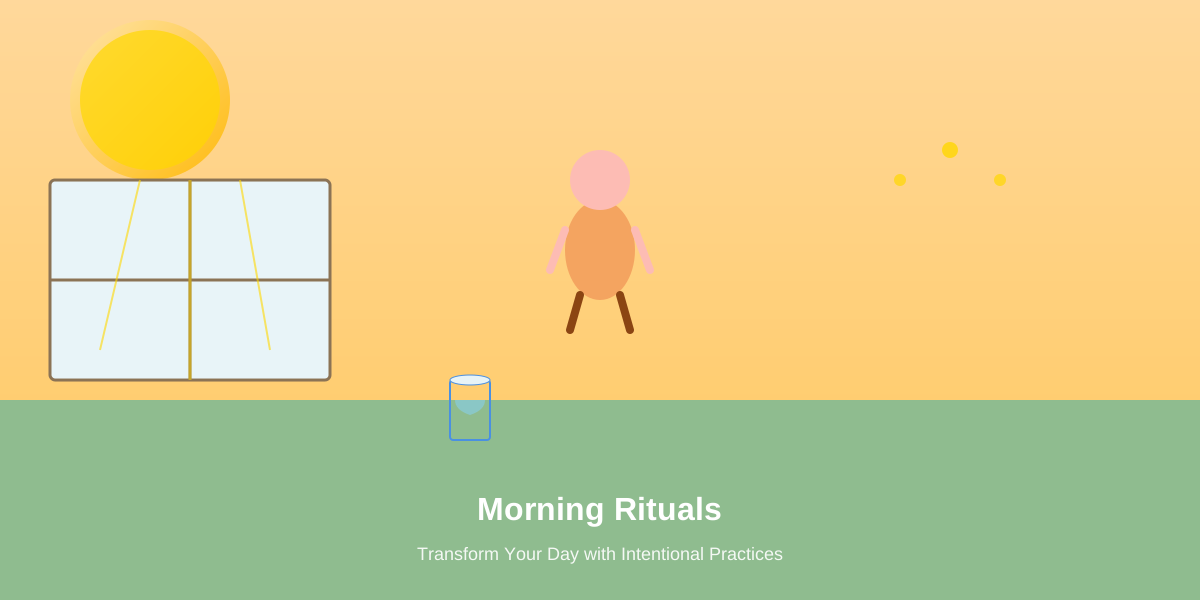
What makes morning rituals powerful is that they're not about perfectionism or rigid schedules. Instead, they're about honoring your intention to start deliberately. Some people thrive with exercise-first mornings; others need quiet reflection. Some grab coffee immediately; others wait for sunlight to hit their eyes first. The neuroscience is clear: consistent morning practices rewire your brain, strengthen your prefrontal cortex (decision-making center), and regulate serotonin and cortisol levels. This means your morning ritual isn't just a nice-to-have—it's foundational architecture for your entire day.
This guide walks you through the science, components, and personality-based approaches to morning rituals. You'll discover which practices fit your natural chronotype, how to implement them without overwhelm, and why the first 90 minutes of your day are worth protecting.
What Is Morning Rituals?
Morning rituals are deliberate, intentional practices you perform at the start of your day—typically within the first 60 to 90 minutes after waking. These are structured activities (as opposed to random habits) designed to set a positive psychological and physiological tone. Common morning rituals include meditation, breathwork, hydration, sunlight exposure, movement, journaling, gratitude practice, intentional eating, and goal-setting. What distinguishes a ritual from a routine is consciousness: rituals carry meaning. You perform them with awareness and intention, not on autopilot.
Not medical advice.
Morning rituals serve multiple functions simultaneously. Physiologically, they align your circadian rhythm (your body's internal 24-hour clock) with external light and activity cycles, which regulates sleep, hormone production, and immune function. Psychologically, they create a sense of agency and control, reducing anxiety about the day ahead. Behaviorally, they build momentum through small wins, which activates your dopamine system and primes your brain for sustained focus. The ritual itself doesn't matter as much as consistency and intentionality. What matters is that you show up for yourself daily, signaling trust and respect for your own wellbeing.
Surprising Insight: Surprising Insight: Your morning ritual doesn't need to be long. A Harvard study found that even five minutes of daily morning meditation produced measurable improvements in attention, memory, mood, and emotional regulation within eight weeks—with benefits appearing as early as week two.
How Morning Rituals Impact Your Day
The cascade of physiological and psychological effects triggered by consistent morning practices
🔍 Click to enlarge
Why Morning Rituals Matter in 2026
In 2026, we face unprecedented cognitive demands: constant notifications, information overload, and the expectation to be 'always on.' Morning rituals offer sanctuary from this chaos. They create a protected window before external demands intrude, allowing you to reclaim agency over your own mind. Without this buffer, most people start their day in reactive mode—checking emails, scrolling social media, responding to others' agendas. By contrast, people who establish morning rituals begin in creative, proactive mode. This shift compounds across weeks and months into measurable gains in productivity, mental health, and life satisfaction.
Morning rituals are also your best defense against decision fatigue and burnout. When you front-load intentional activities—moving your body, quieting your mind, connecting to purpose—you build psychological capital that sustains you through stress. The American Heart Association reports that consistent morning routines support cardiovascular health, better sleep quality, and stronger emotional regulation. In an era of rising anxiety, depression, and burnout, morning rituals are a scientifically-backed intervention that costs nothing and requires only time commitment.
Perhaps most critically, morning rituals in 2026 serve as an anchor against fragmentation. Your morning practice becomes the one thing you control completely, the one space where you define the narrative before anyone else does. This is why successful people—from CEOs to Olympic athletes—guard their mornings fiercely. Tim Cook (Apple), Oprah Winfrey, and Dwayne Johnson all wake between 4-6 AM and invest their first hours in deliberate practice. They understand that the quality of your morning determines the quality of your life.
The Science Behind Morning Rituals
The foundation of morning rituals is circadian biology. Your circadian rhythm is your body's internal clock, regulating sleep-wake cycles, hormone production, core body temperature, and digestive timing across 24 hours. This rhythm responds powerfully to light exposure, physical activity, and food timing. When you get bright light within 30-60 minutes of waking, you stabilize your circadian phase, advance the timing of melatonin onset at night, and improve nighttime sleep quality. This is why morning sunlight—even 10 minutes without sunglasses—has such profound effects on mood, alertness, and sleep.
Morning movement has measurable neuroscience backing. Exercise increases BDNF (brain-derived neurotrophic factor), a protein that supports neuroplasticity and cognitive function. Morning exercise also produces immediate increases in serotonin, norepinephrine, and dopamine—the neurotransmitters responsible for mood, motivation, and sustained focus. A meta-analysis in the Journal of Applied Physiology found that morning exercise-induced phase advance shifts (circadian alignment) were significantly greater than evening exercise shifts. Additionally, meditation produces structural brain changes: an eight-week mindfulness course thickened the prefrontal cortex (decision-making) and anterior insula (emotional awareness), while it reduced amygdala density (fear processing). These changes appear on fMRI scans and correlate with improved emotional regulation.
Neurochemical Effects of Morning Rituals
How different morning practices trigger specific neurotransmitter and hormone releases
🔍 Click to enlarge
Key Components of Morning Rituals
Sunlight Exposure and Circadian Alignment
Getting bright light exposure within 30-60 minutes of waking is the single most powerful circadian synchronizer. This doesn't require leaving your home; even light coming through windows works, though direct sunlight is more effective. The science: light hits your retina and sends a signal through your suprachiasmatic nucleus (your brain's master clock), essentially telling your body 'it's morning, stay alert.' This signal cascades through your entire system, regulating cortisol (should peak in morning), melatonin (should stay low until evening), and dozens of other hormones. Just ten minutes of morning sunlight improves alertness, mood, and nighttime sleep quality. For those in regions with limited sunlight, a light therapy lamp (10,000 lux) placed at eye level for 20-30 minutes provides similar benefits.
Hydration and Nutrition Timing
Your body is naturally dehydrated after 8 hours of sleep. Drinking water—ideally 16-20 oz within the first hour—rehydrates your cells, activates your parasympathetic nervous system, and improves cognitive function. Some research suggests adding electrolytes (sodium, potassium, magnesium) enhances hydration bioavailability, though plain water provides substantial benefits. Regarding breakfast timing and composition: consistency matters more than specific content. Eating within 1-2 hours of waking helps stabilize blood sugar and synchronizes your digestive circadian rhythm. Balanced meals containing protein, healthy fat, and complex carbohydrates support sustained energy and focus. A common mistake is consuming only carbohydrates or sugar, which spikes blood glucose and cortisol, creating an energy crash by mid-morning.
Movement and Physical Activation
Morning movement—whether walking, yoga, strength training, or high-intensity exercise—serves multiple purposes. It increases core body temperature, reinforcing the circadian signal that 'it's daytime.' It triggers BDNF and neurotransmitter release, improving mood and cognitive sharpness. It reduces overnight stiffness and activates your parasympathetic nervous system gradually, preventing the stress spike that often accompanies sudden waking. You don't need intense exercise; even 10 minutes of walking or gentle stretching provides benefits. The key is consistency and movement variety. Research suggests alternating high-intensity work (strength, sprints) with lower-intensity movement (walks, yoga) across different mornings optimizes both immediate performance and long-term health.
Mindfulness, Meditation, and Mental Activation
Morning meditation rewires neural pathways associated with attention, emotional regulation, and self-awareness. Even five minutes activates your prefrontal cortex and reduces amygdala reactivity—meaning you literally become less reactive and more thoughtful. Other mindfulness practices include breathwork (box breathing: 4 counts in, hold 4, out 4, hold 4), body scanning, and gratitude journaling. The specifics matter less than consistent practice. Harvard researchers found that eight weeks of brief daily meditation improved attention, working memory, and mood while decreasing anxiety and emotional reactivity. The effects appear within two weeks for most practitioners. Morning meditation also creates what psychologists call 'positive momentum'—a small win that builds confidence and self-efficacy for the day ahead.
| Practice | Time Required | Primary Benefits |
|---|---|---|
| Sunlight exposure | 10 minutes | Circadian alignment, mood, alertness |
| Hydration | 5 minutes | Cellular rehydration, cognitive clarity |
| Stretching/movement | 10-15 minutes | Flexibility, energy activation, mood |
| Meditation | 5-10 minutes | Emotional regulation, focus, resilience |
| Journaling | 10-15 minutes | Mental clarity, goal alignment, gratitude |
| Intentional breakfast | 15-20 minutes | Blood sugar stability, sustained energy |
| Cold exposure | 3-5 minutes | Alertness boost, nervous system resilience |
| Gratitude practice | 3-5 minutes | Positive psychology, mood elevation |
How to Apply Morning Rituals: Step by Step
- Step 1: Plan your wake time: Choose a consistent time that aligns with your schedule and sleep duration. Aim for 7-9 hours of sleep beforehand. Consistency matters more than waking early; if you naturally thrive waking at 8 AM, honor that instead of forcing 5 AM.
- Step 2: Eliminate snooze triggers: Place your alarm across the room to force you out of bed. When you hit snooze, your brain enters fragmented sleep, leaving you groggier when you finally wake. One decisive movement is better than repeated disruption.
- Step 3: Get light exposure first: Open your curtains or step outside within 30 minutes of waking. This single action cascades through your entire physiology. If sunlight is limited (winter, cloudy climate), use a 10,000-lux light therapy lamp for 20-30 minutes.
- Step 4: Hydrate immediately: Drink 16-20 oz of water within the first hour. Add electrolytes if you prefer. This rehydrates your cells and activates your nervous system. Many people notice improved mental clarity within days of adding this single habit.
- Step 5: Move your body: Do 10-30 minutes of movement that feels good. This might be stretching, walking, yoga, strength training, or dancing. The type matters less than consistency and enjoyment. If you dislike the activity, you won't sustain it.
- Step 6: Practice mindfulness: Spend 5-10 minutes on meditation, breathwork, or body scanning. If sitting meditation feels difficult, try walking meditation or a guided app (Insight Timer, Headspace, or UCLA Mindful are free/affordable). Focus on consistency over duration initially.
- Step 7: Set intentions: Before diving into tasks, spend 2-5 minutes identifying your primary intention for the day. Ask yourself: What's the one thing that, if accomplished, would make today successful? Write it down. This creates focus and psychological clarity.
- Step 8: Eat a balanced meal: Consume breakfast within 2 hours of waking, emphasizing protein, healthy fat, and complex carbs. Examples: eggs with toast and avocado; oatmeal with nuts and berries; yogurt with granola and honey. Avoid sugar-only breakfasts that spike and crash energy.
- Step 9: Journal or reflect: Spend 10-15 minutes writing freely. This might be gratitude (three things you appreciate), brain dump (clearing mental clutter), or reflection (what you learned yesterday). Journaling consolidates sleep-learning and clarifies thinking.
- Step 10: Protect your margin: Delay checking emails, social media, and news until your ritual is complete. This protection is critical. If you check your phone immediately, you enter reactive mode and lose the intentional momentum you've built.
Morning Rituals Across Life Stages
Young Adulthood (18-35)
In young adulthood, morning rituals combat the chaos of school, early career, or relationship transitions. This age group often has high energy but scattered focus. Morning rituals channel that energy strategically. The challenge: competing priorities and irregular sleep from social activities. The opportunity: neuroplasticity is highest, making habit formation easier. Young adults benefit from shorter but consistent rituals (30-45 minutes max) that emphasize goal-setting, creative expression, and peer accountability. Morning journaling, particularly reflection on personal values and long-term aspirations, resonates powerfully. Many young adults find that morning movement (gym, running, yoga) becomes their anchor activity, providing both physical health and emotional stability during uncertain transitions.
Middle Adulthood (35-55)
Middle adulthood brings competing demands: career responsibility, family obligations, aging parents, potential caregiving. Morning rituals become even more crucial as the buffer against burnout. This age group often responds powerfully to meditation and mindfulness, as accumulated stress and the realization of limited time creates openness to inner work. Morning rituals in middle adulthood often stretch to 60-90 minutes because this is when self-investment becomes non-negotiable for health and happiness. The key: consistency trumps duration. A 45-minute daily ritual beats a 90-minute ritual attempted sporadically. Many middle-aged people also find that morning rituals become their protected space—the only time they're not responding to others' needs. This psychological benefit is profound.
Later Adulthood (55+)
Later adulthood presents unique benefits and challenges for morning rituals. The research is encouraging: consistent morning routines correlate with 40 percent better cognitive function and stronger immune systems in older adults. Physically, morning movement becomes even more protective against decline; a 30-minute morning walk or light strength session significantly improves mobility, balance, and bone density. Mentally, morning meditation protects against age-related cognitive decline and supports emotional regulation. Socially, morning rituals can include connection (virtual calls with family, community classes) or solo reflection, depending on preference. Many older adults report that morning rituals give their day structure and meaning, which becomes increasingly important after retirement when external structure disappears. The ritual becomes the rhythm that anchors the day.
Profiles: Your Morning Rituals Approach
The Early Riser
- Extended quiet time before others wake
- Structured ritual with multiple components
- Physical space to move and meditate
Common pitfall: Using extra time for productivity tasks instead of restorative practices; treating morning as an extended work session
Best move: Protect your morning as sacred. Even if you wake at 4 AM, use that time for you—movement, reflection, slowness—before shifting to achievement mode. The key is restoration, not optimization.
The Late Sleeper
- Realistic wake time aligned with natural chronotype
- Abbreviated but complete ritual (30 minutes max)
- Energizing activities over calming ones
Common pitfall: Forcing 5 AM wake times that fight their biology; giving up on rituals entirely because they 'don't have time'
Best move: Honor your natural rhythm. If you thrive waking at 8 AM, build your ritual around that. Prioritize sunlight, hydration, and 10 minutes of movement. Even condensed rituals provide benefit.
The High-Stress Professional
- Stress-reduction practices (meditation, breathwork)
- Consistent schedule regardless of work demands
- Clear boundaries protecting the ritual
Common pitfall: Skipping morning ritual when schedule gets busy—exactly when it's most needed; treating it as optional luxury rather than essential foundation
Best move: Your morning ritual is non-negotiable preventive medicine. Even 20 minutes of meditation and movement provides measurable stress buffering. Schedule it like a board meeting; don't cancel it.
The Multi-Hyphenate Parent
- Flexibility within structure
- Involvement of children if possible (family yoga, gratitude)
- Realistic expectations and self-compassion
Common pitfall: Guilt about not having 'perfect' quiet mornings; abandoning ritual entirely when chaos happens; all-or-nothing thinking
Best move: Your ritual doesn't require silence or perfection. Five minutes of movement while kids eat breakfast, meditation during their screen time, or gratitude journaling after school drop-off all count. Consistency beats perfection.
Common Morning Rituals Mistakes
The most common mistake is perfectionism. People design elaborate 120-minute rituals, commit for three days, then abandon them when life happens. A 20-minute ritual done consistently for a year transforms you far more than a 120-minute ritual attempted sporadically. Start small. Literally: five minutes of sunlight and hydration. Build from there. The goal is sustainability, not heroism.
Another critical error is checking your phone before completing your ritual. Your morning should be yours. The moment you check email, social media, or news, you've shifted into reactive mode and your prefrontal cortex (intentional thinking) takes a back seat to your amygdala (threat response). Protect your morning like you'd protect your child from strangers. Use airplane mode on your phone, or leave it in another room entirely until your ritual is complete.
A third mistake is fighting your natural chronotype. If you're biologically wired to wake at 8 AM but force yourself to 5 AM, your body will rebel. You'll accumulate sleep debt, harm your circadian rhythm, and resent the ritual. Instead, honor your sleep needs and natural timing. An 8 AM riser who does a 30-minute ritual before work benefits more than a 5 AM riser who spends it checking email. Work with your biology, not against it.
From Morning Ritual to Life Transformation
The compound effects of small, consistent morning practices across weeks and months
🔍 Click to enlarge
Science and Studies
The research on morning rituals encompasses circadian biology, neuroscience, and behavioral psychology. Multiple studies demonstrate that consistent morning routines produce measurable improvements across physical health, mental health, and life satisfaction. The evidence is particularly strong for meditation, sunlight exposure, and regular wake times.
- Journal of Aging and Health (2019): Individuals with consistent morning routines demonstrated 40 percent better cognitive function in later life compared to those without structured starts
- Harvard Gazette (2018): Morning meditation and mindfulness practice produced structural brain changes within eight weeks, including thickened prefrontal cortex and reduced amygdala volume
- Lancet Psychiatry: People with active daytime routines show healthier sleep cycles and significantly fewer emotional difficulties
- Meta-analysis in Journal of Applied Physiology (2020): Morning exercise produced greater circadian phase advances than evening exercise, supporting better sleep quality
- NCCIH/NIH: Brief daily meditation decreased negative mood and enhanced attention, working memory, and recognition memory while reducing state anxiety
Your First Micro Habit
Start Small Today
Today's action: Tomorrow morning: place your alarm across the room, get out of bed immediately (before you negotiate with yourself), and spend 10 minutes with sunlight and water. Write down how you feel. That's it. Repeat daily for 7 days.
This micro-habit contains three powerful elements: decisive morning activation (removes snooze negotiation), circadian alignment (sunlight), and immediate hydration. These three actions cascade into better alertness, mood, and sleep that night. You'll notice benefits within days, which motivates continuation. Within a week, you've built the foundation for adding more practices.
Keep quitting habit apps after a missed day? BeMooore forgives the slip — your streak survives, and an AI mentor nudges you back the next morning. Free on iOS.
Quick Assessment
Which aspect of mornings feels most challenging for you right now?
Your answer reveals where to focus first. If timing is the struggle, address sleep architecture. If time-scarcity is the issue, compress the ritual to 20 minutes. If enjoyment is missing, redesign activities to spark joy. If consistency is the problem, add accountability or remove friction.
What outcome would matter most to you from a morning ritual?
Different practices serve different outcomes. If focus is your goal, prioritize movement and meditation. If anxiety reduction matters most, emphasize meditation and breathing. For sleep, prioritize light exposure and routine consistency. For purpose, journaling and intention-setting excel. Design your ritual around your highest value.
What's your natural waking preference?
This is critical: honor your chronotype. Build your ritual within your natural waking window. A person who naturally wakes at 8 AM doing a consistent 20-minute ritual benefits far more than someone forcing 5 AM against their biology. Work with yourself, not against yourself.
Take our full assessment to get personalized recommendations.
Discover Your Style →Next Steps
Start with your micro habit: waking decisively, getting sunlight and water, and reflecting on how you feel. Commit to seven days without exception. This removes decision-making about 'should I do this?' and anchors the behavior neurologically. After seven days, add one additional practice—perhaps stretching or meditation. Build incrementally rather than wholesale redesign.
Track what you notice. Use a simple journal or app to log: how you woke, what practices you did, how you felt before work, and how you slept that night. This data reveals which practices most benefit you. After 30 days, you'll have clear information about whether your ritual genuinely improves your experience. Most people find that the first 30 days reveal benefits they didn't expect—deeper sleep, better emotional regulation, or spontaneous positive shifts in outlook.
Get personalized guidance with AI coaching.
Start Your Journey →Research Sources
This article is based on peer-reviewed research and authoritative sources. Below are the key references we consulted:
Related Glossary Articles
Frequently Asked Questions
How long should a morning ritual be?
Effective morning rituals range from 20 to 90 minutes depending on your schedule and goals. The research doesn't support a magic duration—consistency matters far more than length. A 20-minute daily ritual beats a 90-minute ritual done twice a month. Start with 30 minutes if possible: 10 minutes sunlight/hydration, 10minutes movement, 10 minutes meditation or journaling. Add practices only after this foundation feels natural.
What if I don't like meditation or can't quiet my mind?
Meditation isn't for everyone, and traditional sitting meditation isn't required. Alternatives with similar neurological benefits include: walking meditation (move slowly outdoors while focusing on breath), journaling (write freely for 10 minutes), gentle yoga, tai chi, or even mindful dishwashing. The goal is creating a mental state of present-moment awareness, which can happen through any focused, deliberate practice. Experiment until you find your version.
Can I do my morning ritual at different times on weekends?
Yes, flexibility helps adherence long-term. However, consistency with wake time matters most for circadian regulation. If possible, keep wake times within 30-60 minutes of your weekday schedule—this maintains circadian stability while allowing ritual flexibility. If you wake two hours later on weekends, your internal clock experiences 'social jet lag,' which harms sleep quality and mood. A compromise: wake at a consistent time, but adjust the ritual pace or content.
What if my life circumstances change (new job, new baby, travel)?
Redesign, don't abandon. When circumstances shift, reduce your ritual to its core components rather than skipping entirely. During intense periods, your ritual might be: 5 minutes sunlight, 10 minutes movement, 5 minutes breathing. This minimal version preserves the benefits and maintains the psychological identity of 'I do my morning practice.' When stability returns, gradually expand back to your fuller ritual.
How long until I notice benefits from a morning ritual?
Physical benefits (better sleep, steadier energy) appear within 3-7 days. Psychological benefits (lower anxiety, improved mood) often emerge within 2-3 weeks. Neurological changes (thickened prefrontal cortex, reduced amygdala reactivity) require 8+ weeks of consistent practice. This timeline is important because initial motivation can lag while you're building new habits. If you commit to four weeks, you'll likely notice enough benefits to sustain the practice long-term.
Take the Next Step
Ready to improve your wellbeing? Take our free assessment to get personalized recommendations based on your unique situation.
- Discover your strengths and gaps
- Get personalized quick wins
- Track your progress over time
- Evidence-based strategies