Gratitude Practice

Gratitude Practice

You have heard that gratitude is good for you. But here is what the research actually shows: a 2024 study of nearly 50,000 women found that those with the highest gratitude scores had a 9% lower risk of death over four years. Gratitude protected against every cause of death studied, including cardiovascular disease.
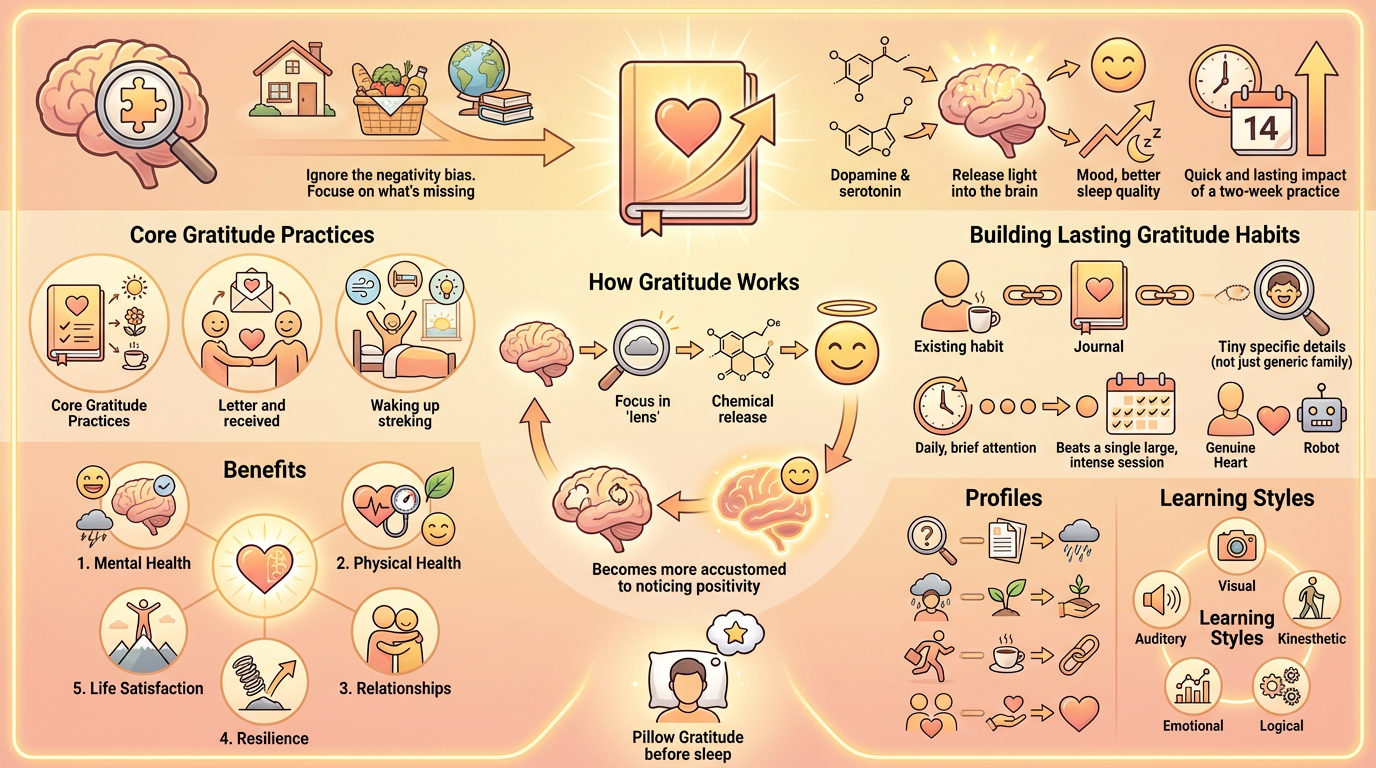
Hero image for gratitude practice

This is not about toxic positivity or ignoring problems. It is about training your brain to notice what is working alongside what is not. The science is clear: out of hundreds of interventions tested, gratitude is one of the few that consistently links to happiness.

This guide covers what gratitude practice actually is, what research reveals about its effects, and specific techniques you can start today. You will learn why some gratitude methods work better than others and how to build a sustainable practice.

What Is Gratitude: Definition and Science

Surprising Insight: Surprising Insight: Robert Emmons, the world's leading gratitude researcher, has studied over 1,000 people and found that keeping a gratitude journal for just three weeks produces overwhelming benefits including better sleep, more exercise, and fewer physical symptoms.

Gratitude is the recognition and appreciation of what is valuable and meaningful to yourself. It involves two stages: acknowledging goodness in your life and recognizing that some of this goodness comes from outside yourself.

Robert Emmons at UC Davis distinguishes gratitude from positive thinking. Gratitude is grounded in reality. It does not deny problems or struggles. It simply also notices what is going well. This dual awareness builds psychological resilience.

Gratitude activates brain regions associated with dopamine, the reward neurotransmitter. When you practice gratitude, you literally train your brain to seek more things to appreciate. The neural pathways strengthen with repetition.

How Gratitude Works in the Brain

The neurological pathway of gratitude practice

flowchart TD A[Notice Something Good] --> B[Gratitude Recognition] B --> C[Dopamine Release] C --> D[Positive Emotion] D --> E[Motivation to Seek More] E --> A F[Regular Practice] --> G[Stronger Neural Pathways] G --> H[Automatic Gratitude Noticing]

šŸ” Click to enlarge

The Science: What Research Actually Shows

Watch Brother David Steindl-Rast explain why gratefulness creates happiness, not the other way around.

A 2025 meta-analysis across 28 countries with over 24,000 participants found gratitude interventions produce small but significant increases in wellbeing. The effect size was 0.19, meaning gratitude reliably improves how people feel, though it is not a cure-all.

The JAMA Psychiatry study published in July 2024 followed nearly 50,000 women. Those scoring highest on gratitude had significantly lower mortality risk. The effect persisted after controlling for other factors. Gratitude appears to be genuinely health-protective.

A 2025 study comparing seven gratitude interventions found that methods which most effectively induce gratitude also best increase positive emotions and reduce negative ones. Not all gratitude practices work equally. Specific, detailed appreciation outperforms generic thankfulness.

Key Gratitude Research Findings
Study Year Sample Size Key Finding
JAMA Psychiatry Mortality 2024 49,275 9% lower death risk for highest gratitude
Cross-Cultural Meta-Analysis 2025 24,804 Small but consistent wellbeing increases
Seven Interventions Comparison 2025 Multiple Specific gratitude outperforms generic
Clemson Children Study 2025 First-graders 10-15 min daily practice effective
Emmons Journal Studies 2003-2024 1,000+ Three weeks produces lasting benefits

Effective Gratitude Practices

  1. Step 1: Three Good Things: Each evening, write three good things that happened today and why they happened. Be specific. The 'why' activates deeper processing.
  2. Step 2: Gratitude Letter: Write a detailed letter to someone who positively impacted your life but never properly thanked. Read it aloud to them if possible.
  3. Step 3: Mental Subtraction: Imagine your life without something good you take for granted. Visualize how different things would be.
  4. Step 4: Gratitude Visit: Visit someone and express your appreciation in person. The combination of writing, speaking, and social connection maximizes impact.
  5. Step 5: Savoring Walk: Take a 20-minute walk specifically noticing things to appreciate. Use all senses.
  6. Step 6: Gratitude Meditation: Spend 5-10 minutes focusing on someone or something you appreciate. Feel the gratitude in your body.
  7. Step 7: Thank-You Notes: Write brief notes of appreciation to different people weekly. Quantity builds the habit.
  8. Step 8: Photo Gratitude: Take photos of things you appreciate throughout the day. Review them in the evening.

Why Some Gratitude Practices Work Better

Specificity matters. Writing 'I am grateful for my partner who brought me coffee this morning and noticed I was stressed' works better than 'I am grateful for my partner.' Details engage the brain more deeply.

Social gratitude outperforms private gratitude. Expressing appreciation to others activates additional neural pathways and strengthens relationships.

Variety prevents habituation. If you write the same three things daily, the practice becomes routine and loses power. Actively seek new things to appreciate.

Depth beats frequency. Research suggests three times weekly may be optimal. Daily practice can feel like a chore.

Gratitude Profiles and Personalization

The Skeptic

Needs:
  • Evidence-based approach
  • Permission to notice negatives too
  • Gradual practice building

Common pitfall: Dismissing gratitude as naive or toxic positivity

Best move: Start with mental subtraction exercise, which works even for skeptics

The Overachiever

Needs:
  • Quality over quantity focus
  • Permission to miss days
  • Variety to prevent burnout

Common pitfall: Turning gratitude into another item on the to-do list

Best move: Practice three times weekly rather than daily to maintain freshness

The Griever

Needs:
  • Permission to feel loss fully
  • Both-and thinking rather than either-or
  • Gentle approach

Common pitfall: Using gratitude to suppress or avoid grief

Best move: Gratitude for what was rather than pressure to feel good now

The Natural

Needs:
  • Structure to deepen existing tendency
  • Ways to share practice with others
  • Advanced techniques

Common pitfall: Assuming natural gratitude means no practice needed

Best move: Gratitude letters and visits to leverage social strength

Common Mistakes to Avoid

Gratitude Practice Pitfalls
Mistake Why It Fails Better Approach
Generic gratitude Does not engage brain deeply Be specific about what and why
Daily forced practice Becomes routine, loses meaning Three times weekly with full attention
Ignoring genuine problems Creates cognitive dissonance Practice both-and: gratitude alongside struggles
Solo practice only Misses social benefits Include gratitude expressions to others
Same items repeatedly Habituation reduces impact Actively seek novel appreciation targets

Your First Micro Habit

The Morning Gratitude Pause

Today's action: Before getting out of bed, identify one specific thing you appreciate about your life right now.

This sets a positive attention direction for the day. It takes less than 30 seconds but primes your brain to notice good things. The specificity requirement engages deeper processing than generic thankfulness.

Track your gratitude practice and receive personalized prompts with AI coaching.

Quick Assessment

What currently brings you the most joy in daily life?

Your joy sources reveal which happiness strategies will resonate most deeply with you.

What tends to hold you back from feeling happier?

Identifying your happiness blockers helps target the most impactful changes.

How would you describe your current life satisfaction?

Your satisfaction level helps determine whether you need foundational changes or refinements.

Take our full assessment to discover which approach matches your personality and goals.

Discover Your Style →

Next Steps

You understand the science of gratitude and specific practices that work. Start with one method, practiced three times weekly. After a month, assess and adjust.

Explore related topics: positive psychology provides the broader framework, happiness shows how gratitude fits into overall wellbeing, and mindfulness strengthens the awareness that gratitude requires.

Get personalized gratitude prompts and track your practice with AI coaching.

Start Your Gratitude Practice →

Research Sources

This article is based on peer-reviewed research and authoritative sources. Below are the key references we consulted:

Frequently Asked Questions

Is gratitude practice toxic positivity?

No. Research-based gratitude practice acknowledges problems while also noticing what works. It is both-and thinking, not denial.

How long until I see benefits?

Some people notice mood improvements within days. Research shows significant effects after three weeks of consistent practice.

Can gratitude help depression?

Gratitude practice can complement depression treatment but should not replace professional help for clinical depression.

What if I cannot think of anything to be grateful for?

Start very small. Running water. A comfortable chair. The inability to find gratitude often reflects depression, which deserves professional attention.

Should I practice gratitude daily?

Research suggests three times weekly may work better than daily. Quality matters more than quantity.

Does gratitude journaling work for everyone?

Most people benefit, but some prefer mental practice, verbal expression, or gratitude meditation.

Can children practice gratitude?

Yes. Research shows even first-graders benefit from age-appropriate practices like gratitude collages and thank-you cards.

How do I maintain the practice long-term?

Anchor to existing habits, vary your approach, make it social, and track consistency rather than content.

Take the Next Step

Ready to improve your wellbeing? Take our free assessment to get personalized recommendations based on your unique situation.

Continue Full Assessment
gratitude practice positive psychology wellbeing

About the Author

DM

David Miller

David Miller is a wealth management professional and financial educator with over 20 years of experience in personal finance and investment strategy. He began his career as an investment analyst at Vanguard before becoming a fee-only financial advisor focused on serving middle-class families. David holds the CFPĀ® certification and a Master's degree in Financial Planning from Texas Tech University. His approach emphasizes simplicity, low costs, and long-term thinking over complex strategies and market timing. David developed the Financial Freedom Framework, a step-by-step guide for achieving financial independence that has been downloaded over 100,000 times. His writing on investing and financial planning has appeared in Money Magazine, NerdWallet, and The Simple Dollar. His mission is to help ordinary people achieve extraordinary financial outcomes through proven, time-tested principles.

×