Nutrition
Every bite you take sets off a cascade of biological events. Food isn't just fuel—it's information that your body uses to build cells, regulate hormones, fight disease, and determine how you feel each day. Yet most people eat without understanding what they're actually putting into their systems. The truth is simple: nutrition is the foundation of everything. Without it, no amount of exercise, sleep, or stress management can fully work. When you understand nutrition and start making intentional food choices, you don't just feel better—you transform your relationship with eating itself. This guide cuts through the confusion and shows you exactly how to eat for optimal health.
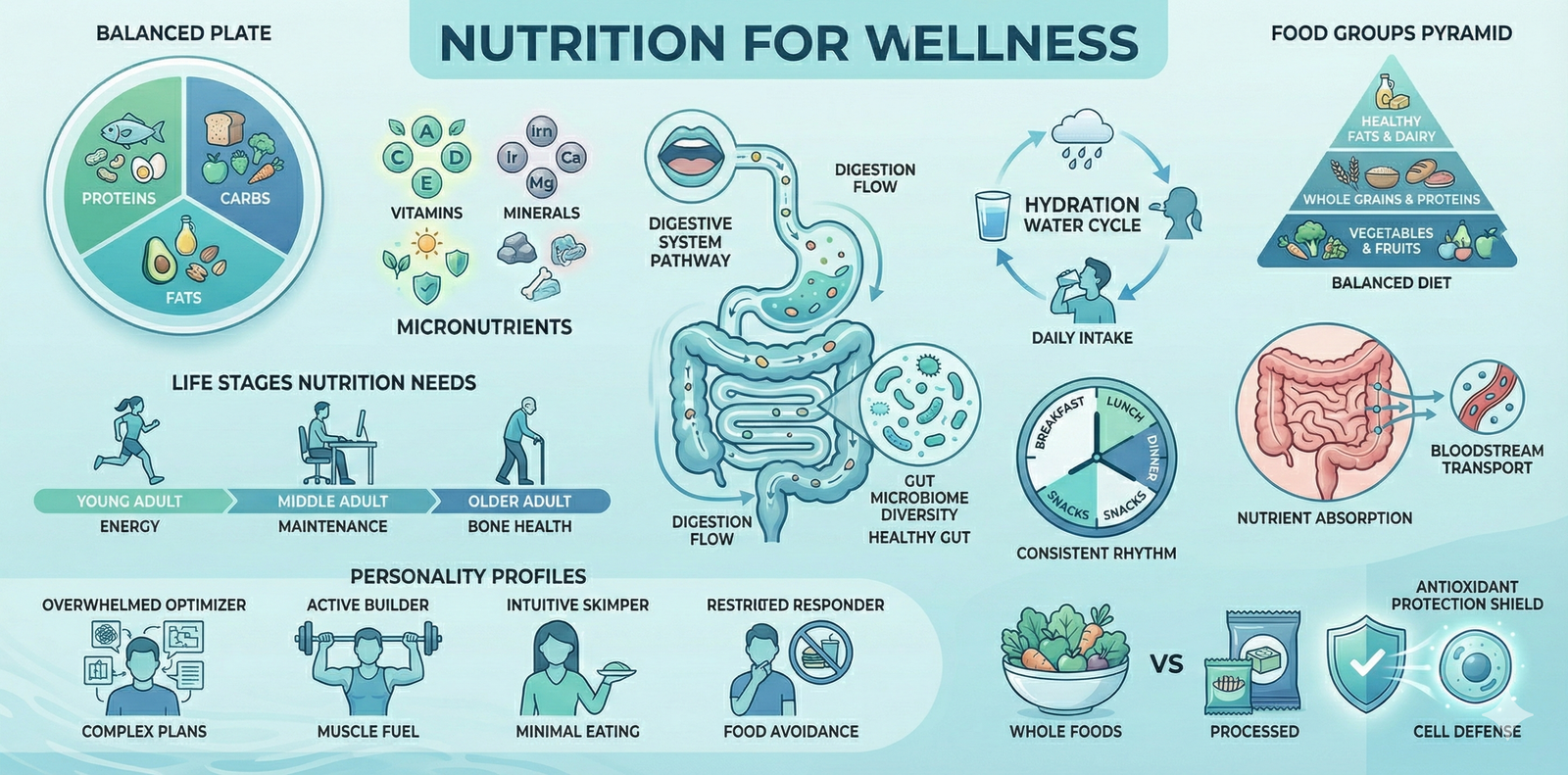
You'll learn what macronutrients and micronutrients actually do in your body, how to recognize what balanced eating looks like, and why certain dietary patterns prevent disease better than others.
By the end of this article, you'll have a practical framework for making food choices that support your best health—no restrictive diets required.
What Is Nutrition?
Nutrition is the science of how food and its components interact with your body to maintain health, provide energy, and support growth. It encompasses the nutrients your body needs—proteins, carbohydrates, fats, vitamins, minerals, and water—and how your digestive system breaks down food into usable forms your cells can actually use. Proper nutrition isn't about perfection or restriction; it's about consistent, intentional eating patterns that fuel your specific life. Whether you're recovering from illness, building muscle, managing stress, or simply trying to live longer, nutrition is the operating system that makes everything else possible.
Not medical advice.
The science of nutrition has evolved dramatically. In the 1900s, researchers first identified vitamins and minerals as essential substances. By the mid-20th century, macronutrients became the focus. Today, modern nutrition science recognizes that it's not just what nutrients you eat—it's how your unique body responds to food, influenced by genetics, lifestyle, stress, and sleep. The 2025-2030 Dietary Guidelines for Americans reflect this shift, emphasizing whole, nutrient-dense foods over processed alternatives. This personalized, holistic approach to nutrition is why eating well matters more now than ever before.
Surprising Insight: Surprising Insight: Your gut microbiome—the trillions of bacteria in your digestive system—directly influence how you absorb nutrients, regulate weight, manage inflammation, and even affect your mood and mental health through the gut-brain axis.
The Nutrition Journey: From Plate to Cell
How food transforms into energy and building blocks your body uses
🔍 Click to enlarge
Why Nutrition Matters in 2026
We live in an unprecedented food environment. Ultra-processed foods are engineered to be hyper-palatable—designed to make you want more regardless of your body's actual needs. At the same time, nutrition science has never been clearer about what works: whole foods, adequate protein, plenty of vegetables, and appropriate fats dramatically reduce your risk of heart disease, type 2 diabetes, certain cancers, and cognitive decline. The World Health Organization has extended its nutrition targets to 2030, with a specific focus on reducing childhood obesity and improving maternal nutrition. Meanwhile, emerging research on precision nutrition shows that your individual response to foods is unique—what works perfectly for one person might not work the same way for another.
Chronic diseases account for 90% of healthcare spending in developed countries, and most of these conditions are partially preventable through better nutrition. When you invest in nutrition now, you're investing in fewer doctor visits, more energy, clearer thinking, better mood, and a longer, more vibrant life. The cost of nutrition is minimal compared to the cost of managing chronic disease. In 2026, with stress at all-time highs, sleep disrupted by screens and deadlines, and environmental toxins everywhere, nutrition has become your most powerful health tool—something entirely within your control.
Beyond individual health, nutrition impacts the environment, sustainable food systems, and global health equity. Eating patterns that are good for your body—whole grains, plants, sustainable protein—are also better for the planet. When you choose nutrition intentionally, you're not just improving your own health; you're contributing to larger positive shifts in food culture and environmental sustainability.
The Science Behind Nutrition
Nutrition science shows us that your body doesn't distinguish between food as a source of calories and food as information. Every nutrient sends signals to your cells, affecting gene expression, inflammation levels, hormone balance, and even your lifespan. Vitamins and minerals serve as cofactors and coenzymes—essential helpers that allow your body to produce energy, build proteins, repair DNA, and regulate every biological process. Carbohydrates provide quick energy and fuel your brain, which uses about 20% of your body's daily calorie intake just to function. Proteins are the building blocks for every cell, enzyme, and hormone in your body. Fats are essential for hormone production, nutrient absorption, brain function, and cellular structure. Water regulates temperature, transports nutrients, and enables every metabolic process.
Modern nutrition research uses advanced tools like metabolomics, genetic testing, and gut microbiome analysis to understand how individual bodies respond to food. This explains why some people thrive on higher carbohydrate intake while others feel better with more fat. Twin studies show that identical genetics can produce very different health outcomes based on nutrition and lifestyle choices. Neuroimaging studies reveal that certain foods actually activate reward centers in your brain differently—understanding this helps explain why changing eating habits is genuinely difficult and why mindful, compassionate approaches work better than rigid restriction.
Macronutrients vs. Micronutrients: Your Body's Two Fuel Systems
How macronutrients provide energy while micronutrients enable all biological functions
🔍 Click to enlarge
Key Components of Nutrition
Proteins
Proteins are polymers of amino acids—the building blocks that construct every tissue in your body. When you eat protein, your digestive system breaks it into individual amino acids, which your cells use to build muscle, enzymes, antibodies, hormones, and connective tissue. Your body needs 9 essential amino acids that you must get from food because your body cannot manufacture them. Animal sources like meat, fish, eggs, and dairy provide complete proteins with all 9 essential amino acids. Plant sources like beans, lentils, nuts, seeds, and whole grains can also provide complete proteins when combined strategically. The recommended dietary allowance is 0.8 grams per kilogram of body weight for most adults, but research suggests that active individuals, older adults, and athletes benefit from higher protein intake—up to 1.2-2.2 grams per kilogram depending on goals. Adequate protein supports muscle maintenance, bone health, immune function, and satiety, making it fundamental to any nutrition plan.
Carbohydrates
Carbohydrates are your body's preferred fuel source—they're broken down into glucose, which powers your brain, muscles, and organs. The key distinction in modern nutrition is between simple carbohydrates (sugars and refined starches that spike blood glucose quickly) and complex carbohydrates (whole grains, vegetables, legumes that provide steady energy). Your brain alone uses approximately 120 grams of glucose daily, and this is why low-carb extreme diets often leave people feeling foggy and exhausted. However, not all carbohydrates are created equal. Refined carbohydrates like white bread, pastries, and sugary drinks cause rapid blood sugar spikes followed by crashes, which contribute to insulin resistance, weight gain, and type 2 diabetes. Whole-grain carbohydrates, vegetables, and fruits contain fiber, which slows glucose absorption, feeds beneficial gut bacteria, and provides lasting energy. The current evidence suggests that 45-65% of daily calories from carbohydrates is optimal for most people, with an emphasis on whole-food sources.
Fats
Fats have been misunderstood for decades, but modern nutrition science clearly shows that dietary fat is essential for health—and absolutely not the enemy of a healthy weight. Your body uses fat for hormone production (including sex hormones and cortisol), inflammation regulation, brain health (your brain is 60% fat), vitamin absorption, and cellular structure. Different types of fat have different effects on your health. Saturated fats, once universally condemned, have a more nuanced relationship with health—the problem is excessive intake of processed saturated fats, not moderate amounts in whole foods like eggs, coconut oil, or full-fat dairy. Trans fats, artificially created through hydrogenation and used in processed foods, are genuinely harmful and should be minimized. Unsaturated fats—both monounsaturated (olive oil, avocados, nuts) and polyunsaturated (fish, seeds, vegetable oils)—are consistently linked to better health outcomes, lower inflammation, and reduced cardiovascular disease risk. Omega-3 fatty acids from fish, flax, chia, and walnuts are particularly important for brain health and inflammation regulation. Aim for 20-35% of daily calories from fat, with emphasis on whole-food sources of unsaturated fats.
Vitamins and Minerals
Micronutrients—vitamins and minerals—don't provide calories, but they're absolutely essential for every biological process. Vitamin D regulates calcium absorption, immune function, and mood; many people are deficient, particularly in winter months. Vitamin B12 is crucial for nerve function and red blood cell formation and is primarily found in animal products, making it an important consideration for vegans. Iron carries oxygen in your blood, and deficiency causes fatigue and cognitive impairment. Magnesium participates in over 300 enzymatic reactions and is involved in sleep, stress regulation, and muscle function. Zinc supports immune function and wound healing. Calcium builds bone density and is essential for muscle contraction and nerve signaling. Selenium, potassium, iodine, copper, chromium, and dozens of other minerals each play specific roles in keeping your body functioning. Rather than taking individual supplement megadoses, which can be ineffective or harmful, the evidence strongly supports getting micronutrients primarily from whole foods—vegetables, fruits, nuts, seeds, legumes, whole grains, and animal products depending on your dietary choices. A food-first approach to micronutrition provides thousands of phytonutrients and compounds that work synergistically in ways supplements cannot replicate.
| Nutrient | Daily Amount | Top Food Sources |
|---|---|---|
| Protein | 0.8-2.2g per kg body weight | Chicken, fish, eggs, Greek yogurt, beans, tofu |
| Carbohydrates (complex) | 45-65% daily calories | Brown rice, oats, quinoa, sweet potatoes, vegetables |
| Fats (unsaturated) | 20-35% daily calories | Olive oil, avocados, nuts, fish, seeds |
| Fiber | 25-35g daily | Vegetables, fruits, whole grains, legumes |
| Water | Half your body weight in ounces | Water, tea, herbal infusions, water-rich foods |
| Calcium | 1000-1200mg daily | Dairy, leafy greens, fortified plant milks, tofu |
| Vitamin D | 800-1000 IU daily | Fatty fish, egg yolks, sunlight, fortified milk |
| Iron | 8-18mg daily | Red meat, poultry, legumes, fortified grains, dark leafy greens |
| Magnesium | 310-420mg daily | Nuts, seeds, whole grains, dark leafy greens |
| Potassium | 2600-3400mg daily | Bananas, potatoes, spinach, sweet potatoes, beans |
How to Apply Nutrition: Step by Step
- Step 1: Assess your current eating patterns honestly without judgment—write down what you typically eat for three days to establish a baseline
- Step 2: Identify one major source of ultra-processed foods in your diet and plan a whole-food replacement (e.g., replacing sugary cereal with oatmeal and berries)
- Step 3: Build your plate using the simple visual model: half vegetables and fruits, quarter whole grains, quarter lean protein, and add healthy fat with each meal
- Step 4: Focus first on adding nutrition rather than subtracting foods—add more vegetables, then whole grains, then quality protein, letting healthy foods naturally crowd out less nutritious options
- Step 5: Hydrate consistently by drinking at least half your body weight in ounces of water daily, spread throughout the day rather than all at once
- Step 6: Plan meals ahead for three days at a time, starting simple with breakfast, lunch, dinner, and one snack each day to remove decision fatigue
- Step 7: Shop primarily the perimeter of the grocery store where whole foods live—produce, lean proteins, dairy—rather than the center aisles of processed foods
- Step 8: Read nutrition labels with focus on three things: grams of added sugar (aim under 10%), grams of fiber (aim higher), and ingredient count (fewer is better)
- Step 9: Find your optimal macro balance by experimenting—most people feel best with 30-40% of calories from protein, but this varies individually based on activity level and body composition goals
- Step 10: Create sustainable eating habits by focusing on consistency over perfection—eating well 80% of the time produces results; chasing 100% perfection leads to burnout and quitting
Nutrition Across Life Stages
Young Adulthood (18-35)
Young adulthood is when nutritional habits form patterns that often persist for life. This life stage demands adequate calories to support activity and metabolism, with particular emphasis on bone health development (peak bone mass is achieved around age 30). Young adults often prioritize convenience, but this is when establishing habits around meal planning, grocery shopping, and basic cooking creates compounding benefits. Protein intake is particularly important if you're building muscle or engaging in regular exercise. Young adults also benefit from building awareness around hidden sugars in seemingly healthy foods, managing caffeine intake (which can disrupt sleep and stress regulation), and recognizing that alcohol's effects on nutrition, sleep, and hormone balance are significant. This is the ideal time to develop a healthy relationship with food based on nourishment rather than restriction, which sets the foundation for lifetime eating patterns and body image.
Middle Adulthood (35-55)
Middle adulthood brings metabolic changes, increased stress, and often competing demands that make nutrition easy to neglect. Metabolism slows approximately 5% per decade after age 30, which means previous eating habits may no longer maintain the same weight. Simultaneously, hormonal changes (perimenopause for women, andropause for men) affect how your body stores fat, builds muscle, and manages inflammation. This life stage requires more intentional nutrition planning, with emphasis on adequate protein to maintain muscle mass (which naturally declines without resistance exercise and sufficient protein), antioxidant-rich foods to combat increasing inflammation, and stable blood sugar management to prevent metabolic dysfunction. Middle-aged adults often find that addressing nutritional deficiencies—particularly vitamin D, B12, and magnesium—significantly improves energy, mood, and recovery from exercise. Time becomes scarce, so nutrition strategy shifts to efficiency: batch cooking, strategic supplementation for gaps, meal prep systems, and clear non-negotiables around core foods that support health despite busy schedules.
Later Adulthood (55+)
Later adulthood presents distinct nutritional needs and challenges. Absorptive capacity for certain nutrients decreases, making food quality even more important. Appetite often diminishes, yet nutritional needs remain high—the challenge is getting adequate nutrition from smaller food volumes. Protein becomes absolutely critical for maintaining muscle mass and bone density, preventing sarcopenia (age-related muscle loss), and supporting immune function; many researchers recommend 1.0-1.2 grams per kilogram body weight for older adults. Vitamin B12 absorption decreases due to reduced stomach acid, making supplementation or B12-fortified foods necessary. Calcium and vitamin D are essential for preventing osteoporosis and fractures. Adequate hydration becomes more challenging as thirst sensation decreases. Nutritional interventions targeted at this life stage—adequate protein, omega-3 fatty acids, antioxidant-rich plants, and consistent resistance exercise—directly correlate with preserved cognitive function, maintained independence, reduced falls and fractures, and improved quality of life. This is when the accumulated benefits of decades of good nutrition become most apparent, and when attention to nutrition has immediate, noticeable impacts on daily function and wellbeing.
Profiles: Your Nutrition Approach
The Overwhelmed Optimizer
- Clear priorities over perfect execution
- Systems that reduce decision fatigue around food
- Permission to be imperfect while still making progress
Common pitfall: Trying to overhaul everything at once and burning out within two weeks
Best move: Pick ONE change this month—maybe it's drinking more water or adding vegetables to dinner. Do that consistently, then add another change next month.
The Active Builder
- Adequate protein distributed throughout the day
- Carbohydrate timing around workouts for fuel and recovery
- Consistent caloric intake to support muscle building without excessive fat gain
Common pitfall: Undereating protein relative to training volume, causing slow progress and constant soreness
Best move: Calculate your protein needs (0.7-1g per pound of body weight), spread across 4-5 meals daily, time carbs around your training, and track intake for two weeks to establish baseline.
The Intuitive Skimper
- Structure without rigidity to prevent under-eating
- Understanding of how insufficient nutrition shows up as fatigue, mood instability, and performance decline
- Permission to eat enough without guilt
Common pitfall: Skipping meals due to busyness or restriction mindset, creating energy crashes and poor food choices later
Best move: Commit to eating three meals daily even if simple—breakfast, lunch, dinner with snack. Notice how your energy, mood, and sleep improve with adequate nutrition.
The Restricted Responder
- Abundance-focused nutrition that emphasizes what to add rather than restrict
- Food freedom without guilt around non-optimal choices
- Personalized nutrition rather than all-or-nothing rules
Common pitfall: Following rigid rules, breaking them, then feeling shame and returning to restriction in a cycle
Best move: Shift from "foods I can't eat" to "foods that make me feel good." Eat freely, but stay curious about how different foods affect your energy, digestion, and mood over time.
Common Nutrition Mistakes
The first major mistake is confusing correlation with causation. A study showing that people who eat vegetables are healthier doesn't mean vegetables caused the health—it might mean that health-conscious people eat vegetables, or that people with time and resources for fresh produce have multiple health advantages. This is why single-nutrient focus fails. Taking massive vitamin C supplements won't prevent colds the way that overall nutritional adequacy does. The second mistake is following dietary patterns because they worked for someone else without considering whether they align with your individual needs, preferences, activity level, or metabolism. A diet that works perfectly for a CrossFit athlete might be terrible for a sedentary office worker. The third mistake is believing that nutrition is about willpower rather than systems and psychology. Willpower is finite and unreliable; systems are sustainable. Instead of relying on willpower to resist unhealthy foods, remove them from your environment or make healthy options more convenient than unhealthy ones.
The fourth mistake is underestimating hidden ingredients. Foods marketed as healthy—granola, yogurt, plant-based meat alternatives, juice—often contain as much sugar and ultra-processed ingredients as the foods people try to avoid. Reading labels and looking at ingredients transforms what you realize you're actually eating. The fifth mistake is not accounting for total caloric intake when focused on one nutrient. You can eat lots of healthy foods and still gain weight if total calories exceed expenditure; you can also be deficient in nutrients while eating excess calories from processed foods. The sixth mistake is perfectionism. Missing one day of healthy eating doesn't undo weeks of consistency. Overeating one meal doesn't require "getting back on track"—just eat normally at the next meal. Nutrition is about long-term patterns, not perfection.
The seventh mistake is consuming liquid calories without realizing it. Smoothies, juice, coffee drinks with syrups, and alcohol contribute significant calories without triggering satiety mechanisms the same way solid food does. The eighth mistake is eating too much processed vegetable oil. While whole nuts and seeds are healthy, the extracted and refined vegetable oils (soybean, canola, corn oil) in ultra-processed foods promote inflammation and cellular dysfunction. The ninth mistake is not planning, which turns busy days into fast-food days and defeats nutritional intentions. The tenth mistake is isolation—trying to change nutrition without addressing sleep, stress, movement, and relationships, which all profoundly affect eating patterns and metabolic function. Nutrition doesn't exist in a vacuum.
The Nutrition Mistake Cycle and How to Break It
Understanding why eating habits fail and how to create sustainable change instead
🔍 Click to enlarge
Science and Studies
Nutrition science is robust and increasingly sophisticated. Major research organizations have invested decades in understanding how different eating patterns affect health outcomes, chronic disease prevention, and longevity. The evidence is remarkably consistent: dietary patterns emphasizing whole foods, particularly plants, whole grains, lean proteins, and healthy fats, prevent disease and extend healthy lifespan. Conversely, diets high in ultra-processed foods, added sugars, and refined carbohydrates accelerate aging and increase disease risk across multiple categories.
- National Institutes of Health (NIH) Nutrition Research Report 2024: "Advances in precision nutrition are enabling personalized dietary recommendations based on individual genetic and metabolic profiles."
- World Health Organization Global Nutrition Targets 2030: Extended evidence-based targets include reducing childhood stunting by 40% and childhood overweight to below 5% through improved maternal and early-life nutrition.
- American Society for Nutrition 2025 Conference: "Recent research on the gut microbiome shows that dietary fiber feeds beneficial bacteria, which affects metabolism, immune function, and mental health through the gut-brain axis."
- Dietary Guidelines for Americans 2025-2030: "Emphasize whole, nutrient-dense foods and limit highly processed foods, added sugars, and sodium—a fundamental shift acknowledging that food quality matters more than calorie counting."
- Journal of the Academy of Nutrition and Dietetics (2024): "Plant-forward eating patterns with adequate plant-based or animal-based protein, whole grains, and diverse vegetables consistently produce the best health outcomes and are also most sustainable environmentally."
Your First Micro Habit
Start Small Today
Today's action: Add one serving of vegetables to lunch today. Any vegetable counts—raw, cooked, frozen, or canned. Just one extra serving. Tomorrow, add one to dinner. Start with the easiest possible version.
This tiny habit is psychologically powerful because it's so easy you can't fail, it creates immediate results you notice (more energy, better digestion, improved mood), it builds confidence and momentum, and it naturally crowds out less nutritious foods without requiring willpower. Success breeds success—after one week of consistent vegetable-adding, you'll naturally want to continue because you've experienced the benefit.
Keep quitting habit apps after a missed day? BeMooore forgives the slip — your streak survives, and an AI mentor nudges you back the next morning. Free on iOS.
Quick Assessment
When you think about your current eating patterns, what feels most true?
Your answer reveals where you naturally focus in nutrition. Day-by-day intuitive eaters benefit most from structure and awareness. Those already improving benefit from removing roadblocks. Emotional eaters need psychology-based approaches. Nutrition-curious people thrive with education. Use this to tailor your next step.
What's your actual goal with nutrition?
Different goals require different nutrition strategies. Energy requires consistent meals and micronutrients. Muscle requires adequate protein and training. Health markers require food quality and sometimes medical nutrition therapy. Peace with food requires addressing psychology alongside nutrition. Clarity on your goal focuses your efforts where they'll actually matter.
When eating, what matters most to you?
All of these values are legitimate. The best nutrition plan aligns with what actually matters to you. Speed-focused people succeed with meal prep systems. Pleasure-focused people thrive with delicious whole foods that taste amazing. Health-focused people succeed with education and tracking. Budget-conscious people benefit from shopping strategies and whole foods rather than packaged alternatives. Your best nutrition plan honors your values.
Take our full assessment to get personalized recommendations.
Discover Your Style →Next Steps
Start with awareness, not perfection. Write down what you actually eat for three days without judgment. Then identify one change that's easy enough that you can maintain it—adding vegetables, drinking more water, or eating protein with each meal. Make one change stick for two weeks, let your body experience the benefit, then add another change. This gradual approach is unsexy, but it's how sustainable nutrition transformation actually works. You're not trying to become a different person overnight; you're progressively becoming a person whose default choices support health.
Connect nutrition to what you care about. Do you want more energy? Better sleep? Clearer thinking? Stable mood? Better workout recovery? Improved appearance? Map your nutrition choices directly to these outcomes. When you eat well and notice three days later that your energy is different or your skin is clearer, that's feedback that works far better than any external motivation. You're not eating well because you "should"—you're eating well because you experience the benefits.
Get personalized guidance with AI coaching.
Start Your Journey →Research Sources
This article is based on peer-reviewed research and authoritative sources. Below are the key references we consulted:
Related Glossary Articles
Frequently Asked Questions
Do I need to count calories to lose weight?
Calorie balance ultimately determines weight change—you need a deficit to lose weight. However, not everyone needs to count calories explicitly. Many people naturally eat less when choosing whole foods, high-protein options, and adequate fiber, which trigger satiety. Some people do better with explicit counting for awareness. Experiment to see what actually works for your psychology and lifestyle. The best approach is the one you'll actually sustain.
Is breakfast really the most important meal?
The importance of breakfast depends on your individual biology and schedule. Some people genuinely need breakfast to focus and avoid overeating later. Others function fine skipping it. Research shows that what matters most is your total daily nutrition and eating patterns throughout the day, not the specific timing of meals. If breakfast helps you eat better overall, have it. If skipping it works for you, that's fine too. Listen to your body.
Should I buy organic produce?
Organic produce contains fewer synthetic pesticide residues, but the health difference between organic and conventional produce is smaller than the difference between eating produce at all versus not eating it. Budget-conscious shoppers get more benefit from buying more conventional vegetables than buying less organic ones. The Clean Fifteen (foods with lowest pesticide residues) include avocados, corn, pineapple—fine conventional. The Dirty Dozen (highest residues) include berries, spinach, apples—consider organic if budget allows. Most importantly: eat more vegetables, whether organic or conventional.
Is carbs bad for weight loss?
No. Carbohydrates don't inherently cause weight gain—excess calories do. Many people successfully lose weight while eating carbohydrates, particularly whole-food carbohydrates like oats, rice, and vegetables. Some people prefer lower-carb approaches because carbs trigger cravings in their biology or they find satiety easier with higher fat intake. The best approach is whichever helps you maintain caloric deficit through sustainable eating patterns and stable blood sugar. Choose based on what actually works for your body and psychology, not dogma.
How much water should I actually drink?
Individual water needs vary based on activity level, climate, body size, and health status. A practical rule is to drink enough that your urine is pale yellow (not clear, which may indicate over-hydration, and not dark, which indicates under-hydration). For most people, this equates to roughly half their body weight in ounces daily as a starting point. Don't force excessive water—let thirst and urine color guide you. Coffee and tea count toward hydration despite caffeine. Vegetables and fruits contribute water intake. Individual needs vary significantly, so adapt to your environment and activity level.
Take the Next Step
Ready to improve your wellbeing? Take our free assessment to get personalized recommendations based on your unique situation.
- Discover your strengths and gaps
- Get personalized quick wins
- Track your progress over time
- Evidence-based strategies