Sleep and Recovery
Imagine waking up each morning feeling completely restored, your muscles rebuilt, your mind sharp, and your mood elevated. That transformation happens during sleep—the most underrated yet scientifically proven recovery tool available to you. Sleep isn't passive downtime; it's your body's active recovery system, where deep physiological restoration occurs at the cellular level. When you prioritize quality sleep, you're not just resting; you're triggering a cascade of biological processes that repair muscle tissue, balance critical hormones, consolidate memories, and strengthen your immune system. In 2025-2026, neuroscience has revealed that sleep is as foundational to health as diet and exercise—in fact, research shows sleep impacts longevity more than any factor except smoking.
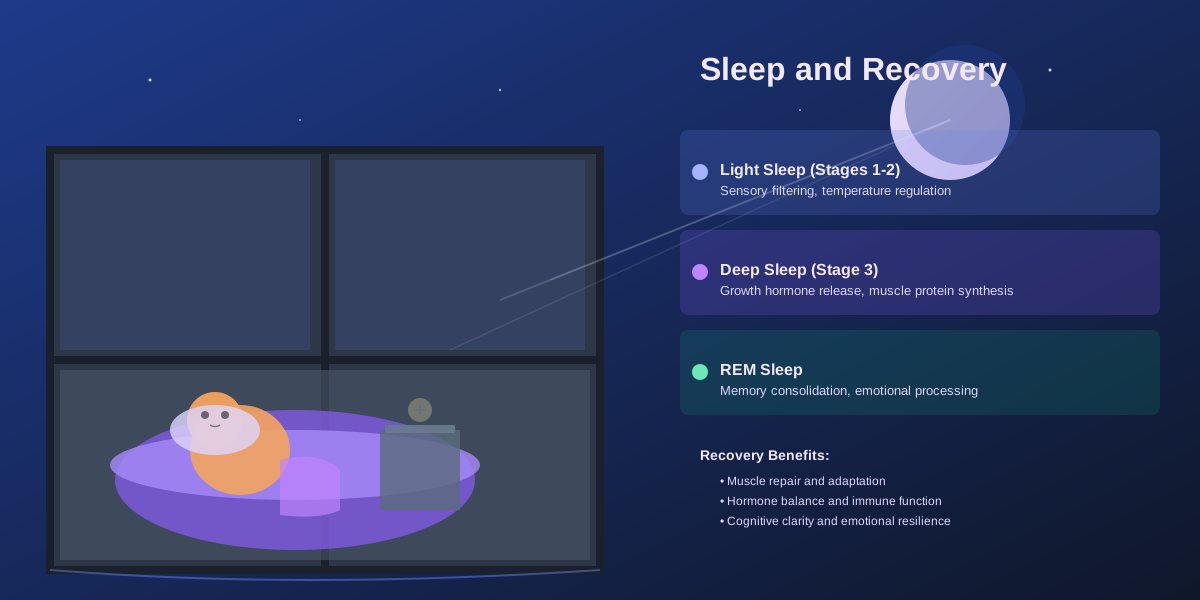
This guide reveals the science behind sleep and recovery, showing you exactly how quality rest drives physical adaptation, mental clarity, emotional resilience, and sustained high performance.
Whether you're an athlete recovering from intense training, a professional managing cognitive load, or someone navigating daily stress, understanding the sleep-recovery connection transforms how you approach rest.
What Is Sleep and Recovery?
Sleep and recovery refers to the integrated process by which your body uses sleep as the primary mechanism for physical restoration, cognitive consolidation, emotional regulation, and immune system optimization. During sleep, your brain and body undergo profound changes: growth hormones surge, muscle protein synthesis accelerates, stress hormones decline, glymphatic clearance removes metabolic waste from your brain, and neuroplasticity strengthens learning and memory. Recovery isn't limited to physical healing after exercise—it encompasses the restoration needed after any form of load: mental effort, emotional processing, immune challenges, and metabolic stress. Quality sleep is the foundation of all recovery processes.
Not medical advice.
Sleep science in 2026 recognizes that sleep quality and consistency matter more than hours alone. Deep, uninterrupted sleep is essential for tissue repair, hormonal balance, immune function, and cognitive performance. Elite athletes, busy professionals, students, and anyone managing high demands benefit equally from understanding how to optimize their sleep-recovery cycle. Research from 2025 shows that people with good sleep health are 56% more likely to report flourishing compared to those with poor sleep, underscoring sleep's role in overall wellbeing.
The recovery process during sleep involves multiple interconnected biological systems working in harmony. Your nervous system shifts from sympathetic (stressed) to parasympathetic (relaxed) dominance, allowing your body to invest energy in repair rather than vigilance. Your cardiovascular system slows, reducing heart rate and blood pressure, which decreases inflammation throughout your body. Your digestive system processes and eliminates metabolic waste accumulated during wakefulness. Your lymphatic system, your body's cleanup crew, moves more efficiently during sleep, removing toxins, dead cells, and other debris. All these systems must work uninterrupted for recovery to be complete, which is why sleep fragmentation—even brief awakenings—significantly impairs the recovery process.
Surprising Insight: Surprising Insight: Insufficient sleep is associated with decreased life expectancy—in fact, sleep stands out as a more powerful behavioral predictor of longevity than diet, exercise, or loneliness according to recent OHSU research.
The Sleep-Recovery Cycle
A cyclical diagram showing how sleep drives recovery across physical, cognitive, emotional, and immune domains
🔍 Click to enlarge
Why Sleep and Recovery Matter in 2026
In an era of constant connectivity, chronic stress, and competing demands, sleep has become the most neglected recovery tool. Yet 2025-2026 research is unequivocal: sleep is non-negotiable for health, performance, and longevity. Modern life creates unprecedented cognitive and emotional load—work pressure, social media, decision fatigue, and travel disrupt natural sleep patterns. Meanwhile, poor sleep triggers a cascade of harmful effects: elevated cortisol (stress hormone), reduced growth hormone (necessary for muscle and tissue repair), impaired glucose metabolism, weakened immune function, and decreased emotional resilience. For high performers—athletes, entrepreneurs, students, professionals—sleep is the competitive advantage they overlook.
Recovery is cumulative. A single night of poor sleep impairs cognitive function, slows muscle repair, and elevates infection risk. Chronic sleep deprivation compounds these effects, accelerating aging, increasing disease risk, and dimming your capacity for joy and engagement. Conversely, consistent quality sleep amplifies the benefits of exercise, improves learning capacity, enhances creativity, stabilizes mood, and extends your healthspan—the years you live in good health.
The sleep-recovery framework is especially critical for three groups: athletes and active people (who depend on sleep for muscle adaptation), knowledge workers (who rely on sleep for cognitive consolidation and decision-making), and anyone managing stress or recovering from illness. In 2026, sleep is recognized as essential infrastructure for wellbeing, not a luxury you squeeze in when convenient.
The Science Behind Sleep and Recovery
Sleep operates through multiple biological mechanisms, each essential for recovery. During sleep, your brain transitions through distinct stages: light sleep (stages 1-2) and deep sleep (stage 3, also called slow-wave sleep), which are further punctuated by REM (rapid eye movement) sleep. Each stage serves specific recovery functions. Deep sleep triggers release of growth hormone, which drives muscle repair, bone density, and tissue regeneration. REM sleep solidifies memories, processes emotions, and maintains brain plasticity. Light sleep allows for gradual temperature regulation and sensory gating (filtering background noise). A full sleep cycle takes roughly 90 minutes, and adults benefit from 4-6 complete cycles each night.
The glymphatic system—your brain's waste-removal mechanism—activates during sleep, clearing beta-amyloid, tau proteins, and metabolic byproducts that accumulate during wakefulness. This process is critical for cognitive health and disease prevention. Hormonal shifts during sleep are equally profound: cortisol (stress hormone) declines, allowing the body to shift from sympathetic (fight-or-flight) to parasympathetic (rest-and-digest) dominance. Testosterone, growth hormone, and thyroid hormone all peak during sleep, supporting muscle growth, metabolism, and immune function. Melatonin production is synchronized to circadian rhythm (your internal 24-hour clock), which governs sleep-wake timing, body temperature, hormone secretion, and cellular repair processes.
Sleep Stages and Recovery Functions
A breakdown of NREM and REM sleep stages and their specific contributions to physical, cognitive, and emotional recovery
🔍 Click to enlarge
Key Components of Sleep and Recovery
Sleep Duration and Consistency
Adults require 7-9 hours of sleep nightly to complete 4-6 full sleep cycles; elite athletes may benefit from 9-10 hours. Beyond quantity, consistency is critical: going to bed and waking at the same time daily—even weekends—strengthens your circadian rhythm, deepens sleep stages, and accelerates recovery. Irregular sleep schedules fragment sleep cycles, reduce deep sleep, and impair both physical and cognitive recovery. A 2025 systematic review found irregular sleep schedules are associated with adverse mental, physical, cognitive, and behavioral outcomes, while consistent schedules enhance the body's capacity for deeper, more restorative sleep.
Sleep Quality and Continuity
Quality sleep means uninterrupted progression through sleep stages without frequent awakenings. Sleep fragmentation—multiple brief awakenings throughout the night—devastates recovery even if total hours seem adequate. Factors that fragment sleep include sleep apnea, frequent bathroom trips, environmental noise, screen light, caffeine too late, or stress. Deep sleep (stage 3) is the most restorative phase, where growth hormone peaks and muscle repair accelerates. Many people get insufficient deep sleep due to poor sleep environment or sleep efficiency issues. Optimizing sleep continuity involves creating ideal conditions: dark room, cool temperature (around 65-68°F), white noise, no screens 1 hour before bed, and consistent relaxation practices.
Circadian Rhythm and Timing
Your circadian rhythm is your body's internal clock, a 24-hour cycle that governs sleep-wake timing, body temperature, hormone secretion, and cellular repair. Light exposure, meal timing, and activity regulate circadian rhythm. Morning sunlight exposure (ideally within 30-60 minutes of waking) sets your circadian rhythm, promoting evening melatonin production and nighttime sleep quality. Blue light exposure in the evening (phones, screens) suppresses melatonin and delays sleep. Traveling across time zones, shift work, and irregular schedules disrupt circadian alignment, impairing both sleep depth and duration. Protecting your circadian rhythm through consistent sleep times and light exposure is foundational for recovery.
Recovery Modalities Beyond Sleep
While sleep is primary recovery, complementary practices amplify restoration. Non-Sleep Deep Rest (NSDR), like yoga nidra or guided body scans, activates the parasympathetic nervous system and enhances recovery even during wakefulness. Physical recovery practices include massage, stretching, and cold or contrast water therapy. Nutritional recovery—consuming adequate protein, carbohydrates, and micronutrients—supports muscle repair and hormone production. Stress management through meditation, breathing exercises, or time in nature reduces cortisol, allowing deeper sleep and faster recovery. Active recovery (gentle movement, walking) maintains circulation while lowering intensity below rest threshold. Together, these modalities create a comprehensive recovery ecosystem.
Sleep Debt and Accumulation Effects
Sleep debt occurs when you accumulate a shortfall between the sleep your body needs and the sleep you actually get. Unlike financial debt, sleep debt cannot simply be 'paid back' with one long sleep session. If you average 6 hours nightly for a week (shortfall of 7-14 hours per week), sleeping 12 hours on Saturday won't fully restore that debt because your circadian rhythm has been disrupted by the irregular schedule. More problematically, chronic sleep debt compounds: nights of poor sleep trigger next-day irritability and stress, which further disrupts the following night's sleep, creating a downward spiral. Research shows that accumulating even 2-3 hours of sleep debt per week impairs cognitive performance equivalent to mild alcohol intoxication, increases accident risk, and impairs decision-making. The solution is prevention through consistent sleep rather than trying to recover from debt after the fact.
Individual Sleep Variability and Chronotypes
While 7-9 hours is the population average, individual sleep needs vary based on genetics. Some people are 'short sleepers' who function optimally on 6-7 hours, while others genuinely need 8-10 hours. More significantly, chronotype—whether you're a natural 'morning person' or 'night owl'—is largely genetic. Your chronotype influences when your circadian rhythm naturally aligns with sleep-wake cycles. Forcing a night owl to wake at 5 AM creates chronic misalignment, impairing sleep quality despite adequate duration. Conversely, forcing an early bird to stay up late fragments their sleep. Whenever possible, aligning your sleep schedule with your natural chronotype improves both sleep quality and daily performance. If schedule constraints prevent this (work demands early mornings), gradual adjustment plus light exposure management can shift your chronotype 1-2 hours over weeks.
| Population | Recommended Duration | Key Focus |
|---|---|---|
| General Adults | 7-9 hours per night | Consistency + deep sleep stages |
| Elite Athletes | 9-10 hours per night | Multiple complete cycles |
| High-Stress Professionals | 8-10 hours per night | Uninterrupted deep sleep |
| Students | 8-10 hours per night | Regular schedule + memory consolidation |
| Shift Workers | 7-9 hours per night | Darkened sleep environment + timing optimization |
| Older Adults (55+) | 7-8 hours per night | Sleep continuity + evening light reduction |
How to Apply Sleep and Recovery: Step by Step
- Step 1: Set a consistent bedtime and wake time: Choose a sleep schedule aligned with your circadian rhythm and commit to it 7 days per week. Consistency is more powerful than flexibility for recovery.
- Step 2: Optimize your sleep environment: Keep your bedroom dark (blackout curtains), cool (65-68°F), and quiet (white noise if needed). Remove screens, clocks, and distractions.
- Step 3: Limit light exposure: Get bright light exposure within 30-60 minutes of waking to anchor your circadian rhythm. Avoid blue light 1-2 hours before bed (phones, tablets, bright overhead lights).
- Step 4: Create a wind-down routine: 30-60 minutes before bed, engage in relaxing activities—reading, gentle stretching, meditation, journaling, or warm baths. This signals your body to transition to sleep.
- Step 5: Manage caffeine and food timing: Stop caffeine intake by 2 PM (half-life is 5-6 hours). Finish eating 2-3 hours before bed to avoid digestive disruption. Alcohol, while sedating initially, fragments sleep and impairs recovery.
- Step 6: Use breathwork or NSDR: Practice 4-7-8 breathing (inhale 4 counts, hold 7, exhale 8) or a 10-minute yoga nidra session before bed to activate your parasympathetic nervous system.
- Step 7: Strengthen sleep pressure naturally: Exercise regularly (30-60 minutes daily, ideally 3-4 hours before bed), manage stress through meditation or journaling, and get morning sunlight exposure.
- Step 8: Track sleep patterns: Use a sleep tracker or journal to identify what improves your sleep quality. Notice correlations between habits (caffeine, exercise, stress, light) and sleep outcomes.
- Step 9: Address underlying issues: If you snore heavily, wake frequently, or experience loud breathing, consult a sleep specialist to rule out sleep apnea or other sleep disorders.
- Step 10: Use post-sleep recovery practices: After waking, spend 10-15 minutes on light movement, hydration, and a healthy breakfast to stabilize blood sugar and optimize cognitive recovery.
Sleep and Recovery Across Life Stages
Young Adulthood (18-35)
Young adults often face high cognitive demands (studying, early career intensity) and frequently disrupt sleep through social activities, travel, or erratic schedules. This population often undervalues sleep, believing they can 'catch up' on weekends—a false economy, since circadian rhythm disruption impairs recovery even if total hours increase. Young adults benefit from establishing strong sleep habits early: consistent sleep times, optimization of sleep environment, and managing caffeine and screen use. During this life stage, sleep drives academic performance, athletic adaptation, and immune resilience. Young adults who prioritize sleep recover faster from illness, perform better in competition or exams, and build habits that protect long-term health.
Middle Adulthood (35-55)
Middle adulthood often brings competing demands—work pressure, family responsibilities, caregiving—that crowd out sleep. This life stage also sees natural shifts in sleep architecture: sleep becomes lighter, deep sleep decreases, and nighttime awakenings increase (especially in women approaching menopause). Middle adults often juggle multiple stressors that elevate cortisol and impair sleep quality. Recovery during this stage requires intentional protection: setting boundaries on work hours, managing stress through exercise and meditation, and addressing hormonal shifts (menopause, andropause). Sleep during middle adulthood is critical for metabolic health, maintaining muscle mass, and managing aging. Investing in sleep quality now directly impacts disease risk, energy, and mental resilience.
Later Adulthood (55+)
Older adults often experience age-related sleep changes: earlier sleep onset, earlier wake times, more frequent nighttime awakenings, and reduced deep sleep. These changes are partly physiological (declining melatonin production, circadian rhythm shifts) and partly situational (health conditions, medications, sleep disorders become more common). Older adults benefit from lighter evening light exposure (to protect melatonin), consistent sleep schedules, and addressing sleep apnea early (which becomes increasingly common with age). Physical activity, strength training, and cognitive engagement support sleep quality in older adults. Sleep during later adulthood is crucial for cognitive health, immune function, fall prevention, and maintaining independence. Quality sleep is one of the most modifiable factors affecting healthy aging. Additionally, managing medications that may disrupt sleep, addressing sleep disorders promptly rather than accepting them as 'normal aging,' and maintaining social engagement all support better sleep in later years.
Profiles: Your Sleep and Recovery Approach
The Athlete
- 9-10 hours sleep per night to support muscle recovery and adaptation
- Deep sleep optimization through consistent sleep times and sleep environment control
- Recognition that sleep provides as much training benefit as the training itself
Common pitfall: Training hard but sleeping inconsistently, negating much of the training's benefit and slowing adaptation.
Best move: Schedule sleep as non-negotiable training time. Prioritize consistent bedtimes and wake times. Use post-workout nutrition and gentle recovery practices to enhance sleep quality.
The Busy Professional
- 7-9 hours sleep despite high work demands and stress
- Stress management and boundary-setting to protect sleep from work intrusion
- Recognition that sleep increases focus and productivity, offsetting lost work hours
Common pitfall: Sacrificing sleep to gain more work hours, which actually decreases productivity and decision-making quality.
Best move: Set a firm cutoff for work (no screens 2 hours before bed). Use an evening wind-down routine. Prioritize sleep as the foundation of professional performance.
The Parent
- 7-9 hours sleep despite parenting demands and fragmentation
- Strategies to protect sleep from frequent interruptions (separate rooms if possible, divide night duties)
- Partner support in rotating nighttime responsibilities
Common pitfall: Accepting chronic sleep fragmentation as inevitable, leading to long-term impairment of immune function and mood.
Best move: Coordinate sleep with partner to ensure uninterrupted blocks. Use white noise to minimize disruption from children. Practice naps or NSDR during the day when possible.
The Night Owl
- Gradual circadian rhythm adjustment toward earlier sleep times aligned with work/family schedules
- Light exposure strategies to shift sleep timing
- Acceptance that extreme night owls may genuinely need different schedules
Common pitfall: Fighting your natural chronotype and forcing an incompatible sleep schedule, resulting in chronic sleep debt.
Best move: Gradually shift sleep time earlier by 15 minutes per week. Get bright light exposure earlier in the day. Negotiate flexible work arrangements if possible. Use blackout curtains in morning if sleeping later.
Common Sleep and Recovery Mistakes
Attempting to catch up on sleep by sleeping much longer on weekends disrupts your circadian rhythm and actually impairs recovery. Your body thrives on consistency. A more effective approach: maintain your consistent sleep schedule even weekends, and if you're sleep-deprived during the week, extend sleep by 30-60 minutes nightly rather than sleeping until noon on Saturday.
Using alcohol as a sleep aid is counterproductive. Alcohol initially sedates, but it dramatically fragments sleep in the second half of the night, reducing deep sleep and REM sleep. You'll wake feeling unrefreshed despite seeming to sleep longer. The same applies to many sleep medications: while they increase sleep duration, they often reduce sleep quality and deep sleep stages. Addressing the root cause of poor sleep (stress, light exposure, inconsistent timing, caffeine) is far more effective than relying on substances.
Ignoring sleep effort or worrying excessively about sleep quality actually worsens sleep. Anxiety about sleep triggers arousal, keeping your brain alert and preventing the relaxation necessary for sleep onset. Modern sleep research shows that 'sleep effort'—trying too hard to fall asleep—is a major cause of insomnia, especially for people with performance anxiety. The counterintuitive solution: practice acceptance and relaxation rather than forcing sleep, using techniques like NSDR or non-judgmental breathing instead.
Sleep Mistakes and Solutions
A comparison chart showing common sleep and recovery mistakes and evidence-based alternatives
🔍 Click to enlarge
Science and Studies
Sleep and recovery science has exploded in recent years. Here are key research findings supporting sleep's role in recovery and health:
- Stanford Medicine created an AI model (2026) that predicts over 100 health conditions from a single night's sleep, demonstrating sleep's role as a comprehensive health biomarker.
- OHSU Research (2025) shows insufficient sleep is associated with decreased life expectancy, impacting longevity more than diet, exercise, or loneliness—second only to smoking.
- A 2025 systematic review in Sleep Health found that sleep regularity (consistent schedules) is strongly associated with better mental, physical, cognitive, and behavioral outcomes.
- Research in Neuron (2025) found that post-stress sleep facilitates recovery, reduces anxiety, and enhances stress resilience—sleep is an active recovery mechanism, not passive rest.
- Frontiers in Physiology (2025) meta-analysis confirmed sleep deprivation impairs athletic performance and increases perceived exertion, while adequate sleep accelerates muscle recovery and adaptation.
- National Sleep Foundation's 2025 Sleep in America poll found 72% of people with good sleep health report flourishing, compared to only 46% with poor sleep health.
Your First Micro Habit
Start Small Today
Today's action: Tonight, set your bedtime 15 minutes earlier than usual and place your phone outside your bedroom. Spend those 15 minutes on a relaxation practice: 4-7-8 breathing, journaling, or gentle stretching. Notice how this small change affects your morning clarity.
This micro habit addresses two powerful factors: advancing sleep time (increasing total sleep opportunity) and removing the blue light source that suppresses melatonin. Small changes compound: 15 extra minutes of quality sleep daily equals 1.75 extra hours per week—enough to shift recovery significantly.
Keep quitting habit apps after a missed day? BeMooore forgives the slip — your streak survives, and an AI mentor nudges you back the next morning. Free on iOS.
Quick Assessment
How would you describe your current sleep pattern?
Your sleep consistency and duration directly predict your recovery capacity and overall health. Regular patterns strengthen circadian rhythm and deep sleep, while irregular or short sleep impairs every recovery system.
What is your biggest barrier to quality sleep?
Identifying your primary barrier lets you target the highest-impact change. Screen reduction and environmental optimization often yield immediate improvements, while stress-management requires more sustained practice.
How do you currently approach recovery outside of sleep?
Comprehensive recovery involves sleep plus complementary practices: stress management, nutrition, movement, and NSDR. Each layer amplifies the others. Starting with one additional recovery habit (e.g., post-workout protein, evening stretching) compounds sleep's benefits.
Take our full assessment to get personalized recommendations for optimizing your sleep and recovery.
Discover Your Style →Next Steps
Start by auditing your current sleep: for one week, track your bedtime, wake time, sleep quality (1-10 scale), and morning alertness. Identify patterns—does consistent timing improve quality? Does eliminating evening screens help? Does earlier bedtime increase deep sleep? This personalized data is far more valuable than generic recommendations. Consider using a simple sleep diary or a sleep tracking app to capture objective metrics like wake-after-sleep-onset (how long you lie awake) and subjective measures like how rested you feel.
Choose one change to implement first. If you're sleep-deprived, advance bedtime by 15 minutes. If you wake frequently, optimize your bedroom (darkness, temperature, white noise). If you struggle with anxiety at bedtime, add a 10-minute breathing or NSDR practice. Small, consistent changes compound far more effectively than attempting multiple overhauls. After 2-3 weeks, evaluate the impact and add your next habit. Expect that changes take 7-14 days to show effects; your body needs time to adjust to new patterns.
Beyond individual changes, consider your broader recovery ecosystem. If sleep alone isn't delivering the recovery you need, layer in complementary practices: post-workout protein intake (within 30-60 minutes of training), daily stress management (meditation, journaling, time in nature), and morning sunlight exposure to anchor your circadian rhythm. These together create momentum toward comprehensive recovery that amplifies sleep's benefits. Remember that recovery is a long-term investment, not a short-term hack. Consistent sleep quality compounds month after month into measurable improvements in energy, mood, immune resilience, and longevity.
Get personalized guidance with AI coaching to optimize your sleep and recovery.
Start Your Journey →Research Sources
This article is based on peer-reviewed research and authoritative sources. Below are the key references we consulted:
Related Glossary Articles
Frequently Asked Questions
How much sleep do I really need?
Adults generally need 7-9 hours of sleep nightly to complete 4-6 full sleep cycles. Elite athletes and highly stressed individuals often benefit from 9-10 hours. The best measure is how you feel: consistent quality sleep should leave you alert, focused, and resilient during the day. Track your sleep duration for a week and note your cognitive function, mood, and energy—this reveals your personal optimal range.
Can I catch up on sleep by sleeping longer on weekends?
Partially, but this approach has major drawbacks. Your circadian rhythm synchronizes to consistent sleep times; irregular schedules disrupt this rhythm and reduce deep sleep quality even if total hours increase. A more effective strategy: maintain your consistent schedule, and if sleep-deprived during the week, extend sleep by 30-60 minutes nightly rather than crashing on weekends. This maintains circadian alignment while increasing recovery.
What's the relationship between exercise and sleep?
Regular exercise improves sleep quality, increases deep sleep, and strengthens circadian rhythm. Exercise increases sleep pressure (body temperature rise and subsequent fall promotes sleep onset). However, exercise timing matters: intense exercise 3-4 hours before bed promotes sleep, while exercise immediately before bed can delay sleep onset due to elevated body temperature and alertness. Aim for morning or afternoon training for optimal sleep benefit.
Is NSDR (Non-Sleep Deep Rest) a replacement for sleep?
No, NSDR is a powerful complement to sleep, not a replacement. Practices like yoga nidra and guided body scans activate your parasympathetic nervous system and promote recovery during wakefulness, reducing overall recovery debt. A 10-20 minute NSDR session might provide recovery equivalent to 30-60 minutes of additional sleep. However, nothing fully replaces sleep's unique functions (glymphatic clearance, muscle protein synthesis, memory consolidation). Use NSDR to enhance recovery, not to justify insufficient sleep.
How do I know if I have a sleep disorder?
Common signs include: consistent snoring, gasping for breath during sleep, persistent difficulty falling or staying asleep despite good sleep hygiene, excessive daytime sleepiness despite adequate sleep duration, or significant insomnia lasting more than 3 weeks. If you experience these symptoms, consult a sleep specialist. Sleep disorders like sleep apnea, insomnia, and restless legs syndrome are highly treatable, and early intervention prevents long-term health consequences.
Does napping help recovery, or does it disrupt nighttime sleep?
Strategic napping enhances recovery when done correctly. Short naps (10-20 minutes) in early afternoon (1-3 PM) promote alertness and don't disrupt nighttime sleep. Longer naps (60-90 minutes) allow for one complete sleep cycle including deep sleep and REM, significantly enhancing recovery without sleep inertia if timed properly. However, naps after 3-4 PM delay nighttime sleep and impair sleep quality. The key is using naps to supplement, not replace, consistent nighttime sleep. For people with high recovery demands (athletes, new parents), strategic napping is a valuable tool; for others, protecting nighttime sleep consistency is more important.
What role does temperature play in sleep quality?
Core body temperature drop is a critical trigger for sleep onset. Your body naturally cools about 2-3 hours before sleep, and this temperature drop facilitates sleep. A cool bedroom (65-68°F is optimal for most) supports this process, while a hot room inhibits sleep. Taking a warm bath or shower 2-3 hours before bed paradoxically enhances sleep because the subsequent drop in body temperature after leaving the bath/shower triggers stronger sleep onset. Conversely, being too cold fragments sleep. The sweet spot for most people is a cool bedroom with warm bedding, which allows body temperature to regulate optimally without disruption.
Take the Next Step
Ready to improve your wellbeing? Take our free assessment to get personalized recommendations based on your unique situation.
- Discover your strengths and gaps
- Get personalized quick wins
- Track your progress over time
- Evidence-based strategies