Sleep Science
What happens to your brain when you fall asleep? Every night, your body undergoes a remarkable biological transformation that fundamentally shapes your memory, mood, and ability to think clearly. Sleep isn't simply downtime—it's an active, highly organized biological process orchestrated by your brain's sophisticated neural architecture. During sleep, your brain cycles through distinct stages, each serving critical functions from memory consolidation to cellular repair. Understanding sleep science reveals how this nightly rest determines your waking performance, emotional resilience, and long-term health. This guide explores the neuroscience of sleep, circadian rhythms, and evidence-based insights to help you harness sleep's full restorative power.
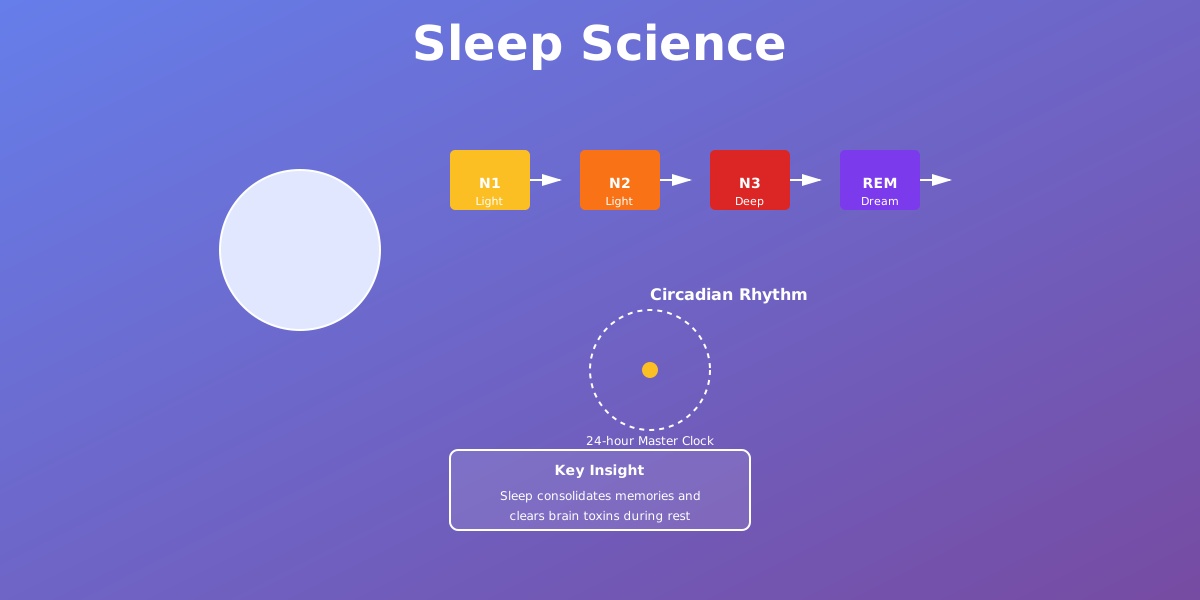
Sleep science reveals that your brain doesn't rest during sleep—it actively consolidates memories, clears toxic proteins, and rebuilds neural connections while you dream.
Your circadian rhythm, controlled by a brain region called the suprachiasmatic nucleus, acts as your body's master clock, synchronizing sleep timing with light-dark cycles and internal biological processes.
What Is Sleep Science?
Sleep science is the interdisciplinary study of sleep physiology, brain activity during sleep, memory consolidation, and the regulation of sleep-wake cycles through biological mechanisms. It encompasses neuroscience, chronobiology, psychology, and medicine to understand how sleep works at the cellular, behavioral, and systemic levels. Sleep scientists use advanced tools like electroencephalography (EEG), functional magnetic resonance imaging (fMRI), and polysomnography to measure brain waves, track eye movements, and monitor muscle activity during different sleep stages. This research reveals that sleep is not a passive state but an active, essential biological process with distinct stages that serve different critical functions.
Not medical advice.
Sleep science bridges our understanding of why sleep is absolutely essential for human survival and performance. Research from 2024-2025 shows that sleep deprivation impairs cognitive function within hours, while chronic sleep loss increases risk of cardiovascular disease, metabolic dysfunction, and neurodegenerative conditions. Unlike waking consciousness, sleep comprises multiple distinct stages characterized by different brain wave patterns, neurotransmitter levels, and physiological functions. The field studies how sleep duration, quality, and timing affect aging, disease resistance, emotional regulation, athletic performance, and academic achievement. Recent neuroscience discoveries highlight the glymphatic system—a brain-wide network that actively flushes out toxic proteins like amyloid-beta and tau during sleep, with this clearing mechanism slowing by up to 90% during sleep deprivation.
Surprising Insight: Surprising Insight: Your brain doesn't rest during sleep—in fact, certain brain regions show more activity during REM sleep than during wakefulness. Meanwhile, the glymphatic system increases cerebrospinal fluid flow through the brain by up to 60% during deep sleep, clearing metabolic waste products that accumulate during waking hours.
Sleep Stage Architecture and Brain Wave Patterns
Visual representation of NREM stages (N1, N2, N3) and REM sleep showing progression through 90-minute cycles, corresponding EEG patterns, and physiological characteristics of each stage.
🔍 Click to enlarge
Why Sleep Science Matters in 2026
Sleep science matters now more than ever because sleep deprivation has become an epidemic. An estimated 33% of adults report inadequate sleep, while shift work, screen use, and busy lifestyles systematically disrupt natural circadian rhythms. Understanding sleep science empowers you to protect your cognitive performance, emotional stability, and physical health in a world increasingly hostile to healthy sleep. The science shows that sleep is not a luxury but a biological necessity on par with food, water, and oxygen.
The health consequences of poor sleep knowledge are staggering. Chronic sleep deprivation increases risk of heart disease by 48%, stroke by 15%, and dementia by up to 27% in older adults. Poor sleep quality impairs memory consolidation, making it harder to learn and retain information—a critical concern for students and professionals. Sleep science reveals that one night of poor sleep degrades cognitive performance as much as consuming three alcoholic drinks. For mental health, sleep deprivation amplifies anxiety, depression, and emotional reactivity while reducing your capacity for emotional regulation and resilience.
The 2025 research advances in circadian biology reveal how light timing, meal patterns, exercise timing, and social schedules synchronize or desynchronize your master clock. Understanding these mechanisms allows you to optimize sleep through lifestyle choices rather than relying only on medication. Sleep science also shows that sleep quality matters as much as quantity—a person sleeping 7 hours of fragmented, low-quality sleep experiences less cognitive benefit than someone sleeping 6 hours of consolidated, deep sleep. This distinction revolutionizes how we approach sleep improvement.
The Science Behind Sleep Science
The neuroscience of sleep reveals a cascade of coordinated brain changes that generate different sleep stages. When you fall asleep, your brain progressively shifts from the high-frequency, desynchronized activity of wakefulness to the slower, more synchronized waves of sleep. This shift involves changing levels of key neurotransmitters: acetylcholine increases during REM, while norepinephrine and serotonin decrease. In deep sleep, your brain generates large, slow delta waves (1-4 Hz) that coordinate memory consolidation, synaptic plasticity, and cellular restoration. These different neurochemical states are not random—they're precisely orchestrated by brainstem regions including the pons, medulla, and midbrain.
Sleep is regulated by two interacting biological processes that work together to determine when you feel sleepy and when you feel alert. The first is homeostatic sleep pressure (process S), which builds progressively during wakefulness and is dissipated during sleep. The longer you're awake, the greater your sleep pressure accumulates, creating a drive to sleep. The second process is your circadian rhythm (process C), which provides a biological timing signal independent of how long you've been awake. Your circadian rhythm is controlled by the suprachiasmatic nucleus (SCN), a tiny brain region containing about 20,000 neurons that acts as your body's master clock. The SCN receives light input from your eyes and synchronizes it with the 24-hour external light-dark cycle. Together, these two processes create your sleep-wake pattern: sleep pressure builds throughout the day while your circadian rhythm enhances alertness during daylight and promotes sleepiness at night.
Two-Process Sleep Regulation Model
Illustrates homeostatic sleep pressure accumulating throughout waking hours and dissipating during sleep, combined with circadian rhythm oscillation showing peak alertness during day and enhanced sleep drive at night.
🔍 Click to enlarge
Key Components of Sleep Science
NREM Sleep Stages (N1, N2, N3)
Non-rapid eye movement (NREM) sleep comprises three progressive stages that transition you from wakefulness into deep sleep. Stage N1 lasts 2-5 minutes as your brain shifts from wakefulness to sleep—you may experience hypnic jerks (sudden muscle spasms) or hypnagogic imagery (fleeting visual experiences). Your brain generates theta waves (4-8 Hz) and alpha waves (8-12 Hz), and your core temperature begins dropping. Stage N2, lasting 10-25 minutes, shows sleep spindles (brief bursts of 12-16 Hz brain activity) and K-complexes (sharp, high-amplitude waves). Sleep spindles are crucial for memory consolidation—stronger spindles correlate with better learning and intelligence. During N2, your heart rate slows, body temperature drops further, and eye movements cease. Stage N3, or slow-wave sleep (SWS), is the deepest sleep stage lasting 20-40 minutes, characterized by large delta waves (1-4 Hz) reflecting synchronized activity across cortical regions. During N3, your body releases growth hormone, blood pressure drops, body temperature reaches its minimum, and physical restoration intensifies. NREM sleep specializes in consolidating declarative memories (facts, names, dates) and procedural memories (skills and habits), and researchers believe slow-wave sleep is the 'workhorse' for memory storage and synaptic strengthening.
REM Sleep and Dreaming
Rapid eye movement (REM) sleep accounts for 20-25% of total sleep time in adults and represents the most cognitively active sleep stage. During REM, your brain shows high-frequency beta and gamma activity (16-50 Hz) similar to waking consciousness, yet you experience vivid, emotionally intense dreams while your voluntary muscles remain paralyzed. This paradox—activated brain, immobilized body—makes REM unique among sleep stages. REM episodes last 10-30 minutes and occur primarily in the second half of the night after several NREM cycles. Your eyes move rapidly beneath closed eyelids, your heart rate increases, body temperature rises, and neurotransmitter profiles shift dramatically with acetylcholine increasing while norepinephrine plummets. REM sleep specializes in processing emotional memories, creative problem-solving, consolidating procedural skills, and integrating new information with existing knowledge networks. Neuroscience research shows that REM sleep facilitates the restructuring of memories—during REM, the hippocampus 'replays' daily experiences while the brain's emotional centers reorganize their significance. This explains why REM sleep is critical for emotional regulation and creative insight.
Circadian Rhythm and the Master Clock
Your circadian rhythm is an intrinsic, self-sustaining biological oscillation lasting approximately 24 hours that drives daily variations in sleep-wake timing, body temperature, hormone secretion, and metabolism. The suprachiasmatic nucleus (SCN) in the hypothalamus generates this rhythm by coordinating the activity of about 20,000 neurons that fire in coordinated bursts. The SCN contains specialized photoreceptor cells that detect light signals from the retina, allowing it to synchronize your internal clock with the external light-dark cycle. During daytime, light exposure sends signals to the SCN that inhibit melatonin production, promoting wakefulness. As evening approaches and light decreases, the SCN triggers melatonin release from the pineal gland, creating sleepiness. The circadian rhythm also regulates cortisol (peaks in early morning, promoting wakefulness), core body temperature (peaks in late afternoon, drops at night), and growth hormone (peaks during deep sleep). Your circadian clock is not fixed to exactly 24 hours—it has a natural period slightly longer than 24 hours in most people (about 24.25 hours), which is why you naturally drift toward staying up later without consistent light cues to reset your clock daily. Light exposure, particularly in the morning, is the most powerful resetting stimulus.
Memory Consolidation and the Glymphatic System
Memory consolidation during sleep is the process by which newly learned information is transformed from fragile, temporary representations into stable, long-term memories integrated with existing knowledge. Sleep-dependent memory consolidation occurs through coordinated activity across multiple brain regions. During slow-wave sleep, the hippocampus (a brain structure critical for learning) reactivates recent memories in compressed form, while the cortex receives these signals and gradually incorporates them into long-term storage networks. This process involves synaptic plasticity—the physical strengthening of connections between neurons that encode memories. REM sleep contributes differently by reorganizing memories, extracting rules and patterns, and integrating emotional significance. The glymphatic system is a brain-wide network of perivascular channels lined with glial cells that facilitates the circulation of cerebrospinal fluid (CSF) through the brain tissue. During sleep, interstitial space (the gaps between brain cells) expands by approximately 60%, allowing CSF to flow much more readily through the brain and flush out metabolic waste products. This cleaning function is critical because during waking hours, brain cells accumulate toxic proteins including amyloid-beta and tau—proteins heavily implicated in Alzheimer's disease and neurodegeneration. Research demonstrates that amyloid-beta levels drop 10-30% during sleep but accumulate during extended wakefulness. Sleep deprivation effectively pauses this waste clearance, allowing toxic proteins to accumulate and increasing neurodegeneration risk.
| Sleep Stage | Duration per Cycle | Brain Activity & Waves |
|---|---|---|
| N1 (Light Sleep) | 2-5 min | Theta (4-8 Hz) and Alpha (8-12 Hz) waves; transitional state from wake |
| N2 (Light Sleep) | 10-25 min | Sleep spindles (12-16 Hz); K-complexes; memory consolidation begins |
| N3 (Deep/Slow-Wave) | 20-40 min | Delta waves (1-4 Hz); high-amplitude synchronized activity; physical restoration |
| REM Sleep | 10-30 min | Beta/Gamma (16-50 Hz); rapid eye movements; vivid dreams; emotional processing |
How to Apply Sleep Science: Step by Step
- Step 1: Track your current sleep pattern for one week by noting bedtime, wake time, and subjective sleep quality each morning. Use this baseline to identify whether you have consistent circadian timing, fragmented sleep, or adequate sleep duration.
- Step 2: Identify your chronotype (whether you're naturally a morning person or night person) by observing when you naturally feel most alert without alarm clocks or caffeine. Your chronotype partly determines whether your circadian rhythm aligns optimally with a standard work schedule.
- Step 3: Establish consistent sleep and wake times—the same time every day, even weekends—to reinforce and stabilize your circadian rhythm. This consistency synchronizes your SCN with external timing cues and improves sleep consolidation within 2-3 weeks.
- Step 4: Optimize morning light exposure by getting bright light (preferably sunlight) within 30-60 minutes of waking. Light in the morning resets your circadian clock, ensuring your melatonin drops promptly and your alertness peaks at optimal times.
- Step 5: Manage light exposure in the afternoon and evening by reducing blue light screen exposure after 3 PM and using amber-tinted glasses or screens 2-3 hours before bed. Evening light exposure delays melatonin release and shifts your circadian rhythm later, making sleep initiation harder.
- Step 6: Maintain consistent meal timing, particularly your largest meal at lunch and lighter meals in the evening. Meal timing provides secondary circadian cues (called food-entrainable oscillators) that synchronize peripheral clocks throughout your body.
- Step 7: Implement a pre-sleep wind-down routine 30-60 minutes before bed involving relaxing activities like reading, gentle stretching, meditation, or journaling. This allows your body temperature and arousal level to drop gradually, supporting the N1 transition into sleep.
- Step 8: Keep your bedroom cool (around 65-68°F or 18-20°C), dark, and quiet. Your core body temperature naturally drops during sleep, and a cool environment facilitates this; darkness promotes melatonin production.
- Step 9: Avoid caffeine after early afternoon (typically 2-3 PM) since caffeine blocks adenosine receptors and artificially suppresses sleep pressure buildup. Caffeine has an 8-hour half-life, meaning half the dose remains active after 8 hours.
- Step 10: Practice nightly sleep tracking using a sleep app or wearable device to monitor sleep stages, sleep efficiency (actual sleep time divided by time in bed), and trends over weeks and months. This feedback helps you identify which interventions most improve your sleep quality.
Sleep Science Across Life Stages
Young Adulthood (18-35)
Young adults typically have the most robust sleep architecture, with longer, deeper slow-wave sleep and more efficient circadian rhythms. However, this life stage often involves the worst sleep habits: late-night socializing, inconsistent sleep schedules, high caffeine and alcohol use, and screen time before bed. Students experience particular sleep deprivation during exams. Young adults often underestimate sleep's importance, believing they can compensate for poor sleep through willpower. In reality, sleep deprivation during these years impacts memory consolidation (critical for learning), mood regulation, and long-term health trajectories. The research shows that inadequate sleep during young adulthood increases future dementia risk by up to 30%. Young adults benefit most from establishing consistent sleep routines now, protecting their sleep schedule as aggressively as work or study commitments, and understanding that sleep is not wasted time but foundational for achievement.
Middle Adulthood (35-55)
Middle-aged adults experience gradual changes in sleep architecture: slower, less robust circadian rhythms; reduced slow-wave sleep (about 20% less than young adults); and increased nighttime awakenings. Many report taking longer to fall asleep and waking more frequently at night. Work stress, family responsibilities, perimenopause or menopause (for women), and age-related health changes all impact sleep. The circadian amplitude (the strength of the biological clock signal) begins declining around age 40-50, making sleep more vulnerable to disruption. However, understanding sleep science allows middle-aged adults to apply strategic interventions: maintaining consistent sleep timing becomes even more important; managing light exposure optimizes the weakening circadian signal; and paying attention to slow-wave sleep quality (through factors like temperature control and sleep stage monitoring) compensates for age-related reductions. Sleep during middle age is when accumulated sleep debt from young adulthood becomes particularly consequential—research shows that poor sleep in this period accelerates cognitive aging and increases metabolic disease risk.
Later Adulthood (55+)
Older adults face more pronounced sleep architecture changes: substantial reductions in slow-wave sleep, increased sleep fragmentation, circadian rhythm dysfunction, and higher rates of sleep disorders like sleep apnea. Circadian rhythm amplitude continues declining, making sleep-wake cycles more fragile and vulnerable to disruption from travel, irregular schedules, or schedule changes. Many older adults report waking multiple times nightly and struggling with early morning awakenings. This is partly due to natural aging of the SCN, reduced melatonin production, and changes in neurotransmitter systems. However, sleep science offers hope: maintaining consistent sleep timing remains powerful even in older age; bright light exposure in morning becomes even more critical as circadian sensitivity to light increases (paradoxically); and managing circadian synchronizers (light, meals, exercise timing) can substantially improve sleep quality. Older adults also benefit from addressing medical factors: optimizing treatment of sleep apnea, managing medications that disrupt sleep, and treating circadian rhythm disorders. Research shows that improved sleep quality in older adults reduces dementia risk, improves cognitive function, and enhances quality of life.
Profiles: Your Sleep Science Approach
The Inconsistent Sleeper
- Consistent sleep-wake timing to stabilize circadian rhythm
- Understanding that circadian consolidation takes 2-3 weeks
- Progressive wind-down routines aligned with their natural rhythm
Common pitfall: Attempting to 'catch up' on weekends by sleeping much later, which destabilizes the SCN and makes Monday's sleep even worse
Best move: Maintain consistent timing even on weekends; if needing extra sleep, add 30-60 minutes rather than 2-3 hours
The Sleep-Deprived Professional
- Understanding that sleep is as critical as work output
- Strategies to protect sleep despite busy schedules
- Recognition that sleep improves work performance more than staying up longer
Common pitfall: Treating sleep as negotiable; sacrificing sleep for work, assuming more waking hours mean more productivity
Best move: Calculate that 7-9 hours of sleep + 15 waking hours is more productive than 5 hours sleep + 19 waking hours; schedule sleep like an essential meeting
The Late-Night Screen User
- Understanding blue light's melatonin suppression effect
- Practical screen management strategies (amber filters, time limits)
- Replacement activities that prepare the brain for sleep
Common pitfall: Browsing screens until sleep-deprived enough to fall asleep, then wondering why sleep quality is poor
Best move: Create a 'digital sunset' 2-3 hours before bed; use blue light filters after 3 PM; replace screens with reading, journaling, or meditation
The Shift Worker
- Understanding circadian disruption mechanisms
- Strategic light exposure and meal timing to re-entrain circadian rhythm
- Sleep fragmentation management techniques
Common pitfall: Accepting disrupted sleep as inevitable; failing to use light exposure strategically to optimize the circadian rhythm for new shift schedules
Best move: Use bright light exposure to reset your SCN toward your new sleep schedule; time meals to reinforce new circadian phase; consider gradual schedule transition before major shift changes
Common Sleep Science Mistakes
The most prevalent sleep mistake is assuming sleep duration is the only metric that matters. Many people pride themselves on functioning on 5-6 hours of sleep, not realizing that chronic sleep deprivation impairs cognitive performance so gradually that the person adapts without noticing the deficit. Research consistently shows that 5-6 hours produces cognitive impairment comparable to consuming three alcoholic drinks, yet individuals often report feeling 'fine.' What matters is not how you feel but objective performance: on 5-6 hours of sleep, reaction time slows, memory consolidation declines, emotional regulation suffers, and decision-making deteriorates. Sleep quality matters equally—seven hours of fragmented, low-quality sleep (frequent awakenings, little deep sleep) provides substantially less cognitive benefit than 6-7 hours of consolidated, uninterrupted sleep with adequate slow-wave sleep. The solution is tracking not just sleep duration but sleep architecture using wearables or apps that estimate sleep stages.
The second major mistake is weekend sleep compensation. After a week of insufficient sleep, people try to 'catch up' by sleeping 10-12 hours on the weekend. While some recovery occurs, this strategy backfires by destabilizing your circadian rhythm. Your SCN is entrained by consistent sleep-wake timing; weekend oversleeping shifts your circadian phase later, making Sunday evening sleeplessness worse and Monday's sleep debt even deeper. The circadian disruption from weekend schedule changes also increases depression risk, metabolic problems, and cardiovascular events—a phenomenon called 'social jet lag.' The solution is maintaining consistent sleep timing daily, adjusting wake time gradually by 15-30 minute increments if changes are necessary, and treating sleep consistency as non-negotiable even during vacation.
The third mistake is using alcohol or sleeping pills as sleep solutions. Alcohol initially promotes sleepiness by suppressing the central nervous system, but it dramatically impairs sleep quality: it suppresses REM sleep, causes frequent arousals in the second half of the night, and reduces slow-wave sleep. You may fall asleep faster but experience worse sleep architecture and wake feeling less rested. Sedative medications can disrupt sleep architecture similarly, and chronic use creates dependence. Sleep science shows that behavioral interventions—consistent sleep timing, light exposure management, temperature control, and stress reduction—typically outperform medications for long-term sleep quality. When medications are necessary, they're best used temporarily during acute stress while building behavioral strategies for sustainable improvement.
Sleep Deprivation Effects on Brain and Body Over Time
Timeline showing cumulative effects of sleep deprivation: 24 hours (impaired reaction time), 48 hours (memory consolidation deficit), 72+ hours (hallucinations, microsleep episodes), plus chronic effects (dementia risk, metabolic dysfunction).
🔍 Click to enlarge
Science and Studies
Sleep science is one of the most robust and rapidly advancing fields in neuroscience. Thousands of peer-reviewed studies from 2024-2025 provide evidence supporting the mechanisms described here. Key research comes from leading institutions including the National Institute of Neurological Disorders and Stroke (NINDS), Stanford Sleep and Circadian Neurobiology Lab, UC Berkeley Sleep and Neuroimaging Lab, and universities worldwide. The evidence base is particularly strong on memory consolidation, circadian rhythm control, sleep deprivation consequences, and the glymphatic system. Studies use multiple complementary methodologies: polysomnography (gold standard sleep recording combining EEG, eye movement tracking, and muscle monitoring), functional brain imaging (fMRI showing which brain regions activate during different sleep stages), molecular biology techniques measuring neurotransmitters and proteins, and large epidemiological studies tracking sleep patterns and health outcomes in thousands of people.
- NCBI/NIH: 'Physiology, Sleep Stages' and 'Sleep Physiology - Sleep Disorders and Sleep Deprivation' providing comprehensive peer-reviewed reference material on sleep neuroscience
- Frontiers in Sleep Research and Neuroscience (2024-2025): Recent studies on slow-wave sleep health implications, circadian rhythm regulation, and sleep's role in memory consolidation
- Nature Neuroscience and npj Biological Timing and Sleep: Advanced research on circadian system coordination, molecular clock genes, and sleep-dependent brain plasticity
- Yale School of Medicine and Harvard Medical School: Research on memory consolidation mechanisms and sleep's effect on cognitive function across the lifespan
- Stanford Sleep Medicine and Neurobiology programs: Leading research on circadian rhythm disorders, sleep architecture changes with age, and interventions to optimize sleep quality
Your First Micro Habit
Start Small Today
Today's action: Set a consistent wake time tomorrow morning and maintain it for 7 consecutive days—the same time every day, including weekends. This single change, more than any other, stabilizes your circadian rhythm. Even if you sleep poorly that night, wake at your set time the next morning. After 7 days, notice changes in sleep timing and quality.
Consistent wake time is the most powerful entrainment signal for the suprachiasmatic nucleus. When you wake at the same time daily, your master clock synchronizes, naturally shifting your bedtime earlier on subsequent nights. Within 2-3 weeks of consistent timing, sleep onset time stabilizes and sleep quality improves noticeably. This creates a foundation on which all other sleep improvements build.
Track your sleep wake time and sleep quality daily and get personalized AI coaching with our app.
Quick Assessment
How consistent are your current sleep and wake times across the week?
Circadian rhythm stability depends on sleep-wake consistency. Greater variation predicts weaker circadian entrainment and poorer sleep quality. Even a consistent sleep time (going to bed at the same time) is less powerful than consistent wake time, so prioritize regular waking.
What describes your sleep quality perception?
Sleep quality involves sleep architecture (proportion of deep vs light sleep), fragmentation, and restorative value. Waking frequently or feeling unrefreshed despite adequate duration suggests REM or deep sleep disruption. Addressing underlying causes (sleep apnea, stress, circadian misalignment) often improves quality more than extending duration.
How does your evening light exposure compare to morning light exposure?
Light is your circadian rhythm's primary control signal. Morning light advances your clock (shifts sleep earlier), while evening light delays it (shifts sleep later). Imbalanced light exposure—weak morning signal, strong evening signal—creates circadian desynchronization, poor sleep timing, and fragmented sleep. Prioritizing morning light and minimizing evening blue light produces rapid sleep improvements.
Take our full assessment to identify your personalized sleep optimization recommendations.
Discover Your Sleep Pattern →Next Steps
Your next step is implementing the consistency foundation: choose a specific wake time, and commit to waking at that time daily for one week. This single intervention, more than any supplement or sleep tracker, stabilizes your circadian rhythm and improves sleep quality within days. Track what happens to your sleep timing and how you feel. Notice whether your natural sleep onset time shifts earlier on subsequent nights as your SCN re-entrains. After establishing this wake time consistency, layer on the other interventions: morning light exposure, evening light reduction, meal timing consistency, and bedroom environment optimization.
Deep sleep science understanding reveals that sleep is not a luxury or indulgence but a biological necessity as essential as food and water. Every cognitive task, emotional regulation, memory formation, and health outcome depends on sleep. The neuroscience is unambiguous: chronic sleep deprivation degrades brain function, accelerates aging, and increases disease risk. By understanding sleep's mechanisms—from circadian rhythm control to glymphatic clearance—you can optimize your sleep strategically rather than hoping for improvement. The most powerful sleep intervention is not expensive; it's free: consistent sleep timing aligned with your biology. Implement this foundation, monitor your sleep quality, and notice how better sleep transforms your waking performance, mood, and health.
Get personalized sleep recommendations based on your sleep science assessment profile.
Start Optimizing Your Sleep →Research Sources
This article is based on peer-reviewed research and authoritative sources. Below are the key references we consulted:
Related Glossary Articles
Frequently Asked Questions
How many hours of sleep do most people actually need?
Research consistently shows that most adults require 7-9 hours nightly for optimal cognitive and physical function. Some individuals (about 5% of the population) are genuine 'short sleepers' who function well on 6 hours, while others ('long sleepers,' about 5%) thrive on 9-10 hours. Your individual need depends on genetics, age, and lifestyle demands. The key metric is not just hours but sleep quality: 7 hours of consolidated, uninterrupted sleep with adequate deep sleep provides more benefit than 9 hours of fragmented sleep with minimal slow-wave activity.
Why do I feel tired if I sleep 8 hours but a coworker functions fine on 6 hours?
Differences in sleep need are partly genetic and partly behavioral. Your coworker may be a genuine short sleeper, but more likely they've adapted to chronic sleep deprivation—they feel 'fine' because their brain has normalized the impaired state. Objective testing would likely reveal cognitive deficits they don't subjectively notice. Additionally, sleep quality differs dramatically between individuals: two people sleeping 7 hours may have vastly different proportions of slow-wave sleep, REM sleep, and fragmentation. If you feel tired on 8 hours, examine sleep quality (using a sleep app), sleep timing consistency, and circadian alignment rather than assuming you need more duration.
Can sleep deprivation be made up on weekends?
Partial recovery is possible, but the strategy is limited and backfires circularly. One night of good sleep can partially recover from 1-2 nights of poor sleep, but chronic weekday sleep deprivation cannot be fully compensated by weekend sleep. More importantly, sleeping much later on weekends destabilizes your circadian rhythm, making Monday-Friday sleep worse. Research on 'social jet lag' (weekday-weekend circadian misalignment) shows it increases depression risk, metabolic dysfunction, and cardiovascular events. The solution is prioritizing consistent sleep timing daily rather than attempting weekend recovery.
Is REM sleep or deep sleep more important for memory and learning?
Both are essential but for different memory types. Slow-wave sleep (deep NREM sleep) is critical for consolidating declarative memories—facts, names, dates, semantic knowledge. REM sleep specializes in consolidating procedural memories (skills, motor learning), extracting rules and patterns, and integrating new information with existing knowledge networks. For learning effectiveness, both sleep stages matter; if either is disrupted, learning suffers. During intensive learning periods (exams, skill acquisition), the brain naturally increases both slow-wave and REM sleep, showing that your brain recognizes learning demands and adapts sleep architecture accordingly.
Does my circadian rhythm really matter if I get enough total sleep hours?
Yes, circadian alignment matters independently of total sleep duration. Sleeping 8 hours at circadianly-aligned times (sleeping 11 PM-7 AM when your chronotype matches) produces better cognitive function than sleeping 8 hours at misaligned times (sleeping 6 AM-2 PM). Circadian misalignment—common in shift workers, jet lag, and social jet lag—creates metabolic dysfunction, mood problems, and cognitive decline even with adequate sleep duration. The suprachiasmatic nucleus controls not just sleep timing but also hormone secretion, metabolism, immune function, and gene expression throughout your body; misalignment disrupts all these systems. The solution is protecting circadian alignment through consistent sleep-wake timing and strategic light exposure.
Take the Next Step
Ready to improve your wellbeing? Take our free assessment to get personalized recommendations based on your unique situation.
- Discover your strengths and gaps
- Get personalized quick wins
- Track your progress over time
- Evidence-based strategies