Travel
Imagine standing at the edge of a sunset you've never seen before, tasting food from a culture that fascinates you, or navigating unfamiliar streets that eventually lead to your most treasured memories. Travel isn't just about checking destinations off a list—it's a transformative experience that rewires your brain, deepens your resilience, and fundamentally shifts how you see yourself and the world. In our increasingly connected yet isolated world, travel has emerged as one of the most powerful pathways to genuine happiness, mental wellness, and personal transformation. Whether you're planning a week abroad or exploring your own region, this guide reveals how travel activates the deepest parts of your wellbeing and shows you exactly how to make every journey count toward lasting happiness.
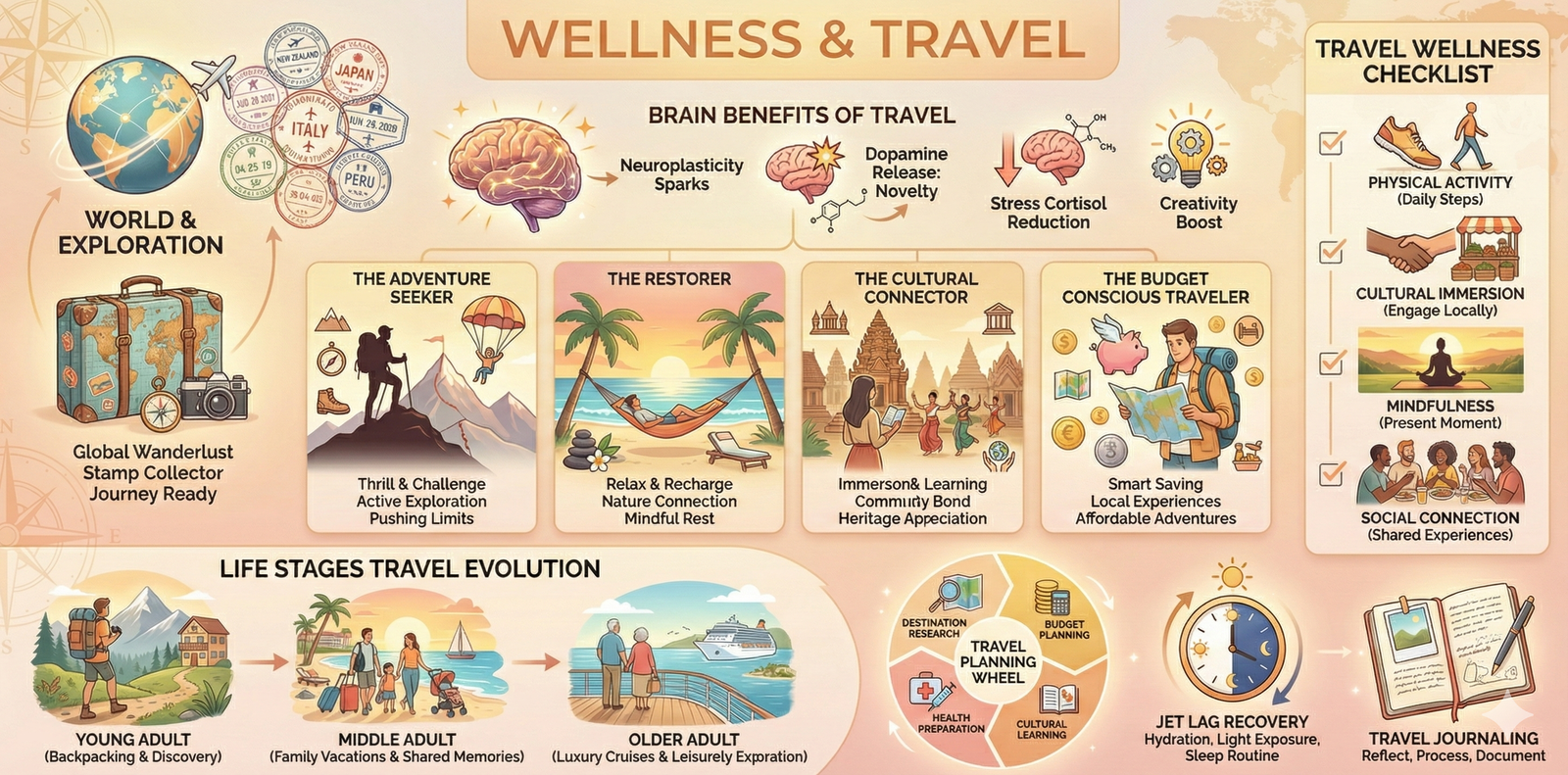
Research from leading universities shows that people who travel regularly experience higher levels of happiness, increased self-esteem, and greater resilience in facing life challenges. The wellness travel industry alone is worth over a trillion dollars globally, with travelers increasingly seeking intentional experiences that combine physical, mental, and spiritual renewal.
Travel transforms ordinary moments into profound life lessons, builds confidence through navigating uncertainty, and connects you to communities and perspectives that expand your capacity for empathy and understanding. Most importantly, the benefits of travel don't end when you return home—they create lasting patterns of growth and happiness that shape your entire life trajectory.
What Is Travel?
Travel is the act of moving from one place to another with the intention of experiencing, learning, or transforming yourself. While the definition seems simple, travel in the context of wellbeing goes far deeper than mere physical displacement. It encompasses the experiences you gather, the perspectives you encounter, the challenges you overcome, and the person you become through these encounters. Travel can range from a solo journey across the world to a weekend exploration of nearby towns, from structured wellness retreats to spontaneous adventures. What matters most is the intentionality behind your travel—the conscious choice to step outside your comfort zone and engage authentically with new environments and people.
Not medical advice.
Travel serves multiple psychological, emotional, and physical functions. It acts as a natural stress-reliever by providing distance from daily routines and pressures. It functions as a learning tool that expands your knowledge and skills. Travel also operates as a mirror for self-discovery, helping you understand your values, strengths, and desires more clearly. For many people, travel becomes a form of meditation in motion—a way to quiet mental chatter and reconnect with what truly matters. The modern concept of travel wellness has evolved significantly, moving beyond luxury tourism toward intentional, slow travel that emphasizes deep connection and meaningful rest.
Surprising Insight: Surprising Insight: Planning a trip increases happiness almost as much as the actual travel experience. A 2014 Cornell University study found that the anticipation of a vacation can boost your mood substantially for weeks before departure, often providing more happiness than the vacation itself in some cases.
The Travel Transformation Cycle
How travel moves you from routine stress through exposure and growth toward sustained happiness and personal expansion
🔍 Click to enlarge
Why Travel Matters in 2026
In 2026, travel has become more than a luxury—it's a necessity for mental and emotional wellbeing. After years of global uncertainty and increased screen time, people are increasingly recognizing that the antidote to burnout, anxiety, and disconnection is meaningful travel and exploration. The wellness travel industry is expanding dramatically, with travelers specifically seeking intentional experiences over passive tourism. Travel now represents a form of self-care and personal development that rivals traditional therapy in its impact on mental health outcomes.
The science is clear: travel reduces stress hormones, boosts immune function, increases creativity, and provides lasting improvements in overall life satisfaction. People who travel regularly report higher happiness levels, stronger relationships, and greater professional success. But more importantly, travel in 2026 represents a conscious shift toward valuing experiences over accumulation, connection over isolation, and growth over comfort. In a world where anxiety and burnout are epidemic, travel offers a proven pathway to restoration and resilience.
Furthermore, travel builds the mental flexibility and adaptability that are essential skills for thriving in our rapidly changing world. When you navigate different cultures, languages, and systems, you develop psychological flexibility—the ability to adapt to uncertainty and handle unexpected challenges. This skill transfers directly to your professional life, relationships, and ability to manage stress and anxiety in all contexts.
The Science Behind Travel
The psychological research on travel is compelling and consistent. A 2020 study published in Nature found that people who experience more changes in scenery day-to-day tend to report higher levels of happiness and life satisfaction. A 2013 survey of 485 adults linked regular travel to enhanced empathy, improved attention, increased energy, and better focus—benefits that persist long after the trip ends. Research published in Personality and Individual Differences found that people who travel regularly have significantly higher levels of self-esteem and life satisfaction, with studies of over 1,500 people confirming this pattern across different demographics and income levels.
The brain mechanisms behind travel's benefits are fascinating. Travel activates neuroplasticity—your brain's ability to form new neural connections. When you encounter new environments, languages, and social situations, your brain literally rewires itself to handle increased complexity and novelty. This neural growth correlates directly with improvements in creativity, problem-solving ability, and emotional regulation. Additionally, travel reduces cortisol (stress hormone) levels while increasing serotonin and dopamine production, naturally improving mood and motivation. For specific populations, research indicates tourism's potential in alleviating depressive symptoms and even suggests its role as a non-pharmacological intervention for age-related cognitive decline.
Key Components of Travel
Mental Health Restoration
Travel provides profound mental health benefits by offering distance from daily stressors and the mental space to process emotions and challenges. The change of environment triggers a psychological reset that allows your mind to rest from habitual thought patterns. This restoration is particularly powerful for people experiencing burnout, anxiety, or depression. Wellness travel specifically combines therapeutic elements with leisure, creating conditions for deep mental healing. The most effective mental health travel includes time in nature, opportunities for reflection, and connection with supportive communities.
Personal Growth and Self-Discovery
Travel serves as a powerful catalyst for self-discovery and personal transformation. When you step into unfamiliar environments, you're forced to rely on your resourcefulness, creativity, and resilience. This process naturally builds confidence in your ability to handle challenges and adapt to new situations. Travel exposes you to diverse perspectives, values, and ways of living, which broadens your worldview and helps you clarify your own values and priorities. Solo travel particularly accelerates this process by creating space for deep introspection and self-reflection. Many people report that major life insights and decisions come during or immediately after meaningful travel experiences.
Cultural Connection and Empathy
Traveling exposes you directly to different cultures, traditions, and perspectives, which naturally increases empathy and cross-cultural understanding. When you interact with people from different backgrounds, navigate different cultural norms, and experience the commonalities that unite all humans, you develop a more compassionate and nuanced worldview. This cultural competency has practical benefits in our globalized world—it makes you more adaptable, more effective in diverse workplaces, and more capable of building meaningful relationships across difference. The most transformative cultural travel involves genuine interaction rather than observation, staying longer in each place, and seeking out authentic local experiences.
Resilience and Confidence Building
Travel inherently involves navigating uncertainty, solving unexpected problems, and adapting to new situations. Each challenge overcome—finding your way in an unfamiliar city, communicating across language barriers, managing travel disruptions—builds your confidence and resilience. This practical confidence translates into other areas of your life, making you feel more capable of handling difficulties and uncertainties. Repeated travel experiences create a sense of self-efficacy (belief in your ability to handle challenges) that becomes a foundation for resilience in all contexts. People who travel regularly report feeling more capable, confident, and prepared to handle life's challenges compared to non-travelers.
| Life Domain | Travel's Impact | Duration of Benefit |
|---|---|---|
| Mental Health | Reduced anxiety and depression symptoms | Up to 6 months post-travel |
| Happiness Levels | Increased life satisfaction and wellbeing | Varies by individual, 1-3 months |
| Creativity | Enhanced problem-solving and innovative thinking | Weeks to months after travel |
| Relationships | Strengthened bonds with travel companions | Lasting when relationships deepen |
| Self-Knowledge | Clarity about values, strengths, and priorities | Permanent growth |
| Professional Skills | Increased adaptability and cross-cultural competence | Career-long advantage |
| Resilience | Greater confidence in handling challenges | Permanent psychological benefit |
How to Apply Travel: Step by Step
- Step 1: Clarify Your Travel Intention: Before booking, get clear on what you need from travel. Are you seeking rest and restoration, adventure and challenge, cultural connection, or self-discovery? Different intentions require different travel approaches. Write down what you hope to gain and how you'll know the trip was successful.
- Step 2: Create Realistic Budget Expectations: Determine your travel budget based on your financial situation, not external pressures. Remember that meaningful travel doesn't require luxury. Many of the most transformative experiences happen on modest budgets. Consider travel timing that aligns with your financial rhythm.
- Step 3: Choose Your Destination Thoughtfully: Rather than defaulting to popular tourist destinations, choose places that genuinely call to you or address your specific intention. Research the culture, climate, and offerings. Consider factors like safety, accessibility, and your comfort level with novelty. Longer stays in fewer places often yield deeper benefits than rapid destination-hopping.
- Step 4: Plan with Flexibility Built In: Create a basic itinerary that leaves space for spontaneity. Over-scheduling can turn travel into stress rather than restoration. Build in unstructured time for wandering, reflection, and chance encounters that often become the most memorable parts of trips.
- Step 5: Engage Authentically with Local Culture: Make genuine efforts to connect with locals, learn basic language phrases, eat where locals eat, and participate in community life rather than just observing. This authentic engagement is what creates the most transformative experiences and deepest happiness.
- Step 6: Practice Mindful Travel: Approach travel with full presence rather than just collecting photos. Take time to sit quietly, observe details, journal your reflections, and consciously absorb experiences. Mindfulness during travel amplifies all the mental health and personal growth benefits.
- Step 7: Set Digital Boundaries: Decide in advance how you'll use technology. Consider limiting social media and work communications to specific times. This protects the restorative and introspective quality of travel by keeping your focus on direct experience rather than documenting for external validation.
- Step 8: Prepare for Reverse Culture Shock: Recognize that returning home involves adjustment. The insights and shifts that happen during travel can create temporary disconnection from your usual environment. Plan for this by journaling insights before returning, scheduling time for integration, and connecting with others who understand travel's transformative power.
- Step 9: Document Intentionally: Rather than creating an exhaustive photo collection, consider keeping a travel journal or creating a more limited visual record. This documentation becomes a valuable tool for processing experiences and accessing the psychological benefits of travel long after you return.
- Step 10: Integrate Learning into Daily Life: The real benefit of travel comes from how you apply it afterward. Actively work to maintain the mental patterns, perspectives, and habits you developed while traveling. Find ways to bring travel's openness and curiosity into your daily life at home.
Travel Across Life Stages
Young Adulthood (18-35)
Young adulthood is an ideal time for exploratory travel that builds confidence and expands horizons. This life stage typically involves fewer financial obligations and family responsibilities, creating space for longer trips, budget travel, and adventurous experiences. Young adults can use travel to clarify values, explore career interests, develop independence, and build cross-cultural competence. Solo travel during this period often becomes formative, creating lasting confidence and a sense of capability. Group travel with peers builds friendships and shared memories that sustain through adulthood. The key focus for young adult travel should be depth over luxury and growth over comfort—choosing experiences that challenge and transform rather than just relax.
Middle Adulthood (35-55)
Middle adulthood often involves balancing career, family, and personal priorities, which can make travel feel less accessible. However, this is a crucial period for travel-based renewal and re-evaluation. Wellness travel becomes particularly valuable during this life stage, offering restoration and relief from burnout. Family travel becomes possible and beneficial, creating shared experiences with partners and children while modeling the importance of exploration and growth. Many middle adults benefit from slow travel—longer stays in fewer places that allow for deeper restoration and reflection. Travel during this period often focuses on renewal, meaning-making, and reconnection with partners or close relationships. Even short, well-planned trips can provide significant mental health and relational benefits.
Later Adulthood (55+)
Later adulthood brings both opportunities and specific considerations for travel. With potentially more flexibility in schedules and often greater financial resources, older adults can pursue longer journeys and more specialized travel experiences. Research shows that travel in later life significantly supports cognitive health, emotional wellbeing, and life satisfaction. Travel also combats isolation and loneliness, which are significant health risks in older populations. Group travel or travel with a partner provides both companionship and shared adventure. Educational travel that pursues intellectual interests becomes increasingly rewarding during this stage. The focus shifts toward meaningful engagement, legacy-building, and enjoying the fruits of a lifetime of experience while contributing to others' growth through mentoring or cultural exchange.
Profiles: Your Travel Approach
The Adventure Seeker
- Novelty and challenge
- Physical activity and exploration
- Experiences that build confidence
Common pitfall: Over-scheduling and exhaustion from trying to do too much, missing the restorative benefits of travel
Best move: Balance adventure with unstructured reflection time; combine active experiences with periods of quiet observation and integration
The Restorer
- Quietude and nature immersion
- Distance from daily responsibilities
- Time for reflection and processing
Common pitfall: Isolating too much or feeling disconnected from local culture and people
Best move: Intentionally build in connection activities—try local restaurants, take one guided experience, or spend time in community spaces alongside personal restoration
The Cultural Connector
- Authentic local interaction
- Deep cultural immersion
- Meaningful relationships with people from different backgrounds
Common pitfall: Feeling frustrated with language barriers or experiencing overwhelm from constant social engagement
Best move: Slow travel with longer stays in each location; study basic language beforehand; balance social engagement with solo reflection time
The Budget Conscious Traveler
- Affordable travel options
- Creative solutions and resourcefulness
- Meaningful experiences that don't require expense
Common pitfall: Limiting yourself too severely and missing transformative opportunities due to cost concerns
Best move: Prioritize intentionality over destination price; seek free cultural experiences, walking tours, and community activities; splurge on one meaningful experience per trip
Common Travel Mistakes
Over-scheduling and attempting to maximize how much you 'see' often backfires by replacing the restorative, transformative benefits of travel with stress and exhaustion. The best travel for happiness isn't about the number of destinations or experiences checked off, but about the depth of engagement and presence you bring. Slow travel—spending more time in fewer places—consistently generates greater happiness and personal growth than rapid destination-hopping. When travel becomes about documenting for social media rather than experiencing for yourself, it loses much of its psychological benefit. Presence matters more than proof.
Another common mistake is expecting travel to permanently fix unhappiness or resolve deep psychological issues without parallel work. While travel provides significant mental health benefits, these are enhanced when combined with other practices like therapy, mindfulness, and regular exercise. Travel is most effective as part of a comprehensive approach to wellbeing rather than as a standalone solution. Additionally, comparing your travel experience to others' Instagram portrayals creates unnecessary pressure and disconnection from authentic experience. Travel is deeply personal—your meaningful trip might look very different from someone else's ideal journey.
Failing to plan for re-entry after significant travel is another widespread mistake. The insights and shifts you experience during travel need active integration into your daily life, or their benefits diminish quickly. When travelers return home without consciously applying what they learned, the happiness boost typically lasts only 1-3 months. Planning for re-entry—through journaling, intentional habit-building, or community connection—extends the benefits substantially.
Travel Impact Timeline and Planning
How to plan travel to maximize happiness and wellbeing across the journey lifecycle
🔍 Click to enlarge
Science and Studies
The research on travel and wellbeing is comprehensive and growing. Multiple peer-reviewed studies document travel's positive effects on mental health, creativity, resilience, and life satisfaction. Leading institutions including Cornell University, Edith Cowan University, and numerous psychology departments have published research confirming travel's transformative power. The wellness travel industry itself is evidence-based, built on research showing that intentional travel combining rest, movement, connection, and growth creates measurable improvements in wellbeing outcomes that persist long after travel ends.
- Cornell University (2014) documented that anticipating travel experiences increases happiness for weeks before the actual trip
- Nature journal (2020) published research showing that people exposed to more changes in scenery daily report higher happiness levels
- Personality and Individual Differences (peer-reviewed) found that regular travelers have significantly higher self-esteem and life satisfaction
- Edith Cowan University demonstrated that travel significantly reduces depression and anxiety symptoms, particularly in older adults
- PMC/NIH (2021) published research on 'travel psychiatry' and travel's therapeutic effects on mental health across populations
Your First Micro Habit
Start Small Today
Today's action: Research and visualize one trip you'd like to take in the next 6-12 months. Spend 10 minutes today looking at images, reading about the destination, or jotting down what appeals to you about this place. Set a reminder to spend 5 minutes each week building anticipation for this trip.
Anticipation of travel provides significant happiness benefits that begin immediately and last for weeks. This micro habit activates the joy of travel before any booking or expense, costs nothing, and begins rewiring your brain toward growth and exploration. Regular visualization of travel goals also makes them more likely to happen as you unconsciously notice opportunities and create space in your life for them.
Track your travel planning micro habit and get personalized coaching on how to build travel into your wellbeing practice with our app.
Quick Assessment
How does your current travel pattern align with your happiness and growth goals?
Your response reveals how travel currently features in your wellbeing strategy. Even occasional travel can significantly improve happiness; the key is intentionality and integration.
What draws you most strongly to travel or exploration?
Your primary travel motivation shapes which destinations, travel styles, and experiences will be most beneficial for your growth and happiness.
What's your biggest barrier to making travel a regular part of your life?
Identifying your primary barrier helps you develop strategies to overcome it. Each barrier has specific solutions that can make travel more accessible and beneficial.
Take our full assessment to get personalized recommendations.
Discover Your Style →Next Steps
Begin by clarifying your travel intention. Rather than defaulting to trending destinations or expensive travel, get clear on what you truly need—restoration, adventure, connection, or self-discovery. Your most transformative travel will align with your actual needs rather than external expectations. Research one destination that genuinely calls to you and spend time visualizing it. This visualization alone activates happiness benefits before you ever book or spend money.
Create a realistic travel plan that fits your life and budget. If you can't travel right now, that's okay—begin building travel into your vision of your future. Set a specific goal: I will take a meaningful trip in [timeframe]. Then work backward to identify how you'll make that happen. Even planning creates happiness benefits. Start researching, setting aside funds, or talking with travel companions. The anticipation is part of the transformation.
Get personalized guidance with AI coaching.
Start Your Journey →Research Sources
This article is based on peer-reviewed research and authoritative sources. Below are the key references we consulted:
Related Glossary Articles
Frequently Asked Questions
How often do I need to travel to see wellbeing benefits?
Research suggests that even one meaningful trip per year can significantly improve happiness and life satisfaction. What matters more than frequency is intentionality—a deeply engaged shorter trip benefits you more than rushed visits to multiple destinations. However, regular travel (multiple times yearly) creates cumulative benefits, particularly for mental health and resilience.
Does travel have to be international or expensive to be beneficial?
Absolutely not. The transformative benefits of travel come from genuine engagement with new environments and experiences, not from spending money or traveling far. Exploring your own region deeply, visiting nearby areas you've never been, or taking a multi-day trip to a regional destination can be equally transformative. Budget travel and local travel often provide more authentic experiences and deeper cultural connection than expensive tourism.
How long does the happiness boost from travel last?
The initial happiness boost from travel typically lasts 1-3 months without intentional integration practices. However, the personal growth, perspective shifts, and confidence building from meaningful travel become permanent. By actively integrating what you learned—through journaling, maintaining new habits, or pursuing travel-inspired goals—you can extend the happiness benefits substantially and make the deeper growth lasting.
Can I get travel's benefits if I travel alone versus with others?
Both solo and group travel provide significant benefits, just different ones. Solo travel accelerates self-discovery and builds independence and confidence in handling challenges. Traveling with partners or friends deepens relationships and creates shared meaning. The benefits aren't better or worse—they're tailored to your current needs and life stage. Choose travel style based on what you most need.
What if I have anxiety about traveling or leaving my routine?
Travel anxiety is common and treatable. Start with shorter trips closer to home, travel with a trusted companion, plan in detail to reduce uncertainty, and practice mindfulness to manage anxiety during travel. Many people find that while travel initially triggers anxiety, repeatedly facing this anxiety and successfully managing it actually builds resilience and reduces baseline anxiety. Professional support from a therapist familiar with travel anxiety can also help.
Take the Next Step
Ready to improve your wellbeing? Take our free assessment to get personalized recommendations based on your unique situation.
- Discover your strengths and gaps
- Get personalized quick wins
- Track your progress over time
- Evidence-based strategies