Academic Performance
Academic performance isn't just about grades—it's the foundation for unlocking your potential, building confidence, and creating opportunities for your future. Whether you're struggling to keep up or aiming for excellence, understanding how to optimize your learning is a game-changer. Research shows that students who combine effective study habits, strong time management, and emotional resilience dramatically improve their academic results. In 2025, with more educational pressures than ever, mastering academic performance techniques has become essential for success in school and beyond.
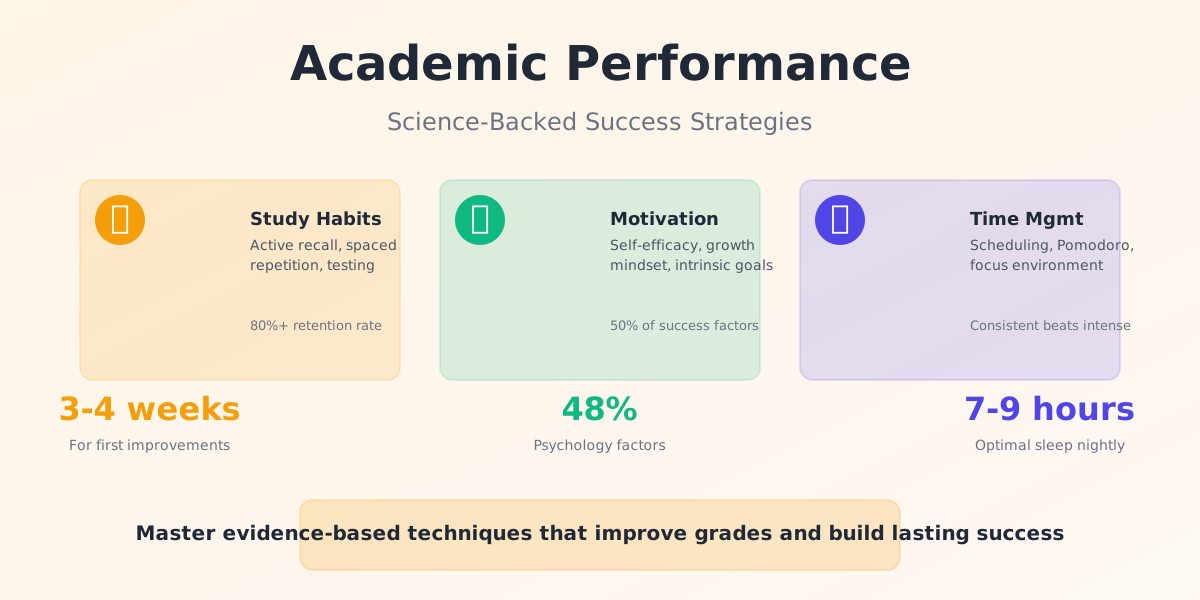
Discover how study habits reshape your grades faster than you think—students who apply structured learning techniques report improvement in just 3-4 weeks.
Learn the psychological factors that secretly influence your success, from motivation and self-efficacy to anxiety management and resilience.
What Is Academic Performance?
Academic performance refers to the measurable outcomes of a student's learning efforts, typically reflected in grades, test scores, and demonstrated competency in subject matter. However, true academic performance encompasses much more: it's the combination of your study habits, motivation, self-efficacy, emotional regulation, and ability to manage stress. It's about how effectively you absorb information, apply knowledge, and demonstrate understanding through assessments. Academic performance is shaped by both controllable factors (like effort, study techniques, and time management) and structural factors (like socioeconomic background, access to resources, and quality of instruction).
Not medical advice.
Academic performance is deeply interconnected with mental and emotional wellbeing. When students experience high anxiety, inadequate sleep, poor nutrition, or unmanaged stress, their cognitive function deteriorates. Conversely, students who prioritize their holistic health—including mental wellness, emotional regulation, and physical vitality—consistently outperform their peers. The latest neuroscience research confirms that the brain's capacity for learning, memory retention, and problem-solving is optimized when we address the whole person, not just academic mechanics.
Surprising Insight: Surprising Insight: Study habits are MORE predictive of academic success than prior achievement scores or standardized test results. Students who develop intentional learning strategies often surpass naturally talented peers who rely on aptitude alone.
The Academic Performance Framework
Visual representation of the interconnected factors that influence academic success, including study techniques, emotional factors, environmental factors, and physical wellbeing.
🔍 Click to enlarge
Why Academic Performance Matters in 2026
In today's competitive landscape, academic performance determines access to higher education, scholarships, career opportunities, and professional advancement. Strong academic results open doors to top universities, competitive internships, and prestigious job positions. But beyond career prospects, academic success builds critical life skills: discipline, resilience, time management, and the ability to solve complex problems—skills that directly transfer to every area of life.
The increased pressure on students in 2026 is real. Academic demands have intensified with more rigorous curricula, higher college admission standards, and greater emphasis on standardized testing. Students face unprecedented levels of competition, which can trigger anxiety, burnout, and mental health challenges. Learning how to optimize academic performance while maintaining emotional wellbeing has become a critical life skill for navigating modern education and preventing burnout.
Academic performance isn't isolated—it directly impacts self-esteem, confidence, social relationships, and long-term life satisfaction. Students who struggle academically often experience shame and reduced self-worth, which creates a negative feedback loop. Conversely, students who develop effective learning strategies and experience academic success develop stronger confidence, better emotional resilience, and greater life satisfaction. Mastering academic performance is an investment in your overall happiness and wellbeing.
The Science Behind Academic Performance
Neuroscience reveals that academic performance is optimized when we work WITH the brain's natural learning mechanisms, not against them. The hippocampus, responsible for memory formation, requires spaced repetition and active recall to consolidate learning. The prefrontal cortex, which handles focus and executive function, is depleted by stress and sleep deprivation—explaining why cramming the night before fails. Research from Princeton and other leading institutions confirms that spacing study sessions over time, changing learning contexts, and actively retrieving information dramatically improves retention compared to massed practice or passive reading.
Psychological research identifies intrinsic motivation, self-regulated learning strategies, prior academic performance, and family background as the strongest predictors of academic success. Studies show that 48% of university dropout and success outcomes are determined by psychological factors rather than raw intelligence. This means your mindset, motivation, and emotional management have GREATER influence on your academic performance than your natural ability. Anxiety specifically impairs working memory and cognitive processing, reducing test performance by up to 20% in affected students. Students who develop anxiety management and stress tolerance skills significantly improve their academic results.
Psychological Factors Influencing Academic Success
Brain illustration showing how different psychological factors impact learning: motivation increases dopamine and focus, stress triggers cortisol reducing memory, sleep supports consolidation.
🔍 Click to enlarge
Key Components of Academic Performance
Study Habits and Learning Strategies
Effective study habits are the cornerstone of academic performance. This includes active note-taking (jotting down key ideas during lectures to reinforce memory), spaced repetition (reviewing material at increasing intervals), self-testing (quizzing yourself on content), and changing learning contexts (studying in different locations to strengthen memory associations). The most successful students break study sessions into 25-50 minute focused intervals with short breaks—a technique called the Pomodoro method—because the brain has limited attention capacity. Research shows that students who employ metacognitive strategies (thinking about their thinking) and self-monitoring adjust their approach when something isn't working, rather than repeating ineffective methods.
Motivation and Self-Efficacy
Motivation is the fuel for academic performance, but there are two types: extrinsic (driven by external rewards like grades) and intrinsic (driven by genuine interest and personal values). Students with strong intrinsic motivation perform better long-term because they engage more deeply with material and persist through challenges. Self-efficacy—the belief that you CAN succeed at academic tasks—acts as a powerful predictor of actual performance. When students experience success, set challenging but achievable goals, and receive meaningful feedback, their self-efficacy grows, creating an upward spiral of confidence and improved results. Growth mindset (the belief that abilities can be developed through effort) is strongly associated with greater resilience when facing academic setbacks.
Emotional Regulation and Stress Management
Emotional factors have a profound impact on academic performance. Positive emotions like enjoyment and confidence enhance motivation and cognitive processing, while negative emotions like fear and fatigue reduce performance. Academic anxiety significantly impairs working memory—the cognitive system needed for complex problem-solving and test performance. Students who develop emotional regulation skills (managing stress, anxiety, and frustration), practice mindfulness, and build psychological resilience maintain focus and perform better under pressure. Physical activity, quality sleep, and stress reduction practices directly improve emotional regulation and academic outcomes.
Time Management and Environmental Factors
Effective time management is critical for academic success. This includes creating a priority pie that maps how you'll allocate time during a semester, using an assignment book or digital calendar to track deadlines, and protecting focus time from distractions. Environmental factors also matter—studying in a distraction-free location, managing interruptions from technology, and optimizing the physical study space (adequate lighting, comfortable temperature) enhance concentration and learning. Students who attend classes consistently, maintain regular study schedules, and build in recovery time perform better than those who cram or skip class. The quality of your study environment directly influences your study efficiency and information retention.
| Technique | Effectiveness for Memory | Time Investment |
|---|---|---|
| Spaced Repetition | Very High - 80%+ retention | Moderate - spread over weeks |
| Active Recall Testing | Very High - 75%+ retention | Moderate - frequent self-quizzes |
| Passive Re-reading | Low - 20-30% retention | Low - but inefficient |
| Cramming | Very Low - 10-15% retention | High - intensive but short-lived |
| Interleaved Practice | High - 65%+ retention | Moderate - mix topics in sessions |
| Elaboration | High - 70%+ retention | Moderate - explain concepts deeply |
How to Apply Academic Performance: Step by Step
- Step 1: Assess your current study habits honestly by tracking how you study for one week, noting techniques you use and which ones produce results.
- Step 2: Identify your biggest academic challenge: Is it time management, motivation, anxiety, poor study techniques, health factors, or emotional regulation?
- Step 3: Develop a growth mindset by reading about neuroplasticity and understanding that intelligence and abilities develop through effort and practice.
- Step 4: Implement spaced repetition by scheduling review sessions at increasing intervals (1 day, 3 days, 1 week, 2 weeks) after learning new material.
- Step 5: Practice active recall by creating flashcards, practice tests, or explaining concepts aloud without looking at notes to strengthen memory.
- Step 6: Optimize your sleep schedule by maintaining consistent sleep-wake times, targeting 7-9 hours nightly, since sleep is when memories consolidate.
- Step 7: Create a focused study environment free from phone notifications, social media, and other distractions to maximize concentration and learning.
- Step 8: Build a sustainable study routine using the Pomodoro technique: 25 minutes focused work, 5-minute break, repeat with longer breaks after 4 cycles.
- Step 9: Develop emotional resilience by practicing stress management techniques like breathing exercises, exercise, meditation, or talking to supportive people.
- Step 10: Seek help early when struggling with specific subjects or overwhelming stress rather than waiting until problems compound.
Academic Performance Across Life Stages
Young Adulthood (18-35)
During young adulthood, academic performance directly impacts career trajectory, with college grades affecting graduate school admissions and early job opportunities. This age group faces heightened pressure, increased independence in managing their own learning, and the challenge of balancing academics with social life and work. Young adults benefit most from developing autonomous self-regulation strategies, building intrinsic motivation (moving beyond grades to genuine interest), and establishing lifetime habits around time management and focus. College performance at this stage often determines access to competitive careers and professional networks that provide decades of advantage.
Middle Adulthood (35-55)
In middle adulthood, academic performance takes different forms—professional certifications, skill development, and continued learning for career advancement. Many return to education for career changes or advancement. At this stage, life experience is an asset; adults bring perspective and intrinsic motivation (learning for genuine interest rather than grades). Middle-aged learners often perform exceptionally when they can connect new learning to practical applications and personal goals. Balancing academic pursuits with career and family responsibilities requires sophisticated time management and strong internal motivation.
Later Adulthood (55+)
Later adulthood increasingly involves learning and skill development for personal enrichment, volunteer work, or adapting to new technologies. Research shows that older adults maintain strong learning capacity and often demonstrate better focus and follow-through than younger students. Academic pursuits at this life stage tend to be intrinsically motivated, leading to deeper engagement and higher satisfaction. Cognitive health and memory optimization become more important; older learners benefit from chunking information, allowing processing time, and connecting new learning to extensive life experience.
Profiles: Your Academic Performance Approach
The Naturally Talented But Underperformer
- Accountability systems to maintain effort consistency
- Clear consequences and rewards tied to behavioral goals, not just grades
- Challenges that require growth and sustained focus rather than relying on natural ability
Common pitfall: Relying on innate ability without developing strong study habits; coasting through early education then hitting a wall when material becomes complex.
Best move: Develop deliberate practice and study systems NOW before they become critical. Build your learning muscles while you can still succeed on talent alone. Connect success to effort, not just aptitude.
The Anxious Overachiever
- Anxiety management techniques like breathing exercises and meditation
- Permission to aim for 'good enough' rather than perfection
- Support systems and open communication about pressure and stress
Common pitfall: Perfectionistic thinking and anxiety about grades becomes self-defeating; over-studying without adequate breaks leads to burnout and diminishing returns.
Best move: Practice emotional regulation first, then optimize study efficiency. Focus on evidence-based techniques rather than hours spent. Build self-compassion and realistic expectations. Seek professional support if anxiety interferes with functioning.
The Unmotivated Learner
- Clear connection between learning and personally meaningful goals
- Quick wins and visible progress to build momentum
- Social connection and accountability rather than isolated studying
Common pitfall: Studying for external reasons (grades, parental pressure) without intrinsic motivation leads to minimal effort, procrastination, and poor retention.
Best move: Identify WHY academic success matters to YOUR future and values. Connect current learning to long-term goals. Start with high-interest subjects. Build confidence through achievable wins before tackling harder material.
The Struggling Student
- Targeted help identifying specific learning gaps or challenges
- Study skills training and learning strategy instruction
- Emotional support, tutoring, and accommodations when needed
Common pitfall: Shame about struggling prevents seeking help; ineffective study techniques compound the problem; underlying issues (learning disabilities, anxiety, health problems) go unaddressed.
Best move: Get a comprehensive evaluation of your learning style and any underlying challenges. Invest in tutoring or academic coaching early. Build a support network. Celebrate effort, not just outcomes. Break large goals into smaller, manageable steps.
Common Academic Performance Mistakes
The first major mistake is relying entirely on passive reading and re-reading notes. Passive review creates the illusion of familiarity without true memory encoding. Your brain needs ACTIVE engagement—self-testing, explaining concepts aloud, solving practice problems—to genuinely learn material. Students who only re-read often feel prepared for exams because the material seems familiar, then are shocked by poor performance when they must retrieve information from memory. The solution: Replace reading with active recall, self-quizzing, and teaching the material to others.
The second mistake is cramming instead of spaced learning. Cramming creates short-term memory that fades rapidly; information crammed the night before is often completely forgotten within 24-48 hours. Meanwhile, spaced repetition—reviewing material at increasing intervals over weeks—creates durable long-term memories. Cramming feels productive in the moment but is neurologically inefficient. Students who space their studying invest slightly more total time but retain information far longer and perform better on exams AND in subsequent courses building on that knowledge. Break study into smaller sessions spread over time; your future self will thank you.
The third mistake is ignoring emotional factors like anxiety, sleep deprivation, and stress. Many students optimize study techniques but ignore the physical and emotional foundation required for learning. Anxiety directly impairs working memory needed for complex problem-solving. Sleep deprivation prevents memory consolidation. Chronic stress elevates cortisol, impairing cognitive function. Ignoring these factors is like trying to build a house on sand. The solution: Prioritize sleep, exercise, stress management, and anxiety treatment alongside study skills. Your learning capacity depends on your overall wellbeing.
Common Academic Performance Mistakes and Solutions
Flow chart showing three major mistakes students make in academic performance and the evidence-based solutions to overcome each.
🔍 Click to enlarge
Science and Studies
Recent peer-reviewed research from 2024-2026 provides compelling evidence about what actually improves academic performance. Large-scale longitudinal studies and meta-analyses have identified the most effective interventions and factors influencing student success across different populations and educational contexts.
- PMC (2024): Academic Performance and Resilience in Secondary Education Students confirms that resilience, measured alongside motivational and self-concept variables, is predictive of academic success, with academic self-efficacy acting as a key mediator.
- Springer Nature (2024): Key factors influencing students' academic performance identifies family support, study hours, class attendance, and learning strategies as significant predictors, with psychological factors accounting for nearly half of dropout/success outcomes.
- Penn Medicine (2024): Predicting Academic Performance in High School using longitudinal data identifies prior achievement, motivation, anxiety management, and self-regulation as the strongest predictors of continued academic success.
- Sage Journals (2025): Ascribed and Achieved Factors Associated With Academic Performance examines how intrinsic factors (effort, motivation, study habits) interact with structural factors (family education, socioeconomic status) to shape outcomes.
- International Journal (2025): The Impact of Study Habits on Academic Performance demonstrates that effective study habits—including spaced practice, active recall, and metacognitive monitoring—are more predictive of success than prior test scores or natural ability.
Your First Micro Habit
Start Small Today
Today's action: After your next class or study session, spend 5 minutes writing down three key concepts you learned WITHOUT looking at your notes—this is active recall, the most powerful learning technique.
Active recall strengthens memory pathways by forcing your brain to retrieve information, which is exactly what you'll need to do on exams. This simple 5-minute habit leverages neuroscience to dramatically improve retention. Starting with just 5 minutes makes it easy to add to any routine; consistency matters more than duration.
Keep quitting habit apps after a missed day? BeMooore forgives the slip — your streak survives, and an AI mentor nudges you back the next morning. Free on iOS.
Quick Assessment
How would you describe your current academic performance?
Your current performance level helps identify where to focus. Struggling students benefit most from study skills training and addressing emotional factors. Good performers often need mindset shifts and advanced techniques to reach excellence.
What's your biggest obstacle to academic success?
Identifying your specific barrier allows targeted solutions. Study techniques, time management, stress management, and motivation-building require different approaches. Many students struggle with multiple barriers simultaneously.
How often do you experience academic anxiety or test stress?
Anxiety level directly correlates with academic performance. Even minor anxiety impairs working memory needed for complex problems. If you experience frequent anxiety, anxiety management techniques and possibly professional support can dramatically improve your performance.
Take our full assessment to get personalized recommendations.
Discover Your Style →Next Steps
Your academic performance journey starts with one honest step: identifying your specific barrier—whether that's study skills, time management, anxiety, motivation, or health factors—and addressing that area first. You don't need to overhaul everything simultaneously. Pick ONE technique (like spaced repetition or active recall) and ONE wellbeing priority (like sleep or stress management) and commit to them for two weeks. Momentum builds from small, consistent actions, not massive life changes.
Connect with support resources available to you: academic tutoring, counseling services for anxiety or emotional challenges, study groups for accountability and learning, and mentors who understand your field. Academic success is not a solo sport; seek help early rather than struggling in silence. Finally, remember that academic performance is one measure of your ability and worth—not THE measure. Pursue excellence while maintaining perspective and self-compassion.
Get personalized guidance with AI coaching.
Start Your Journey →Research Sources
This article is based on peer-reviewed research and authoritative sources. Below are the key references we consulted:
Related Glossary Articles
Frequently Asked Questions
Can study techniques really improve my grades if I'm naturally unmotivated?
Yes. While motivation helps, effective study techniques bypass motivation challenges by making learning easier and showing quick results that BUILD motivation. Spaced repetition and active recall work even when you don't feel excited about the subject. As you experience success, intrinsic motivation develops. Start with techniques, not willpower.
How long does it take to see improvement in academic performance?
Students implementing evidence-based techniques typically see measurable improvement within 3-4 weeks as new study habits establish. More significant improvement—substantially higher grades—usually appears within 6-8 weeks as learning accumulates. Long-term transformation requiring mindset shifts takes longer, sometimes months. Consistency matters more than intensity.
Is academic performance more about intelligence or effort?
Research clearly shows effort and effective strategies matter more than raw intelligence. Study habits, motivation, and emotional factors account for nearly 50% of academic outcomes. Even naturally gifted students who don't develop strong study strategies often underperform compared to average students with excellent learning habits. You can develop these skills regardless of starting ability.
How can I manage test anxiety that impacts my academic performance?
Test anxiety requires multi-pronged approaches: (1) preparation strategies—practice tests, spaced review, and thorough learning reduce uncertainty; (2) physical techniques—deep breathing, progressive muscle relaxation, and exercise reduce physical anxiety; (3) cognitive strategies—reframing anxiety as excitement, positive self-talk, and mindfulness; (4) sometimes professional support through counseling or therapy. Address multiple angles for best results.
Can sleep and exercise really improve academic performance or is that overblown?
Sleep and exercise dramatically impact academic performance—it's not overblown. Sleep is when memories consolidate from short-term to long-term storage. Sleep deprivation directly reduces working memory, focus, and decision-making. Exercise increases blood flow to the brain, enhances mood, and improves cognitive function. These aren't nice-to-haves; they're foundational for optimal learning. Prioritize them like you prioritize studying.
Take the Next Step
Ready to improve your wellbeing? Take our free assessment to get personalized recommendations based on your unique situation.
- Discover your strengths and gaps
- Get personalized quick wins
- Track your progress over time
- Evidence-based strategies