Excellence
Excellence isn't about achieving perfection or being flawless. It's about the deliberate pursuit of doing things exceptionally well, guided by your values and commitment to continuous improvement. When you embrace excellence, you step into a deeper form of happiness—one rooted in meaningful accomplishment, personal growth, and the satisfaction of becoming your best self. This sense of striving toward your highest potential creates resilience, purpose, and lasting fulfillment that goes far beyond fleeting success.
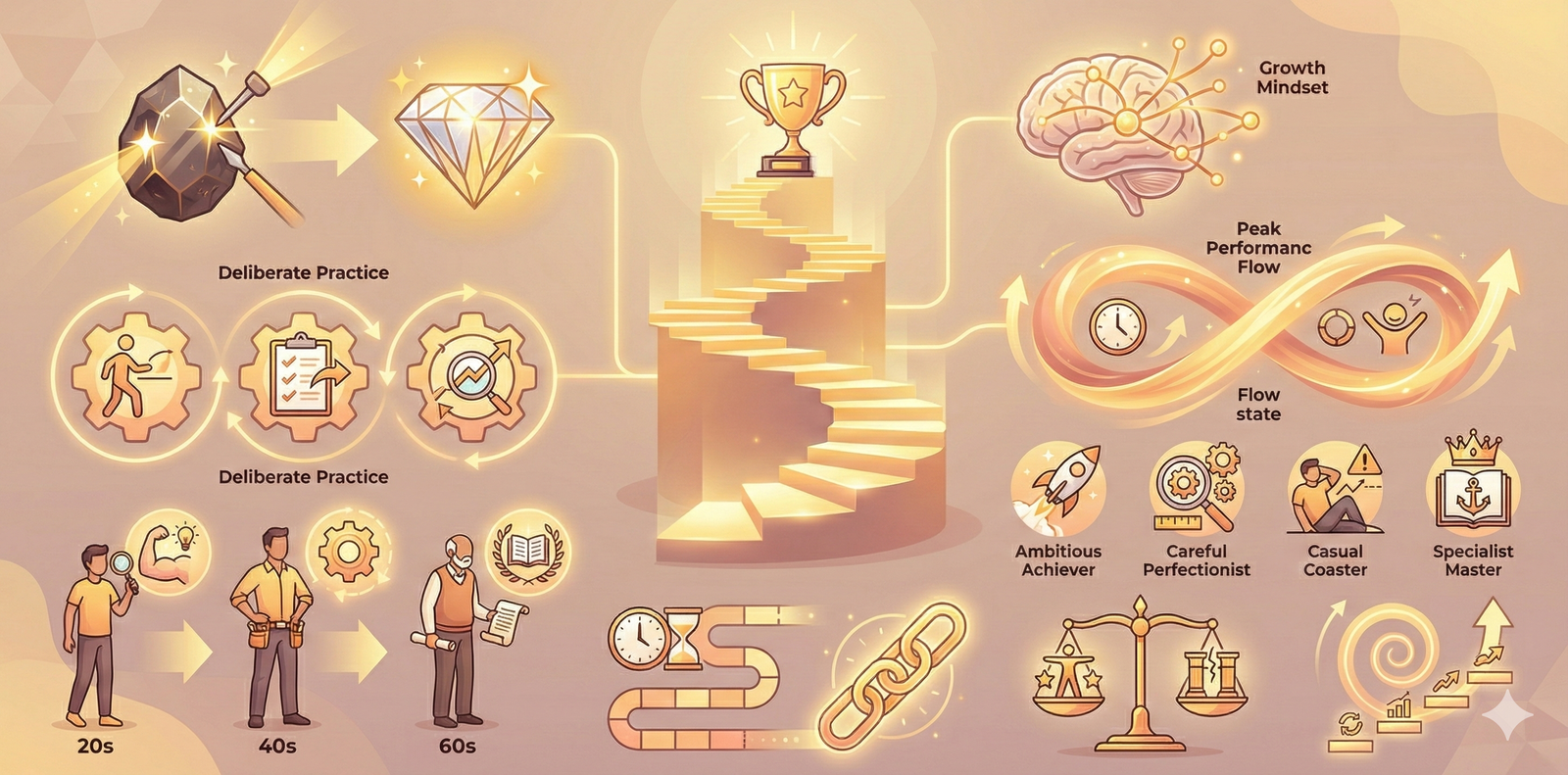
Excellence means setting high standards for yourself, learning from setbacks, and finding joy in the process of improvement rather than obsessing over outcomes. It's a mindset that transforms how you approach work, relationships, health, and every area of life.
In this guide, you'll discover what excellence truly means, how it differs from perfectionism, and practical strategies to cultivate an excellence mindset that brings sustainable happiness and meaningful achievement.
What Is Excellence?
Excellence is the deliberate commitment to performing at your highest level across meaningful pursuits—not to achieve perfection, but to honor your capabilities and values. The Greek concept of aretē (virtue as excellence) reflects this ancient understanding: excellence means doing anything well, whether it's a craft, skill, relationship, or life pursuit. In modern psychology, excellence represents striving for high standards while maintaining self-compassion and viewing challenges as opportunities for growth rather than threats.
Not medical advice.
Excellence exists in the middle ground between complacency and perfectionism. It acknowledges that humans are imperfect, that failure is inevitable, and that progress matters far more than flawlessness. Research in positive psychology shows that people who pursue excellence experience higher life satisfaction, better mental health, and more sustainable achievement than those driven by perfectionism. Excellence is intrinsically motivated—you pursue it because it aligns with who you want to become, not because you need external approval or fear judgment.
Surprising Insight: Surprising Insight: Pursuing excellence actually leads to better performance and results than perfectionism. People focused on excellence experience lower depression, higher life satisfaction, and greater progress toward their goals than perfectionists.
Excellence vs. Perfectionism
A comparison showing how excellence and perfectionism differ in motivation, response to mistakes, and outcomes.
🔍 Click to enlarge
Why Excellence Matters in 2026
In an era of rapid change, constant comparison, and increasing pressure to succeed, excellence has become more valuable than ever. The pursuit of perfection exhausts people—it creates anxiety, damages mental health, and paradoxically prevents the very achievements it seeks. In contrast, excellence offers a sustainable path forward. When you pursue excellence rather than perfection, you free yourself to experiment, fail, learn, and improve without the crushing weight of always needing to be flawless.
Excellence is directly connected to eudaimonia—the Greek concept of human flourishing that modern happiness research emphasizes. People who pursue excellence through meaningful goals, deliberate practice, and continuous growth report significantly higher life satisfaction than those chasing happiness directly or driven by perfectionism. In a world where burnout is epidemic and mental health struggles are widespread, excellence offers a healthier alternative that builds resilience, purpose, and genuine fulfillment.
Furthermore, excellence naturally contributes to better outcomes. Deliberate practice, growth mindset, and process focus—all components of excellence pursuit—lead to superior performance in sports, academics, music, business, and personal relationships. Excellence isn't just emotionally healthier; it's more effective.
The Science Behind Excellence
Research on achievement, positive psychology, and well-being consistently demonstrates that excellence pursuit supports both better performance and greater happiness. Mihaly Csikszentmihalyi's concept of 'flow'—a state of full engagement where you're deploying your skills and strengths on a challenging task—emerges as one of the most gratifying human experiences. This flow state, central to excellence pursuit, is so inherently rewarding that people will engage in activities producing it without external incentives.
The science of excellence reveals that high achievers across domains—from sports to music to business—share common characteristics: clear commitment to a specific domain, engagement in deliberate practice, supportive environments, and what psychologists call a 'growth mindset.' Unlike talent alone (which is fixed), the combination of motivation, practice, and the right mindset can develop excellence in virtually any meaningful pursuit. Studies show that the people who reach exceptional performance levels consistently emphasize process improvement over outcome obsession, making mistakes a valued part of development rather than proof of inadequacy.
The Excellence Development Model
How deliberate practice, growth mindset, and meaningful commitment combine to create excellence over time.
🔍 Click to enlarge
Key Components of Excellence
Clear Standards and Intentional Focus
Excellence begins with defining what excellence looks like in your chosen area. Rather than vague goals like 'be successful,' excellence pursuit involves specific, measurable standards aligned with your values. You decide what excellence means to you in your work, relationships, health, or creative pursuits. This clarity allows you to direct effort strategically and measure progress meaningfully. People pursuing excellence consistently set high standards while remaining flexible about how to achieve them—they focus on the standard they're reaching toward rather than rigid methods.
Deliberate Practice and Continuous Learning
Excellence isn't developed through casual effort or passive experience. It requires deliberate practice—focused, intentional repetition with attention to improvement. This means regularly engaging with material at the edge of your current skill level, seeking feedback, and adjusting based on what you learn. Deliberate practice is somewhat uncomfortable; it stretches you beyond current competence. Yet this discomfort is precisely how capabilities develop. People committed to excellence view learning as lifelong and necessary, seeking feedback not as criticism but as essential information for growth.
Process Focus Over Outcome Obsession
A core distinction between excellence and perfectionism is where attention lands. Excellence-focused people emphasize the process—the quality of preparation, practice, and effort—trusting that good processes lead to good outcomes. They celebrate improvement over outcomes, learn from both success and failure, and remain engaged regardless of external validation. This process focus paradoxically leads to better outcomes because it maintains motivation, reduces anxiety, and keeps focus on what's actually controllable. When you're absorbed in perfecting your craft or approach, results naturally follow.
Resilience and Growth Through Setbacks
Everyone pursuing excellence encounters failure, rejection, and setbacks. The difference is how excellence-minded people interpret these experiences. Rather than viewing mistakes as evidence of inadequacy, they see them as essential feedback and opportunities to improve. This resilience—the ability to bounce back from difficulty—is perhaps the most critical component of sustained excellence. People who achieve exceptional results across domains share a remarkable ability to persist through difficulty, learn from failure, and adjust their approach based on experience.
| Life Domain | Excellence Standard | Key Practice |
|---|---|---|
| Work & Career | Growing competence in meaningful role | Deliberate skill development, regular feedback |
| Physical Health | Consistent improvement in fitness and nutrition | Progressive training, nutrition monitoring |
| Relationships | Deepening connection and communication | Active listening practice, conflict resolution skills |
| Creative Pursuits | Developing craft and authentic expression | Regular creation, study of craft, mentorship |
| Personal Growth | Expanding self-knowledge and capabilities | Reflection practice, learning from experience |
| Community Contribution | Meaningful positive impact | Service aligned with values, building relationships |
How to Apply Excellence: Step by Step
- Step 1: Define Your Domain: Choose a meaningful area of life where you want to pursue excellence—whether work, a skill, health, relationships, or personal development. Excellence is too demanding to pursue everywhere, so choose areas aligned with your values and that matter to you.
- Step 2: Clarify Your Standard: Spend time articulating what excellence looks like in this domain. What specific qualities matter? What would exceptional look like compared to mediocre? Write this down. Your standard becomes your north star.
- Step 3: Assess Current Reality: Honestly evaluate your current level relative to your standard. Identify specific gaps between where you are and where you want to be. This assessment prevents both unrealistic expectations and complacency.
- Step 4: Design Your Practice: Create a deliberate practice plan focused on skill development. Include specific activities, frequency, and methods for getting feedback. Your practice should consistently challenge you at the edge of your current ability.
- Step 5: Establish Feedback Loops: Excellence requires feedback. Identify ways to get accurate information about your progress—mentors, coaches, peers, metrics, or direct observation. Make feedback regular and actionable.
- Step 6: Create Accountability: Share your excellence pursuit with others who support it. Regular check-ins with an accountability partner, coach, or community keep you committed and provide encouragement during difficult periods.
- Step 7: Embrace Mistakes as Data: When you fail or fall short, treat it as information rather than judgment. Ask: What can I learn? What needs to adjust? This transforms setbacks into essential development.
- Step 8: Celebrate Progress: Notice and acknowledge improvement, however small. Celebrating progress maintains motivation and reinforces that you're moving in the right direction even when the final goal feels distant.
- Step 9: Adjust Your Approach: Based on feedback and results, regularly adjust your practice methods, standards, or focus. Excellence pursuit requires flexibility about how you achieve your standards while maintaining commitment to the standards themselves.
- Step 10: Maintain Long-Term Perspective: Excellence development takes time. Maintain patience with yourself and commitment to the process even when progress feels slow. Most meaningful excellence develops over years of consistent engagement.
Excellence Across Life Stages
Young Adulthood (18-35)
During young adulthood, excellence pursuit often centers on developing foundational competence and exploring potential. This stage offers an opportunity to experiment with different domains, discover what genuinely interests you, and begin deliberate development in chosen areas. Young adults pursuing excellence benefit from mentorship, diverse experiences, and permission to fail while learning. The goal isn't immediate mastery but rather committing to growth in areas that matter and beginning the deliberate practice that excellence requires. This is also when you establish habits of learning and self-improvement that will serve lifetime excellence.
Middle Adulthood (35-55)
Middle adulthood is often when excellence comes to fruition. By this stage, many people have invested years in deliberate practice and development, beginning to reach higher levels of expertise and competence. Excellence during this phase often involves deepening mastery, taking on greater responsibility, and potentially mentoring others. This stage also offers opportunity to redirect excellence pursuit if previous choices no longer align with your values. Middle adults pursuing excellence often report deepest satisfaction, as they're experienced enough to competently pursue complex challenges while still young enough to execute ambitious visions. Maintaining growth mindset and continuing to challenge yourself prevents stagnation.
Later Adulthood (55+)
Excellence in later adulthood can shift toward wisdom, integration, and contribution. Rather than always pursuing new excellence, many find deep satisfaction in mastering domains of lifelong pursuit, sharing knowledge with younger generations, and applying developed competence toward meaningful contribution. Some people discover entirely new domains for excellence pursuit, free from earlier career or family constraints. The essence remains—pursuing meaningful activity with deliberate engagement and continuous learning. Many report that later life excellence, unburdened by needing to prove anything or achieve external markers of success, offers some of life's deepest satisfaction.
Profiles: Your Excellence Approach
The Ambitious Achiever
- Clear long-term vision and milestones
- Structured feedback and progress metrics
- Challenge and stretch opportunities
Common pitfall: Overextending across too many domains and burning out; becoming outcome-obsessed and missing the joy of process
Best move: Choose 2-3 domains maximum for excellence pursuit. Shift focus to process and daily practice. Build rest and reflection into your schedule. Celebrate progress, not just destinations.
The Careful Perfectionist
- Permission to be imperfect and still worthy
- Process-focused rather than outcome-focused metrics
- Reassurance that mistakes are learning, not failure
Common pitfall: Getting stuck in endless preparation or revision; avoiding action for fear of not being good enough; paralyzed by high standards
Best move: Set clear 'good enough' thresholds for various tasks. Practice submitting work before you feel ready. Focus deliberately on process quality rather than perfect outcomes. Get regular feedback to interrupt perfectionist spirals.
The Casual Coaster
- Connection to meaningful purpose
- Small wins and visible progress
- Accountability and community
Common pitfall: Settling for mediocrity; living far below potential; unclear what excellence would even look like
Best move: Identify one area where you genuinely want to improve. Define what excellence looks like. Start with small deliberate practice. Find accountability partner or community. Celebrate early progress.
The Specialist Master
- Opportunities to deepen expertise
- Intellectual challenge and continuing growth
- Mentoring and knowledge-sharing outlets
Common pitfall: Becoming rigid in approach; difficulty adapting to change; unbalanced life with one domain dominating
Best move: Continue deepening expertise while intentionally broadening adjacent skills. Seek mentoring opportunities. Balance intense focus with developing excellence in other life areas. Stay curious and open to new approaches in your domain.
Common Excellence Mistakes
One of the most common mistakes is confusing excellence with perfectionism. People pursuing 'excellence' but actually trapped in perfectionism set impossible standards, obsess over every detail, fear making mistakes, and base self-worth on outcomes. True excellence is comfortable with imperfection, focuses on process, learns from failure, and maintains self-compassion. If you notice yourself paralyzed by pursuit of flawlessness, anxious about mistakes, or basing your worth on achievements, you've likely slipped into perfectionism rather than excellence.
Another widespread mistake is pursuing excellence in too many domains simultaneously. Humans have finite energy and attention. Genuine excellence requires sustained commitment and deliberate practice. Spreading yourself across five different areas of excellence pursuit typically results in competence in none. Instead, choose 2-3 areas maximum that genuinely matter to you. Excel in those while allowing other areas to receive maintenance-level attention.
Finally, many people pursue excellence in domains that don't align with their authentic values. They chase excellence in careers, skills, or pursuits because they think they should, because parents/society expects it, or because external rewards are available. This produces hollow success—you may achieve the excellence markers but feel empty because the pursuit itself wasn't meaningful. The deepest satisfaction from excellence pursuit comes when you choose domains that authentically matter to you.
From Mistake to Mastery
How recognizing and learning from excellence mistakes accelerates development.
🔍 Click to enlarge
Science and Studies
Research on excellence, achievement, and well-being comes from diverse fields including positive psychology, sports psychology, educational research, and neuroscience. Key findings consistently show that excellence pursuit—characterized by growth mindset, deliberate practice, and intrinsic motivation—produces both superior performance and greater life satisfaction. The research is clear: pursuing excellence is not just more effective; it's also happier.
- Mihaly Csikszentmihalyi's research on flow states shows that full engagement in challenging tasks aligned with skills produces profound satisfaction and is one of the most rewarding human experiences
- Carol Dweck's research on growth mindset demonstrates that believing abilities can develop through effort, combined with deliberate practice, produces sustained excellence and greater resilience
- Studies comparing excellence and perfectionism consistently show that excellence-focused individuals experience lower depression, higher life satisfaction, better academic outcomes, and greater goal progress than perfectionism-focused individuals
- The positive psychology research on eudaimonia (human flourishing) shows that pursuing virtue, excellence, and meaningful achievement produces more robust well-being than hedonic pleasure or comfort-seeking
- Research on expertise development across domains shows that excellence requires deliberate practice (focused, challenging practice with feedback), not just talent or natural ability, with timeline of approximately 10,000 hours to reach high mastery
Your First Micro Habit
Start Small Today
Today's action: Today, choose one meaningful area of your life. Write down what excellence would look like in that area in 2-3 sentences. Then identify one small practice or skill to deliberately develop this week. Commit to that one practice.
This micro habit shifts you from vague aspiration to concrete commitment. Naming one specific area and one specific practice removes overwhelm and creates momentum. You're not trying to achieve excellence immediately—you're starting the process of deliberate development that excellence requires.
Keep quitting habit apps after a missed day? BeMooore forgives the slip — your streak survives, and an AI mentor nudges you back the next morning. Free on iOS.
Quick Assessment
When you think about pursuing excellence in an important area of your life, what most strongly comes to mind?
Your answer reveals your current relationship with excellence—whether you're energized, blocked by perfectionism, unmotivated, or already engaged. This helps you understand what support you need.
How do you typically respond when you fail at something you're trying to excel at?
This reveals your resilience and whether you have a growth mindset—both essential for sustained excellence pursuit. Growth-oriented responses predict both better performance and happiness.
Which statement feels most true about meaningful goals for you right now?
This indicates whether your excellence pursuit is authentically motivated, which determines whether it will sustain you and bring satisfaction. Authentic motivation is essential for long-term excellence.
Take our full assessment to get personalized recommendations.
Discover Your Style →Next Steps
Excellence development begins with a single choice: deciding that meaningful improvement matters to you and identifying one area where you want to pursue it deliberately. You don't need perfect conditions, natural talent, or years of planning. You just need commitment to consistent, focused practice and willingness to learn from your experience.
Start today with your micro habit—name one area, define what excellence looks like, and commit to one specific practice. Let that small commitment build momentum. Connect with others pursuing excellence in similar domains; community and mentorship accelerate development. Remember that excellence is a journey, not a destination. The joy and fulfillment come not just from reaching milestones but from the process of continuous growth toward becoming your best self.
Get personalized guidance with AI coaching.
Start Your Journey →Research Sources
This article is based on peer-reviewed research and authoritative sources. Below are the key references we consulted:
Related Glossary Articles
Frequently Asked Questions
How is excellence different from just working hard?
Working hard without direction or strategy can lead to wasted effort. Excellence specifically combines hard work with deliberate practice (focused, challenging work with feedback), clear standards, and continuous learning. You're working hard strategically toward meaningful improvement, not just being busy.
Can someone who isn't naturally talented pursue excellence?
Absolutely. Research shows that exceptional performance comes primarily from deliberate practice, growth mindset, and sustained commitment—not innate talent. Many high achievers weren't 'naturally gifted' but became excellent through consistent development. Talent matters less than you might think.
Doesn't pursuing excellence mean sacrificing happiness and balance?
No—this is the perfectionism trap. True excellence pursuit contributes to happiness through meaningful engagement, progress, and the satisfaction of becoming your best self. It requires balance, rest, and integration with other life areas. Perfectionism sacrifices happiness; excellence supports it.
What if I don't know what I want to pursue excellence in?
This is common and okay. Spend time exploring different potential areas—what naturally interests you, what problems you want to solve, what brings engagement, what you find meaningful. Experimentation is part of the process. Start with one area that even slightly appeals to you.
How long does it actually take to develop excellence?
Research suggests approximately 10,000 hours of deliberate practice to reach high mastery in complex domains. That's roughly 5-7 years of consistent daily practice. However, meaningful improvement happens much faster—within weeks and months of consistent deliberate practice you'll notice real progress.
Take the Next Step
Ready to improve your wellbeing? Take our free assessment to get personalized recommendations based on your unique situation.
- Discover your strengths and gaps
- Get personalized quick wins
- Track your progress over time
- Evidence-based strategies