What Is Fulfillment? Psychology, Science & How to Achieve It
Fulfillment is that deep, lasting sense of wholeness you feel when your life aligns with what truly matters to you. It's not a fleeting moment of happiness or temporary excitement. Instead, it's a profound internal state where you recognize your own value, see meaning in what you do, and feel genuinely satisfied with who you've become. In 2026, psychological research reveals that fulfillment is not luxury—it's essential for your mental health and long-term wellbeing.
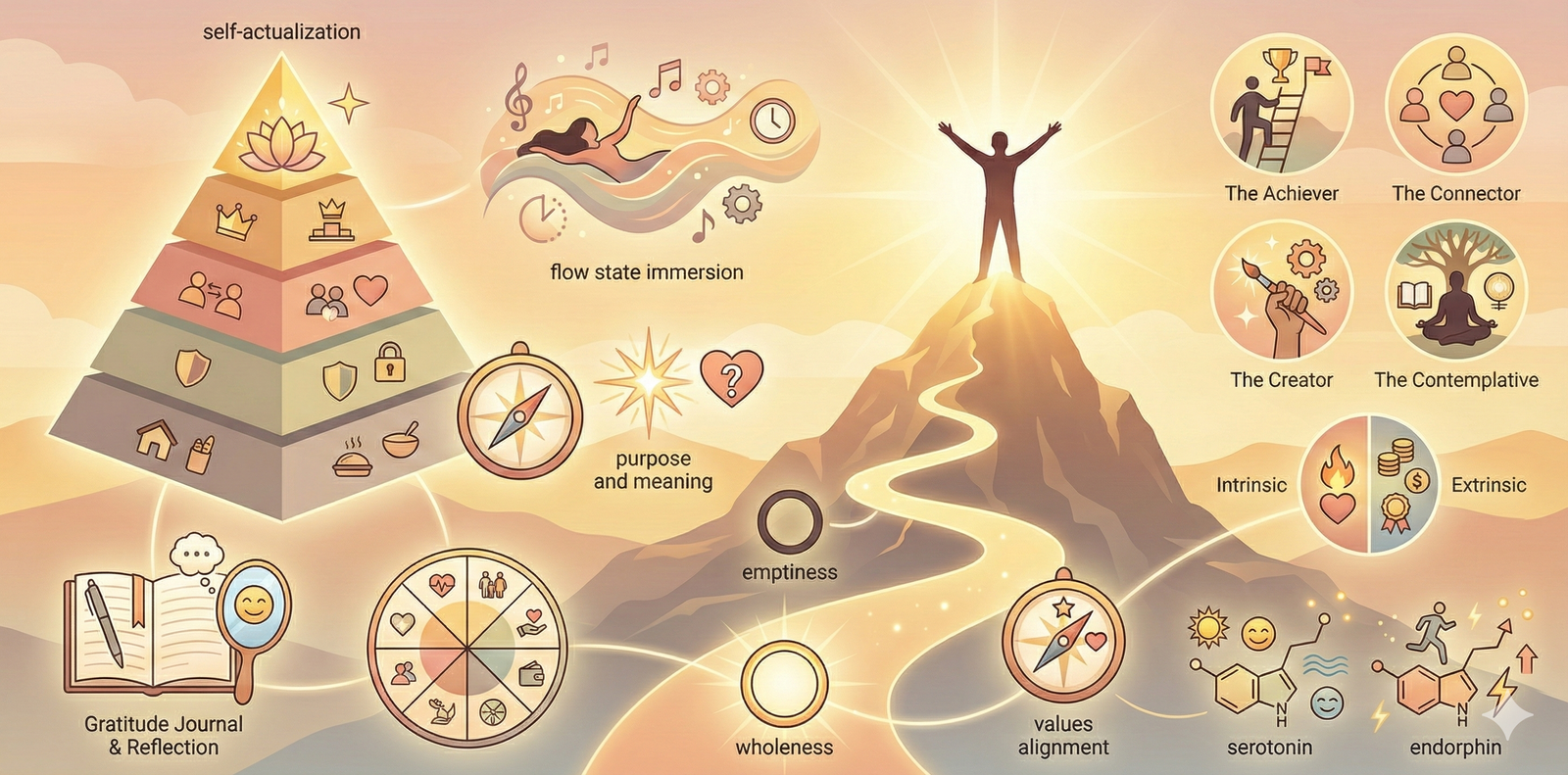
Many people confuse fulfillment with happiness, but they're fundamentally different. Happiness tends to be temporary and reactive to external events. Fulfillment, by contrast, comes from living in alignment with your personal values and making meaningful contributions to your own life and the lives of others.
This guide explores what fulfillment truly means, the psychological science behind it, and concrete steps you can take today to build a more deeply satisfying life.
What Is Fulfillment?
Fulfillment is a psychological state in which you feel a sense of wholeness, meaning, and contentment that comes from recognizing your personal impact and living according to your core values. It involves appreciating your accomplishments, acknowledging your growth, and seeing how your life matters in the broader context of your relationships and community.
Not medical advice.
The concept of fulfillment extends beyond individual happiness. Research distinguishes fulfillment from mere life satisfaction. Life satisfaction is your general feeling about how well your life is going. Fulfillment, however, is a deeper evaluation that asks: Does my life feel whole? Am I becoming the person I want to be? Do my daily actions reflect what I truly value?
Surprising Insight: Surprising Insight: According to 2025 research, fulfillment is not about achieving more—it's about aligning what you have with what matters to you. People who focus solely on accomplishment without meaning often struggle with emptiness despite external success.
Happiness vs. Fulfillment
The key differences between temporary happiness and lasting fulfillment
🔍 Click to enlarge
Why Fulfillment Matters in 2026
In our fast-paced, digitally-connected world, the pursuit of fulfillment has become more important than ever. Research from the World Economic Forum and leading psychology institutions shows that people who feel fulfilled report significantly better mental health, physical health outcomes, and resilience during challenging times.
Studies reveal that fulfillment is a protective factor against anxiety, depression, and burnout. When you have a sense of purpose and meaning, you're better equipped to handle stress, recover from setbacks, and maintain motivation even during difficult periods. Your brain actually responds differently to challenges when they feel connected to something meaningful.
Furthermore, fulfillment is associated with longevity and better overall health outcomes. Research shows that individuals who rate their lives as fulfilling report better self-rated health, lower rates of chronic disease, and greater life expectancy. Pursuing fulfillment isn't selfish—it's an investment in your wellbeing and capacity to contribute meaningfully to the world.
The Science Behind Fulfillment
Psychological research identifies three core psychological needs that must be met for fulfillment: autonomy, competence, and relatedness. These needs are not optional; they're fundamental to human psychology. When these needs are satisfied, people naturally experience greater fulfillment and wellbeing.
Autonomy means having a sense of choice and control over your life direction. Competence involves developing skills and seeing yourself make progress. Relatedness refers to feeling connected to others and part of a community. When all three work together, you create the conditions for deep fulfillment.
The Fulfillment Triangle
Three psychological needs that create lasting fulfillment
🔍 Click to enlarge
Key Components of Fulfillment
Purpose and Meaning
Purpose is the sense that your life direction aligns with something larger than yourself. It answers the question: Why does my life matter? Research shows that people with a strong sense of purpose experience better mental health, greater resilience, and higher life satisfaction. Your purpose doesn't need to be grand—it can be as simple as raising children with values, creating art that moves people, or helping others learn and grow.
Personal Growth and Development
Fulfillment requires continuous growth. This doesn't mean chasing achievement endlessly. Instead, it means regularly stretching yourself, learning new skills, overcoming challenges, and becoming more of who you want to be. When you're growing, you feel alive and capable. When you're stagnant, even success feels hollow.
Meaningful Relationships and Connection
The Harvard Study of Adult Development, one of the longest-running psychological studies, conclusively shows that strong relationships are the greatest predictor of fulfillment and longevity. Quality connections—with family, friends, and community—provide emotional support, shared meaning, and a sense of belonging that nothing else can replace.
Impact and Contribution
Fulfillment involves recognizing that you make a difference. This can mean directly helping others, creating something of value, mentoring someone, or contributing to a cause you believe in. When you see your positive impact, you feel that your existence matters. This sense of generativity—concern for future generations and the legacy you're creating—is strongly linked to fulfillment.
| Component | Definition | Impact on Wellbeing |
|---|---|---|
| Purpose & Meaning | Sense that life direction aligns with values | Reduced anxiety, greater resilience |
| Personal Growth | Continuous learning and self-development | Increased confidence, expanded capabilities |
| Relationships | Quality connections and community belonging | Better mental health, longer lifespan |
| Impact & Contribution | Recognition of positive difference made | Stronger sense of self-worth, life satisfaction |
How to Apply Fulfillment: Step by Step
- Step 1: Clarify Your Core Values: Spend time identifying 3-5 values that matter most to you (e.g., creativity, family, service, learning). Write why each matters. When daily actions align with these values, fulfillment naturally increases.
- Step 2: Assess Your Current Life Alignment: Review your time, energy, and resources. What percentage goes toward things that matter to you? What gaps exist between your values and your actual daily life? Honest assessment is the first step to change.
- Step 3: Identify Your Purpose: Consider what unique combination of skills, experiences, and interests you have. What problems in the world concern you? What could you do for hours without getting bored? Your purpose often lives in the intersection of what you're good at and what you care about.
- Step 4: Set Growth-Oriented Goals: Rather than chasing external outcomes, set goals focused on becoming someone—developing resilience, mastering a skill, becoming more patient. Growth-focused goals create fulfillment regardless of external results.
- Step 5: Invest in Key Relationships: Schedule regular, quality time with people you care about. This isn't optional. The research is clear: relationships are the foundation of fulfillment. Make them a priority, not an afterthought.
- Step 6: Create Small Acts of Service: You don't need to change careers to experience fulfillment through contribution. Mentor someone, volunteer, support a friend's goal, or create something you share with others. Small acts of generosity create meaningful impact.
- Step 7: Build in Reflection Time: Weekly reflection helps you notice progress, appreciate what you've created, and adjust course. Spend 15 minutes each week reviewing: What felt fulfilling this week? What's one growth moment I experienced? How did I connect with others?
- Step 8: Let Go of External Validation: Fulfillment dies when you're living for others' approval. Make deliberate choices based on your values, not trending paths. This is where real freedom begins.
- Step 9: Embrace Your Unique Path: There's no single formula for fulfillment. Your path will look different from anyone else's. Give yourself permission to pursue what actually matters to you, even if it doesn't match expectations.
- Step 10: Track Your Fulfillment: Notice patterns. When do you feel most alive? What activities energize rather than drain you? What relationships feel nourishing? Your fulfillment signals guide you toward more of what works.
Fulfillment Across Life Stages
Young Adulthood (18-35)
In young adulthood, fulfillment often centers on identity formation and establishing autonomy. You're discovering who you are separate from family expectations. The challenge is avoiding the trap of should do versus want to do. Research shows that young adults who take time to identify their values early experience greater fulfillment throughout life. This is also when foundational relationships and early career direction significantly impact later satisfaction.
Middle Adulthood (35-55)
Middle adulthood often brings a shift toward generativity—finding fulfillment through mentoring, leadership, and contribution. Many people reassess whether their lives align with their values. This life stage offers a powerful opportunity to adjust course if needed. Those who successfully integrate purpose, relationships, and personal growth during this period report highest life satisfaction.
Later Adulthood (55+)
In later adulthood, fulfillment centers on legacy, wisdom-sharing, and life review. Research shows that older adults who feel their lives were fulfilling experience better health outcomes and greater peace. The focus shifts from What will I achieve? to What has my life meant? What will I leave behind? Maintaining relationships, passing knowledge to younger generations, and acknowledging accomplishments become primary sources of fulfillment.
Profiles: Your Fulfillment Approach
The Achiever
- Redefining success beyond external metrics
- Connecting accomplishments to deeper meaning
- Building relationships alongside achievement
Common pitfall: Pursuing achievement without purpose, leading to hollow victories
Best move: Pause quarterly to ask: Does this goal align with my values? Am I becoming who I want to be?
The Connector
- Understanding that nurturing relationships IS fulfillment
- Creating impact through your connections
- Setting boundaries to prevent caretaking burnout
Common pitfall: Losing yourself in others' needs, forgetting your own growth
Best move: Balance supporting others with investing in your own development. Your growth makes you a better support for others.
The Creator
- Channeling creativity into meaningful expression
- Finding outlets for original thinking
- Building community around your creations
Common pitfall: Creating in isolation or abandoning projects before completion
Best move: Share your work. The fulfillment deepens when others connect with what you create.
The Contemplative
- Honoring your reflective nature as a strength
- Balancing introspection with action
- Finding ways to apply insights to make a difference
Common pitfall: Getting stuck in analysis without taking meaningful steps
Best move: Trust your deep understanding. Use reflection as a guide to purposeful action.
Common Fulfillment Mistakes
One of the biggest mistakes people make is chasing happiness instead of fulfillment. Happiness is a nice side effect, but it's not stable. When you build your life around pursuits that fulfill you—even challenging ones—you experience deeper satisfaction that happiness alone can't provide. Purpose often involves difficulties, but those difficulties feel worth it.
Another common mistake is waiting until you have 'enough' before pursuing what matters. Enough money, enough time, enough stability. But fulfillment isn't a destination you reach after preparation; it's built through alignment starting now. The fulfillment you're waiting for won't automatically arrive—it's created through deliberate choices today.
A third mistake is trying to force someone else's definition of fulfillment onto yourself. You might think fulfillment requires travel, or marriage, or a certain career. But fulfillment is personal. It requires honest self-knowledge about what actually matters to you, not what you think should matter.
From Obstacles to Fulfillment
Common barriers and how to overcome them
🔍 Click to enlarge
Science and Studies
Contemporary psychological research has moved beyond simple happiness metrics to understand fulfillment. The Basic Psychological Need Theory (BPNT), grounded in decades of research, shows that autonomy, competence, and relatedness are universal human needs. When these are met, wellbeing naturally follows.
- Harvard Study of Adult Development (80+ years): Strong relationships are the greatest predictor of health, happiness, and longevity
- Research on Meaning and Fulfillment (2025, ScienceDirect): Fulfillment is a distinct psychological construct that predicts mental wellbeing beyond life satisfaction alone
- Assessing Psychological Need Fulfillment (2024, Frontiers in Psychology): Systematic review showing measurement of need fulfillment consistently predicts wellbeing across cultures
- The Fulfilled Life Scale (2021, Frontiers): New research scale measuring fulfillment across dimensions of personal growth, meaningful relationships, and life impact
- World Economic Forum Study: Pursuing fulfillment is not a luxury but essential for mental health, with research showing strong correlation between fulfillment and resilience
Your First Micro Habit
Start Small Today
Today's action: Spend 5 minutes daily identifying one decision you made today that aligned with your values. If you can't find one, commit to one value-aligned action tomorrow. Track it.
This micro habit trains your brain to notice alignment between your values and actions. Over time, this awareness creates natural momentum toward more fulfilling choices without requiring massive willpower or life overhaul. You're building fulfillment through consistency, not perfection.
Track your daily value-aligned actions and build fulfillment momentum with personalized guidance from our AI mentor app.
Quick Assessment
How would you describe your current sense of fulfillment?
Your current fulfillment level reflects how well your daily life aligns with your values. This assessment helps identify your starting point for building deeper satisfaction.
Which aspect feels most important for your fulfillment?
Different people's fulfillment comes from different sources. Knowing your primary source helps you prioritize where to focus your energy and attention.
What's your biggest challenge in pursuing fulfillment?
Identifying your specific barrier helps you address it directly. Most fulfillment blocks have practical solutions once you name them clearly.
Take our full 50-question assessment to get personalized recommendations for building fulfillment.
Discover Your Style →Next Steps
Building fulfillment is a progressive journey, not a single decision. Start by clarifying your core values—the 3-5 things that matter most to you. This clarity alone shifts how you approach daily choices. From there, gradually increase alignment between your values and your time, energy, and relationships.
Remember that fulfillment is not selfish; it's the foundation of your capacity to show up meaningfully in relationships, contribute to your community, and weather life's challenges. When you're fulfilled, everyone around you benefits from your greater presence, resilience, and positive energy. The world needs you fulfilled.
Get personalized guidance and track your progress toward greater fulfillment.
Start Your Journey →Research Sources
This article is based on peer-reviewed research and authoritative sources. Below are the key references we consulted:
Related Glossary Articles
Frequently Asked Questions
Is fulfillment the same as happiness?
No. Happiness is temporary and emotion-based. Fulfillment is a lasting psychological state based on living aligned with your values and seeing meaning in your life. You can be fulfilled while experiencing difficult emotions.
Can I feel fulfilled in a job I don't love?
Yes. Fulfillment comes from alignment with your values, not just job satisfaction. If your work aligns with your values (providing for family, helping others, creating stability), or if other areas of your life are deeply fulfilling, overall fulfillment is possible.
How long does it take to build fulfillment?
You can feel increased fulfillment relatively quickly by aligning one area of your life with your values. However, deep, stable fulfillment builds over months and years as you consistently choose alignment and invest in relationships and growth.
Is fulfillment selfish?
No. Pursuing fulfillment actually makes you better equipped to contribute to others. When your needs are met and you feel purposeful, you have more to give. Burning yourself out helps no one.
What if I don't know my values?
This is common and fixable. Start by noticing when you feel most alive, proud, or satisfied. What were you doing? Who were you with? These moments reveal your values. Writing exercises and reflection time help clarify them.
Take the Next Step
Ready to improve your wellbeing? Take our free assessment to get personalized recommendations based on your unique situation.
- Discover your strengths and gaps
- Get personalized quick wins
- Track your progress over time
- Evidence-based strategies