Vulnerability in Relationships
Vulnerability is the courage to open your heart despite the risk of being hurt. It's the foundation of genuine intimacy, where you allow your partner to see your authentic self—your fears, hopes, insecurities, and deepest needs—without hiding behind protective walls. In an age of emotional armor and self-protection, vulnerability has become a revolutionary act. Research shows that couples who embrace vulnerability experience stronger bonds, greater trust, and more meaningful connection than those who maintain emotional distance.
If you've ever felt the fear of rejection when considering opening up to someone you love, or wondered whether showing weakness might push your partner away, you're not alone. The paradox of vulnerability is that it feels dangerous, yet it's precisely what creates safety in relationships.
This guide explores the science of vulnerability, practical strategies for developing emotional openness, and how to transform fear into connection in your most important relationships.
What Is Vulnerability?
Vulnerability is the willingness to expose your authentic self—your true thoughts, feelings, fears, and needs—to another person, knowing there's a possibility of rejection, misunderstanding, or hurt. It's not about oversharing indiscriminately or being emotionally reckless. Rather, it's a conscious choice to be genuine and open with someone you trust, creating the conditions for real intimacy to develop.
Not medical advice.
Vulnerability involves emotional exposure in relationships, where you share your authentic self with a partner through honesty and emotional openness. This creates the foundation for deeper understanding and connection. Research published in Psychology Today shows that vulnerability is essential for building trust and intimacy, as it signals to your partner that you trust them enough to let down your emotional defenses.
The concept of vulnerability has been studied extensively in relationship psychology and neuroscience. At its core, vulnerability is not about weakness or fragility. Instead, it represents the strength to be authentic in a world that constantly pressures us to present a curated version of ourselves. When you allow yourself to be vulnerable with someone, you're making a declaration: 'This is who I really am, flaws and all, and I trust you enough to see it.' This declaration creates the psychological and emotional foundation for genuine intimacy.
Many people confuse vulnerability with victimhood or dependency, but these are fundamentally different experiences. Vulnerability is empowering because you're choosing it consciously. You're deciding when, how, and with whom to open up. Victimhood, by contrast, is something done to you. Understanding this distinction is crucial because it reframes vulnerability from something passive and fearful to something active and courageous.
In contemporary relationship science, vulnerability is recognized as a non-negotiable component of secure attachment. When both partners develop the capacity for appropriate vulnerability—sharing fears, hopes, insecurities, and needs—they create what researchers call a secure emotional bond. This bond acts as a buffer against life's stressors and provides a foundation from which both individuals can grow and explore the world with confidence.
Surprising Insight: Surprising Insight: You cannot selectively numb emotion. When you numb difficult feelings like fear or shame, you simultaneously numb joy, gratitude, and happiness. Authentic vulnerability is the pathway to experiencing the full spectrum of human emotion.
The Vulnerability Paradox
How vulnerability creates safety through mutual emotional exposure, building trust and intimacy between partners.
🔍 Click to enlarge
Why Vulnerability Matters in 2026
In our hyper-connected yet emotionally distant world, genuine vulnerability has become more important than ever. Digital communication allows us to control our image and curate our persona, yet these same tools often create barriers to authentic connection. Relationships built without vulnerability tend to remain superficial—partners can feel disconnected, resentful, and unseen.
Research from the Journal of Social Psychology reveals that couples who share emotional vulnerability experience higher relationship satisfaction, better communication, and greater resilience during difficult times. In 2026, as society increasingly recognizes mental health and emotional wellness, vulnerability is being reframed from weakness to courage—a strength that builds foundations of trust and authentic love.
The stakes are high: relationships without vulnerability often deteriorate because partners never truly know each other. By contrast, couples who practice vulnerability report feeling genuinely seen, understood, and valued by their partners. This creates a positive feedback loop where increased openness leads to deeper connection, which makes future vulnerability feel safer and more natural.
In the context of 2026, we're witnessing a cultural shift. Mental health conversations are mainstream. Therapy is normalized. And people increasingly understand that emotional intelligence and relational capacity are as important as professional achievement or financial success. Vulnerability is central to this shift because it's the skill that enables authentic connection and psychological safety in relationships.
Furthermore, research from couples therapy indicates that the capacity for vulnerability is one of the strongest predictors of relationship longevity and satisfaction. Couples who can navigate vulnerability together—who can share fears, admit needs, and ask for support—report significantly higher levels of commitment and satisfaction than couples who maintain emotional distance. This suggests that vulnerability isn't just important; it's essential to creating relationships that not only survive but thrive.
The cost of avoiding vulnerability is significant. Emotionally distant relationships often devolve into patterns of resentment, misunderstanding, and disconnection. Partners may stay together physically but become strangers emotionally. By contrast, relationships where vulnerability is cultivated and reciprocated develop what researchers call 'emotional intimacy'—the sense of being deeply known, accepted, and valued by another person. This emotional intimacy is what people report missing most when relationships end, and it's what they seek to build when relationships begin.
The Science Behind Vulnerability
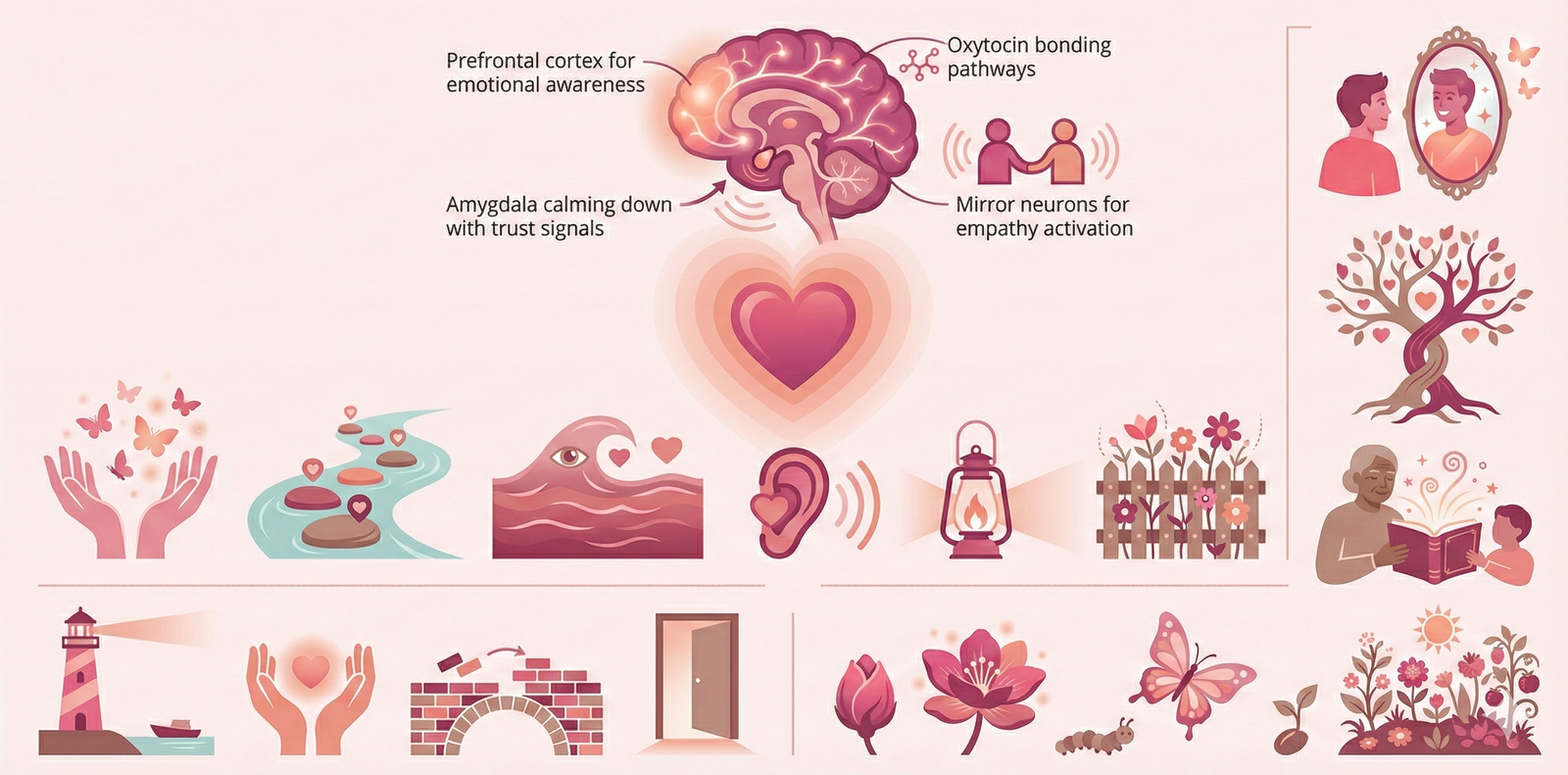
Neuroscientific research shows that vulnerability activates the parasympathetic nervous system—the part of your brain responsible for trust, safety, and bonding. When you share something vulnerable with a partner and receive a compassionate response, your brain releases oxytocin (the bonding hormone), strengthening the attachment between you. This creates a biological basis for why vulnerability deepens love.
Research by Brené Brown, who has spent over twelve years studying vulnerability and shame, found that people who feel emotionally whole understand vulnerability as a strength, not a weakness. After analyzing data from thousands of interviews, Brown concluded that there is no courage without vulnerability. Her work demonstrates that vulnerability is the birthplace of innovation, creativity, belonging, love, and joy—the very experiences that make life worth living.
The neurobiology of vulnerability is fascinating. When you experience fear or anxiety about opening up, your amygdala (the threat-detection center of your brain) becomes activated. This is why vulnerability feels dangerous—your brain is literally registering it as a potential threat. However, when your partner responds with compassion and acceptance to your vulnerability, your nervous system receives a different signal: 'This is safe. This person cares about you. Your authentic self is acceptable.' Over time, as your partner repeatedly responds positively to your vulnerability, your brain learns to associate emotional openness with safety rather than threat.
This process is called 'nervous system recalibration,' and it's foundational to attachment theory. Attachment theory, developed by John Bowlby and expanded by Mary Ainsworth and others, explains how early relationships shape our capacity for vulnerability throughout life. If you experienced caregivers who responded compassionately to your emotional needs, you likely developed what's called 'secure attachment'—the ability to be vulnerable with others because you learned that openness leads to comfort and connection.
If, conversely, your early experiences involved caregivers who were dismissive, critical, or unavailable when you were vulnerable, you may have developed protective patterns. You might have learned that vulnerability leads to rejection, abandonment, or criticism. These learned patterns are powerful and persistent, but they're not permanent. Through conscious effort and with supportive partners or therapists, you can develop new patterns of vulnerability that feel safer and more rewarding.
Neuroscience of Vulnerability
How emotional openness triggers neurological responses that strengthen bonding and trust between partners.
🔍 Click to enlarge
Key Components of Vulnerability
Emotional Honesty
Emotional honesty means acknowledging and expressing what you truly feel, even when those feelings are uncomfortable, inconvenient, or unpopular. It's the willingness to say 'I'm scared,' 'I feel hurt,' or 'I need help' rather than hiding behind a facade of strength or positivity. In relationships, emotional honesty creates alignment between what's happening inside you and what your partner sees, eliminating the exhaustion of maintaining a false persona.
Emotional honesty is more than just naming your feelings; it's about being truthful about your internal experience without filtering it through what you think your partner wants to hear. Many people struggle with this because they were taught to manage other people's emotions, to protect others from their authentic feelings, or to present a certain image. Developing emotional honesty requires unlearning these patterns and trusting that your authentic feelings—even the difficult ones—are worth sharing and deserve to be heard.
Authentic Self-Disclosure
This involves gradually revealing your true thoughts, experiences, and values to your partner over time. Authentic self-disclosure isn't about dumping all your insecurities on someone immediately; it's about thoughtfully sharing aspects of yourself that matter—your dreams, your past wounds, your values, and your needs. This builds intimacy progressively and allows trust to develop at a healthy pace.
Relationship research identifies a phenomenon called 'reciprocal self-disclosure,' which suggests that vulnerability naturally escalates in healthy relationships. When you share something vulnerable and your partner responds with their own vulnerability, it creates a cycle that deepens intimacy. Early in relationships, vulnerability tends to be low-risk: sharing favorite movies, childhood memories, or career aspirations. As trust builds, vulnerability deepens: sharing fears about commitment, insecurities about appearance, or doubts about life direction. This natural progression allows both partners to develop trust at a pace they can handle.
Risk Tolerance
Vulnerability requires accepting that your partner might not respond perfectly, might not understand, or might even use your openness against you. Risk tolerance is the ability to sit with this uncertainty and choose openness anyway, based on evidence that your partner is trustworthy. This doesn't mean trusting blindly; it means trusting based on consistent, caring behavior over time.
Risk tolerance in relationships is built through repeated experiences of safety. Early in relationships, the risk of vulnerability is high because you don't yet know how your partner will respond. Testing small vulnerabilities allows you to gather data: Does your partner listen with genuine interest? Do they respect your privacy? Do they use your openness against you in arguments? Do they reciprocate with their own vulnerability? Each positive experience increases your risk tolerance and willingness to be more open. Conversely, repeated breaches of trust (having your confidences shared, having your vulnerabilities mocked or weaponized) rightfully decrease your risk tolerance and increase your protective barriers.
Boundary Awareness
Healthy vulnerability isn't about sharing everything with everyone. It requires knowing your boundaries—what you're comfortable revealing, to whom, and at what pace. Boundary awareness ensures that your openness is mutual and reciprocal, that you're not oversharing with someone who hasn't earned your trust, and that your vulnerability is met with respect and care.
Boundary awareness is particularly important because many people swing between extremes: either they share nothing with anyone, or they overshare indiscriminately. Healthy vulnerability requires discernment. Some information might be appropriate to share with your partner but not with friends. Some vulnerabilities might be too deep for early dating but perfect for long-term committed relationships. Boundary awareness allows you to be authentic while also protecting yourself and respecting the readiness of others to hear your truth.
| Stage | Type of Vulnerability | Key Actions |
|---|---|---|
| Early Dating | Gradual self-revelation | Share interests, values, gentle personal stories |
| Building Connection | Deeper emotional sharing | Discuss fears, past experiences, hopes for relationship |
| Committed Partnership | Full emotional openness | Share insecurities, needs, dreams, receive support |
How to Apply Vulnerability: Step by Step
- Step 1: Assess your current comfort with vulnerability by reflecting: What fears come up when you imagine sharing something deep with your partner? What past experiences shaped your vulnerability patterns?
- Step 2: Start small with low-risk vulnerability—share something you've never mentioned before, something that matters to you but feels manageable to reveal.
- Step 3: Pay attention to your partner's response. Do they listen with genuine interest? Show compassion? Respect your privacy? Use this to build trust gradually.
- Step 4: Name your emotions clearly: Instead of 'I'm fine,' try 'I feel anxious about this decision' or 'I'm hurt by what happened.' Precision creates understanding.
- Step 5: Share your needs explicitly: 'I need reassurance,' 'I need space,' 'I need you to listen without trying to fix this.' Clear communication prevents misunderstandings.
- Step 6: Practice reciprocal vulnerability: When your partner opens up, respond with compassion and care. Create safety so they feel as comfortable being vulnerable as you want to be.
- Step 7: Notice the courage it takes to be vulnerable, and acknowledge that in yourself. This isn't weakness—it's bravery.
- Step 8: If you receive a negative response to your vulnerability, process it: Was your partner simply unready? Did they lack emotional capacity that day? Use this data to assess whether this relationship is safe for deeper openness.
- Step 9: Gradually increase the depth of vulnerability as trust builds. Share bigger fears, deeper dreams, more authentic parts of yourself.
- Step 10: Remember that vulnerability is ongoing, not one-time. Continue creating space for emotional honesty as your relationship evolves and deepens.
Vulnerability Across Life Stages
Young Adulthood (18-35)
In young adulthood, vulnerability often involves navigating romantic relationships while still forming your identity. This stage often includes learning what healthy vulnerability looks like, recognizing unhealthy patterns from family of origin, and beginning to set boundaries. Many young adults struggle with vulnerability because they're still developing self-awareness. The key focus here is learning to communicate your needs clearly, recognizing your emotional patterns, and building resilience in the face of rejection or misunderstanding in early relationships.
Young adults are often in the process of developing their 'relationship template'—the patterns they'll carry forward. If they experience partners who respond compassionately to vulnerability, they build confidence that openness is safe. If they experience partners who dismiss, mock, or weaponize their vulnerability, they may develop protective patterns that persist into later relationships. This is why early relationship experiences have such profound impact. Understanding your patterns now, and consciously choosing healthier partners and responses, can significantly reshape your entire relationship trajectory.
Middle Adulthood (35-55)
By middle adulthood, many people have accumulated relationship experiences that either deepen their capacity for vulnerability or create protective barriers. At this stage, vulnerability often involves admitting doubts about life direction, sharing fears about aging or career, and being honest about relationship dissatisfaction rather than pushing through quietly. Middle-aged adults often find that vulnerability creates renewal in long-term relationships—when partners finally discuss the real state of their connection, transformation becomes possible.
Many middle-aged people experience what's sometimes called a 'vulnerability awakening.' Having invested years in a relationship, accumulated life experiences, and developed more self-awareness, they begin to recognize the cost of emotional distance. They realize they've built their professional lives or raised children while neglecting emotional connection with their partner. This recognition can be painful, but it's also an opportunity. When couples at this stage consciously choose vulnerability—perhaps with the help of therapy—they often report their relationships deepening in ways they didn't think possible. They feel seen for who they actually are, not just the roles they've been playing.
Later Adulthood (55+)
In later adulthood, vulnerability often centers on mortality, legacy, and deepening spiritual or philosophical connection with partners. Many people report that vulnerability becomes easier because the pressure to maintain a certain image decreases. At this stage, honest conversations about aging, end-of-life wishes, and life review become profoundly important. Couples who embrace vulnerability at this stage often report their deepest and most meaningful periods of connection.
There's a poignant quality to vulnerability in later adulthood. With fewer years ahead, the superficial simply matters less. Many older couples report that their later years together are their happiest, despite physical decline, because they've finally let go of image management and are simply being with each other as they are. This doesn't happen automatically—it requires choosing vulnerability, sharing fears and hopes honestly, and supporting each other through the transitions aging brings. The gift of later-life vulnerability is that it deepens the meaning of remaining time together.
Profiles: Your Vulnerability Approach
Everyone has a unique vulnerability style based on their history, attachment patterns, and lived experiences. Understanding your profile can help you recognize your patterns and make conscious choices about how you want to show up in relationships.
The Protective Armor Builder
- Clear evidence that opening up is safe
- Gradual exposure rather than sudden deep sharing
- Reassurance that vulnerability won't be weaponized
Common pitfall: Maintaining emotional walls even in committed relationships, leading to loneliness despite being partnered. Partners feel rejected and eventually stop trying to connect.
Best move: Start by naming emotions in small moments ('I felt embarrassed then') to practice emotional vocabulary and build trust incrementally. Consider therapy to explore the origins of protective patterns.
The Oversharer
- Boundaries around what, when, and with whom to share
- Understanding that vulnerability is reciprocal
- Awareness of emotional capacity of others
Common pitfall: Sharing too much too quickly, overwhelming partners and creating an imbalanced dynamic where the partner becomes a therapist rather than a peer. This often leads to partners feeling burdened and withdrawing.
Best move: Practice asking 'Are you ready to hear this?' and respecting if your partner says no, developing discernment about timing and audience. Notice when you're sharing to feel heard versus to create genuine connection.
The Selective Sharer
- Recognition that specific vulnerabilities matter to specific people
- Permission to have different levels of openness in different relationships
- Understanding that some fears are worth sharing even if uncomfortable
Common pitfall: Never sharing the things that matter most, keeping partners at an emotional distance even in intimate relationships. This creates a paradoxical situation where you're partnered but not truly known.
Best move: Identify the 2-3 vulnerabilities that would transform your primary relationship if you shared them, and create a safe moment to do so. Start with one.
The Already Vulnerable Soul
- Reciprocal vulnerability from partners
- Boundaries to prevent being used or manipulated
- Recognition that vulnerability has limits and shouldn't require constant emotional labor
Common pitfall: Giving vulnerable access to people who haven't earned it, experiencing repeated hurt from partners who don't reciprocate care. This pattern leads to feelings of being used and taking on emotional labor without reciprocation.
Best move: Assess whether partners are truly meeting your openness with their own vulnerability and care; if not, consider whether the relationship is balanced. You may need to develop more boundaries and be more discerning about who you trust.
Common Vulnerability Mistakes
One of the most common mistakes is confusing vulnerability with oversharing. Dumping all your emotional baggage on someone you've just met isn't vulnerability—it's emotional flooding. True vulnerability is thoughtful, reciprocal, and honors boundaries. If you're sharing constantly while your partner remains guarded, the dynamic becomes unbalanced and potentially damaging.
Another critical mistake is being vulnerable with people who haven't demonstrated trustworthiness. This sets up a painful pattern where you learn that opening up leads to hurt. Vulnerability should be gradual and earned. Test the waters with small shares and pay attention to whether your partner responds with care, discretion, and reciprocation before revealing deeper truths.
The third major mistake is using vulnerability as a tool to manipulate or control. Saying 'I'm hurt' to guilt your partner, or sharing vulnerability to evade responsibility, is not genuine openness—it's emotional manipulation. True vulnerability is honest, owns your part, and creates space for genuine dialogue rather than blame or defense.
A fourth mistake is expecting your partner to fix the vulnerable feelings you share. Vulnerability is for connection and understanding, not for problem-solving. When you share a fear or insecurity, you might not need your partner to fix it—you might just need them to acknowledge it and care about you despite it. Similarly, avoid expecting your vulnerability to immediately transform the relationship. Change takes time, consistency, and mutual effort.
Finally, many people mistake vulnerability for admitting wrongdoing or apologizing. While apologies can involve vulnerability, simply saying 'I'm sorry' doesn't create emotional intimacy if it's not paired with genuine understanding of how your actions affected your partner. Real vulnerability in relationships involves understanding not just what you did wrong, but why—what fears or insecurities drove the behavior, and what you're committed to changing.
Vulnerability Mistakes Cycle
How common mistakes create barriers to authentic connection and how to break the cycle.
🔍 Click to enlarge
Science and Studies
The research on vulnerability in relationships is compelling and consistent. Studies in social psychology, neuroscience, and relationship science all demonstrate that emotional openness and vulnerability are not signs of weakness but foundations of strength. Couples who practice vulnerability report higher satisfaction, better communication, and greater resilience.
Multiple longitudinal studies have tracked couples over years, examining which factors predict relationship satisfaction and longevity. Consistently, the capacity for mutual vulnerability emerges as one of the strongest predictors of relationship success. Couples who practice vulnerability stay together longer, report higher satisfaction, experience better sexual intimacy, and navigate conflicts more effectively than couples who maintain emotional distance.
- Brené Brown's 12-year research project found that vulnerability is the birthplace of love, belonging, joy, courage, and creativity, and that there is no courage without vulnerability.
- Psychology Today research demonstrates that vulnerability is essential for building trust in relationships, as it signals to your partner that you trust them enough to let down emotional defenses.
- Studies on intimate relationships show that mutual vulnerability and emotional sharing significantly enhance relationship satisfaction and create stronger bonds between partners.
- Neuroscience research confirms that emotional vulnerability activates the parasympathetic nervous system and triggers oxytocin release, creating biological bonding between partners.
- Research on communication patterns reveals that couples who practice authentic emotional expression have fewer conflicts and resolve disagreements more effectively.
- Studies on attachment styles show that people with secure attachment—developed through experiencing vulnerability met with compassion—have more stable, satisfying relationships throughout their lives.
- Research on conflict resolution indicates that couples who can remain vulnerable during disagreements find solutions more quickly and with less lingering resentment than couples who become defensive or withdrawn.
Your First Micro Habit
Start Small Today
Today's action: Tonight, tell your partner one thing you've never told them before—something small but real. It could be a childhood fear, a current insecurity, a dream you've never voiced, or something you're struggling with. Listen to their response without defending or explaining. That's it.
This creates a low-stakes opportunity to practice vulnerability and assess your partner's response. Small acts of openness build the neural pathways and emotional capacity for larger vulnerability. You'll discover whether your partner is capable of receiving your authenticity, and you'll experience the relief that comes from being seen even in a small way. Notice your nervous system—how does your body respond after sharing? Pay attention to their response. Do they lean in, ask follow-up questions, share something in return? This data will inform your next steps in building vulnerability.
Keep quitting habit apps after a missed day? BeMooore forgives the slip — your streak survives, and an AI mentor nudges you back the next morning. Free on iOS.
Quick Assessment
How comfortable are you currently being vulnerable with your primary partner?
Your comfort level with vulnerability is likely shaped by past relationship experiences and your attachment style. If you're uncomfortable, that's not a character flaw—it's a signal that you may need more trust, safety, or different relational patterns to feel secure opening up.
What fear comes up most strongly when you consider being more vulnerable?
Your primary fear points to where you need to build new neural pathways. Someone with rejection fears needs to experiment with small sharings that confirm they remain loved. Someone with abuse fears needs to assess whether their partner is truly trustworthy or whether the relationship itself may be unsafe.
In your current relationship, does your partner reciprocate vulnerability?
Healthy vulnerability is reciprocal. If you're the only one opening up, the relationship dynamic is unbalanced. A partner who won't reciprocate openness either hasn't developed this capacity yet, isn't ready to, or isn't truly safe for your vulnerability. This insight is valuable information about your relationship.
Take our full assessment to get personalized recommendations.
Discover Your Style →Next Steps
Vulnerability is a skill that develops over time. You didn't learn to defend yourself overnight, and you won't unlearn those patterns instantly either. But each small act of openness rewires your nervous system toward greater safety and connection. Start with the micro habit above, paying close attention to how your partner receives your vulnerability.
If you find that your current relationship lacks reciprocal vulnerability, remember that change is possible. Many couples have transformed their relationships by consciously choosing vulnerability and creating safety for each other. The pathway forward often involves uncomfortable conversations—but discomfort is the price of depth and authenticity.
Consider exploring these practices further: journaling about your feelings to develop emotional awareness; practicing with lower-stakes relationships (friends, family) to build confidence; seeking therapy if you have deep wounds around trust and abandonment; reading books or taking courses on communication and vulnerability; and most importantly, choosing partners who demonstrate the capacity to receive vulnerability with compassion.
Remember that vulnerability is not a destination but an ongoing practice. Even in long-term relationships, vulnerability requires courage. But it's a courage that's rewarded with the deepest human experiences: being truly known, genuinely loved, and authentically connected with another person. That reward—that sense of being home in another person's presence—is worth every moment of discomfort vulnerability requires.
Get personalized guidance with AI coaching.
Start Your Journey →Research Sources
This article is based on peer-reviewed research and authoritative sources. Below are the key references we consulted:
Related Glossary Articles
Frequently Asked Questions
Isn't vulnerability the same as weakness?
No. Research shows that vulnerability is actually a sign of courage and strength. It takes far more bravery to open your heart knowing you might get hurt than to maintain protective walls. Weakness is the inability to be vulnerable; strength is the willingness to take that emotional risk. Consider this: it's easy to stay defended, to never risk rejection or hurt. It's actually harder, and therefore more courageous, to be open. The strongest people are often those most willing to be vulnerable because they've built enough self-worth that rejection doesn't destroy them.
How do I know if my partner is safe for vulnerability?
Safe partners respond to your openness with compassion, not judgment. They respect your privacy and don't use your vulnerabilities against you. They reciprocate with their own openness. They ask follow-up questions to understand better. If your partner dismisses, mocks, or weaponizes your vulnerability, that's a red flag that the relationship may not be safe for deeper openness. Track their patterns across multiple interactions—a single poor response might indicate a bad day, but a pattern of dismissiveness suggests deeper incompatibility.
What if I'm vulnerable and my partner isn't receptive?
Not every response to vulnerability will be perfect, and partners may sometimes lack emotional capacity in the moment. However, if your partner consistently dismisses, criticizes, or becomes defensive when you're vulnerable, you have important information: this relationship may not support your emotional needs. Consider whether the relationship is safe for ongoing vulnerability or whether you need to adjust your expectations and boundaries. You might also explore whether they have their own fears around vulnerability that prevent them from receiving yours.
Can you be vulnerable too early in a relationship?
Yes. Vulnerability should match the level of trust built. In early dating, sharing your core wounds might overwhelm a new partner who hasn't yet demonstrated they're trustworthy. Build vulnerability gradually, matching the depth of sharing to the depth of trust. This creates healthy attachment rather than premature bonding. A good rule of thumb: if you're sharing before you've observed consistent, caring behavior over time, you're likely being too vulnerable too soon.
How do I balance vulnerability with protecting myself?
Healthy vulnerability isn't about removing all boundaries. It's about conscious, gradual opening with people who demonstrate trustworthiness. You can be vulnerable while also protecting yourself by: sharing slowly, assessing responses, maintaining boundaries, and being willing to adjust your openness if a partner proves untrustworthy. Think of vulnerability as a gradual process, like slowly unlocking doors to your heart only as each room proves to be safe.
Is vulnerability the same in friendships and romantic relationships?
Vulnerability exists in all close relationships but often looks different. With romantic partners, vulnerability might include physical and emotional intimacy, future planning, and deep existential sharing. With friends, it might be emotional support, sharing struggles, or admitting insecurity. While the principles are the same—authentic sharing and mutual support—the scope and depth typically differ based on the nature of the relationship.
What if vulnerability triggers trauma responses in me?
If vulnerability—either your own or your partner's—triggers significant anxiety, panic, or trauma responses, this is valuable information that you may have wounds that need healing. Consider working with a trauma-informed therapist who can help you develop capacity for vulnerability gradually and safely. Therapy can help you understand where these responses originated and build new neural pathways that associate vulnerability with safety rather than danger.
Take the Next Step
Ready to improve your wellbeing? Take our free assessment to get personalized recommendations based on your unique situation.
- Discover your strengths and gaps
- Get personalized quick wins
- Track your progress over time
- Evidence-based strategies