Self-Disclosure
Have you ever hesitated before sharing something personal with someone you care about? That moment of vulnerability—deciding whether to reveal your true thoughts and feelings—sits at the heart of every meaningful relationship. Self-disclosure is the intentional act of sharing personal information, emotions, and experiences with others. It's what transforms casual acquaintances into close friends, and surface-level connections into deep, intimate partnerships. Research shows that people who engage in appropriate self-disclosure experience stronger relationships, better mental health, and greater overall life satisfaction. Yet many of us struggle with how much to share, when to share it, and with whom. This guide explores the science, psychology, and practical strategies behind effective self-disclosure—the foundation of authentic connection.
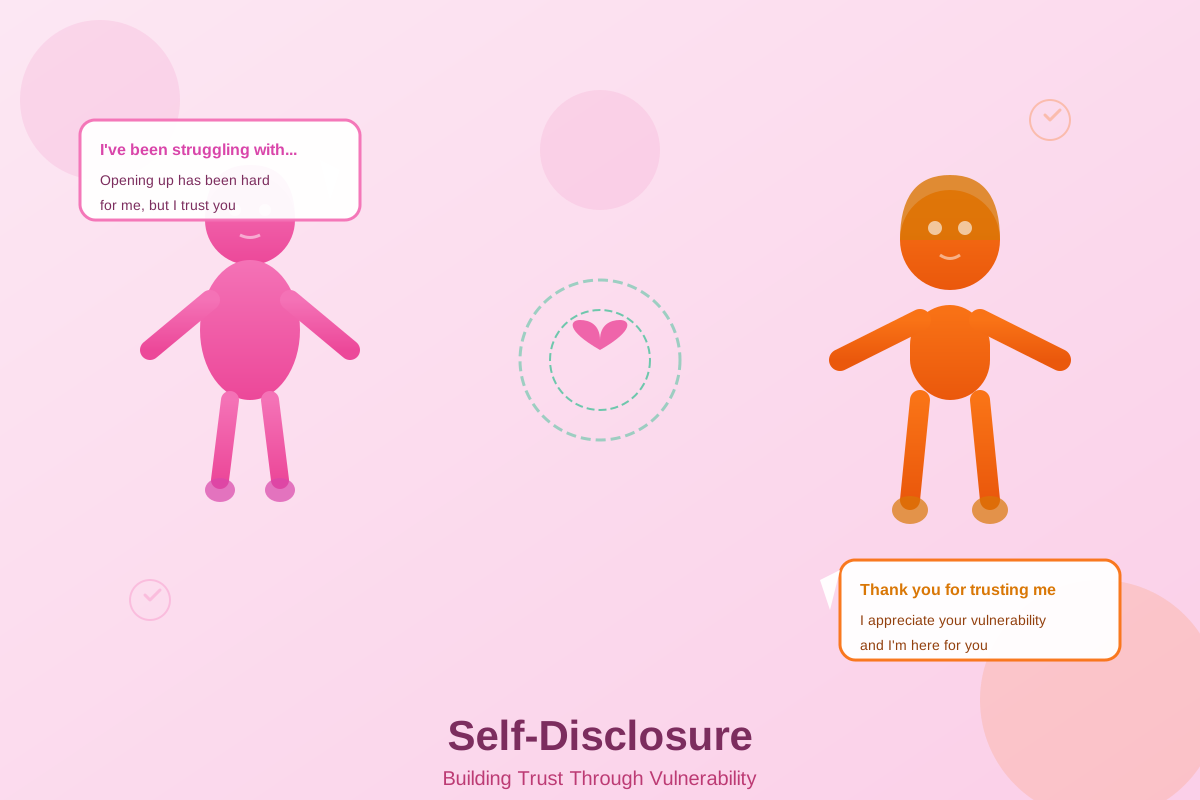
Self-disclosure isn't about oversharing or divulging every secret to the first person who listens. It's about strategic vulnerability—sharing the right information at the right time with the right person. When done correctly, it creates reciprocal trust, deepens emotional bonds, and helps others feel seen and understood. Throughout this guide, you'll discover why self-disclosure matters for your relationships, how attachment styles influence your ability to be vulnerable, and practical steps to share authentically without crossing into inappropriate territory.
Whether you're building new relationships, deepening existing ones, or recovering from past betrayals that make vulnerability feel risky, understanding self-disclosure can transform how you connect with others. Let's explore the research, personality patterns, and actionable strategies that will help you share more authentically.
What Is Self-Disclosure?
Self-disclosure is the process of intentionally revealing personal information, thoughts, feelings, and experiences to another person. It ranges from small revelations—like sharing a preference or mild concern—to deeper disclosures about trauma, insecurities, or intimate experiences. Psychologically, self-disclosure serves multiple functions: it allows others to know who we really are, it signals trust and creates psychological safety for reciprocal sharing, and it triggers rewarding brain activity related to dopamine release, making the experience pleasurable and reinforcing.
Not medical advice.
Self-disclosure exists on a spectrum of depth and breadth. Depth refers to how personal or intimate the information is—from surface-level preferences to deeply vulnerable admissions. Breadth refers to how many different topics you discuss with someone. Healthy relationships typically develop gradually along both dimensions. Early in relationships, disclosure is usually broader but shallow (many topics, little depth). As trust builds, relationships become narrower but deeper (fewer people, but much more intimate sharing). This natural progression is described by Social Penetration Theory, which explains how relationships develop through increasingly intimate exchanges.
Surprising Insight: Surprising Insight: Research reveals that self-disclosure activates the mesolimbic dopamine system—the brain's reward center—creating pleasure similar to eating food or receiving money. This neurological response explains why sharing personal information feels good and why people become more attracted to those who make them feel psychologically safe to be vulnerable.
Self-Disclosure Spectrum: Depth vs. Breadth
Visual representation showing how relationships develop through increasingly intimate disclosure
🔍 Click to enlarge
Why Self-Disclosure Matters in 2026
In an increasingly digital, fragmented world, authentic self-disclosure has become more valuable and more challenging than ever. People often present curated versions of themselves on social media, making genuine vulnerability feel risky. Yet research from 2024-2025 consistently shows that people crave real connection—the kind that only happens through honest self-disclosure. Those who engage in appropriate self-disclosure report higher relationship satisfaction, lower anxiety levels, and stronger immune function. In fact, the act of sharing personal information is linked to cathartic relief and emotional clarification, helping people process difficult experiences and gain new perspectives on their challenges.
Beyond individual benefits, self-disclosure strengthens the fabric of relationships themselves. When you reveal something personal and your partner responds with acceptance and reciprocal sharing, trust deepens exponentially. This creates a positive feedback loop where both people feel increasingly safe, which encourages more openness, which builds even stronger connection. Without self-disclosure, relationships remain stuck at a superficial level—enjoyable perhaps, but lacking the depth that makes relationships meaningful and resilient during difficult times.
For emerging adults and young professionals navigating complex work relationships, romantic partnerships, and family dynamics, understanding how to self-disclose appropriately has become a critical life skill. It affects everything from mental health and job satisfaction to relationship longevity and personal fulfillment.
The Science Behind Self-Disclosure
Recent neuroscience research reveals that self-disclosure activates reward pathways in the brain. When you share something personal with someone who responds positively, dopamine is released, creating a pleasurable sensation. This explains why vulnerable conversations often feel so good—your brain is literally rewarding you for connecting authentically. Additionally, self-disclosure has been shown to reduce stress levels, lower blood pressure, and strengthen immune function, suggesting that bottling up personal information carries real physiological costs.
Attachment theory provides another crucial lens for understanding self-disclosure. People with secure attachment styles—developed through consistent, responsive relationships in childhood—tend to be more comfortable with appropriate vulnerability. They disclose at moderate levels, reciprocate their partner's disclosures, and adjust their sharing based on the relationship's development. In contrast, those with anxious attachment may over-disclose as a strategy to secure closeness, while those with avoidant attachment may under-disclose, creating emotional distance. Understanding your attachment style helps explain your natural comfort level with sharing and reveals patterns you might want to adjust for healthier relationships.
Attachment Styles and Self-Disclosure Patterns
How different attachment styles influence disclosure comfort and reciprocity
🔍 Click to enlarge
Key Components of Self-Disclosure
Timing and Gradual Progression
Effective self-disclosure follows a natural progression. Early in relationships, appropriate disclosure is light and surface-level—sharing interests, goals, and non-threatening personal details. As trust builds through consistent positive interactions, disclosure gradually becomes deeper and more intimate. Rushing this progression (over-disclosing too early) can overwhelm the other person and damage trust. Conversely, never deepening disclosure keeps relationships trapped in surface-level interaction. The key is matching your disclosure level to the relationship's development stage and the other person's reciprocal sharing.
Reciprocity and Balance
Healthy disclosure operates according to a norm of reciprocity—the expectation that partners will exchange similar levels of vulnerability. When one person consistently discloses while the other remains guarded, an imbalance develops that prevents true intimacy. Reciprocal disclosure creates a sense of mutual investment and equal emotional risk-taking. Pay attention to whether your partner reciprocates your sharing. If they rarely open up when you do, this signals either discomfort with vulnerability or lack of trust in the relationship. Addressing this imbalance directly (itself a form of disclosure) can improve the relationship or clarify whether it's worth continuing.
Appropriateness and Context
What's appropriate to share varies dramatically by relationship type and context. Sharing anxieties about work performance with a trusted mentor is appropriate; sharing them with a casual coworker in the break room is not. Disclosing a relationship concern with your partner is healthy; disclosing it to their parent is a violation of trust. Appropriate disclosure considers the relationship's nature, the setting, the other person's capacity to hear it, and your motivation for sharing. Before disclosing something significant, ask yourself: Why am I sharing this? Is this person in a position to support it? Have we built enough trust? Is this the right setting? These questions help ensure your disclosure serves connection rather than creating awkwardness or burden.
Emotional Safety and Response
Self-disclosure only builds trust when met with acceptance and support. If you share something vulnerable and someone dismisses it, judges you, or uses it against you later, you've learned that vulnerability with this person is unsafe. This is why initial disclosures in new relationships often test the water—we reveal something relatively minor to gauge the response before sharing deeper secrets. Creating emotional safety for others involves listening without judgment, keeping shared confidences, validating their experience even if you disagree, and reciprocating with your own vulnerability. When people feel truly safe, they naturally disclose more deeply.
| Disclosure Depth | Examples | Appropriate With | Risk Level |
|---|---|---|---|
| Surface Level | Preferences, daily activities, mild opinions | Acquaintances, colleagues, strangers | Low—safe to share broadly |
| Personal Level | Goals, values, moderate concerns, past experiences | Friends, trusted colleagues, mentors | Medium—requires developing trust |
| Vulnerable Level | Fears, insecurities, trauma, shame, intimate details | Close friends, romantic partners, therapists | High—requires deep trust and safety |
How to Apply Self-Disclosure: Step by Step
- Step 1: Assess your attachment style by reflecting on how comfortable you are with vulnerability in relationships. Do you typically over-share, under-share, or find a healthy balance? Understanding your baseline helps you intentionally adjust your patterns.
- Step 2: Choose the right person by considering whether they've demonstrated trustworthiness, reciprocal openness, and consistent respect for confidences. Not everyone deserves access to your vulnerability.
- Step 3: Start small with lower-risk disclosures to gauge the response. Share something moderately personal and notice how the person responds. Do they listen without judgment? Offer support? Keep it confidential? This helps build trust gradually.
- Step 4: Match the relationship stage by ensuring your disclosure depth aligns with how long you've known someone and the intimacy level you've already established together. Don't dive too deep too fast.
- Step 5: Create the right setting by choosing a private, calm environment where both people can focus. A meaningful conversation about vulnerable topics requires psychological and physical space away from distractions.
- Step 6: Use reflective language that explains your experience without demanding a particular response. Say 'I've felt really anxious about...' rather than 'You always make me feel...' to own your experience rather than blaming the other person.
- Step 7: Invite reciprocal sharing by asking questions or creating space for the other person to respond with their own experiences. Healthy disclosure is conversational, not a monologue.
- Step 8: Notice the response and adjust accordingly. Pay attention to whether the person listens, validates, keeps confidence, and reciprocates. Their response teaches you how safe this relationship is for deeper vulnerability.
- Step 9: Build gradually by continuing to deepen disclosure only as trust solidifies. Each positive exchange should increase your comfort and willingness to share at deeper levels.
- Step 10: Reflect on impact by checking in with yourself after vulnerable conversations. Did you feel more connected? Did the relationship strengthen? Positive reflections reinforce healthy disclosure patterns.
Self-Disclosure Across Life Stages
Young Adulthood (18-35)
Young adulthood is a critical period for developing healthy self-disclosure patterns. You're navigating new relationships—romantic partners, roommates, colleagues—while developing your identity and learning who you are. During this stage, many people oscillate between oversharing (trying to build connection quickly) and undersharing (protecting themselves from judgment). The key task is learning to be authentically vulnerable while maintaining healthy boundaries. Friendships formed in young adulthood often become lifelong because they're built during a period of mutual vulnerability and growth. Romantic relationships benefit enormously from early, appropriate disclosure about values, relationship expectations, and personal history, which prevents misalignment later. Young adults who develop secure disclosure patterns tend to have more stable relationships and better mental health outcomes.
Middle Adulthood (35-55)
By middle adulthood, you typically know yourself better and have developed clear patterns around vulnerability. You may have experienced relationship successes and failures that taught you about disclosure timing and appropriateness. Many middle-aged adults struggle with increased self-disclosure in established relationships—comfort can lead to less conscious effort at maintaining openness and vulnerability. Simultaneously, career pressures, family obligations, and competing demands can make vulnerability feel like a luxury rather than a necessity. Recommitting to regular, intentional self-disclosure during this stage—with romantic partners, close friends, and even children—prevents relationships from becoming stale and keeps emotional connections strong. Interestingly, many people find that middle adulthood allows for deeper, more nuanced disclosure because you're less concerned with others' judgment of you.
Later Adulthood (55+)
In later adulthood, self-disclosure often becomes simpler and more direct. You care less about judgment and more about meaning. Many older adults report that their closest relationships involve high levels of authentic sharing about mortality, legacy, regret, and gratitude. Disclosure in this stage often centers on life review—looking back, processing experiences, and making peace with the past. For those in new relationships (second marriages, partnerships after widowhood), redeveloping disclosure patterns with a new partner can be simultaneously more efficient (you know what matters) and more vulnerable (you carry relationship history and fear of loss). Grandparent-grandchild relationships often involve different disclosure patterns—deliberately selective sharing that conveys wisdom without burdening younger generations.
Profiles: Your Self-Disclosure Approach
The Careful Sharer
- Permission to be gradually more vulnerable
- Consistent evidence of trustworthiness from others
- Private settings where disclosure feels safe
Common pitfall: Waiting for perfect safety before sharing means you may never disclose deeply, leaving relationships surface-level and others unable to truly know you
Best move: Identify one person in your life who has consistently shown respect and support, then intentionally share something moderately personal. Notice the positive response and build from there.
The Enthusiastic Oversharer
- Learning to observe before disclosing
- Understanding relationship stages and appropriate depth
- Developing awareness of when to pause and listen
Common pitfall: Over-disclosing early in relationships overwhelms others, creates imbalance, and often leads to embarrassment or relationship rupture when the other person hasn't built equal trust
Best move: Practice the rule of reciprocal disclosure: only share at the depth level that others have demonstrated. If someone shares something mildly personal, match that level rather than jumping to deeper disclosure.
The Selective Intimacy Builder
- Confidence in your discernment about who deserves trust
- Willingness to share beyond surface level with trusted people
- Recognition that appropriate vulnerability deepens trust
Common pitfall: While your caution prevents some harm, it may also prevent the deep connections that require some risk-taking and vulnerability
Best move: Choose one person you trust and gradually deepen your disclosure with them intentionally. Practice vulnerability in small increments and notice how it strengthens connection.
The Self-Aware Balancer
- Continued attention to ensure you're reciprocating
- Awareness of new relationship dynamics that may require adjusted disclosure
- Intentionality to prevent relationships from becoming stale
Common pitfall: Your balanced approach is healthy, but comfort can lead to complacency. Long-term relationships benefit from continued renewal through deeper disclosure over time
Best move: Periodically ask trusted people 'What don't you know about me that you'd like to understand better?' and share what emerges. This keeps intimacy fresh and deepens connection.
Common Self-Disclosure Mistakes
One widespread mistake is using self-disclosure as a dumping ground for emotional pain without checking whether the other person has capacity or willingness to hear it. Disclosing your deepest trauma to someone who just met you, or to someone already overwhelmed with their own challenges, burdens them unfairly. Another common error is confusing self-disclosure with complaint or blame. Saying 'I feel hurt when you cancel plans' (disclosure) is different from 'You always cancel and you don't care about me' (blame). Disclosure focuses on your internal experience; blame focuses on the other person's character or intentions.
A third mistake involves disclosing to the wrong person—sharing vulnerabilities with someone who has shown themselves to be judgmental, gossips, or competitive rather than supportive. Trust should be earned, not assumed. Related is the mistake of disclosing in inappropriate settings (sharing relationship concerns loudly at a party, disclosing professional struggles to someone you just met at work) where the context doesn't support true intimacy. Finally, many people make the mistake of never following up on disclosure—they reveal something vulnerable and then avoid the topic, which leaves the other person uncertain about whether their support was received or valued.
Common Self-Disclosure Mistakes and Solutions
Avoiding pitfalls in vulnerability and sharing
🔍 Click to enlarge
Science and Studies
Recent research consistently demonstrates the power of self-disclosure for relationship quality and mental health. A 2025 systematic review in Frontiers in Psychology found that self-disclosure emerged as a significant predictor of interpersonal benefits, stronger effects when combined with positive presentation of self. Studies on attachment styles show that securely attached individuals disclose more comfortably and reciprocally, while anxiously attached individuals often over-disclose as a strategy to secure closeness, and avoidantly attached individuals minimize disclosure to maintain distance. Research on the neurobiology of vulnerability reveals that self-disclosure activates the mesolimbic dopamine system, creating rewarding sensations that reinforce connection. Longitudinal studies on romantic relationships show that couples who engage in regular vulnerable disclosure maintain higher relationship satisfaction and are less likely to separate. Perhaps most compelling, research demonstrates that the act of self-disclosure itself—independent of others' response—provides psychological benefits including catharsis, emotional clarity, and reduced stress.
- Frontiers in Psychology (2025): The social benefits of self-disclosure and self-presentation through social media—systematic review finding that vulnerability predicts interpersonal benefits
- Psychology Today (2024): Research on self-disclosure and relationship satisfaction showing strong correlation between appropriate vulnerability and long-term relationship quality
- Neuroscience research: Studies on mesolimbic dopamine activation during vulnerable self-disclosure, explaining the neurological reward of connection
- Attachment theory studies: Research linking attachment styles to disclosure patterns and relationship outcomes across the lifespan
- Therapeutic research: Evidence that vulnerability in therapeutic contexts predicts better outcomes and stronger therapeutic alliances
Your First Micro Habit
Start Small Today
Today's action: Choose one person you trust and share something moderately personal that you haven't revealed before—not your deepest secret, but something real about your experience, feelings, or perspective. Then listen for their response and notice how it feels.
Starting small removes the fear of deep vulnerability while building confidence in your ability to share authentically. Small successes create positive associations with disclosure and gradually expand your comfort zone. The practice also teaches you to assess how safe specific relationships truly are before deeper sharing.
Keep quitting habit apps after a missed day? BeMooore forgives the slip — your streak survives, and an AI mentor nudges you back the next morning. Free on iOS.
Quick Assessment
How would you describe your current comfort level with sharing personal information in relationships?
Your answer reflects your natural disclosure tendency. Those who rarely share may need to practice vulnerability in small increments. Those who share selectively are likely building healthy relationships. Those comfortable with appropriate sharing are likely experiencing strong relationships. Those who share readily might benefit from pausing before disclosure to assess relationship safety and readiness.
When someone shares something vulnerable with you, what's your typical response?
Your response style shapes how safe others feel disclosing to you. Supportive listening (validating, reciprocating, maintaining confidentiality) encourages deeper vulnerability. Problem-solving responses, though well-intentioned, can make vulnerable people feel unheard. Creating genuine emotional safety is foundational to healthy relationships.
Which statement best reflects your experience in close relationships?
Close relationships characterized by mutual disclosure and support tend to be more resilient and satisfying. If you feel distant, struggling to develop closeness, or uncomfortable with others' intimacy needs, exploring your attachment patterns and practicing gradual vulnerability could deepen your connections and increase life satisfaction.
Take our full assessment to get personalized recommendations.
Discover Your Style →Next Steps
Self-disclosure is a skill that improves with practice and reflection. Start by identifying one relationship where you'd like deeper connection, and commit to gradually increasing appropriate vulnerability. This might mean sharing something moderately personal in your next conversation, or asking the person 'What don't you know about me that you'd like to understand?' and listening to what emerges. Keep practicing the micro habit until small disclosures feel natural and safe, then incrementally deepen your sharing.
Beyond individual practice, reflect on your attachment style and how it shapes your disclosure patterns. If you tend toward avoidance, practice noticing when you're pulling away and gently pushing toward greater openness. If you tend toward anxious attachment, practice observing others' reciprocal sharing before disclosing, and build comfort with measured vulnerability. Most importantly, recognize that authentic connection requires risk. The relationships that matter most in life are almost always those where both people have been genuinely vulnerable, where truth has been spoken with compassion, and where imperfect humans have shown up as themselves.
Get personalized guidance with AI coaching.
Start Your Journey →Research Sources
This article is based on peer-reviewed research and authoritative sources. Below are the key references we consulted:
Related Glossary Articles
Frequently Asked Questions
How do I know if I'm disclosing too much too soon?
The key indicator is reciprocity. If you're sharing at a much deeper level than the other person is reciprocating, you're likely over-disclosing. Another signal is the other person's body language—do they seem comfortable, or withdrawn? If you feel awkward after sharing, that's often a sign you've exceeded the relationship's readiness. Remember: disclosure should match relationship development stage. Early relationships warrant lighter, broader sharing. As trust builds, you naturally move toward deeper topics with fewer people.
What should I do if I disclosed something and immediately regretted it?
First, assess whether the regret comes from genuine harm (you told someone who betrayed confidence, or shared trauma to someone unprepared to hear it) or from normal vulnerability anxiety (you revealed something real and felt exposed). For the latter, sit with the discomfort—it often fades. For the former, you can address it directly: 'I shared something personal with you, and I'm feeling vulnerable about it. I'd appreciate your support and confidentiality.' This vulnerability statement often deepens connection rather than damaging it.
How do I build trust with someone if neither of us is willing to disclose?
Trust and disclosure develop together, but they can start with consistency and reliability rather than vulnerability. Show up on time, keep small promises, maintain boundaries, and demonstrate respect. As this foundation strengthens, gradually increase disclosure. You might also make a vulnerability first move—share something moderately personal to signal that you're willing to be real. Often others will follow.
Is there such a thing as too deep or inappropriate self-disclosure, even with close partners?
Yes. Even in close relationships, context matters. Some disclosures are appropriate for one-on-one intimate conversations but not for group settings. Some personal information is yours to protect (you don't need to share everything ever). Additionally, using disclosure as a weapon ('I'm sharing my pain to make you feel guilty') violates the spirit of authentic connection. Healthy disclosure comes from genuine sharing, not manipulation or obligation.
How do I help someone who has disclosed something vulnerable without feeling burdened?
Healthy response to vulnerability doesn't mean fixing the person's problem or carrying their emotional weight. Instead: listen without judgment, validate their experience, ask what they need from you (support, advice, just listening?), and share something related if appropriate. You can also set boundaries: 'I care about you and want to support this, but I need to manage my own energy. Can we talk about what kind of help would actually help?' Honest boundaries often strengthen relationships more than false martyrdom.
Take the Next Step
Ready to improve your wellbeing? Take our free assessment to get personalized recommendations based on your unique situation.
- Discover your strengths and gaps
- Get personalized quick wins
- Track your progress over time
- Evidence-based strategies