Vitality
Vitality is the essence of feeling alive—a vibrant state of physical and mental energy that fuels your ability to engage fully with life. It's not just the absence of fatigue; it's the presence of enthusiasm, resilience, and the capacity to pursue activities with strength and joy. In today's demanding world, cultivating genuine vitality has become essential for thriving rather than merely surviving.
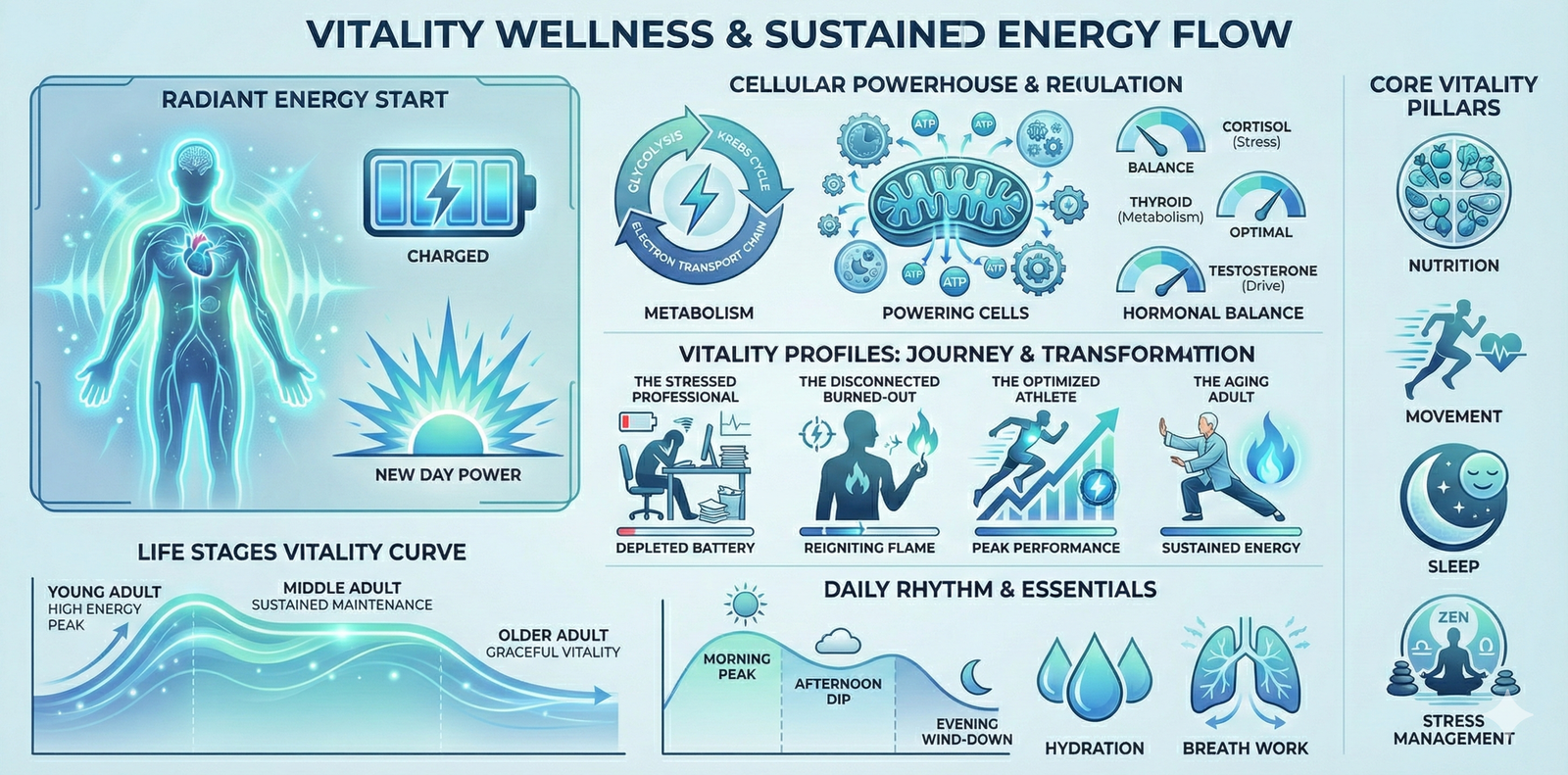
Whether you're struggling with afternoon energy crashes or seeking to maximize your potential, understanding vitality opens doors to sustainable wellness that transforms how you experience each day.
This guide explores the science of vitality, proven strategies to boost your life force, and practical habits that create lasting energy and health.
What Is Vitality?
Vitality refers to physical strength, energy, and mental vigor that enables you to pursue activities and goals with enthusiasm and stamina. It encompasses eight interconnected dimensions: physical, emotional, social, intellectual, financial, environmental, spiritual, and occupational wellness. True vitality means feeling genuinely energized and capable of handling life's demands while maintaining balance and purpose.
Not medical advice.
Vitality differs from temporary energy boosts that come from caffeine or adrenaline. Genuine vitality is sustainable, holistic, and rooted in healthy physiological function. Research shows that people with strong vitality report feeling more alive, more engaged with their work and relationships, and significantly better equipped to handle stress and adversity.
Surprising Insight: Surprising Insight: Studies reveal that individuals with a strong sense of purpose and vitality are five times more likely to feel energized and three times more likely to look forward to each new day compared to those with low vitality.
The 8 Dimensions of Vitality
How physical, emotional, social, intellectual, financial, environmental, spiritual, and occupational wellness interact to create comprehensive vitality
🔍 Click to enlarge
Why Vitality Matters in 2026
Modern life presents unprecedented demands on our physical and mental reserves. The World Health Organization recognizes vitality as a core component of healthy longevity and quality of life. Individuals with high vitality demonstrate better job performance, deeper relationship satisfaction, and greater resilience to chronic disease.
Beyond personal benefits, vitality creates ripple effects. Workers with high vitality contribute more meaningfully to their organizations, communities thrive when members maintain wellbeing, and families function more harmoniously when individuals have emotional and physical resources to share.
In an era of burnout epidemics and stress-related illness, cultivating vitality isn't a luxury—it's essential preventive medicine. Research shows that adults with excellent or very good mental health have vitality levels approximately 25 points higher than those with fair or poor mental health, illustrating the bidirectional relationship between wellness practices and energy.
The Science Behind Vitality
Vitality emerges from the interplay of four key physiological systems: cardiovascular efficiency, nervous system balance, hormonal optimization, and metabolic health. When these systems function harmoniously, your body produces sustained energy at the cellular level. When any system becomes depleted or dysregulated, vitality suffers.
Frontiers in Public Health research demonstrates that vitality can predict onset of depression, fatigue, and chronic disease symptoms. Even more compelling: vitality is dynamic and changeable. Unlike genetic factors that remain fixed, vitality responds remarkably well to behavioral interventions—making it one of the most actionable health metrics available.
The Vitality Generation Cycle
How healthy behaviors, psychological factors, and rest periods create sustainable energy and vitality
🔍 Click to enlarge
Key Components of Vitality
Physical Energy
Physical energy depends on cardiovascular fitness, muscle strength, metabolic efficiency, and proper nutrition. When you exercise regularly, your mitochondria (cellular powerhouses) become more efficient at producing ATP—the molecule that fuels all cellular activity. This biological upgrade creates genuine physical vitality.
Mental Clarity
Mental clarity represents the cognitive sharpness to think strategically, make decisions, and focus deeply on meaningful work. This component depends on sleep quality, stress management, and engaging in intellectually stimulating activities. People with high mental clarity report greater life satisfaction and productivity.
Emotional Resilience
Emotional resilience is your capacity to navigate difficulties, recover from setbacks, and maintain hope during challenges. This reflects balanced nervous system function, strong social connections, and a sense of purpose. Emotionally resilient individuals maintain vitality even during difficult periods.
Purpose & Engagement
Having a sense of purpose and being engaged in meaningful activities powerfully boosts vitality. Research shows that individuals who feel their work matters and their life has direction report substantially higher energy levels, better health markers, and greater happiness than those without clear purpose.
| Life Stage | Primary Energy Sources | Common Vitality Challenges |
|---|---|---|
| 18-35 Years | Biological peak, social engagement, novelty exploration | Sleep deprivation, poor nutrition, overcommitment |
| 35-55 Years | Purpose mastery, established relationships, career impact | Work stress, caregiving demands, accumulated lifestyle consequences |
| 55+ Years | Wisdom, spiritual depth, mentoring roles, life review | Physical decline, loss, changing social roles, sleep changes |
How to Apply Vitality: Step by Step
- Step 1: Assess your current vitality baseline: Rate your physical energy, mental clarity, emotional resilience, and sense of purpose on a scale of 1-10. This creates awareness of your starting point.
- Step 2: Prioritize sleep as your foundation: Commit to 7-9 hours nightly. Sleep is where cellular repair, hormone regulation, and nervous system recovery occur. No supplement replaces quality sleep.
- Step 3: Add movement daily: Exercise for just 20-30 minutes most days. Walking, strength training, yoga, or any activity you enjoy increases mitochondrial efficiency and boosts dopamine—your energy neurotransmitter.
- Step 4: Optimize your nutrition: Emphasize whole foods with low glycemic impact. Include B vitamins (brown rice, salmon, eggs, nuts), healthy fats (olive oil, avocados), and fiber-rich vegetables that sustain energy without crashes.
- Step 5: Hydrate intentionally: Dehydration causes fatigue that mimics low energy. Drink water consistently throughout the day, aiming for 8-10 glasses of 200ml servings.
- Step 6: Practice stress management: Choose one technique—meditation, journaling, nature walks, or tai chi—and practice it 10-15 minutes daily. Chronic stress depletes vitality rapidly.
- Step 7: Strengthen social connections: Spend quality time with people who energize you. Social vitality directly impacts physical health and emotional resilience.
- Step 8: Clarify your purpose: Regularly reflect on what matters most to you. People with clear purpose show substantially higher vitality and better health outcomes.
- Step 9: Manage your environment: Optimize light exposure (morning sunlight helps circadian rhythm), reduce noise when possible, and create spaces that feel restorative and inspiring.
- Step 10: Track your progress: Monitor energy levels, sleep quality, and mood. Seeing improvements reinforces healthy habits and reveals what strategies work best for your unique biology.
Vitality Across Life Stages
Young Adulthood (18-35)
Young adults typically have biological advantages: faster metabolism, quicker cellular repair, and strong cardiovascular capacity. However, this life stage often features poor sleep habits, inconsistent exercise, and nutritional neglect due to busy schedules or experimentation. The vitality challenge in this stage involves building sustainable health habits that compound over decades. Establishing consistent sleep, regular exercise, and stress management practices now prevents future health complications and builds resilience.
Middle Adulthood (35-55)
Middle adulthood brings profound purpose and mastery—career peaks, meaningful relationships, and accumulated wisdom. However, this stage often presents significant vitality challenges: work stress, caregiving responsibilities (children or aging parents), and accumulated lifestyle consequences of earlier choices. Many people notice their previous habits no longer sustain energy. The vitality opportunity involves strategic interventions: prioritizing sleep despite busy schedules, incorporating strength training to counter muscle loss, and addressing accumulated stress through targeted practices.
Later Adulthood (55+)
Later adulthood offers wisdom, spiritual depth, meaningful mentoring, and freedom from some earlier pressures. Physical vitality requires more intentional maintenance: hormonal changes affect sleep and energy, cardiovascular conditioning becomes essential for health, and muscle maintenance prevents functional decline. However, older adults with strong vitality practices show remarkable resilience, cognitive sharpness, and life satisfaction. Maintaining purpose, staying socially engaged, and continuing physical and mental stimulation are vital vitality practices for this stage.
Profiles: Your Vitality Approach
The Overextended Achiever
- Protection of sleep hours as non-negotiable
- Delegation and saying no to low-priority demands
- Recovery practices like massage, sauna, or float therapy
Common pitfall: Believing success requires sacrificing sleep and personal time; running on stress hormones until collapse
Best move: Track sleep quality for one week and observe how it affects your performance and mood. Use this data to advocate for adequate rest.
The Disconnected Isolator
- Regular social engagement with people who energize them
- Purposeful community involvement or meaningful relationships
- Structured activities that create predictable social contact
Common pitfall: Underestimating how profoundly isolation drains vitality; believing they don't need others
Best move: Start with one recurring social commitment—a weekly coffee, exercise class, or volunteer activity—and notice the energy shift.
The Uninspired Wanderer
- Clarity about personal values and purpose
- Engagement in work or activities that feel meaningful
- Regular reflection on what brings genuine satisfaction
Common pitfall: Moving through days without direction, feeling disconnected from what matters, leading to low motivation and energy
Best move: Spend 30 minutes identifying three values that matter most. Then brainstorm how current activities align with these values.
The Optimizing Biohacker
- Evidence-based strategies targeting specific vitality components
- Measurable metrics and tracking systems
- Continuous learning about health science and optimization
Common pitfall: Chasing the newest trend without building sustainable foundations; perfectionism undermining consistency
Best move: Choose ONE evidence-backed intervention and commit to it for 12 weeks before adding additional practices.
Common Vitality Mistakes
The most common vitality mistake is viewing energy as something to extract through willpower and stimulants (coffee, energy drinks, supplements) rather than something to build through healthy practices. This approach creates a vicious cycle: temporary energy boosts followed by crashes, leading to deeper fatigue and greater stimulant dependence.
A second critical mistake is overlooking sleep while pursuing other health practices. Exercise and nutrition matter tremendously, but without adequate sleep, your body cannot repair cells, consolidate memories, regulate hormones, or fight disease. Sleep is where the magic happens; it's not something to sacrifice for productivity.
A third mistake involves ignoring the emotional and spiritual dimensions of vitality. You cannot maintain lasting physical energy without addressing stress, purpose, and meaning. This is why meditation practices, strong relationships, and purposeful work so consistently boost measured vitality—they address roots rather than symptoms.
The Vitality Depletion vs. Renewal Cycle
Contrasting trajectories showing how poor habits deplete vitality versus how healthy practices build sustainable energy
🔍 Click to enlarge
Science and Studies
Research on vitality has expanded significantly, with peer-reviewed journals publishing hundreds of studies examining how various factors influence energy, resilience, and wellbeing. The evidence consistently shows that vitality is measurable, predictable, and highly responsive to behavioral interventions. Key findings include the importance of sleep for cellular restoration, exercise for mitochondrial efficiency, social connection for neurological health, and purpose for psychological resilience.
- University of Pennsylvania Authentic Happiness Center demonstrates that vitality directly correlates with life satisfaction and predicts mental health outcomes across lifespan
- ScienceDirect research on 'The Pursuit of Health: A Vitality-Based Perspective' (2023) shows how holistic vitality enhances recovery from somatic disorders and physical functioning
- PubMed Central studies on 'The Integrative Vitality Scale' (2024) validate measurement tools for assessing physical and mental wellbeing dimensions across populations
- Johns Hopkins Medicine evidence shows that consistent exercise increases BDNF (brain-derived neurotrophic factor), directly enhancing memory, mood, and cognitive function
- Harvard Health publications demonstrate that low glycemic index nutrition stabilizes blood sugar and prevents energy crashes while supporting sustained vitality
Your First Micro Habit
Start Small Today
Today's action: Tomorrow morning, before checking your phone, spend 5 minutes doing the 4-7-8 breathing technique: inhale for 4 counts, hold for 7 counts, exhale for 8 counts. Repeat 4 times. Notice how you feel.
This specific breathing pattern activates your parasympathetic nervous system, reducing stress hormones and increasing oxygen delivery to cells. This single 5-minute practice can shift your entire nervous system toward vitality and resilience. By practicing immediately upon waking, you prime your day for better energy management.
Keep quitting habit apps after a missed day? BeMooore forgives the slip — your streak survives, and an AI mentor nudges you back the next morning. Free on iOS.
Quick Assessment
How would you currently describe your baseline energy level throughout a typical day?
Your answer reveals your current vitality baseline and identifies whether you need foundational changes (sleep, nutrition, stress) or optimization strategies.
Which dimension of vitality matters most to your personal wellbeing right now?
Your answer points to your primary vitality leverage point—the dimension where building strength will most impact your overall wellbeing.
What barriers currently prevent you from having higher vitality?
Your answer identifies which practical strategy to prioritize first—addressing root causes creates sustainable vitality faster than treating symptoms.
Take our full assessment to get personalized recommendations.
Discover Your Style →Next Steps
Building genuine, lasting vitality requires understanding that it's not a destination but a practice—daily choices that accumulate into transformed health and energy. You now understand vitality's components, the science supporting various strategies, and practical steps to build sustainable energy. The final step is commitment: choosing one or two practices and implementing them consistently for the next 30 days.
Start with whichever area feels most urgent: if you're exhausted, prioritize sleep; if overwhelmed, add stress management; if disconnected, strengthen relationships; if directionless, clarify purpose. This focus prevents overwhelm and creates momentum. After 30 days, assess results and expand to additional practices. This progressive approach builds sustainable vitality that compounds over months and years.
Get personalized guidance with AI coaching.
Start Your Journey →Research Sources
This article is based on peer-reviewed research and authoritative sources. Below are the key references we consulted:
Related Glossary Articles
Frequently Asked Questions
How quickly can I improve my vitality?
Sleep quality improvements can shift energy within 3-7 days. Exercise benefits appear within 2-4 weeks. Substantial vitality transformations typically emerge over 8-12 weeks when you commit to consistent foundational practices. The exact timeline depends on your starting point and how many practices you implement simultaneously.
Can supplements significantly boost vitality?
High-quality supplements can support vitality, but they cannot replace foundational practices. B vitamins help energy metabolism, magnesium supports sleep and stress resilience, and omega-3 fatty acids support brain health. However, supplements work best alongside excellent sleep, regular exercise, and stress management—not as substitutes.
Is vitality the same as having no health conditions?
No. Vitality represents thriving and engagement with life, not the absence of illness. People managing chronic conditions can develop strong vitality by optimizing what they can control. Similarly, people without diagnosed illness can have low vitality from poor lifestyle choices or unaddressed mental health needs. Vitality and health status are different dimensions.
How does stress specifically deplete vitality?
Chronic stress elevates cortisol and adrenaline, suppressing immune function, disrupting sleep, impairing digestion, and reducing DHEA (the 'vitality hormone'). Over time, this neurochemical imbalance creates fatigue, inflammation, and reduced capacity for joy. Stress management practices directly reverse this cascade.
Can I maintain high vitality during difficult life periods?
Yes, though you may need to adjust your expectations and strategies. During challenging times, vitality comes from maintaining core practices (sleep, movement, connection) while simplifying other areas. Your vitality baseline may temporarily lower, but consistent foundational practices prevent complete collapse and enable faster recovery once circumstances improve.
Take the Next Step
Ready to improve your wellbeing? Take our free assessment to get personalized recommendations based on your unique situation.
- Discover your strengths and gaps
- Get personalized quick wins
- Track your progress over time
- Evidence-based strategies