Intimacy
Intimacy represents one of humanity's most profound needs—the desire to be truly known, deeply understood, and authentically connected to another person. While often mistakenly reduced to physical closeness alone, genuine intimacy encompasses the entire spectrum of human connection, from <a href='/g/emotional-wellbeing.html'>emotional wellbeing</a> to intellectual engagement, spiritual alignment, and yes, physical expression. Recent research reveals that intimacy serves as the cornerstone of <a href='/g/romantic-relationships.html'>romantic relationships</a>, predicting relationship satisfaction more reliably than nearly any other factor.
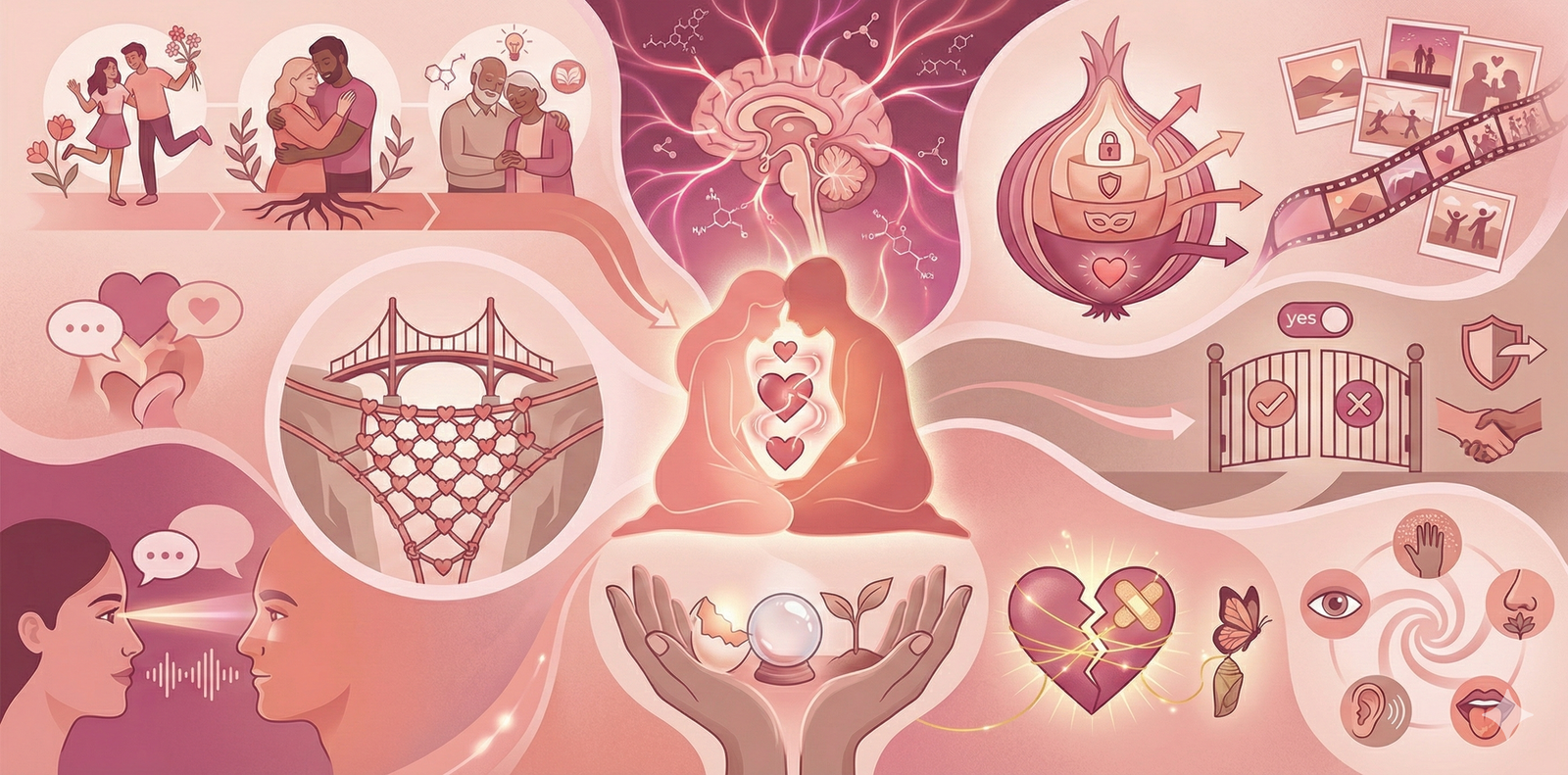
According to a 2025 study published in the journal Cogent Social Sciences examining 1,058 married participants in Malaysia, emotional, intellectual, and recreational intimacy emerged as the three most significant predictors of marital satisfaction for both men and women. This groundbreaking research confirms what relationship experts have long suspected: intimacy extends far beyond the bedroom, touching every aspect of how we connect, communicate, and create <a href='/g/life-satisfaction.html'>life satisfaction</a> with our partners.
The neuroscience of intimacy reveals equally fascinating insights. When we experience genuine connection with another person, our brains release oxytocin—often called the 'bonding hormone'—which deepens feelings of attachment and trust. Research from the journal Psychoneuroendocrinology shows that oxytocin levels are significantly higher in new lovers compared to singles, and these elevated levels correlate directly with affectionate communication and connection quality. This neurochemical foundation explains why intimacy feels so rewarding and why its absence creates such profound distress.
But understanding intimacy and cultivating it are two different challenges. In our modern world of digital distraction, demanding schedules, and cultural messages that often prioritize independence over interdependence, many couples struggle to maintain the depth of connection they crave. Whether you're building partnership for the first time, rekindling connection after years together, or healing from past wounds that make vulnerability feel dangerous, this comprehensive guide will illuminate the science, psychology, and practical strategies for developing profound intimacy in your relationships.
What Is Intimacy? Understanding the Full Spectrum of Connection
Intimacy originates from the Latin word 'intimus,' meaning 'innermost' or 'most profound.' At its core, intimacy represents the experience of being fully known and fully accepted—a state where you can reveal your authentic self without fear of rejection or judgment. This definition immediately distinguishes intimacy from related concepts like attraction, affection, or even love itself. You can feel attracted to someone you barely know, affectionate toward someone you don't understand deeply, or even love someone you're not intimate with. True intimacy requires both self-respect and self-validation as foundations.
Psychologists Mark Schaefer and David Olson, who developed the Personal Assessment of Intimacy in Relationships (PAIR) inventory in 1981, identified five distinct dimensions of intimacy that together create comprehensive connection in relationships. Their research, validated across thousands of couples, demonstrates that relationship building requires attention to all five domains rather than excelling in just one or two areas.
Five Dimensions of Intimacy
🔍 Click to enlarge
The Five Core Dimensions of Intimacy
Emotional intimacy represents the foundation upon which all other forms of connection build. This dimension involves honestly sharing your thoughts, feelings, fears, hopes, and dreams while feeling heard and understood by your partner. Research shows emotional intimacy accounts for 53% of the variance in marital satisfaction among Indonesian couples, making it the single strongest predictor of relationship quality. When you experience emotional intimacy, you feel safe revealing your inner peace and inner turmoil alike, knowing your partner will respond with empathy rather than judgment. This kind of openness requires both personal boundaries and willingness to step beyond them, balancing self-care practices with vulnerability.
Physical intimacy encompasses all forms of physical touch and connection, from sexual intercourse to holding hands, cuddling, kissing, or simply sitting close together. A 2025 Kinsey Institute study found that frequent affectionate touch significantly improved women's body image, mental wellness, and sexual satisfaction, with more frequent touch leading to higher relationship satisfaction overall. Importantly, physical intimacy includes both sexual and non-sexual touch—research demonstrates that couples who maintain regular non-sexual physical affection report greater relationship stability and satisfaction than those who limit touch to sexual contexts alone. Physical connection supports overall vitality and contributes to energy levels in relationships.
Intellectual intimacy involves communicating beliefs, viewpoints, and ideas in ways that create mental stimulation, curiosity, interest, and acceptance despite potentially different perspectives. This dimension thrives when partners can engage in substantive conversations, challenge each other's thinking respectfully, share ideas freely, and experience the pleasure of understanding and being understood at a conceptual level. Couples with strong intellectual intimacy often describe their partners as fascinating, stimulating, or endlessly interesting.
Spiritual intimacy emerges when partners share moments that bring a sense of awe, wonder, or acknowledgment of something larger than themselves. This dimension doesn't necessarily require religious belief—it can manifest through shared values, existential conversations, experiences of transcendence in nature, creative pursuits, or engagement with questions of meaning and purpose. Research published in the Journal of Family Psychology found that spiritual intimacy, mediated by a sense of shared meaning, significantly predicted both marital intimacy and physical and psychological holistic wellness. Many couples find that mindfulness and meditation practices create opportunities for spiritual connection, while others connect through appreciation of nature or art.
Recreational intimacy develops through doing something together that creates shared experiences or allows teamwork toward common goals. This dimension includes shared hobbies, travel, sports, games, creative projects, or simply enjoying leisure time together. The 2025 Malaysian study found recreational intimacy among the top three predictors of marital satisfaction, suggesting that couples who play together stay together. This dimension combats the routine and predictability that can erode romance over time. Whether through physical fitness activities, creative hobbies, or shared adventures, recreational connection builds contentment and satisfaction while creating lasting memories.
The Science of Intimacy: Neurochemistry, Attachment, and Connection
The experience of intimacy isn't merely psychological or emotional—it's deeply biological, rooted in ancient evolutionary mechanisms designed to promote pair bonding and family relationships. Understanding the neuroscience behind intimacy helps explain why connection feels so rewarding, why its absence creates such pain and impacts our mental health, and how we can intentionally cultivate deeper bonds through practices that support both cognitive health and emotional wellbeing.
The Neurochemistry of Bonding
At the molecular level, intimacy involves a complex interplay of neurochemicals, with oxytocin playing a starring role. Research from Ruth Feldman's lab demonstrates that pair bonding is underpinned by crosstalk between oxytocin and dopamine in the striatum, combining motivation and vigor with social focus. When we experience moments of genuine connection—whether through emotional expression, physical touch, or shared experiences—our brains release oxytocin, which enhances feelings of trust, reduces fear responses, and deepens our sense of attachment.
Interestingly, oxytocin's effects on intimacy are bidirectional. Not only does oxytocin facilitate intimate connection, but intimate behaviors themselves trigger oxytocin release, creating a positive feedback loop. Research shows that even non-sexual physical contact like hugging and hand-holding triggers oxytocin secretion, which strengthens collaboration and connection through daily interaction. This neurochemical reality explains why small, consistent acts of affection—holding hands while walking, greeting your partner with a hug, cuddling before sleep—can significantly impact relationship quality over time.
Beyond oxytocin, other neurochemicals contribute to the intimacy experience. Dopamine drives the motivation and reward aspects of connection, making time with an intimate partner feel pleasurable and energizing. Vasopressin supports long-term attachment and partner preference. Endorphins create feelings of comfort and security. Together, this neurochemical symphony transforms intimacy from abstract concept to visceral, embodied experience that fundamentally shapes our emotional wellbeing and contributes to overall happiness. These biological mechanisms explain why intimacy enhances natural energy and supports stress reduction in daily life.
Attachment Styles and Their Impact on Intimacy
Our capacity for intimacy doesn't develop in a vacuum—it's profoundly shaped by early attachment experiences with caregivers. Attachment theory, pioneered by John Bowlby and Mary Ainsworth, identifies four primary attachment styles that continue influencing our intimate relationships throughout adulthood: secure, anxious-preoccupied, dismissive-avoidant, and fearful-avoidant.
Securely attached individuals, who experienced consistent, responsive caregiving, generally feel comfortable with both intimacy and independence. They trust that their needs will be met, communicate openly about vulnerabilities, and navigate conflict resolution effectively. Research shows secure attachment correlates strongly with relationship satisfaction and stability. These individuals typically demonstrate strong confidence-building skills, healthy self-esteem, and effective coping mechanisms when facing relationship challenges.
Anxiously attached individuals crave intimacy but fear abandonment, often seeking excessive reassurance and experiencing heightened sensitivity to relationship threats. They may struggle with emotional intelligence regulation, experiencing intense emotions during conflicts. Studies show anxious attachment predicts greater fear of intimacy despite simultaneously desiring closeness—a painful paradox that can create relationship turbulence. These individuals benefit from developing psychological flexibility, improving anxiety management, and building mental toughness to weather relationship uncertainty.
Avoidantly attached individuals prioritize independence and self-reliance, often suppressing emotional needs and avoiding vulnerability. They may experience discomfort with closeness, preferring emotional distance even in committed relationships. Research from 2024 published in Psycho-Woman: Indonesian Journal of Psychology found that avoidant attachment style exhibited significantly greater fear of intimacy, which predicted lower marital satisfaction.
Fearful-avoidant individuals desire close relationships yet simultaneously fear vulnerability, often behaving unpredictably due to internal conflict between intimacy needs and self-protection instincts. A 2024 study in the International Journal of Environmental Research and Public Health found that childhood emotional abuse profoundly impacts the attachment system, with rejection sensitivity and attachment avoidance together explaining a notable proportion of variance in intimacy difficulties.
The encouraging news? Attachment styles aren't immutable. Through consistent experiences with secure, responsive partners, therapeutic intervention, and intentional work on self-compassion and emotional regulation, insecure attachment patterns can shift toward greater security over time. This healing process often involves developing personal empowerment, practicing forgiveness for past hurts, and building new patterns through daily routines that prioritize connection and self-awareness.
Attachment Styles and Intimacy Capacity
🔍 Click to enlarge
The Paradox of Intimacy: Security Versus Desire
One of the most profound insights into intimacy comes from psychotherapist Esther Perel, whose TED talk 'The Secret to Desire in a Long-Term Relationship' has garnered over 30 million views. Perel identifies a fundamental paradox at the heart of intimate relationships: the same qualities that create intimacy—closeness, predictability, security, familiarity—can simultaneously extinguish desire and passion.
In her clinical work and research, Perel observes that good and committed sex draws on two conflicting needs: our need for security (togetherness, closeness, commitment, safety) and our need for surprise (novelty, mystery, distance, autonomy). The challenge facing long-term couples is that intimacy gravitates toward the former while desire often requires elements of the latter. Good intimacy, she notes, doesn't guarantee good sex because intimacy focuses on emotional closeness and connection, while passionate desire thrives on a sense of separateness and the unknown.
This paradox explains why many couples experience what Perel calls 'the crisis of desire'—relationships where love, commitment, and even emotional intimacy remain strong, yet sexual connection fades. The qualities that nurture intimacy—predictability, reliability, self-nurturing care—can inadvertently stifle the erotic, which depends on novelty, unpredictability, and a sense of the other as autonomous and slightly mysterious. Maintaining both requires conscious effort toward work-life balance and creating space for spontaneity within structured lives, balancing the simple living that creates stability with adventures that spark passion.
The solution isn't choosing between intimacy and desire, but rather learning to navigate both. This requires creating what Perel calls 'erotic space'—moments where partners can see each other as separate, autonomous individuals rather than extensions of domestic life. It means balancing connection with separateness, familiarity with novelty, security with adventure. Successful long-term couples cultivate both profound intimacy and ongoing curiosity about their partners, understanding that mystery and knowing can coexist.
Vulnerability: The Gateway to Authentic Intimacy
If intimacy means being fully known, then vulnerability represents the mechanism through which we become known. Research professor Brené Brown, whose TED talk on vulnerability has also reached over 30 million views, defines vulnerability as 'uncertainty, risk, and emotional exposure'—that unstable feeling we experience when stepping outside comfort zones or loosening control.
Brown's research reveals a crucial insight: 'There can be no intimacy—emotional intimacy, spiritual intimacy, physical intimacy—without vulnerability.' Vulnerability serves as the glue holding intimate relationships together. When we share our authentic selves—including the parts we consider shameful, weak, or unlovable—and experience acceptance rather than rejection, intimacy deepens exponentially. Conversely, when we armor ourselves against vulnerability to avoid potential hurt, we simultaneously protect against the very connection we crave.
This creates what Brown identifies as the fundamental challenge of self-love and intimate connection: we cannot selectively numb emotions. When we shut down vulnerability to avoid pain, we also diminish our capacity for joy, belonging, creativity, and love. The pathway to deeper intimacy requires willingness to remove our emotional armor, accepting that vulnerability involves risk but recognizing that the alternative—isolation and disconnection—carries even greater costs.
Practically, cultivating vulnerability in relationships involves several key practices. First, it requires developing self-acceptance—we can only share what we've first acknowledged in ourselves. Second, it demands creating psychological safety where both partners can reveal vulnerabilities without fear of judgment, criticism, or weaponization during future conflicts. Third, it necessitates reciprocity, with both partners sharing appropriately rather than one person consistently over-disclosing while the other remains guarded. Building this foundation involves regular gratitude practice, cultivating present moment awareness during conversations, and developing inner love that makes external validation less critical.
Building Intimacy: Evidence-Based Strategies from Relationship Science
While understanding intimacy's theoretical foundations proves valuable, most people seeking to deepen connection want practical, actionable strategies. Fortunately, decades of relationship research have identified specific behaviors and practices that reliably increase intimacy. The Gottman Method, developed by Drs. John and Julie Gottman through 40+ years of studying thousands of couples, offers particularly robust evidence-based approaches.
The Sound Relationship House: Gottman's Framework for Intimacy
The Gottman Method identifies nine components of healthy relationships, with the foundational three directly addressing intimacy development. Research published in the Journal of Evidence-Based Integrative Medicine demonstrates that Gottman Couple Therapy significantly improves both marital adjustment and couples' intimacy.
Build Love Maps: This practice involves knowing the details of your partner's inner world—their worries, stresses, joys, hopes, dreams, and daily experiences. Couples with detailed 'love maps' of each other's psychological landscapes experience greater emotional expression and connection. The Gottmans recommend regularly asking open-ended questions about your partner's life, updating your knowledge as they grow and change, and demonstrating through specific recall that you pay attention to what matters to them.
<strong>Share Fondness and Admiration:</strong> This component focuses on explicitly expressing appreciation, respect, and affection for your partner. Research shows that couples who regularly vocalize characteristics they admire—both significant traits and small behaviors—maintain a 'positive sentiment override' that protects relationships during conflicts. The practice combats the natural human tendency toward negativity bias, where we notice problems more readily than positives.
<strong>Turn Toward Instead of Away:</strong> Perhaps the most powerful intimacy builder, this practice involves responding positively to your partner's 'bids for connection'—those small moments throughout each day when one partner reaches out for attention, affection, humor, or support. Research by the Gottmans found that couples who stayed married turned toward each other's bids 86% of the time, while couples who divorced turned toward only 33% of the time. These micro-moments of connection or disconnection accumulate, either building intimacy or eroding it.
The 36 Questions That Lead to Love
Psychologist Arthur Aron's research on intimacy acceleration produced the famous '36 questions that lead to love,' demonstrating that mutual vulnerability and self-disclosure can create closeness remarkably quickly. In his studies, strangers paired together to answer increasingly personal questions reported feeling closer to each other than they felt to most people in their lives—all in under an hour.
The questions progress through three sets, each more intimate than the last. They begin with relatively safe inquiries ('Would you like to be famous? In what way?'), move toward values and preferences ('What would constitute a perfect day for you?'), and culminate in deeply vulnerable shares ('Share with your partner an embarrassing moment in your life'). The final instruction—four minutes of silent eye contact—often produces profound feelings of connection and understanding.
While these questions were initially studied with strangers, they prove equally powerful for established couples. Relationship experts recommend that long-term partners periodically revisit these questions, as answers evolve over time, creating opportunities to know each other anew.
Physical Touch Beyond Sex
Research consistently demonstrates that non-sexual physical affection significantly impacts intimacy and relationship satisfaction. The 2025 Kinsey Institute study found that affectionate touch like holding hands, hugging, and cuddling improved women's body image, mental wellbeing, and sexual satisfaction, with more frequent touch correlating with higher relationship satisfaction.
The neurochemistry explains these effects: physical touch triggers oxytocin release even outside sexual contexts, strengthening bonds through everyday interaction. This suggests that couples seeking greater intimacy should prioritize regular affectionate touch—a six-second kiss goodbye in the morning, holding hands while talking, cuddling on the couch, back rubs without sexual expectation. These small physical connections accumulate, creating an atmosphere of warmth and self-nurturing care that supports all forms of intimacy.
Common Barriers to Intimacy and How to Overcome Them
Despite intimacy's profound importance to relationship satisfaction and personal happiness, many people struggle to achieve or maintain the depth of connection they desire. Understanding common barriers helps identify where intervention might prove most valuable.
Fear of Vulnerability and Rejection
Perhaps the most fundamental barrier, fear of vulnerability stems from concerns about rejection, judgment, or having our trust violated. Research shows that rejection sensitivity and attachment avoidance each make significant unique contributions to predicting intimacy difficulties. Individuals high in rejection sensitivity remain hypervigilant to signs of potential rejection, often interpreting neutral or ambiguous partner behaviors negatively.
Overcoming this barrier requires gradually building tolerance for vulnerability through 'titrated' emotional sharing—starting with smaller, less threatening disclosures and progressively sharing more as trust develops. It also involves working on self-worth independent of relationship outcomes, so that potential rejection, while painful, doesn't feel catastrophic. Therapy, particularly approaches focusing on attachment repair, can significantly help individuals with pronounced fear of intimacy. Complementary practices include developing stress tolerance, engaging in breathing techniques during difficult conversations, and building positive psychology skills that reframe vulnerability as strength.
Communication Deficits
Intimacy requires effective communication, yet many people lack training in how to express emotions clearly, listen empathically, or navigate differences constructively. Research published in the Journal of Marriage and Family found that couple communication, emotional intimacy, and sexual intimacy are all significantly intercorrelated, with communication serving as the foundation for other intimacy forms.
Developing communication skills that support intimacy involves learning active listening (truly hearing your partner's meaning rather than preparing your response), using 'I' statements that express feelings without blame ('I feel hurt when...' rather than 'You always...'), validating your partner's experience even when you disagree, and practicing repair after communication breakdowns. Many couples benefit from working with therapists trained in evidence-based methods like Gottman Method or Emotionally Focused Therapy.
Time Scarcity and Competing Priorities
In contemporary life, work demands, childcare responsibilities, household management, digital distractions, and individual pursuits often leave little time or energy for intimate connection. The paradox is that intimacy itself requires time—time for conversations that go beyond logistics, for physical affection beyond perfunctory gestures, for shared experiences that create recreational intimacy.
Addressing this barrier necessitates intentional prioritization of relationship time. Research shows that couples who schedule regular 'state of the union' conversations, weekly date nights, and annual relationship retreats maintain higher intimacy levels than those who rely on spontaneous connection alone. While 'scheduling' intimacy may feel unromantic, relationship science demonstrates that structure often creates space for genuine connection that otherwise gets crowded out by daily demands. Effective time-management becomes a relationship skill, supported by energy management to ensure quality presence during connection time. Implementing morning rituals and evening routines that include partner connection, along with burnout prevention strategies, helps create sustainable intimacy practices.
Unresolved Conflict and Resentment
Accumulated grievances, unrepaired hurts, and chronic patterns of negative interaction create emotional distance that makes intimacy difficult. Research on 'negative sentiment override' shows that when partners harbor significant resentment, they interpret even neutral or positive behaviors negatively, creating a downward spiral that erodes connection.
Overcoming this barrier requires both addressing specific unresolved conflicts and developing better conflict resolution skills for future disagreements. The Gottmans' research identifies the 'Four Horsemen of the Apocalypse' that predict relationship dissolution: criticism, contempt, defensiveness, and stonewalling. Couples who replace these patterns with their antidotes—gentle startup, building appreciation and respect, taking responsibility, and self-soothing—can rebuild intimacy even after significant damage.
Intimacy Barriers and Solutions
🔍 Click to enlarge
Technology and Intimacy: Apps and Tools for Deeper Connection
While digital technology often receives blame for reducing face-to-face intimacy, researchers and developers have created apps specifically designed to deepen couples' connection. These tools range from conversation prompt apps to intimacy coaching platforms to guided therapy exercises.
<strong>Paired</strong> helps couples build better communication, manage conflict, and deepen connection in just five minutes daily through research-backed questions that encourage intimacy and strengthen relationships. The app draws on relationship science to prompt meaningful conversations that might not otherwise occur.
<strong>Gottman Card Decks</strong> brings the Gottman Institute's decades of research into a digital format, offering conversation prompts, date night ideas, and intimacy builders based on empirically validated relationship science. The app makes evidence-based practices accessible for daily use.
Lasting functions as relationship therapy in app form, offering guided sessions on communication, conflict resolution, emotional and financial intimacy, and sex life. Research shows that brief daily engagement with structured relationship education can significantly improve relationship outcomes.
<strong>Coral</strong> acts as a couples' love coach, asking thought-provoking questions and providing creative exercises for both partners. After an optional satisfaction quiz, the app tailors recommendations to each couple's unique needs and growth areas.
These apps prove particularly valuable for couples who recognize intimacy gaps but struggle to address them spontaneously. By providing structure, prompts, and education, they lower barriers to intimacy-building conversations and behaviors. However, technology should supplement rather than replace face-to-face connection, genuine presence, and the irreplaceable experience of physical connection.
Intimacy Across the Lifespan: How Connection Evolves
Intimacy isn't static—it evolves as individuals and relationships progress through different life stages. Understanding these developmental shifts helps couples adapt their intimacy practices to current circumstances rather than expecting connection to look the same as it did earlier.
Early Relationship Intimacy
New relationships often feature intense emotional and physical intimacy fueled by novelty, discovery, and neurochemical floods of dopamine, oxytocin, and other bonding hormones. Research shows that oxytocin levels are significantly higher in new lovers compared to singles, supporting the 'honeymoon phase' characterized by obsessive thinking about partners, idealization, and passionate desire.
This phase serves important functions: it motivates partners to spend extensive time together, facilitating rapid intimacy development, and creates powerful positive associations that can sustain relationships through later challenges. However, the intensity naturally moderates over time as neurochemical systems recalibrate—a shift that, while biologically normal, often distresses couples who interpret it as 'falling out of love' rather than transitioning to mature love. Understanding this evolution supports optimism-building about the relationship's future and helps couples maintain peaceful mind during this natural transition, recognizing that deepening connection differs from initial infatuation.
Long-Term Relationship Intimacy
As relationships mature, intimacy often deepens emotionally and spiritually even as passionate intensity moderates. Long-term couples develop profound knowing of each other, shared histories, and integration of lives that creates companionate love—characterized by deep affection, commitment, and partnership rather than passionate longing.
Research examining 10-year relationship trajectories found that couples maintaining consistently high satisfaction showed stable intimacy across multiple domains, while declining satisfaction correlated with decreasing emotional and recreational intimacy. The key to sustained intimacy in long-term relationships involves intentionality—continuing to pursue novelty, maintaining curiosity about your evolving partner, and actively creating connection rather than assuming it will occur automatically.
Intimacy During Major Life Transitions
Significant life changes—having children, career shifts, relocations, health challenges, aging—profoundly impact intimacy. New parenthood particularly challenges couples, as sleep deprivation, shifted priorities, and identity changes often reduce time, energy, and attention available for connection. Research shows that relationship satisfaction typically declines after having children and doesn't recover until children leave home unless couples actively work to maintain intimacy.
Successfully navigating these transitions requires acknowledging changed circumstances, adjusting expectations appropriately, and creatively adapting intimacy practices to current realities. This might mean shorter but more frequent connection moments, prioritizing quality over quantity, or accepting that different intimacy dimensions will take precedence during different life phases. Maintaining life balance becomes crucial, along with life-integration skills that blend partnership needs with other responsibilities. Couples who thrive during transitions often employ productivity habits and micro habits to sustain connection despite challenging circumstances.
The Health Benefits of Intimacy: Why Connection Matters for Wellbeing
Beyond its intrinsic value for relationship quality, intimacy significantly impacts physical and mental health. Research demonstrates that individuals in intimate, satisfying relationships experience better health outcomes across virtually every measured domain.
A comprehensive review published in Wiley's Social and Personality Psychology Compass examining dyadic biobehavioral and sociocultural approaches to romantic relationships found that relationship quality affects cardiovascular function, immune response, stress reactivity, inflammation, and overall mortality risk. Individuals in satisfying intimate relationships show better cardiovascular health, faster wound healing, stronger immune function, and lower cortisol levels than those in distressed relationships or who are socially isolated.
Mental health benefits prove equally robust. Intimacy predicts lower rates of depression and anxiety relief, greater mental resilience during stress, and higher overall life satisfaction. The emotional support provided through intimate relationships serves as one of the most powerful buffers against life's challenges. Research shows that simply holding a partner's hand during stressful situations reduces neural activity in brain regions associated with threat detection. These benefits extend to brain function, sleep optimization, recovery from illness, and overall longevity. Intimate relationships support disease prevention and strengthen the immune system through reduced chronic stress.
Interestingly, relationship quality matters more than relationship status—being in a distressed, conflict-filled relationship without genuine intimacy actually predicts worse health outcomes than being single. This underscores that the protective health benefits come specifically from intimate connection, not merely from having a partner.
Science and Studies: Research Supporting Intimacy Practices
The intimacy practices and principles discussed throughout this article rest on decades of rigorous research across psychology, neuroscience, sociology, and related fields. Key studies informing our understanding include:
- Schaefer, M. T., & Olson, D. H. (1981). Assessing intimacy: The PAIR Inventory. <em>Journal of Marital and Family Therapy</em>, developing the five-dimensional model of intimacy that remains foundational to relationship research.
- Feldman, R. (2017). The neurobiology of human attachments. <em>Trends in Cognitive Sciences</em>, examining oxytocin-dopamine crosstalk in pair bonding and attachment formation.
- Gottman, J. M., & Silver, N. (2015). <em>The Seven Principles for Making Marriage Work</em>, synthesizing 40+ years of longitudinal research on what makes relationships succeed or fail.
- Brown, B. (2012). <em>Daring Greatly: How the Courage to Be Vulnerable Transforms the Way We Live, Love, Parent, and Lead</em>, presenting research on vulnerability's essential role in intimacy.
- Perel, E. (2006). <em>Mating in Captivity: Unlocking Erotic Intelligence</em>, exploring the paradoxical relationship between intimacy and desire in long-term relationships.
- Malaysian study (2025). Associations between intimacy in relationships and marital satisfaction across gender and different relationship durations, published in <em>Cogent Social Sciences</em>.
- Kinsey Institute (2025). Study on affectionate touch, finding that non-sexual physical affection significantly improves body image, mental wellbeing, and sexual satisfaction.
- International Journal of Environmental Research and Public Health (2024). From emotional abuse to fear of intimacy: A preliminary study of the mediating role of attachment styles and rejection sensitivity.
- Journal of Evidence-Based Integrative Medicine (2024). Examining the effectiveness of Gottman Couple Therapy on improving marital adjustment and couples' intimacy.
- Social and Personality Psychology Compass (2024). Dyadic biobehavioral and sociocultural approaches to romantic relationships, examining health implications.
- Frontiers in Psychology (2025). Love and Rejection Messages Theory: A new theory of couple functioning, exploring communication patterns in intimate relationships.
- Psychoneuroendocrinology. Oxytocin during the initial stages of romantic attachment: Relations to couples' interactive reciprocity.
- MDPI Biology (2023). The neurobiology of love and pair bonding from human and animal perspectives, reviewing neurochemical mechanisms.
- Journal of Family Psychology. Research on spiritual intimacy, marital intimacy, and physical and psychological wellbeing.
- Aron, A., et al. (1997). The experimental generation of interpersonal closeness: A procedure and some preliminary findings, introducing the '36 questions' methodology.
This research foundation demonstrates that intimacy isn't merely a romantic ideal but a scientifically understood phenomenon with measurable impacts on relationship quality, individual wellbeing, and physical health. The evidence-based practices derived from these studies offer actionable pathways for anyone seeking deeper connection.
Micro Habit: The Daily Connection Check-In
Your First Micro Habit
Today's action: Spend 5-10 minutes each day in distraction-free conversation with your partner, taking turns sharing meaningful updates and practicing active listening.
Research shows couples who engage in brief daily connection rituals maintain significantly higher intimacy levels. These small daily investments compound into profound connection over time by consistently creating space for vulnerability, sharing, and presence.
Track your daily check-ins and get personalized conversation starters with the bemooore app.
Moving Forward: Your Intimacy Journey
Intimacy represents both a universal human need and a uniquely personal journey. While research illuminates general principles and effective practices, each relationship must discover its own intimacy language—the specific combination of emotional sharing, physical affection, intellectual engagement, spiritual alignment, and shared experiences that creates deep connection for those particular partners.
The encouraging news is that intimacy can be cultivated at any relationship stage. Whether you're building intimacy for the first time, rebuilding after betrayal or distance, or simply seeking to deepen already satisfying connection, the evidence-based practices outlined here offer pathways forward. Start with what resonates most—perhaps the daily connection check-in if communication needs strengthening, or intentional non-sexual touch if physical intimacy has become confined to sexual contexts, or the 36 questions if you want to accelerate emotional disclosure.
Remember that intimacy development isn't linear. You'll experience moments of profound connection and periods of distance. External stressors will sometimes make intimacy feel impossible. Conflicts will temporarily erode closeness. This is all normal. What matters is the overall trajectory and the commitment to returning to connection after inevitable disconnections.
Finally, recognize that while this article focuses on romantic intimacy, the principles apply broadly. Emotional intimacy with friendships, vulnerability with family relationships, and authentic connection in all your close relationships enhance wellbeing and life satisfaction. Humans are fundamentally wired for connection—developing the capacity for intimacy enriches every dimension of life. Whether through parenting skills that model healthy attachment, social skills that facilitate making friends, or networking abilities that create professional connections, intimacy skills transfer across contexts. Building social confidence, improving conversation skills, and developing charisma all contribute to creating meaningful bonds throughout life.
When you imagine the deepest form of connection in a relationship, which experience feels most meaningful to you?
Your answer reveals your primary intimacy language. Emotional intimacy seekers value vulnerability and deep understanding. Physical intimacy types connect through touch and proximity. Intellectual intimacy enthusiasts bond through ideas and mental engagement. Experiential intimacy lovers build connection through shared activities. Understanding your preference helps you communicate needs and recognize if you're getting the type of connection you crave most.
Reflecting honestly on your relationship patterns, what most often prevents you from experiencing the intimacy you desire?
Your response identifies your primary intimacy barrier. Fear of vulnerability suggests attachment patterns or past wounds that therapy could address. Time scarcity indicates prioritization challenges that intentional scheduling can solve. Communication struggles point to learnable skills that couples therapy teaches effectively. Unresolved conflicts require both addressing specific hurts and improving conflict resolution skills. Knowing your barrier helps target the most effective interventions.
When you think about deepening intimacy in your closest relationship, which approach feels most natural and appealing to you?
Your preference reveals your intimacy-building style. Structured approaches work well for busy couples who benefit from intentional practices like daily check-ins or conversation prompts. Spontaneous types value natural connection but may need some structure to ensure consistency. Those open to professional guidance recognize therapy's value for accelerating growth. Experience-seekers intuitively understand that novelty prevents stagnation. Your natural style suggests which practices you'll actually maintain, though balancing different approaches often proves most effective.
Take our comprehensive Wellbeing Assessment to understand your unique patterns of connection, identify barriers to deeper intimacy, and receive personalized recommendations for building more satisfying relationships.
Discover Your Intimacy Style →Related Glossary Articles
Take the Next Step
Ready to improve your wellbeing? Take our free assessment to get personalized recommendations based on your unique situation.
- Discover your strengths and gaps
- Get personalized quick wins
- Track your progress over time
- Evidence-based strategies