Gottman Method
Your relationship feels strained. Communication breaks down into arguments. You wonder if your partnership can survive the constant conflict. What if there was a scientifically proven system for rebuilding connection, understanding each other's needs, and creating lasting love? The Gottman Method offers exactly this—a research-backed approach based on 40 years of studying thousands of couples. Instead of guessing what works, you'll learn specific techniques that top relationship experts recommend worldwide.
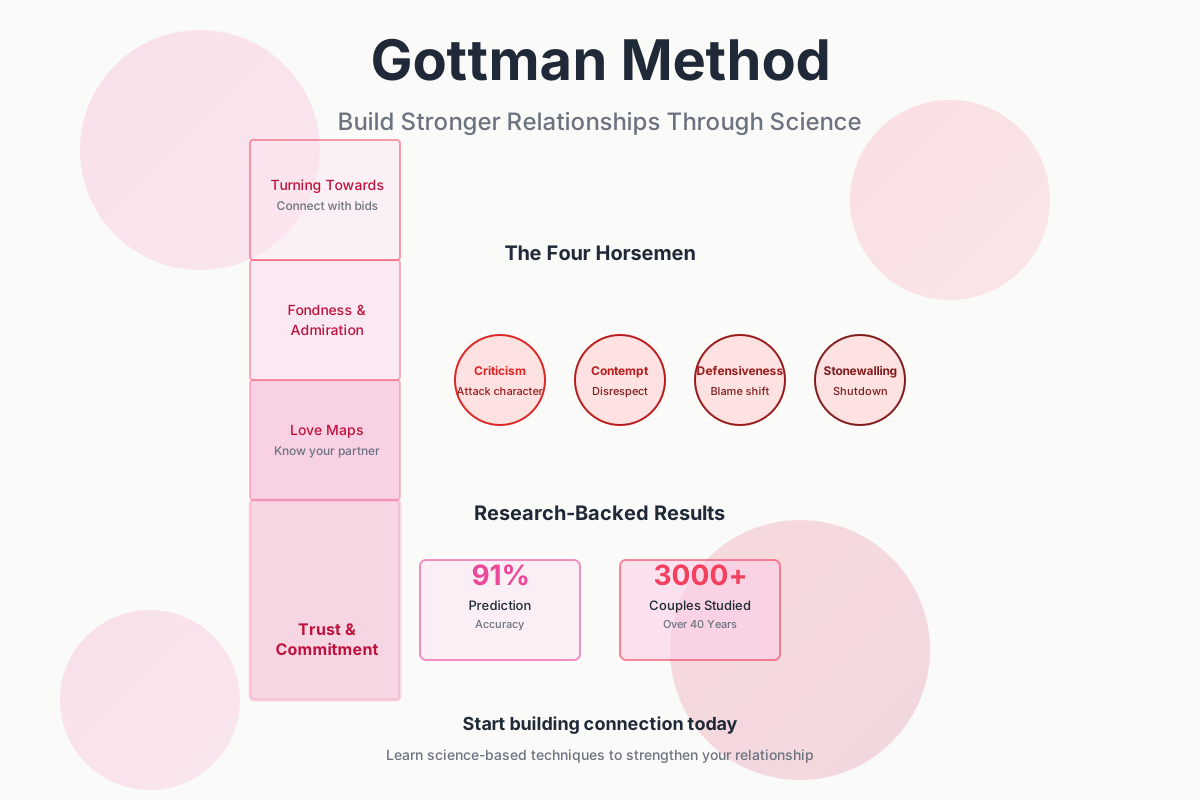
Dr. John Gottman can predict with 91% accuracy which couples will stay together—based on just 15 minutes of conversation. He didn't guess. He measured.
This guide reveals how to apply his breakthrough science to strengthen your partnership, whether you're facing conflict, rebuilding trust after betrayal, or simply deepening intimacy.
What Is Gottman Method?
The Gottman Method is a scientifically-validated approach to couples therapy developed by Drs. John and Julie Gottman, pioneering researchers who have studied relationships for over four decades. It combines behavioral science, neurobiology, and relationship research into practical techniques for improving communication, managing conflict, and building emotional connection. The method addresses the patterns that actually predict relationship success or failure, rather than assumptions about what should work.
Not medical advice.
The Gottman Method emerged from the Gottmans' research in their famous 'Love Lab'—a specially equipped apartment where couples' interactions were observed and analyzed. Their breakthrough finding: certain communication patterns are extraordinarily predictive of divorce. By identifying these destructive patterns early and replacing them with healthier alternatives, couples can transform their relationships. The method now trains thousands of therapists worldwide and has become the gold standard in couples therapy.
Surprising Insight: Surprising Insight: The ratio of positive to negative interactions in a relationship must be at least 5:1 during conflict to maintain a healthy partnership. Research shows couples headed for divorce operate at a 1:1 ratio.
The Sound Relationship House Foundation
The core framework showing how trust and commitment support all relationship elements
🔍 Click to enlarge
Why Gottman Method Matters in 2026
Relationships today face unprecedented stress. Work pressures, digital distractions, and competing demands create distance between partners. Traditional marriage counseling often feels vague—'communicate better' or 'spend quality time' are well-meaning but unclear. The Gottman Method addresses this by providing specific, measurable techniques based on what actually works. Its evidence-based approach means you're not experimenting; you're following a proven roadmap.
The method proves especially valuable during crisis moments—infidelity, financial stress, parenting disagreements—when couples need concrete skills, not platitudes. Recent studies show that couples using the Gottman Method experience sustained improvements in relationship satisfaction, trust recovery, and emotional intimacy over months and years.
In a world of quick fixes and surface-level advice, the Gottman Method offers depth. It addresses the root causes of relationship breakdown while building positive connection patterns that last. Whether you're struggling or thriving, learning these principles strengthens your partnership's resilience.
The Science Behind Gottman Method
The Gottman Method rests on four decades of rigorous research. The Gottmans analyzed thousands of couples—some married over 20 years, others divorcing—and measured interaction patterns, heart rate, stress hormones, and relationship satisfaction. Their data identified specific behavioral markers that predict relationship outcomes. They discovered that divorce isn't caused by one catastrophic event; it's the result of repeated negative interaction patterns that erode connection over time. More importantly, they learned which patterns can be replaced with healthier ones through deliberate practice.
Neuroscience confirms their findings. When couples engage in contempt, criticism, defensiveness, or stonewalling—the Four Horsemen—their nervous systems enter a stress state called 'flooding.' In this state, the prefrontal cortex (logic and reasoning) goes offline, and people operate from reptilian brain survival mode. They can't hear their partner. They can't problem-solve. They can only defend or attack. The Gottman Method teaches techniques that keep the nervous system regulated enough for genuine dialogue.
The Four Horsemen: Predictors of Divorce
Communication patterns that damage relationships, from least to most destructive
🔍 Click to enlarge
Key Components of Gottman Method
The Sound Relationship House
The Sound Relationship House is the architecture of healthy relationships. Like a physical house, it has foundational walls and multiple levels. Trust and commitment are the load-bearing walls that support everything else. Above this foundation are seven building blocks: love maps (knowing your partner deeply), fondness and admiration (positive feelings about your partner), turning towards (noticing and responding to connection bids), managing conflict (resolving disagreements productively), making dreams meaningful (supporting each other's aspirations), creating shared purpose (building life together), and perpetual problems management (handling issues that don't have solutions). When partners intentionally build each level, the house stands strong through stress and challenge.
Identifying and Replacing the Four Horsemen
The Four Horsemen—criticism, contempt, defensiveness, and stonewalling—are communication patterns that predict relationship failure. Criticism attacks your partner's character rather than addressing a specific behavior. Contempt treats your partner with disrespect through mockery, eye-rolling, or name-calling; it's the most damaging Horseman. Defensiveness shifts blame instead of taking responsibility. Stonewalling shuts down communication entirely. Learning to recognize these patterns in yourself and your partner is the first step. Then, deliberately replacing them with soft startup (gentle rather than harsh), taking responsibility, offering repairs, and staying physiologically calm creates lasting change.
Physiological Regulation
Couples therapy fails when partners are in 'flooding'—the state where their nervous systems are overwhelmed by stress, and they can't think clearly or hear their partner. The Gottman Method teaches couples to recognize flooding early through physical cues (elevated heart rate, tension, temperature changes) and take strategic breaks. This isn't avoidance; it's self-care that allows genuine dialogue to resume. Partners learn to self-soothe through breathing, movement, or distraction, then return to the conversation with a regulated nervous system. This single skill transforms conflict from destructive to constructive.
Building Positive Connection
The Gottman Method emphasizes building positive interactions deliberately. Love maps—specific knowledge about your partner's dreams, stressors, favorite things, and inner world—create emotional attunement. Fondness and admiration practices strengthen positive regard. Turning towards small bids for connection (a comment, a touch, a question) rather than turning away builds accumulated goodwill. These positive deposits in the relationship bank account create a buffer that allows couples to navigate conflict without the relationship collapsing. Couples learn that happiness isn't about never disagreeing; it's about maintaining sufficient positivity that disagreements feel safe.
| Destructive Pattern | Typical Example | Healthy Alternative |
|---|---|---|
| Criticism | 'You always forget things. You're so irresponsible.' | 'I feel frustrated when bills aren't paid on time. Can we organize a system?' |
| Contempt | 'Whatever, you're an idiot anyway.' | 'I'm feeling hurt and need a break before we continue.' |
| Defensiveness | 'I didn't forget! YOU never remind me!' | 'You're right, I did forget. I'll set a reminder.' |
| Stonewalling | Silent treatment lasting hours or days | 'I'm overwhelmed. Let's take a 20-minute break and reconnect.' |
How to Apply Gottman Method: Step by Step
- Step 1: Assess your current patterns. Spend a week observing how you and your partner communicate during disagreements. Notice which of the Four Horsemen appear most frequently and how you typically respond.
- Step 2: Build love maps together. Schedule dedicated time weekly to ask deeper questions about your partner's current stressors, dreams, fears, and inner world. Knowledge creates connection.
- Step 3: Identify flooding triggers. Notice what topics or patterns trigger your nervous system flooding. When you feel tension rising, become aware of your physical sensations.
- Step 4: Practice physiological regulation. When approaching flooding, take a 20-minute break. During breaks, do something soothing: walk, listen to music, breathe deeply. Don't ruminate about the conflict.
- Step 5: Replace one Horseman. Choose the most prevalent destructive pattern in your relationship. Practice the healthy alternative specifically for one week before addressing others.
- Step 6: Use gentle startup for complaints. Frame concerns as requests rather than criticisms. Example: 'I'd like us to decide together how we handle finances' instead of 'You never think about money.'
- Step 7: Develop repair skills. Create specific phrases that help both partners recover when conflict escalates: 'I'm feeling defensive. Can we pause?' or 'I care about you. Let's try this differently.'
- Step 8: Practice turning towards. Actively respond to your partner's bids for connection. When they comment on something, engage with it. When they ask questions, listen fully.
- Step 9: Schedule connection rituals. Establish specific times for fondness practices: morning coffee together, evening walks, weekly date nights. Consistency matters more than duration.
- Step 10: Seek professional support if needed. If patterns are deeply entrenched or trauma is involved, a Gottman-trained therapist can accelerate healing and provide personalized techniques.
Gottman Method Across Life Stages
Young Adulthood (18-35)
In early relationships, the Gottman Method helps couples build strong foundations before negative patterns solidify. Young couples often haven't developed conflict resolution skills and may blame their partner's character rather than addressing specific behaviors. Focusing on love maps and fondness practices now prevents later resentment. Learning to communicate about needs, boundaries, and differences prevents the Four Horsemen from becoming habitual. Couples who master these skills early report significantly higher satisfaction as they navigate major life transitions—career changes, relocation, decisions about children.
Middle Adulthood (35-55)
Mid-life couples often face the greatest stress: demanding careers, parenting responsibilities, aging parents, financial pressure. The Gottman Method addresses the specific erosion that happens during this phase. Partners may have developed Four Horsemen patterns they don't even recognize anymore. The method's focus on physiological regulation becomes crucial—managing the flooding that happens when exhausted partners clash. Rebuilding fondness and admiration can feel challenging when partners feel disconnected, but the Gottman framework provides concrete pathways. Couples report that refreshing these skills mid-relationship often feels like relationship recommitment.
Later Adulthood (55+)
Couples in later life benefit from the Gottman Method's focus on meaning-making and dream support. With career pressures often reduced, couples can explore what they want their remaining years to mean together. The method helps long-term partners reconnect after decades of distance. It addresses specific challenges: how to support each other through health changes, grief, and mortality awareness. Gottman research shows that couples who maintain positive connection and physiological regulation report greater satisfaction and resilience in later years, even when facing significant health challenges. The method's emphasis on knowing your partner deeply becomes even more precious.
Profiles: Your Gottman Method Approach
The Avoidant Partner
- Understanding that conflict avoidance doesn't preserve harmony—it creates distance
- Specific language for expressing emotions without feeling attacked or intrusive
- Permission to take regulated breaks without this signaling relationship rejection
Common pitfall: Stonewalling during difficult conversations, which escalates partner frustration and creates a pursue-withdraw cycle
Best move: Practice gentle startup, take planned breaks to regulate, and return to conversations with specific repair attempts
The Pursuer Partner
- Recognition that pushing harder for connection often drives partner further away
- Skills for giving space while maintaining connection through other means
- Understanding that partner withdrawal doesn't mean they don't care
Common pitfall: Escalating criticism or contempt when partner withdraws, creating a cycle of increasing distance
Best move: Learn to use soft startup for concerns, respect your partner's need for breaks, and build connection through love maps instead
The Trauma-Aware Couple
- Understanding how past trauma affects current triggers and reactions
- Compassion for partner's nervous system responses without taking them personally
- Therapeutic support integrated with Gottman techniques for deeper healing
Common pitfall: Misinterpreting trauma responses as rejection or intentional harm, triggering cycle of retraumatization
Best move: Work with a trauma-informed Gottman therapist who can address both attachment patterns and nervous system healing
The High-Satisfaction Couple
- Tools for deepening already-good relationship and preventing complacency
- Ways to navigate life stage transitions without losing connection
- Frameworks for making shared dreams together rather than settling into routines
Common pitfall: Taking the relationship for granted and letting small positive connection practices fade over time
Best move: Maintain love maps, fondness practices, and turning towards consistently; use Gottman principles preventatively
Common Gottman Method Mistakes
The most common mistake is treating the Gottman Method as quick fixes rather than practices. Couples expect one workshop or therapy session to transform their relationship. In reality, the method requires consistent practice—weekly, sometimes daily—to rewire communication patterns. It's similar to physical fitness: understanding what to do isn't enough; you must actually do it.
Another mistake is focusing only on conflict management while ignoring positive connection practices. Couples learn the Four Horsemen and how to avoid them, but neglect love maps, fondness, and turning towards. This creates a relationship that's less negative but still feels empty. The Gottman Method requires both: eliminating destructives and building positives.
The third mistake is applying techniques without emotional understanding. Partners memorize phrases and use them mechanically: 'I feel frustrated because...' but without genuine curiosity about their partner's experience. The method works when both partners genuinely want to understand each other, not just win arguments. Techniques without emotional attunement feel performative and breed resentment.
Why Gottman Method Fails and How to Fix It
Common pitfalls and their solutions for successful implementation
🔍 Click to enlarge
Science and Studies
The Gottman Method's effectiveness is documented across multiple peer-reviewed studies in leading psychology and relationship journals. Research shows sustained improvements in relationship satisfaction, conflict management, emotional intimacy, and trust recovery following Gottman Method interventions, particularly in specialized applications.
- Irvine, T.J., et al. (2024). Pilot study examining the effectiveness of Gottman Method couples therapy for treating couples dealing with infidelity. Found GMCT globally more effective than treatment-as-usual in trust, conflict management, and relationship satisfaction.
- Zahl-Olsen, R., et al. (2024). Effectiveness of in-person and online Gottman Seven Principles course. Demonstrated equal effectiveness across delivery formats and professional backgrounds, broadening access to evidence-based methods.
- Journal of Marital and Family Therapy (2024). Study on couples' emotional regulation and family cohesion using Gottman Method, with significant improvements in both areas.
- PubMed/NIH Studies: Multiple studies on Gottman Method effectiveness for gay and lesbian couples, infertile couples, and couples with emotion regulation difficulties, all showing positive outcomes.
- The Gottman Institute Research Archives: Four decades of data from 3,000+ couples establishing predictive validity of interaction patterns and intervention effectiveness.
Your First Micro Habit
Start Small Today
Today's action: This week, ask your partner one specific love map question daily: 'What's been on your mind lately?' or 'What are you looking forward to?' and listen without trying to fix or problem-solve. Just understand.
Love maps are the foundation of the Sound Relationship House. This tiny practice creates emotional attunement, increases positive interaction, and shifts your nervous system toward connection rather than defensiveness. It accumulates into genuine knowledge of your partner that prevents misinterpretation during conflicts.
Keep quitting habit apps after a missed day? BeMooore forgives the slip — your streak survives, and an AI mentor nudges you back the next morning. Free on iOS.
Quick Assessment
When you and your partner disagree, which pattern shows up most in your conversations?
Your answer reveals which of the Four Horsemen most damages your relationship. Focus your Gottman practice on replacing this specific pattern first.
How often do you have conversations specifically about your partner's dreams, stressors, and inner world?
Strong love maps predict relationship resilience. If you scored low, implementing daily love map questions will transform your connection.
What would improved communication with your partner mean for your relationship?
The Gottman Method addresses all these areas simultaneously. Your answer shows which benefit will feel most meaningful as you practice.
Take our full assessment to get personalized recommendations.
Discover Your Style →Next Steps
Start with self-awareness. This week, observe your conflicts without judgment. Notice which of the Four Horsemen appear, when your nervous system floods, and what connection bids you might be missing. This awareness alone creates the possibility for change. Write down patterns you notice—this clarity becomes your roadmap.
Then implement one micro habit from this article: daily love map questions with genuine curiosity. This single practice creates measurable shifts in emotional attunement and safety within days. From this foundation, layer in other elements—physiological regulation during conflict, fondness practices, repair attempts—at a pace that feels manageable for both you and your partner.
Get personalized guidance with AI coaching.
Start Your Journey →Research Sources
This article is based on peer-reviewed research and authoritative sources. Below are the key references we consulted:
Related Glossary Articles
Frequently Asked Questions
How long does it take to see results with the Gottman Method?
Most couples report noticeable improvements in conflict patterns within 2-3 weeks of consistent practice. Deeper changes in emotional intimacy and trust typically take 2-3 months. Sustained transformation—where new patterns feel automatic—develops over 6-12 months of practice. The timeline depends on how entrenched current patterns are and your commitment to daily practices.
Can the Gottman Method help if we're thinking about divorce?
Yes, significantly. Couples on the brink of divorce who work with Gottman-trained therapists and commit to the method report remarkable recoveries. The method specifically addresses the patterns that lead to divorce—the Four Horsemen—and replaces them with connection-building practices. However, it requires both partners' genuine commitment. If one partner has already emotionally left the relationship, success becomes more difficult but isn't impossible.
Do we need a therapist to use the Gottman Method, or can we do it alone?
Couples can learn basics through books, courses, or apps, but a Gottman-trained therapist accelerates progress, especially when patterns are deeply entrenched or trauma is involved. A therapist provides: assessment of your specific patterns, personalized techniques, accountability, and support during difficult moments. For couples managing conflict well but wanting to deepen intimacy, self-directed learning is often sufficient. For couples in crisis, professional guidance is strongly recommended.
What if my partner won't do the Gottman Method with me?
You can still benefit individually by changing your communication patterns. When one partner stops criticizing, stonewalling, or showing contempt—and instead practices soft startup, repair attempts, and regulated responses—the other partner's defensive reactions typically decrease. This creates space for the partner to gradually engage. Working with a therapist on this dynamic can help you influence your relationship even when your partner isn't fully on board.
Is the Gottman Method effective for all types of relationships?
Research supports its effectiveness for different-sex couples, same-sex couples, long-term relationships, newer relationships, couples managing infidelity, couples with parenting challenges, and couples facing mental health issues. Some situations require specialized therapists: trauma-informed practitioners for abuse survivors, specialists experienced with substance use, or experts in specific cultural contexts. The core principles of physiological regulation, replacing Four Horsemen, and building positive connection apply universally, but implementation may need tailoring.
Take the Next Step
Ready to improve your wellbeing? Take our free assessment to get personalized recommendations based on your unique situation.
- Discover your strengths and gaps
- Get personalized quick wins
- Track your progress over time
- Evidence-based strategies