Stonewalling in Relationships
You're trying to talk about something important. Your partner listens for a moment, then something shifts. Their face goes blank. They stop responding. They look away. Suddenly, you're talking to a wall—literally and emotionally. This shutdown is stonewalling, one of the most destructive patterns in relationships. When emotional withdrawal replaces dialogue, intimacy erodes, trust fractures, and couples find themselves separated by silence instead of connected by conversation. Understanding stonewalling is the first step toward breaking this painful cycle and rebuilding authentic communication.
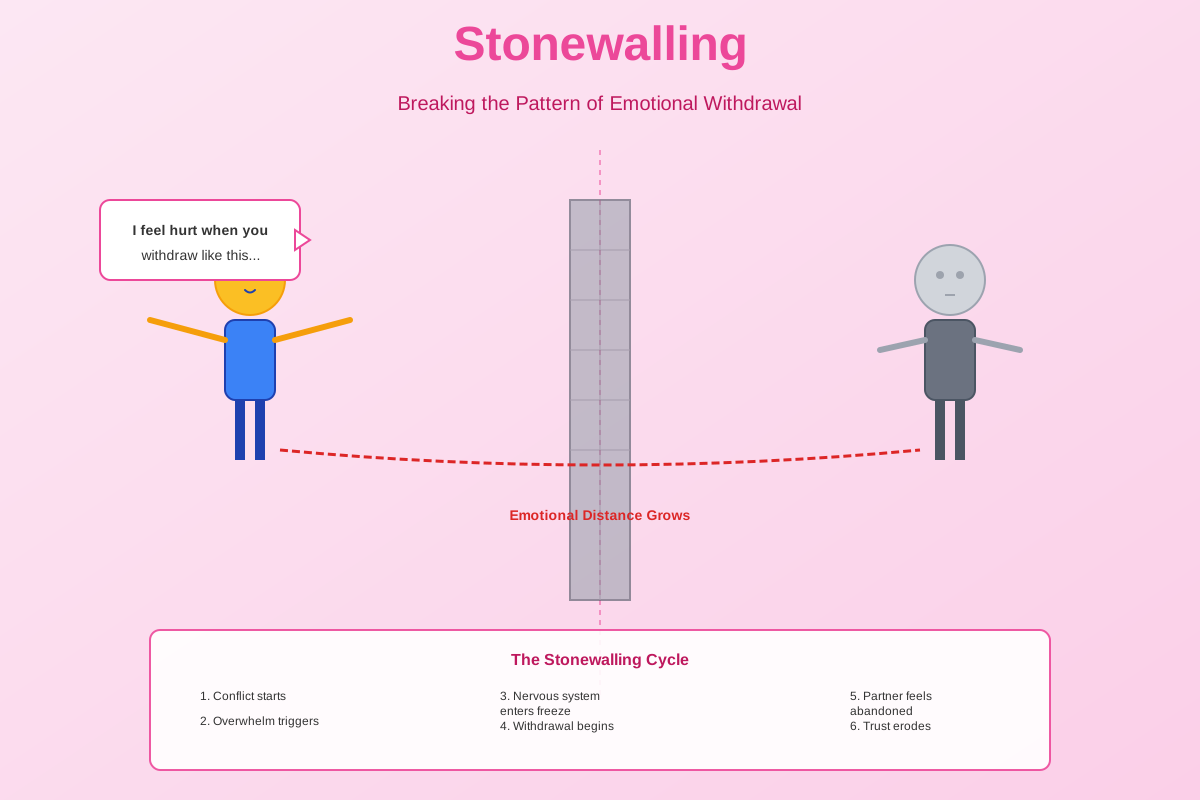
Stonewalling isn't about taking space—it's about abandonment in the moment when your partner needs you most.
This pattern predicts relationship breakdown with startling accuracy, yet it's also one of the most changeable destructive behaviors with the right approach and awareness.
What Is Stonewalling?
Stonewalling is emotional withdrawal during conflict. The stonewaller presents a blank face, avoids eye contact, becomes silent or unresponsive, and essentially checks out from the interaction. Rather than engaging with their partner's concerns, the stonewaller creates emotional distance through non-responsiveness, physical avoidance, or obsessive distraction. It's not a conscious decision to hurt; it's typically a physiological response to overwhelm—the nervous system shifts into freeze mode when conflict feels too intense to process.
Not medical advice.
Dr. John Gottman, a pioneering relationship researcher, identified stonewalling as the fourth and final 'Horseman of the Apocalypse'—a set of four communication patterns that predict divorce with over 90% accuracy. Stonewalling typically emerges after years of criticism, defensiveness, and contempt have worn down a partner's willingness to engage. It represents the ultimate disconnect: one partner has stopped trying to resolve conflict and withdrawn into emotional silence.
Surprising Insight: Surprising Insight: Stonewalling research shows that men stonewall 85% more often than women in heterosexual relationships, often due to differences in nervous system regulation during conflict.
The Stonewalling Cycle
How stonewalling emerges from earlier conflict patterns and deepens relationship disconnection
🔍 Click to enlarge
Why Stonewalling Matters in 2026
In our hyperconnected yet emotionally isolated world, stonewalling has become more common than ever. Digital communication creates the illusion of connection while enabling easier avoidance. Partners can 'check out' not just emotionally but physically—through phones, work, hobbies—making it harder to recognize the pattern. Yet research shows relationships that overcome stonewalling report deeper intimacy, greater trust, and lasting satisfaction. Breaking this pattern isn't luxury; it's essential for relationship survival and thriving.
Stonewalling affects not just emotional wellbeing but physical health. Studies show that stonewalling correlates with musculoskeletal symptoms in partners over 20+ years of marriage, and emotional loneliness serves as a key pathway between stonewalling and sexual disengagement. The consequences ripple through every dimension of partnership.
The good news: stonewalling is changeable. Unlike contempt (which often signals irreversible damage), couples who learn to recognize and interrupt stonewalling patterns can rebuild connection, restore safety, and create conversations where both partners feel genuinely heard.
The Science Behind Stonewalling
Stonewalling emerges from physiology, not intention. When someone experiences conflict as threatening, their nervous system floods with stress hormones—cortisol and adrenaline. Heart rate climbs above 100 beats per minute. Blood flow redirects from the prefrontal cortex (reasoning, empathy) to the amygdala (threat detection). The body enters fight, flight, or freeze mode. For many partners, freeze manifests as stonewalling: the face goes blank, words stop, connection breaks. This isn't stubbornness—it's neurobiology protecting against perceived danger.
Research shows that people who grew up in chaotic or emotionally unsafe environments often default to stonewalling as their coping mechanism. It was protection then; it remains their first response to conflict now. Understanding this history creates compassion: the stonewaller isn't choosing coldness—they're enacting learned survival. Yet compassion alone doesn't fix the pattern. Both partners need new tools to regulate their nervous systems and stay present during difficulty.
Stonewalling Physiology Timeline
How the nervous system shifts during the onset of stonewalling behavior
🔍 Click to enlarge
Key Components of Stonewalling
Emotional Avoidance
The stonewaller doesn't just avoid the conversation—they avoid the feelings underneath. Sadness, fear, shame, or rage becomes too much, so the nervous system shuts down. What looks like indifference is actually hyperarousal masked by disconnection. The stonewaller may be drowning in emotion internally while appearing unreachable externally.
Physical Withdrawal
Stonewalling shows up in the body: avoiding eye contact, turning away, leaving the room, becoming physically rigid, or focusing obsessively on something else (phone, TV, work). The message sent—intentionally or not—is 'I'm not here for this conversation.' The partner experiences this as rejection and abandonment, deepening their sense of isolation.
Communication Shutdown
Words stop. Questions get single-word answers or silence. When pushed, the stonewaller might say 'I don't know' or 'I don't want to talk about it.' The partner is left guessing, imagining, filling the void with worst-case interpretations. This silence is louder than any argument.
Physiological Flooding
The stonewaller feels overwhelmed—nervous system flooded, ability to process compromised. They're not choosing silence maliciously; they're in a neurobiological state where words feel impossible. Pushing them to 'just talk' backfires because their body is in protection mode, not dialogue mode.
| Behavior | Stonewalling | Healthy Space-Taking |
|---|---|---|
| Duration | Undefined, often hours/days | 15-30 minutes with clear agreement |
| Communication | Silent, no explanation | 'I need 20 minutes to calm down, then let's talk' |
| Partner's experience | Abandoned, confused, hurt | Respected, understood, still connected |
| Return to dialogue | Partner initiates, often met with more withdrawal | Stonewaller returns and re-engages |
How to Apply Stonewalling: Step by Step
- Step 1: Recognize the pattern in yourself: When do you withdraw? What triggers it? Notice without judgment—awareness is the foundation of change.
- Step 2: Identify your nervous system signal: Does your chest tighten? Does your mind go blank? Does your body temperature shift? Know your personal warning signs.
- Step 3: Create a safe signal with your partner: Agree that when overwhelm hits, the stonewaller says 'I need a break' rather than vanishing. Transparency replaces mystery.
- Step 4: Take a structured break: Leave the room for 15-20 minutes. Use this time to calm your nervous system through deep breathing, movement, or grounding techniques.
- Step 5: Use self-soothing tools: Practice box breathing (4 counts in, hold, out, hold), go for a walk, splash cold water on your face, or listen to calming music. Find what regulates your system.
- Step 6: Do a reality check: During your break, remind yourself 'My partner is safe. I am safe. This is a conversation, not a catastrophe.' Challenge the threat narrative your amygdala created.
- Step 7: Return and reconnect: Come back to your partner. Make eye contact. Say 'I'm ready to listen now' or 'I'm sorry I withdrew. Let's try again.' This signals safety to both systems.
- Step 8: Listen first without defending: When you return, listen to your partner's experience. Resist the urge to immediately explain or defend. They need to feel heard first.
- Step 9: Share what you felt: 'I felt overwhelmed and scared, so my body shut down' explains the physiology. This teaches your partner it wasn't about them; it was about your nervous system.
- Step 10: Practice this pattern repeatedly: Each time you successfully take a break, return, and re-engage, you're rewiring your nervous system. Connection becomes safer than withdrawal.
Stonewalling Across Life Stages
Young Adulthood (18-35)
Young adults often haven't yet learned healthy conflict skills. Stonewalling might emerge as a default from family patterns or from first serious relationship where overwhelm hits hard. The challenge: breaking the pattern before it becomes entrenched. Young couples who address stonewalling early often develop stronger communication skills than those who let it calcify over decades.
Middle Adulthood (35-55)
By middle age, stonewalling often feels 'normal'—the couple has adapted around it for years. One partner has learned to preempt withdrawal, the other has learned to withdraw faster. Yet this is the life stage with highest divorce rates, often linked to unresolved stonewalling patterns. Therapy and intentional recommitment to dialogue becomes critical. Many couples report that addressing this in midlife saves their marriage.
Later Adulthood (55+)
Older couples with long stonewalling histories face a choice: accept emotional distance or invest in reconnection. Some report that retirement—removing work stress—finally creates space for genuine healing. Others realize their health is fragile and decide their remaining years matter too much for silence. Neuroplasticity persists at any age; nervous systems can still learn new patterns.
Profiles: Your Stonewalling Approach
The Overwhelmed Stonewall
- Permission to take breaks without guilt
- Tools to recognize nervous system overwhelm early
- Partner support in the return process
Common pitfall: Taking breaks but never returning; using breaks to avoid rather than regulate.
Best move: Set a specific return time with your partner. 'I'm taking 20 minutes, then I'm coming back to talk.' Follow through every time. Consistency rebuilds trust.
The Protected Stonewall
- Safety signals from partner (softer approach, vulnerability first)
- Reassurance that engagement won't lead to rejection or humiliation
- Gradual exposure to dialogue in low-stakes conversations
Common pitfall: Waiting for perfect safety before engaging; perfection never comes and withdrawal continues.
Best move: Practice vulnerability about why you withdraw. 'I'm afraid if I show my feelings, you'll lose respect for me.' Naming the fear is the first step toward facing it.
The Habitual Stonewall
- Recognition that this is a learned pattern, not your true nature
- Commitment to rewiring nervous system through repetition
- Partner patience as you practice new responses
Common pitfall: Trying once or twice, then reverting to default pattern when it's hard.
Best move: Expect that change takes 30-60 days of consistent new behavior before feeling natural. Celebrate small wins. Work with a therapist experienced in nervous system regulation (Somatic Experiencing, EFT).
The Triggered Stonewall
- Understanding of your specific triggers (authority, criticism, rejection, powerlessness)
- Negotiated signals with partner to recognize when a trigger has hit
- Compassionate accountability from yourself
Common pitfall: Blaming your partner for 'triggering' you and refusing to change your response.
Best move: Take responsibility: 'Your tone reminds me of my parent, so I shut down. That's my pattern to work on, not your fault.' This separates past from present.
Common Stonewalling Mistakes
Assuming stonewalling means your partner doesn't care. The truth is often the opposite: they care so much that conflict threatens their sense of safety. Withdrawal is protective, not callous. Understanding this distinction shifts blame into compassion.
Forcing dialogue during the freeze response. Pushing a stonewaller to 'just talk' when their nervous system is flooded is like asking someone drowning to explain their feelings underwater. The body can't access words in that state. Wait for regulation, or the conversation will only deepen the disconnection.
Never establishing what 'break' means. Vague breaks invite unclear endings. Is it 10 minutes or all night? Will you come back? Is silence your response to everything now? Specificity and follow-through transform breaks from avoidance into tools for genuine return.
Breaking the Stonewalling Cycle
How awareness and action interrupt the pattern and create new responses
🔍 Click to enlarge
Science and Studies
Stonewalling research spans three decades of rigorous study, confirming its role as a relationship predictor and highlighting pathways to change. Key findings include its 90% predictive accuracy for divorce within 4 years, long-term health impacts including musculoskeletal symptoms, and the role of emotional loneliness as a mediating factor in sexual disengagement.
- Gottman Institute research (1991-present): The Four Horsemen framework identified stonewalling as the final, most relationship-destructive pattern.
- NIH longitudinal study (20-year follow-up, PMC5042820): Interpersonal emotional behaviors during conflict, including stonewalling, predicted physical health outcomes decades later.
- Emotionally Focused Therapy model: Views stonewalling as a cry for emotional safety; therapy focuses on creating secure attachment where dialogue feels possible.
- Attachment theory applications: Partners with anxious attachment often pursue during conflict; partners with avoidant attachment often stonewall; understanding these patterns enables conscious change.
- Neurobiology research: Brain imaging shows how conflict-triggered stress floods the amygdala, reducing prefrontal cortex activity—the neurological basis for shutdown responses.
Your First Micro Habit
Start Small Today
Today's action: Next time you feel overwhelm rising in a conversation, pause and notice: Where do you feel it in your body? Chest tightness? Blank mind? Throat closure? Name it to yourself. Say to your partner: 'I'm feeling overwhelmed. I need 15 minutes, then I'll come back.' Then actually come back.
This one practice breaks three patterns: you recognize your warning sign, you communicate instead of disappearing, and you establish that breaks are temporary gates, not permanent exits. Repetition rewires your nervous system.
Keep quitting habit apps after a missed day? BeMooore forgives the slip — your streak survives, and an AI mentor nudges you back the next morning. Free on iOS.
Quick Assessment
When your partner brings up a difficult topic, what typically happens in your body?
If you chose option 2 or 4, you're experiencing nervous system overwhelm that can lead to stonewalling. This is a signal to work on regulation, not a character flaw.
How often do you find yourself unable to respond during conflicts?
Options 3 and 4 suggest a well-established stonewalling pattern. The good news: with practice and awareness, you can change this. It takes 30-60 days of consistent new behavior.
When your partner experiences your withdrawal, what do they typically do?
If you chose 2, 3, or 4, your stonewalling is likely triggering cascading disconnection. Breaking the pattern benefits both of you. Consider couples therapy for support.
Take our full assessment to get personalized recommendations.
Discover Your Style →Next Steps
Breaking stonewalling patterns requires three commitments: first, awareness—knowing when you're entering withdrawal mode. Second, accountability—taking responsibility for your response rather than blaming your partner for 'making you' shut down. Third, action—practicing new behaviors consistently until your nervous system learns that dialogue is safe. None of these is easy, but the alternative—a relationship built on silence—is far more costly.
Start with your micro habit this week. Notice your warning signs. Take one structured break and return to dialogue. Build the skill through repetition. If you find yourself struggling after two weeks, seek couples therapy. The investment in professional support often pays lifelong dividends in relationship satisfaction and partner trust.
Get personalized guidance with AI coaching.
Start Your Journey →Research Sources
This article is based on peer-reviewed research and authoritative sources. Below are the key references we consulted:
Related Glossary Articles
Frequently Asked Questions
Is stonewalling the same as the silent treatment?
Not exactly. The silent treatment is deliberately punitive—'I'm going to ignore you to hurt you.' Stonewalling is involuntary shutdown—'I'm overwhelmed and my nervous system is protecting me by checking out.' The distinction matters: silent treatment requires a different approach (addressing control and punishment), while stonewalling requires nervous system regulation. Both damage relationships, but the solutions differ.
Can someone stonewall intentionally?
Yes, sometimes. Early on, stonewalling might be chosen as a strategy to avoid conflict ('If I just don't respond, maybe this will end'). But often it becomes automatic—the nervous system defaults to shutdown without conscious decision. Most people who stonewall report feeling trapped in their own shutdown, unable to access words even when they want to. This doesn't excuse it, but it explains why willpower alone doesn't fix it; nervous system rewiring does.
Is it okay to take a break during conflict?
Absolutely—if done with structure and clarity. A break is healthy when you say 'I need 20 minutes to calm down, then we'll continue this conversation' and you follow through. A break becomes stonewalling when it's undefined, indefinite, or never followed by return to dialogue. The key difference: structured breaks lead back to conversation; stonewalling stops conversation indefinitely.
Can therapy help with stonewalling?
Yes, significantly. Emotionally Focused Therapy (EFT), the Gottman Method, and Somatic Experiencing approaches all address stonewalling effectively. A good therapist helps both partners understand the nervous system basis for withdrawal, teaches regulation tools, and creates a safe space for dialogue. Many couples report that addressing stonewalling in therapy transforms their entire relationship.
What if my partner refuses to acknowledge their stonewalling?
This is common—the stonewaller often doesn't realize the impact or may feel defended ('I was just taking time'). Focus on your own experience: 'When you stop talking and leave, I feel abandoned and hurt.' Describe the impact, not the intention. Eventually, if your partner cares about you, the impact of their behavior will become harder to deny. If they continue to refuse accountability after you've clearly named it, couples therapy becomes essential—a neutral third party often breaks through resistance.
Take the Next Step
Ready to improve your wellbeing? Take our free assessment to get personalized recommendations based on your unique situation.
- Discover your strengths and gaps
- Get personalized quick wins
- Track your progress over time
- Evidence-based strategies