Couples Therapy
You sit across from each other on the couch, and the silence feels heavier than any argument. Something shifted months ago, maybe years ago, and now you wonder if the distance between you can ever close. The truth is that most couples wait an average of six years after problems begin before seeking professional help. That delay often turns small cracks into deep fractures. But here is the encouraging part: research consistently shows that 70 to 75 percent of couples who engage in evidence-based therapy report meaningful improvement in their <a href="/g/connection.html">connection</a> and satisfaction.
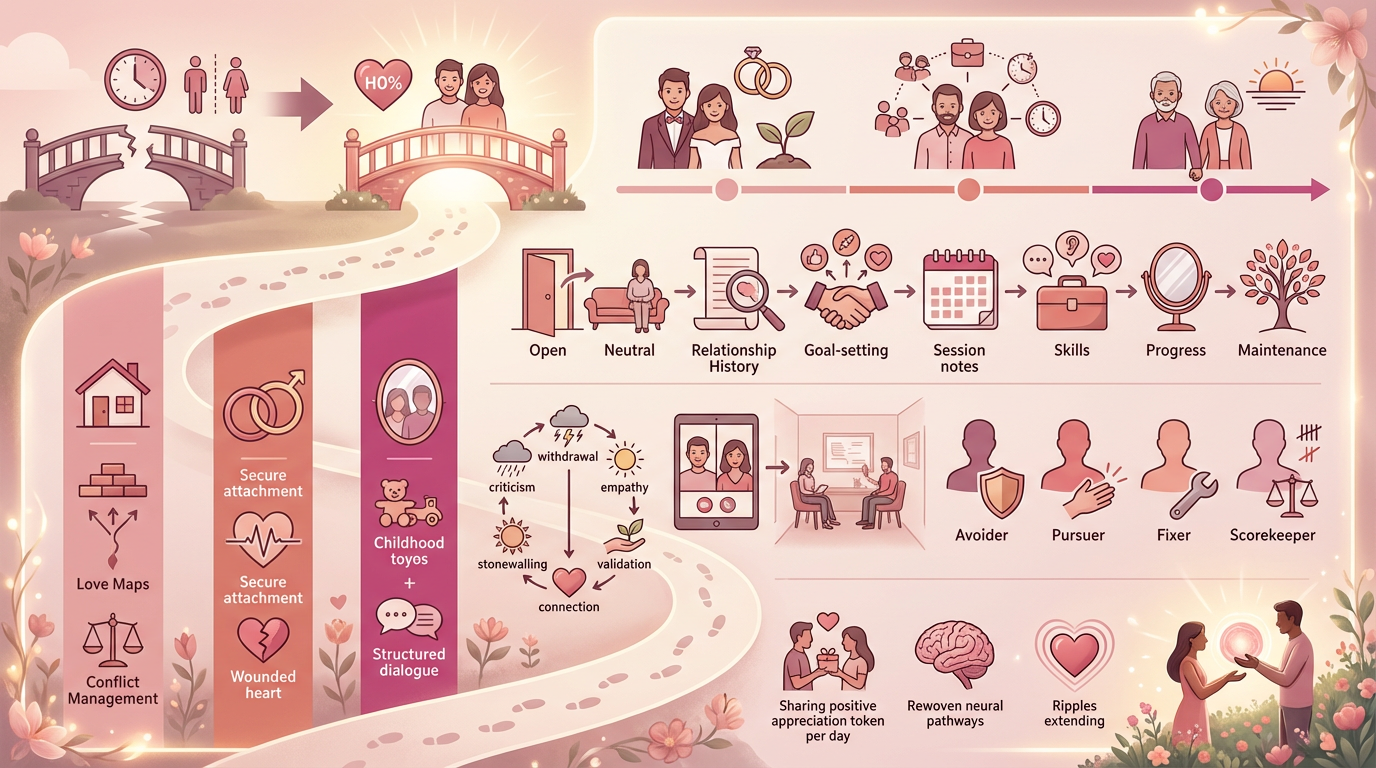
In this guide, you will discover the most effective types of couples therapy, learn what actually happens during sessions, and find out whether therapy could be the turning point your relationship needs.
Whether you are navigating recurring conflict, recovering from a breach of trust, or simply want to deepen your emotional connection, understanding couples therapy empowers you to make an informed choice about your relationship's future.
What Is Couples Therapy?
Couples therapy is a form of psychotherapy in which a licensed mental health professional works with two partners to identify patterns of conflict, improve communication skills, rebuild emotional intimacy, and strengthen the overall health of the relationship. Unlike individual therapy, which focuses on one person's internal world, couples therapy treats the relationship itself as the client. The therapist acts as a neutral guide, helping both partners understand their own contributions to dysfunction while developing shared tools for growth.
Not medical advice.
Couples therapy draws from multiple psychological frameworks, including attachment theory, behavioral psychology, and systems theory. Each approach offers a different lens for understanding why partners get stuck in painful cycles and how they can break free. The field has evolved significantly since the 1950s, with modern evidence-based methods showing robust success rates across diverse populations. Today, couples therapy is not only for relationships in crisis. Many healthy couples use it proactively to strengthen their communication, navigate major life transitions, and build a foundation for lasting fulfillment.
Surprising Insight: Surprising Insight: The average couple waits six years after problems begin before seeking therapy, yet research shows that couples who seek help within the first two years of noticing issues have significantly higher success rates.
The Couples Therapy Process
Overview of the typical journey through couples therapy from initial assessment to lasting change
🔍 Click to enlarge
Why Couples Therapy Matters in 2026
In 2026, relationships face unprecedented pressures. Digital distraction, remote work blurring boundaries between professional and personal life, economic stress, and the lingering effects of global uncertainty have all placed enormous strain on partnerships. Research from the American Psychological Association indicates that stress is the single largest contributor to relationship dissatisfaction. Couples therapy provides a structured, evidence-based framework for navigating these modern challenges together rather than letting them erode the partnership from within.
The stigma around seeking relationship help has decreased dramatically. A growing cultural shift toward emotional openness and vulnerability means more couples are treating therapy as a proactive investment rather than a last resort. Online therapy platforms have also expanded access, making it possible for couples in rural areas or with demanding schedules to work with qualified professionals. This accessibility is transforming how couples approach their emotional health together.
Beyond the relationship itself, couples therapy creates ripple effects across every dimension of wellbeing. Partners who communicate effectively and resolve conflict constructively report lower levels of anxiety, improved mental health, better physical health outcomes, and greater happiness. Children in households where parents model healthy relationship skills develop stronger emotional intelligence and more secure attachment patterns. The benefits extend far beyond the therapy room.
The Science Behind Couples Therapy
Decades of research support the effectiveness of couples therapy. A comprehensive meta-analysis published in the Journal of Marital and Family Therapy found that couples therapy produces clinically significant improvement in approximately 70 percent of cases when evidence-based approaches are used. Emotionally Focused Therapy, one of the most studied methods, shows that 70 to 73 percent of couples move from distress to recovery, with follow-up studies demonstrating these gains are maintained years after treatment ends. The Gottman Method, developed from over 40 years of observational research at the University of Washington, has identified specific behavioral patterns that predict relationship outcomes with remarkable accuracy.
Neuroscience research reveals why therapy works at a biological level. When partners feel emotionally disconnected, the brain's threat detection system activates, flooding the body with cortisol and adrenaline. This makes active listening and empathetic responding nearly impossible. Therapy helps couples co-regulate their nervous systems by creating a safe space where both partners can express needs without triggering defensive reactions. Over time, new neural pathways form that support emotional regulation and secure bonding. Studies using functional MRI scans have shown that successful couples therapy literally changes how partners' brains respond to each other's emotional signals.
Major Couples Therapy Approaches Compared
Comparison of the three most widely used evidence-based couples therapy methods
🔍 Click to enlarge
Key Types of Couples Therapy
Gottman Method Couples Therapy
Developed by Drs. John and Julie Gottman based on over four decades of research at the University of Washington's Love Lab, the Gottman Method is one of the most recognized approaches to couples therapy worldwide. It centers on the Sound Relationship House theory, which identifies seven levels of a healthy relationship, from building detailed love maps of your partner's inner world to creating shared meaning and life dreams. The method is particularly effective at identifying destructive communication patterns known as the Four Horsemen: criticism, contempt, defensiveness, and stonewalling. Therapists trained in this approach help couples replace these patterns with gentler startup, repair attempts, and physiological self-soothing, which directly improves communication in relationships.
Emotionally Focused Therapy (EFT)
Created by Dr. Sue Johnson, Emotionally Focused Therapy is grounded in attachment science and views relationship distress as a result of unmet attachment needs. EFT helps partners recognize the negative interaction cycles they are trapped in, such as the pursue-withdraw pattern where one partner escalates while the other shuts down. Through a structured three-stage process of de-escalation, restructuring interactions, and consolidation, couples learn to express their deeper emotional needs and respond to each other with greater sensitivity. Research shows that 70 to 73 percent of couples recover from distress through EFT, making it one of the most effective approaches available. EFT is particularly powerful for rebuilding emotional bonds and healing emotional wounds.
Imago Relationship Therapy
Created by Dr. Harville Hendrix and Dr. Helen LaKelly Hunt, Imago Relationship Therapy combines insights from psychoanalysis, behavioral therapy, and spiritual traditions. The core premise is that we unconsciously choose partners who reflect both the positive and negative traits of our early caregivers. This attraction serves a purpose: it provides opportunities to heal childhood wounds within the safety of an adult relationship. The signature technique is the Intentional Dialogue, a structured conversation format that includes mirroring, validation, and empathy. This approach deepens deep connection and helps partners see each other's behavior through the lens of compassion rather than judgment.
Other Evidence-Based Approaches
Several additional approaches have strong clinical support. Integrative Behavioral Couple Therapy (IBCT) combines acceptance strategies with traditional behavioral change techniques. Research shows IBCT produces clinically significant improvement for approximately 69 percent of couples. The Psychobiological Approach to Couple Therapy (PACT) draws on attachment theory, neuroscience, and arousal regulation to help couples understand their automatic reactions. Narrative Therapy helps couples rewrite the stories they tell about their relationship, shifting from problem-saturated narratives to accounts that highlight strength and resilience. Each approach offers unique tools that can be matched to specific relationship challenges.
| Approach | Core Focus | Best For |
|---|---|---|
| Gottman Method | Communication patterns and friendship | Conflict management, rebuilding friendship |
| EFT | Attachment needs and emotional bonds | Emotional disconnection, trust repair |
| Imago | Childhood wounds and conscious partnership | Understanding recurring patterns |
| IBCT | Acceptance and behavioral change | Deep personality differences |
| PACT | Neuroscience and arousal regulation | Reactive couples, anxious-avoidant dynamics |
How to Apply Couples Therapy: Step by Step
- Step 1: Acknowledge the need together. Have an <a href="/g/honest-conversations.html">honest conversation</a> with your partner about wanting to improve your relationship through professional help. Frame it as investing in your future together rather than fixing what is broken.
- Step 2: Research therapists carefully. Look for licensed professionals with specific training in couples therapy methods like Gottman, EFT, or Imago. Check credentials, read reviews, and ensure they are a good fit for both partners.
- Step 3: Schedule an initial consultation. Many therapists offer a brief phone or video call to determine fit. Use this time to ask about their approach, session structure, and what they expect from clients.
- Step 4: Complete the intake assessment. Your first full session typically involves sharing your relationship history, identifying current challenges, and discussing individual backgrounds. Be as open and honest as possible.
- Step 5: Set clear goals together. Work with your therapist to define what success looks like. Goals might include reducing arguments, rebuilding <a href="/g/trust.html">trust</a>, improving <a href="/g/emotional-intimacy.html">intimacy</a>, or learning to navigate a specific life transition.
- Step 6: Commit to regular sessions. Most couples therapists recommend weekly sessions, especially at the beginning. Consistency creates momentum and allows skills to build upon each other.
- Step 7: Practice skills between sessions. The real work happens at home. Therapists typically assign exercises like structured dialogues, appreciation practices, or <a href="/g/active-listening.html">active listening</a> activities to reinforce session learning.
- Step 8: Track your progress honestly. Keep a journal or use a relationship app to notice patterns, celebrate small wins, and identify areas that still need attention. Share observations with your therapist.
- Step 9: Address setbacks without shame. Every couple experiences regressions during therapy. These moments are not failures but opportunities to practice new skills under pressure. Bring challenges back to sessions for guidance.
- Step 10: Transition to maintenance mode. As you meet your initial goals, discuss reducing session frequency while maintaining the habits and <a href="/g/communication-skills.html">communication tools</a> you have developed. Many couples continue periodic check-in sessions for years.
Couples Therapy Across Life Stages
Young Adulthood (18-35)
Young couples often seek therapy to navigate the transition from passionate romance to committed partnership. Common issues include learning to manage conflict constructively, aligning on values around finances and family planning, and maintaining individual identity within the relationship. Pre-marital counseling, a form of preventive couples therapy, helps partners establish healthy patterns before challenges arise. Young adults who invest in relationship skills early build a strong foundation that supports commitment and growth over decades. Dating advice often overlooks the transformative power of working with a professional to understand your own relational patterns before they become entrenched.
Middle Adulthood (35-55)
This stage often brings the greatest complexity to relationships. Partners may be juggling parenting demands, career pressures, aging parents, and shifting personal identities. Couple dynamics frequently shift as children enter the picture, and many couples struggle with the loss of spontaneity and romance. Infidelity, whether emotional or physical, peaks during this period. Therapy during middle adulthood often focuses on renegotiating roles, rediscovering the partnership beneath the parenting team, and addressing unspoken resentments that have accumulated over years. Family dynamics and extended family relationships add additional layers that a skilled therapist can help navigate.
Later Adulthood (55+)
Retirement, empty nesting, health challenges, and the loss of shared routines create unique pressures for long-term couples. Partners who spent decades focused on children and careers may suddenly find themselves face to face with a relationship that has been running on autopilot. Therapy at this stage often involves reconnecting emotionally, processing grief and loss together, and creating new shared meaning for the years ahead. Research shows that couples who actively invest in their relationship during later life report higher levels of life satisfaction and better health outcomes. It is never too late to deepen your emotional connection and rediscover what brought you together.
Signs You May Need Couples Therapy
Recognizing when professional help would benefit your relationship is an act of strength, not weakness. Some signs are obvious, like frequent explosive arguments or a significant betrayal. Others are subtler and easier to dismiss. Persistent emotional distance where conversations stay surface-level and neither partner feels truly known is one of the most common precursors to serious relationship breakdown. If you find yourselves having the same argument repeatedly without resolution, or if one partner has emotionally checked out while the other keeps pursuing, these patterns signal that the relationship's natural repair mechanisms have become overwhelmed.
Other important indicators include difficulty navigating a major life transition together, loss of physical or emotional intimacy, one or both partners turning to external sources for emotional support that should come from the relationship, resentment that builds rather than resolves, and communication that has become predominantly negative. If boundary setting feels impossible or if you walk on eggshells around each other, therapy provides a safe container for addressing these dynamics. Remember that seeking help early, before patterns become deeply entrenched, dramatically improves outcomes.
What to Expect in Your First Session
The first couples therapy session is typically an intake assessment where the therapist gathers information about your relationship history, individual backgrounds, and current challenges. Many therapists meet with both partners together initially, then schedule individual sessions before reconvening as a couple. This approach allows each person to share perspectives privately and helps the therapist understand the full picture. You can expect the therapist to ask about how you met, what attracted you to each other, your family of origin experiences, and what specific issues brought you to therapy. The first session may feel like a conversation that jumps between topics as the therapist explores different dimensions of your relationship.
It is normal to feel nervous, vulnerable, or even skeptical before your first session. A skilled therapist creates an atmosphere of safety and neutrality, ensuring both partners feel heard without judgment. They will not take sides, assign blame, or tell you what to do. Instead, they will help you understand the dynamics at play and begin building a roadmap for change. Many couples report feeling a sense of relief after the first session simply because they have started the process. The therapist's role is to be a guide who helps you develop self-compassion and mutual understanding as you work through challenges together.
Profiles: Your Couples Therapy Approach
The Avoider
- A safe environment where <a href="/g/vulnerability.html">vulnerability</a> feels manageable
- Clear structure and predictability in sessions
- Gradual exposure to difficult emotions with therapist support
Common pitfall: Withdrawing during heated moments, which partners experience as emotional abandonment
Best move: Start with EFT to understand attachment needs and learn that emotional engagement is safe
The Pursuer
- Validation that the desire for <a href="/g/connection.html">connection</a> is healthy
- Tools to express needs without escalating
- Understanding of how intensity can push partners away
Common pitfall: Overwhelming a partner with emotional demands, creating the very distance they fear
Best move: Practice <a href="/g/emotional-regulation.html">emotional regulation</a> techniques and learn to make softer requests
The Fixer
- Permission to sit with discomfort instead of solving it
- Understanding that listening is often more healing than advice
- Tools for emotional attunement over problem-solving
Common pitfall: Jumping to solutions before the partner feels truly heard and understood
Best move: Use Imago Intentional Dialogue to practice mirroring and validation before responding
The Scorekeeper
- A shift from fairness focus to <a href="/g/empathy.html">empathy</a> focus
- Understanding that relationships thrive on generosity, not balance sheets
- Tools for expressing unmet needs constructively
Common pitfall: Keeping mental tallies of who did what, which breeds resentment rather than <a href="/g/gratitude.html">gratitude</a>
Best move: Start a daily <a href="/g/appreciation.html">appreciation</a> practice and notice positive contributions rather than deficits
Common Couples Therapy Mistakes
One of the most damaging mistakes couples make is waiting too long to seek help. The average couple endures six years of relationship distress before entering therapy. By that point, negative patterns are deeply entrenched, resentment has accumulated, and both partners may have already begun emotionally detaching. Early intervention dramatically improves outcomes. Think of therapy as routine maintenance rather than emergency repair. Couples who engage proactively, even when things are going relatively well, build stronger relationship habits and catch small issues before they become crises.
Another common mistake is approaching therapy with a hidden agenda to prove your partner wrong or convince the therapist to take your side. Effective therapy requires both partners to take ownership of their contributions to relationship dysfunction. If you enter sessions focused on changing your partner rather than understanding yourself, progress will stall. Similarly, expecting the therapist to fix everything without doing homework between sessions undermines the process. Research consistently shows that couples who practice skills outside of sessions see significantly better outcomes than those who only engage during the therapy hour.
Choosing the wrong therapist or approach can also derail progress. Not every therapist is trained in evidence-based couples therapy methods, and individual therapy skills do not automatically transfer to working with couples. Look for professionals with specific certifications in Gottman, EFT, or other recognized couples therapy modalities. Additionally, quitting after a few sessions because it feels uncomfortable is a mistake. Therapy often involves confronting painful truths, and the discomfort is usually a sign that important work is happening. Give the process at least eight to twelve sessions before evaluating whether it is the right fit for your personal growth journey.
The Negative Cycle vs. The Positive Cycle
How couples shift from destructive patterns to constructive ones through therapy
🔍 Click to enlarge
Online vs. In-Person Couples Therapy
The rise of telehealth has transformed access to couples therapy. Online sessions offer significant advantages in convenience, accessibility, and scheduling flexibility. Research conducted during and after the pandemic found that online couples therapy produces comparable outcomes to in-person sessions for most relationship issues. Partners can attend sessions from the comfort of their home, which sometimes reduces the anxiety associated with visiting a therapist's office. Online therapy also expands options for couples in areas with limited access to specialized relationship therapists.
However, in-person therapy offers certain benefits that are difficult to replicate online. Therapists can better observe nonverbal communication, body language, and the physical dynamic between partners when everyone is in the same room. Some therapeutic exercises, particularly those involving physical proximity or movement, work better in person. The ideal choice depends on your specific circumstances, including the severity of your challenges, your comfort with technology, and what is available in your area. Many therapists now offer hybrid models, combining in-person and virtual sessions to maximize both convenience and effectiveness. Whatever format you choose, the most important factor is the quality of the therapeutic relationship and your commitment to the process.
Science and Studies
The evidence base for couples therapy is robust and growing. Multiple randomized controlled trials, meta-analyses, and longitudinal studies support the effectiveness of several approaches. The research consistently shows that when couples engage fully in evidence-based therapy, the majority experience meaningful and lasting improvement in emotional wellbeing and relationship satisfaction.
- Johnson, S.M. (2019). Attachment Theory in Practice: Emotionally Focused Therapy with Individuals, Couples, and Families. Guilford Press. Found that 70-73% of couples recover from distress using EFT, with gains maintained at two-year follow-up.
- Gottman, J.M. & Silver, N. (2015). The Seven Principles for Making Marriage Work. Harmony Books. Based on 40+ years of research observing over 3,000 couples at the University of Washington.
- Christensen, A. et al. (2010). Marital status and satisfaction five years following a randomized clinical trial comparing traditional versus integrative behavioral couple therapy. Journal of Consulting and Clinical Psychology, 78(2), 225-235. Showed 69% clinically significant improvement with IBCT.
- Hendrix, H. & Hunt, H.L. (2019). Getting the Love You Want: A Guide for Couples. St. Martin's Griffin. Foundational text for Imago Relationship Therapy approach.
- Lebow, J.L. et al. (2012). Research on the treatment of couple distress. Journal of Marital and Family Therapy, 38(1), 145-168. Comprehensive meta-analysis confirming approximately 70% improvement rate across evidence-based modalities.
Your First Micro Habit
Start Small Today
Today's action: Each evening, share one specific thing you appreciated about your partner that day. Use the format: I noticed when you did X, and it made me feel Y.
Research from the Gottman Institute shows that a 5:1 ratio of positive to negative interactions predicts relationship stability. This micro habit builds appreciation naturally and creates a daily ritual of turning toward your partner.
Keep quitting habit apps after a missed day? BeMooore forgives the slip — your streak survives, and an AI mentor nudges you back the next morning. Free on iOS.
Quick Assessment
When conflict arises in your relationship, what is your typical response pattern?
Your conflict style reveals your underlying attachment needs. Understanding whether you pursue or withdraw is the first step toward breaking negative cycles.
What would you most want to gain from couples therapy?
Your primary goal helps determine which therapy approach may be most effective. Communication-focused goals align with Gottman, while emotional connection goals point toward EFT.
How comfortable are you with expressing vulnerable emotions to your partner?
Emotional vulnerability is the foundation of secure attachment. Therapy helps create the safety needed for both partners to share authentically.
Take our full assessment to get personalized recommendations for your relationship.
Discover Your Style →Building a Stronger Relationship Beyond Therapy
Couples therapy is not a destination but a catalyst for ongoing growth. The skills you develop in sessions form a foundation that supports your relationship for years to come when practiced consistently. Maintaining a regular check-in ritual where both partners share appreciations, concerns, and dreams keeps communication channels open. Many therapists recommend a weekly state-of-the-union meeting where couples discuss what went well, what was challenging, and what each person needs in the week ahead.
Continue investing in your relationship through shared experiences, ongoing learning, and individual self-improvement. Read relationship books together, attend workshops, and maintain the mindfulness practices you learned in therapy. Nurture your friendship as the bedrock of your partnership by maintaining curiosity about your partner's evolving inner world. When challenges arise, draw on the tools you developed rather than reverting to old patterns. And do not hesitate to return to therapy for tune-ups when life throws new challenges your way. The strongest couples view professional support as a resource to be utilized whenever needed, not a sign of failure.
Next Steps
If you are considering couples therapy, start by having an open conversation with your partner about your desire to invest in the relationship. Explore the different approaches described in this guide and identify which resonates most with your specific needs. Research qualified therapists in your area or explore reputable online therapy platforms. Remember that taking this step is one of the most powerful investments you can make in your emotional wellbeing, your partner's wellbeing, and the health of your family. Whether you begin with a meditation practice together, read a relationship book, or schedule that first session, every step toward understanding and belonging matters.
Your relationship deserves the same care and attention you give to your career, your health, and your personal goals. Couples therapy provides the structure, expertise, and accountability to transform how you and your partner relate to each other. Whether you are facing a specific crisis or simply want to deepen your love and connection, the tools and approaches described here can help you build the relationship you both deserve. Take the first step today toward a more fulfilling, resilient, and deeply connected partnership.
Get personalized guidance with AI coaching.
Start Your Journey →Research Sources
This article is based on peer-reviewed research and authoritative sources. Below are the key references we consulted:
Related Glossary Articles
Frequently Asked Questions
How long does couples therapy typically take?
Most couples attend therapy for 12 to 20 sessions, though this varies based on the complexity of issues and the approach used. Some couples see significant improvement within 8 sessions, while others benefit from longer-term work spanning 6 months to a year. Intensive formats, such as weekend retreats, can compress the process for couples wanting accelerated results.
Can couples therapy work if only one partner wants to go?
While couples therapy is most effective when both partners are engaged, individual therapy focused on relationship patterns can create meaningful change. When one partner develops better communication skills, emotional regulation, and self-awareness, it often shifts the dynamic enough to motivate the other partner to participate. Some therapists specialize in working with one partner to improve the relationship.
How much does couples therapy cost?
Session costs typically range from 100 to 300 dollars per session depending on location, therapist experience, and approach. Some insurance plans cover couples therapy when a mental health diagnosis is involved. Online platforms may offer more affordable options, and many therapists provide sliding scale fees based on income. Consider couples therapy an investment in your relationship that often costs less than the financial and emotional toll of divorce.
Is couples therapy only for married couples?
Couples therapy is for any two people in a committed relationship who want to improve their partnership. This includes dating couples, engaged couples, cohabiting partners, and LGBTQ+ relationships. The therapeutic principles of healthy communication, emotional attunement, and secure attachment apply universally regardless of relationship structure or legal status.
What if couples therapy reveals we should separate?
Sometimes therapy clarifies that separation is the healthiest path forward. A good therapist helps couples reach this conclusion with clarity and compassion rather than resentment. Discernment counseling is a specific approach designed for couples on the brink, helping both partners gain confidence and clarity about whether to work on the relationship or move forward separately. Even when separation occurs, therapy ensures it happens in a way that minimizes harm and supports healing.
How do I find a qualified couples therapist?
Look for licensed mental health professionals with specific training in evidence-based couples therapy approaches. The Gottman Institute, International Centre for Excellence in EFT, and Imago Relationships International all maintain directories of certified therapists. Ask about their specific couples therapy training, years of experience, and approach. A good therapist should be able to clearly explain their method and why they believe it fits your situation.
Can couples therapy help after infidelity?
Research shows that couples therapy can be highly effective for recovering from infidelity when both partners are committed to the process. The Gottman Method and EFT both have specific protocols for affair recovery that address the trauma, rebuild trust through transparency, and help couples understand the vulnerabilities that contributed to the breach. Recovery typically takes longer than other issues, often 12 to 18 months, but many couples report their relationship becomes stronger and more honest than before the affair.
Take the Next Step
Ready to improve your wellbeing? Take our free assessment to get personalized recommendations based on your unique situation.
- Discover your strengths and gaps
- Get personalized quick wins
- Track your progress over time
- Evidence-based strategies