Transition
A transition is the internal psychological process you go through when something in your life shifts. Whether you are changing careers, moving to a new city, ending a relationship, or stepping into parenthood, the outer event is only the start. The real work happens inside, where you let go of what was, sit with uncertainty, and gradually find your footing in a new reality. Understanding this inner process can mean the difference between feeling crushed by change and emerging stronger on the other side.
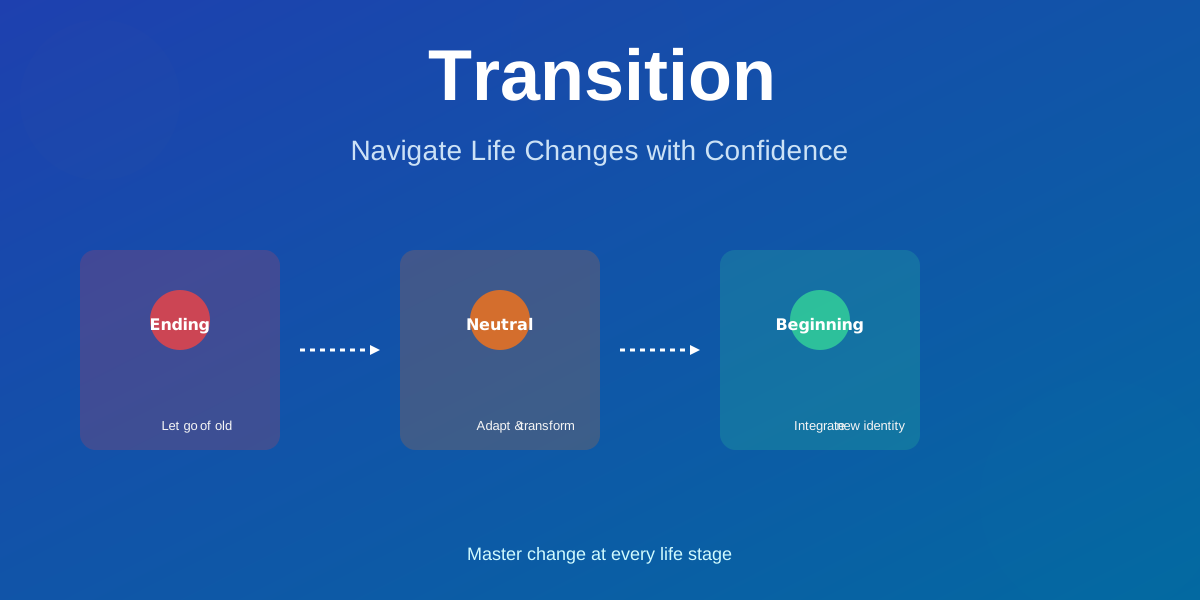
In this guide you will discover the science behind successful transitions, learn a step-by-step framework used by psychologists worldwide, and find practical tools you can start using today. We will also explore how different personality types handle change and reveal the most common mistakes people make when navigating major life shifts.
By the end of this article you will have a clear roadmap for any transition you face, from small daily adjustments to life-altering pivots. You will also understand why some people thrive during change while others struggle, and what you can do to move into the first group.
What Is Transition?
Transition refers to the inner psychological process people experience when they internalize and come to terms with a new situation that external change brings about. Change consultant William Bridges made a crucial distinction that has shaped modern psychology: change is the external event that happens to you, while transition is the internal reorientation that happens within you. A company restructure is a change. The grief, confusion, and eventual acceptance you feel are the transition. This distinction matters because you can manage a transition even when you cannot control the change itself. By focusing on the emotional regulation and coping mechanisms that support inner adjustment, you gain power over how any shift affects your happiness and life satisfaction.
Not medical advice.
Researchers Schlossberg and Merriam categorize transitions into four types: anticipated transitions you expect as part of normal life such as graduation or retirement, unanticipated transitions like sudden job loss or illness, non-events where an expected change never happens such as a promotion you did not receive, and sleeper transitions that build so gradually you barely notice them until the cumulative shift becomes undeniable. Each type carries its own emotional signature, yet the underlying psychological process follows a remarkably similar pattern. Recognizing which type of transition you face helps you choose the right coping strategies and set realistic expectations for your emotional recovery timeline.
Surprising Insight: Surprising Insight: Research from the London School of Economics found that the psychological impact of life transitions depends more on perceived control and personal coping skills than on the objective severity of the change itself.
The Four Types of Life Transitions
A visual breakdown of Schlossberg and Merriam's transition categories
🔍 Click to enlarge
Why Transition Matters in 2026
The pace of change in modern life has accelerated dramatically. Career shifts, remote work adjustments, global uncertainties, and rapid technological evolution mean most people now face multiple significant transitions simultaneously. A 2024 survey from the American Psychological Association found that a majority of adults reported at least one major life transition in the past year, with many citing compounded stress from overlapping changes. Understanding how to navigate transitions is no longer a nice-to-have skill. It is essential for protecting your mental health and sustaining emotional wellbeing in an era of constant flux.
Poorly managed transitions can cascade into chronic stress, anxiety, relationship breakdown, and even physical health issues like insomnia and digestive problems. On the other hand, people who develop strong transition skills tend to report higher levels of contentment, deeper connections, and greater career success over time. The ability to move through change with grace is a transferable life skill that compounds across every domain of your existence.
Beyond personal wellbeing, transition literacy affects your relationships. When you understand your own transition process, you can communicate more clearly with partners, family, and colleagues about what you need. This understanding strengthens communication, prevents unnecessary conflict, and builds emotional resilience within your entire support network. In 2026 the most valuable skill you can develop is not resistance to change but fluency in navigating it.
The Science Behind Transition
Neuroscience research reveals that transitions activate the brain's threat detection system, centered in the amygdala, because change introduces uncertainty and the brain interprets uncertainty as potential danger. This explains why even positive transitions like getting married or starting a dream job can trigger anxiety, sleep disruption, and emotional volatility. The prefrontal cortex, responsible for executive function and rational planning, can become temporarily less effective during periods of intense change, making it harder to think clearly and make good decisions. Understanding this neurological reality helps normalize the difficulty of transitions. You are not weak for struggling with change. Your brain is doing exactly what it was designed to do: keeping you alert to potential threats. The key is learning techniques that calm the amygdala and re-engage the prefrontal cortex, such as breathing techniques, mindfulness, and structured daily routines.
Psychologist Susan Bridges expanded on William Bridges' model by showing that self-compassion is a stronger predictor of psychological wellbeing during transitions than either self-esteem or optimism. A study published in the Journal of Personality found that people who practice self-compassion during major life changes recover faster, experience less depression, and maintain healthier relationships throughout the process. This finding aligns with broader positive psychology research showing that kindness toward yourself during difficulty builds mental resilience rather than undermining it. The Harvard Study of Adult Development, running for nearly eighty years, confirms that the quality of relationships during transitions is the single strongest predictor of long-term health and happiness.
Bridges Transition Model: Three Stages
The psychological journey from endings through the neutral zone to new beginnings
🔍 Click to enlarge
Key Components of Transition
Endings and Letting Go
Every transition begins with an ending. Before you can move forward, you must acknowledge what you are leaving behind. This might be a job title, a relationship dynamic, a physical location, a daily routine, or an identity you held for years. The ending phase often brings grief, even when the change is positive. A person who gets promoted may grieve the simplicity of their old role. Someone who moves to their dream city may grieve the community they left. Allowing yourself to feel this grief without judgment is essential. Suppressing it only delays the transition and can lead to unresolved emotions surfacing later as burnout, irritability, or withdrawal. Practical tools for this phase include journaling about what you are releasing, having honest conversations with trusted people, and creating small rituals of closure such as writing a farewell letter to your old chapter.
The Neutral Zone
The neutral zone is the in-between space where the old way is gone but the new way is not yet fully formed. William Bridges called this the core of the transition process and identified it as the place where critical psychological realignments happen. This phase feels uncomfortable because it lacks the clarity of either the old or the new. You may feel lost, confused, or directionless. However, the neutral zone is also a period of extraordinary potential. It is where creativity flourishes, new perspectives emerge, and genuine growth takes root. The key is to resist the urge to rush through it. Giving yourself permission to explore, experiment, and sit with not-knowing is what allows the deepest transformation to occur. Practices like mindfulness meditation and creative expression are particularly powerful in the neutral zone because they help you stay present rather than anxiously grasping for premature certainty.
New Beginnings
New beginnings emerge when you start to feel a sense of purpose, energy, and direction in the new reality. This is not a single moment but a gradual dawning. You begin to build new competencies, form new habits, and develop a renewed sense of self-worth that incorporates the change. Beginnings require active engagement. Setting small, achievable goals, celebrating incremental progress, and connecting with people who support your new direction all accelerate this phase. It is important to note that beginnings and endings are not strictly linear. You may cycle back to grief or uncertainty even after you have started building your new chapter, and that is perfectly normal.
Support Systems and Social Connection
No transition happens in isolation. The quality of your support system has a profound impact on how smoothly you navigate change. Research consistently shows that people with strong social connections experience less depression, recover faster from setbacks, and find meaning in change more quickly. Building and maintaining your support network is not a passive process during transition. It requires intentional effort: reaching out even when you feel like withdrawing, being honest about your struggles with trusted friends, and sometimes seeking professional guidance through therapy or coaching. Active listening and emotional expression become especially important skills during this time.
| Stage | Common Emotions | Best Strategy |
|---|---|---|
| Endings | Grief, fear, denial, resistance | Acknowledge loss, journal, seek closure rituals |
| Neutral Zone | Confusion, anxiety, curiosity, restlessness | Practice mindfulness, explore options, allow uncertainty |
| New Beginnings | Hope, excitement, occasional doubt | Set small goals, celebrate wins, build new routines |
How to Apply Transition Skills: Step by Step
- Step 1: Name the transition. Write down exactly what is changing in your life right now. Clarity about the external change is the first step toward managing the internal transition. Be specific: instead of writing 'everything is changing,' identify each distinct shift.
- Step 2: Identify what you are losing. List the routines, relationships, identities, or comforts that are ending. This is not about being negative. It is about honest acknowledgment that frees you to move forward without carrying unprocessed grief.
- Step 3: Allow yourself to grieve. Give yourself permission to feel sad, scared, or angry about what you are losing, even if the change is ultimately positive. <a href="/g/self-compassion.html">Self-compassion</a> during this phase is the single strongest predictor of healthy adjustment.
- Step 4: Map your support network. Write down three to five people you can lean on during this transition. Contact at least one of them this week and share what you are going through. Social <a href="/g/connection.html">connection</a> is protective during change.
- Step 5: Establish anchor routines. During transition, your <a href="/g/daily-routines.html">daily routines</a> provide stability when everything else feels uncertain. Choose two or three non-negotiable habits such as a <a href="/g/morning-rituals.html">morning ritual</a>, regular exercise, or a consistent bedtime.
- Step 6: Practice mindfulness daily. Spend five to ten minutes each day in a <a href="/g/mindfulness.html">mindfulness</a> practice such as <a href="/g/breathing-techniques.html">breathing exercises</a> or body scans. This calms your amygdala and improves your ability to make clear decisions during uncertainty.
- Step 7: Set micro goals. Instead of overwhelming yourself with the full scope of your new situation, break it into tiny achievable steps. Complete one small action each day that moves you toward your new reality. Track these wins to build momentum and <a href="/g/confidence-building.html">confidence</a>.
- Step 8: Use cognitive reframing. When negative thoughts arise, practice seeing the transition as an opportunity rather than a threat. Research on cognitive reframing shows this simple shift can reduce stress and improve <a href="/g/emotional-wellbeing.html">emotional wellbeing</a> significantly.
- Step 9: Journal through the neutral zone. Write for ten minutes each evening about what you noticed, felt, and learned during the day. Journaling reduces anxiety, enhances self-awareness, and helps you spot patterns in your transition process.
- Step 10: Celebrate new beginnings. When you notice signs that you are settling into your new reality, such as feeling competent, making new connections, or experiencing genuine excitement, mark those moments. Celebration reinforces your brain's positive associations with the change and accelerates adaptation.
Transition Across Life Stages
Young Adulthood (18-35)
Young adults face a concentration of major transitions: leaving home, starting higher education, entering the workforce, forming romantic partnerships, and potentially becoming parents. Research shows that wellbeing during the transition to adulthood follows diverse trajectories, with some young people thriving and others struggling significantly. The key differentiator is not the number of transitions faced but the quality of coping resources available. Young adults who build strong friendships, develop emotional intelligence early, and practice self-acceptance navigate this period with greater ease. Financial transitions are also prominent at this stage, making budgeting and basic financial literacy valuable transition tools.
Middle Adulthood (35-55)
Middle adulthood brings transitions related to career evolution, parenting challenges, caring for aging parents, and the midlife reevaluation of values and priorities. The U-shape of happiness research suggests that life satisfaction often dips during the early to mid-forties before rising again, partly because this is when the gap between youthful expectations and lived reality becomes most apparent. Successful transitions during this stage often involve redefining fulfillment, deepening intimacy in relationships, and developing a more authentic sense of meaning. This is also a critical period for burnout prevention and reassessing work-life balance.
Later Adulthood (55+)
Later adulthood transitions include retirement, health changes, loss of peers and partners, and shifting family roles such as becoming a grandparent. While these transitions involve significant losses, research from the Harvard Study of Adult Development shows that people who maintain strong social connections and a sense of purpose report high levels of life satisfaction well into their later years. The capacity to find gratitude in daily life, engage in simple living, and contribute to the wellbeing of others through mentoring or volunteering becomes a powerful source of inner peace during this stage. Physical health transitions also require attention to flexibility, strength training, and nutrition.
Profiles: Your Transition Approach
The Planner
- Clear timelines and structured milestones
- Written plans and checklists for each phase
- Predictable anchor routines during uncertainty
Common pitfall: Over-planning can become a way to avoid feeling difficult emotions. Plans create an illusion of control that delays genuine processing.
Best move: Schedule specific times for unstructured reflection alongside your planning. Let yourself feel the uncertainty for at least ten minutes each day without trying to fix it.
The Adapter
- Freedom to explore options without pressure
- Variety in daily activities and social connections
- Permission to change direction as new information emerges
Common pitfall: Constant adapting without pausing to process can lead to surface-level adjustment that masks deeper unresolved feelings.
Best move: Journal weekly about what you are actually feeling beneath the busy adapting. Ask yourself what you might be avoiding by staying in motion.
The Connector
- Strong social support and frequent check-ins
- Opportunities to talk through feelings with trusted people
- Group activities that provide a sense of belonging
Common pitfall: Relying too heavily on others can prevent you from developing your own internal coping resources and delay personal ownership of the transition.
Best move: Balance social processing with solo practices like mindfulness or journaling. Spend time alone with your thoughts at least once per week.
The Resister
- Gradual exposure to change rather than sudden immersion
- Evidence that the new situation has clear benefits
- Acknowledgment that resistance is a natural protective response
Common pitfall: Prolonged resistance can turn into rigidity, increasing suffering and damaging relationships with people who are moving forward.
Best move: Start with the smallest possible step into the new reality. Commit to trying one new thing related to the transition each week, and notice what happens.
Common Transition Mistakes
One of the most common mistakes during transition is rushing through the endings phase. People want to skip the discomfort of grief and jump straight to new beginnings. However, unprocessed endings create emotional debt that accumulates and eventually demands repayment, often at the worst possible time. If you find yourself saying things like 'I should be over this by now,' you are likely rushing your transition. Give the endings phase the time it needs. There is no universal timeline for grief, and pushing yourself to move faster than your psyche is ready only prolongs the process.
Another frequent error is isolating during the neutral zone. The confusion and vulnerability of this phase often makes people withdraw from their support networks exactly when they need them most. Isolation amplifies anxiety, distorts thinking, and removes the external perspectives that help you make sense of your experience. Even if you feel like retreating, maintain at least minimal contact with your closest friends or a professional therapist. You do not need to have everything figured out before reaching out. In fact, sharing your uncertainty is one of the most powerful things you can do.
A third mistake is comparing your transition timeline to others. Every person processes change at a different pace based on their personality, history, support system, and the nature of the change itself. Comparing yourself to someone who seems to be handling a similar transition more quickly creates shame and self-doubt that actively hinder your progress. Focus on your own process. The only relevant question is whether you are moving, however slowly, in a direction that aligns with your values and wellbeing. Self-compassion are not just nice sentiments. They are evidence-based tools for faster, healthier transitions.
Common Transition Mistakes and Their Antidotes
Three frequent errors and the corrective strategies for each
🔍 Click to enlarge
Building Emotional Resilience During Transition
Emotional resilience is not about being unaffected by change. It is about recovering well from the inevitable disruption that change brings. Research identifies several factors that build resilience during transitions. First, a sense of perceived control matters enormously. You may not control the change itself, but you can control your daily habits, your responses, and how you treat yourself. Even small acts of agency, like choosing what to eat for dinner or deciding to go for a walk, reinforce your sense of personal empowerment during chaotic times.
Second, psychological flexibility plays a critical role. This is the ability to adapt your thinking and behavior to fit changing circumstances rather than rigidly applying old strategies to new situations. People with high psychological flexibility view challenges as temporary and workable rather than permanent and overwhelming. You can develop this quality through mindfulness practices, acceptance-based approaches, and deliberate exposure to small, manageable changes in your daily life.
Third, maintaining physical health provides a biological foundation for emotional resilience. Sleep, nutrition, exercise, and hydration directly affect your brain's ability to regulate emotions and manage stress. During transitions, it is tempting to let these basics slide, but this is precisely when they matter most. Treat physical self-care as non-negotiable infrastructure for your transition, not as optional extras you will get back to once things calm down.
Transition and Relationships
Transitions do not happen in a vacuum. They ripple outward into every relationship you have. When one partner in a couple goes through a major transition, the relationship itself enters a transition. When a family member changes careers, retires, or faces a health crisis, the entire family system must adjust. Understanding this relational dimension is essential for managing transitions without damaging the bonds that sustain you. Clear communication about what you are experiencing and what you need is the foundation. Your loved ones cannot support you if they do not know what is happening inside you.
At the same time, be mindful that your transition affects others. Practice active listening to understand how your change is impacting the people around you. Show appreciation for their patience and support. And be willing to adjust your expectations of others during this period. They are navigating their own version of your transition, and they may need time and space to process it in their own way. Healthy relationships during transition require both vulnerability and boundary setting, the willingness to share your experience honestly while respecting your own and others' limits.
Transition and Career Change
Career transitions are among the most common and most psychologically complex life changes. Your work often forms a significant part of your identity, so changing careers can feel like changing who you are. The Bridges model is particularly useful here. The endings phase involves grieving your old professional identity and the relationships, routines, and competencies associated with it. The neutral zone may involve retraining, networking in unfamiliar spaces, and tolerating the discomfort of being a beginner again. The new beginning phase brings renewed ambition, fresh career growth opportunities, and a chance to align your work more closely with your values.
Financial considerations add another layer of complexity to career transitions. Having an emergency fund, understanding your cash flow, and maintaining a realistic budget can reduce the anxiety that accompanies professional change. Financial planning during career transition is not just about money. It is about creating the safety net that allows you to take meaningful risks. When financial stress is managed, you free up cognitive and emotional resources to invest in the actual transition work.
Science and Studies
A growing body of research supports the psychological frameworks and strategies described in this article. Here are key studies that inform our understanding of transitions and how to navigate them effectively.
- Bridges, W. (2004). Transitions: Making Sense of Life's Changes. This foundational work established the three-stage model of transition: endings, neutral zone, and new beginnings, now widely used in both organizational and personal psychology.
- Schlossberg, N.K. (2011). The Challenge of Change: The Transition Model and Its Applications. Published in the Journal of Employment Counseling, this study validated the four types of transitions and the role of coping resources in mediating outcomes.
- Sbarra, D.A. and Hazan, C. (2008). Coregulation, Dysregulation, Self-Regulation: An Integrative Analysis and Empirical Agenda for Understanding Adult Attachment, Separation, and Bereavement. Published in Personality and Social Psychology Review, demonstrating the neurobiological basis of transition-related grief.
- Neff, K.D. and McGehee, P. (2010). Self-compassion and Psychological Resilience Among Adolescents and Young Adults. Published in Self and Identity, showing that self-compassion predicts psychological wellbeing during transitions better than self-esteem.
- Vaillant, G.E. and Mukamal, K. (2001). Successful Aging. American Journal of Psychiatry. Drawing on the Harvard Study of Adult Development to show that relationship quality during transitions predicts long-term health and happiness outcomes.
Your First Micro Habit
Start Small Today
Today's action: Each evening, write one sentence about what changed for you today and how you feel about it. This takes less than sixty seconds and builds transition awareness over time.
Micro-journaling creates a daily checkpoint that keeps you connected to your transition process without overwhelm. Research shows that even brief reflective writing reduces anxiety and improves emotional processing.
Keep quitting habit apps after a missed day? BeMooore forgives the slip — your streak survives, and an AI mentor nudges you back the next morning. Free on iOS.
Quick Assessment
When you face an unexpected change, what is your first instinct?
Your first instinct reveals your dominant transition style. Planners benefit from adding emotional processing. Connectors benefit from building solo coping skills. Processors benefit from balancing reflection with action. Reframers benefit from allowing grief before shifting to optimism.
During a major life change, what do you struggle with most?
Your biggest struggle points to where you need the most support. Difficulty with endings suggests practicing grief rituals. Struggling with uncertainty calls for mindfulness. Routine disruption needs anchor habits. Vulnerability challenges benefit from small, safe disclosure practices.
After a transition settles, what matters most to you?
What you value after a transition reveals what to prioritize during one. Security-seekers should build anchor routines early. Relationship-focused people should invest in their support network. Growth-oriented individuals should embrace the neutral zone. Purpose-driven people should clarify their values before making major decisions.
Take our full assessment to get personalized recommendations for navigating your current life changes.
Discover Your Transition Style →Next Steps
Start by identifying where you are in the transition process right now. Are you in the endings phase, the neutral zone, or approaching new beginnings? Name your current stage and choose one strategy from this article that matches it. If you are in endings, practice a closure ritual. If you are in the neutral zone, begin a daily mindfulness practice. If you are entering new beginnings, set one small goal for this week. Remember that transitions are not problems to solve but processes to navigate. The skill you build now will serve you through every future change you encounter.
Explore related topics to deepen your understanding: emotional resilience for building your capacity to bounce back, self-compassion for treating yourself kindly during difficulty, growth mindset for seeing challenges as opportunities, and stress management for practical tools that keep you grounded. Each of these topics connects directly to your ability to move through transitions with greater ease, clarity, and even joy.
Get personalized guidance with AI coaching.
Start Your Journey →Research Sources
This article is based on peer-reviewed research and authoritative sources. Below are the key references we consulted:
Related Glossary Articles
Frequently Asked Questions
How long does a typical life transition take?
There is no universal timeline. Simple transitions may resolve in weeks, while major life changes like career shifts, divorce, or bereavement can take one to three years for full psychological adjustment. The key is to focus on progress rather than speed and to give each phase the time it requires.
What is the difference between change and transition?
Change is the external event that happens to you, such as a job loss, a move, or a diagnosis. Transition is the internal psychological process of letting go, reorienting, and building a new sense of normal. You can manage your transition even when you cannot control the change.
Can positive changes still cause difficult transitions?
Absolutely. Getting married, having a baby, receiving a promotion, or moving to your dream home are all positive changes that still involve endings and uncertainty. The grief you feel during a positive transition is real and valid. Acknowledging it helps you adjust faster.
When should I seek professional help during a transition?
Seek professional help if you experience persistent anxiety or depression lasting more than a few weeks, if you are unable to maintain basic daily functions, if you are relying on substances to cope, or if you feel stuck in the same phase for an extended period without any movement.
How can I support someone else going through a transition?
Listen without trying to fix. Validate their feelings rather than minimizing them. Offer practical help like meals or errands. Respect their pace and avoid comparing their transition to yours or anyone else's. Check in regularly even if they say they are fine.
What role does self-compassion play in transitions?
Research shows self-compassion is a stronger predictor of psychological wellbeing during transitions than self-esteem or optimism. Treating yourself with kindness during difficulty builds resilience rather than undermining it and accelerates healthy adjustment.
How do I know which phase of transition I am in?
If you are feeling grief, resistance, or denial, you are likely in the endings phase. If you feel confused, restless, or creatively inspired, you are in the neutral zone. If you notice renewed energy, emerging routines, and growing competence, you are entering new beginnings. You may cycle between phases.
Can mindfulness really help during transitions?
Yes. Mindfulness calms the amygdala's threat response and re-engages the prefrontal cortex, improving decision-making and emotional regulation during uncertain times. Even five minutes of daily practice has measurable benefits for people navigating major life changes.
Take the Next Step
Ready to improve your wellbeing? Take our free assessment to get personalized recommendations based on your unique situation.
- Discover your strengths and gaps
- Get personalized quick wins
- Track your progress over time
- Evidence-based strategies