Friendship
Friendship is one of life's greatest treasures—a bond built on mutual trust, shared values, and genuine care. In a world that often feels disconnected, meaningful friendships provide emotional support, laughter, and a sense of belonging. Yet many people struggle to develop deeper connections or maintain friendships through life's challenges. Whether you're seeking to strengthen existing friendships or build new ones, understanding the foundations of authentic friendship can transform your social life and overall wellbeing.
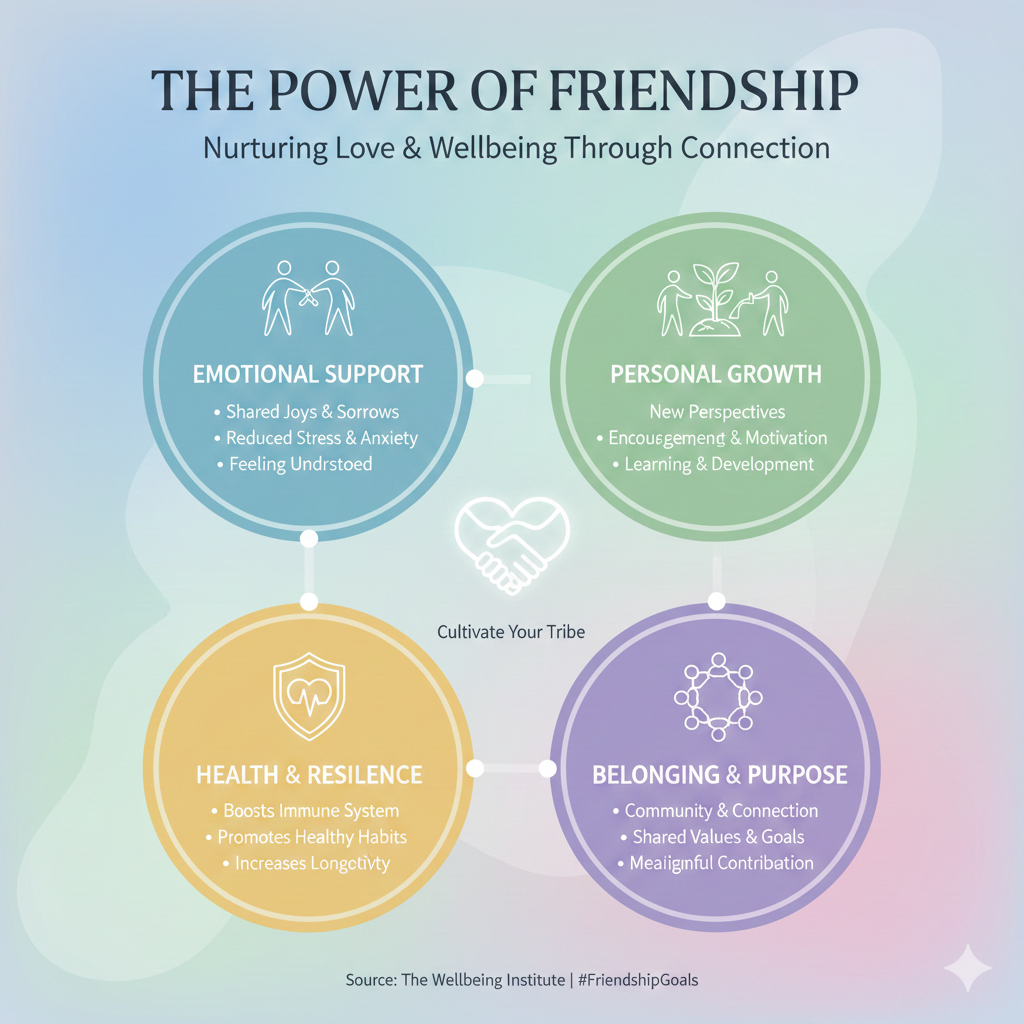
Discover how vulnerability and consistency create the deepest friendships.
Learn practical strategies for navigating conflicts and deepening trust with the people you care about.
What Is Friendship?
Friendship is a voluntary relationship characterized by mutual affection, trust, and reciprocal support between two or more people. Unlike family relationships (bound by biology) or romantic partnerships (marked by romantic love), friendships are chosen bonds based on shared interests, values, and genuine care. Authentic friendships involve emotional honesty, active listening, and a commitment to each other's growth and wellbeing.
Not medical advice.
Throughout human history, friendship has been recognized as essential to mental health, resilience, and life satisfaction. Modern research confirms what ancient philosophers knew: people with strong friendships experience better physical health, lower stress levels, and greater happiness. Yet in today's fast-paced, digitally-mediated world, many people report feeling lonely despite having hundreds of "friends" on social media. True friendship requires time, vulnerability, and authentic presence.
Surprising Insight: Surprising Insight: People with 3-5 close friendships report significantly higher life satisfaction than those with many casual acquaintances.
The Friendship Development Cycle
How friendships evolve through stages of acquaintance, bonding, deepening, and mutual support.
🔍 Click to enlarge
Why Friendship Matters in 2026
Friendships directly impact mental health. Research shows that people with strong friendships experience lower rates of anxiety and depression, higher self-esteem, and greater emotional resilience. When life throws challenges—career setbacks, relationship breakups, health struggles—true friends provide emotional support that helps us navigate difficulties with courage.
Physical health improves through meaningful friendships. Studies indicate that people with strong social connections live longer, have lower blood pressure, and recover faster from illness. The positive emotions and stress reduction that come from quality friendships strengthen immune function and promote overall wellness.
Friendships enhance personal growth. True friends challenge us to become better versions of ourselves, celebrate our victories, and support us through failures. They provide honest feedback, encourage us to pursue meaningful goals, and witness our evolution over time.
The Science Behind Friendship
Neuroscience reveals that friendship activates reward centers in the brain similar to romantic love. When we spend quality time with close friends, our brains release oxytocin (the bonding hormone), which reduces stress and promotes feelings of connection and safety. This neurochemical response explains why genuine friendship feels so deeply satisfying.
Psychologists have identified that vulnerable self-disclosure is the primary mechanism for deepening friendships. When we share our authentic selves—including fears, struggles, and uncertainties—and receive acceptance in return, trust deepens exponentially. This mutual vulnerability creates psychological safety that allows friendships to flourish.
Friendship Components: The Balance of Connection
Four essential elements that keep friendships healthy and thriving.
🔍 Click to enlarge
Key Components of Friendship
Trust & Reliability
The foundation of any friendship is trust—knowing your friend will be honest, keep your confidences, and show up when they say they will. Reliability builds trust over time as friends demonstrate consistent character and keep their commitments.
Emotional Support & Acceptance
Friends provide a safe space to express feelings without judgment. This emotional acceptance allows us to be authentic rather than wearing masks. Supportive friends listen actively, validate our experiences, and stand by us during difficult times.
Shared Values & Interests
While differences can strengthen friendships, shared core values and common interests provide the initial connection and ongoing engagement that keeps friendships vital. These commonalities create natural opportunities for bonding and mutual enjoyment.
Communication & Vulnerability
Healthy friendships involve open, honest communication about both joys and challenges. The willingness to be vulnerable—sharing fears, admitting mistakes, asking for help—creates the intimacy that distinguishes true friendship from casual acquaintance.
| Friendship Type | Characteristics | Time Investment |
|---|---|---|
| Acquaintance | Light conversations, surface-level interaction, low vulnerability | < 5 hours/month |
| Casual Friend | Shared activities, moderate engagement, selective sharing | 5-10 hours/month |
| Close Friend | Deep conversations, emotional support, mutual vulnerability | 10+ hours/month |
How to Apply Friendship: Step by Step
- Step 1: Assess your current friendships honestly: Which relationships energize you? Which feel one-sided or draining?
- Step 2: Invest time in relationships that feel authentic: Schedule regular connection, even if just 30 minutes for coffee or a phone call.
- Step 3: Practice vulnerability: Share something personal and authentic that you normally keep private.
- Step 4: Listen with full presence: Put away distractions and give your friend your genuine attention.
- Step 5: Show up reliably: Follow through on commitments and be consistent in your presence.
- Step 6: Offer genuine support: Ask what your friend needs and provide help without keeping score.
- Step 7: Address conflicts directly: Use "I feel" statements and focus on understanding rather than winning.
- Step 8: Celebrate their wins: Actively rejoice in your friend's successes as if they were your own.
- Step 9: Initiate social connection: Don't wait for others to reach out—take the first step to deepen friendships.
- Step 10: Review and adjust: Periodically assess which friendships are thriving and where you might invest more energy.
Friendship Across Life Stages
Young Adulthood (18-35)
Young adulthood is when many form their closest friendships. With time, freedom, and shared experiences at school or early career stages, friendships can develop deep roots. This is an ideal time to invest in authentic connections that may last a lifetime. Focus on finding people who share your values and allow yourself to be vulnerable.
Middle Adulthood (35-55)
Middle adulthood often brings career demands and family responsibilities that can strain friendships. Intentional effort becomes crucial—scheduling regular check-ins, making time for shared activities, and being present despite busy schedules. Friendships that survive these years become deeply resilient.
Later Adulthood (55+)
In later adulthood, friendships provide crucial emotional support and combate loneliness. Many report that older friendships become even more meaningful as shared history deepens understanding. This is when quality truly outweighs quantity—a few close friends matter more than a wide social circle.
Profiles: Your Friendship Approach
The Loyal Sustainer
- Deep, consistent relationships with few people
- Clear communication and reliability
- Low-pressure friendships without constant social activity
Common pitfall: Risk of becoming too attached or unable to handle distance
Best move: Invest in 2-3 close friendships while also maintaining a wider social circle
The Social Connector
- Variety in friendships and diverse social circles
- Energizing activities and shared experiences
- Freedom to maintain multiple friendship styles
Common pitfall: May avoid vulnerability or keep friendships surface-level
Best move: Intentionally deepen 2-3 friendships by increasing vulnerability and exclusive time
The Growth-Focused Friend
- Friendships that support personal development and challenge them
- People who share ambitions and inspire growth
- Mutual accountability and honest feedback
Common pitfall: May view friendships through a productivity lens instead of enjoying them
Best move: Balance growth-oriented friendships with friendships focused purely on joy and presence
The Thoughtful Introvert
- Meaningful one-on-one time with friends
- Small group gatherings over large social events
- Deep conversations and authentic connection
Common pitfall: May withdraw during busy periods, making friendships feel abandoned
Best move: Schedule regular (even brief) check-ins to maintain connection during introverted seasons
Common Friendship Mistakes
Expecting friendships to develop quickly. True friendship requires time, repeated interaction, and accumulated shared experiences. Trying to rush intimacy or force deeper connection often backfires.
Maintaining one-sided friendships. Healthy friendship requires mutual investment of time and emotional energy. If you're always initiating and your friend rarely reciprocates, it's worth addressing or redirecting your energy.
Confusing followers with friends. Social media creates the illusion of connection while actual friendship requires presence, vulnerability, and consistent real-world interaction. Prioritize depth over breadth.
Friendship Health Check: Red Flags & Green Lights
Indicators of healthy vs unhealthy friendship patterns.
🔍 Click to enlarge
Science and Studies
Modern research on friendship reveals compelling insights about its impact on wellbeing. Studies from Harvard, Stanford, and the American Psychological Association consistently show that quality friendships are among the strongest predictors of happiness and longevity.
- Harvard Study of Adult Development: People with strong social connections live longer and healthier lives than isolated individuals
- Nature Reviews Psychology: Vulnerability in friendship is the primary mechanism for developing trust and deepening bonds
- American Psychological Association: Close friendships reduce stress hormones and strengthen immune function
- Journal of Social Psychology: Quality friendships predict life satisfaction more strongly than family or romantic relationships
- Psychology Today: Introverts and extroverts both need 3-5 close friendships for optimal wellbeing
Your First Micro Habit
Start Small Today
Today's action: Today, reach out to one person you've been meaning to connect with. Send a genuine message asking how they're really doing, and share something real about your own week.
Small, consistent actions of reaching out rewire your brain toward connection. Each genuine interaction releases oxytocin and strengthens neural pathways of trust and belonging.
Keep quitting habit apps after a missed day? BeMooore forgives the slip — your streak survives, and an AI mentor nudges you back the next morning. Free on iOS.
Quick Assessment
How do you typically experience friendships?
Understanding your current friendship style helps you align social patterns with your authentic needs.
What matters most to you in developing friendships?
Clarifying what you value in friendships guides where to invest your energy and what to look for in companions.
How do you naturally communicate in friendships?
Your natural communication style reveals how you bond with others and guides authentic friendship development.
Take our full assessment to get personalized recommendations.
Discover Your Style →Next Steps
Identify one friendship you want to deepen this week. Reach out with genuine interest and schedule quality time together.
Reflect on your friendship patterns: Are your current relationships meeting your emotional needs? Where could you invest more intentionally?
Get personalized guidance with AI coaching.
Start Your Journey →Research Sources
This article is based on peer-reviewed research and authoritative sources. Below are the key references we consulted:
Related Glossary Articles
Frequently Asked Questions
How many close friends do I really need?
Research suggests 3-5 close friendships provide optimal support and life satisfaction. Quality matters far more than quantity. One truly close friend is better than dozens of shallow connections.
Is it okay to have friendships at different levels of closeness?
Absolutely. A healthy social ecosystem includes close confidants, regular friends, and casual acquaintances. Different relationships serve different purposes, and that's healthy and realistic.
How do I address conflict in friendships without damaging the relationship?
Use "I feel" statements, focus on specific behaviors rather than character attacks, listen to understand their perspective, and express your commitment to the friendship. Most conflicts strengthen friendships when handled with care.
What if I realize a friendship is one-sided?
First, communicate your feelings using "I" statements. If the pattern continues after honest conversation, it's okay to redirect energy to reciprocal relationships. You can keep the friendship but adjust your investment.
How do I make new friends as an adult?
Join groups aligned with your interests (classes, sports, volunteer work, book clubs), attend regularly so you see the same people, and initiate casual socializing. Friendship develops through repeated interaction plus genuine interest in others.
Take the Next Step
Ready to improve your wellbeing? Take our free assessment to get personalized recommendations based on your unique situation.
- Discover your strengths and gaps
- Get personalized quick wins
- Track your progress over time
- Evidence-based strategies