Grounding Techniques
Your heart is racing. Your thoughts spiral. You feel disconnected from your body, lost in a sea of worry. In these moments, grounding techniques become your anchor to the present—simple, powerful exercises that interrupt the anxiety cycle and bring you back to now. Whether you're battling panic attacks, flashbacks from trauma, or overwhelming stress, these sensory-based methods activate your body's natural calm response within minutes.
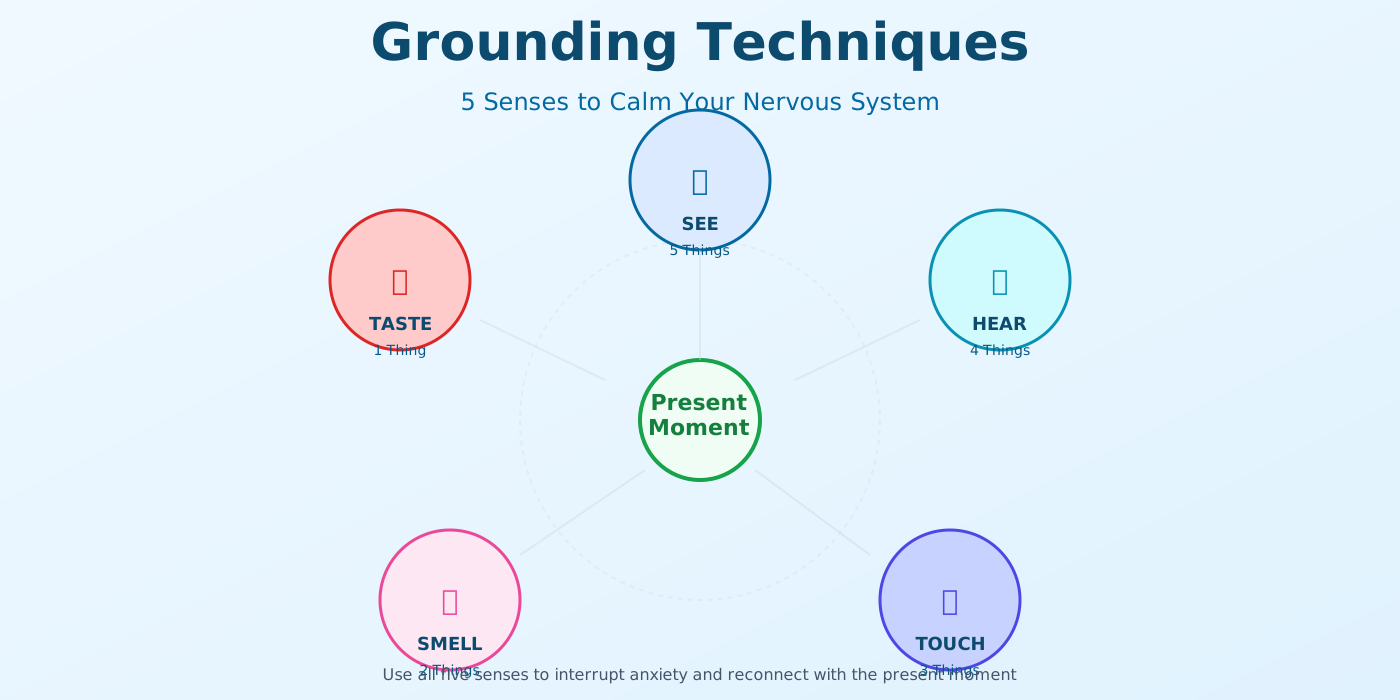
Grounding techniques work by deliberately engaging your five senses to shift your nervous system from hyperarousal (fight-or-flight) to present-moment awareness. When anxiety hijacks your brain's threat-detection system, grounding creates competing neural signals that interrupt the panic loop and reactivate your prefrontal cortex—the reasoning center that regulates emotional reactions.
What makes grounding so effective is its accessibility. You need no equipment, no special training, and no quiet space. A grounding technique can work anywhere—at work, in your car, during a difficult conversation, or in the middle of the night when anxiety strikes.
What Is Grounding Techniques?
Grounding techniques are evidence-based coping strategies that help you refocus on the present moment when you're overwhelmed by anxiety, dissociation, traumatic memories, or intense emotions. These techniques use your five senses—sight, sound, touch, smell, and taste—to create an anchor to here-and-now reality, interrupting the mental loops that fuel panic and distress.
Not medical advice.
Grounding is recognized by mental health professionals as a foundational tool in trauma-informed care, dialectical behavior therapy (DBT), and anxiety management. The International Society for the Study of Trauma and Dissociation mentions grounding techniques nine times in its clinical guidelines, while the American Psychological Association includes them in PTSD treatment recommendations. Grounding works because it's sensory-based—it bypasses rumination and engages the nervous system directly.
Surprising Insight: Surprising Insight: Research shows that engaging multiple senses simultaneously can reduce anxiety severity by up to 39 points on clinical scales—comparable to some medication effects—because competing sensory signals literally interrupt the brain's threat-response pathway.
How Grounding Interrupts the Anxiety Cycle
Visual flow showing how anxiety activation triggers the threat-response system, and how sensory grounding creates competing neural signals that shift the nervous system back to calm awareness.
🔍 Click to enlarge
Why Grounding Techniques Matter in 2026
In 2026, anxiety disorders remain among the most prevalent mental health conditions, affecting millions globally. Traditional anxiety management—therapy schedules, medication timing, professional appointments—requires planning and access that isn't always available when panic strikes at 2 AM or during a stressful work meeting. Grounding techniques fill this gap with immediate, portable relief that empowers you to regulate your own nervous system.
The modern world creates constant overstimulation: endless notifications, social media scrolling, information overload, and disconnection from physical presence. Grounding techniques reclaim your capacity to be present. They're especially valuable for people managing PTSD, dissociative disorders, anxiety disorders, panic attacks, and trauma recovery. Recent research also shows grounding effectiveness for managing test anxiety, social anxiety, and chronic stress.
Grounding is also democratizing mental health support. Unlike therapy or medication, these techniques require no cost, no provider, and no insurance. They're culturally adaptable, scientifically validated, and can be taught to children, adults, and seniors. In crisis moments—when professional help isn't immediately available—grounding techniques provide evidence-based stabilization that can prevent escalation.
The Science Behind Grounding Techniques
Grounding works through the nervous system's natural ability to regulate through sensory input. When you're anxious, your amygdala (emotional alarm system) is hyperactive, and your prefrontal cortex (reasoning center) is offline. Anxiety creates a narrow, threat-focused attention tunnel where your brain filters out present-moment safety signals. By deliberately engaging multiple senses, you flood your nervous system with competing sensory information that forces it to shift attention away from the threat spiral and toward immediate physical reality.
Research published in peer-reviewed journals shows specific outcomes: nursing students using the 5-4-3-2-1 technique reduced test anxiety by 4.7 points (p < 0.001), with high anxiety prevalence dropping from 23% to 4%. In another study, children with Tourette Syndrome using grounding exercises showed 36-point anxiety reductions—significantly greater than controls—with 11+ point reductions in separation and social anxiety. Patients with functional neurological disorder showed 39-point mental health score increases and 35-point improvements in emotional functioning. This isn't coincidence—sensory engagement literally rewires the nervous system's response pathway in real-time.
Key Components of Grounding Techniques
Sensory Grounding (Five Senses Method)
The sensory grounding approach deliberately engages sight, sound, touch, smell, and taste to anchor you to the present. The most popular version is the 5-4-3-2-1 technique: identify 5 things you can see, 4 things you can touch, 3 things you can hear, 2 things you can smell, and 1 thing you can taste. This systematic sensory scan shifts your brain's attention from internal threat processing to external reality, activating the parasympathetic nervous system's calm response.
Physical Grounding (Body-Based Methods)
Physical grounding uses movement and tactile sensation to interrupt dissociation and activate body awareness. Techniques include holding ice cubes, splashing cold water on your face, pressing your feet firmly into the ground, progressive muscle tension-and-release, or engaging in rhythmic movement like walking or tapping. The cold-water immersion method (called the dive response) activates the parasympathetic nervous system within seconds, making it powerful for acute panic.
Cognitive Grounding (Mind-Based Methods)
Cognitive grounding uses mental exercises to anchor you to present-moment awareness and safety. This includes reality testing (naming what's objectively true right now), describing your environment in detail, mental counting exercises, describing a familiar place from memory, or using affirmations that reinforce present safety. These methods activate your prefrontal cortex directly, bypassing the amygdala's threat signals.
Emotional Grounding (Connection-Based Methods)
Emotional grounding uses connection and comfort to regulate your nervous system. This includes calling a trusted person, petting an animal, listening to meaningful music, hugging a pillow, or recalling a safe person or place from memory. These methods activate the vagus nerve's calming response and engage the social engagement system, shifting you from isolation anxiety to connection safety.
| Category | Best For | Example Techniques |
|---|---|---|
| Sensory Grounding | Rumination, dissociation, racing thoughts | 5-4-3-2-1 method, naming objects, listening exercise |
| Physical Grounding | Acute panic, disconnection from body | Cold water, ice cubes, progressive muscle relaxation |
| Cognitive Grounding | Intrusive thoughts, flashbacks, anxiety spirals | Reality testing, mental counting, safe-place visualization |
| Emotional Grounding | Isolation, grief, emotional overwhelm | Calling support, petting animal, meaningful music |
How to Apply Grounding Techniques: Step by Step
- Step 1: Recognize the trigger: Notice when anxiety or dissociation is starting. Early recognition gives you better control than waiting until panic peaks.
- Step 2: Choose your method: Select sensory, physical, cognitive, or emotional grounding based on your current state. If you're dissociated, sensory techniques work best. If you're ruminating, cognitive techniques interrupt the loop.
- Step 3: Find a safe space: When possible, move to a physically safe location. If you can't move, that's okay—grounding works anywhere, even in a crowded room.
- Step 4: Engage your senses deliberately: For 5-4-3-2-1, name 5 things you see in detail (color, shape, texture). Move slowly through each sense, pausing to notice.
- Step 5: Notice physical sensations: Feel your feet on the ground, your back against a chair, temperature on your skin. Anchor to the physical body.
- Step 6: Slow your breathing naturally: You don't need to force breathing exercises. As sensory input increases, breathing naturally slows as your nervous system shifts.
- Step 7: Stay with the technique for 2-5 minutes: Most people feel significant relief within 2-3 minutes, but staying longer deepens the effect.
- Step 8: Return to activity gradually: Don't rush back to whatever triggered you. Spend a few moments in the calm state before transitioning.
- Step 9: Practice when calm: The more you practice grounding when you're feeling okay, the faster it works when you're in crisis.
- Step 10: Combine with other tools: Grounding works best alongside therapy, mindfulness practice, and lifestyle changes. Use it as one tool in your full wellness toolkit.
Grounding Techniques Across Life Stages
Young Adulthood (18-35)
Young adults often face high-pressure environments (college, early career, relationship development) that trigger anxiety. For this group, quick, discreet techniques work best—the 5-4-3-2-1 method, ice-cube hold, or mental counting can be done in a classroom or office without drawing attention. Young adults also respond well to app-based guided grounding exercises and peer support. Teaching grounding early creates lifelong anxiety management skills and prevents escalation to anxiety disorders.
Middle Adulthood (35-55)
Middle-aged adults managing work stress, family responsibilities, and potential health concerns benefit from longer, more deliberate grounding practices. Physical grounding (walking, stretching) combined with sensory techniques works well for this life stage. Middle adults also appreciate the flexibility of grounding—it fits into lunch breaks, car rides, and quiet evenings. Connecting grounding to larger self-care routines (morning ritual, wind-down practice) increases consistency and benefit.
Later Adulthood (55+)
Older adults dealing with health concerns, life transitions, and sometimes isolation benefit greatly from grounding's accessibility. Gentle physical grounding (pressing feet to ground, hand-holding), emotional grounding (connecting with loved ones), and detailed sensory observation work well. Gardening, pet interaction, and nature connection provide natural grounding. Older adults also appreciate the lack of technology requirement—grounding works without apps or devices, valuable for those preferring simpler practices.
Profiles: Your Grounding Techniques Approach
The Anxious Overthinker
- Immediate thought interruption when rumination spirals
- A technique concrete enough to focus the wandering mind
- Something to do with nervous energy
Common pitfall: Trying to think their way out of anxiety using more analysis and planning, which deepens the spiral.
Best move: Use the 5-4-3-2-1 sensory method or cold-water grounding. Physical sensation interrupts rumination loops faster than cognitive techniques alone.
The Trauma Survivor
- A way to reconnect with body safety without overwhelming the nervous system
- Techniques that feel controllable and don't trigger dissociation
- Options to move away from triggering environments when possible
Common pitfall: Avoiding grounding because they fear it will intensify emotions or memories, missing the fact that grounding actually reduces flashback intensity.
Best move: Start with gentle emotional or connection-based grounding (calling a trusted person, petting a pet), then gradually add sensory techniques as nervous system regulation improves.
The Busy Professional
- Techniques that work in 2 minutes or less during work
- Methods that don't require obvious physical movements
- Something discreet that doesn't signal distress to colleagues
Common pitfall: Postponing grounding or dismissing it as 'not serious enough' for real anxiety, then suffering through panic attacks instead.
Best move: Keep ice cubes in your desk, use mental counting or 5-4-3-2-1 silently at your desk, or take a quick bathroom break for physical grounding. Brief, frequent grounding prevents escalation.
The Mind-Body Connector
- Integration of physical sensation with mental awareness
- Techniques that deepen body attunement and presence
- Movement-based methods that feel natural
Common pitfall: Over-complicating grounding into a full meditation practice when simplicity is the point.
Best move: Combine physical grounding (walking, stretching) with sensory awareness and breathing. Let the technique be as simple or elaborate as feels natural in the moment.
Common Grounding Techniques Mistakes
One frequent mistake is waiting until panic is extreme before using grounding. Grounding works fastest when used early in the anxiety response, before your nervous system has fully escalated. Practice grounding when you're calm so it becomes automatic when you need it.
Another common error is expecting one technique to work for everyone or in every situation. Your body might respond better to physical grounding one day and sensory grounding another. Anxiety varies, and flexibility with technique selection maximizes effectiveness.
Many people also make the mistake of grounding too briefly. Rushing through the technique in 30 seconds limits its effectiveness. Give yourself 2-3 minutes of deliberate sensory engagement for significant nervous system shift. The longer engagement allows your nervous system to fully transition from threat to safety.
Grounding Technique Selection Matrix
Decision tree showing which grounding technique type works best based on your current state and available resources.
🔍 Click to enlarge
Science and Studies
Grounding techniques are extensively researched and supported by peer-reviewed clinical evidence. Major findings show consistent anxiety reduction, PTSD symptom improvement, and dissociation relief across diverse populations. The evidence base continues expanding as more clinicians recognize grounding's effectiveness and accessibility.
- 5-4-3-2-1 Technique & Test Anxiety (2025): Nursing students reduced test anxiety by 4.7 points (p < 0.001) with high-anxiety prevalence dropping from 23% to 4%—students reported feeling 'calm, simple, useful, and focused.'
- Grounding for Childhood Anxiety (2024): Children with Tourette Syndrome showed 36-point anxiety reductions using grounding exercises, with separation anxiety reducing 11.31 points and social anxiety reducing 11.05 points.
- Functional Neurological Disorder Study (2024): Patients using 5-4-3-2-1 grounding showed 39-point mental health score increases, 35-point emotional functioning improvements, and disability scales halved from 25.7 to 13.2.
- DBT Integration (2023): Dialectical Behavior Therapy programs incorporating grounding show faster emotional regulation improvement and better crisis intervention outcomes compared to DBT without grounding emphasis.
- Trauma-Informed Care Standards (NCBI 2022): Grounding techniques are core components of trauma-informed behavioral health services, with recognition from ISSTD guidelines and APA PTSD treatment recommendations.
Your First Micro Habit
Start Small Today
Today's action: Pick one grounding technique and practice it for 2 minutes today when you're calm. Notice what changes in your body. Tomorrow, do it again. By day 5, you'll have a reliable tool ready when anxiety strikes.
Practice during calm creates neural pathways that activate automatically during stress. You're literally training your nervous system to recognize grounding as the safety signal. Small, repeated practice builds the skill faster than occasional intense practice.
Keep quitting habit apps after a missed day? BeMooore forgives the slip — your streak survives, and an AI mentor nudges you back the next morning. Free on iOS.
Quick Assessment
When anxiety hits, what's your go-to coping strategy right now?
Your current strategy reveals which grounding technique will work fastest for you. If you're an overthinker, sensory/physical grounding interrupts rumination. If you already use movement, adding sensory awareness deepens the effect.
What situation makes you most anxious or dissociated?
Different anxiety sources respond to different grounding approaches. Work anxiety often responds to quick sensory techniques, social anxiety to emotional grounding, trauma to slower physical grounding, and uncertainty to cognitive grounding.
Which senses feel easiest to focus on when you're overwhelmed?
Build your grounding practice around your clearest senses first. You'll have success faster when engaging sensory channels that naturally capture your attention, then add other senses as you build skill.
Take our full assessment to get personalized recommendations.
Discover Your Style →Next Steps
Start today by choosing one grounding technique that feels most natural for you. If you're visual, try the 5-4-3-2-1 method. If you prefer physical sensation, try holding ice or pressing your feet into the ground. Practice it once this week when you're calm. Notice what happens to your body, mind, and emotional state.
Build grounding into your daily routine. Use it during your morning routine, after work, or whenever you notice even small anxiety stirrings. The goal is to make grounding automatic so that when real crisis hits, your nervous system already knows the pattern. Over weeks of practice, you'll develop a portable anxiety-management tool that works anywhere, anytime.
Get personalized guidance with AI coaching.
Start Your Journey →Research Sources
This article is based on peer-reviewed research and authoritative sources. Below are the key references we consulted:
Related Glossary Articles
Frequently Asked Questions
How fast do grounding techniques work?
Most people feel significant relief within 2-3 minutes of deliberate sensory engagement. Physical grounding techniques like cold-water immersion work even faster—sometimes within 30 seconds—because they activate the parasympathetic nervous system directly. The more you practice grounding when calm, the faster it works during anxiety.
Can I use grounding if I have dissociation or trauma?
Yes, grounding is specifically designed for dissociation and trauma recovery. Start with gentle techniques—emotional grounding (connecting with a safe person) or soft physical grounding (feeling your feet). Build gradually to sensory techniques as your nervous system stabilizes. Work with a trauma-informed therapist if intense dissociation occurs.
Is grounding just distraction? Won't the anxiety return?
Grounding is not distraction—it's nervous system regulation. By engaging your senses, you're literally shifting your autonomic nervous system from sympathetic (fight-or-flight) to parasympathetic (calm) activation. This creates real physiological change, not just mental avoidance. Anxiety may return later, but you've interrupted the acute panic cycle and taught your body it's safe.
Can I combine grounding with therapy or medication?
Absolutely. Grounding works best as part of a comprehensive mental health approach that may include therapy, medication, lifestyle changes, and social support. Think of grounding as a first-aid tool you carry with you—it helps manage moments between therapy sessions and works alongside medication by helping regulate your nervous system's response.
What if grounding techniques don't work for me?
If one technique doesn't work, try another. Some people respond better to physical grounding, others to sensory or emotional grounding. Also consider: Are you practicing when calm, so it's automatic during stress? Are you giving yourself enough time (2-3 minutes)? Are you avoiding your strongest trigger situations entirely? If grounding truly doesn't help after trying multiple techniques consistently, discuss with a mental health professional—you may benefit from additional treatment approaches.
Take the Next Step
Ready to improve your wellbeing? Take our free assessment to get personalized recommendations based on your unique situation.
- Discover your strengths and gaps
- Get personalized quick wins
- Track your progress over time
- Evidence-based strategies