Legacy
Legacy is the lasting impact you create on others through your values, actions, and contributions. It's not just about material wealth or possessions—it's about the meaningful difference you make in people's lives and the world around you. Your legacy includes the lessons you teach, the inspiration you provide, the connections you build, and the positive change you initiate that continues long after you're gone. Research shows that people who intentionally build a legacy experience greater purpose, deeper relationships, and enhanced wellbeing throughout their lives.
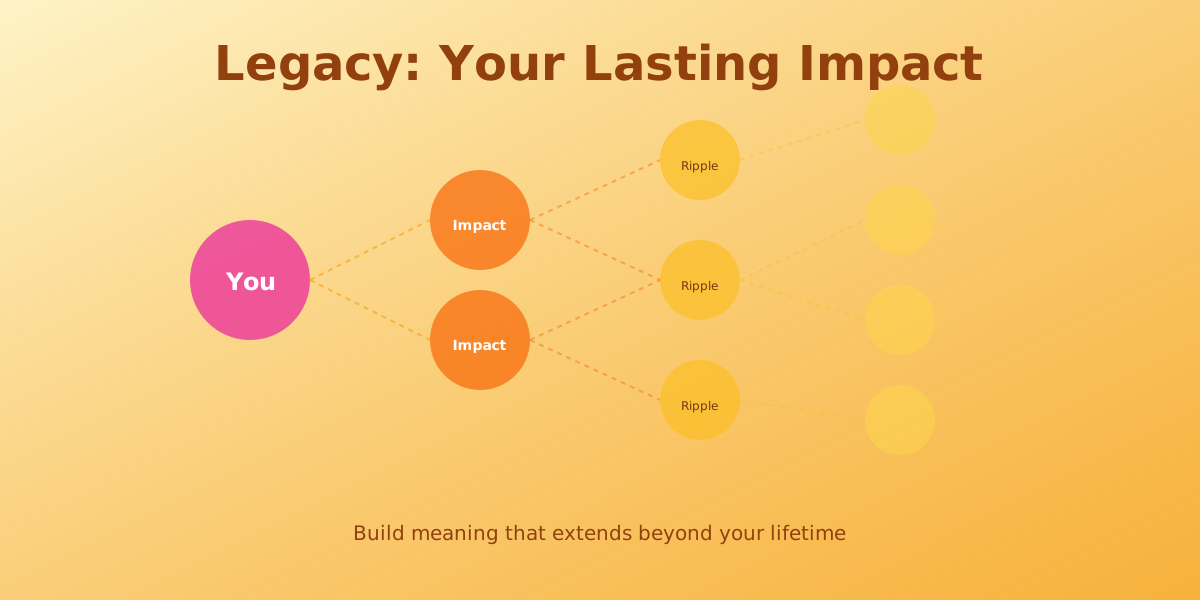
Think about the people who've influenced you most—a teacher, mentor, parent, or friend. What did they leave you with? That's their legacy. Whether through direct mentoring, setting an example, creating something meaningful, or simply caring deeply, legacy is about human connection that transcends time.
In 2026, legacy thinking has evolved beyond retirement planning. Younger generations view legacy as creating social impact and living authentically. Older adults see legacy as preserving values and creating meaning. Across all ages, legacy connects us to something larger than ourselves—a sense of purpose that transforms how we live.
What Is Legacy?
Legacy, in its essence, is an enduring meaning attached to your identity that manifests in actions intended to have a lasting impact on others. Psychologists define it as 'the sum of the personal values, accomplishments, and actions that resonate with the people around you'—creating ripples of influence that extend far beyond your immediate presence. Legacy is simultaneously personal and universal: it's deeply tied to your individual character and choices, yet it only truly exists in how others receive and carry forward what you've given them.
Not medical advice.
Your legacy encompasses multiple dimensions: intellectual (ideas and knowledge shared), emotional (the feelings and sense of safety you create), relational (the quality of connections you nurture), professional (the work you do and standards you set), and generational (values passed to family or community). Unlike a will or inheritance, which are documents or money, legacy is alive—it grows and evolves through how others choose to honor and continue it.
Surprising Insight: Surprising Insight: People who actively work on their legacy in midlife report significantly lower levels of existential distress and higher life satisfaction than those focused primarily on self-serving interests, according to developmental psychology research.
The Legacy Spectrum
How legacy operates across different time horizons and domains of life
🔍 Click to enlarge
Why Legacy Matters in 2026
Legacy has become increasingly central to wellbeing conversations because it directly addresses a core human need: the desire to matter. In a world of rapid change and uncertainty, legacy offers stability and meaning. Research from the Journal of Psychology and Aging shows that individuals with strong legacy motivations experience purpose-driven living, which correlates with better mental health, reduced anxiety, and increased life satisfaction.
In 2026, creating a legacy isn't just for aging populations. Gen Z and Millennials define legacy through social impact and authentic living. Building a legacy now means aligning your daily choices with your values, whether that's environmental sustainability, social justice, creative expression, or personal relationships. Legacy gives your everyday actions meaning—your emails, your mentoring moments, your kindness to strangers become part of something larger.
The urgency around legacy also stems from awareness of our finite time and influence. Creating a legacy forces intentionality: What do you want to be remembered for? What values matter most? This reflection naturally leads to better decision-making, more meaningful relationships, and work that aligns with purpose rather than just paychecks. People with legacy focus tend to make choices that benefit not just themselves but future generations.
The Science Behind Legacy
Developmental psychologist Erik Erikson identified generativity—the desire to create and guide the next generation—as essential to psychological health in adulthood. Legacy is the behavioral expression of generativity. When you work toward legacy, you activate neural networks associated with meaning-making, social bonding, and reward. Studies using fMRI show that thinking about positive legacy impacts activates the same brain regions involved in happiness and social connection.
Research also reveals that legacy motivation has two distinct components: impact-oriented (wanting to make a positive difference) and reputation-focused (wanting to be remembered well). People highest in both dimensions report the deepest sense of purpose. The neurotransmitter dopamine reinforces legacy-oriented behavior, creating positive feedback loops: you take meaningful action → you see positive impact → dopamine reward → you're motivated for more meaningful action.
Legacy Motivation & Brain Science
How legacy thinking activates neural pathways for meaning, connection, and reward
🔍 Click to enlarge
Key Components of Legacy
Values Transmission
Legacy begins with clarity about your core values—what truly matters to you. Whether it's integrity, compassion, creativity, resilience, or justice, these values become the foundation of your legacy. You transmit them through storytelling, example, and explicit teaching. A parent who demonstrates honesty in difficult situations, a mentor who invests time in younger colleagues, a friend who shows up consistently—all are transmitting values that become part of someone else's character.
Impact Creation
Legacy requires creating tangible or intangible impact. This might be raising confident, compassionate children; publishing work that influences others; volunteering to address community needs; mentoring someone through a career transition; or simply being present during someone's crisis. The key is intentionality—you're consciously trying to leave things better than you found them, whether 'things' means a person's confidence or a neighborhood's safety.
Continuity & Multiplier Effects
True legacy multiplies through others. When you teach someone a skill or share a value, they carry it forward to their own circles. A patient teacher who inspires a student might enable that student to inspire hundreds. A person who models emotional honesty gives permission for others to do the same. Legacy creates exponential impact—you directly influence some people, who then influence others, creating waves far beyond your direct contact.
Authenticity & Alignment
The most powerful legacies come from people living in alignment with their values. When there's congruence between what you believe and how you live, people feel it authentically and are moved by it. Inauthentic attempts to look good or be remembered well ring hollow. Legacy built on genuine commitment to your values—even when it's inconvenient or unpopular—creates deeper, lasting impact.
| Life Stage | Primary Focus | Legacy Activities |
|---|---|---|
| Young Adulthood (18-35) | Foundation & Values Clarity | Skill development, mentoring relationships, value exploration, early community involvement |
| Middle Adulthood (35-55) | Impact & Generativity | Leadership roles, mentoring, creative projects, family values transmission, community leadership |
| Later Adulthood (55+) | Integration & Meaning | Legacy documentation, life review, wisdom sharing, intergenerational connections, ethical wills |
How to Apply Legacy: Step by Step
- Step 1: Clarify your core values by identifying 3-5 principles that matter most to you (integrity, compassion, creativity, courage, justice, etc.). Reflect on moments when you felt most alive and aligned—what values were present?
- Step 2: Assess your current impact by asking trusted people: 'What qualities or lessons do you associate with me?' Listen without defensiveness. Notice patterns in how others perceive your influence.
- Step 3: Define your legacy in writing: Complete this sentence: 'I want to be remembered for...' and 'I want my life to have made a difference in...' Be specific and emotionally honest.
- Step 4: Identify legacy domains where you can create impact: family/relationships, professional/mentoring, community/volunteering, creative/intellectual, or spiritual/values work.
- Step 5: Set intentional legacy actions: For each domain, choose 1-2 concrete behaviors that align with your values. 'I will mentor one junior employee monthly' or 'I will share family stories with my kids quarterly.'
- Step 6: Build relationship depth by investing in quality over quantity. Legacy happens in relationships—meaningful conversations, showing up during difficult times, being genuinely interested in others' growth.
- Step 7: Create legacy documentation: Write letters to important people, record videos sharing lessons, create ethical wills expressing non-monetary values, or document family recipes/stories.
- Step 8: Model what matters: Show your values in action, especially during challenges. Children and colleagues remember how you handle adversity, not just success.
- Step 9: Mentor and pass forward: Actively teach skills, values, and wisdom. Find people one generation younger and invest time in their development.
- Step 10: Review and adapt your legacy: Quarterly, reflect on whether your actions align with your legacy intention. Adjust as your understanding of what matters deepens.
Legacy Across Life Stages
Young Adulthood (18-35)
In young adulthood, legacy is about exploring and establishing your values, building foundational relationships, and developing skills you'll pass forward. This isn't the time to worry about grand impact—it's about integrity in daily choices, reliability in friendships, developing expertise, and asking 'What kind of person do I want to become?' Your legacy roots are planted now. Are you someone who keeps commitments? Who learns deeply? Who stands up for what's right? These character patterns become your legacy foundation.
Middle Adulthood (35-55)
Middle adulthood is peak legacy-building time. You likely have more resources, influence, and clarity about what matters. This is when mentoring becomes natural—younger colleagues, family members, community members look to you for guidance. Generativity often peaks in these years. You're likely balancing caring for aging parents while raising or supporting younger generations. Legacy work includes creating systems and structures that outlast you, being intentional about values transmission to those you influence, and asking 'What do I want my mark to be?' Both professional and personal legacies deepen in these years.
Later Adulthood (55+)
Later adulthood offers time for legacy integration—reviewing your life, recognizing the impact you've already had, and being intentional about final chapters. Research shows older adults who focus on legacy experience greater wellbeing and lower existential distress. This stage includes wisdom-sharing, documentation of values and stories, deepening spiritual or philosophical understanding, and strengthening intergenerational bonds. Legacy isn't finished—it's accelerating as you consciously craft how you want to be remembered and what you want future generations to carry forward from your life.
Profiles: Your Legacy Approach
The Mentor
- Clear skills and wisdom to share
- Permission to invest time in others without guilt
- Recognition that one-on-one impact counts deeply
Common pitfall: Expecting mentees to follow exactly your path; getting discouraged if they make different choices
Best move: Share what you've learned while trusting others' unique journeys; celebrate their growth even when different from yours
The Creator
- Permission to focus on creating (art, writing, music, ideas)
- Understanding that creative legacy often takes time to be recognized
- Community of people who appreciate your work
Common pitfall: Waiting for permission or perfection before sharing; underestimating creative work's ripple effects
Best move: Create consistently and share generously; your work will find people who need it
The Relational Builder
- Time for deep connection with loved ones
- Permission to prioritize relationships over achievement
- Understanding that emotional legacy is as real as professional legacy
Common pitfall: Feeling like 'just' maintaining relationships isn't significant enough legacy
Best move: Recognize that secure, loving relationships create psychological security for generations; that's profound legacy
The Values Advocate
- Clarity on which values to advocate for
- Community aligned with your values
- Resilience to stand for values even when unpopular
Common pitfall: Burnout from fighting for change; feeling like individual efforts don't matter
Best move: Start with circles you influence directly; trust that values-alignment creates systemic change over time
Common Legacy Mistakes
Mistake #1: Waiting until later life to think about legacy. Legacy isn't only for retirement—it's built through daily choices, relationships, and values alignment throughout life. Starting to think intentionally about your impact in your twenties or thirties creates a lifetime of meaningful contribution rather than trying to retrofit legacy in your sixties.
Mistake #2: Confusing legacy with achievement or accumulation. You don't need to be famous, wealthy, or powerful to have legacy. Some of the most powerful legacies are created by ordinary people living with integrity, showing up for others, and passing values forward. A parent who models compassion, a teacher who believes in students' potential, a friend who listens deeply—these create lasting impact.
Mistake #3: Creating legacy 'at' people rather than 'with' people. Forcing values on children, imposing your vision on mentees, or expecting gratitude for your 'generosity' creates resistance. True legacy emerges from genuine relationship, invitation, and collaboration. Ask others what they're interested in before trying to shape their path.
Legacy vs. Common Misconceptions
Clarifying what legacy actually is versus common myths
🔍 Click to enlarge
Science and Studies
Research on legacy and generativity has expanded significantly over the past decade, providing evidence that legacy-oriented living supports wellbeing across the lifespan. Key findings show that people who actively engage in legacy-building behaviors experience higher purpose, lower anxiety, and greater life satisfaction.
- Erikson's Generativity Theory: Adults who successfully navigate midlife generativity develop greater integrity and wisdom; those who avoid generative work experience stagnation and self-absorption, with associated mental health challenges.
- Legacy Motivation Research (ScienceDirect 2022-2024): Distinguishing impact-oriented versus reputation-focused legacy motives reveals that combined motivations lead to highest wellbeing; pure reputation-focus without genuine care for others creates stress.
- Purpose & Longevity Studies: Adults with strong sense of purpose (connected to legacy awareness) show reduced cardiovascular disease risk, lower all-cause mortality rates, and better cognitive function in later years.
- Intergenerational Connection Research: Meaningful intergenerational relationships (mentoring, storytelling, values transmission) improve psychological wellbeing for both younger and older participants; they reduce isolation and create sense of belonging.
- Psychological Flexibility & Legacy: People high in psychological flexibility (ability to align actions with values) naturally create more authentic, sustainable legacy; they adapt legacy expression to changing life circumstances rather than rigidly forcing predetermined plans.
Your First Micro Habit
Start Small Today
Today's action: This week, write or record one story that represents a value important to you and share it with one person. It could be a 2-minute conversation, an email, or a recorded message. Notice how they respond.
Storytelling is how values become memorable and transmissible. By sharing one story, you're beginning legacy work immediately. You'll likely discover that your stories matter more than you thought, motivating larger legacy actions.
Keep quitting habit apps after a missed day? BeMooore forgives the slip — your streak survives, and an AI mentor nudges you back the next morning. Free on iOS.
Quick Assessment
When you think about your life's impact, what feels most important to you?
Your answer reveals your primary legacy motivation—whether you're drawn to direct impact, generational transmission, creative contribution, or values alignment. All are valid; knowing yours helps you channel energy effectively.
What obstacles most prevent you from building the legacy you want?
Identifying your obstacle is the first step. Clarity obstacles respond to reflection and values work. Resource obstacles need prioritization and often creative solutions. Fear obstacles need courage and community. Execution obstacles need specific guidance.
How often do you consciously think about the impact you want your life to have?
Legacy awareness exists on a spectrum. Moving from 'rarely' to 'regularly' typically increases sense of purpose and alignment. Your current frequency shows your starting point for deepening legacy focus.
Take our full assessment to get personalized recommendations.
Discover Your Style →Next Steps
Legacy building is a lifelong practice, not a destination. Start small with one micro action: identify one core value, share one story, mentor one person, or create one piece of documentation about what matters to you. Notice how this small action creates ripples—perhaps the person you shared with mentions it to someone else, or you feel more aligned after articulating your value.
The most sustainable legacy emerges from regular, small actions aligned with your values rather than dramatic once-in-a-lifetime gestures. Consistency over time wins. A parent who models integrity every day creates deeper legacy than one grand gesture. A mentor who shows up monthly for five years impacts more than quarterly intensity. Your legacy is being created right now through how you're living.
Get personalized guidance with AI coaching.
Start Your Journey →Research Sources
This article is based on peer-reviewed research and authoritative sources. Below are the key references we consulted:
Related Glossary Articles
Frequently Asked Questions
Isn't thinking about legacy too self-focused? Shouldn't I just live my life?
Paradoxically, legacy thinking can reduce self-focus. When you're intentional about values and impact, you naturally shift from 'What do I want for myself?' to 'What do I want to contribute?' This shift often increases generosity, compassion, and connection. Legacy isn't vanity—it's purpose.
I'm only 25—isn't legacy thinking for older people?
Actually, the earlier you clarify your values and think about impact, the more intentionally you can live your entire life. Your twenties and thirties shape patterns you'll carry forward. Plus, generational legacy isn't waiting until retirement—you're already influencing others through how you live and the standards you set.
What if I've made mistakes or don't feel like a good role model?
Some of the most powerful legacies come from people who've made significant mistakes and learned from them. Your growth, resilience, and willingness to change create powerful lessons for others. Share your mistakes alongside what you learned—that's authentic legacy that others can actually relate to.
How do I know if my legacy actions are actually making a difference?
Sometimes impact is obvious (mentee gets promoted, student succeeds). Often it's subtle (someone remembers your kindness during crisis, adopts your values). Ask people close to you how they've been influenced by you. Recognize that you might not see the full ripple effects of your legacy in your lifetime.
What if I don't know what values matter most to me?
Start by reflecting on moments when you felt most alive and aligned, or times when you felt angry or disappointed (these reveal violated values). Ask trusted people what qualities they associate with you. Read about different value systems. Legacy clarity often emerges through experimentation and reflection, not sudden clarity.
Take the Next Step
Ready to improve your wellbeing? Take our free assessment to get personalized recommendations based on your unique situation.
- Discover your strengths and gaps
- Get personalized quick wins
- Track your progress over time
- Evidence-based strategies