Values Alignment
Imagine waking up each day feeling pulled in different directions—your job demanding one thing, your relationships another, and your heart wanting something completely different. That tension you feel is cognitive dissonance, the psychological discomfort that comes from living out of alignment with your core values. Values alignment is the practice of intentionally organizing your life around what truly matters to you, creating harmony between your beliefs and actions. When you live in alignment with your authentic values, research shows you experience greater wellbeing, resilience, motivation, and life satisfaction. This isn't just philosophy—it's neuroscience, psychology, and positive research demonstrating that the most fulfilled people are those whose daily choices reflect their deepest convictions.
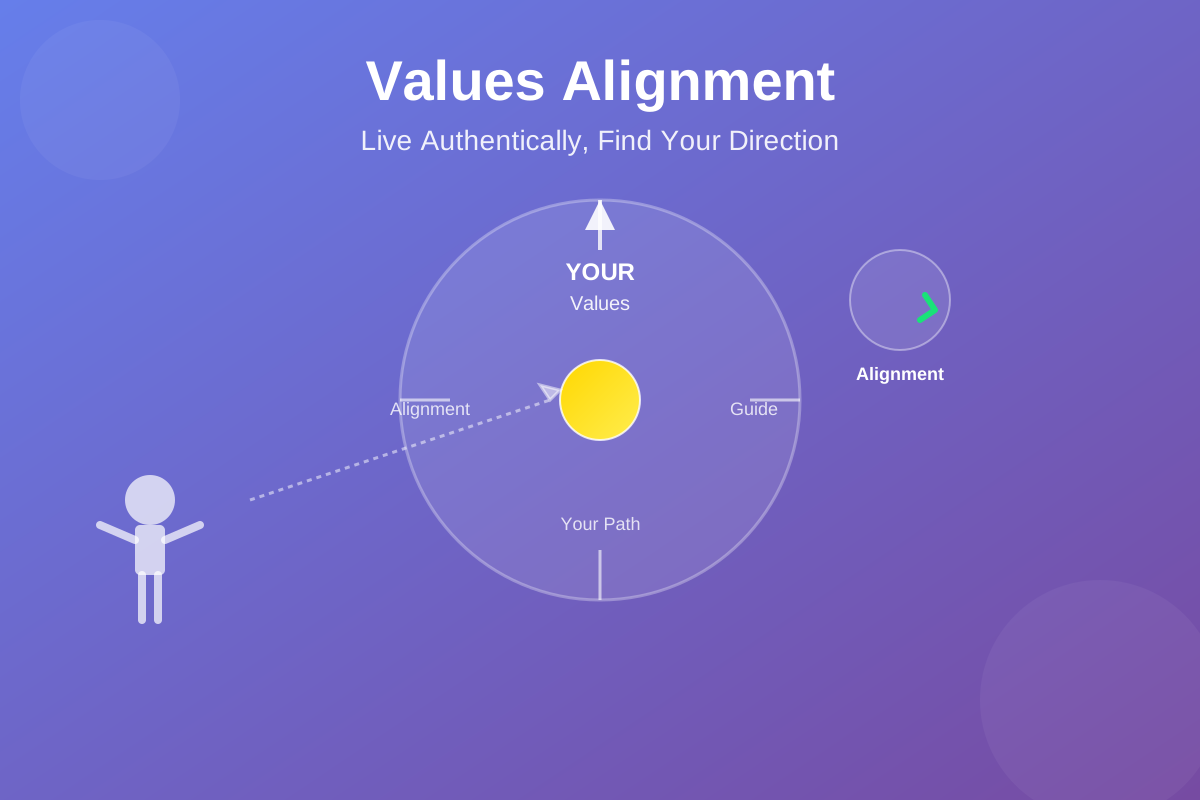
Values alignment isn't about perfection or rigid adherence to a predetermined life plan. It's about acknowledging what genuinely matters to you—whether that's family, growth, creativity, service, or adventure—and making deliberate choices that honor those priorities. The fascinating part: most people have never formally identified their core values, yet they feel the pain of living misaligned every single day.
This article explores the psychology of values alignment, why it's crucial for happiness in 2026, and practical strategies you can implement today to start living more authentically. Whether you're feeling burnout at work, disconnected from relationships, or simply searching for more meaning, values alignment is your path forward.
What Is Values Alignment?
Values alignment, also called value congruence or self-concordance, is the degree to which your daily behaviors, choices, and lifestyle align with your core values—the principles and beliefs that matter most to you. It's the harmony between what you believe is important and how you actually spend your time, energy, and resources.
Not medical advice.
Think of your values as your internal compass. When you're aligned, that compass points clearly forward, and you navigate life with purpose and clarity. When misaligned, that compass spins in circles, creating stress, confusion, and a vague sense of dissatisfaction. Values alignment answers the fundamental question: 'Am I living the life I actually want, or the life I think I should want?'
Surprising Insight: Surprising Insight: Research from UC Berkeley's Greater Good Institute shows that happiness is deeply ingrained in leading a life aligned with your personal value system. People who prioritize spirituality, social relationships, and family relationships report the highest levels of life satisfaction—but only if those values are genuinely theirs, not imposed by culture or family expectations.
The Values Alignment Spectrum
Visual representation of how alignment impacts psychological wellbeing and life satisfaction.
🔍 Click to enlarge
Why Values Alignment Matters in 2026
In 2026, we're experiencing unprecedented choice paralysis. Technology offers endless options for careers, relationships, lifestyles, and identities. Without a clear anchor—your core values—it's easy to drift into a life designed by others' expectations, algorithms, or cultural pressure. Values alignment has become essential for mental health and authenticity in an increasingly fragmented world.
Burnout has reached epidemic proportions, affecting not just workers but students, parents, and retirees. Research shows that burnout isn't simply caused by overwork—it's caused by misalignment. When employees' values conflict with organizational values, they experience emotional exhaustion, cynicism, and reduced efficacy. Companies with high person-organization fit (values alignment) report significantly lower burnout rates and higher job satisfaction.
Beyond career, values alignment impacts mental health directly. Living authentically—according to your genuine values rather than internalized 'shoulds'—reduces anxiety and depression symptoms. Acceptance and Commitment Therapy (ACT), one of the most researched psychological interventions, is built entirely around helping people identify and live according to their values. Studies show ACT improves wellbeing across anxiety disorders, depression, chronic pain, and existential disconnection.
The Science Behind Values Alignment
Psychologically, values alignment activates Self-Determination Theory, a framework showing humans thrive when their actions support three psychological needs: autonomy (choosing for yourself), competence (feeling capable), and relatedness (connecting with others). When your values guide your choices, you feel autonomous. When your actions reflect your capabilities, you feel competent. And when your values include relationship-focused priorities, you deepen connection.
Neurologically, living aligned with your values activates your prefrontal cortex—the brain region responsible for purpose, meaning-making, and long-term planning. This is different from the amygdala activation (fear, stress) that occurs with chronic misalignment. Regular alignment practice essentially rewires your brain toward resilience and motivation. Acceptance and Commitment Therapy research demonstrates that values-based living increases psychological flexibility, the ability to stay present and committed even when facing discomfort.
How Values Alignment Impacts Brain and Biology
Brain regions and biological processes activated by values-aligned living versus misalignment.
🔍 Click to enlarge
Key Components of Values Alignment
1. Values Clarification
This is the foundation—identifying which values are genuinely yours versus absorbed from family, culture, or social media. True values emerge from introspection and self-reflection, not from 'shoulds.' Common core values include: family, growth, creativity, service, health, adventure, learning, authenticity, security, achievement, spirituality, and connection. The key is identifying your top 3-5 values that feel non-negotiable to you, not the values you think you should have.
2. Behavior Audit
Once you've identified your values, audit how you actually spend time and resources. If family is a core value but you work 70 hours weekly with minimal family time, there's misalignment. If creativity matters but you haven't created anything in months, misalignment. This honest assessment—without judgment—reveals where your life contradicts your values. This is often uncomfortable but essential.
3. Values-Based Action
Alignment requires action aligned with identified values. This might mean job changes, relationship adjustments, time reallocation, or habit shifts. Small actions count: if service is a value, volunteering monthly creates alignment. If health matters, prioritizing sleep and movement aligns daily life with values. Importantly, values-based action often requires accepting discomfort (staying present with anxiety at a networking event if connection is valued, for example).
4. Acceptance and Commitment
ACT teaches that values alignment requires both acceptance and commitment. You accept difficult emotions that arise during change—grief from leaving a career, anxiety from setting boundaries—while remaining committed to values-aligned action. This isn't positive thinking or ignoring pain; it's moving toward what matters even when it's hard. This psychological flexibility distinguishes sustainable alignment from superficial life changes.
| Aspect | Misaligned Life | Aligned Life |
|---|---|---|
| How You Feel | Anxious, exhausted, disconnected, purposeless | Energized, fulfilled, connected, purposeful |
| Decision-Making | Based on external pressure, fear, obligation | Based on what genuinely matters to you |
| Energy Levels | Constant depletion, burnout risk | Sustainable energy, natural motivation |
| Relationships | Superficial, strained by inauthenticity | Deeper, more genuine connections |
| Mental Health | Higher anxiety/depression risk | Greater resilience and psychological wellbeing |
| Life Satisfaction | Vague dissatisfaction despite achievements | Sense of meaning and fulfillment |
How to Apply Values Alignment: Step by Step
- Step 1: Pause and Reflect: Set aside 30 minutes in a quiet space. Write down what matters most to you without judgment. What brings joy? What causes anger when violated? What would you regret not doing? These point to your authentic values.
- Step 2: Identify Your Top 5 Values: From your reflection, narrow down to your top 5 core values. Be specific—not just 'family' but 'deep family connection' or 'being a present parent.' Specific values guide better than abstract ones.
- Step 3: Test for Authenticity: For each value, ask: 'Is this genuinely important to me, or do I think it should be important?' Listen to your body's response. Authentic values feel resonant; imposed values feel heavy.
- Step 4: Audit Your Current Life: Track how you spend time, money, and mental energy for one week. Be honest. Then compare this to your identified values. Where's the biggest gap? This gap is your starting point for change.
- Step 5: Identify One Small Misalignment: Don't try changing everything. Pick one area where you can take a values-aligned action this week. If creativity matters but you haven't created, schedule 30 minutes for art. If relationships matter but you've been isolated, text an old friend.
- Step 6: Take One Values-Based Action: Act on the area you identified. Keep it small, specific, and achievable. Notice what internal resistance arises—that's data, not a sign to stop.
- Step 7: Build the Habit: Repeat your values-aligned action weekly, then regularly. Values-based living is a practice, not a one-time decision. Each action reinforces neural pathways toward alignment.
- Step 8: Expand Gradually: Once one area feels more aligned, address the next gap. This might involve bigger changes: job searches, relationship conversations, lifestyle shifts. Pace yourself to avoid overwhelm.
- Step 9: Notice Psychological Shifts: Track changes in your wellbeing. Do you feel less anxious? More motivated? Sleeping better? Enjoying relationships more? These signals confirm you're moving toward alignment.
- Step 10: Revisit and Refine: Every 6-12 months, revisit your values. Do they still feel authentic? Have they evolved? Life stages and experiences shift values. Regular reflection keeps your alignment current and genuine.
Values Alignment Across Life Stages
Young Adulthood (18-35)
In young adulthood, the primary challenge is distinguishing authentic values from inherited ones. You're often still operating under family values, cultural expectations, or peer pressure. This is the ideal time to experiment and question: What do *you* actually believe matters? Which values feel genuinely yours versus imposed? Young adults who do this clarification work build a strong foundation for adult life. Those who skip it often experience a values crisis at 30, 40, or 50 when they realize they've been living someone else's life.
Middle Adulthood (35-55)
Middle adulthood is often when misalignment becomes painfully obvious. Career pressures peak, responsibilities multiply (children, aging parents, financial stress), and you may realize your values have shifted. Many people experience burnout or existential questioning during this phase. This is the valuable moment for intentional realignment. Changing careers, restructuring relationships, or reallocating time to match evolved values prevents decades of regret. While change is harder now (more responsibilities), it's more urgent because you're aware of time passing.
Later Adulthood (55+)
In later adulthood, clarity about what matters becomes even more precious. With perhaps 20-40 years remaining, every choice carries weight. People who've maintained values alignment throughout life typically report high life satisfaction and peace. Those who haven't often express regret. The good news: it's never too late. Many people use later adulthood to realign—pursuing delayed passions, deepening important relationships, simplifying to what matters most, or moving toward legacy-building activities that reflect core values.
Profiles: Your Values Alignment Approach
The Conflict Avoider
- Permission to set boundaries without guilt
- Reassurance that disappointing others isn't a character flaw
- Small, supported steps toward authentic living
Common pitfall: You know your values but don't live them because it might upset others. You suppress authenticity to maintain harmony, leading to quiet resentment and disconnection.
Best move: Start with one small boundary or honest conversation. Notice that relationships don't collapse when you're authentic. Build from there. Your authenticity actually strengthens relationships when you stay connected to the people involved.
The Overachiever
- Permission to question the achievement treadmill
- Reframing success beyond external metrics
- Integration of meaning-making into ambition
Common pitfall: You excel at achieving goals, but they're not *your* goals. You chase what looks good, pays well, or impresses others. Success feels hollow because it doesn't reflect what actually matters to you.
Best move: Pause the achievement cycle. Ask: If money and status were removed, what would I want? What activities make time disappear? Those clues point to authentic values. Reframe success to include meaning, not just metrics.
The Drift Master
- Clarity on what actually matters to you
- External structure to support new habits
- Accountability and regular reflection
Common pitfall: You haven't formally identified your values, so you drift with whatever's convenient—jobs, relationships, habits that just happen. You lack direction, and that vagueness breeds anxiety.
Best move: Invest in values clarification work. Use assessment tools, talk with trusted mentors, journal about what brings genuine joy. Once identified, create small, concrete actions that embody each value. Track these weekly.
The Value Warrior
- Self-compassion during inevitable misalignment moments
- Flexibility when life circumstances require compromise
- Integration of acceptance alongside commitment
Common pitfall: You're highly values-driven, which is wonderful. But you can become rigid, unforgiving of yourself when you can't perfectly live your values, or judgmental of others who don't share them.
Best move: Remember that values alignment is a practice, not perfection. Some seasons (new job, illness, caregiving) require temporary compromise. This isn't failure. Extend the same compassion to yourself during difficult seasons that you'd offer a friend.
Common Values Alignment Mistakes
One of the biggest mistakes is confusing values with goals. Having a goal to be wealthy isn't the same as holding wealth as a core value. You might pursue wealth because it serves a deeper value (security, family provision, freedom). Understanding this distinction prevents misguided life changes. You might quit your high-paying job thinking money isn't a value, only to realize you actually value security—and need income for that. The goal was the problem, not the value.
Another common error is adopting values wholesale from someone you admire—a therapist, mentor, or person you follow online. You hear their passions about service, minimalism, or learning and think, 'Yes, that should be my value too!' Then you burn out trying to live by values that aren't genuinely yours. Authentic values emerge from your own experience and reflection, not borrowed from others, no matter how inspiring they seem.
A third critical mistake is expecting immediate life transformation from values clarity alone. Identifying your values is step one. Living by them requires sustained action, acceptance of discomfort, and often significant life changes. Many people feel energized after a values workshop, then slip back into old patterns when the real work begins—setting boundaries, changing careers, having difficult conversations. Values-aligned living is a practice, not a one-time realization.
The Values Alignment Journey: Where People Stumble
Common obstacles and how to navigate them on the path to values-aligned living.
🔍 Click to enlarge
Science and Studies
Values alignment research spans psychology, neuroscience, organizational behavior, and positive psychology. The evidence consistently shows that alignment improves wellbeing, reduces mental health symptoms, and increases resilience. Key research programs include Self-Determination Theory (explaining why autonomy matters), Acceptance and Commitment Therapy (teaching values-based psychological flexibility), person-organization fit studies (showing workplace alignment reduces burnout), and longitudinal happiness research (demonstrating that values matter more than circumstances).
- Psychology Today: 'Living in Alignment With Values, Identity, and Purpose' — Recent research demonstrating the connection between values alignment and psychological wellbeing in 2025.
- PMC/NIH: 'Working With Values: An Overview of Approaches and Considerations in Implementation' — Systematic review of values interventions across therapeutic contexts.
- PLOS One: 'The Keys to Happiness: Associations Between Personal Values and Life Satisfaction' — Study from Seoul National University showing which values correlate with happiness across cultures.
- ScienceDirect: 'Acceptance and Commitment Therapy and Subjective Wellbeing: A Systematic Review and Meta-Analyses' — Meta-analysis of ACT research confirming values-based approaches improve wellbeing.
- Frontiers in Psychology: 'A Study of the Psychological Mechanisms of Job Burnout: Implications of Person-Job Fit and Person-Organization Fit' — Research showing that values alignment significantly reduces burnout risk.
Your First Micro Habit
Start Small Today
Today's action: Spend 5 minutes tonight writing one answer to this question: 'If I could redesign my life with no constraints, what would I change first?' Don't overthink—your gut response reveals your values. One sentence is enough.
This micro habit bypasses the 'shoulds' that cloud judgment and accesses your intuition. Your immediate answer reveals what genuinely matters to you. This becomes your compass direction for deeper values work. The habit is small enough to seem trivial (it's not), yet profound in what it reveals.
Keep quitting habit apps after a missed day? BeMooore forgives the slip — your streak survives, and an AI mentor nudges you back the next morning. Free on iOS.
Quick Assessment
When you imagine the next year of your life, how aligned do your current choices feel with what genuinely matters to you?
People who feel completely or mostly aligned report 3x higher life satisfaction. If you're misaligned, that's valuable data. Rather than shame, use it as motivation for values clarification work.
How clear are you on your top 3-5 core values—the things that genuinely matter most to you?
Most people without clarity experience vague dissatisfaction and decision paralysis. Values clarity is foundational. If you're unclear, values clarification exercises are your first step toward alignment.
When you face a difficult decision (career change, relationship boundary, time reallocation), do you primarily base it on your values or on external factors (what others expect, financial pressure, social norms)?
Values-based decision-making is a skill that strengthens with practice. The more you lead with your values in small decisions, the more naturally it flows in big ones. Each values-based choice reinforces psychological alignment.
Take our full assessment to get personalized recommendations.
Discover Your Style →Next Steps
Values alignment is one of the highest-leverage practices for wellbeing, resilience, and meaning. Begin with values clarification—identify your top 3-5 values through honest reflection or formal assessment. Then audit your current life to see where misalignment exists. Finally, commit to small, values-based actions in your biggest gap area. You don't need to overhaul your life; you need to start directing it intentionally.
Remember: Everyone experiences periods of misalignment. Jobs change, relationships evolve, circumstances shift. What matters is noticing misalignment and consciously realigning. The people with the highest life satisfaction aren't those who never get misaligned—they're those who regularly check and adjust. You have the agency to design your life around what matters most. That power starts with clarity about your values and continues with consistent, courageous action aligned with them.
Get personalized guidance with AI coaching.
Start Your Journey →Research Sources
This article is based on peer-reviewed research and authoritative sources. Below are the key references we consulted:
Related Glossary Articles
Frequently Asked Questions
Can values change over time?
Absolutely. Values often evolve with life experience, maturity, and changing circumstances. A value that mattered deeply at 25 might shift at 45. This is healthy, not failure. What matters is regularly checking whether your current life reflects your current values, not outdated ones. Many people experience growth and renewed fulfillment when they realign after values evolution.
What if my values conflict with each other?
This is actually common and resolvable. You might value both security and adventure, or both achievement and family time. The key is understanding the hierarchy and trade-offs. Which matters more to you? In what contexts? This clarity helps you make choices that honor your top priorities while acknowledging that some trade-offs are unavoidable. Psychological flexibility helps you accept that you can't optimize everything.
What if living my values requires leaving my job/relationship/living situation?
First, values don't necessarily mean dramatic changes. Small actions often create alignment without upheaval. However, if deep misalignment exists, change might be necessary. This is where accepting discomfort matters—relationships, career changes, and relocations are uncomfortable but possible. Consider whether the status quo cost (burnout, inauthenticity, regret) exceeds the change cost (financial stress, social disapproval, uncertainty). Many people find that values-aligned change, though hard, is worth it.
How long does it take to feel the benefits of values alignment?
Many people feel psychological shifts within weeks of taking their first values-aligned action. Reduced anxiety, better sleep, increased motivation, and improved mood can appear quickly. However, sustained life changes (career satisfaction, relationship quality, financial security) often take months or years. The key is noticing early wins to maintain motivation, while patiently building toward deeper transformation.
What if my values don't match mainstream success metrics?
This is where authenticity becomes revolutionary. If your values emphasize family time, creativity, or service over wealth and status, that's valid and valuable—even if society doesn't celebrate it. Living by non-traditional values can feel lonely initially, but you'll find community with similarly aligned people. The fulfilled life isn't the most successful life by external metrics; it's the life that matches your values. Trust that.
Take the Next Step
Ready to improve your wellbeing? Take our free assessment to get personalized recommendations based on your unique situation.
- Discover your strengths and gaps
- Get personalized quick wins
- Track your progress over time
- Evidence-based strategies