Ikigai
Imagine waking up each morning with a profound sense of purpose, knowing exactly why you're getting out of bed. That feeling is ikigai—a Japanese concept that combines the joy of living with a compelling reason to live. In Okinawa, where people regularly live past 100 years with vibrant energy and joy, ikigai isn't just philosophy; it's the daily practice of aligning passion, skill, mission, and income into one coherent life direction. This ancient wisdom is now backed by modern psychology and longevity research showing that people with strong ikigai live longer, healthier, and happier lives.
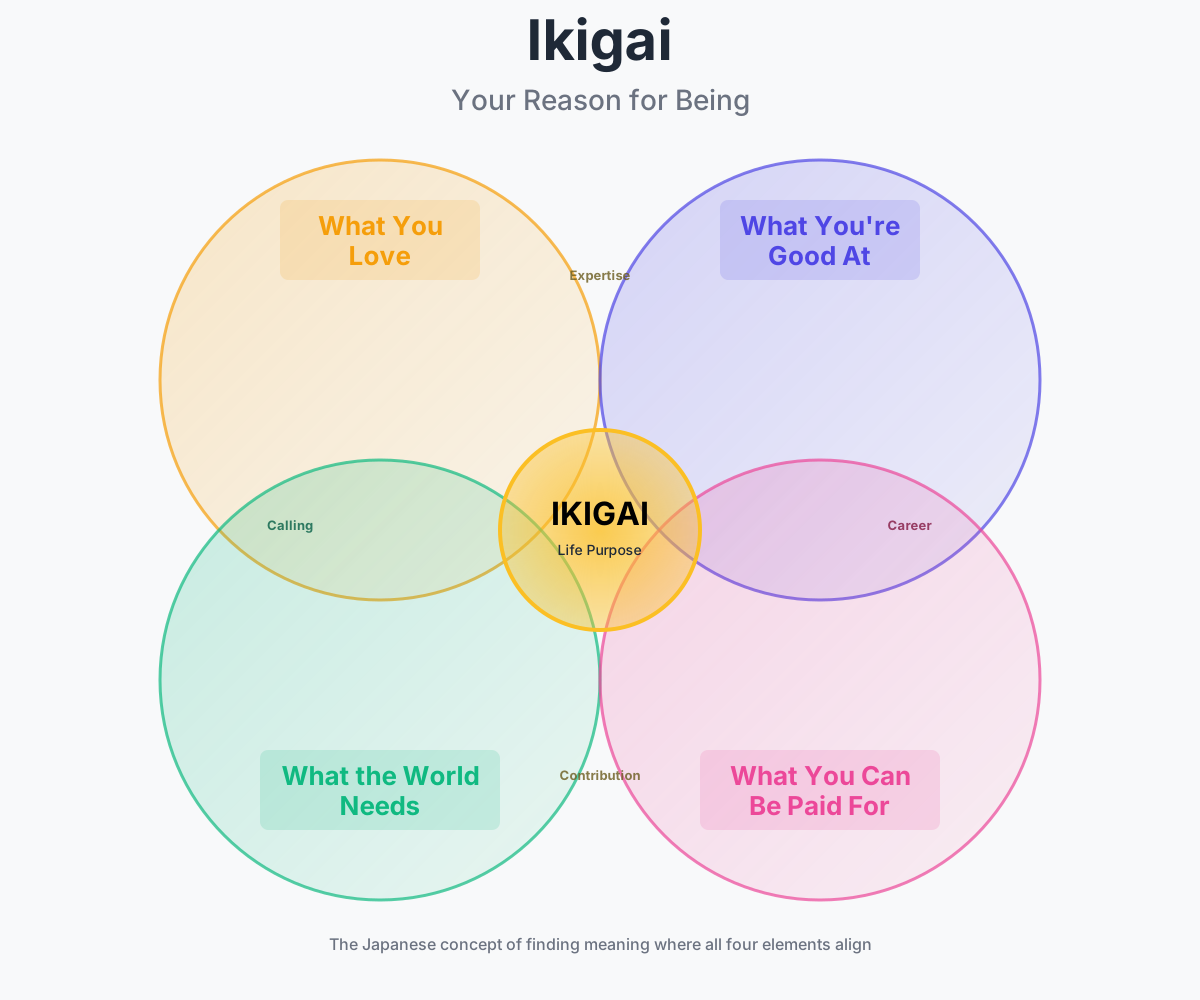
The power of ikigai lies in its integration. Unlike Western concepts of "finding your passion" that often leave people feeling incomplete, ikigai addresses four dimensions simultaneously, creating sustainable meaning rather than fleeting motivation.
Whether you're navigating career decisions at 25, reassessing life at 45, or seeking renewed purpose at 65, ikigai offers a framework that evolves with your life stages and circumstances.
What Is Ikigai?
Ikigai (生き甲斐) is a Japanese word combining "iki" (to live) and "gai" (reason, worth). It translates literally as "reason for being" or "life worth living." Psychologically, ikigai represents a profound sense of purpose that motivates daily living and contributes meaningfully to overall well-being. It's not a destination you arrive at but rather a continuous alignment of your passions, skills, contributions, and livelihood into a coherent sense of direction.
Not medical advice.
In Japan, ikigai is considered a universal human need. Research identifies seven psychological needs met by ikigai: survival, growth and change, future orientation (goals and dreams), influence (being necessary to others), freedom of choice, self-fulfillment through potential development, and meaning or sense of life worth. Together, these needs create a foundation for lasting happiness and engagement with life.
Surprising Insight: Surprising Insight: Japanese researchers found that people lacking a strong sense of ikigai faced significantly higher mortality rates, particularly from cardiovascular disease, independent of other health factors. Conversely, those with clear ikigai showed increased levels of protective HDL cholesterol and reduced inflammatory markers.
The Ikigai Four-Circle Framework
Visual representation of the four overlapping circles that define ikigai: passion (what you love), vocation (what you excel at), mission (what the world needs), and profession (what you can earn from)
🔍 Click to enlarge
Why Ikigai Matters in 2026
In 2026, we're experiencing unprecedented disconnection despite constant digital connection. Mental health challenges are rising globally, with rates of depression and anxiety climbing year over year. People report feeling lost, unmotivated, or trapped in roles that don't align with their values. The traditional path of education → career → retirement no longer provides the security or satisfaction it once did. Ikigai addresses this modern crisis by offering a framework for personal meaning-making in uncertain times.
Research from 2023-2024 shows that individuals with clear ikigai experience significantly lower anxiety and depression symptoms, higher life satisfaction, and better resilience during difficult periods. For organizations, employees with strong ikigai demonstrate higher engagement, productivity, and retention. This makes ikigai not just a personal wellness practice but an economic and social priority.
Crucially, ikigai is not limited to individual achievement or career success. It applies equally to parents, volunteers, caregivers, students, and retirees. In an age where many feel pressure to "optimize" every aspect of life, ikigai offers permission to pursue meaning through diverse channels—community contribution, creative expression, learning, relationships, and work.
The Science Behind Ikigai
Modern psychology has formalized what Japanese culture has long known: purpose predicts longevity and wellbeing. Multiple hierarchical regression analyses show that ikigai positively predicts overall well-being while negatively predicting depression and anxiety. One landmark study of the Ohsaki population in Japan found that individuals reporting a "sense of life worth living" had significantly lower mortality rates from all causes over a 7-year follow-up, even after adjusting for conventional health risk factors.
Neuroscientifically, ikigai engages multiple brain systems simultaneously. When pursuing ikigai activities, the brain activates reward centers (releasing dopamine), meaning-making regions (the prefrontal cortex), and social connection circuits (oxytocin release). This creates a neurochemical state of sustained motivation and fulfillment, distinct from the short-lived high of external rewards. People with ikigai show measurable differences in cortisol patterns, immune function, and cardiovascular health markers compared to those without clear purpose.
How Ikigai Influences Health Outcomes
Causal pathway showing how ikigai drives psychological well-being, stress resilience, health behaviors, and physical health markers
🔍 Click to enlarge
Key Components of Ikigai
1. Passion (What You Love)
This is the visceral element—activities that make you lose track of time, that energize rather than drain you. Passion includes hobbies, interests, and pursuits that bring joy simply through engagement, regardless of external reward. For some it's creating art, for others it's mentoring young people or spending time in nature. The key is authenticity: these activities align with your values and express your personality. Passion often emerges from childhood interests or experiences where you felt most alive and present.
2. Vocation (What You're Good At)
Vocation encompasses your skills, talents, and abilities developed through education, experience, and practice. These are things you do well—often so naturally that you might underestimate their value. Vocation is distinct from passion; you might be skilled at something you don't love, or love something you're still developing skill in. True ikigai emerges when passion and vocation overlap: you excel at something that energizes you. Identifying your vocation requires honest self-assessment and often feedback from others who witness your capabilities.
3. Mission (What the World Needs)
Mission represents your sense of contribution and impact. What problems do you feel called to help solve? What needs do you see in your community, industry, or the world that align with your values? Mission transforms ikigai from individual achievement into social contribution. This might involve solving concrete problems (environmental sustainability, healthcare access), supporting others' growth, creating beauty, or advancing knowledge. Mission provides meaning beyond personal satisfaction—it connects you to something larger than yourself.
4. Profession (What You Can Be Paid For)
Profession addresses the practical reality: you need income to sustain yourself and likely those depending on you. This component asks what economic value your combination of passion, skill, and mission creates in the marketplace. Profession isn't cynical or selfish—it's recognition that sustainable contribution requires sustainable income. The goal isn't maximizing income but finding livelihood that pays adequately while aligning with the other three components. For many, this might mean primary income from one source with mission and passion expressed through secondary activities.
| Life Situation | Primary Component | Secondary Components |
|---|---|---|
| Corporate Career | Profession + Vocation | Passion (side projects), Mission (workplace impact) |
| Parent/Caregiver | Mission + Passion | Vocation (caregiving skills), Profession (optional/supplemental) |
| Nonprofit Worker | Mission + Passion | Vocation (professional skills), Profession (modest salary) |
| Artist/Creator | Passion + Vocation | Mission (artistic contribution), Profession (selling work) |
| Retiree | Passion + Mission | Vocation (life experience), Profession (optional) |
How to Apply Ikigai: Step by Step
- Step 1: Reflect on your passions: What activities make you lose track of time? What did you love doing as a child? Write down 5-7 activities that genuinely energize you without requiring external motivation or reward.
- Step 2: Inventory your skills: List 3-5 things you do well that others consistently recognize and request from you. Include both professional and personal skills—cooking, listening, organizing, creating, teaching.
- Step 3: Identify world needs: What problems upset you? What gaps do you see in your community, industry, or the world? Write 3-5 needs that align with your values, not just problems affecting everyone.
- Step 4: Explore income opportunities: Research how your passion-skill combinations could generate income. This doesn't require starting a business—it might mean changing roles, freelancing, or adding a secondary income stream.
- Step 5: Find your Venn diagram sweet spot: Where do these four elements overlap? Don't expect perfect overlap immediately; ikigai is usually a 70-80% alignment that evolves over time.
- Step 6: Start small and test: Choose one action that integrates at least two ikigai components. This might be offering your skill to address a world need without immediate compensation, or exploring whether your passion could generate income.
- Step 7: Align your daily schedule: Audit how you spend your time. What percentage goes to each component? Consider small shifts that increase time on ikigai activities and decrease obligatory ones.
- Step 8: Find your tribe: Connect with others pursuing similar ikigai. They provide accountability, inspiration, and often practical collaboration opportunities.
- Step 9: Practice iterative refinement: Ikigai isn't static. Revisit these steps quarterly, adjusting as your skills develop, values evolve, and life circumstances change.
- Step 10: Measure meaning, not just metrics: Track changes in energy, satisfaction, and sense of purpose rather than just income or achievement. Ikigai is about sustainable fulfillment, not optimization.
Ikigai Across Life Stages
Young Adulthood (18-35)
This phase is often focused on establishing financial stability and professional identity. Your ikigai work involves exploring which of your many interests and skills might sustain you long-term. Young adults often have high passion and developing vocation but may lack clarity on mission and may prioritize profession over purpose. The opportunity here is to experiment: try different roles, pursue side projects, volunteer in various communities. This exploration phase prevents later regret and often reveals connections between passion and income you hadn't considered. Social influence peaks in this stage, making peer community and mentorship particularly valuable.
Middle Adulthood (35-55)
Middle adulthood typically brings increased clarity about strengths and values, but also competing demands. Your ikigai challenge involves integrating multiple roles—professional, parental, community—into coherent meaning. This is often when professional status and income requirements peak, potentially crowding out passion and mission. The ikigai advantage here is recognizing that meaning comes through multiple channels. If your primary income source isn't deeply fulfilling, doubling down on mission-driven volunteering or passion-based creative work can provide essential balance. This stage often brings renewed appreciation for relationships and contribution over achievement.
Later Adulthood (55+)
Later adulthood offers freedom from some earlier constraints—often reduced work obligations, clearer sense of priorities, and accumulated wisdom. Health emerges as a primary source of ikigai for many in this stage. Paradoxically, this is when ikigai becomes most protective: people with strong purpose show better physical health and cognitive function. This phase often involves transitioning from "doing" to "being" and "contributing," from professional identity to integrated identity. Mentoring younger people, creative pursuits, community involvement, and deepening relationships all provide robust ikigai sources. The research on Okinawan centenarians shows that this stage's ikigai is often about family, community participation, and spiritual meaning.
Profiles: Your Ikigai Approach
The Career Climber
- Permission to define success beyond job title or salary
- Space for passion projects outside work hours
- Clarity on personal values independent of professional achievement
Common pitfall: Assuming career success equals life fulfillment; burning out when promotions don't satisfy deeper needs
Best move: Intentionally design your role or side pursuits to align with personal mission; invest in mentoring or community work that generates meaning beyond compensation
The Parent/Caregiver
- Recognition that caregiving itself can be ikigai when it aligns with passion and values
- Outlets for skills and interests beyond the caregiving role
- Financial and scheduling flexibility to pursue some personal vocation
Common pitfall: Losing personal identity in caregiving role; accumulating resentment when personal needs are entirely deferred
Best move: Build small, non-negotiable time for personal interests; recognize the profound mission and vocation in quality caregiving; explore how skills developed in caregiving transfer to other domains
The Purpose Seeker
- Permission to prioritize meaning and mission over maximum income
- Realistic planning for financial sustainability while pursuing mission work
- Connection with others pursuing similar purposes
Common pitfall: Deferred financial security; burnout from mission work that doesn't provide adequate income or sustainability
Best move: Design a layered income model: perhaps part-time work for financial stability and part-time mission work for meaning; explore how your particular skills make your mission work financially viable
The Multi-Passionate Person
- Permission to integrate multiple interests rather than forcing single-focus niches
- Recognition that breadth can be strength in developing integrated solutions
- Portfolio-style approach: primary income plus multiple passion/mission projects
Common pitfall: Dilution without focus; feeling like a generalist in a specialist economy; accumulating unfinished projects
Best move: Actively integrate your diverse interests into a coherent personal brand or philosophy; build complementary projects that reinforce each other rather than competing for attention
Common Ikigai Mistakes
One fundamental mistake is treating ikigai as a destination rather than a practice. People often search for "the one" perfect alignment of all four elements, then feel defeated when it doesn't materialize. Ikigai is 70-80% alignment that evolves continuously. Another common error is prioritizing one component over others: pursuing passion regardless of skill, choosing profession while ignoring mission, or chasing mission without financial sustainability. These imbalances are unsustainable. Real ikigai involves constant negotiation among the four elements.
Many people also make ikigai too narrow or too ambitious. Limiting ikigai to work alone misses opportunities for meaning through relationships, creativity, and community. Conversely, expecting any single activity to fulfill all four components creates impossible standards. Finally, people often neglect the iterative aspect: they define ikigai once and expect it to sustain them for decades. Life changes—skills develop, values evolve, circumstances shift. Regular reassessment and adjustment is essential.
A subtle but critical mistake is conflating ikigai with hustle culture. Ikigai isn't about maximizing productivity or achievement; it's about sustainable fulfillment. You can have ikigai with a "simple" life focused on relationship, community, and creativity. In fact, Okinawan ikigai often emphasizes slowness, social connection, and everyday joys rather than achievement-oriented striving.
Common Ikigai Imbalances and How to Address Them
Visual showing different imbalanced ikigai configurations and paths toward better integration
🔍 Click to enlarge
Science and Studies
Research on ikigai and life purpose has grown substantially in recent years, confirming what Japanese culture has long known. Multiple peer-reviewed studies demonstrate that ikigai is not merely a pleasant concept but a measurable predictor of physical health, mental well-being, and longevity.
- "An Integrated Cognitive-Motivational Model of Ikigai (Purpose in Life) in the Workplace" (2024, PMC) - Research showing ikigai predicts workplace engagement, productivity, and well-being while negatively predicting burnout and anxiety.
- "Can Ikigai Predict Anxiety, Depression, and Well-being?" (2022-2024, International Journal of Mental Health and Addiction, Springer Nature) - Demonstrates strong negative correlation between ikigai and depression/anxiety symptoms; positive correlation with overall well-being and life satisfaction.
- "Sense of Life Worth Living (Ikigai) and Mortality in Japan: Ohsaki Study" - Landmark epidemiological study showing significantly lower cardiovascular and all-cause mortality in individuals reporting strong sense of ikigai, independent of conventional health risk factors.
- "Exploring Interests: A Pathway to Ikigai and Eudaimonic Well-being Among People with Serious Mental Illness" (2024, PubMed) - Evidence that ikigai framework supports recovery and resilience in individuals with mental health conditions.
- "Understanding the Connection Among Ikigai, Well-Being, and Home Robot Acceptance in Japanese Older Adults: Mixed Methods Study" (2023, PMC/JMIR Aging) - Shows ikigai predicts adaptation to technology, quality of life, and psychological resilience in aging populations, with health being primary ikigai source for elders.
Your First Micro Habit
Start Small Today
Today's action: Spend 15 minutes reflecting on one question: What activity made you lose track of time recently? Identify one element of passion that energized you. Write it down and commit to 30 minutes of that activity this week.
This micro habit begins the ikigai discovery process by reconnecting you with passion, which often gets buried under obligations. Just 15 minutes of reflection creates awareness, and 30 minutes of actual engagement this week rebuilds neural pathways of motivation and joy. This simple start prevents the "all-or-nothing" paralysis that stops many people from exploring ikigai.
Keep quitting habit apps after a missed day? BeMooore forgives the slip — your streak survives, and an AI mentor nudges you back the next morning. Free on iOS.
Quick Assessment
Which ikigai component feels most developed in your current life?
Your strongest component is your foundation. Ikigai develops by strengthening weaker areas and connecting all four. Someone strong in passion but weak in profession might explore how their passion could generate income. Someone strong in profession but weak in mission might find ways to contribute beyond earning.
Which feels most absent from your current life?
The component you selected is your next frontier for growth. If passion feels missing, small experiments with new activities or rekindling old interests can help. If vocation is unclear, feedback from trusted friends about your strengths often reveals it. If mission is absent, volunteering or community engagement can clarify what moves you. If profession misaligns, exploring role changes or side work can create sustainable income around your ikigai.
What timeframe feels realistic for developing stronger ikigai?
Your timeframe shapes strategy. Quick-win seekers benefit from immediate action on passion and visible wins. Medium-term thinkers can afford structured exploration of all four components. Longer-journey perspectives often produce the most integrated results but require patience with the process. The most successful ikigai developers embrace it as ongoing practice rather than a problem to solve once.
Take our full assessment to get personalized recommendations.
Discover Your Style →Next Steps
Your ikigai journey begins with honest self-reflection about where you stand in each of the four components. Don't wait for perfect alignment before taking action. Start with one small step this week: Have a conversation with someone who knows you well about your strengths. Spend 30 minutes on an activity that brings you joy. Research a problem you care about. Explore one small way your current skills could serve others. These small actions build momentum.
Remember that ikigai isn't a selfish pursuit. When you align your passions, skills, mission, and livelihood, you become capable of sustained contribution to your community and the world. You model for those around you that meaning, joy, and contribution are possible. You demonstrate that work can be more than obligation, that life can feel like it has direction and worth. In a world increasingly hungry for meaning, your own ikigai practice is an act of hope.
Get personalized guidance with AI coaching.
Start Your Journey →Research Sources
This article is based on peer-reviewed research and authoritative sources. Below are the key references we consulted:
Related Glossary Articles
Frequently Asked Questions
Can I have ikigai if I can't find work I love?
Absolutely. Ikigai doesn't require loving your job; it requires integrating your job with passion, mission, and skill through other channels. Many people derive strong ikigai from work they find adequate and necessary, while pursuing deep passion through creative work, volunteering, or relationships. The key is that your total life—not just your career—aligns with your four ikigai components.
Isn't ikigai just another name for passion or purpose?
Ikigai is more integrated than passion alone. Passion can be unfocused or economically unsustainable. Purpose alone might lack joy or align with your skills. Ikigai's power is specifically in synthesizing all four elements: passion gives joy, vocation provides skill, mission creates meaning beyond self, and profession ensures sustainability. This integration creates resilience and lasting fulfillment that any single element provides alone.
How do I find ikigai if I feel completely lost?
Start with vocation or passion because they're most tangible. Ask trusted people what they see as your strengths. Reflect on times you felt most alive—what were you doing? Try new activities to explore passion. Once you have clarity on one or two components, the others become easier to identify. Many ikigai journeys begin with a small skill or hobby, not with grand vision.
Is it selfish to focus on ikigai when so many people struggle to survive?
Not at all. Ikigai actually integrates social responsibility through the "mission" component. The people most capable of contributing to solving world problems are those with clear purpose and sustainable motivation. Additionally, many people discover that pursuing mission—helping others—is central to their own ikigai. Personal fulfillment and social contribution are not opposed; they're often intertwined.
Can ikigai change over my lifetime?
Yes, absolutely. Ikigai evolves as you develop new skills, your values mature, life circumstances change, and you learn more about yourself. Someone's ikigai at 25 differs from at 45 or 65. This isn't failure; it's growth. Regular reflection helps you adjust your life direction as you evolve rather than feeling stuck with old definitions of purpose.
Take the Next Step
Ready to improve your wellbeing? Take our free assessment to get personalized recommendations based on your unique situation.
- Discover your strengths and gaps
- Get personalized quick wins
- Track your progress over time
- Evidence-based strategies