Recuperación
You push yourself hard during the day—mentally, emotionally, and physically. But here's the overlooked truth that sleep scientists now Entiende: your body does its most powerful work when you stop. Recuperación isn't laziness or wasted time; it's when your brain consolidates memories, your muscles repair and grow stronger, and your immune system restores itself. In 2026, Recuperación has become one of the most scientifically validated pillars of health, yet many of us are still treating sleep and rest as afterthoughts. This guide explores the profound science behind Recuperación and práctico techniques to unlock its transformative power.
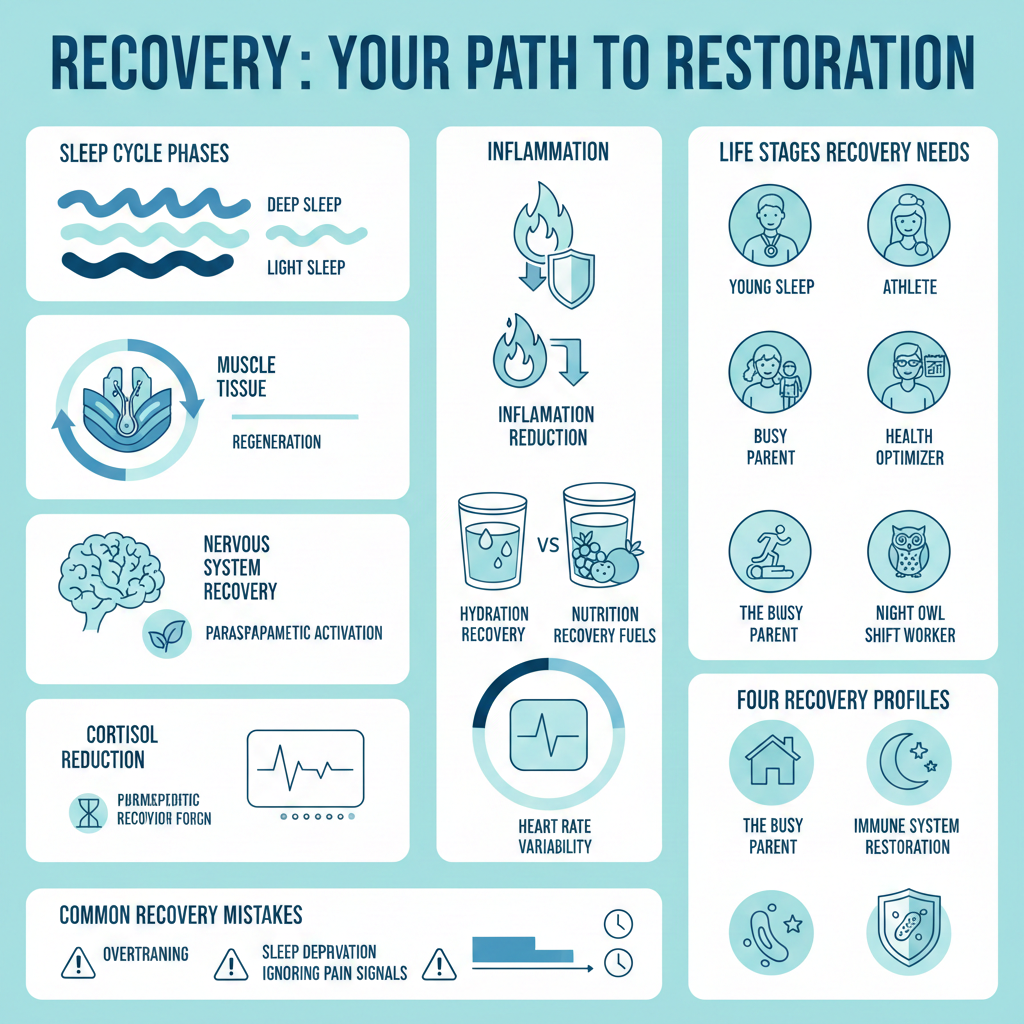
Recent research from OHSU and NIH shows that insufficient sleep is associated with decreased life expectancy. Recuperación isn't optional—it's foundational.
Whether you're an athlete optimizing performance, a professional managing stress, or simply someone seeking better health, understanding Recuperación can change your life.
What Is Recuperación?
Recuperación is the biological and psychological process of restoration that occurs during rest, particularly sleep. It encompasses the repair of muscle tissue, consolidation of memories, detoxification of the brain, immune system Fortaleciendo, and emotional regulation. Recuperación isn't a single event—it's a complex orchestration of physiological processes designed to return your body and mind to optimal function after exertion, stress, or damage.
No es consejo médico.
Think of Recuperación as your body's maintenance and upgrade system. When you're awake and active, you accumulate mental fatigue products, muscle micro-tears, and emotional stress. Sleep and Recuperación processes clear away these byproducts, repair tissue damage, and prepare you for the next day's demands. The quality and completeness of your Recuperación directly influence your cognitive function, immune strength, emotional resilience, and physical performance.
Surprising Insight: Perspectiva Sorprendente: Sleep deprivation impacts your decision-making and emotional regulation more than a blood alcohol concentration of 0.10%—legally drunk in most jurisdictions.
The Recuperación Process: What Happens During Sleep
Visual representation of the major biological processes that occur during sleep Recuperación
🔍 Click to enlarge
Why Recuperación Matters in 2026
In 2026, we face unprecedented challenges to Recuperación. Blue light from screens disrupts circadian rhythms, work culture glorifies burnout, and sleep remains undervalued despite mounting scientific evidence of its criticality. Recent studies show that sleep outpaces diet, exercise, and even loneliness as a behavioral driver of life expectancy. When you prioritize Recuperación, you're not indulging yourself—you're making the most scientifically sound health investment possible.
The modern workplace and digital environment Crea constant stimulation that prevents adequate Recuperación. Your nervous system remains activated, cortisol levels stay elevated, and your body never fully enters the parasympathetic state necessary for deep restoration. Meanwhile, research on circadian rhythms reveals that the timing of Recuperación matters as much as the quantity. Muscle injuries heal faster when they occur during your natural waking hours, and memory consolidation happens most effectively during specific sleep stages.
Recuperación also intersects with longevity and disease prevention. The NIH Sleep Research Plan identifies sleep and Recuperación as fundamental to cardiovascular health, metabolic function, cognitive aging, and emotional well-being. By understanding and optimizing your Recuperación, you're directly extending your healthspan—not just your lifespan.
The Science Behind Recuperación
Recuperación operates through multiple interconnected mechanisms. During non-REM deep sleep (stages 3-4), your body increases growth hormone production, which drives muscle protein synthesis and tissue repair. Simultaneously, your brain enters a state of reduced metabolic activity that allows the glymphatic system to clear metabolic waste products, including amyloid-beta proteins associated with cognitive decline. This nightly detoxification is so significant that disrupted sleep increases Alzheimer's disease risk by up to 30 percent.
REM sleep, which comprises about 20-25% of total sleep in adults, is dominated by rapid eye movements and vivid dreams. During this stage, your brain consolidates emotional memories, processes complex information, and integrates new learning with existing knowledge. This is why sleep deprivation particularly impairs emotional regulation and creative problem-solving. The circadian system also plays a critical role: your body's internal clock synchronizes Recuperación processes with your sleep-wake cycle, and disruptions to this rhythm impair all downstream Recuperación functions.
Sleep Stages and Recuperación Functions
Timeline showing the cycling of sleep stages throughout the night and their associated Recuperación functions
🔍 Click to enlarge
Key Components of Recuperación
Sleep Duration and Architecture
Most adults require 7-9 hours of sleep nightly, according to CDC guidelines and endorsed by the American Academy of Sleep Medicine. However, quantity alone doesn't guarantee quality Recuperación. Sleep architecture—the proportion of time spent in each sleep stage—matters equally. Alcohol, common sleep medications, and sleep disorders can fragment sleep and reduce deep sleep percentage even if total hours seem adequate. Effective Recuperación requires consolidated, uninterrupted sleep with sufficient time in both deep NREM and REM stages.
Circadian Rhythm Alignment
Your circadian system is a 24-hour biological clock that synchronizes sleep-wake cycles, hormone production, body temperature, and metabolic function. Light exposure—particularly blue light from the sun in morning hours—resets this clock daily. When your sleep schedule aligns with your natural circadian rhythm, Recuperación processes optimize. Shift work, jet lag, and irregular sleep schedules desynchronize circadian function and impair Recuperación efficiency. Recent research shows that exercising and being injured during your natural wake period accelerates healing compared to the same injury during your sleep period.
Physical Recuperación Mechanisms
During sleep, especially deep sleep, your body increases synthesis of proteins that rebuild muscles, tendons, and ligaments. Growth hormone reaches peak levels during the first deep sleep cycle, and testosterone production increases during REM sleep—both critical for tissue repair and adaptation to training. Cold water immersion, hot water immersion, contrast therapy, foam rolling, and stretching can enhance Recuperación by promoting blood flow, reducing inflammation, and clearing metabolic byproducts. However, these techniques are most effective when combined with adequate sleep, nutrition, and stress management.
Psychological and Emotional Recuperación
Recuperación isn't only physical. REM sleep processes emotional experiences, reducing their affective intensity and integrating them into long-term memory. Poor sleep impairs emotional regulation, increases anxiety and depression risk, and reduces stress resilience. Practices like mindfulness, meditation, deep breathing, and social connection activate your parasympathetic nervous system and complement sleep-based Recuperación. Taking digital breaks, creating wind-down routines, and maintaining consistent sleep schedules all support psychological Recuperación alongside sleep physiology.
| Technique | Evidence Level | Best Use |
|---|---|---|
| Sleep (7-9 hours) | Excellent | Foundation for all Recuperación |
| Cold water immersion | Good | Post-exercise inflammation, athletic Recuperación |
| Hot water immersion | Good | Muscle relaxation, stress reduction |
| Contrast therapy | Good | Enhanced circulation, DOMS reduction |
| Foam rolling | Moderate | Lactate clearance, mobility |
| Sleep tracking | Moderate | Awareness and optimization |
| Meditation/mindfulness | Good | Parasympathetic activation |
| Consistent sleep schedule | Excellent | Circadian alignment |
How to Apply Recuperación: Paso a Paso
- Step 1: Assess your current sleep: Track your bedtime, wake time, and perceived sleep quality for one week. Calculate total hours and note any patterns.
- Step 2: Establish a consistent sleep schedule: Choose a bedtime and wake time that align with your natural circadian rhythm. Maintain this schedule even on weekends.
- Step 3: Optimize your sleep environment: Ensure your bedroom is dark (consider blackout curtains), cool (65-68°F / 18-20°C is optimal), and quiet. Invest in a quality mattress and pillows.
- Step 4: Implement light hygiene: Get bright light exposure within 30 minutes of waking to reset your circadian clock. Reduce blue light 1-2 hours before bed using blue light glasses or device filters.
- Step 5: Crea a wind-down routine: 30-60 minutes before bed, reduce stimulation. Try reading, gentle stretching, meditation, cálido baths, or herbal tea.
- Step 6: Limit sleep disruptors: Avoid caffeine after 2 PM, alcohol close to bedtime, and large meals within 3 hours of sleep. Stop working 1-2 hours before bed.
- Step 7: Choose appropriate Recuperación techniques: Based on your lifestyle, incorporate cold water, heat therapy, foam rolling, or stretching. Time these activities strategically—intense Recuperación work should complete 2-3 hours before bed.
- Step 8: Track Recuperación quality: Note your energy levels, mood, cognitive clarity, and physical performance. These outcomes reveal whether your Recuperación is working.
- Step 9: Adjust for circadian disruptions: If you experience jet lag or shift work, gradually shift your light exposure and sleep schedule. Consider melatonin timing with professional guidance.
- Step 10: Review and refine: Every 4 weeks, assess what's working. Consistency matters more than perfection—focus on sustainable habits.
Recuperación Across Life Stages
Adultez joven (18-35)
Young adults often underestimate Recuperación needs, prioritizing work and social activities over sleep. This stage is critical for establishing sustainable sleep habits. Your circadian system is most flexible now, but irregular sleep can still disrupt Recuperación. Young adults should focus on consistent sleep schedules, managing caffeine and alcohol use, and recognizing that sleep deprivation impairs cognitive function and emotional regulation more dramatically at this age than later. Post-workout Recuperación is particularly important during this stage if you're Construyendo muscle or athletic capacity.
Edad media (35-55)
Middle adulthood brings increased work stress, caregiving responsibilities, and hormonal changes (particularly perimenopause and andropause). Sleep quality often declines due to stress and circadian disruptions from busy schedules. This stage requires intentional Recuperación practices: stress management, consistent sleep schedules despite busy schedules, and potentially professional intervention if sleep problems emerge. Research on circadian rhythms shows that even small inconsistencies in sleep timing compound over time, making consistency more important than duration alone during this stage.
Adultez tardía (55+)
Later adulthood often involves natural sleep architecture changes: decreased deep sleep, more nighttime awakenings, and shifted circadian timing (earlier bedtime and wake time). These changes are normal but can reduce Recuperación quality if not managed proactively. Maintaining consistent sleep schedules becomes even more critical. Light exposure timing, medical review of medications affecting sleep, and strategic use of physical Recuperación techniques (stretching, gentle water immersion) support effective Recuperación. Sleep-related health risks (sleep apnea, restless leg syndrome) also increase with age and warrant professional evaluation.
Profiles: Your Recuperación Approach
The Driven Achiever
- Permission to prioritize sleep without guilt
- Recognition that sleep enhances performance, not detracts from it
- Integration of Recuperación into their achievement goals
Common pitfall: Viewing sleep as lost productivity time and chronically prioritizing work over rest
Best move: Track performance metrics (cognitive function, decision quality, mood) while gradually improving sleep. Notice how better Recuperación actually accelerates achievement.
The Busy Parent
- Realistic, flexible Recuperación strategies
- Support systems that protect sleep time
- Short, effective Recuperación techniques
Common pitfall: Accepting chronic sleep deprivation as unavoidable, then burning out
Best move: Protect a consistent sleep window even if 1-2 hours shorter than ideal. Focus on sleep quality and timing. Use micro-Recuperación (brief meditation, stretching) during the day.
El optimizador de Salud
- Quantifiable metrics and tracking
- Cutting-edge Recuperación techniques and tools
- Scientific evidence and research updates
Common pitfall: Over-complicating Recuperación with excessive tracking and expensive interventions
Best move: Domina sleep fundamentals first (schedule, environment, wind-down). Then layer in additional techniques. Simple consistency outperforms complex inconsistency.
The Night Owl Shift Worker
- Circadian rhythm management strategies
- Timing of light exposure and sleep
- Recuperación techniques for irregular schedules
Common pitfall: Trying to maintain a 'normal' sleep schedule and constantly fighting their natural rhythm
Best move: Commit fully to your shift schedule's circadian rhythm. Use light exposure strategically. Protect sleep timing consistency even if shifted from traditional hours.
Common Recuperación Mistakes
The biggest Recuperación mistake is treating sleep as negotiable. Many people sacrifice sleep for productivity or social activities, then try to 'catch up' on weekends. Research shows that weekend sleep extension provides minimal Recuperación benefit for weekday sleep deprivation. Your brain and body need consistent nightly sleep. Even one night of poor sleep impairs immune function, mood, and cognitive performance the next day.
Another critical error is relying on sleep medications, alcohol, or sedating substances as substitutes for natural sleep. These interventions disrupt sleep architecture and actually reduce Recuperación quality despite increasing sleep duration. Alcohol, for instance, fragments sleep and suppresses REM sleep stage, impairing emotional processing and memory consolidation. Sleep medications can reduce deep sleep percentage and Crea dependence. While professional intervention is sometimes necessary, natural sleep optimization should be attempted first.
A third mistake is ignoring circadian alignment. You can sleep 8 hours but still experience poor Recuperación if your sleep time doesn't align with your natural circadian rhythm. Additionally, many people underestimate how much their sleep environment affects Recuperación. Poor temperature control, light exposure, noise, and an uncomfortable mattress all significantly impair sleep architecture even if total sleep hours seem adequate.
Recuperación Mistakes and Solutions
Common Recuperación errors and evidence-based corrections
🔍 Click to enlarge
Ciencia y estudios
Recent research reveals the profound impact of Recuperación on health and longevity. Studies from 2024-2025 provide compelling evidence for prioritizing sleep and Recuperación as core health practices.
- Oregon Health & Science University (2025): Sleep emerged as the strongest behavioral predictor of life expectancy, surpassing diet, exercise, and loneliness in impact on mortality.
- Northwestern University (2025): Circadian timing affects muscle repair efficiency. Injuries incurred during natural wake hours heal faster than those during sleep periods, driven by circadian-regulated immune cell function.
- National Institute of Neurological Disorders (2024): Sleep deprivation research in the post-COVID era shows that Recuperación sleep doesn't fully restore memory consolidation to baseline levels after prolonged sleep loss.
- Frontiers in Neuroscience (2025): Exercise, circadian rhythms, and muscle regeneration are interconnected. Gene expression related to tissue repair peaks during sleep phases aligned with circadian peaks.
- American Academy of Sleep Medicine: CDC-endorsed sleep duration guidelines specify 7+ hours nightly for adults. Compliance with these recommendations is associated with reduced cardiovascular disease, diabetes, obesity, and cognitive decline.
Tu primer micro hábito
Comienza pequeño hoy
Today's action: Tonight, move your bedtime 15 minutes earlier than usual. Protect this 15 minutes from distractions and screens. Notice tomorrow how this small change affects your energy and mood.
Small, consistent shifts in sleep timing are easier to sustain than dramatic overhauls. This single micro-habit will likely add 1.75 hours of sleep weekly without feeling restrictive. You'll quickly notice cognitive and emotional improvements, which creates motivation for further optimization.
Track your micro habits and get personalized AI coaching with our app.
Evaluación rápida
How would you describe your current sleep experience?
Your response indicates your baseline Recuperación status. If you selected option 1, you're doing well—focus on maintaining these habits. If you selected options 2-4, Recuperación optimization is an immediate opportunity for significant life quality improvement.
What's your biggest barrier to better Recuperación right now?
Your barrier guides where to focus first. Busy schedules require protection strategies. Sleep environment issues are the fastest to fix. Winding down challenges benefit from parasympathetic practices. Confusion about strategies suggests starting with fundamentals: consistent sleep schedule and proper sleep environment.
Which Recuperación timeline appeals to you most?
Your timeline preference determines your approach. Dramatic improvements usually require intensive multi-factor optimization. Four weeks allows for establishing solid foundations. Twelve weeks enables comprehensive circadian realignment and habit entrenchment. Gradual shifts work best for long-term sustainability, though they require patience to notice benefits.
Take our full assessment to get personalized recommendations.
Descubre Your Style →Preguntas frecuentes
Próximos pasos
Recuperación isn't complicated, but it does require intention in a world designed to keep you stimulated and productive around the clock. Start with the fundamentals: consistent sleep timing, an optimized sleep environment, and a wind-down routine. These three elements alone typically produce dramatic improvements within 2-4 weeks.
Then, layer in additional Recuperación techniques based on your needs: circadian light optimization if your schedule is irregular, physical Recuperación methods if you exercise regularly, or stress management practices if your barrier to Recuperación is mental. Remember that Recuperación is the foundation of every other health goal—cognitive function, immune health, emotional resilience, physical performance, and longevity all depend on it.
Get personalized guidance with AI coaching.
Start Your Journey →Research Sources
This article is based on peer-reviewed research and authoritative sources. Below are the key references we consulted:
Related Glossary Articles
Frequently Asked Questions
Can you really 'catch up' on sleep by sleeping more on weekends?
Limited research suggests weekend sleep extension provides minimal Recuperación benefit for weekday sleep deprivation. Your body requires consistent nightly sleep to regulate circadian function, immune function, and metabolic processes. A single night of adequate sleep doesn't fully reverse the cognitive and mood impacts of weekday sleep loss. Consistent sleep is far more effective than irregular catch-up sleep.
How long does it take to see improvements from better Recuperación practices?
Many people notice mood and cognitive improvements within 3-5 nights of better sleep. Immune function improvements appear within 1-2 weeks. Physical Recuperación and muscle adaptation take 4-8 weeks of consistent good sleep. Circadian realignment (if your schedule was severely disrupted) can take 2-4 weeks of consistent sleep timing.
Is it better to sleep 8 hours at night or split sleep into multiple sessions?
Consolidated 7-9 hour nightly sleep is optimal for most adults. Polyphasic sleep (multiple short sessions) works against your natural circadian rhythm and disrupts the architecture needed for full Recuperación—especially deep sleep and REM sleep. Some shift workers find biphasic sleep (main sleep + short nap) functional, but consolidated sleep is physiologically preferred.
What's the relationship between exercise and Recuperación?
Exercise creates muscle micro-tears and neurological demand that require Recuperación to repair and adapt. Sleep is the primary Recuperación driver—it increases growth hormone and testosterone, synthesizes muscle proteins, and consolidates motor learning. Physical Recuperación techniques (stretching, massage, immersion therapy) support but don't replace sleep. For athletes, 8-10 hours nightly is often beneficial.
How do I know if my sleep environment is optimized?
An optimized sleep environment is dark (under 5 lux light), cool (65-68°F / 18-20°C), quiet (under 30 decibels), and comfortable with quality bedding. You should fall asleep within 10-20 minutes of lying down, remain asleep with minimal nighttime awakenings, and wake feeling rested. If you're not meeting these criteria, experiment with blackout curtains, temperature adjustment, white noise, and mattress/pillow upgrades sequentially.
Take the Next Step
Ready to improve your wellbeing? Take our free assessment to get personalized recommendations based on your unique situation.
- Discover your strengths and gaps
- Get personalized quick wins
- Track your progress over time
- Evidence-based strategies