Physical Performance
Have you ever wondered what separates elite athletes from everyone else? It's not just genetics. Physical performance is the measurable ability to execute movements with power, efficiency, and endurance. Whether you're a competitive athlete, weekend warrior, or someone simply wanting to move better through life, understanding how to optimize your physical performance can transform what your body is capable of achieving. In 2026, we're seeing groundbreaking advances in personalized training, wearable technology, and evidence-based recovery strategies that make peak performance more accessible than ever before.
From professional sports organizations using GPS tracking vests to monitor athlete workload, to periodic training methods scientifically designed to peak you exactly when it matters most, the pursuit of physical performance is increasingly data-driven and personalized to individual needs.
The science reveals that building physical performance requires attention to strength, power, endurance, flexibility, and mental resilience working together as an integrated system.
What Is Physical Performance?
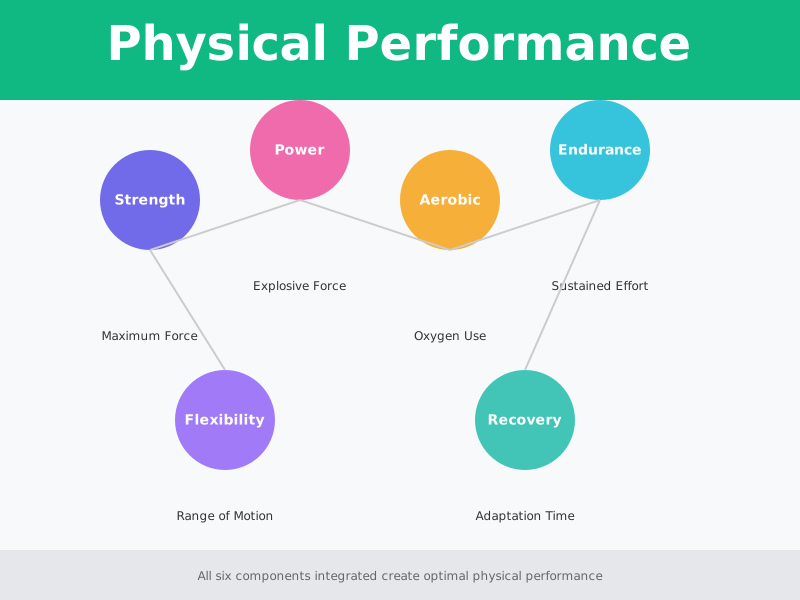
Physical performance is your body's capacity to generate force, sustain effort, move efficiently, and recover quickly from exertion. It encompasses multiple dimensions including muscular strength (maximum force production), power (force generated rapidly), aerobic fitness (oxygen utilization), muscular endurance (sustained muscle contraction), flexibility (range of motion), and body composition. Performance isn't just about how fast you can run or how much you can lift—it's about your entire body's ability to function optimally across different demands.
Not medical advice.
In practical terms, physical performance represents the intersection of physiology, biomechanics, psychology, and nutrition. A rugby player needs explosive power for scrums and collision impact. A marathon runner needs aerobic capacity and muscular endurance. A gymnast needs flexibility, body control, and strength-to-bodyweight ratio. A CrossFit athlete needs all of these elements in varying proportions. Your specific performance needs depend entirely on your goals, sport, or lifestyle demands.
Surprising Insight: Surprising Insight: Research shows that athletes peak between ages 26-36 across both strength and aerobic capacity. This means your best performances may come after decades of training foundation-building, not just in youth.
Components of Physical Performance
Six interconnected elements that together create overall physical performance capacity
🔍 Click to enlarge
Why Physical Performance Matters in 2026
Physical performance directly impacts quality of life, longevity, injury prevention, and psychological wellbeing. In 2026, we understand that optimal physical performance isn't just about competitive sports—it's foundational to healthy aging, productivity, and resilience in daily life. People who maintain strong aerobic capacity and muscular strength experience better sleep quality, improved mental health, reduced disease risk, and greater independence throughout aging.
Technology is accelerating personalization. Wearable devices now track heart rate variability, sleep quality, muscle activation patterns, and recovery status in real-time. AI-powered coaching apps analyze movement patterns to identify injury risk before problems occur. Genetic testing can reveal your natural predisposition toward endurance versus strength performance, allowing targeted training. This convergence of data and science means you can optimize training with surgical precision rather than generic programming.
Mental performance is increasingly recognized as inseparable from physical performance. The flow state—that zone where you perform at your peak with complete focus—isn't mystical, it's a trainable psychological skill. Research confirms that structured mental training combined with physical training produces significantly better results than physical training alone. Visualization, stress management, and focus techniques are now standard in elite athletic programs.
The Science Behind Physical Performance
Muscular adaptation happens through specific cellular mechanisms. When you perform resistance training, you create micro-tears in muscle fibers. During recovery, your body repairs these tears and builds back stronger through a process called hypertrophy. But here's the critical insight: the recovery phase is where adaptation happens, not during the workout. You don't get stronger in the gym—you get stronger during sleep and rest days when protein synthesis elevates and muscle rebuilds. This is why recovery optimization (sleep, nutrition, stress management) is scientifically just as important as the training itself.
Periodization—strategically cycling through different training phases—is scientifically proven to prevent plateaus and maximize performance gains. A complete training year typically divides into off-season (building foundational strength and addressing weaknesses), pre-season (developing sport-specific power and skills), and in-season (maintaining gains while prioritizing competition performance). This systematic approach allows athletes to peak exactly when competition arrives, rather than hoping peak form shows up randomly. Studies show that structured periodized training reduces injury risk by up to 46% while maintaining conditioning throughout the competitive season.
Training Periodization Cycle
Strategic phasing of training variables across a complete annual training cycle
🔍 Click to enlarge
Key Components of Physical Performance
Muscular Strength
Strength is your maximum force-producing capacity—how much weight you can lift for a single repetition. Developing strength requires heavy loads (typically 80%+ of your one-rep max) with low repetitions (6-8 reps) and complete recovery between sets. Strength training triggers neural adaptations (your nervous system becomes more efficient at recruiting muscle fibers) and hypertrophic adaptations (muscle fibers increase in size). Progressive overload is essential—you must gradually increase demands on your muscles through heavier weight, more volume, or improved technique.
Power and Explosiveness
Power is strength expressed rapidly—jumping, sprinting, throwing, or accelerating explosively. While strength is about maximum force, power is about producing force quickly. Power training uses lighter loads (30-60% of one-rep max for upper body, 0-60% for lower body) performed at maximum velocity with full recovery between repetitions. This explosive training develops fast-twitch muscle fibers and trains your neuromuscular system to coordinate muscle activation efficiently. Power is absolutely critical for sports involving sprinting, jumping, throwing, or sudden directional changes.
Aerobic Capacity
Aerobic capacity—often measured as VO2 max—represents how efficiently your cardiovascular system delivers oxygen to working muscles. Training to improve aerobic capacity requires sustained effort at moderate to high intensities (typically 70-85% of maximum heart rate) for extended periods. Aerobic training develops slow-twitch muscle fibers, improves mitochondrial density (the powerhouses of your cells), and enhances oxygen utilization. Endurance sports performance depends heavily on aerobic capacity, but all athletes benefit from a strong aerobic base supporting recovery between intense efforts.
Muscular Endurance
Endurance is sustained muscle contraction capacity—completing high repetitions or prolonged efforts before fatigue. While strength emphasizes heavy loads with few repetitions, endurance training uses lighter loads (40-60% of one-rep max) with high repetitions (15+) and short rest periods. Muscular endurance develops your aerobic energy systems within muscles and improves lactate tolerance (your ability to buffer metabolic byproducts during intense effort). Building adequate muscular endurance prevents fatigue-related performance declines and injury risk in later game situations.
| Performance Component | Load Range | Repetition Range |
|---|---|---|
| Muscular Strength | 80%+ of 1RM | 6-8 reps |
| Power/Explosiveness | 30-60% of 1RM | 3-5 reps |
| Hypertrophy | 65-85% of 1RM | 8-12 reps |
How to Apply Physical Performance: Step by Step
- Step 1: Assess your current physical capacity across all performance dimensions through testing: aerobic fitness (1.5-mile run time), strength (maximum pushups or squat weight), power (vertical jump height), endurance (maximum repetitions at moderate weight), and flexibility (sit and reach test for lower body range of motion).
- Step 2: Define your specific performance goal with precision—not just 'get stronger' but 'increase deadlift from 225 to 315 pounds in 12 weeks' or 'improve marathon time from 3:45 to 3:30.' Specific, measurable targets enable better programming.
- Step 3: Choose a training program architecture that matches your goal. Periodized training cycles (off-season to competition) work best; if competition doesn't apply, use 8-12 week blocks progressively building intensity.
- Step 4: Implement progressive overload—systematically increasing training demands. Add weight, increase repetitions, reduce rest periods, or improve technique. Your body adapts to current demands and requires greater stimulus for continued progress.
- Step 5: Structure training frequency appropriately: most athletes benefit from 3-5 sessions weekly depending on sport, with adequate rest days for recovery. Overtraining without recovery is counterproductive.
- Step 6: Prioritize technique and movement quality above heavy loads. Poor movement patterns under fatigue ingrain injury-producing mechanics. Video analysis and coaching feedback prevent this costly mistake.
- Step 7: Establish a recovery protocol including adequate sleep (7-9 hours nightly), post-exercise nutrition (carbohydrates and protein within 60 minutes), hydration throughout training, and stress management techniques.
- Step 8: Track performance metrics consistently—weights used, repetitions completed, workout time, body weight, sleep hours, perceived exertion. Objective data reveals progress and allows adjustment when progress plateaus.
- Step 9: Assess and address limiting factors preventing performance goals. If your strength is excellent but power is weak, emphasize explosive training. If aerobic capacity limits endurance, prioritize cardio work.
- Step 10: Periodically retest across performance dimensions every 8-12 weeks to verify progress, adjust programming based on results, and maintain motivation through measurable improvements.
Physical Performance Across Life Stages
Young Adulthood (18-35)
This is the window of maximum performance potential. Recovery is fastest, strength and power peaks are accessible, and the nervous system is highly adaptable. Young adults should prioritize building comprehensive physical foundations across all performance domains rather than specializing too early. This is the ideal time to develop strength base, aerobic capacity, and mobility that support decades of athletic pursuits. Injury risk is lower due to higher recovery capacity, but poor movement patterns established now often cause problems later. Young adulthood is the time to invest in excellent technique, smart periodization, and consistent training habits.
Middle Adulthood (35-55)
Performance peaks shift—maximum strength and power still achievable but recovery times increase and injury risk rises. Middle-aged athletes must emphasize injury prevention through mobility work, technique refinement, and appropriate recovery. Testosterone and estrogen naturally decline with age, requiring intentional strength maintenance. This life stage often brings time constraints (career demands, family responsibilities) requiring efficient programming—quality focused training beats high-volume scattered efforts. Regular movement testing and addressing emerging mobility restrictions prevent declining performance and maintain quality of life.
Later Adulthood (55+)
Performance goals shift toward maintaining independence, preventing falls, preserving muscle mass, and supporting longevity. Strength training becomes even more critical since sarcopenia (age-related muscle loss) accelerates without resistance stimulus. Recovery and injury prevention remain paramount—technique matters more than weight, and addressing movement restrictions maintains mobility and prevents compensation injuries. Aerobic activity supports cardiovascular health and cognitive function. Consistent moderate-intensity training proves superior to sporadic intense efforts for long-term performance and health outcomes across later life.
Profiles: Your Physical Performance Approach
The Competitive Athlete
- Sport-specific performance programming aligned with competition schedule
- Access to coaching feedback on technique and performance
- Systematic periodization peaking exactly when competition arrives
Common pitfall: Overtraining without adequate recovery, burning out before major competitions
Best move: Work with a coach on periodized programming that peaks for key competitions, prioritize recovery quality equal to training intensity, and use objective metrics to avoid overtraining.
The Fitness Enthusiast
- Balanced training across multiple performance dimensions
- Flexible programming fitting variable schedule
- Clear metrics tracking progress and maintaining motivation
Common pitfall: Random workouts lacking progressive structure, training same energy systems repeatedly
Best move: Follow structured 8-12 week training blocks varying intensity, test performance quarterly, and ensure training addresses strength, power, endurance, and mobility systematically.
The Aging Adult
- Strength maintenance preventing age-related muscle loss
- Mobility preservation supporting independence and fall prevention
- Recovery-optimized training given longer recovery times
Common pitfall: Avoiding resistance training assuming it's too demanding, becoming sedentary
Best move: Emphasize consistent resistance training 2-3 times weekly maintaining strength, dedicate attention to mobility and balance, recover fully between sessions, and prioritize functional movements supporting daily independence.
The Recovery-Focused Optimizer
- Sleep and stress management strategies enhancing recovery
- Nutrition protocols supporting training adaptation
- Awareness of workload tolerance and deload timing
Common pitfall: Obsessing over supplements while neglecting sleep, ignoring recovery signals from fatigue
Best move: Prioritize 7-9 hours quality sleep nightly as the highest leverage recovery tool, ensure post-exercise nutrition, monitor heart rate variability indicating recovery status, and strategically deload every 4th week allowing full recovery.
Common Physical Performance Mistakes
Neglecting foundational strength while chasing sport-specific performance is a critical error. Athletes often spend enormous time perfecting sport-specific skills while underdeveloping fundamental strength supporting power, injury prevention, and peak performance. A soccer player without adequate hip and ankle strength gets injured. A swimmer without sufficient shoulder stability develops tendinitis. Building comprehensive strength foundation protects against injury and amplifies sport-specific performance. Allocate 30-40% of training to general strength development regardless of sport.
Overtraining without adequate recovery sabotages progress and increases injury risk catastrophically. Many athletes operate on the false belief that 'more training equals more progress.' In reality, adaptation happens during recovery—training only creates the stimulus. Too much training without proportional recovery prevents adaptation, depletes glycogen stores, suppresses immune function, and elevates injury risk. If you're fatigued consistently, missing workouts, getting sick frequently, or experiencing performance plateaus despite training hard, overtraining is likely. Solution: reduce training volume 20%, prioritize sleep and stress management, and monitor performance instead of just effort.
Ignoring individual differences and following generic programs rarely produces optimal results. Your genetics predispose you toward strength or endurance, your sport imposes specific demands, your age determines recovery capacity, and your life demands affect available training time. A one-size-fits-all program ignores these critical factors. While following a 12-week program is valuable, personalizing the fundamental approach to your specific situation produces better results. Assess your specific limiting factors and address them rather than training indiscriminately.
Common Performance Training Mistakes
Three critical errors that prevent progress and increase injury risk
🔍 Click to enlarge
Science and Studies
Research on physical performance optimization consistently confirms that individualized, periodized training produces superior results to random programming. Studies from National Academy of Sports Medicine, university kinesiology labs, and sports medicine research centers demonstrate that structured training addressing specific performance goals, combined with optimized recovery, prevents injuries while maximizing performance gains. Key findings support progression overload, adequate recovery, and systematic periodization as foundational principles.
- PMC research on functional training effectiveness shows significant improvements in both physical and technical performance among athletic populations through evidence-based resistance protocols.
- Studies from the Journal of Pediatric Orthopaedic Society confirm that structured training programs reduce injury risks by up to 46% while maintaining peak conditioning during competition.
- Research on periodization demonstrates that strategic cycling through different training phases prevents plateaus and allows athletes to peak exactly when competition arrives.
- Studies on muscular adaptation confirm that hypertrophy develops through resistance training in the 8-12 repetition range, with adaptation occurring during recovery phases rather than during the workout itself.
- Nutrition research from PMC consistently shows that post-exercise protein and carbohydrate intake within 60 minutes optimizes muscle recovery and performance adaptation after training.
Your First Micro Habit
Start Small Today
Today's action: Complete a 5-minute performance assessment: measure your maximum pushups, time a 1-mile jog, test your flexibility with a sit-and-reach test, or jump for maximum height. Record your baseline numbers and commit to retesting in 4 weeks.
Baseline assessment creates objective awareness of your current physical capacity. Committing to retest in 4 weeks provides specific motivation. Even minor improvements in your baseline metrics (2 more pushups, 30 seconds faster mile time, 2 inches more flexibility) provide concrete proof of progress and motivation to continue training.
Keep quitting habit apps after a missed day? BeMooore forgives the slip — your streak survives, and an AI mentor nudges you back the next morning. Free on iOS.
Quick Assessment
How would you describe your current physical fitness level?
Your activity level determines appropriate starting training intensity and volume. Sedentary individuals should begin with 150 minutes moderate weekly activity. Highly active individuals should focus on periodization and recovery optimization rather than increasing volume further.
What is your primary physical performance goal?
Different goals require different training emphasis. Strength focuses on heavy loads and low reps. Endurance requires sustained moderate effort. Mobility needs dedicated flexibility work. Your goal determines training programming design. Most comprehensive fitness includes all elements; what's your current priority?
How many hours of sleep do you typically get nightly?
Recovery is where physical adaptation happens. Seven to nine hours nightly is optimal for athletic performance and health. If you're averaging less than 7 hours, improving sleep is your highest-leverage performance improvement investment—even before changing training. Quality sleep amplifies training benefits more than additional training volume does.
Take our full assessment to get personalized recommendations.
Discover Your Style →Next Steps
Physical performance improvement requires systematic attention to training stimulus, recovery optimization, and consistent effort over months. Start by assessing your current capacity across all performance dimensions—strength, power, aerobic capacity, endurance, and flexibility. Define specific, measurable goals rather than vague aspirations. Choose a structured training approach that matches your goal rather than random workouts.
Commit to evidence-based practices: progressive overload (systematic difficulty increases), adequate recovery (7-9 hour sleep, post-exercise nutrition, stress management), and objective tracking (measuring progress rather than guessing). Address your specific limiting factors rather than training indiscriminately. Most importantly, start before you feel ready. Your first 4-week training block will establish habits and baseline metrics. You can optimize programming once you understand your specific response to training.
Get personalized guidance with AI coaching.
Start Your Journey →Research Sources
This article is based on peer-reviewed research and authoritative sources. Below are the key references we consulted:
Related Glossary Articles
Frequently Asked Questions
How long does it take to see physical performance improvements?
Initial adaptations appear within 2-3 weeks (neuromuscular improvements and coordination). Meaningful strength gains typically appear by 4-6 weeks. Aerobic capacity improvements require 6-8 weeks. Muscle hypertrophy develops over 8-12 weeks. Compound improvements (multiple dimensions) develop over several months. Consistency matters more than intensity—steady training over months produces superior results to sporadic intense efforts.
Should I train through pain?
Never. Sharp pain is your body signaling tissue damage. Training through pain worsens injury and delays healing. Distinguish between discomfort (muscle fatigue, mild soreness) which is normal, and pain (sharp sensation, joint discomfort) which requires attention. If pain develops, reduce training intensity, address the movement causing pain, and consider professional evaluation. Pushing through pain-producing movements creates compensation patterns and chronic injury.
Is strength training necessary if I want endurance performance?
Absolutely. Even pure endurance athletes benefit significantly from 2-3 strength sessions weekly. Strength training improves power, prevents injury, maintains muscle mass, and enhances economy of movement. Elite marathoners and cyclists incorporate regular strength work. The initial goal for endurance athletes should be building adequate maximum strength (roughly 1.5x bodyweight deadlift ability) before specializing completely on endurance.
Can I improve physical performance if I'm older?
Yes, significantly. Age-related performance decline is partly biological and partly behavioral. Regular training maintains strength, power, aerobic capacity, and mobility even into advanced age. Recovery times increase and injury risk rises, but consistent smart training produces improvements at any age. Focus shifts from maximizing performance peaks toward maintaining function, independence, and health-span. Older adults training consistently often exceed sedentary younger individuals in relevant fitness measures.
How do I know if I'm overtraining?
Warning signs include persistent fatigue despite rest, consistent performance decline despite training hard, frequent illness, elevated resting heart rate, sleep disruption, mood changes, and motivation loss. Use objective metrics: if your resting heart rate elevated 5+ beats above baseline, that indicates inadequate recovery. If performance decreases despite training, overtraining is likely. Solution: reduce training volume 15-20%, prioritize sleep, manage stress, and include full recovery weeks every 4th week.
Take the Next Step
Ready to improve your wellbeing? Take our free assessment to get personalized recommendations based on your unique situation.
- Discover your strengths and gaps
- Get personalized quick wins
- Track your progress over time
- Evidence-based strategies