Peak Performance
Peak performance is the state of optimal functioning where your physical capabilities, mental focus, and emotional resilience align to produce your best possible results. This isn't about pushing harder—it's about creating the conditions where excellence becomes natural. Athletes, professionals, and performers across all domains share one truth: peak performance isn't random. It follows a science-backed cycle of preparation, focused execution, and deliberate recovery that builds each performance higher than the last.
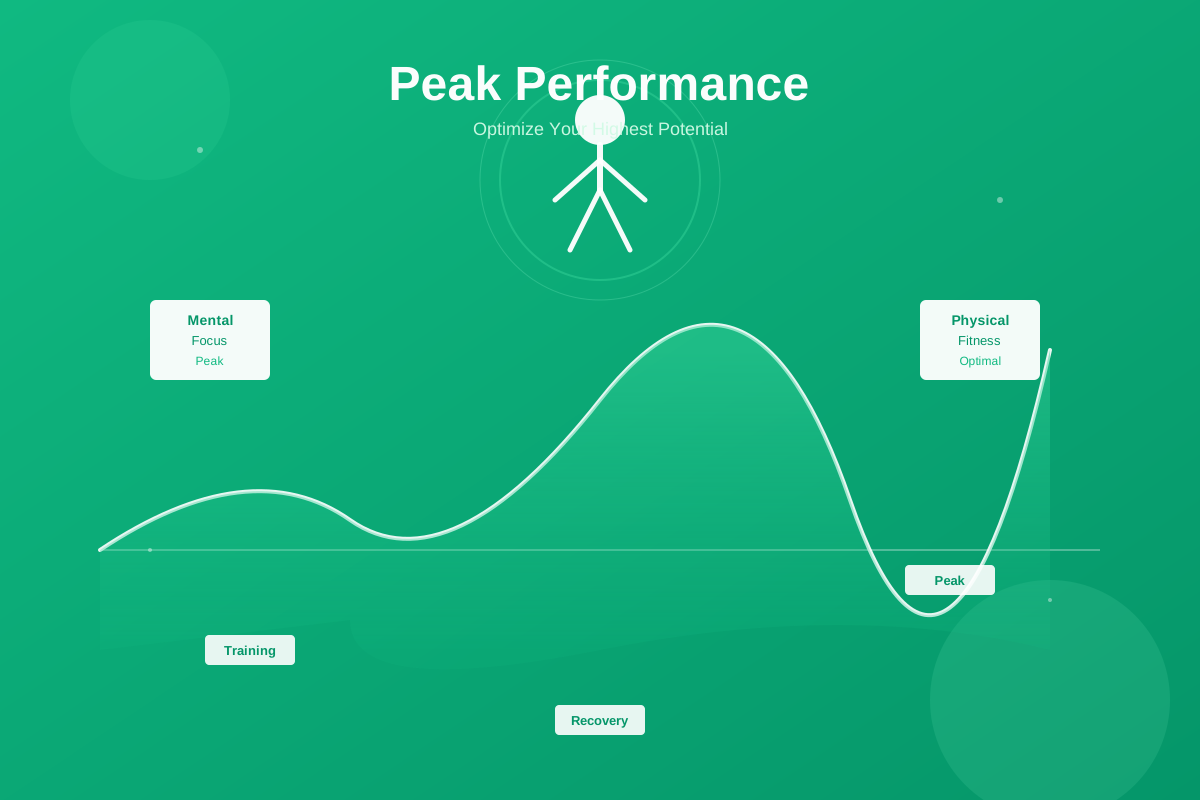
This guide reveals how top performers achieve their greatest moments and sustain excellence over their careers.
Discover the hidden leverage point that separates athletes who reach their potential from those who plateau.
What Is Peak Performance?
Peak performance is the state where you operate at your highest level—combining maximal strength, speed, technical skill, and mental clarity. It's the moment when an athlete breaks a personal record, a musician delivers a flawless concert, or a professional makes a breakthrough in their field. This state emerges from the alignment of three core systems: physical preparation through targeted training, mental readiness through visualization and self-talk, and emotional resilience through stress management and recovery.
Not medical advice.
Peak performance differs from merely working hard. You can train intensely for years without reaching peak states if recovery, periodization, and mental skills aren't prioritized equally. The science shows that peak performance follows a predictable pattern: isolate the capability you want to grow, stress it through strategic training, recover fully to allow adaptation, then repeat with slightly greater demand. This cycle—stress plus recovery equals growth—is the foundation of sustainable peak performance.
The distinction between ordinary effort and peak performance often surprises people. Many athletes and professionals work with maximum intensity continuously, assuming this directly translates to better results. However, the nervous system, muscular system, and hormonal system all require recovery periods to actually adapt and improve. Someone training at 80% intensity with perfect recovery often outperforms someone training at maximum intensity with insufficient recovery. The peak performer is not necessarily the one working hardest—they're the one who has mastered the stress-recovery cycle.
Surprising Insight: Surprising Insight: Elite athletes often reduce training volume before major competitions, prioritizing recovery over additional practice. This strategic decrease in stress allows the nervous system to consolidate gains and reach genuine peak states.
The Peak Performance Cycle
How stress, recovery, and adaptation create sustainable peak performance
🔍 Click to enlarge
Why Peak Performance Matters in 2026
In an era of increasing competition and shorter attention spans, the ability to perform at your highest level when it matters most has become a genuine advantage. Whether competing in sports, advancing a career, or building a business, peak performance separates those who achieve their potential from those who remain average. The stakes are higher, the windows of opportunity shorter, and the margin between success and mediocrity smaller.
Beyond competitive advantage, peak performance protects your long-term wellbeing. Athletes and professionals who understand peak performance principles experience fewer injuries, lower burnout rates, and longer careers. By building recovery into your system from the beginning, you're not sacrificing performance—you're protecting it. Peak performers also report higher life satisfaction because they experience genuine accomplishment rather than just activity.
The modern performance challenge isn't lack of effort—most people work harder than ever. The real challenge is working smarter through understanding the science of how excellence actually happens. This knowledge gap explains why some reach their potential while others plateau despite equal effort.
The Science Behind Peak Performance
Peak performance emerges from coordinated changes in your nervous system, hormonal balance, and brain chemistry. When you engage in focused training with appropriate intensity and duration, you create microscopic damage to muscle fibers and neural pathways. This damage triggers an adaptation response—your body rebuilds these systems stronger and more efficient. However, this rebuilding only happens during recovery periods, particularly during sleep and low-intensity activity.
The neurochemistry of peak states involves multiple neurotransmitters working in concert. When fully immersed in challenging activity that matches your skill level, your brain releases norepinephrine (enhancing focus), dopamine (enabling faster learning), anandamide (the bliss molecule), serotonin (mood regulation), and endorphins (pain relief and euphoria). This cascade creates the sensation of being 'in the zone'—the psychological state that characterizes peak performance. Research shows that individuals in flow states experience enhanced neural efficiency, better decision-making, and dramatically improved performance outcomes.
Understanding the neurochemical basis of peak performance reveals why traditional training methods often miss the mark. You can build exceptional physical fitness without developing the mental state that enables peak performance. Conversely, you can achieve flow states that feel excellent but don't translate to actual performance improvement without proper physical preparation. The complete peak performance formula requires developing both the physical substrate and the neurochemical state simultaneously. This is why championship athletes often work with sports psychologists alongside strength coaches—each addresses a different but equally critical component.
The brain also exhibits structural changes in response to peak performance training. Repeated practice that leads to automaticity—performing complex movements without conscious thought—involves myelination, a process where the neural pathways controlling those movements become insulated with myelin, increasing signal speed and efficiency. This explains why deliberate practice produces different neural adaptations than casual repetition. The expert musician's brain shows measurable structural differences in motor cortex regions controlling their instrument. Similarly, elite athletes show structural brain differences in regions controlling sport-specific movements and decision-making.
Neurochemistry of Peak Performance
How different brain chemicals create the optimal mental state for peak performance
🔍 Click to enlarge
Key Components of Peak Performance
Periodized Training Structure
Peak performance cannot be sustained indefinitely—attempting to do so causes overtraining and burnout. Instead, elite athletes organize their training into cycles: off-season (building strength and addressing weaknesses), pre-season (developing sport-specific power and skills), in-season (maintaining gains while prioritizing performance), and competition (tapering to reach peak states). This periodization prevents adaptation plateaus where your body stops improving because training stimulus remains unchanged. By strategically varying training intensity, volume, and focus, you continue creating the growth stimulus necessary for continuous improvement. The structured recovery periods also prevent the accumulated fatigue that degrades both performance and immunity.
The off-season phase focuses on building the physical foundation for peak performance. This typically involves higher training volumes with moderate intensity, allowing you to accumulate the training stress that drives adaptation. Off-season training emphasizes strength development, addressing movement imbalances, building work capacity, and developing motor patterns for sport-specific skills. The off-season is when you fix the problems that limit peak performance—a tennis player might focus on shoulder stability, a runner on core strength, a swimmer on hip mobility. By addressing these limitations when competition doesn't demand immediate performance, you enter competition periods with fewer limitations.
The pre-season phase transitions training focus toward sport-specific demands. Strength gains from off-season training are converted into sport-specific power through explosive movements and high-intensity intervals. Technical skill work increases, and competitive strategies are introduced in training scenarios. Training volume typically decreases while intensity increases, allowing adequate recovery for high-quality skill work. By the end of pre-season, your nervous system has adapted to the specific demands of your sport, and your body is primed to perform at high levels.
Mental Training & Visualization
Your brain cannot distinguish between vivid mental rehearsal and actual physical practice—both activate the same neural pathways. Elite performers use visualization to mentally rehearse successful performances, preparing their nervous system to execute under pressure. When you visualize competing in an important competition and see yourself performing successfully, you're literally strengthening the neural pathways you'll activate during the real competition. This mental preparation reduces anxiety, increases confidence, and improves actual performance. Combined with positive self-talk strategies, visualization creates the emotional readiness necessary for peak performance.
Strategic Recovery & Rest
The performance paradox is that peak results emerge more from what you do during rest than from training itself. During sleep and low-intensity recovery activities, your nervous system consolidates motor learning, your muscles rebuild stronger than before, and your hormonal systems rebalance. Without adequate recovery, even the best training stimulus produces diminishing returns. Elite athletes often follow months of intense training with mandatory recovery weeks where training volume drops dramatically. This seems counterintuitive—how can training less improve performance? The answer is that recovery weeks allow your nervous system to adapt to accumulated training stress, preventing the overtraining symptoms that degrade performance.
Sleep is the primary recovery mechanism for peak performance. During sleep, particularly during deep sleep stages, your brain consolidates the motor learning from training sessions, converting practice into automatic execution. The default mode network in your brain activates during sleep, processing the day's experiences and integrating them into long-term memory. Growth hormone, released primarily during deep sleep, drives muscle repair and adaptation. Sleep deprivation impairs all aspects of performance: reaction time decreases, decision-making quality declines, emotional regulation worsens, and immune function suppresses. Elite athletes treat sleep as seriously as training, often targeting 8-10 hours nightly during heavy training phases. Many use sleep tracking to optimize sleep quality through consistent bedtime schedules, cool dark sleeping environments, and evening routine practices that support sleep onset.
Beyond sleep, active recovery days maintain the training habit while allowing physiological recovery. Easy-paced activities like walking, swimming, cycling, or yoga on recovery days keep the body moving without creating significant training stress. This maintains cardiovascular fitness and mental engagement while allowing neural and muscular recovery. Athletes often alternate hard days with easy days—a structure called polarized training where most training is either high intensity or very low intensity, with little moderate intensity. Research shows this structure produces better adaptations than consistently moderate-intensity training.
Nutritional Optimization
Your nutrition directly influences whether you're in a state that enables peak performance or one that limits it. Complex carbohydrates provide sustained energy for extended training, protein supports muscle repair and recovery, and healthy fats regulate hormonal function. Micronutrient deficiencies—in iron, zinc, magnesium, or B vitamins—impair energy production and recovery even if calorie and macronutrient intake appear adequate. Hydration status dramatically affects thermoregulation, cognitive function, and physical performance. Many athletes and professionals achieve significant performance gains simply by addressing previously undetected nutritional gaps rather than through additional training.
Timing of nutrition relative to training creates additional performance leverage. Carbohydrates consumed 1-2 hours before training provide fuel and improve performance in intense sessions. Protein consumed within 30-60 minutes after training optimizes muscle protein synthesis during the recovery window when muscles are primed to rebuild. During extended training lasting over 90 minutes, consuming carbohydrates during the session (sports drinks, gels, or whole food) maintains performance and reduces the recovery demands of that session. The interplay between training demands and nutritional timing means that the same athlete eating the same total nutrition might experience different adaptation if meal timing doesn't align with training demands.
Hydration deserves specific attention because performance degradation from dehydration appears at relatively small fluid losses. A 2% reduction in body weight through fluid loss impairs both physical and cognitive performance. Athletes often fail to drink enough during training because thirst mechanisms lag behind actual fluid needs. Practical hydration strategies involve drinking on a schedule during longer activities—perhaps 150-250ml every 15-20 minutes—rather than relying on thirst cues. The ideal hydration approach varies by individual, climate, and exercise intensity, making individual experimentation during training (not competition) valuable.
| Phase | Duration | Focus |
|---|---|---|
| Off-Season | 6-8 weeks | Strength building, weakness correction |
| Pre-Season | 6-8 weeks | Sport-specific power, skill refinement |
| In-Season | Variable | Maintaining gains, competition priority |
| Taper | 2-3 weeks | Reducing volume while maintaining intensity, reaching peak state |
How to Apply Peak Performance: Step by Step
- Step 1: Assess your current capabilities honestly by testing your baseline performance in key areas—maximum strength, speed, endurance, technical skills, and mental focus. This creates a reference point for measuring progress and identifying your highest-leverage improvement areas. Baseline testing should be done when well-rested and in good health to represent true current capacity rather than a fatigued state.
- Step 2: Design a periodized training plan that includes distinct phases: off-season (building), pre-season (sharpening), in-season (maintaining), and taper (peaking). This structure prevents adaptation plateaus and ensures you peak at the right time. The specific duration of each phase depends on your sport or domain and your individual adaptation rate.
- Step 3: Identify your mental barriers through honest reflection or working with a sports psychologist. Common barriers include fear of failure, perfectionism, distraction under pressure, or lack of confidence. Addressing these barriers is often the highest-leverage performance improvement. Many athletes find that technical breakthroughs come after mental breakthroughs.
- Step 4: Develop a pre-performance routine that activates your optimal mental state. This might include specific breathing patterns, visualization, music, or physical warm-up sequences. This routine signals your nervous system to access peak performance states on demand. The routine doesn't need to be lengthy—even 5-10 minutes of consistent pre-performance practice can dramatically improve consistency under pressure.
- Step 5: Implement strategic recovery practices including sleep optimization (7-9 hours minimum), active recovery (light movement on rest days), nutrition timing (protein within 30-60 minutes of training), and stress management (meditation, breathing techniques). Recovery is not optional for peak performance. Consider sleep quality as important as sleep duration—consistent sleep schedule, cool dark bedroom, and limited screen time in the hour before bed all support recovery.
- Step 6: Track multiple performance indicators, not just the primary outcome. Monitor training quality, sleep quality, appetite, mood, resting heart rate, and perceived exertion. These data points reveal overtraining before it degrades performance. Overtraining is much easier to prevent than to recover from.
- Step 7: Conduct weekly performance reviews to assess what's working and adjust the plan accordingly. Peak performance requires continuous refinement—what worked last month may need adjustment based on current stress levels and adaptation responses. Keep a simple training journal noting not just what you did but how you felt, sleep quality, and perceived readiness.
- Step 8: Build psychological resilience through graduated stress exposure. Practice performing under pressure in training, master stress management techniques, and develop a growth mindset that views setbacks as information rather than failures. The athletes who perform best under pressure are typically those who've deliberately practiced performing under pressure rather than avoided it.
- Step 9: Schedule mandatory recovery weeks where training volume drops to 50% of normal. Research shows these strategic recovery periods dramatically accelerate adaptation and prevent the overtraining that stops progress. Recovery weeks feel uncomfortable to many—they fear losing fitness—but adaptation actually accelerates during recovery periods.
- Step 10: Test your peak performance state in progressively important competitions or challenges. This prevents surprises in truly critical moments and reveals which aspects of your preparation need strengthening. Competitive practice creates nervous system adaptations that training alone cannot develop.
Peak Performance Across Life Stages
Young Adulthood (18-35)
This stage offers maximum physical capacity but often lacks the mental discipline and long-term perspective needed for sustained peak performance. Young performers frequently sacrifice recovery for additional training, believing more effort always equals better results. The highest-leverage activity at this stage is developing proper training fundamentals and mental skills that will prevent injuries and ensure longevity. Establishing sleep habits, learning stress management, and understanding periodization early creates massive advantages over competitors who neglect these foundations.
Young adults possess rapid adaptation capacity—their nervous systems, muscular systems, and recovery mechanisms are at optimal responsiveness. This is the ideal time to build the movement patterns, technical skills, and mental habits that will support peak performance throughout life. Many young performers focus exclusively on competition, neglecting the foundational development that enables sustained excellence. An elite athlete at 22 who hasn't addressed a movement pattern limitation is setting up future injury risk and limiting their highest potential. The wise young performer uses their decade of higher capacity to develop not just current performance but the resilience and fundamentals supporting long-term excellence. This includes establishing sleep consistency, learning to recognize overtraining signals, and developing patience with periodization rather than always pushing maximum intensity.
Middle Adulthood (35-55)
This stage brings competing demands from career and family that make peak performance more challenging but more valuable. Middle-aged performers often achieve their greatest accomplishments because they combine physical capacity with accumulated experience and mental maturity. The key is recognizing that peak performance requires deliberate prioritization—you cannot perform optimally while neglecting sleep, nutrition, and recovery to pursue other demands. Many successful professionals at this stage schedule training like business meetings, treating it as non-negotiable.
Middle-aged athletes often report that while their recovery capacity has declined compared to their youth, their mental training effectiveness has increased dramatically. They know their body's signals better, understand what recovery methods work personally, and have the experience to execute strategies consistently. Some research suggests that middle-aged athletes with consistent training and deliberate recovery practices can achieve performance improvements comparable to younger athletes, though the total volume of training typically needs to decrease. The priorities shift from chasing absolute performance records to optimizing health, managing competing life demands, and finding the most efficient training approaches that fit busy schedules while still enabling peak performance in specific competitions.
Later Adulthood (55+)
Peak performance in later adulthood emphasizes quality over quantity. While absolute performance capacity declines, research shows that older adults who maintain consistent training, prioritize mobility and injury prevention, and optimize recovery can achieve remarkable performance in their age group. The focus shifts from breaking absolute records to achieving personal bests and maintaining the physical vitality that enables an active lifestyle. Mental skills become even more valuable—experience, focus, and emotional regulation often compensate for reduced physical capacity.
The performance strategy for older adults centers on maintaining the physical systems supporting activity rather than building new capacity. Mobility work and injury prevention become more important than pushing absolute strength or speed limits. The neurological efficiency developed through decades of practice becomes the performance asset—older performers often execute complex movements with less apparent effort because their nervous systems have optimized the motor patterns. Some older athletes report that they've never performed better technically despite lower absolute power. The strategic priority becomes preventing the gradual decline that comes with inactivity while avoiding the overtraining that causes injury in aging bodies. Many older performers focus on sustainable training approaches that can continue indefinitely, prioritizing longevity and health alongside performance.
Profiles: Your Peak Performance Approach
The Ambitious Overthinker
- Permission to rest and recover without guilt
- Clear metrics to trust recovery is working
- Understanding that rest is part of training
Common pitfall: Believes more training always equals better results, fears detraining during recovery phases, resists periodization
Best move: Schedule mandatory recovery weeks and measure how performance improves after tapering. This experiential evidence shifts belief systems faster than logic alone.
The Naturally Talented Coaster
- Bigger challenges to prevent boredom
- Competition structures that matter
- Focus on weaknesses rather than strengths
Common pitfall: Relies on natural ability without developing mental toughness or addressing technical gaps, hits performance ceiling
Best move: Deliberately seek competitive situations where current abilities aren't sufficient, forcing genuine growth rather than coasting on talent.
The Inconsistent Performer
- Simpler training plans that don't require constant variation
- Clear daily routines and pre-performance rituals
- Accountability structures
Common pitfall: Constantly changes approaches without giving any plan enough time to work, attributes inconsistency to bad luck rather than execution
Best move: Commit to a 12-week training block without major changes. Consistency typically outperforms perfection in program design.
The Mentally Intimidated Athlete
- Graduated pressure exposure in training
- Mental skills training and visualization practice
- Support from coaches or psychologists experienced with mental performance
Common pitfall: Avoids competitive situations or high-pressure training because anxiety is uncomfortable, never develops mental toughness
Best move: Deliberately practice performing under pressure in training where mistakes don't matter. This builds the emotional resilience needed for peak performance.
Common Peak Performance Mistakes
The most common peak performance mistake is insufficient recovery. Many performers, especially in early career stages, believe that training more, longer, and harder automatically produces better results. Research consistently shows that this approach leads to overtraining, increased injury risk, performance plateaus, and eventual burnout. Elite performers distinguish themselves not by training harder but by recovering smarter.
A second critical mistake is neglecting mental training while emphasizing physical preparation. You can have optimal physical conditioning but fail under pressure if you haven't trained your mind to manage stress, maintain focus, and execute under emotional intensity. Mental skills training—visualization, self-talk, breathing techniques, stress inoculation—are as trainable as physical conditioning and deserve equal preparation time.
The third major mistake is pursuing peak performance constantly rather than strategically. Peak states are physiologically demanding and cannot be sustained indefinitely. Attempting to peak year-round leads to chronic stress, depression of immune function, and eventual performance decline. Elite strategies involve peaking strategically for important competitions while accepting that other times will involve recovery phases.
A fourth mistake often overlooked is insufficient mental training relative to physical training. Many athletes dedicate 90% of their preparation to physical conditioning and only 10% to mental skills. Research suggests this ratio should be roughly reversed for athletes competing at high levels where physical capabilities are relatively equal among competitors. The mental advantages—focus under pressure, emotional regulation, confidence, resilience—often determine outcomes when physical fitness is similar. Developing mental skills requires similar deliberate practice as developing physical skills. You don't develop peak mental performance by assuming it will automatically follow physical training.
Another significant mistake is comparing your performance with others rather than tracking your own progress. This external comparison creates anxiety and shifts focus from controllable factors to external outcomes. Peak performance comes from focusing on the preparation process—executing your training plan, recovering adequately, developing mental skills, perfecting technique—rather than comparing yourself to competitors. The paradox is that focusing entirely on your preparation while accepting competitive outcomes as data points typically produces better competitive results than obsessing over how you compare to rivals.
Common Performance Pitfalls & Solutions
How to avoid the mistakes that stop peak performance progress
🔍 Click to enlarge
Science and Studies
Peak performance research comes from sports psychology, neuroscience, and exercise physiology. Studies consistently show that the stress-recovery-adaptation cycle drives all performance improvement, that flow states involve specific neurochemical changes that enhance learning and performance, and that mental training produces measurable performance improvements comparable to physical training. The research also demonstrates that overtraining reduces performance and increases injury risk, making recovery not optional but essential to success.
One significant research finding shows that the heart rate variability (HRV)—the variation in time intervals between heartbeats—correlates strongly with recovery status and readiness for high-intensity training. Athletes with high HRV typically have better parasympathetic nervous system tone, indicating the body is in a recovered state ready for training stress. Morning HRV measurements can guide daily training decisions—high HRV suggests capacity for intense training, while low HRV suggests a recovery day is appropriate. This individual, real-time metric provides a more accurate guide to recovery status than generic 'rest day' schedules.
Research on circadian rhythms reveals that performance capacity varies predictably throughout the day. Most people show peak physical strength and power in the late afternoon (2-6 pm), while cognitive function peaks in the morning. Temperature regulation and coordination also show circadian patterns. Elite athletes strategically train during their predicted peak times for key qualities—strength training in afternoon, technical skill work when mentally fresh. Additionally, sleep timing relative to training matters; learning consolidation during sleep after training produces better skill acquisition than learning without subsequent sleep.
- Frontiers in Psychology (2024): Research on professional dancers identified that peak performance involves coordinated physiological, technical, cognitive, and emotional factors, with cognitive development and automatic execution of complex movements as critical components
- Flow research: Engineers in flow states are 2-5x more productive, with neurochemical cascades (norepinephrine, dopamine, anandamide, serotonin, endorphins) enhancing focus, learning, and innovation
- Periodization studies: Athletic training organized into distinct phases (off-season, pre-season, in-season, taper) prevents adaptation plateaus and optimizes peak timing better than constant training
- Recovery science: Elite athletes often reduce training volume before major competitions, allowing nervous system recovery and reaching genuine peak states better than those who train through taper periods
- Mental training research: Visualization and imagery activate the same neural pathways as physical practice, making mental rehearsal an evidence-based performance enhancement strategy
Your First Micro Habit
Start Small Today
Today's action: This week, add one complete recovery day where you do no structured training—just light walking, stretching, or rest. Notice how you feel the next day and compare your performance in training. This single experiment often shifts beliefs about the importance of recovery.
Most people underestimate recovery's impact because they've never experienced genuinely complete recovery. One week isn't enough to draw firm conclusions, but the immediate performance improvement typically makes the recovery case clearer than any research study.
Track your training and recovery with our app to see how recovery days correlate with better performance in subsequent training sessions.
Quick Assessment
How much of your training focus currently goes to recovery compared to training intensity?
Your ratio of training to recovery effort directly predicts your long-term peak performance trajectory. Elite performers treat recovery as seriously as training itself.
Under high-pressure performance situations, what happens to your execution quality?
Mental toughness under pressure is trainable through graduated stress exposure. Those who accept occasional high-pressure situations develop resilience; those who avoid them remain vulnerable.
How satisfied are you with your current performance level relative to your potential?
Honest assessment of your performance gap guides where to focus your development efforts. Those in stages one and two typically have quick wins through fundamentals; those in stage four are optimizing details.
Take our full assessment to get personalized recommendations for your peak performance journey.
Discover Your Style →Building Your Peak Performance Foundation
Peak performance doesn't emerge from random effort—it requires a systematic foundation. Start by establishing the non-negotiable basics: consistent sleep schedule (same bedtime and wake time even on weekends), basic nutritional consistency (not perfection, but reliable choices), and regular structured training with clear objectives. These foundations sound simple but create massive advantages over people who treat sleep, nutrition, and training inconsistently. Once foundational consistency is established, layer in periodization, mental training, and recovery optimization. Most people try to implement everything simultaneously and fail. Starting with consistency, then adding structure, then optimizing detail produces far better results.
Measurement and tracking enable peak performance in ways that intuition alone cannot. Simple metrics—how long it took to fall asleep, how you felt upon waking, training session quality rating, appetite, mood—provide data revealing patterns invisible to intuition. Athletes often discover through tracking that their worst performances follow particular sleep patterns or that they need 48 hours recovery after specific training types. These individual patterns can only emerge from personal tracking data. You don't need complex technology—a simple daily rating of sleep quality (1-10), training quality (1-10), and readiness (1-10) provides powerful data.
The progression of peak performance competence typically follows a predictable pattern. Initial performers focus entirely on training intensity, believing harder equals better. Intermediate performers discover periodization and recovery, leading to performance improvements from smarter structure. Advanced performers optimize the details—individual recovery methods, circadian timing of training, specific mental techniques—recognizing that small advantages accumulate. Elite performers operate at a different level entirely, where tiny changes in marginal factors accumulate into significant advantages. The progression from beginner to elite takes years of consistent practice with increasingly sophisticated understanding.
Next Steps
Peak performance isn't something that happens by accident—it's the result of systematic application of evidence-based principles combined with honest self-assessment and willingness to adjust your approach based on results. Start by honestly evaluating which of the key components (periodization, mental training, recovery, nutrition) is your current weakness. That weakness is typically where your highest-leverage improvement lies.
Consider connecting with a coach, sports psychologist, or nutritionist who specializes in peak performance. The cost of professional guidance is often less than the cost of years spent training inefficiently. Even a brief consultation can identify gaps in your approach that take months to discover through trial and error.
Get personalized guidance with AI coaching to develop your peak performance approach.
Start Your Journey →Performance imagery has a real evidence base. Here is what carries over to vision boards and what is marketing.
Imagery and performance →Research Sources
This article is based on peer-reviewed research and authoritative sources. Below are the key references we consulted:
Related Glossary Articles
Frequently Asked Questions
Can I achieve peak performance without a coach?
Yes, though coaching accelerates progress by providing outside perspective and accountability. Many athletes achieve peak performance through self-directed training if they're disciplined about periodization, recovery, and honest performance assessment. Working with a coach becomes increasingly valuable as you approach elite levels where small details matter significantly.
How long does it take to reach peak performance?
This depends on your starting point and goals. Meaningful performance improvements typically appear within 12 weeks of consistent training using proper periodization. Peak performance in a specific competition typically requires 12-24 weeks of focused preparation. Building a sustained peak performance approach takes years as you develop the mental skills, understand your individual physiology, and learn what recovery methods work best for you.
Can women and men follow the same peak performance strategies?
The fundamental principles are identical—periodization, recovery, mental training, and nutrition work for all. However, hormonal cycles affect women's training and recovery differently than men's, particularly regarding energy levels, protein needs, and optimal training intensity through different cycle phases. Working with coaches who understand these sex-specific factors allows women to optimize their approach.
What if I plateau despite following this approach?
Performance plateaus signal that your training stimulus is no longer creating adaptation. Solutions include increasing training intensity (but carefully to avoid injury), changing exercise selection to stress the body differently, increasing training volume, or—counterintuitively—adding more recovery to allow accumulated fatigue to resolve. Often the solution is a longer recovery phase followed by returning to training with renewed stimulus. Plateaus typically last 2-6 weeks if you adjust the stimulus appropriately.
Should I use supplements to enhance peak performance?
Most performance gains come from training, recovery, and nutrition fundamentals rather than supplements. If these fundamentals are solid, specific supplements supported by research (like creatine monohydrate, caffeine, beta-alanine, or beta-hydroxy-beta-methylbutyrate) offer modest additional benefits. However, optimizing sleep, nutrition timing, and training structure typically produces more dramatic improvements than supplement additions. Focus on fundamentals first, then consider evidence-based supplementation only if your foundation is solid.
Can I achieve peak performance with limited time for training?
Yes, time-limited athletes often achieve excellent results through strategic training design. Lower training volume combined with higher intensity and perfect recovery often produces better results than higher volume with mediocre recovery. Many busy professionals perform exceptionally by training 4-5 times weekly at high intensity with excellent recovery practices rather than training 6-7 times at moderate intensity. The key is making every training session high quality and protecting recovery time equally.
How do I know if I'm overtraining?
Overtraining symptoms include elevated resting heart rate (5+ beats above baseline), decreased performance despite increased training, persistent fatigue, mood disturbances (irritability, depression), sleep disruption despite extra sleep attempts, increased injury risk, and suppressed appetite. The solution is immediate reduction in training volume and intensity combined with increased recovery emphasis until these symptoms resolve.
Take the Next Step
Ready to improve your wellbeing? Take our free assessment to get personalized recommendations based on your unique situation.
- Discover your strengths and gaps
- Get personalized quick wins
- Track your progress over time
- Evidence-based strategies