Sleep Architecture
Every night, your brain orchestrates a complex symphony of electrical activity, cycling through distinct stages of sleep that determine how rested you feel in the morning. Sleep architecture—the structural organization of sleep stages and cycles—is the invisible framework that separates shallow, fragmented rest from deep, restorative sleep. Understanding what happens during each 90-minute cycle reveals why some mornings you wake refreshed and others you feel sluggish despite eight hours in bed. This journey through NREM and REM sleep isn't random chaos; it's a precisely timed biological ballet that your body has perfected over millions of years of evolution.
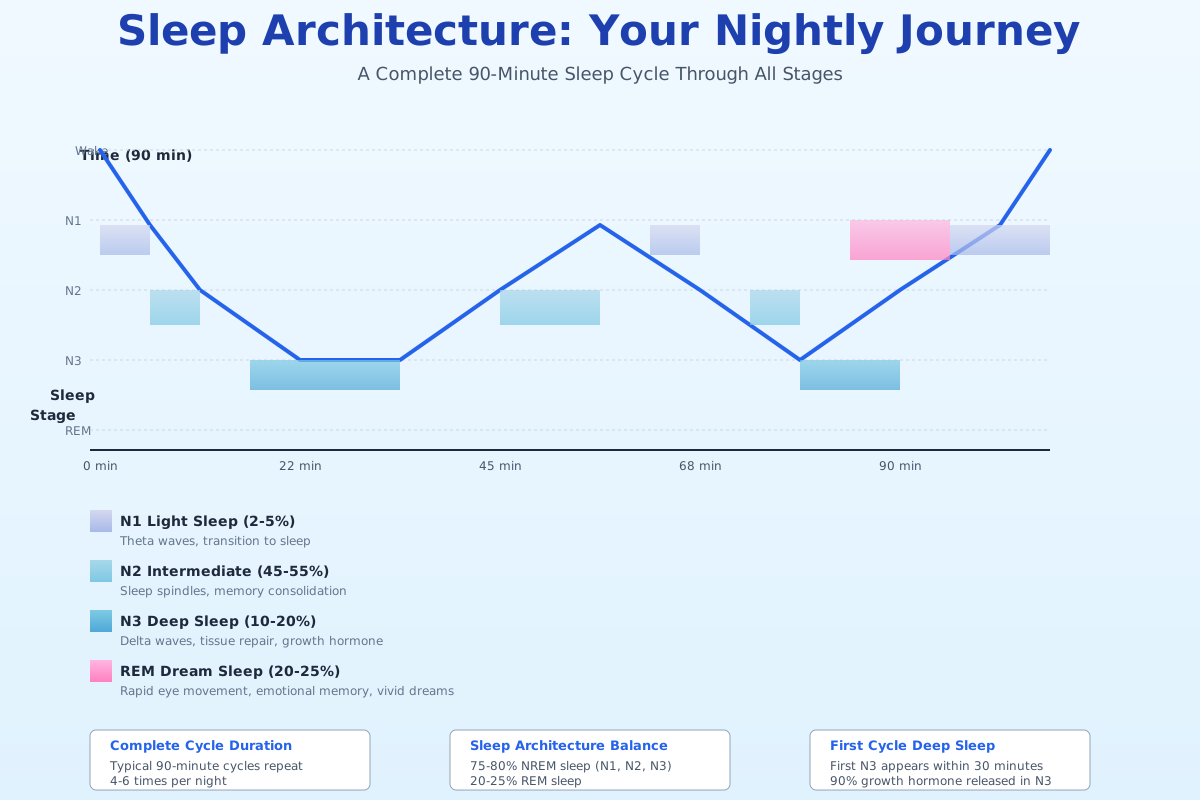
Most adults spend 75–80% of sleep in NREM stages (N1, N2, N3) where physical repair and memory consolidation happen, while 20–25% unfolds in REM sleep—when vivid dreams occur and emotional memories are processed.
Your sleep cycles repeat approximately every 90 minutes, with earlier cycles favoring deep sleep (N3) and later cycles shifting toward longer REM periods—why the last two hours of sleep are often your most dream-intensive.
What Is Sleep Architecture?
Sleep architecture refers to the basic structural organization of sleep—the pattern and sequence of sleep stages that occur throughout a full night's rest. Think of it as the blueprint of your sleep, showing not just how long you sleep, but the quality and balance of each stage. Your brain doesn't simply 'turn off' for eight hours; instead, it cycles through five distinct stages: N1 (light sleep), N2 (intermediate sleep), N3 (deep sleep), back to N2, and then REM sleep (rapid eye movement), before repeating the entire cycle four to six times per night.
Not medical advice.
Sleep architecture is measured using electroencephalography (EEG)—sensors placed on the scalp that detect electrical brain wave patterns unique to each stage. Each stage has its own frequency: theta waves (4–7 Hz) in N1, sleep spindles (11–16 Hz) in N2, and slow delta waves (0.1–4 Hz) in N3 deep sleep. REM sleep shows rapid, low-amplitude waves resembling wakefulness, yet your muscles are temporarily paralyzed—a protective mechanism ensuring you don't act out your dreams.
Surprising Insight: Surprising Insight: Waking briefly between sleep cycles is completely normal. Most people have 10–15 micro-awakenings per hour, yet remember none of them because the brain smooths these moments into continuous sleep perception.
The Sleep Cycle: From Light Sleep to Deep Sleep to Dreams
A visual representation of a single 90-minute sleep cycle showing the progression from N1 through N3 and into REM sleep, with EEG wave patterns for each stage.
🔍 Click to enlarge
Why Sleep Architecture Matters in 2026
In an era when sleep trackers proliferate and people obsess over eight-hour minimums, sleep architecture reveals the uncomfortable truth: hours slept matters far less than stages achieved. A person who cycles through complete NREM-REM sequences may feel more recovered after six hours than someone who sleeps eight hours of fragmented, shallow sleep. With chronic sleep deprivation affecting 35% of adults globally, understanding architecture is the difference between generic sleep advice and truly restorative rest.
Poor sleep architecture—skipping or cutting short deep sleep and REM—accelerates aging at the cellular level, weakens immunity against viral infections, and increases risk of metabolic disease, depression, and cognitive decline. People working irregular shift schedules, traveling across time zones, or dealing with untreated sleep apnea often show fragmented architecture with excessive N1, insufficient N3, and compressed REM periods.
Monitoring your sleep architecture through consumer wearables (though less precise than clinical EEG) has become mainstream, empowering people to see which habits—caffeine timing, exercise windows, bedroom temperature—improve their stage distribution. This data-driven awareness is reshaping how we approach sleep not as a fixed block of time, but as a dynamic process requiring intentional optimization.
The Science Behind Sleep Architecture
Sleep architecture is governed by two competing biological systems: the homeostatic drive (your brain's need for sleep after wakefulness builds up adenosine) and the circadian rhythm (your internal 24-hour clock regulated by light exposure and the hormone melatonin). The suprachiasmatic nucleus (SCN), a cluster of 20,000 neurons in the hypothalamus, receives light information from specialized retinal cells and coordinates your sleep-wake cycle, while the pineal gland secretes melatonin to signal sleep readiness to your brainstem.
As you fall asleep, your brain's electrical activity slows from fast beta waves (15–30 Hz) during wakefulness to theta waves. Your first N3 deep sleep period appears within the first 30 minutes—this is when 90% of your nightly growth hormone is released, enabling tissue repair, bone remodeling, and immune strengthening. Later in the night, as your homeostatic sleep pressure decreases, deep sleep shortens and REM lengthens. Each 90-minute cycle is progressively lighter in deep sleep but progressively richer in REM, which is why the final cycles—around 6–8 AM—are your most dream-intensive.
Brain Wave Patterns Across Sleep Stages
EEG waveforms showing the distinct electrical signatures of each sleep stage: wakefulness, N1, N2 (with sleep spindles and K-complexes), N3 delta waves, and REM.
🔍 Click to enlarge
Key Components of Sleep Architecture
NREM N1 Sleep: The Transition Stage
N1 is the brief gateway between wakefulness and sleep, typically lasting 2–5 minutes and accounting for just 2–5% of total sleep time. During this stage, your muscles begin to relax, your heart rate slows, and your brain transitions from alpha waves to theta waves. You may experience hypnic jerks—sudden muscle spasms—or the sensation of falling, which is your brain misinterpreting muscle relaxation signals. If you're awakened during N1, you might not even realize you'd fallen asleep, reporting instead that you were 'just thinking.' This stage is easily disrupted by noise or light, making it a fragile entry point into true sleep.
NREM N2 Sleep: The Intermediate Stage
N2 is the workhorse of sleep, consuming 45–55% of your total sleep duration and appearing multiple times throughout the night. This stage is defined by two EEG signatures: sleep spindles (bursts of rapid brain activity at 11–16 Hz) and K-complexes (sudden spikes in electrical activity). Sleep spindles are crucial for memory consolidation—they help transfer procedural memories (how to play tennis, type on a keyboard) into long-term storage. Your core body temperature continues dropping, your breathing becomes regular, and external stimuli that would have woken you in N1 now require louder or more persistent signals. N2 occupies the period just before deep sleep and reappears after each N3 bout, acting as a buffer stage.
NREM N3 Sleep: Deep Restorative Sleep
N3, also called slow-wave sleep (SWS), is the crown jewel of sleep architecture—the stage where most physical recovery happens. Characterized by dominant delta waves (0.1–4 Hz) with high amplitude, N3 typically occupies 10–20% of total sleep and is most abundant in the first third of the night. During N3, your body is flooded with growth hormone, enabling tissue repair, bone strengthening, and immune system restoration. You're nearly impossible to wake—it takes sounds louder than 100 decibels to rouse someone in deep sleep—and if you're awakened, you'll experience 'sleep inertia,' a disoriented, foggy sensation lasting minutes. Children have higher percentages of N3 than adults, partly explaining why they need more sleep for optimal growth.
REM Sleep: Dream Processing and Emotional Health
REM (Rapid Eye Movement) sleep comprises 20–25% of sleep and becomes progressively longer and richer as the night advances. Your brain shows electrical activity similar to wakefulness, your eyes dart rapidly side to side (hence the name), yet your voluntary muscles are almost completely paralyzed—a phenomenon called REM atonia that prevents you from acting out dreams. During REM, vivid, often bizarre dreams occur as your brain consolidates emotional memories, processes psychological experiences, and strengthens neuroplasticity (the brain's ability to rewire itself). REM deprivation impairs emotional regulation, increases anxiety and depression risk, and slows learning. This is why the final REM periods of early morning—when some people naturally wake—are so crucial for emotional resilience.
| Sleep Stage | % of Night | Brain Waves | Primary Function |
|---|---|---|---|
| N1 (Light) | 2-5% | Theta 4-7 Hz | Transition to sleep, habituation to stimuli |
| N2 (Intermediate) | 45-55% | Sleep spindles 11-16 Hz, K-complexes | Procedural memory consolidation, temperature regulation |
| N3 (Deep) | 10-20% | Delta 0.1-4 Hz (high amplitude) | Tissue repair, bone remodeling, growth hormone release, immune restoration |
| REM (Dream) | 20-25% | Beta/theta mixed (awake-like) | Emotional memory consolidation, neuroplasticity, mood regulation |
How to Apply Sleep Architecture: Step by Step
- Step 1: Track your current sleep pattern for one week using a sleep diary, noting when you go to bed, wake, and how rested you feel. This baseline reveals whether you're prioritizing sleep duration at the expense of architecture quality.
- Step 2: Protect your first 90 minutes of sleep by establishing a consistent bedtime 30 minutes earlier than usual. This allows your first cycle to include abundant N3 deep sleep when your homeostatic drive is strongest.
- Step 3: Cool your bedroom to 60–67°F (15–19°C) to facilitate the natural core body temperature drop required for sleep onset. Even one degree variation affects whether your brain transitions smoothly into N3 or stalls in N2.
- Step 4: Eliminate light exposure in the two hours before bed—dim your lights, use blue-light blocking glasses if using screens, and ensure your bedroom is completely dark. This allows melatonin to rise uninterrupted, improving sleep consolidation.
- Step 5: Time exercise to finish at least three hours before bed. Vigorous exercise raises core temperature; finishing too close to bedtime delays your temperature drop and truncates early deep sleep cycles.
- Step 6: Limit caffeine to before 2 PM, as caffeine has a half-life of five hours. A 200 mg dose at 4 PM leaves 100 mg in your system at 9 PM, blocking adenosine receptors and fragmenting your first cycle.
- Step 7: Avoid alcohol as a sleep aid, as it suppresses REM sleep in the first half of the night and causes fragmented, shallow sleep in the second half. You may fall asleep faster, but architecture suffers significantly.
- Step 8: Use your last REM periods—typically 6–8 AM—intentionally by staying in bed an extra 20 minutes if possible. This is when your brain consolidates the day's emotional experiences and solidifies learning.
- Step 9: If you nap, keep it under 30 minutes before 3 PM to avoid entering deep sleep, which would create sleep inertia and fragment your nighttime sleep drive.
- Step 10: Track one sleep quality metric weekly—either using a wearable that estimates stages or simply rating your morning alertness 1-10. Correlate this to the seven previous days' habits to discover your personal architecture optimization factors.
Sleep Architecture Across Life Stages
Young Adulthood (18-35)
Young adults typically have the most robust sleep architecture, with clear stage differentiation and easy transitions between cycles. However, this life stage is often marked by lifestyle factors that fragment architecture—irregular schedules, shift work, late-night socializing, high stress, and stimulant use. The prefrontal cortex, responsible for planning and delayed gratification, is still maturing, making it harder to prioritize sleep consistency. Young adults who establish strong sleep architecture habits now build a foundation for lifelong cognitive function and metabolic health.
Middle Adulthood (35-55)
Middle-aged adults often experience the first significant declines in sleep architecture: N3 deep sleep decreases by 10–15%, REM becomes more fragmented, and awakenings between cycles increase. Work pressures, caregiving responsibilities, hormonal shifts (perimenopause for women), and accumulated stress combine to create shallower overall sleep architecture. At this stage, deliberate intervention—regular exercise, consistency, environmental optimization—becomes essential to maintain the architecture quality of youth.
Later Adulthood (55+)
Aging naturally reshapes sleep architecture: N3 deep sleep may decline by 50% or more compared to young adulthood, and REM fragmentation increases. Older adults spend more time in N1 and N2, less in restorative deep sleep, and experience more frequent awakenings. Medical conditions (sleep apnea, restless leg syndrome), medications, and circadian rhythm changes further compound these shifts. However, maintaining consistency and addressing modifiable factors (sleep apnea screening, bedroom environment, daytime light exposure) can preserve considerable sleep architecture quality into later life.
Profiles: Your Sleep Architecture Approach
The Light Sleeper (Easily Awakened)
- White noise or earplugs to reduce stage disruption from external stimuli
- Blackout curtains to prevent light from pulling you from deep sleep back to N1
- A consistent sleep schedule to deepen architecture through entrainment
Common pitfall: Trying eight-hour sleep when six hours of perfect architecture serves better than fragmented eight hours.
Best move: Prioritize sleep environment optimization over duration. One week of perfect conditions reveals your true sleep architecture capacity.
The Shift Worker (Irregular Schedule)
- Strategic light exposure (bright light at shift start, darkness before bed) to align circadian rhythm with new schedule
- Consistent sleep location and routine, even if timing shifts, to preserve architecture despite schedule instability
- A nap strategy: 20-minute power naps before shifts or 90-minute naps to complete a full cycle
Common pitfall: Accepting fragmented architecture as inevitable without attempting circadian re-entrainment.
Best move: Use light exposure to gradually reset your circadian rhythm. Each four-day shift rotation, add 20-30 minutes of bright light exposure at your new 'wake time.'
The Anxious Sleeper (Racing Mind)
- Cognitive settling before bed: journaling worries, meditation, or body scan to transition from sympathetic to parasympathetic nervous system
- Temperature control to cool nervous system activation that prevents N1→N2 transition
- Consistent wake time even on weekends to strengthen circadian anchoring
Common pitfall: Assuming longer time in bed will compensate for racing mind; it typically increases anxiety.
Best move: Establish a 30-minute pre-sleep wind-down ritual that practices psychological settling. This reduces N1 duration and deepens subsequent stages.
The Performance Optimizer (Data-Driven)
- A wearable device tracking sleep stages to quantify architecture changes and correlate to habits
- Experimental tracking: testing caffeine timing, exercise windows, meals, and measuring architecture response
- A monthly review of metrics to identify personal patterns and optimize further
Common pitfall: Over-optimizing one variable (like temperature) while ignoring others (consistency, light), creating marginal gains.
Best move: Change one variable per week, measure for two weeks, then decide: keep, discard, or adjust. This evidence-based approach reveals your optimal architecture formula.
Common Sleep Architecture Mistakes
The most pervasive error is confusing sleep duration with sleep quality. Eight hours of fragmented sleep—interrupted by noise, light, or conscious awakenings—produces inferior architecture to six hours of uninterrupted, stage-rich sleep. People often resolve low energy by adding sleep duration rather than by optimizing what's happening during existing sleep.
A second major mistake is shifting sleep schedules dramatically on weekends ('social jet lag'). Sleeping until 10 AM on Saturday after waking at 6 AM all week doesn't let you 'catch up'—it desynchronizes your circadian rhythm, fragmenting architecture for the next three days. Consistent wake times, regardless of sleep quality, strengthen your biological clock.
Third, using alcohol or cannabis to 'help sleep faster' appears to work initially—you do fall asleep quickly—but architecture suffers dramatically: REM is suppressed in the first half of the night, then hyperactivates later causing fragmentation, sweating, and premature morning awakenings. The architecture quality drops so severely that despite longer time in bed, you wake less rested.
How Common Habits Degrade Sleep Architecture
A comparison diagram showing healthy sleep architecture versus fragmented architecture caused by caffeine, alcohol, irregular schedules, and poor sleep environment.
🔍 Click to enlarge
Science and Studies
Sleep architecture research spans decades of clinical sleep medicine, neuroscience, and epidemiology. The foundational understanding of NREM and REM stages emerged from polysomnography (simultaneous EEG, EMG, and eye-tracking recordings), pioneered in the 1950s-1960s. Modern research increasingly focuses on how architectural disruption—even without total sleep deprivation—contributes to disease. Recent NIH and CDC research demonstrates clear mechanisms linking fragmented architecture to metabolic syndrome, cardiovascular disease, and accelerated cognitive aging.
- NIH/NCBI: "Physiology, Sleep Stages" (2024)—Comprehensive review of EEG signatures, neurochemical transitions, and functional purpose of each stage, establishing that N3 deep sleep is when 90% of nightly growth hormone release occurs.
- NHLBI/NIH: Circadian rhythm research showing that consistent sleep timing (more than duration alone) preserves sleep architecture through suprachiasmatic nucleus entrainment.
- CDC/NIOSH sleep research: Demonstrates that shift workers with fragmented architecture show 35% greater cardiovascular disease risk and 50% higher metabolic syndrome prevalence versus stable-schedule workers.
- PMC/NCBI (2025): Sleep spindle research linking N2 sleep spindle frequency to memory consolidation efficiency and intelligence measures, suggesting architecture quality predicts cognitive outcomes.
- University sleep labs (2024): Consumer wearable sleep tracking validation studies showing that estimated sleep stages correlate moderately (r=0.65-0.75) with clinical polysomnography, making them useful (though imperfect) for architecture tracking.
Your First Micro Habit
Start Small Today
Today's action: Tonight, set one environmental change: either blackout your bedroom windows, cool the room to 65°F, or move your alarm clock out of sight. Pick whichever feels easiest. This single change typically improves N3 deep sleep within three nights.
Sleep architecture responds rapidly to environmental optimization because your body's temperature regulation and light sensitivity are hardwired sleep triggers. One small change removes one major architecture disruptor. You'll notice deeper sleep, fewer awakenings, and more vivid dreams (indicating REM return) within a week.
Track your nightly sleep environment changes and rate morning alertness in the Bemooore app to see which modifications unlock your best architecture.
Quick Assessment
How would you describe your current sleep experience most nights?
Option 1 suggests your architecture is working well; options 2-4 indicate fragmentation or architectural imbalance. Fragmented sleepers often need environmental optimization more than extra hours.
Which of these best describes your sleep consistency?
Consistent sleep timing strengthens circadian rhythm entrainment, improving N3 abundance and REM stability. If you chose option 2+, consistency itself—more than any other single change—could transform your architecture.
What's your current bedroom environment like?
Environment is the highest-ROI change for architecture quality. Moving from option 4 to option 1 typically improves N3 deep sleep by 30-50% within two weeks, without any behavioral change.
Take our full 50-question wellbeing assessment to identify your sleep challenges and get personalized habitat and behavioral recommendations.
Discover Your Style →Next Steps
Start by observing your current architecture through either a sleep diary (simple) or a wearable tracker (more detailed). For one week, record bedtime, wake time, perceived sleep quality, and how rested you feel. This baseline is your reference for measuring improvements. Then, implement one environmental change: cool your room, blackout your windows, or move sound-disrupting devices. Track whether this change shifts your morning alertness.
After two weeks of environmental stability, add one behavioral change: either locking in a consistent wake time (even on weekends) or moving your exercise to mid-afternoon if currently done late. Again, track the effect. This iterative, single-variable approach reveals which changes matter most for your specific architecture. You're not just sleeping better; you're becoming an expert in your own sleep science.
Track your sleep environment, consistency, and architecture quality with personalized AI coaching in the Bemooore app.
Start Your Journey →Research Sources
This article is based on peer-reviewed research and authoritative sources. Below are the key references we consulted:
Related Glossary Articles
Frequently Asked Questions
Can you have good sleep architecture on less than six hours?
Theoretically yes—if you experience 4–5 complete cycles with full N3 and REM representation, five hours might suffice. However, most people need 6–9 hours to achieve complete cycles. Below six hours, truncated REM and reduced N3 become nearly unavoidable. The real question isn't 'how little can I sleep' but 'how much do I need for complete architecture'—and that's highly individual.
Do sleep trackers accurately measure my sleep architecture?
Consumer wearables (watches, rings, mattress sensors) estimate stages based on movement and heart rate variability, not direct brain waves. Their accuracy is moderate (r=0.65–0.75 versus clinical EEG). They're useful for tracking trends over weeks—'my sleep got deeper after I cooled my room'—but shouldn't be trusted as precise stage percentages. For clinical accuracy, polysomnography in a sleep lab is required.
Why do I still feel tired after 8 hours of sleep?
Most likely your architecture is fragmented: too much N1/N2, insufficient N3, or truncated REM. Causes include sleep apnea (frequent arousals fragmenting cycles), environmental disruption (noise, light, warmth), circadian misalignment (late bedtime, irregular schedule), or substances (caffeine, alcohol). Before adding sleep duration, diagnose architecture quality by optimizing environment and consistency first—often the fatigue resolves without more hours.
Does exercise improve sleep architecture?
Yes, when timed correctly. Regular aerobic exercise (30+ minutes, four times weekly) increases N3 deep sleep percentage by 10–15% and stabilizes REM. However, vigorous exercise within three hours of bedtime raises core temperature, delaying sleep onset and fragmenting initial N3. Optimal timing is mid-afternoon exercise finishing 6–8 hours before bed.
How long does it take to improve sleep architecture?
Environment changes (temperature, darkness) often show N3 improvements within 2–3 nights. Consistency effects (regular bedtime) take 7–10 days to reshape circadian timing. Deeper architectural shifts (after eliminating alcohol or caffeine, or treating sleep apnea) may take 2–3 weeks. Don't expect linear improvement—your brain needs time to recalibrate its sleep drive and circadian phase.
Take the Next Step
Ready to improve your wellbeing? Take our free assessment to get personalized recommendations based on your unique situation.
- Discover your strengths and gaps
- Get personalized quick wins
- Track your progress over time
- Evidence-based strategies