Workplace
Your workplace is more than just a physical location—it's an ecosystem where you spend a significant portion of your life, developing skills, relationships, and contributing to meaningful work. The quality of your workplace environment directly impacts your productivity, wellbeing, career growth, and overall life satisfaction. From the physical design of your office to the culture and relationships within it, every element shapes your daily experience and long-term success. Understanding how to navigate and improve your workplace is essential for thriving professionally and maintaining mental health.
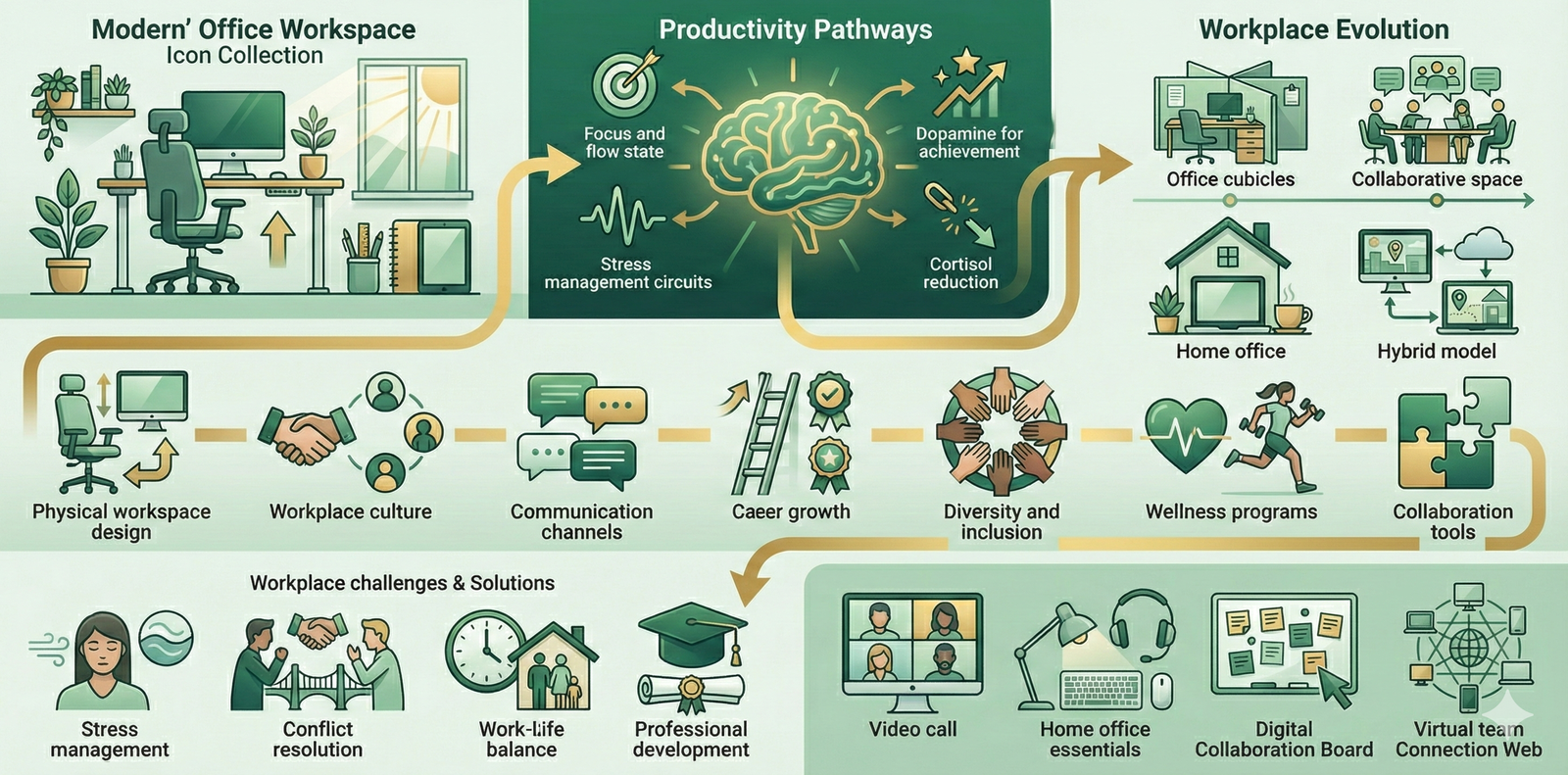
A thriving workplace is built on clear communication, mutual respect, psychological safety, and opportunities for growth. Whether you work in a traditional office, hybrid environment, or fully remote setting, the principles of workplace excellence remain consistent: creating conditions where people can do their best work while maintaining healthy boundaries and work-life balance.
This comprehensive guide explores every dimension of workplace success—from understanding workplace dynamics and culture to developing strategies for career advancement, managing stress, and building meaningful professional relationships that support your wellbeing and career trajectory.
What Is a Workplace?
A workplace is any physical or virtual environment where work activities occur. It encompasses the physical space, organizational culture, interpersonal relationships, systems, processes, and overall conditions under which work is performed. Modern workplaces range from traditional corporate offices to remote home offices, co-working spaces, and hybrid environments combining multiple work locations.
The concept of 'workplace' has evolved significantly, especially since 2020. Where once workplace meant a specific geographic location you traveled to, today's workplace is increasingly flexible, distributed, and technology-enabled. However, the fundamental purpose remains unchanged: creating an environment where individuals and teams can accomplish meaningful work while maintaining their health and wellbeing.
Beyond the physical or virtual location, a workplace includes the organizational structure, company values, management philosophies, and the daily interactions between colleagues. It encompasses written policies and unwritten cultural norms that influence how people communicate, collaborate, and contribute to organizational success.
Why Your Workplace Matters
The average person spends approximately 90,000 hours working during their lifetime—roughly one-third of their waking life. Your workplace directly influences your mental and physical health, financial security, relationships, and sense of purpose. A positive workplace environment correlates with lower stress levels, better health outcomes, higher productivity, and greater life satisfaction.
Research from the American Psychological Association demonstrates that employees who feel valued, supported, and psychologically safe at work experience significantly lower rates of anxiety, depression, and burnout. Conversely, toxic workplace environments contribute to chronic stress, reduced immune function, cardiovascular disease, and compromised mental health—effects that extend far beyond work hours into personal life.
Your workplace also serves as a primary source of identity, social connection, and purpose. The relationships you build, skills you develop, and accomplishments you achieve at work contribute meaningfully to your sense of self-worth and life fulfillment. A workplace that supports your growth and values your contributions strengthens your confidence and resilience across all life areas.
Key Components of an Effective Workplace
The most productive and satisfying workplaces share several essential characteristics. Physical environment matters—adequate lighting, ergonomic design, temperature control, and noise management all affect focus and wellbeing. But equally important is psychological environment: clear communication, transparent decision-making processes, and acknowledgment of individual contributions create the foundation for psychological safety.
Organizational culture represents the shared values, beliefs, and behaviors that define 'how we do things here.' Strong cultures have explicitly articulated values, consistent leadership that models those values, and systems that reward aligned behavior. Culture influences whether employees feel motivated or demoralized, whether they collaborate or compete destructively, and whether they feel free to voice concerns or ideas.
Leadership quality directly impacts workplace quality. Leaders who listen, provide clear feedback, remove obstacles, and invest in employee development create environments where people thrive. Conversely, micromanagement, unclear expectations, and punitive approaches generate stress, disengagement, and turnover. The relationship between employee and manager is often the single most important factor determining job satisfaction.
Physical Workspace Design and Ergonomics
The physical design of your workplace profoundly affects your productivity, health, and wellbeing. Ergonomic furniture—properly positioned desk, supportive chair, monitor at eye level—prevents musculoskeletal injuries and reduces pain. Research shows that employees working in ergonomically designed spaces experience fewer neck, back, and shoulder problems while maintaining focus for longer periods.
Lighting significantly impacts circadian rhythm, mood, and performance. Natural light exposure regulates melatonin production, improves sleep quality, and boosts mood and alertness. When natural light is unavailable, full-spectrum lighting that mimics natural daylight supports better focus and reduces eye strain. Dim or harsh fluorescent lighting contributes to headaches, fatigue, and reduced productivity.
Noise levels affect concentration and stress levels. Open office layouts, while promoting collaboration, often create distracting environments that reduce deep focus. Access to quiet spaces for concentrated work, along with noise-canceling technology and clear protocols about interruptions, helps employees maintain focus and cognitive performance. Temperature control, air quality, and break spaces also contribute to overall workplace comfort and health.
Workplace Culture and Its Impact
Workplace culture is the invisible force that shapes daily interactions, decision-making, and employee experience. Organizations with strong, positive cultures where employees feel valued and trusted experience higher productivity, lower turnover, better innovation, and stronger financial performance. Culture is communicated through leadership behavior, organizational policies, hiring and promotion decisions, and how the organization responds to crises.
Psychological safety—the belief that you can take interpersonal risks without fear of negative consequences—is crucial for innovation, learning, and effective teamwork. In psychologically safe workplaces, employees freely share ideas, admit mistakes, ask questions, and challenge the status quo. This creates environments where problems are identified and solved quickly and where employees feel valued as whole people, not just task-performers.
Inclusive workplace cultures actively seek diverse perspectives, ensure equal opportunities for advancement, and create spaces where all employees feel they belong. Inclusion goes beyond representation—it means that diverse voices are genuinely heard, valued, and integrated into decision-making. Research consistently shows that inclusive organizations outperform homogeneous ones in innovation, retention, and financial outcomes.
Communication and Collaboration
Effective workplace communication requires clarity, transparency, and mutual respect. Leaders must clearly articulate organizational goals, individual role expectations, and feedback about performance. Employees need adequate channels to share concerns, ideas, and progress updates. Regular one-on-one meetings, team meetings, and open communication about both successes and challenges create environments where people feel heard and valued.
Collaboration improves when team members understand each other's perspectives, strengths, and work styles. Diverse teams that leverage their differences outperform homogeneous teams, but only when communication norms support honest dialogue and respectful disagreement. Establishing clear decision-making processes, defining roles and responsibilities, and creating psychological safety around conflict resolution strengthens collaborative capacity.
In remote and hybrid workplaces, communication becomes even more critical. Written communication should be clear and complete, reducing misunderstandings. Regular video calls help maintain personal connection and non-verbal communication cues. Documenting decisions and processes centrally ensures information is accessible to all team members, reducing confusion and creating accountability.
Career Development and Growth Opportunities
Workplaces that invest in employee development see significantly higher engagement, retention, and performance. Growth opportunities include formal training, mentorship, stretch projects that expand capabilities, and clear career pathways. Employees who see how their current role connects to future opportunities and who receive support in skill development remain engaged and motivated even during challenging periods.
Mentorship and coaching accelerate learning and development. Experienced colleagues who invest time in guiding newer employees accelerate skill acquisition, cultural integration, and confidence. Formal mentorship programs ensure this valuable resource isn't limited to those with privileged access to senior leaders. Coaching that focuses on developing strengths alongside addressing weaknesses creates more resilient, capable professionals.
Transparent promotion criteria and equitable advancement processes ensure that career growth opportunities are available to all employees regardless of background or demographics. Organizations that clearly communicate what skills, experience, and contributions are required for advancement reduce favoritism, increase motivation, and attract ambitious talent committed to meritocratic progression.
Managing Stress and Preventing Burnout
Workplace stress stems from various sources: role ambiguity, excessive workload, lack of control, insufficient support, poor relationships, or misalignment between personal values and organizational culture. While some stress is healthy and motivating, chronic workplace stress leads to burnout—emotional exhaustion, cynicism, and reduced effectiveness. Organizations must actively manage stress sources to protect employee wellbeing and maintain productivity.
Preventing burnout requires organizational action, not just individual resilience strategies. Setting realistic workloads, respecting work-life boundaries, providing adequate resources and support, recognizing contributions, and ensuring that work aligns with employee values all reduce burnout risk. When organizations treat burnout as a systemic issue rather than individual weakness, they create sustainable work environments where people can thrive long-term.
Supporting mental health at work includes providing access to mental health resources, removing stigma around seeking help, training managers to recognize signs of struggle, and fostering cultures where taking mental health days is normalized. Employee assistance programs, counseling services, and mental health days when needed help employees maintain wellbeing and prevent crisis.
Building Professional Relationships
The relationships you build at work significantly impact your satisfaction, effectiveness, and resilience. Strong professional relationships provide emotional support, collaborative opportunities, learning partnerships, and career advancement support. Investing time in knowing colleagues beyond their job titles, showing genuine interest in their wellbeing, and offering help without immediate expectation of return builds trust and mutual respect.
Healthy workplace relationships maintain appropriate boundaries while allowing authentic connection. You don't need to be best friends with colleagues, but you do need mutual respect, clear communication, and reliability. Trust is built through consistency—keeping commitments, following through on promises, and supporting colleagues during challenges. Trustworthy colleagues make work environments safer and more collaborative.
Networking within and beyond your organization opens opportunities for learning, collaboration, and career growth. Diverse professional networks provide fresh perspectives, access to resources, and information about opportunities. Actively maintaining relationships through regular check-ins, offering help, and celebrating others' achievements strengthens networks and creates mutual support systems that benefit all participants.
Diversity, Equity, and Inclusion
Workplaces that embrace diversity benefit from broader perspectives, better problem-solving, increased innovation, and improved decision-making. However, diversity alone is insufficient—equity and inclusion practices ensure that diverse employees have equal access to opportunities and feel valued. Equitable workplaces actively work to remove barriers, address historical disadvantages, and ensure fair treatment across race, gender, age, ability, and other dimensions.
Creating inclusive workplaces requires ongoing work: examining policies for bias, ensuring diverse hiring and promotion processes, creating employee resource groups where marginalized employees can find community and support, and providing cultural competency training for all staff. Inclusion means that diverse perspectives are actively solicited, genuinely heard, and integrated into decisions. It means psychological safety for all employees.
Organizations committed to DEI see benefits including higher retention, better talent attraction, improved innovation and decision-making, and stronger financial performance. When employees from all backgrounds feel they belong and can bring their whole selves to work, they engage more fully, contribute more creatively, and remain longer—benefiting both employees and organizations.
Remote and Hybrid Workplaces
The shift toward remote and hybrid work has transformed the workplace landscape. Well-executed remote work offers benefits including flexibility, reduced commute stress, and ability to create personalized work environments. However, remote work also presents challenges: maintaining connection and culture, managing communication across time zones, ensuring equitable opportunities for advancement, and preventing isolation and burnout.
Hybrid workplaces require intentional design to prevent creating two-tiered systems where remote employees are disadvantaged. Ensuring that meetings are structured to include remote participants, that information is documented and accessible to all, and that career development opportunities are available regardless of location maintains equity. Regular in-person gatherings strengthen culture and relationships while respecting flexibility needs.
Successful remote work depends on clear expectations, trust-based management, strong communication systems, and employee support. Managers must focus on outcomes and quality of work rather than visibility. Organizations must provide technology, ergonomic support, and mental health resources to support remote employees. Regular check-ins, virtual team building, and clear boundaries between work and personal life help remote employees maintain wellbeing.
Workplace Wellness Programs and Benefits
Comprehensive workplace wellness programs address physical health, mental health, financial security, and work-life balance. Fitness benefits, health screenings, mental health resources, financial planning assistance, flexible scheduling, and paid time off all contribute to employee wellbeing. However, truly effective wellness goes beyond offering benefits—it creates cultures where using these benefits is normalized and encouraged rather than viewed as weakness or lack of commitment.
Organizations that invest in wellness see reduced healthcare costs, decreased absenteeism, improved productivity, and higher retention. Wellness programs are most effective when they address root causes of poor health—excessive stress, inadequate sleep, sedentary work, poor nutrition—rather than just offering treatment after problems develop. Prevention-focused programs that reduce workplace stress, support movement, and promote healthy eating create lasting improvements.
Mental health support is essential. Employee assistance programs, on-site counseling, access to mental health professionals, and cultural normalization of mental health care help employees address challenges before they impact productivity and wellbeing. Organizations that recognize mental health as equally important as physical health create safer, more resilient workforces.
Practical Strategies for Workplace Success
Start by clearly understanding your role, goals, and how your work contributes to organizational mission. Seek regular feedback from your manager about performance and alignment. Build relationships with colleagues through genuine interest, reliability, and willingness to collaborate. Participate in learning opportunities that develop skills and expand capabilities. Manage your energy by taking breaks, maintaining work-life boundaries, and addressing stress promptly.
Communicate clearly and professionally, ensuring that others understand your ideas and can easily reach you. Document your accomplishments and contributions so that managers understand the value you bring. Seek mentors and offer mentorship—this accelerates learning and deepens professional relationships. Be proactive about career development, identifying skills needed for future opportunities and seeking projects that develop those skills.
If you're in a leadership position, lead by example in demonstrating your organization's values. Invest time in understanding each team member's strengths, challenges, and aspirations. Provide clear expectations, regular feedback, and removal of obstacles so your team can succeed. Protect your team from unnecessary interruptions and competing priorities. Model healthy work-life boundaries by taking time off, not working evenings and weekends, and maintaining your own wellbeing.
Navigating Workplace Challenges
Workplace conflict is inevitable. When conflicts arise, address them promptly and directly with the involved party. Use non-defensive communication, listen to understand rather than defend your position, and look for solutions that work for both parties. If direct resolution isn't possible, involve management or HR. Don't allow conflicts to fester or escalate—they damage relationships and productivity.
When facing discrimination, harassment, or other serious issues, know your organization's reporting channels and don't hesitate to use them. Document incidents and maintain records. Seek support from trusted colleagues, mentors, or employee assistance programs. Understand your legal rights and protections. In severe situations, external resources like employment lawyers or government agencies may be necessary. No job is worth compromising your dignity or safety.
If your workplace culture is fundamentally misaligned with your values or if you're experiencing chronic stress despite your best efforts, it may be time to consider other opportunities. A toxic workplace cannot be fixed by individual resilience strategies. Recognizing when to leave a harmful situation demonstrates self-respect and protects your long-term wellbeing. Life is too short to spend years in an environment that diminishes you.
FAQ: Common Workplace Questions
Key Takeaways
- Your workplace significantly impacts your <a href='/g/physical-health.html'>physical health</a>, <a href='/g/mental-health.html'>mental health</a>, and overall wellbeing—investing in workplace quality matters
- Positive workplace cultures built on psychological safety, clear communication, and inclusive practices drive engagement, innovation, and retention
- Career success requires both personal excellence and organizational support—develop skills while seeking environments that value your growth
- Strong professional relationships built on trust, mutual respect, and genuine connection enhance satisfaction and resilience
- Remote and hybrid work can be successful with intentional design, clear communication, and trust-based management
- When workplace environments are fundamentally toxic despite your best efforts, leaving may be necessary to protect your wellbeing
- Workplace wellness is both individual responsibility and organizational responsibility—maintain boundaries while seeking support
- Culture attracts and retains talent as powerfully as compensation—organizations that create positive cultures gain competitive advantage
How would you describe your current workplace environment?
What's your primary goal related to your workplace?
How important is workplace culture to your satisfaction?
Related Glossary Articles
Frequently Asked Questions
How can I improve my workplace experience if my current environment is toxic?
First, clearly assess what aspects are problematic and whether they're changeable. If issues are systemic (poor leadership, lack of psychological safety), direct your energy toward addressing them through appropriate channels or considering a job change. Simultaneously, protect your wellbeing through support networks, mental health resources, and maintaining strong boundaries. Sometimes the best action is recognizing when to leave and seeking a healthier environment.
What's the best way to advocate for myself at work?
Document your accomplishments and how you contribute to organizational success. Speak with confidence about your capabilities while remaining humble. Request regular feedback and act on it. Seek visibility by presenting work, sharing ideas, and taking on projects that showcase your abilities. Have regular conversations with your manager about your career goals and what you need to advance. Be clear about your value proposition.
How do I balance career advancement with maintaining work-life balance?
Advancement and balance aren't mutually exclusive, though career stages may require different balancing acts. Identify roles and organizations that align with your values about balance. Communicate boundaries clearly—some intensive seasons are acceptable if they're temporary and offset by less demanding periods. Look for advancement paths that reward efficiency and impact rather than just hours worked. Mentors who have achieved balance can provide valuable guidance.
How important is workplace culture in job satisfaction?
Culture is fundamental—research shows it's often more important than salary in determining satisfaction and retention. You can tolerate temporary hardship in a culture that values you and aligns with your values, but all the money in the world can't compensate for a toxic environment. When evaluating jobs, assess culture as seriously as compensation.
Should I try to be friends with coworkers?
Workplace relationships can range from cordial to close friendships—both are valid. The key is professional respect and appropriate boundaries. You don't need to be best friends with colleagues, but genuine connection makes work more satisfying and collaboration more effective. Be yourself authentically while maintaining professional standards. Some of the most meaningful friendships develop from workplace relationships, while other colleagues remain friendly acquaintances—both are fine.
How do I recover from a significant workplace mistake?
Acknowledge the mistake promptly and clearly to those affected. Explain what happened without excessive excuse-making. Take responsibility and outline steps you'll take to prevent recurrence. Focus on solutions and prevention rather than dwelling on the error. Most importantly, demonstrate through subsequent behavior that you've learned from the experience. People generally respect those who handle mistakes with accountability and improvement.
What should I do if I'm feeling burned out at work?
First, recognize burnout as a signal that something needs to change—either in your approach or in your work environment. Take time off to recover. Examine what's causing burnout: excessive workload, lack of control, misalignment with values, insufficient recognition. Have conversations with your manager about adjusting workload or responsibilities. If your organization won't support changes, consider whether a different role or organization would better align with your needs and capacity.
Take the Next Step
Ready to improve your wellbeing? Take our free assessment to get personalized recommendations based on your unique situation.
- Discover your strengths and gaps
- Get personalized quick wins
- Track your progress over time
- Evidence-based strategies
About the Author
Keep quitting habit apps after a missed day? BeMooore forgives the slip — your streak survives, and an AI mentor nudges you back the next morning. Free on iOS.