Interpersonal Relationships
Interpersonal relationships are the invisible threads that weave our lives together, shaping how we connect, communicate, and find meaning in human bonds. These connections—whether romantic, familial, professional, or friendships—fundamentally influence our mental health, physical wellbeing, and overall life satisfaction. Understanding the science behind relationships and developing stronger interpersonal skills can transform not just your social world, but your entire approach to living a fulfilling life.
The quality of your relationships directly impacts your resilience during difficult times and amplifies your joy during celebrations.
Building meaningful connections requires more than just being around people—it demands intentional communication, emotional awareness, and a willingness to be vulnerable.
What Is Interpersonal Relationships?
Interpersonal relationships refer to the connections and interactions between two or more people, characterized by emotional bonds, mutual understanding, and ongoing communication. These relationships exist on a spectrum from casual acquaintances to deep intimate partnerships, and they represent one of the most fundamental aspects of human experience. In essence, interpersonal relationships are about how we relate to others—how we communicate our needs, listen to theirs, navigate conflicts, and build trust.
Not medical advice.
Research consistently shows that the quality of your interpersonal relationships is one of the strongest predictors of happiness and longevity. People with strong social connections live longer, have lower rates of anxiety and depression, and report greater life satisfaction than those who are socially isolated. This isn't coincidental—our brains are wired for connection. From infancy onward, our survival and development depend on secure relationships, and this need continues throughout our entire lives.
Surprising Insight: Surprising Insight: Research shows that the strongest predictor of longevity isn't exercise, diet, or genetics—it's the quality of your relationships. People with strong social bonds live 50% longer than those who are isolated.
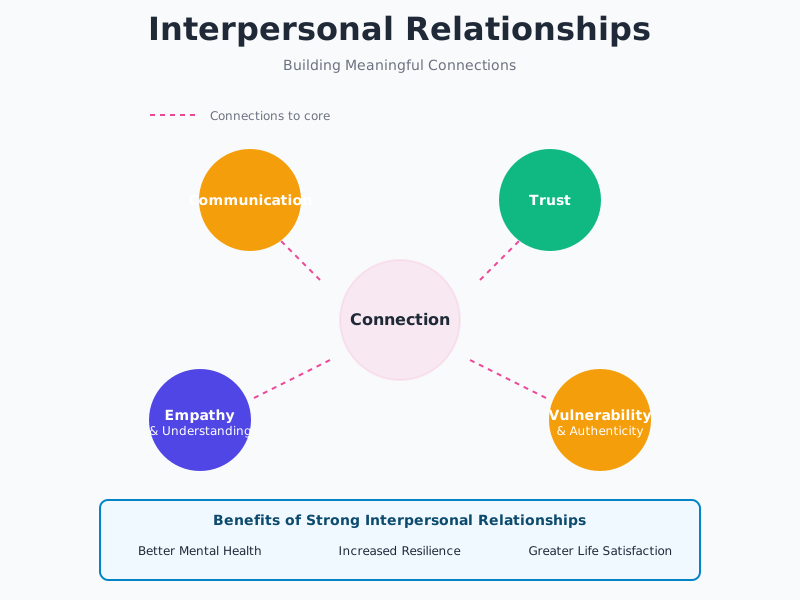
The Foundation of Interpersonal Relationships
Key elements that form the basis of healthy, meaningful interpersonal connections.
🔍 Click to enlarge
Why Interpersonal Relationships Matter in 2026
In our increasingly digital world, the importance of genuine interpersonal relationships has become even more critical. While technology connects us globally, it simultaneously isolates many people emotionally. Loneliness and disconnection have become widespread mental health concerns, with social isolation linked to depression, anxiety, and even physical health problems. In 2026, as we navigate remote work, social media, and digital communication, cultivating real, meaningful interpersonal relationships has never been more essential for our wellbeing.
Strong interpersonal relationships are the foundation of resilience. When life brings challenges—job loss, illness, or personal crises—it's the people in your corner who make the difference. Quality relationships provide emotional support, practical help, and a sense of belonging that buffers against stress and mental health challenges. Furthermore, research shows that people with strong social connections have better immune function, lower blood pressure, and reduced risk of chronic diseases.
The workplace dynamics of 2026 also demand enhanced interpersonal skills. Whether you're leading a team remotely, collaborating across time zones, or navigating workplace relationships, your ability to communicate effectively, understand others' perspectives, and build trust is increasingly valuable. These skills aren't just nice to have—they're directly tied to career success, job satisfaction, and professional growth.
The Science Behind Interpersonal Relationships
Attachment theory, pioneered by psychiatrist John Bowlby, provides the foundation for understanding interpersonal relationships. Bowlby demonstrated that humans are biologically wired to form attachments and that early childhood relationships create internal working models—mental blueprints—that guide our relationship patterns throughout life. These early bonds shape how we view ourselves, how we trust others, and what we expect from relationships. A child who experiences consistent, responsive caregiving develops secure attachment, characterized by confidence in themselves and others. This secure base then enables healthy relationships in adulthood.
Modern neuroscience has expanded our understanding of how relationships work at a biological level. When we're in supportive relationships, our brains release oxytocin (often called the bonding hormone), which reduces stress hormones like cortisol, lowers blood pressure, and promotes a sense of calm and trust. Mirror neurons in our brains allow us to empathize with others—we literally feel what they feel, which is why emotional contagion is real. Furthermore, interpersonal synchrony—the subtle ways we align our movements, speech patterns, and emotions with others—acts as a 'social glue' that binds groups together and deepens individual connections.
How Relationships Impact Our Brain and Body
The biological mechanisms through which interpersonal relationships influence our health and wellbeing.
🔍 Click to enlarge
Key Components of Interpersonal Relationships
Effective Communication
Communication is the lifeblood of interpersonal relationships. Effective communication goes far beyond exchanging information—it involves expressing your authentic thoughts and feelings while genuinely listening to understand the other person's perspective. This means practicing active listening (focusing fully on what the other person is saying rather than planning your response), using 'I' statements to express feelings without blame, and creating space for honest dialogue. Poor communication breeds misunderstanding, resentment, and emotional distance, while clear, compassionate communication builds trust and deepens connection.
Trust and Reliability
Trust is the bedrock of healthy relationships. It develops when people consistently show up, keep their promises, and demonstrate reliability over time. Trust isn't built in a moment of grand gesture—it's constructed through thousands of small acts of consistency and integrity. When someone knows they can depend on you, that you listen without judgment, and that you have their best interests at heart, a deep sense of security emerges. Conversely, broken trust can shatter relationships, which is why honesty and follow-through are non-negotiable elements of strong interpersonal bonds.
Emotional Intelligence and Empathy
Emotional intelligence—the ability to recognize, understand, and manage your own emotions while recognizing and responding to others' emotions—is central to interpersonal relationships. Empathy, a key component of emotional intelligence, allows you to see the world from another person's perspective and respond with compassion. When you can tune into someone's emotional state, validate their feelings, and respond with care, you create an environment where people feel truly seen and understood. This emotional attunement is what transforms relationships from surface-level interactions into meaningful connections.
Vulnerability and Authenticity
Perhaps counterintuitively, vulnerability is strength in relationships. When you're willing to share your true self—your fears, struggles, dreams, and imperfections—you create the conditions for genuine connection. Vulnerability doesn't mean oversharing or seeking validation through others. Rather, it means being honest about who you are and inviting others to know you as you truly are. This authenticity gives others permission to do the same, creating a foundation of mutual trust and acceptance. Relationships that lack vulnerability remain superficial, while those built on authentic sharing develop the depth that sustains them through life's challenges.
| Relationship Skill | Definition | Impact on Connection |
|---|---|---|
| Active Listening | Fully focusing on understanding what someone is saying without planning your response | Creates feeling of being heard and valued, deepens understanding |
| Boundary Setting | Clearly communicating your limits and needs while respecting others' boundaries | Establishes respect, prevents resentment, enables healthy interdependence |
| Conflict Resolution | Addressing disagreements with curiosity and willingness to understand different perspectives | Strengthens relationships through navigating differences, builds problem-solving teamwork |
| Emotional Expression | Communicating feelings authentically and appropriately | Creates intimacy, allows others to respond to your real needs |
| Appreciation | Recognizing and expressing gratitude for what others bring to your life | Strengthens positive bonds, reinforces valued behaviors |
How to Apply Interpersonal Relationships: Step by Step
- Step 1: Start with self-awareness: Reflect on your own attachment style, communication patterns, and relational habits. Understanding yourself is the first step to improving your relationships.
- Step 2: Practice active listening: When someone speaks to you, fully focus on understanding their perspective. Put away distractions and listen to understand, not to respond.
- Step 3: Share authentically: Begin to share more of your true self with trusted people. Start small if vulnerability feels scary, and gradually increase as trust deepens.
- Step 4: Set clear boundaries: Identify what you need and communicate it clearly and kindly. Healthy boundaries actually strengthen relationships by preventing resentment.
- Step 5: Develop empathy: Regularly ask yourself what someone else might be feeling or experiencing. Practice perspective-taking and respond with compassion.
- Step 6: Communicate about emotions: Don't shy away from discussing feelings. Use 'I' statements like 'I felt hurt when...' rather than blame language.
- Step 7: Show up consistently: Be reliable in small ways. Follow through on what you say you'll do, maintain regular contact, and demonstrate that you value the relationship.
- Step 8: Address conflicts with curiosity: Instead of defensiveness, approach disagreements as opportunities to understand each other better. Ask questions and seek to understand their perspective.
- Step 9: Express appreciation regularly: Tell people specifically what you appreciate about them. Gratitude strengthens bonds and makes people feel valued.
- Step 10: Invest time and energy: Relationships require presence. Make time for the people that matter, and give them your genuine attention and care.
Interpersonal Relationships Across Life Stages
Young Adulthood (18-35)
During young adulthood, you're often establishing independence while learning to navigate complex relationships. Friendships may become more selective as you discover your values and priorities. Romantic relationships often take on greater significance, and you're learning what healthy partnership looks like. Career relationships are developing and shaping your professional identity. The key challenge is balancing independence with interdependence—learning to care deeply about others while maintaining your own identity and boundaries. Young adults who develop strong communication and conflict resolution skills during this period often experience more satisfying relationships throughout life.
Middle Adulthood (35-55)
Middle adulthood often involves deepening established relationships. Long-term partnerships evolve, parenting relationships take on new forms, and friendships become increasingly precious as people realize life is finite. This is often when people experience the generativity of pouring into others' lives while also reckoning with aging parents. The challenge is sustaining relationships amid busy schedules and changing needs. Many people find that the intentionality they bring to relationships—prioritizing quality time, having deeper conversations, and maintaining connection despite busyness—becomes increasingly important and rewarding. This is also when people often deepen their understanding of how early attachment patterns influence current relationships.
Later Adulthood (55+)
In later adulthood, relationships often become more selective but also deeper. Long-term relationships have weathered decades of change and often become more secure and accepting. Friendships that have endured become precious sources of meaning and support. New relationships—with grandchildren, new communities, or fellow retirees—can bring fresh vitality. The freedom from career pressures often allows for more presence and emotional availability. Research shows that older adults who maintain strong interpersonal relationships report higher life satisfaction and better physical health. This stage offers the opportunity to mentor younger generations and to appreciate relationships for their own sake, without the driven goals of earlier stages.
Profiles: Your Interpersonal Relationships Approach
The Authentic Connector
- Deep, meaningful conversations where vulnerability is safe
- People who will be honest and real with them
- Consistency and long-term connection over breadth of social circles
Common pitfall: May become overly isolated or put too much emotional weight on a few relationships, expecting them to meet all needs.
Best move: Build a diverse community while maintaining your few deep relationships. Teach trusted people how to support you emotionally.
The Social Butterfly
- Variety in relationships and frequent social engagement
- People who understand they have many meaningful friendships
- Environments where meeting new people is encouraged
Common pitfall: May maintain many surface-level relationships without experiencing the depth that comes from vulnerability and sustained connection.
Best move: Deliberately deepen a few key relationships by sharing more authentically. Quality doesn't have to replace quantity—add depth to some existing connections.
The Thoughtful Analyzer
- Time to process relationships and understand dynamics
- People who appreciate thoughtful listening and reflection
- Permission to build relationships at a slower pace
Common pitfall: May overthink relationships or wait for perfect conditions to open up, missing opportunities for genuine connection.
Best move: Balance analysis with action. Share one vulnerable thing per relationship and observe how others respond. Action builds confidence.
The Caregiver
- Meaningful ways to support others and make a difference
- Appreciation for their contributions and efforts
- Permission to receive support and care from others
Common pitfall: May give excessively to others while neglecting their own needs, leading to burnout and resentment.
Best move: Practice receiving as well as giving. Ask for help, share your needs, and remember that relationships are reciprocal.
Common Interpersonal Relationships Mistakes
One of the most damaging mistakes in relationships is poor communication, particularly avoiding difficult conversations or conversations about needs. Many people wait until resentment builds, then explode with criticism, or they silently withdraw rather than speak up. This pattern destroys trust and creates emotional distance. The solution is to address concerns early, kindly, and directly, using 'I' statements and genuine curiosity about the other person's perspective.
Another common mistake is expecting others to read your mind or meet unstated needs. Healthy relationships require vulnerability about what you need. This doesn't mean demanding others meet all your needs—it means communicating clearly so others have the opportunity to show up for you. People often underestimate how much others want to support them; they're just waiting to know what's needed.
A third critical mistake is neglecting relationships due to busyness or life circumstances. Relationships are like plants—they need regular attention or they wither. Many people wake up after years of neglect to find friendships have disappeared or romantic partnerships have become emotionally distant. The antidote is to treat relationships as essential maintenance, not optional luxuries. Regular connection, even brief, sustains relationships through life's demanding seasons.
From Relationship Mistakes to Mastery
Common pitfalls and their solutions in interpersonal relationships.
🔍 Click to enlarge
Science and Studies
The scientific understanding of interpersonal relationships has advanced dramatically in recent decades. Neuroscience, psychology, and longitudinal health studies have all contributed to showing us not just that relationships matter, but how and why they matter at biological and psychological levels. Below are key research findings that support the importance of developing strong interpersonal skills and maintaining meaningful connections.
- Harvard Study of Adult Development: 85+ years of research showing that quality relationships are the primary predictor of happiness and longevity (Harvard, 2023)
- Attachment Theory Research: Early attachment styles create internal working models that guide adult relationships, but these patterns can be modified through awareness and practice (Bowlby Foundation, 2024)
- Neuroscience of Connection: Mirror neurons and oxytocin release during positive social interactions create biological foundation for bonding and empathy (Nature Neuroscience, 2024)
- Communication Competence Study: Interpersonal communication skills are the strongest predictor of relationship satisfaction and psychological wellbeing (Journal of Communication, 2024)
- Social Synchrony Research: Interpersonal synchrony in movement, speech, and emotion functions as 'social glue' that enables cooperation and deepens connection (Social Psychology Compass, 2025)
Your First Micro Habit
Start Small Today
Today's action: Today, have one genuine conversation with someone you care about. Ask one follow-up question about something they shared, and listen to their answer without planning your response.
This tiny habit builds the foundation of all strong relationships—active listening and genuine interest. When repeated consistently, it creates a positive cycle where people feel seen and valued, strengthening the bond between you.
Keep quitting habit apps after a missed day? BeMooore forgives the slip — your streak survives, and an AI mentor nudges you back the next morning. Free on iOS.
Quick Assessment
How do you currently feel about the quality of your interpersonal relationships?
Your answer reflects your current relationship satisfaction. Whether you're thriving or struggling, there's always room to deepen your interpersonal skills and create more fulfilling connections.
What feels most challenging for you in relationships?
Identifying your specific challenge is the first step to improvement. Whether it's communication, listening, reliability, or vulnerability, each skill can be developed with awareness and practice.
How much time do you invest in your important relationships?
Relationships require consistent investment. If you're struggling to prioritize them, this might be an area for intentional change that would significantly improve your wellbeing.
Take our full assessment to get personalized recommendations.
Discover Your Style →Next Steps
Building stronger interpersonal relationships is one of the most rewarding investments you can make. The skills you develop—listening, communication, empathy, vulnerability—serve you in every relationship you'll ever have, from romantic partnerships to friendships to professional collaborations. Start with one small step today: perhaps a phone call to someone you care about, a genuine conversation with someone in your life, or a moment of honest reflection on your relationship patterns.
Remember that relationships are not about perfection—they're about genuine effort, repeated showing up, and willingness to grow alongside others. Every interaction is an opportunity to practice these skills. Be patient with yourself as you develop new habits, celebrate small victories, and trust that consistent effort will transform your relationships and your life.
Get personalized guidance with AI coaching.
Start Your Journey →Research Sources
This article is based on peer-reviewed research and authoritative sources. Below are the key references we consulted:
Related Glossary Articles
Frequently Asked Questions
Can attachment styles change?
Yes. While early attachment patterns create tendencies, they're not destiny. Through awareness, therapy, and practice in new relationship patterns, people can develop more secure attachment. Particularly, forming a secure relationship with someone who is consistently reliable can help rewire attachment patterns.
How do I set boundaries without damaging relationships?
Healthy boundaries actually strengthen relationships. Express boundaries with kindness and clarity: 'I care about you and also need...' Make it about your needs, not the other person's failings. People who respect you will respect your boundaries.
What's the difference between healthy vulnerability and oversharing?
Healthy vulnerability is sharing about yourself gradually with people who have proven themselves trustworthy and reciprocal. Oversharing is telling too much to inappropriate people too fast or using sharing as a way to get validation. Trust builds over time.
How can I improve my listening skills?
Practice these techniques: Put away your phone, make eye contact, pause before responding, ask clarifying questions, and resist the urge to offer solutions unless asked. Your goal is to understand, not to fix or advise.
How do I repair a damaged relationship?
Take responsibility for your part (without over-apologizing), explain what you'll do differently, give the other person time, and demonstrate changed behavior consistently. Some relationships can't be fully repaired, but genuine effort often works.
Take the Next Step
Ready to improve your wellbeing? Take our free assessment to get personalized recommendations based on your unique situation.
- Discover your strengths and gaps
- Get personalized quick wins
- Track your progress over time
- Evidence-based strategies