Nervous System Reset
Your nervous system is constantly scanning for danger. When stress or trauma activates your fight-flight-freeze response, your body gets stuck in protection mode, leaving you exhausted, reactive, and disconnected. A nervous system reset is your pathway to breaking this cycle. By stimulating your vagus nerve and activating your parasympathetic nervous system, you can signal safety to your body and restore calm. Unlike meditation or positive thinking alone, these techniques directly rewire your autonomic nervous system—the automatic control center governing your heart rate, breathing, digestion, and emotional regulation. Recent neuroscience research shows that targeted vagal activation can reduce anxiety within minutes, improve sleep quality, enhance emotional regulation, and build resilience against future stress. Whether you're dealing with chronic anxiety, trauma responses, or simply the accumulated stress of modern life, nervous system reset techniques offer a practical, science-backed pathway to healing.
The vagus nerve is the longest cranial nerve in your body, running from your brainstem through your neck, chest, and into your digestive system.
Vagal tone—your ability to regulate between activation and rest—is now recognized as a key biomarker of health, linked to cardiovascular function, immune resilience, and mental wellbeing.
What Is Nervous System Reset?
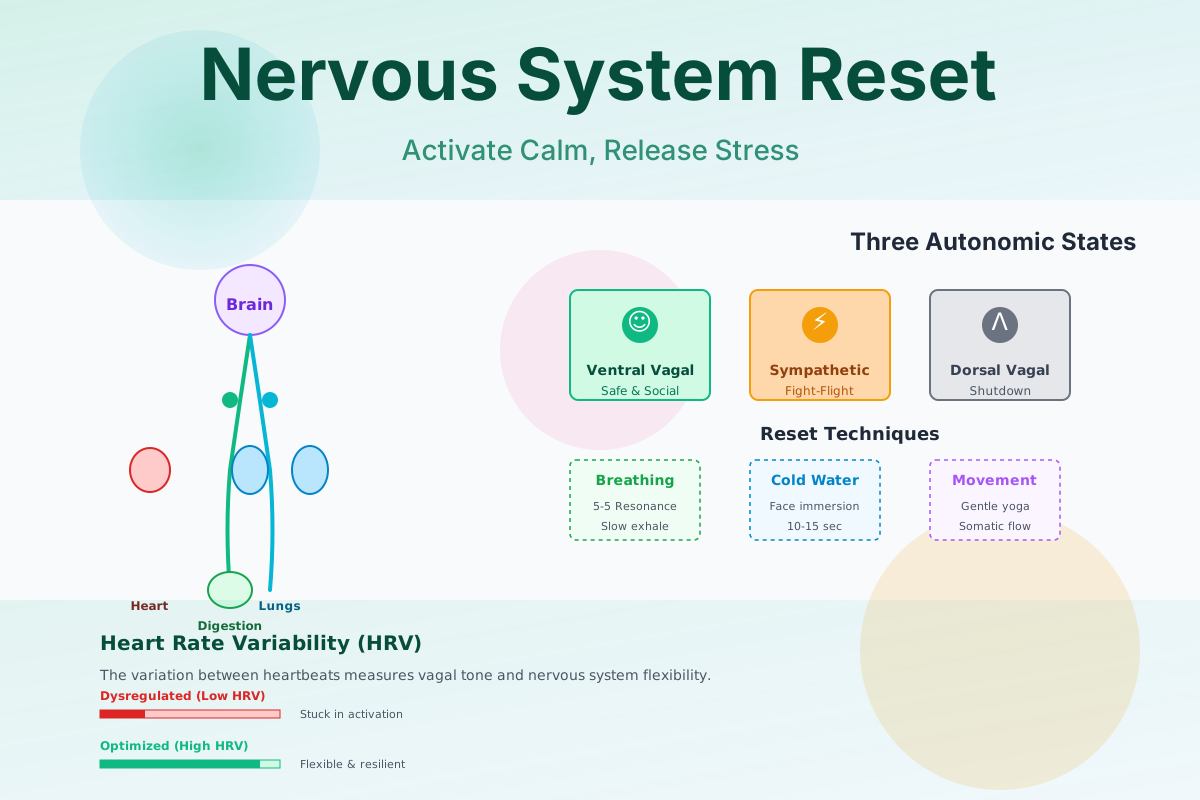
A nervous system reset is a targeted intervention that downregulates your sympathetic nervous system (your accelerator) and upregulates your parasympathetic nervous system (your brake). Instead of being stuck in fight-flight-freeze, your body enters a state of rest-digest-connect, where healing, digestion, and social engagement become possible. The term itself isn't a medical diagnosis—it's a functional concept describing practices that enhance vagal tone and autonomic flexibility. Your autonomic nervous system operates across three primary states: ventral vagal (safe-social), sympathetic (mobilized-active), and dorsal vagal (shutdown-immobilized). A healthy nervous system moves fluidly between these states based on environmental demands. When trauma, chronic stress, or accumulated overwhelm locks you in sympathetic dominance, you need targeted tools to help your system recognize safety and downshift into parasympathetic restoration.
Not medical advice.
Your nervous system is wired for survival, not comfort. For millions of years, your ancestors relied on their nervous system's threat-detection abilities to survive predators and dangers. Today, that same system often activates in response to emails, traffic, social conflicts, and countless other non-lethal stressors. The result: chronic activation that becomes your new baseline. This hypervigilance exhausts your adrenal system, dysregulates your immune response, impairs digestion, and disconnects you from your body's wisdom. A nervous system reset isn't about eliminating stress or suppressing uncomfortable emotions—it's about restoring your capacity to move between activation and rest, to feel safe enough to digest, rest, and connect with others. This requires both top-down practices (breathing, cognitive reframing) and bottom-up practices (somatic movement, vagal stimulation) that directly access your autonomic nervous system.
Surprising Insight: Surprising Insight: Heart rate variability (HRV)—the variation in time between heartbeats—is a direct measure of vagal tone and autonomic flexibility. Higher HRV correlates with better stress resilience, emotional regulation, cognitive performance, and immune function. Unlike your resting heart rate (which stays relatively stable), HRV changes daily based on stress levels, sleep quality, and emotional state. Tracking HRV provides real-time biofeedback about your nervous system's state.
The Autonomic Nervous System Map
Visual representation of three autonomic states and their characteristics
🔍 Click to enlarge
Why Nervous System Reset Matters in 2026
In 2026, the collective nervous system is dysregulated. Burnout has reached epidemic levels—workers are exhausted not from work itself, but from the constant low-level threat activation caused by notification overload, social media comparison, economic uncertainty, and digital omnipresence. The term 'neurowellness' has exploded in popular culture, reflecting a cultural shift toward recognizing the nervous system as central to health. Unlike wellness trends focused on willpower and self-improvement, nervous system reset work is fundamentally bottom-up: it meets your body where it is, honors its survival strategies, and gently teaches it that safety is possible again.
Clinical applications have expanded dramatically. The FDA approved vagus nerve stimulation for drug-resistant epilepsy, treatment-resistant depression, obesity, stroke rehabilitation, and most recently for rheumatoid arthritis in 2025. Research from the University of Texas at Dallas shows that PTSD patients experienced long-term symptom relief when traditional therapy was paired with vagus nerve stimulation. Heart rate variability biofeedback is now used in elite sports performance, cardiac rehabilitation, and trauma therapy. Your nervous system's state directly governs your immune function, inflammation levels, digestive capacity, cognitive performance, and emotional availability. Resetting it isn't optional—it's foundational to lasting health.
The window of tolerance—the zone where your nervous system can process information optimally—has shrunk for most people. Chronic stress, social media, information overload, and unpredictable environments have narrowed this window. A nervous system reset practice systematically expands your window of tolerance, increasing your capacity to handle challenge without flipping into dysregulation. This is what resilience actually is: not avoiding stress, but maintaining your coherence under pressure.
The Science Behind Nervous System Reset
The vagus nerve is your body's primary parasympathetic conduit, controlling the tenth cranial nerve that branches to nearly every major organ. When stimulated, the vagus nerve releases acetylcholine, the primary parasympathetic neurotransmitter, which signals safety to your heart, lungs, stomach, and immune system. This activation is measured through vagal tone—your capacity to modulate between sympathetic and parasympathetic activation. A 2025 review published in Frontiers in Psychology found that higher vagal tone predicts superior executive performance on tasks requiring sustained attention, working memory, cognitive flexibility, and impulse control. The mechanism: a well-toned vagus nerve dampens the amygdala (your threat detector), stabilizes the prefrontal cortex (your reasoning center), and rebalances your autonomic nervous system.
Stephen Porges' Polyvagal Theory, recently updated with contemporary neuroscience, proposes that your vagus nerve has three distinct functional branches. The ventral vagal system supports social engagement, calm, and optimal performance. When you feel safe, this system activates, slowing your heart rate, softening your facial expression, and making social connection possible. The sympathetic nervous system mobilizes your body for action—increasing heart rate, redirecting blood to your limbs, and heightening sensory acuity. The dorsal vagal system is your ancient immobilization response, useful for playing dead but problematic when chronically activated. A healthy nervous system moves fluidly between these states. Dysregulation occurs when your system gets locked in one state or struggles to transition between them. HRV biofeedback and Safe and Sound Protocol (SSP) are evidence-based interventions that retrain your vagal responsiveness. Studies show that HRV biofeedback improves blood pressure regulation, reduces systemic inflammation, enhances emotional stability, and builds stress resilience over 8-12 weeks of practice.
How Vagal Stimulation Works
The pathway from vagal activation to parasympathetic effects
🔍 Click to enlarge
Key Components of Nervous System Reset
Breathing Techniques
Slow, nasal, diaphragmatic breathing is the most direct voluntary tool for vagal activation. When you breathe slowly through your nose and extend your exhale, you stimulate the vagus nerve's parasympathetic fibers. Resonance frequency breathing—breathing at approximately 5-6 cycles per minute (5-second inhale, 5-second exhale)—has been scientifically validated to enhance heart rate variability and vagal tone. Box breathing (4-4-4-4), 4-7-8 breathing (4 inhale, 7 hold, 8 exhale), and humming (which vibrates the vagus nerve) are all evidence-backed techniques. The key mechanism: a longer exhale than inhale maximally activates parasympathetic fibers, while nasal breathing filters, warms, and humidifies air, optimizing gas exchange and vagal stimulation.
Cold Water Exposure
Cold water on your face, particularly the cheeks and forehead, triggers the mammalian dive reflex—an ancient parasympathetic response that drops your heart rate within seconds. Splashing cold water on your face or holding ice briefly against your cheek activates the trigeminal nerve, which works synergistically with the vagus nerve to downregulate arousal. This is not about cold showers (which initially activate the sympathetic nervous system)—it's about specific cold facial stimulation that signals safety and triggers immediate vagal engagement. Studies show this effect is more powerful than many realize: some people experience 15-20 beat-per-minute drops in heart rate within 10-15 seconds.
Somatic Movement Practices
Your nervous system is embodied—it lives in your body, not just your brain. Somatic practices like gentle yoga, tai chi, qigong, and somatic experiencing help your body complete interrupted stress cycles. When you experience threat, your nervous system prepares for fight-flight-freeze. If the threat passes without completion of the protective action, that energy gets trapped in your muscles and fascial system. Gentle movement, tremoring, and shaking can help your nervous system discharge this trapped activation. Vagus nerve exercises like gentle head movements, throat stretches, and humming further stimulate vagal tone.
Acoustic and Social Engagement
The Safe and Sound Protocol (SSP) uses specifically filtered acoustic stimulation to engage the vagal complex that governs middle ear muscles, facial muscles, and social engagement. The protocol teaches your nervous system to recognize social cues as safe through sound. Similarly, singing, chanting, and humming activate vagal fibers controlling your voice and throat, directly stimulating parasympathetic pathways. The presence of a calm, attuned other person—co-regulation—is perhaps the most powerful nervous system reset, as your vagus nerve directly responds to others' nervous system states through mirror neuron mechanisms.
| Technique | Vagal Mechanism | Time to Effect |
|---|---|---|
| 5-5 Resonance Breathing | Extends exhale, directly stimulates parasympathetic fibers | 2-3 minutes |
| Cold facial water (10-15 seconds) | Triggers mammalian dive reflex via trigeminal nerve | 10-30 seconds |
| Humming or chanting | Vibrates vagal pathways in throat, stimulates vagal branches | 1-2 minutes |
| Gentle neck stretches | Directly stretches vagal pathways, reduces muscular compression | Ongoing (5-10 min) |
| Eye movement slow tracking | Engages vagal complex controlling eye movements and social cues | 2-3 minutes |
| Singing or vocal toning | Combines breathing and throat engagement, maximizes vagal stimulation | 5-10 minutes |
| Gentle yoga or tai chi | Combines movement, breath, and somatic awareness for parasympathetic shift | 15-30 minutes |
| Loving-kindness meditation with heartfelt focus | Combines ventral vagal social engagement with meditation practice | 10-20 minutes |
How to Apply Nervous System Reset: Step by Step
- Step 1: Assess your current state: Notice your heart rate, breathing depth, muscle tension, emotional tone, and self-awareness. Are you activated, calm, or shutdown? This baseline helps you recognize the shift after your reset practice.
- Step 2: Choose your primary technique based on your current state and available time. If you're acutely anxious, cold water is fastest. If you need deeper work, breathing or movement is more sustainable.
- Step 3: Engage your breathing: Begin with 5-6 cycles per minute (5-second inhale through nose, 5-second exhale through mouth). Notice your nervous system beginning to downshift within the first 1-2 minutes.
- Step 4: Add secondary technique: Combine breathing with humming, gentle neck stretches, or if accessible, cold water facial immersion (15-30 seconds).
- Step 5: Slow your eye movements: Track a point slowly left-to-right, up-and-down, in circles. Slow ocular tracking engages the vagus nerve's social engagement complex.
- Step 6: Notice internal sensations: Tune into your heartbeat, any vibrations in your chest or throat, temperature changes, or relaxation in your muscles. Interoceptive awareness strengthens the feedback loop.
- Step 7: Practice grounding: Feel your feet on the ground, your spine against the chair, your hands in your lap. Physical contact with the earth or stable surfaces further activates parasympathetic grounding.
- Step 8: Extend your practice: If you have 10-15 minutes, shift into gentle somatic movement or yoga. If you only have 3-5 minutes, focused breathing plus one secondary technique is sufficient.
- Step 9: Track the shift: After 5-10 minutes, reassess your state. You should notice slower heart rate, deeper breathing, warmer extremities, softer facial expression, or increased calm clarity.
- Step 10: Close deliberately: End your practice by expressing gratitude, setting an intention to carry this calm into your day, and committing to practice regularly—ideally twice daily for nervous system rewiring.
Nervous System Reset Across Life Stages
Young Adulthood (18-35)
Young adults face early career stress, relationship formation, financial uncertainty, and social media comparison. Your nervous system is still plastic—responsive to rewiring. This is the ideal time to build healthy stress resilience. Focus on brief, consistent practices: 3-5 minute breathing resets twice daily, regular exercise, and cold water exposure. Young adults often respond quickly to nervous system techniques because your vagal tone hasn't been chronically suppressed. Your challenge: consistency rather than intensity. It's tempting to ignore stress until it becomes crisis—instead, small daily practices now prevent burnout later.
Middle Adulthood (35-55)
This life stage often carries accumulated stress: career pressure, family responsibilities, aging parents, identity questions. Many people in this stage have developed chronic sympathetic dominance—their baseline resting state is partially activated. Your reset practices need to be longer, more consistent, and integrated into daily rhythms. Morning breathing and movement practice (10-20 minutes) combined with evening wind-down routines establish nervous system regulation anchors. Many benefit from professional support—somatic therapy, neurofeedback, or yoga therapy—to help release accumulated trauma.
Later Adulthood (55+)
Vagal tone naturally declines with age, but this decline is accelerated by chronic stress and inactivity. Later adulthood offers an opportunity to harvest the benefits of lifelong practice or to begin rebuilding vagal tone. Gentle, consistent practices are essential—tai chi, restorative yoga, and slow breathing work beautifully for this stage. Social engagement becomes increasingly important; the vagus nerve directly responds to meaningful relationships and social connection. Group practices (yoga class, choir, community gatherings) provide the dual benefit of nervous system stimulation plus social co-regulation.
Profiles: Your Nervous System Reset Approach
The Overwhelmed Achiever
- Quick resets integrated into busy schedule (3-5 minute practices)
- Nervous system awareness—noticing activation patterns
- Permission to prioritize downregulation as performance optimization
Common pitfall: Trying to willpower through exhaustion; skipping practices on high-stress days when they're most needed
Best move: Anchor one reset practice to an existing habit (morning coffee ritual, lunch break, evening wind-down). Use cold water facial reset as your emergency technique—15 seconds for instant vagal downshift.
The Trauma-Informed Seeker
- Body-aware, paced practices that honor protective responses
- Somatic movement and bottom-up techniques (breathing, movement) rather than top-down strategies
- Professional guidance—somatic therapy, trauma-informed yoga, neurofeedback
Common pitfall: Pushing too hard with advanced techniques before foundational nervous system safety is established; re-traumatizing yourself with aggressive cold exposure
Best move: Start with gentle somatic practices, supported by professional guidance. Use breathing as your primary tool—it's safe, accessible, and gradually rewires nervous system patterns. Build community and co-regulation as your foundation.
The Data-Driven Optimizer
- Objective nervous system feedback—HRV monitoring, biofeedback devices
- Protocol-based approaches with measured outcomes
- Understanding of the physiological mechanisms
Common pitfall: Over-complicating practice; treating nervous system optimization as another performance metric rather than sustainable wellbeing
Best move: Use HRV biofeedback apps to track your baseline and progress. Commit to 6-8 weeks of consistent practice and measure improvement. This provides motivation and data to optimize your approach.
The Gentle Path Seeker
- Slow, sustainable practices that honor introspection
- Mindfulness-integrated approaches
- Connection to meaning and presence alongside physiology
Common pitfall: Becoming too passive—understanding but not practicing; spiritual bypassing (meditating instead of moving)
Best move: Combine meditation with somatic movement—tai chi, yoga, qigong. These integrate awareness and embodied practice. Join a class for community and guided experience.
Common Nervous System Reset Mistakes
Mistake 1: Expecting permanent shifts from single practices. Nervous system regulation is like physical fitness—one workout doesn't create lasting change. You're rewiring decades of nervous system patterns. Expect subtle shifts after 1-2 weeks, noticeable changes after 4-6 weeks, and significant nervous system reorganization after 12 weeks of consistent practice. The neural pathways supporting parasympathetic dominance strengthen through repetition, not intensity.
Mistake 2: Forcing yourself into calm through gritted-teeth effort. Your nervous system is exquisitely sensitive to authenticity. If you're using willpower and self-judgment to 'achieve' calm, you're actually activating your sympathetic nervous system. Real parasympathetic activation requires gentleness, permission, and curiosity rather than force. If a practice feels aggressive or rejecting, adjust it toward slower, softer, kinder approaches.
Mistake 3: Choosing incompatible techniques for your current state. If you're in dorsal vagal shutdown (dissociated, numb, immobilized), gentle breathing might deepen your shutdown. You need activating practices first—movement, cold, or strong vocal toning—to shift into sympathetic activation, then downregulate to parasympathetic calm. Conversely, if you're acutely activated, intense exercise might amplify your activation. Meet your nervous system where it is rather than forcing a standard protocol.
Nervous System States and Appropriate Reset Practices
Matching reset techniques to your current autonomic state
🔍 Click to enlarge
Science and Studies
Recent peer-reviewed research from leading neuroscience institutions validates nervous system reset approaches. Multiple clinical trials show that HRV biofeedback and vagal stimulation produce measurable improvements in stress response, emotional regulation, and cardiovascular function. The Safe and Sound Protocol has evidence from dozens of studies showing its effectiveness for trauma, anxiety, autism, and behavioral regulation. These aren't emerging concepts—they're now standard approaches in progressive mental health, trauma therapy, sports performance, and functional medicine.
- Harnessing Non-Invasive Vagal Neuromodulation: HRV Biofeedback and SSP for Cardiovascular and Autonomic Regulation (2025) - PMC/NIH: Comprehensive review showing HRV biofeedback enhances baroreflex sensitivity, reduces systemic inflammation, and improves autonomic balance.
- Polyvagal Theory: Current Status, Clinical Applications, and Future Directions (2024) - PMC: Updated neuroscience confirming Stephen Porges' theory and its clinical applications across trauma, autism, and mental health.
- The Vagus Nerve: A Cornerstone for Mental Health and Performance Optimization (2025) - Frontiers in Psychology: Shows higher vagal tone predicts superior executive performance on attention, working memory, and impulse control tasks.
- Study: PTSD Patients Show Long-Term Benefits with Vagus Nerve Stimulation (2025) - University of Texas at Dallas: Clinical trial demonstrating long-term symptom relief when traditional PTSD therapy is paired with VNS.
- A Review of Vagus Nerve Stimulation for Disease (2025) - PMC: FDA approvals for epilepsy, depression, obesity, stroke, and rheumatoid arthritis; comprehensive mechanism-of-action analysis.
Your First Micro Habit
Start Small Today
Today's action: Three-minute Resonance Reset: Tomorrow morning or when you notice stress, set a timer for 3 minutes. Breathe in through your nose for 5 counts, exhale through your mouth for 5 counts. Repeat 18 times. That's it. No perfectionism, no judgment, just consistent nervous system signaling.
This single practice directly activates parasympathetic fibers, lowers your baseline anxiety, and teaches your nervous system that safety is possible. Done consistently, this 3-minute practice rewires your autonomic baseline within 4-6 weeks.
Keep quitting habit apps after a missed day? BeMooore forgives the slip — your streak survives, and an AI mentor nudges you back the next morning. Free on iOS.
Quick Assessment
How would you describe your typical baseline nervous system state?
Your baseline state reflects your habitual nervous system dominance. Frequent activation suggests chronic sympathetic dominance (you're running on stress response). Frequent numbness suggests dorsal vagal shutdown. The goal is developing flexibility—the capacity to activate when needed, downshift when safe, and stay socially engaged.
What's your biggest barrier to nervous system reset practice?
Understanding your barrier shapes your approach. Skeptics benefit from tracking HRV data. Time-pressed people need 3-5 minute micro-practices embedded in existing habits. Emotional resisters benefit from somatic therapy to process protective responses. Beginners need a structured protocol to follow, not just concepts.
If you successfully developed a consistent nervous system reset practice, what would change first?
Your answer reveals which nervous system benefit matters most to you right now. Use that as your primary motivation. When you practice for the outcome that truly matters—whether that's emotional availability, better sleep, or recovered energy—you're more likely to maintain consistency.
Take our full assessment to get personalized recommendations.
Discover Your Style →Next Steps
Your nervous system didn't become dysregulated overnight, and it won't rewire instantly. But it will respond to consistent, compassionate practice. Start by choosing one technique that feels accessible to you—whether that's breathing, cold water, or gentle movement. Commit to practicing that single technique twice daily for two weeks. You'll likely notice subtle shifts: slightly slower heart rate, softer shoulders, or easier sleep. After two weeks, if it's working, continue. If not, try a different technique. The goal isn't finding the perfect practice—it's finding the practice that works for your specific nervous system.
As you practice, track what changes. Notice your baseline stress level, your sleep quality, your reactivity to everyday stressors, your capacity for connection and joy. These subjective shifts precede measurable changes in HRV or other biomarkers. You're not chasing a destination—you're gradually reclaiming your capacity for calm, connection, and presence. That's the real nervous system reset: moving from survival-mode reactivity back to your natural state of adaptive flexibility, safety, and possibility.
Get personalized guidance with AI coaching.
Start Your Journey →Research Sources
This article is based on peer-reviewed research and authoritative sources. Below are the key references we consulted:
Related Glossary Articles
Frequently Asked Questions
How long does it take to feel results from nervous system reset practices?
Some techniques produce immediate effects: cold water facial immersion can lower your heart rate within 10-15 seconds through the mammalian dive reflex. Breathing practices shift your state within 2-3 minutes. However, sustainable nervous system rewiring—building higher vagal tone as your baseline—takes 4-8 weeks of consistent practice (ideally twice daily for 10-15 minutes). Your nervous system responds to repetition, not intensity. Think of this like fitness: one workout doesn't create lasting strength, but consistent practice gradually rewires your autonomic baseline.
Can I practice nervous system reset even if I have anxiety disorders or PTSD?
Yes, absolutely—and it's often particularly beneficial. However, choose your techniques wisely. For trauma survivors, somatic-aware bottom-up practices (breathing, gentle movement) are often better than top-down practices (thinking, analyzing). Start slowly to avoid triggering, work with professional support when needed, and focus on titration—small doses of practice that build safety gradually. Cold water exposure should be cautious for trauma survivors; humming, gentle breathing, and movement are usually safer starting points. Professional guidance from a trauma-informed therapist or somatic practitioner is valuable.
Is nervous system reset the same as meditation or mindfulness?
Not exactly. Meditation and mindfulness are cognitive practices that calm your mind through attention control. They engage your prefrontal cortex and can indirectly improve nervous system regulation. Nervous system reset practices are more direct—they access your autonomic nervous system through bottom-up pathways: breathing, somatic movement, cold exposure, and vagal stimulation. You can combine both approaches beautifully: meditation grounds your mind while breathing activates your parasympathetic nervous system simultaneously. However, someone with acute anxiety might find nervous system reset practices (immediate physiological downshift) more effective than meditation (which requires cognitive focus they may not have available).
How often should I practice nervous system reset techniques?
Consistency matters more than duration. Starting with 5-10 minutes twice daily (morning and evening) for 4-6 weeks establishes new nervous system baseline patterns. Once established, you can often maintain benefits with daily practice of 5-10 minutes plus responsive practice when you notice activation. Think of this like brushing your teeth: regular preventive practice prevents crisis. Additionally, throughout your day, use brief 1-3 minute resets when you notice stress activation—a few conscious breaths, cold water on your face, or 30 seconds of humming. These micro-practices prevent accumulation of nervous system dysregulation.
Can nervous system reset help with physical health conditions, or is it just for stress?
Nervous system regulation affects virtually every physiological system. Your parasympathetic nervous system directly controls digestion, immune function, inflammation, cardiovascular regulation, and hormone balance. Research shows HRV biofeedback improves blood pressure, reduces inflammatory markers, improves heart rate variability (a strong predictor of cardiovascular health), and supports recovery from illness. The FDA approved vagus nerve stimulation for rheumatoid arthritis specifically because vagal activation reduces systemic inflammation. While nervous system reset isn't a cure for disease, optimizing your autonomic nervous system supports your body's innate healing capacity. Work with qualified healthcare providers to integrate these practices with any medical treatment you're receiving.
Take the Next Step
Ready to improve your wellbeing? Take our free assessment to get personalized recommendations based on your unique situation.
- Discover your strengths and gaps
- Get personalized quick wins
- Track your progress over time
- Evidence-based strategies