Hypervigilance
Imagine walking into a grocery store and immediately scanning every exit, noticing every raised voice, watching strangers' hand movements. Your heart races at sudden sounds. Your shoulders stay tensed. Your mind never stops searching for the next threat. This exhausting state of constant alertness is hypervigilance—a survival mechanism that once protected you but now costs you peace, connection, and rest. Understanding hypervigilance is the first step toward reclaiming your sense of safety and learning to trust that the immediate danger has passed.
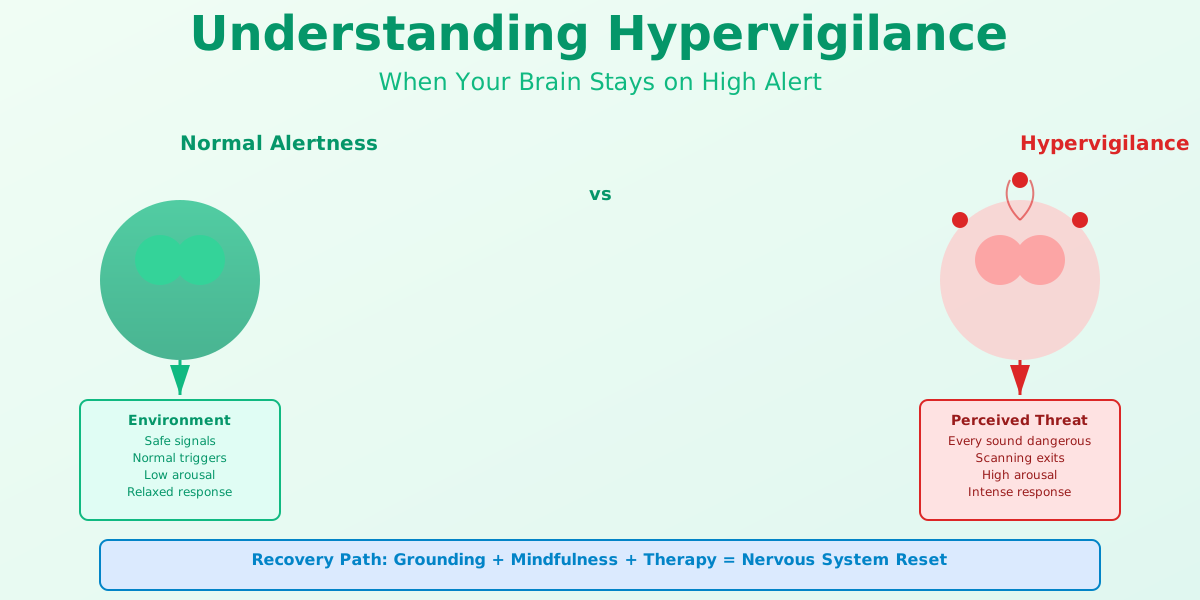
Hypervigilance goes far beyond normal caution. It's a neurological response where your brain's threat-detection system gets stuck in overdrive, treating every environment as potentially dangerous even when objectively safe.
The good news? This state isn't permanent. Your nervous system can learn that safety is possible again through targeted techniques, professional support, and time.
What Is Hypervigilance?
Hypervigilance is a heightened state of sensory sensitivity and alertness where a person constantly scans their environment for signs of danger or threat—even when the risk of actual danger is low or nonexistent. The National Institute of Mental Health describes it as a core symptom of post-traumatic stress disorder (PTSD), characterized by exaggerated responses to potential threats and inability to relax or lower one's guard. Rather than a personality trait, hypervigilance is a neurobiological response where the brain's alarm system remains activated and looking for reasons to stay afraid.
Not medical advice.
Think of hypervigilance like a smoke detector set too sensitive—it goes off when you're cooking dinner, when you burn toast, even when you're just boiling water. Your threat-detection system is working correctly; it's just calibrated way too high. This happens because past trauma or prolonged stress taught your nervous system that danger is everywhere and vigilance is necessary for survival.
Surprising Insight: Surprising Insight: Research from the National Institute of Mental Health shows that hypervigilance creates a forward feedback loop—the more hypervigilant you become, the more threats your brain detects, which increases anxiety, which further increases hypervigilance.
The Hypervigilance Cycle
Shows how hypervigilance feeds itself: trauma creates threat detection → increased alertness → more threats perceived → anxiety increases → hypervigilance strengthens
🔍 Click to enlarge
Why Hypervigilance Matters in 2026
In today's world, hypervigilance affects millions. Whether triggered by childhood trauma, recent violence exposure, military service, medical emergencies, or chronic unpredictability, hypervigilance has reached epidemic levels among trauma survivors. The American Psychiatric Association estimates that approximately 8% of adults will experience PTSD in their lifetime, and hypervigilance is a central feature of this condition.
The consequences are severe: chronic hypervigilance leads to exhaustion, impaired relationships, difficulty concentrating at work, sleep disruption, and increased risk of physical health problems including cardiovascular disease, digestive issues, and autoimmune conditions. Without intervention, hypervigilance can persist for decades, reducing quality of life and preventing full engagement with work, relationships, and joy.
Understanding and addressing hypervigilance matters because recovery is possible. Modern trauma therapy—particularly Eye Movement Desensitization and Reprocessing (EMDR) and trauma-focused cognitive-behavioral therapy (CBT)—can help reset your nervous system. The brain's neuroplasticity means new patterns can be learned even after years of hypervigilance.
The Science Behind Hypervigilance
Hypervigilance is rooted in neurobiology, not weakness or imagination. When you experience trauma, your amygdala—the brain's threat-detection center—becomes hyperactive. Research from translational psychiatry shows that trauma survivors have abnormally elevated resting amygdala connectivity, meaning their alarm system stays activated even during rest. Meanwhile, the prefrontal cortex (your rational decision-making brain) shows weakened communication with the amygdala, so your thinking brain struggles to tell your fear brain that danger has actually passed.
The sympathetic nervous system (responsible for fight-flight-freeze responses) gets stuck in overdrive while the parasympathetic nervous system (responsible for rest-and-digest responses) remains suppressed. This creates a state of chronic hyperarousal where your body releases stress hormones—cortisol and adrenaline—constantly, even during sleep. Your breath stays shallow, your muscles stay tense, and your heart rate remains elevated.
Hypervigilance in the Brain
Compares healthy vs hypervigilant brain activity: healthy has balanced amygdala-prefrontal communication; hypervigilant shows overactive amygdala, weakened prefrontal connection
🔍 Click to enlarge
Key Components of Hypervigilance
Sensory Hypersensitivity
People with hypervigilance experience heightened sensory perception where sounds, movements, and stimuli feel more intense than they objectively are. A car backfiring sounds like gunfire. A partner's quick movement triggers a fear response. This isn't exaggeration—research shows that increased postsynaptic gain in the primary auditory cortex means hypervigilant individuals literally process sounds with greater neural amplification. The sensory signal itself is stronger in the brain.
Attentional Bias to Threat
Your attention automatically and preferentially locks onto potential dangers. Your eyes scan for exits before even registering that you've entered a room. You notice the person arguing on the phone while missing the beauty of the sunset. This selective attention served survival purposes in dangerous environments but becomes maladaptive in safe ones. The brain allocates 80% of attention to threat-checking, leaving only 20% available for neutral or positive information.
Impaired Threat Prediction
Hypervigilance disrupts your ability to accurately predict future risk. People with PTSD-related hypervigilance tend to overestimate danger probability—believing that today's safe shopping trip has a 50% chance of being dangerous, when objectively it's 0.1%. This predictive error keeps the system locked in threat mode. The brain that experienced real danger assumes danger remains universal and uncontrollable.
Chronic Physiological Arousal
The nervous system stays in sympathetic activation rather than the rest-and-digest state. Blood vessels constrict. Digestion shuts down. Muscles stay ready for action. Heart rate remains elevated. Breathing stays shallow. This chronic arousal exhausts the body's stress response system over time, leading to what's called allostatic load—the wear and tear from constant activation. The body never gets the recovery signal that safety has been restored.
| Physical Symptoms | Psychological Symptoms | Behavioral Symptoms |
|---|---|---|
| Rapid heartbeat, muscle tension, jaw clenching, trembling, sweating, headaches, stomach issues | Constant worry, difficulty concentrating, intrusive thoughts, feeling overwhelmed, emotional numbness, irritability | Avoiding triggers, checking exits, keeping watch during conversations, difficulty relaxing, sleep disruption, substance use |
| Restlessness, difficulty staying still, fatigue from constant alertness, hyperreactivity to stimuli | Racing thoughts, paranoid ideation, memory gaps, difficulty with decision-making, shame about symptoms | Overprotective behaviors, controlling relationships, startled responses, always armed or prepared |
| Chronic pain, elevated blood pressure, weakened immune function, autoimmune activation | Depression, anhedonia (inability to feel pleasure), dissociation, attachment difficulties | Social withdrawal, aggression toward loved ones, compulsive safety behaviors, hyperactivity in children |
How to Apply Hypervigilance Recovery: Step by Step
- Step 1: Recognize the pattern: Acknowledge that your hypervigilance is a protective response, not a personal flaw. It kept you alive. Honor that while recognizing it's no longer necessary.
- Step 2: Name your triggers: Identify specific situations, sounds, places, or people that activate your hypervigilance response. Write them down. Awareness is the first step toward change.
- Step 3: Practice grounding techniques: Use the 5-4-3-2-1 method when triggered—notice five things you see, four you can touch, three you hear, two you smell, one you taste. This anchors you in present safety.
- Step 4: Regulate your breathing: Practice 4-7-8 breathing (inhale for 4, hold for 7, exhale for 8) which activates the vagus nerve and shifts the nervous system from fight-flight to rest-and-digest.
- Step 5: Establish safety signals: Create intentional markers of safety—a comfortable chair, a supportive person, a specific location. These become proof that safety exists.
- Step 6: Develop body awareness: Use body scans to notice where you're holding tension. Progressively relax each muscle group. Reconnection to your body reduces dissociation and threat perception.
- Step 7: Seek trauma-focused therapy: EMDR or trauma-focused CBT can help process underlying trauma and reset the amygdala's threat threshold. These approaches are evidence-based with strong success rates.
- Step 8: Practice titration: Gradually expose yourself to previously avoided situations while using grounding skills. Too much too fast causes retraumatization; too little perpetuates avoidance.
- Step 9: Build predictability: Create daily routines where possible. Predictability signals safety to the nervous system. Include non-negotiable recovery time—no optimizing, no productivity pressure.
- Step 10: Connect with others: Healing happens in relationship. Find a trauma-informed therapist, support group, or trusted community. Shared experience and witnessed recovery accelerate nervous system healing.
Hypervigilance Across Life Stages
Young Adulthood (18-35)
Young adults with hypervigilance often struggle with relationship formation and work performance. The constant vigilance interferes with trust-building and connection. Some respond by avoiding relationships altogether; others become controlling partners. In work settings, hypervigilance can look like over-preparation, difficulty with spontaneity, or conflict with authority figures. Early intervention through therapy during this stage prevents the hypervigilance from becoming more entrenched and helps establish secure relationships before patterns solidify.
Middle Adulthood (35-55)
By midlife, untreated hypervigilance often manifests as chronic health problems—hypertension, autoimmune conditions, digestive disorders—alongside relationship strain and professional limitations. Many seek treatment only after physical symptoms become undeniable. Those who address hypervigilance during this stage often experience profound relief and report rediscovering joy they'd forgotten was possible. The brain's neuroplasticity remains strong enough for significant change.
Later Adulthood (55+)
Older adults may have carried hypervigilance for decades, sometimes not recognizing it as trauma-related until later in life. Retirement can unexpectedly trigger intensified hypervigilance (loss of structure) or unexpected relief (escape from work stress). Older adults often benefit from gentle trauma therapy that honors their life experience while introducing nervous system regulation. Intergenerational healing becomes possible—they can recognize hypervigilance in adult children and grandchildren and seek healing together.
Profiles: Your Hypervigilance Recovery Approach
The Protective Guardian
- Validation that their protective mechanisms helped them survive
- Permission to release control without catastrophe happening
- Clear evidence that safety is genuinely possible
Common pitfall: Overextending control into areas where it's not needed, exhausting themselves and alienating loved ones through constant surveillance or preparation
Best move: Practice delegating low-stakes decisions to trusted others. Create a 'safety experiment' list—small situations where you deliberately don't check for danger and document that safety was maintained.
The Numb Escape Artist
- Reconnection to the body and emotions through safe, graded exposure
- Understanding that dissociation protected them but now prevents healing
- Somatic techniques that help gradually increase sensory awareness
Common pitfall: Using avoidance, substances, or dissociation to manage hypervigilance, which actually prevents nervous system reset and perpetuates the problem
Best move: Start with guided body scans. Spend 2 minutes daily feeling sensation in your body without judgment. Gradually increase from dissociation-proof activities to mildly triggering ones.
The Anxious Overthinker
- Cognitive restructuring to challenge catastrophic thinking patterns
- Proof that most predictions of danger don't materialize
- Mindfulness training to notice thoughts without believing them
Common pitfall: Ruminating on worst-case scenarios, researching possible dangers, and becoming consumed by threat assessment, which paradoxically increases the sensation of danger
Best move: Keep a 'prediction log'—write down anticipated dangers, then record what actually happened. Most entries will show zero danger. Review weekly to retrain threat prediction.
The Hyperreactive Exploder
- Immediate de-escalation techniques for acute nervous system activation
- Understanding the gap between perceived and actual threat
- Compassion for their reactivity while building capacity to pause
Common pitfall: Lashing out at loved ones, damaging relationships and employment, then feeling shame which creates more hypervigilance
Best move: Create a 'pause protocol'—when triggered, use 10 deep breaths before responding. Tell loved ones: 'I need 5 minutes.' This tiny delay creates space between impulse and action.
Common Hypervigilance Mistakes
Mistake 1: Avoiding all triggers. While some trigger avoidance is healthy, complete avoidance keeps hypervigilance locked in place. Your nervous system never learns that safety is possible in those situations. Avoidance also shrinks your world, reducing quality of life. The path forward requires gradually facing triggers with proper support and grounding skills in place.
Mistake 2: Trying to think your way out. Hypervigilance isn't primarily a thinking problem—it's a nervous system regulation problem. You can't logic yourself out of an amygdala in overdrive. Cognitive strategies alone often fail because they don't address the neurobiological root. Somatic approaches (body-focused techniques) often work better than talk therapy alone.
Mistake 3: Expecting instant recovery. Hypervigilance often takes months or years to fully resolve depending on trauma severity and support available. Expecting too-rapid progress leads to discouragement and relapse. The nervous system needs repetition and safety evidence to gradually update its threat assessment. Celebrate small victories—one social interaction without dissociating, one night of solid sleep, one day where you didn't scan every exit.
Recovery Pathway vs. Avoidance Trap
Shows how avoidance perpetuates hypervigilance while gradual exposure with support leads to nervous system reset
🔍 Click to enlarge
Science and Studies
The neuroscience of hypervigilance has been extensively studied, providing clear evidence for both the mechanisms and treatment approaches. Landmark research from the National Institute of Mental Health demonstrates the amygdala-prefrontal cortex dysregulation underlying hypervigilance. Studies of trauma survivors show elevated startle responses to both predictable and unpredictable threats. Research on EMDR and trauma-focused CBT show effect sizes of 0.8-1.2 (considered large in psychological research), indicating these approaches are among the most effective treatments for PTSD-related hypervigilance.
- Shin & Liberzon (2010) in Neuropsychology Review demonstrated altered threat processing in PTSD, with enhanced amygdala reactivity to threat-related stimuli
- Foa & Kozak (1986) established the theoretical framework for emotional processing theory, which underlies trauma-focused therapy's effectiveness
- van der Kolk et al. (2016) in JAMA Psychiatry showed EMDR was superior to medication alone in treating PTSD and related hypervigilance
- Porges (2011) in Biological Psychology developed Polyvagal Theory explaining how vagal activation through breathing and movement can shift nervous system state
- Yehuda & LeDoux (2007) in Nature Reviews Neuroscience integrated findings on the amygdala's role in fear conditioning and extinction, providing basis for exposure therapy
Your First Micro Habit
Start Small Today
Today's action: Practice 5-4-3-2-1 grounding for 2 minutes when you notice hypervigilance activation. Name five things you see (not judge—just see), four you can physically touch, three you hear, two you smell, one you taste.
This technique interrupts the hypervigilance feedback loop by forcing your conscious mind to engage with present-moment reality rather than threat-scanning. It activates the thinking brain, partially deactivating the emotional brain. The sensory engagement proves to your nervous system that your immediate environment is safe.
Keep quitting habit apps after a missed day? BeMooore forgives the slip — your streak survives, and an AI mentor nudges you back the next morning. Free on iOS.
Quick Assessment
How often do you find yourself scanning for danger or threats in your daily environment?
The more frequently you scan for threats even when logically safe, the more your nervous system may be stuck in hypervigilance. Recovery is possible at any level.
How has hypervigilance affected your relationships and work?
Understanding the life impact helps you prioritize recovery. Even when severe, professional support provides reliable paths forward.
What resonates most with your experience of hypervigilance?
Your primary symptom profile guides which recovery techniques work best for you. Physical symptoms respond well to somatic approaches; anxiety to cognitive-behavioral techniques; avoidance to gradual exposure.
Take our full assessment to get personalized recommendations.
Discover Your Style →Next Steps
Recovery from hypervigilance begins with self-compassion. Your hypervigilance protected you when you needed protection. It's not a flaw—it's a symptom of what your nervous system experienced. Now it's time to update that system with the message that present safety is real and recovery is possible.
Start with one micro habit. Practice grounding when you notice activation. Consider seeking a trauma-informed therapist who specializes in EMDR or trauma-focused CBT. Connect with others who understand—support groups, online communities, or trusted friends. Track small victories. Be patient with yourself. Your nervous system learned to be hypervigilant over time; it will learn safety over time too.
Get personalized guidance with AI coaching.
Start Your Journey →Research Sources
This article is based on peer-reviewed research and authoritative sources. Below are the key references we consulted:
Related Glossary Articles
Frequently Asked Questions
Is hypervigilance the same as anxiety?
No, though they're related. Anxiety is worry about future threats; hypervigilance is active scanning for present threats. You can have anxiety without hypervigilance and vice versa. Hypervigilance is more neurobiologically rooted in amygdala overactivity, while anxiety involves increased future-oriented thinking.
Can hypervigilance go away completely?
Yes. With proper treatment (especially EMDR or trauma-focused CBT) and time, hypervigilance can resolve significantly or completely. Your brain can relearn that the world is safe. Some people retain a slightly elevated baseline alertness but lose the exhausting, constant edge.
How long does hypervigilance recovery typically take?
Recovery timelines vary widely. Mild cases may improve in weeks with grounding skills and lifestyle changes. Moderate cases often require 3-6 months of therapy. Complex trauma may take 12-24 months. The key is consistency and avoiding the trap of expecting linear progress—it's usually two steps forward, one step back.
Is medication helpful for hypervigilance?
SSRIs (selective serotonin reuptake inhibitors) can reduce hypervigilance symptoms and are often prescribed for PTSD. They work best combined with therapy rather than alone. Medication gives your nervous system space to learn new patterns through therapy. Some people eventually reduce medication as hypervigilance resolves.
What if my hypervigilance is related to ongoing threat?
If you're still in an unsafe situation, addressing hypervigilance requires first addressing safety. You cannot tell your nervous system it's safe while you're actually unsafe. Safety planning and exit strategies may be necessary first steps before nervous system recovery work.
Take the Next Step
Ready to improve your wellbeing? Take our free assessment to get personalized recommendations based on your unique situation.
- Discover your strengths and gaps
- Get personalized quick wins
- Track your progress over time
- Evidence-based strategies