Polyvagal Theory
Your nervous system is constantly scanning the environment for signs of safety or danger—often without your conscious awareness. This automatic detection happens through a process called neuroception, and it shapes every emotion you feel, every relationship you have, and every moment of peace you experience. Understanding polyvagal theory means learning why your body sometimes freezes in fear, why you feel safe with certain people, and how you can retrain your nervous system to support healing, resilience, and genuine connection.
Developed by Dr. Stephen Porges in 1994, polyvagal theory revolutionizes how we understand trauma, anxiety, and emotional regulation by revealing the hidden role of the vagus nerve—your body's longest and most critical communication highway.
Rather than seeing stress as a simple fight-or-flight response, polyvagal theory shows that your nervous system operates through three distinct physiological states, each with its own purpose, limitations, and healing potential.
What Is Polyvagal Theory?
Polyvagal theory describes how your autonomic nervous system—the part of your nervous system that operates automatically without conscious thought—uses the vagus nerve to regulate your body, emotions, and social behavior. The theory proposes that your nervous system operates through three distinct and hierarchical states, each with unique physiological signatures and behavioral patterns. These three states evolved at different points in human history and serve different survival functions.
Not medical advice.
The word 'polyvagal' literally means 'many vagus,' referring to the multiple branches and functions of the vagus nerve. This single nerve carries signals from your brainstem down through your neck, chest, and abdomen, influencing heart rate, breathing, digestion, immune function, and facial expression. When your vagus nerve is working optimally, you experience emotional flexibility, social engagement, and physiological balance. When it's dysregulated—often due to chronic stress or trauma—you may feel stuck in patterns of anxiety, isolation, or numbness.
Surprising Insight: Surprising Insight: Your body decides whether you're safe before your conscious mind even registers danger. This automatic detection happens through neuroception—your nervous system's implicit safety-assessment system—which operates entirely outside of conscious awareness and can misfire after trauma.
The Three Autonomic States
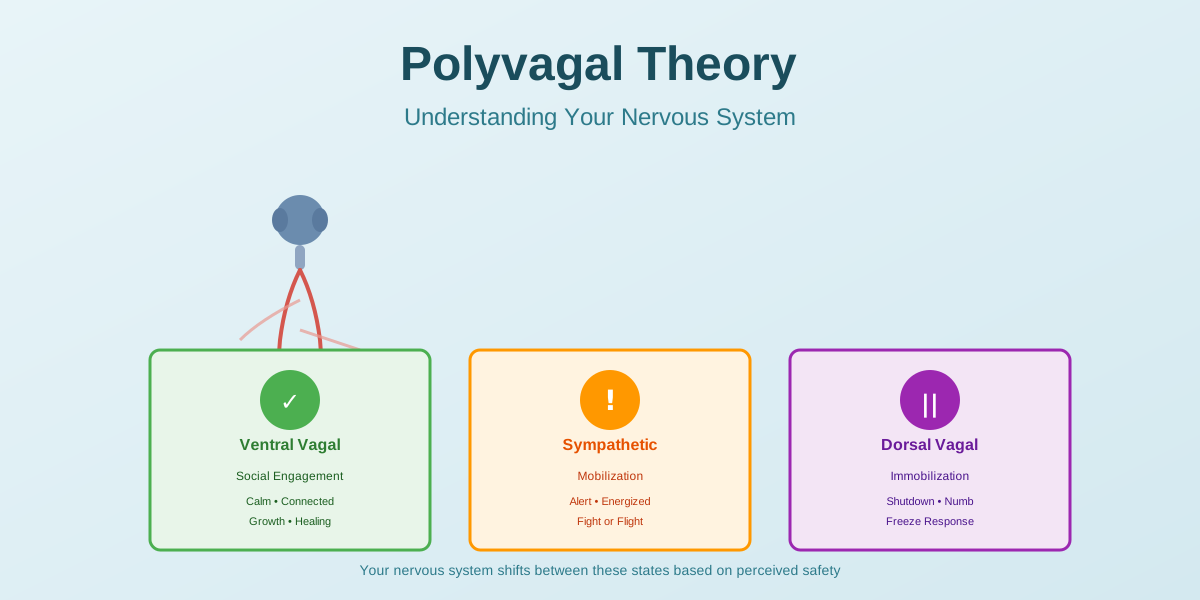
Visualization of ventral vagal (social engagement), sympathetic (mobilization), and dorsal vagal (immobilization) states with their characteristic behaviors and physiological signatures.
🔍 Click to enlarge
Why Polyvagal Theory Matters in 2026
As anxiety, chronic stress, and trauma-related conditions continue to rise globally, polyvagal theory offers a scientifically grounded framework for understanding why people get stuck in patterns of fear, isolation, or numbing—and how to move beyond them. Unlike older models that treated the nervous system as a simple on-off switch, polyvagal theory reveals a more nuanced reality: your nervous system has multiple gears, and learning to shift between them is the foundation of emotional wellbeing.
In clinical practice, polyvagal-informed approaches are being used to treat PTSD, anxiety disorders, autism spectrum conditions, chronic pain, and depression. Therapists, coaches, and practitioners worldwide are integrating polyvagal principles into their work, recognizing that top-down cognitive approaches alone often fail to help people whose bodies are locked in old survival patterns.
For individuals seeking to build resilience, improve relationships, and enhance overall wellbeing, understanding polyvagal theory provides a practical roadmap. It explains why certain practices like breathwork, vocal toning, and safe social connection are so powerful—they directly stimulate your vagus nerve and signal safety to your nervous system.
The Science Behind Polyvagal Theory
The vagus nerve is the tenth cranial nerve and the primary nerve of the parasympathetic nervous system. It's often called the 'wandering nerve' because it extends from your brainstem down to your abdomen, touching nearly every major organ: heart, lungs, stomach, and digestive tract. Through multiple branches and connections, the vagus nerve creates a two-way communication system between your brain and body. When your vagus nerve is toned—meaning it's responsive and flexible—your body can smoothly transition between states as circumstances demand. When it's dysregulated, you may feel trapped in one state or unable to access the calm, connected state you need.
Polyvagal theory distinguishes between different vagal pathways and their evolutionary origins. The ventral vagal complex (VVC), which includes the myelinated vagus nerve in mammals, evolved most recently and supports social engagement, emotional communication, and physiological homeostasis. The sympathetic nervous system evolved earlier to handle acute threats through mobilization (fight or flight). The dorsal vagal system—shared with reptiles and other ancient species—handles life-threatening situations through immobilization (freeze or shutdown). This evolutionary layering explains why trauma can activate such primitive survival responses even when no real danger exists.
How Neuroception Shapes Your Response
The pathway from environmental/internal cues to automatic nervous system response, showing how neuroception works and why it sometimes misfires after trauma.
🔍 Click to enlarge
Key Components of Polyvagal Theory
The Ventral Vagal Complex (Social Engagement System)
The ventral vagal complex represents your most evolved nervous system state—the one unique to mammals. When you're in this state, your face is mobile and expressive, your voice carries emotional tone and prosody, your heart rate is calm and coherent, and your digestion is active. You feel safe, open to connection, and capable of creative thinking and growth. This is the state where genuine intimacy, playfulness, and learning happen. It's also the state where your body can heal, your immune system functions optimally, and your vagal tone (the strength and responsiveness of your vagus nerve) is highest. Polyvagal theory calls this the foundation of wellbeing.
Neuroception: Your Nervous System's Lie Detector
Neuroception is your nervous system's automatic and unconscious detection of safety or danger based on environmental and internal cues. Unlike conscious perception, neuroception happens instantly, without thought, and operates based on patterns learned from past experiences. After trauma, neuroception can become hypersensitive or misdirected—mistaking neutral situations for threats, or remaining blind to genuine danger. This is why someone with PTSD might feel terrified in a safe environment, or why a child who experienced neglect might struggle to trust even caring adults. Healing neuroception is central to recovery.
Vagal Tone: The Measure of Flexibility
Vagal tone refers to the strength and responsiveness of your vagus nerve—essentially how well your parasympathetic nervous system can activate and recover. Vagal tone is measured using metrics like respiratory sinus arrhythmia (RSA), which reflects the synchronization of your heart rate with your breathing. Higher vagal tone predicts better emotional regulation, social engagement capacity, and physiological resilience. Lower vagal tone is associated with increased anxiety, poor emotion regulation, and difficulty recovering from stress. The good news is that vagal tone can be trained and improved through specific practices.
The Three-Tiered Hierarchy
Polyvagal theory proposes that your nervous system operates through a hierarchical ladder. When you feel safe, you access the highest rung—the ventral vagal state of social engagement and connection. When you sense threat, you drop to the middle rung—sympathetic mobilization (fight or flight). When you encounter life-threatening danger, you collapse to the lowest rung—dorsal vagal immobilization (freeze). The key insight: you cannot think yourself out of the lower rungs. Therapy, willpower, and positive thinking don't work when your nervous system has already decided you're in danger. You need to re-educate your nervous system's threat-detection system.
| State | Physiological Signature | Emotional Quality | Social Capacity |
|---|---|---|---|
| Ventral Vagal (Social Engagement) | Calm heart rate, coordinated breathing, active digestion, mobile face, warm voice | Safe, connected, creative, capable | High—open to intimacy, playfulness, collaboration |
| Sympathetic (Mobilization) | Elevated heart rate, rapid breathing, muscles tense, eyes alert, voice urgent | Threat alert, energized, ready for action, sometimes anxious | Reduced—focused on survival, limited capacity for empathy |
| Dorsal Vagal (Immobilization) | Low heart rate, shallow breathing, muscle flaccidity, glazed expression, monotone voice | Shutdown, numb, dissociated, helpless | Minimal—self-protective withdrawal, isolation |
How to Apply Polyvagal Theory: Step by Step
- Step 1: Recognize your three states: Notice throughout the day when you're in ventral vagal (calm, connected), sympathetic (alert, tense), or dorsal vagal (shutdown, numb) state. Most people have habitual patterns—they live predominantly in one or two states.
- Step 2: Identify your triggers: What cues make you feel safe and drop into social engagement? What triggers threat responses? What causes collapse? Track both environmental triggers (people, places, situations) and internal ones (body sensations, thoughts, memories).
- Step 3: Practice vagal toning: Use practices that directly stimulate the vagus nerve. These include slow diaphragmatic breathing (especially with longer exhales), humming or vocal toning, cold water exposure, progressive muscle relaxation, and gentle neck movements.
- Step 4: Create safety signals: Deliberately design your environment and interactions to generate neuroception of safety. This includes warm lighting, comfortable temperature, trusted people present, and predictable routines.
- Step 5: Use co-regulation: Spend time with people who have high vagal tone and feel genuinely safe in your presence. Their calm nervous system can help stabilize yours through a process called co-regulation.
- Step 6: Practice the Safe and Sound Protocol (if available): This acoustic intervention uses specially filtered music to exercise and tone the muscles of the middle ear and vagus nerve, gradually signaling safety to your nervous system.
- Step 7: Engage in rhythmic activities: Movement practices like dance, drumming, walking, or swimming that involve rhythm can entrain your nervous system toward parasympathetic activation.
- Step 8: Use breath as your anchor: Slow, deep breathing—especially practices like 4-7-8 breathing or box breathing—directly stimulates vagal activation and signals safety to your system.
- Step 9: Address past trauma: Work with a trauma-informed therapist who understands polyvagal principles to help retrain your threat-detection system and reduce hyper-vigilance.
- Step 10: Build resilience through practice: Like physical fitness, vagal tone improves with consistent practice. Small daily doses of vagal activation practices are more effective than occasional intense interventions.
Polyvagal Theory Across Life Stages
Young Adulthood (18-35)
In young adulthood, your nervous system is still developing its full capacity for emotional regulation. Many people in this age range struggle with high baseline anxiety, difficulty with sustained attention, and relationship challenges because their vagal tone is still building. This is also the window when trauma from childhood often surfaces as anxiety or relationship struggles. The advantage: your nervous system is still plastic and responsive to new learning. Practices that build vagal tone—like breathwork, movement, cold exposure, and safe social connection—are particularly effective at this stage. Young adults who learn polyvagal principles can prevent years of dysregulation by building healthy nervous system habits early.
Middle Adulthood (35-55)
By middle adulthood, many people have accumulated years of chronic stress, unprocessed trauma, or habitual dysregulation patterns. The good news: understanding polyvagal theory often provides the missing piece that explains why they've struggled despite years of therapy or self-help. Middle-aged adults often benefit most from integrated approaches that combine polyvagal awareness with somatic work, emotional processing, and lifestyle changes. At this stage, addressing nervous system dysregulation becomes critical for preventing chronic disease, maintaining relationship quality, and sustaining energy and motivation.
Later Adulthood (55+)
In later adulthood, vagal tone naturally declines, which is why many older adults experience increased anxiety, health issues, and social withdrawal. However, polyvagal-informed practices remain powerful at any age. Older adults who maintain or improve their vagal tone through consistent practice show better immune function, emotional resilience, and social engagement. Gentle vagal stimulation practices—warm social connection, slow breathing, gentle movement—are particularly valuable for older adults seeking to maintain health and quality of life while naturally accommodating age-related changes.
Profiles: Your Polyvagal Theory Approach
The Anxious Mobilizer
- Nervous system awareness to recognize sympathetic activation before it escalates
- Downregulation techniques (slow breathing, gentle movement) to access ventral vagal calm
- Support in distinguishing real threats from false alarms created by hyper-vigilant neuroception
Common pitfall: Trying to think away anxiety through logic and willpower alone, which doesn't work when the nervous system has already decided you're in danger
Best move: Use bottom-up approaches (breathing, movement, safe social connection) to signal safety to your nervous system first, then let cognitive reframing follow
The Shutdown Freezer
- Practices that activate parasympathetic energy and mobilization without triggering fight-or-flight
- Safe co-regulation with calm, attuned others to gradually expand window of tolerance
- Gentle trauma processing to help nervous system recognize that threat has passed
Common pitfall: Using only calming techniques (meditation, breathing) that can deepen dissociation instead of supporting resilience and engagement
Best move: Combine downregulation with gentle activation (warm connection, light movement, soft vocalization) to build capacity for social engagement without overwhelming the nervous system
The Disconnected Oscillator
- Recognition that nervous system patterns are not personal failures but learned survival strategies
- Experience of genuine safety and attunement from others to rewire neuroception
- Practices that build vagal tone gradually and consistently without forcing positivity
Common pitfall: Cycling between excessive activity (sympathetic overdrive) and complete withdrawal (dorsal shutdown) without sustaining social engagement
Best move: Build daily micro-practices that anchor you in the middle ground of calm social engagement—morning connection rituals, midday body check-ins, evening reflection
The Resilient Regular
- Understanding of why their natural flexibility works and how to maintain it under stress
- Deeper practices for fine-tuning nervous system regulation during challenging periods
- Ways to use their stable baseline to support and co-regulate others
Common pitfall: Assuming their natural regularity will persist without maintenance, then struggling when life stressors overwhelm their system
Best move: Maintain and deepen vagal tone practices even during stable periods, and learn to recognize early signs of dysregulation so they can course-correct quickly
Common Polyvagal Theory Mistakes
Mistaking polyvagal theory for a simple relaxation technique. Many people assume that understanding polyvagal theory means they should just 'calm down' or meditate away anxiety. The theory is more profound: it explains why calming techniques alone often fail for traumatized nervous systems, and why you need bottom-up approaches that work through the body first, not the mind.
Thinking you can access ventral vagal state through willpower alone. Your nervous system responds to actual perceived safety, not to positive thinking or determination. If your body still detects threat, no amount of mental effort will shift you into calm social engagement. You need to actually change the signals your nervous system receives—through somatic practices, safe relationships, and environmental changes.
Using calming practices in ways that deepen dissociation. For people in dorsal vagal shutdown, overly passive practices can paradoxically worsen their condition by sinking them deeper into immobilization. These individuals need practices that combine gentle activation with safety signals—not just relaxation.
Common Mistakes & How to Course-Correct
Visual guide showing common misunderstandings about polyvagal theory and the evidence-based adjustments that actually work.
🔍 Click to enlarge
Science and Studies
Polyvagal theory has become increasingly central to neuroscience, psychology, trauma research, and clinical practice. Major research institutions, universities, and clinical organizations worldwide are investigating and applying polyvagal principles. Recent meta-analyses and systematic reviews show strong evidence for polyvagal-informed interventions in treating PTSD, anxiety, autism, developmental trauma, and chronic pain. Here are key research sources:
- Polyvagal Theory: Current Status, Clinical Applications, and Future Directions (PMC/NIH, 2024) - Comprehensive review of recent advances and clinical implementations
- Polyvagal theory: a journey from physiological observation to neural innervation and clinical insight (Frontiers in Behavioral Neuroscience, 2025) - Latest neuroscientific evidence and expanded applications
- Polyvagal Theory: A Science of Safety (PMC/NIH, 2022) - Foundational review of how the theory explains safety-dependent physiology and psychology
- A theoretical exploration of polyvagal theory in creative arts and psychomotor therapies (PMC, 2024) - Evidence for movement-based and somatic approaches grounded in polyvagal principles
- Understanding PTSD From a Polyvagal Perspective (Institute for Functional Medicine, 2024) - Clinical framework for trauma recovery using polyvagal theory
Your First Micro Habit
Start Small Today
Today's action: Vagal reset in 90 seconds: Three times today, take 3 slow, deep breaths where your exhale is longer than your inhale. Count: inhale for 4, hold for 2, exhale for 6. Feel your body relax.
Extended exhale directly stimulates your vagus nerve and shifts your nervous system toward parasympathetic activation. Just 90 seconds of this practice can signal safety to your body and shift your neuroception. Repetition builds vagal tone.
Keep quitting habit apps after a missed day? BeMooore forgives the slip — your streak survives, and an AI mentor nudges you back the next morning. Free on iOS.
Quick Assessment
How often do you feel calm, connected, and able to engage with others?
Your answer reflects your baseline ventral vagal capacity. Those who answer 'most of the time' have well-developed vagal tone. Those who answer 'rarely' likely have nervous system dysregulation patterns that could benefit from polyvagal-informed approaches.
When you experience stress or conflict, what typically happens to your body?
This shows how your nervous system typically responds to perceived threat. Understanding your dominant response is the first step toward building flexibility and developing other options.
What would change if you could reliably access a calm, connected, social engagement state?
The ventral vagal state where true wellbeing, growth, and connection happen is available to you—but only after you understand and work with your nervous system patterns. Polyvagal theory shows you the path.
Take our full assessment to get personalized recommendations.
Discover Your Style →Next Steps
Your nervous system holds the key to your wellbeing. Polyvagal theory shows you exactly how it works and why understanding your autonomic patterns matters more than willpower or positive thinking alone. The most important first step is simply noticing—throughout your day, pause and ask: Am I in ventral vagal state (calm, connected, creative)? Sympathetic state (alert, mobilized, tense)? Or dorsal vagal state (shutdown, numb, withdrawn)? Once you recognize your patterns, you can begin to intentionally shift them.
Start with the micro habit above—just 90 seconds of extended exhale breathing, three times today. This is your nervous system learning that safety is possible. Over time, as you practice vagal toning through breathing, movement, vocal practices, and safe social connection, your baseline vagal tone will improve. You'll notice you feel calmer more often, recover from stress more quickly, and experience deeper connection with others. This is what healing looks like through the lens of polyvagal theory.
Get personalized guidance with AI coaching.
Start Your Journey →Research Sources
This article is based on peer-reviewed research and authoritative sources. Below are the key references we consulted:
Related Glossary Articles
Frequently Asked Questions
Is polyvagal theory scientifically proven?
Polyvagal theory has substantial research support, particularly regarding its clinical applications in trauma, anxiety, and nervous system regulation. While some aspects of the original theory have been refined based on neuroscientific evidence, the core insight—that the vagus nerve plays a central role in regulating safety perception, emotional states, and social engagement—is well-established. Thousands of peer-reviewed studies now use polyvagal frameworks.
Can I use polyvagal theory techniques if I have serious trauma or mental health conditions?
Yes, but ideally with professional guidance. Polyvagal-informed practices like breathing and safe social connection are generally very gentle and effective. However, if you have trauma, PTSD, dissociation, or complex mental health conditions, working with a trauma-informed therapist trained in polyvagal approaches ensures you progress safely and don't re-traumatize yourself.
How long does it take to improve my vagal tone?
Some changes happen immediately—a single conscious breathing session can shift your nervous system state within minutes. But building lasting changes in vagal tone typically takes weeks to months of consistent practice. Think of it like physical fitness: one workout helps today, but consistent training changes your baseline over time.
What's the difference between polyvagal theory and other nervous system approaches like Somatic Experiencing or Internal Family Systems?
Polyvagal theory is the neuroscientific framework that explains how the nervous system works. Somatic Experiencing, Internal Family Systems, and other approaches are therapeutic methods that can be informed by polyvagal principles. Many modern trauma therapies integrate polyvagal understanding to enhance their effectiveness.
Can polyvagal theory help with chronic health conditions?
Yes, because many chronic conditions—chronic pain, IBS, autoimmune conditions, high blood pressure—are connected to nervous system dysregulation. Polyvagal-informed approaches that restore healthy vagal tone can help reduce symptom severity and support overall healing, though they work best as part of a comprehensive treatment plan with your healthcare provider.
Take the Next Step
Ready to improve your wellbeing? Take our free assessment to get personalized recommendations based on your unique situation.
- Discover your strengths and gaps
- Get personalized quick wins
- Track your progress over time
- Evidence-based strategies