Breathwork
You take roughly 20,000 breaths every single day, yet most of them happen without a shred of awareness. What if the simplest tool for transforming your <a href='/g/mental-health.html'>mental health</a>, sharpening your <a href='/g/focus.html'>focus</a>, and calming a racing mind was already inside you? Breathwork is the intentional practice of controlling your breath to influence your physical, mental, and emotional state. Across thousands of years and dozens of traditions, humans have discovered that how you breathe changes how you feel, think, and heal. Modern science is now catching up to what yogis and monks have known for millennia, and the results are remarkable.
In the next few minutes, you will learn the major breathwork techniques, understand the science behind each one, and walk away with a simple practice you can start today. Whether you are dealing with chronic <a href='/g/stress-management.html'>stress</a>, searching for better <a href='/g/sleep-quality.html'>sleep quality</a>, or hoping to unlock peak performance, breathwork offers an accessible path forward.
From box breathing techniques used by Navy SEALs to ancient yoga pranayama practices, the world of breathwork is vast and deeply practical. Let us explore what the research says and how you can apply it to your daily life.
What Is Breathwork?
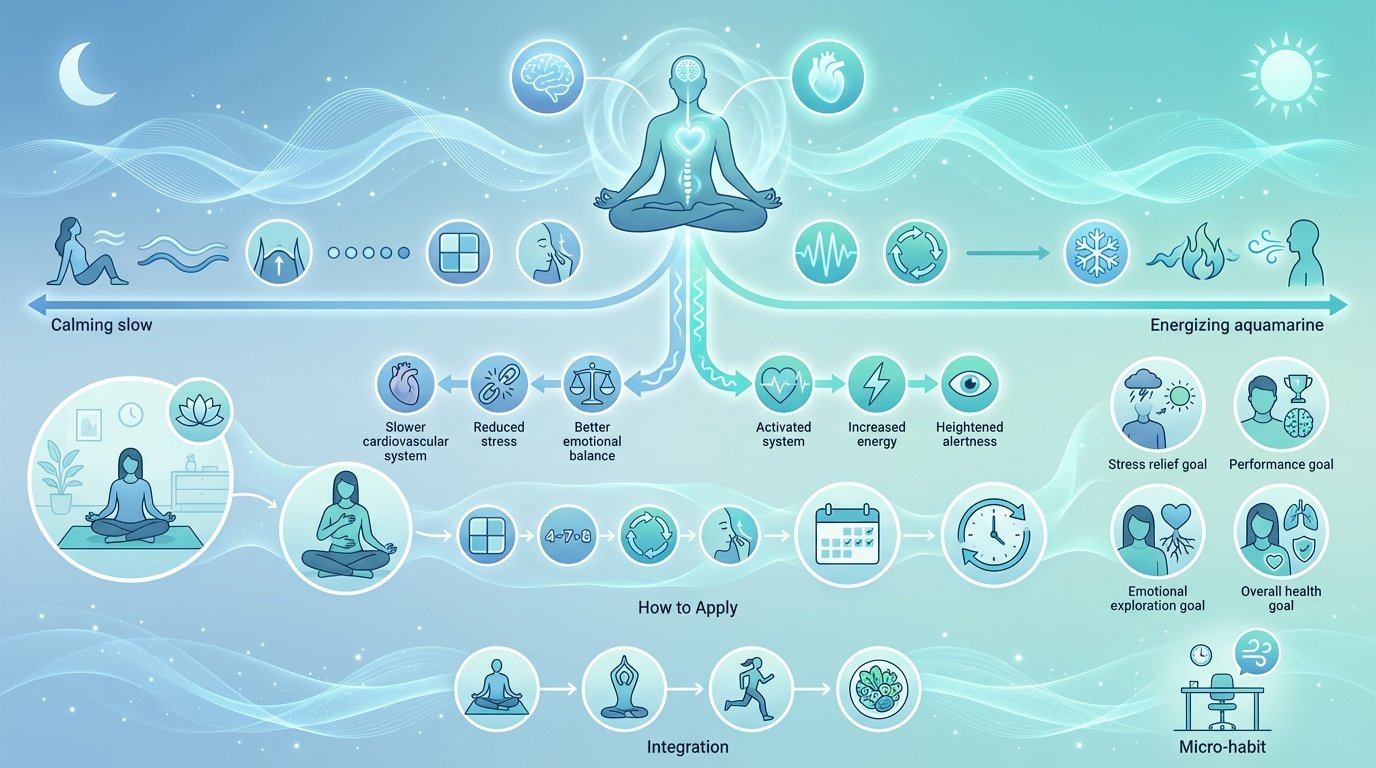
Breathwork is an umbrella term for any practice that uses conscious, intentional breathing patterns to improve body wellness, emotional wellness, and mental clarity. Unlike the automatic breathing controlled by your brainstem, breathwork asks you to take the steering wheel. You deliberately change the depth, speed, rhythm, or pattern of your breath to produce specific physiological and psychological effects. Some techniques slow the breath to activate the parasympathetic nervous system, while others accelerate it to energize the body or access altered states of consciousness.
Not medical advice.
The practice spans a broad spectrum. On one end you find gentle, calming approaches like diaphragmatic breathing and the 4-7-8 breathing technique. On the other, you have intense methods like holotropic breathwork and the Wim Hof Method that push the body into deliberate stress to build resilience. In between lie dozens of pranayama variations, coherent breathing at six breaths per minute, and tactical patterns like box breathing. All of them share a common principle: your breath is a direct interface between your conscious mind and your autonomic nervous system. When you control the breath, you gain influence over heart rate, blood pressure, cortisol levels, and brain function.
Surprising Insight: Surprising Insight: A 2023 Stanford study found that just five minutes of cyclic sighing (long exhales) per day improved mood and reduced anxiety more effectively than mindfulness meditation over the same period.
The Breathwork Spectrum
A visual overview of breathwork techniques arranged from calming to activating.
🔍 Click to enlarge
Why Breathwork Matters in 2026
Chronic stress has become one of the defining health challenges of our era. According to the American Psychological Association, persistent stress contributes to cardiovascular problems, weakened immune system function, and depression. Breathwork provides an immediate, cost-free intervention that anyone can use anywhere. Unlike pharmaceutical approaches, it carries minimal side effects and can be practiced independently after basic instruction. In a world saturated with digital stimulation and constant demands on energy management, the ability to regulate your nervous system through breath alone is a genuine superpower.
The scientific evidence base for breathwork has expanded dramatically. A 2023 meta-analysis published in the journal Scientific Reports analyzed twelve randomized controlled trials and found that breathwork interventions significantly reduced self-reported stress, anxiety, and depressive symptoms across diverse populations. Heart rate variability (HRV) based breathing at six breaths per minute decreased panic symptoms and chronic pain while increasing quality of life and cognitive function. These are not marginal improvements; they represent meaningful shifts in wellbeing that rival established therapeutic interventions.
Breathwork is also gaining traction in corporate holistic wellness programs, athletic training, military performance optimization, and clinical therapy. The Global Wellness Institute identified breathwork as one of the top wellness trends, with dedicated breathwork studios, apps, and certifications multiplying rapidly. Whether your goal is anxiety relief, sharper concentration and attention, improved cardiovascular health, or deeper emotional healing, there is a breathwork method designed for that outcome.
The Science Behind Breathwork
The power of breathwork lies in the vagus nerve, the longest cranial nerve in your body. It runs from your brainstem down through your neck, chest, and abdomen, connecting your brain to your heart, lungs, gut, and other organs. When you exhale slowly and deeply, you stimulate the vagus nerve, which activates the parasympathetic (rest-and-digest) branch of your autonomic nervous system. This lowers heart rate, reduces blood pressure, decreases cortisol production, and promotes relaxation. Conversely, rapid or forceful breathing activates the sympathetic (fight-or-flight) branch, increasing alertness and energy.
Neuroimaging research reveals that controlled breathing enhances the connectivity between the amygdala and the medial prefrontal cortex. In practical terms, this means breathwork strengthens the brain circuits responsible for emotional regulation. A 2023 study in Nature Scientific Reports demonstrated that coherent breathing at six breaths per minute improved both mental health and wellbeing compared to a placebo in a randomized controlled trial. Additionally, slow breathing increases brain health by optimizing oxygen and carbon dioxide balance in the blood, which influences cerebral blood flow and neural efficiency. The gut-brain axis also responds to breathing patterns, with slow diaphragmatic breathing improving digestive function and reducing inflammation in the cardiovascular system.
How Breathwork Affects Your Body
The physiological pathway from breath pattern to health outcome.
🔍 Click to enlarge
Key Breathwork Techniques
Diaphragmatic Breathing
Also called belly breathing, diaphragmatic breathing is the foundation of most breathwork practices. You breathe deeply into your abdomen rather than shallowly into your chest. Place one hand on your chest and one on your belly. As you inhale through your nose, your belly should rise while your chest stays relatively still. This engages the diaphragm fully, drawing more air into the lower lungs where gas exchange is most efficient. Research shows diaphragmatic breathing lowers blood pressure, reduces heart rate, and is especially beneficial for people with lung conditions such as COPD. It serves as the gateway technique for all deeper breathing techniques and supports better general health.
Box Breathing
Box breathing involves four equal phases: inhale for four counts, hold for four counts, exhale for four counts, and hold empty for four counts. This technique is widely used by military personnel, first responders, and athletes to maintain calm under pressure. The equal timing creates a balanced autonomic state, stabilizing the nervous system without tipping too far into relaxation or arousal. It improves emotional resilience, sharpens cognitive performance, and can be practiced discreetly in any setting. Even two minutes of box breathing has been shown to increase heart rate variability, a key marker of psychological flexibility and stress adaptation.
Pranayama Practices
Pranayama is the Sanskrit term for breath control and encompasses dozens of techniques refined over thousands of years within the yoga tradition. Alternate nostril breathing (Nadi Shodhana) balances the left and right hemispheres of the brain, promoting calm and cognitive flexibility. Ujjayi breathing creates an ocean-like sound by slightly constricting the throat, which increases vagal tone and supports deep sleep preparation. Kapalabhati (skull-shining breath) uses rapid, forceful exhales to energize the body and clear mental fog. Each pranayama technique serves a specific purpose within a broader system of holistic health.
The Wim Hof Method
Developed by Dutch athlete Wim Hof, this method combines rapid circular breathing with breath retention and cold exposure. A typical round involves thirty deep, fast breaths followed by a breath hold on the exhale that can last one to three minutes. The technique temporarily alters blood chemistry by reducing carbon dioxide levels, creating tingling sensations and a feeling of lightness. A 2025 semi-randomized controlled trial published in Nature Scientific Reports involving over four hundred participants found that the Wim Hof Method produced measurable improvements in executive function and psychometric wellbeing. The method builds mental toughness, enhances immune function, and supports disease prevention. However, it should only be practiced in a safe, seated position due to the risk of lightheadedness.
| Technique | Primary Benefit | Difficulty Level |
|---|---|---|
| Diaphragmatic Breathing | Stress reduction, foundation skill | Beginner |
| Box Breathing (4-4-4-4) | Calm under pressure, focus | Beginner |
| 4-7-8 Breathing | Sleep improvement, anxiety relief | Beginner |
| Coherent Breathing (6/min) | HRV optimization, emotional balance | Beginner |
| Alternate Nostril (Nadi Shodhana) | Brain hemisphere balance, calm focus | Intermediate |
| Wim Hof Method | Immune boost, resilience, energy | Intermediate |
| Holotropic Breathwork | Emotional release, altered states | Advanced |
How to Apply Breathwork: Step by Step
- Step 1: Choose a quiet, comfortable space where you will not be disturbed. Sit upright in a chair or on the floor with your spine straight. Good posture allows your diaphragm to move freely.
- Step 2: Start with diaphragmatic breathing. Place one hand on your belly and one on your chest. Inhale slowly through your nose for four counts, feeling your belly expand. Your chest should barely move.
- Step 3: Exhale slowly through your mouth or nose for six counts. The longer exhale activates your parasympathetic nervous system. Repeat this pattern for two minutes to establish your baseline.
- Step 4: Progress to box breathing if you want balanced <a href='/g/emotional-regulation.html'>emotional regulation</a>. Inhale for four counts, hold for four, exhale for four, and hold empty for four. Complete four to six cycles.
- Step 5: Try the <a href='/g/4-7-8-breathing.html'>4-7-8 technique</a> before bed for better <a href='/g/deep-sleep.html'>sleep</a>. Inhale through your nose for four counts, hold for seven, and exhale through your mouth for eight. Repeat three to four cycles.
- Step 6: For an energizing practice, explore the Wim Hof Method. Take thirty deep, fast breaths (in through nose, out through mouth). Then exhale fully and hold your breath as long as comfortable. Inhale deeply and hold for fifteen seconds. That is one round; do three rounds.
- Step 7: Incorporate alternate nostril breathing for <a href='/g/cognitive-flexibility.html'>cognitive balance</a>. Close your right nostril with your thumb, inhale through the left for four counts. Close the left with your ring finger, hold for four counts. Open the right and exhale for four counts. Repeat on the other side.
- Step 8: Track your practice. Note the technique used, duration, and how you felt before and after. Patterns will emerge showing which techniques work best for your unique <a href='/g/body-systems.html'>body</a>.
- Step 9: Build consistency by anchoring breathwork to an existing habit. Practice for five minutes after waking, during your lunch break, or as part of your <a href='/g/evening-routines.html'>evening routine</a>.
- Step 10: Gradually extend sessions from five to fifteen to twenty minutes as your capacity grows. Explore advanced techniques like holotropic breathwork only with a qualified facilitator.
Breathwork for Stress and Anxiety
One of the most well-documented applications of breathwork is stress management. When you are stressed, your breathing becomes shallow and rapid, signaling danger to your brain. This triggers a cascade of cortisol and adrenaline that keeps you in a heightened state. Slow, controlled breathing reverses this pattern. A 2023 meta-analysis of randomized controlled trials found that breathwork significantly reduced self-reported stress and anxiety across multiple populations, including healthcare workers, university students, and people with clinical anxiety disorders. The effects were comparable to established psychotherapy approaches.
For acute anxiety or panic, the deep breathing technique of extending your exhale is the fastest intervention. Breathing in for four counts and out for eight counts rapidly downregulates the sympathetic nervous system. For chronic anxiety, a daily practice of coherent breathing at six breaths per minute (five seconds in, five seconds out) has shown consistent improvements in heart rate variability and emotional coping capacity. The beauty of breathwork for anxiety is that it works both as an acute rescue tool and as a long-term coping strategy that rewires your nervous system over time.
Breathwork for Physical Health
Beyond mental and emotional benefits, breathwork produces measurable physical health improvements. Diaphragmatic breathing has been shown to lower blood pressure in hypertensive patients, making it a valuable complement to cardiovascular health strategies. Slow breathing improves lung capacity and respiratory efficiency, which benefits everything from athletic exercise performance to recovery from respiratory illness. The Wim Hof Method has demonstrated effects on the immune system, with research showing that practitioners can voluntarily influence their innate immune response, something previously thought impossible.
Breathwork also plays a role in fatigue management and rest and recovery. Proper breathing during sleep promotes deeper, more restorative rest. Techniques like the 4-7-8 method have helped people with insomnia fall asleep faster by activating the parasympathetic response before bed. For athletes, breath control during training improves oxygen utilization, delays the onset of fatigue, and accelerates healing and repair after intense sessions. The connection between breath and body wellness is direct and measurable.
Breathwork and Emotional Wellbeing
Breathwork provides one of the most direct pathways to emotional regulation. When emotions run high, the breath changes automatically: anger produces short, sharp breaths; grief produces sighing; fear produces shallow, rapid breathing. By reversing these patterns intentionally, you can shift your emotional state. This is not suppression; it is regulation. You are using the breath-body connection to create space between stimulus and response, which is the foundation of emotional resilience.
More intensive practices like holotropic breathwork and connected breathing can facilitate deep emotional healing. These techniques use sustained hyperventilation patterns to access emotions stored in the body, allowing for cathartic release under supervised conditions. While these approaches require trained facilitation, gentler daily practices like heart-focused breathing and coherent breathing can steadily improve your emotional wellness baseline. Research shows that regular breathwork practitioners report greater emotional awareness, improved mood stability, and enhanced capacity for emotional expression.
Breathwork Across Life Stages
Young Adulthood (18-35)
Young adults often encounter breathwork through yoga classes, fitness apps, or social media. This age group benefits particularly from energizing techniques like the Wim Hof Method and Kapalabhati, which complement active lifestyles and support cognitive performance during demanding academic or early career years. Box breathing is valuable for managing exam anxiety, job interview nerves, and the general overwhelm of establishing independence. Building a breathwork habit in young adulthood creates a foundation of behavioral health skills that compounds over decades.
Middle Adulthood (35-55)
Middle adulthood brings peak professional demands, family responsibilities, and the first signs of age-related health changes. Breathwork becomes a critical tool for burnout prevention and energy management. Coherent breathing at six breaths per minute is especially valuable here because it optimizes heart rate variability, which naturally declines with age. This life stage also sees increased risk of cardiovascular issues and chronic disease, making the blood pressure and immune benefits of breathwork particularly relevant. Pranayama practices support the transition toward greater mindfulness and self-reflection that many people seek at this stage.
Later Adulthood (55+)
For older adults, breathwork offers gentle yet powerful benefits without the physical demands of vigorous exercise. Diaphragmatic breathing and the 4-7-8 technique support deep sleep, which becomes harder to achieve with age. Slow breathing practices improve respiratory function, which naturally declines over time. The cognitive benefits of breathwork, including improved brain health and cognitive function, are especially relevant for maintaining mental sharpness. Breathwork also provides a meditative practice that supports emotional wellbeing during life transitions like retirement or loss.
Profiles: Your Breathwork Approach
The Stress Reliever
- Quick techniques for acute stress moments
- Daily calming practices to lower baseline anxiety
- Tools that work in any environment without equipment
Common pitfall: Only using breathwork during crisis instead of building a preventive daily practice.
Best move: Start with five minutes of coherent breathing (six breaths per minute) every morning before checking your phone.
The Performance Optimizer
- Techniques that enhance focus and cognitive output
- Breathing patterns for pre-performance preparation
- Methods to accelerate recovery between intense efforts
Common pitfall: Treating breathwork as a hack rather than integrating it into a comprehensive training routine.
Best move: Use box breathing before important tasks and the Wim Hof Method as a dedicated morning energy practice.
The Emotional Explorer
- Practices that help process difficult emotions safely
- Techniques for deepening self-awareness and presence
- Connection between breath, body sensations, and feelings
Common pitfall: Jumping into intense modalities like holotropic breathwork without establishing a foundation in basic techniques.
Best move: Build a daily practice of alternate nostril breathing, then explore deeper techniques with a trained facilitator.
The Health Builder
- Evidence-based techniques for specific health goals
- Practices that complement existing fitness and nutrition plans
- Methods to improve sleep, immunity, and cardiovascular function
Common pitfall: Expecting breathwork alone to solve complex health issues without addressing diet, movement, and sleep.
Best move: Pair diaphragmatic breathing with your existing health routine: before meals for digestion, after workouts for recovery, before bed for sleep.
Common Breathwork Mistakes
The most frequent mistake is forcing the breath. Breathwork should feel challenging but never painful. If you experience dizziness, tingling in your extremities, or panic during a session, you are pushing too hard. Reduce the intensity, shorten the holds, and let your body adapt gradually. Many beginners try the Wim Hof Method at full intensity on day one and feel overwhelmed. Start with shorter rounds and fewer breaths until your system adjusts. Remember that breathwork builds resilience over time; it is not a one-session transformation.
Another common error is practicing breathwork in unsafe positions. Never do hyperventilation-based techniques (Wim Hof, holotropic) while standing, driving, swimming, or in a bathtub. The temporary changes in blood chemistry can cause lightheadedness or brief loss of consciousness. Always practice seated or lying down in a safe space. People with cardiovascular conditions, epilepsy, or pregnancy should consult a healthcare provider before starting intensive breathwork practices. Gentle techniques like diaphragmatic breathing and the 4-7-8 method are safe for virtually everyone.
Inconsistency is the third major pitfall. Like meditation or flexibility training, breathwork delivers its deepest benefits through regular practice. A five-minute daily session will outperform a sixty-minute session done once a month. Anchor your practice to an existing habit (after brushing teeth, during your commute, before meals) so it becomes automatic. Track your sessions in a journal or app to maintain accountability and observe patterns in how different techniques affect your health and mood over time.
Building a Sustainable Breathwork Practice
A progression path from beginner to advanced breathwork.
🔍 Click to enlarge
Breathwork and Cognitive Performance
The relationship between breathing and cognitive function is well established. When carbon dioxide levels drop too low (as in chronic over-breathing), blood vessels in the brain constrict, reducing oxygen delivery and impairing thinking. Conversely, optimal breathing patterns maintain the ideal balance of oxygen and carbon dioxide, ensuring steady cerebral blood flow and sharp concentration. Box breathing before cognitively demanding tasks has been shown to improve working memory, attention span, and decision-making quality.
Nasal breathing deserves special mention. Breathing through the nose produces nitric oxide, a molecule that dilates blood vessels and improves oxygen absorption in the lungs. Habitual mouth breathers often experience reduced brain function, disrupted sleep, and increased anxiety. Simply switching to nasal breathing during the day and taping the mouth gently during sleep can improve cognitive health and deep sleep quality. This simple shift supports better flow state access, enhanced creativity, and sharper mental performance throughout the day.
Integrating Breathwork with Other Practices
Breathwork amplifies the benefits of nearly every other wellness practice. Combined with meditation, it deepens presence and accelerates the quieting of mental chatter. Paired with yoga, it synchronizes movement and breath for greater flexibility, strength, and body awareness. Before exercise, breathwork primes the nervous system for performance; after exercise, it shifts the body into recovery mode. Even healthy eating benefits from breathwork: taking three deep diaphragmatic breaths before a meal activates the parasympathetic nervous system, improving digestion and nutrient absorption.
For those interested in biohacking, breathwork is a cornerstone practice. It can be combined with cold exposure (as in the Wim Hof Method), heat therapy, and sleep optimization for synergistic effects. In therapeutic contexts, breathwork enhances the effectiveness of cognitive behavioral therapy, somatic experiencing, and trauma processing. The key is to view breathwork not as an isolated technique but as a foundational skill that enhances everything else in your comprehensive health strategy.
Science and Studies
The evidence base for breathwork has grown substantially in recent years, with multiple randomized controlled trials, meta-analyses, and neuroimaging studies validating its effects on mental health, physical health, and cognitive performance. Below are key studies that inform the recommendations in this article.
- Balban et al. (2023). Brief structured respiration practices enhance mood and reduce physiological arousal. Cell Reports Medicine. Stanford University study showing cyclic sighing outperformed mindfulness meditation for mood improvement.
- Fincham et al. (2023). Effect of breathwork on stress and mental health: A meta-analysis of randomised-controlled trials. Scientific Reports. Found significant reductions in stress, anxiety, and depression across twelve trials.
- Ubolnuar et al. (2019). Immediate effects of diaphragmatic breathing on blood pressure and heart rate. Showed sustained reductions in both systolic and diastolic blood pressure after diaphragmatic breathing intervention.
- Jansen et al. (2025). A semi-randomised control trial assessing psychophysiological effects of breathwork and cold immersion. Nature Scientific Reports. Studied Wim Hof Method in 404 participants, finding improvements in executive function and wellbeing.
- Zaccaro et al. (2023). Breathing Practices for Stress and Anxiety Reduction: Conceptual Framework of Implementation Guidelines. Systematic review providing evidence-based guidelines for clinical breathwork application.
Your First Micro Habit
Start Small Today
Today's action: Take three slow, deep diaphragmatic breaths (four counts in, six counts out) every time you sit down at your desk. One minute total.
Anchoring breathwork to an existing habit (sitting at your desk) removes the need for willpower. Three breaths take under sixty seconds but immediately activate your parasympathetic nervous system, lowering cortisol and improving focus for the work ahead.
Keep quitting habit apps after a missed day? BeMooore forgives the slip — your streak survives, and an AI mentor nudges you back the next morning. Free on iOS.
Quick Assessment
How would you describe your current breathing awareness throughout the day?
Most people fall in the first two categories. Even brief moments of breathing awareness can begin shifting your nervous system toward balance. The goal is to move gradually from unconscious breathing to intentional practice.
What is your primary goal for exploring breathwork?
Your goal determines your ideal starting technique. Stress relief pairs best with coherent breathing. Physical health goals align with diaphragmatic and Wim Hof methods. Cognitive goals match box breathing. Emotional exploration benefits from pranayama and facilitated sessions.
How do you prefer to learn new wellness practices?
Breathwork accommodates every learning style. Self-directed learners can start with the step-by-step guide above. Visual learners benefit from YouTube guided sessions. Structured learners thrive with apps that track sessions. Social learners can join breathwork circles or studio classes.
Take our full assessment to get personalized recommendations.
Discover Your Style →Next Steps
You now have a comprehensive understanding of what breathwork is, why it works, and how to start practicing. The most important step is the first one: choose one technique from this guide and practice it for five minutes today. Diaphragmatic breathing is the simplest starting point. If you want more structure, try the box breathing pattern for a week and track how you feel. Explore related practices like meditation, mindfulness, and yoga to build a well-rounded holistic health approach. Your breath has been with you every moment of your life. Now it is time to make it your most powerful ally.
For deeper exploration, investigate the connections between breathwork and recovery optimization, health science, and comprehensive health. If you are working on specific goals like anxiety relief, better sleep, or cardiovascular fitness, the techniques outlined here provide a strong foundation. Remember that breathwork is a skill; like any skill, it improves with practice. Be patient, stay consistent, and breathe.
Get personalized guidance with AI coaching.
Start Your Journey →Research Sources
This article is based on peer-reviewed research and authoritative sources. Below are the key references we consulted:
Related Glossary Articles
Frequently Asked Questions
How long should I practice breathwork each day?
Start with five minutes daily and gradually increase to fifteen or twenty minutes. Research shows that even short sessions of two to five minutes produce measurable changes in heart rate variability and stress levels. Consistency matters more than duration.
Is breathwork safe for everyone?
Gentle techniques like diaphragmatic breathing, box breathing, and 4-7-8 breathing are safe for most people. Intensive methods like the Wim Hof Method and holotropic breathwork should be avoided by pregnant women, people with cardiovascular conditions, epilepsy, or severe mental health conditions without medical guidance.
Can breathwork replace medication for anxiety?
Breathwork is a powerful complementary tool, but it should not replace prescribed medication without consulting your healthcare provider. Research shows breathwork can reduce anxiety symptoms significantly and may allow some people to reduce medication under medical supervision over time.
What is the best time of day to practice breathwork?
Calming techniques like diaphragmatic breathing and 4-7-8 breathing work best in the evening or before bed. Energizing techniques like the Wim Hof Method and Kapalabhati are ideal in the morning. Box breathing works well any time you need to regain focus or calm.
How quickly will I notice benefits from breathwork?
Many people notice immediate effects like reduced heart rate and a sense of calm after their first session. Longer-term benefits like improved sleep, reduced baseline anxiety, and better emotional regulation typically emerge after two to four weeks of consistent daily practice.
What is the difference between breathwork and meditation?
Meditation typically focuses on observing the mind and cultivating awareness, often using the breath as an anchor. Breathwork actively manipulates the breath pattern to produce specific physiological changes. They complement each other well, with breathwork often serving as an effective entry point for people who find traditional meditation difficult.
Can children practice breathwork?
Yes. Simple techniques like belly breathing and counting breaths are safe and beneficial for children. They can help with test anxiety, emotional regulation, and focus. Intensive techniques like the Wim Hof Method are not recommended for young children. Always teach age-appropriate methods.
Take the Next Step
Ready to improve your wellbeing? Take our free assessment to get personalized recommendations based on your unique situation.
- Discover your strengths and gaps
- Get personalized quick wins
- Track your progress over time
- Evidence-based strategies
About the Author
Using Finch, but one habit never sticks?
Finch is one of the best-loved self-care apps on iOS and it makes looking after yourself rewarding through a virtual pet. If there is one concrete habit you installed it for and it keeps slipping, there is a short guide on when to stay with Finch and what to look for instead. Read: Finch app alternative, what to use when you want one habit to stick.