Box Breathing Techniques
Box breathing is a simple yet powerful breathing technique where you inhale for 4 seconds, hold your breath for 4 seconds, exhale for 4 seconds, and hold again for 4 seconds—creating a balanced, calming rhythm that activates your parasympathetic nervous system. This ancient technique, used by Navy SEALs and elite athletes worldwide, can lower cortisol levels by up to 20% in just minutes, making it one of the most accessible tools for instant stress relief. Whether you're facing a high-pressure meeting, struggling with anxiety, or simply need a moment of calm, box breathing offers a portable solution that requires nothing but your awareness and breath.
Also called square breathing or tactical breathing, this technique has become a cornerstone of stress management in high-performance environments. The beauty of box breathing lies in its simplicity—anyone can learn it in under a minute and experience benefits immediately.
What makes box breathing different from other breathing exercises is its perfectly balanced structure, which creates a rhythmic engagement with both your breath and your mind, allowing you to shift from a stressed state to a calm, focused state within moments.
What Is Box Breathing Techniques?
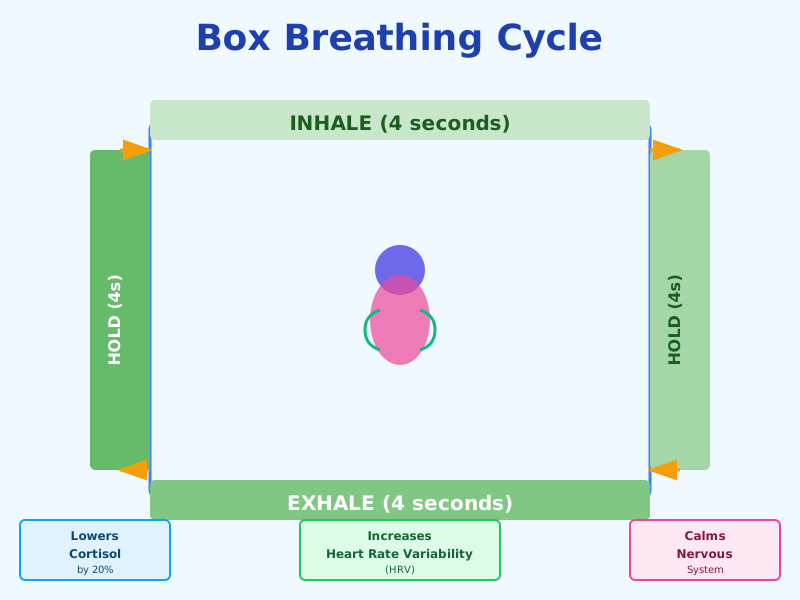
Box breathing is an equal-duration breathing pattern where each phase—inhalation, breath retention, exhalation, and post-exhalation hold—lasts the same amount of time, traditionally four seconds. The term "box breathing" comes from visualizing your breath moving along the four edges of a square or box. You breathe in as if moving up one side, hold as you move across the top, breathe out moving down the other side, and hold again as you move along the bottom.
Not medical advice.
This technique is also known as sama vritti pranayama in yogic traditions, meaning "equal breath," and has roots in ancient meditation practices. Modern applications include military training, sports psychology, anxiety management, and everyday stress relief. The 4-4-4-4 pattern is the most common, though some practitioners use longer counts like 5-5-5-5 or 6-6-6-6 once they become comfortable with the technique.
Surprising Insight: Surprising Insight: Research shows that a single four-minute session of box breathing can reduce cortisol levels by approximately 20%, making it as effective as some pharmaceutical interventions for immediate stress relief.
The Box Breathing Cycle
Visual representation of the four-phase box breathing pattern with timing and physiological effects
🔍 Click to enlarge
Why Box Breathing Techniques Matter in 2026
In 2026, where stress levels continue to rise due to digital overload, social media pressure, and fast-paced work environments, box breathing offers a scientifically-backed tool that requires no equipment, no app subscription, and no special location. It's a form of active stress management that empowers you to regulate your own nervous system rather than waiting for external solutions. As mental health awareness increases, breathing techniques like box breathing are being integrated into corporate wellness programs, schools, hospitals, and therapeutic settings worldwide.
The 2025 systematic review published in the Stress and Health journal confirms that structured breathing exercises produce significant improvements in mood and anxiety reduction. With the growing recognition of the mind-body connection, box breathing represents a bridge between ancient wisdom and modern neuroscience. It's increasingly recommended by therapists, coaches, and healthcare providers as a first-line intervention for anxiety and stress management.
Moreover, box breathing supports long-term resilience building. Regular practice strengthens your vagal tone—the ability of your vagus nerve to activate your parasympathetic nervous system—meaning you become more naturally calm even in challenging situations. This makes it an investment in your future mental health and emotional regulation capacity.
The Science Behind Box Breathing Techniques
Box breathing works by directly influencing your autonomic nervous system, the part of your nervous system that operates automatically. Your autonomic nervous system has two branches: the sympathetic nervous system (fight-or-flight response) and the parasympathetic nervous system (rest-and-digest response). Most people spend too much time in sympathetic activation, which leads to chronic stress and anxiety. Box breathing activates the vagus nerve, the main conductor of your parasympathetic nervous system, triggering a relaxation response that downregulates stress hormones like cortisol and adrenaline. When you exhale slowly and hold your breath, you increase heart rate variability (HRV)—the variation in time between heartbeats—which is a key biomarker of nervous system flexibility and stress resilience.
Research shows that the balanced structure of box breathing—with equal hold periods—provides unique benefits compared to other breathing techniques. The breath-holding phases increase blood CO2 levels slightly, which paradoxically signals your body that it's safe and stimulates deeper parasympathetic engagement. Studies from 2024-2025 demonstrate that even a four-minute session produces measurable decreases in respiratory rate, heart rate, and stress hormones, with effects lasting 30-60 minutes after practice. The technique also enhances heart rate variability and improves vagal tone over time with regular practice.
Nervous System Response to Box Breathing
How box breathing activates parasympathetic response and shifts you from stress to calm
🔍 Click to enlarge
Key Components of Box Breathing Techniques
The Inhalation Phase (4 seconds)
During the inhalation phase, you breathe in slowly through your nose for a count of four seconds, filling your lungs completely with oxygen. This phase activates your parasympathetic nervous system immediately and increases oxygen saturation in your blood. Your abdomen should expand outward (diaphragmatic breathing) rather than your chest rising, indicating deep, efficient breathing. The slow pace prevents hyperventilation and allows your body to process the incoming oxygen properly.
The First Hold Phase (4 seconds)
After inhalation, you hold your breath for four seconds, allowing oxygen to saturate your bloodstream and brain. This hold phase is crucial because it prevents rapid expulsion of oxygen and creates a moment of stillness. The gentle buildup of CO2 during the hold phase activates chemoreceptors in your brain that signal safety to your nervous system. This phase also strengthens your ability to tolerate mild breath-holding, which is psychologically grounding and increases confidence in your ability to manage physiological sensations.
The Exhalation Phase (4 seconds)
The exhalation phase, where you slowly release air for four seconds, is the most powerful for parasympathetic activation. A slow exhale directly stimulates your vagus nerve, which is why this phase produces the most significant calming effect. Longer exhalations compared to inhalations are known to be particularly effective at activating relaxation, and box breathing balances them equally for sustainable, manageable stress relief. Exhale through your mouth or nose according to your preference, but maintain the slow, controlled pace.
The Post-Exhalation Hold (4 seconds)
The final hold after exhalation completes the cycle and deepens the parasympathetic response. During this phase, your body recognizes the temporary absence of inhalation as a signal to relax further. This hold prevents you from immediately re-engaging in shallow breathing and consolidates the nervous system shift. The full cycle—creating the "box" shape—means neither the inhale nor exhale dominates, maintaining balance throughout your practice.
| Phase | Duration | Physiological Effect |
|---|---|---|
| Inhalation | 4 seconds | Oxygen intake increases; parasympathetic system begins activation |
| First Hold | 4 seconds | Oxygen saturates blood; CO2 builds slightly, signaling safety |
| Exhalation | 4 seconds | Vagus nerve stimulation; heart rate decreases; cortisol reduction begins |
| Second Hold | 4 seconds | Parasympathetic dominance increases; relaxation deepens |
How to Apply Box Breathing Techniques: Step by Step
- Step 1: Find a comfortable position: Sit upright in a chair with your feet flat on the floor, or lie down on your back. Ensure your spine is straight to allow full diaphragmatic breathing. Close your eyes if it helps you focus, or soften your gaze downward.
- Step 2: Place one hand on your chest and one on your belly: This helps you verify you're breathing diaphragmatically. Your belly hand should move more than your chest hand as you breathe—this indicates deep, efficient breathing rather than shallow chest breathing.
- Step 3: Begin the inhalation phase: Breathe in slowly and deeply through your nose for a mental count of four seconds. As you inhale, feel your belly expand outward and your lungs fill with fresh oxygen. Count steadily: one-Mississippi, two-Mississippi, three-Mississippi, four-Mississippi.
- Step 4: Hold your breath: After completing the inhale, hold your breath for four seconds without straining. Keep your throat and body relaxed. This is a gentle hold, not a forced one. Use the same counting method: one-Mississippi through four-Mississippi.
- Step 5: Exhale slowly: Release your breath through your mouth over four seconds, letting the air flow out steadily and completely. As you exhale, feel your belly gently return to its resting position. Imagine releasing tension and stress with each breath.
- Step 6: Hold after exhalation: After fully exhaling, hold your breath again for four seconds. This completes the box cycle. Maintain a relaxed posture and gentle awareness of your body.
- Step 7: Repeat the cycle: After the post-exhalation hold, immediately begin the next inhalation. Continue this pattern for at least 4-5 minutes for noticeable effects. With practice, you can extend sessions to 10-15 minutes.
- Step 8: Maintain steady rhythm: The key to box breathing is keeping each phase exactly equal. Use a mental metronome or count consistently to maintain the 4-4-4-4 pattern throughout your session.
- Step 9: Notice bodily changes: As you practice, observe your heart rate slowing, your shoulders relaxing, and your mind becoming calmer. These sensations confirm the technique is working and reinforce your confidence in the practice.
- Step 10: End gently: After completing your session, breathe naturally for a minute before opening your eyes or moving. This gradual return prevents dizziness and allows your nervous system to stabilize at its new, calmer baseline.
Box Breathing Techniques Across Life Stages
Young Adulthood (18-35)
In young adulthood, box breathing addresses the unique stressors of education, early career pressures, and social anxiety. This age group benefits greatly from quick 2-4 minute sessions before exams, job interviews, or social events. Young adults are often digitally connected and high-stress, making a portable, equipment-free technique especially valuable. Regular box breathing practice during this stage builds healthy stress management habits that last a lifetime and improves academic and professional performance. Many young adults find that box breathing helps with sleep anxiety and racing thoughts before bed.
Middle Adulthood (35-55)
Middle-aged adults face compounding stressors: career pressure, family responsibilities, aging parent care, and often health concerns. For this group, box breathing becomes a valuable tool for managing work stress during the day, improving focus, and preventing burnout. Regular practice (10-15 minutes daily) supports cardiovascular health and emotional regulation during this high-pressure life phase. Many middle-aged practitioners report improved sleep quality, better relationships due to reduced stress reactivity, and enhanced resilience during life transitions. Box breathing also pairs well with meditation and other wellness practices common in this age group.
Later Adulthood (55+)
Older adults benefit from box breathing for anxiety management, sleep improvement, and cardiovascular regulation. The technique supports healthy aging by promoting vagal tone and parasympathetic function, both of which naturally decline with age. Box breathing helps manage chronic pain, supports medication-free anxiety relief, and improves cognitive function through increased parasympathetic activation. Older adults often appreciate the simplicity and accessibility of the technique—no apps, no classes, just their breath. Regular practice has been associated with better overall health outcomes and improved quality of life in older populations.
Profiles: Your Box Breathing Techniques Approach
The High-Stress Professional
- Quick relief during work hours (2-4 minute sessions)
- Technique that works without leaving the desk
- Evidence-based approach for credibility
Common pitfall: Skipping practice due to "not having time" even though the technique takes minutes
Best move: Schedule three 4-minute box breathing sessions throughout the workday as non-negotiable breaks
The Anxiety-Prone Individual
- Immediate relief during panic or anxiety spikes
- Understanding of why it works (cognitive reassurance)
- Practice routines that build confidence
Common pitfall: Practicing only when anxious rather than building baseline resilience through daily practice
Best move: Practice daily at neutral times to strengthen parasympathetic tone, then use it during anxiety episodes
The Athlete or Performance Optimizer
- Focus on nervous system regulation for peak performance
- Integration with other breathing techniques
- Measurable results (HRV tracking, recovery metrics)
Common pitfall: Using box breathing only pre-competition instead of building it into daily wellness routine
Best move: Practice daily, use before competitions, and track HRV improvements with wearables
The Mindfulness Seeker
- Deeper practice (longer sessions, extended counts)
- Integration with meditation and yoga
- Understanding of traditional breathing practices
Common pitfall: Overthinking the technique or waiting for "perfect" conditions to practice
Best move: Start with basic 4-4-4-4 pattern, gradually extend counts, and combine with meditation
Common Box Breathing Techniques Mistakes
One common mistake is breathing too quickly or using unequal counts for the four phases. The power of box breathing comes from its balanced rhythm, so rushing or doing 4-4-3-4 defeats the purpose. Another frequent error is chest breathing instead of diaphragmatic breathing, which reduces the technique's effectiveness at activating the parasympathetic nervous system. Many people also give up after one session without experiencing immediate benefits, not realizing that the strongest effects come with regular practice over days and weeks.
A third mistake is practicing only when in crisis mode rather than building it as a daily habit. Box breathing is most effective when practiced regularly at baseline, which strengthens your vagal tone and makes your nervous system more responsive to calming. Many people also hold tension in their shoulders, jaw, or face during the practice, which counteracts the relaxation benefits. Finally, some practitioners set unrealistic expectations—box breathing is powerful for stress management, but it's not a replacement for professional mental health treatment when needed.
Don't practice too soon after eating a large meal, as digestion can interfere with breathing. Also, avoid practicing box breathing while driving or operating machinery, and if you experience dizziness or lightheadedness, stop immediately and return to normal breathing. Start with 4-4-4-4 counts rather than jumping to longer durations like 5-5-5-5 or 6-6-6-6 until you're comfortable with the basic technique.
Common Box Breathing Mistakes and Corrections
Visual guide to avoiding mistakes and optimizing box breathing practice
🔍 Click to enlarge
Science and Studies
Recent research from 2024-2025 provides strong evidence for box breathing's effectiveness. A systematic review published in the Stress and Health journal found that structured breathing exercises including box breathing produce significant improvements in mood and anxiety reduction. Studies show that brief structured respiration practices enhance mood and reduce physiological arousal including respiratory rate, heart rate, and anxiety symptoms. The research indicates that effective breath practices include multiple sessions, human guidance or training, and long-term practice rather than one-time sessions.
- Morgan, S.P., et al. (2025). A Systematic Review of Breathing Exercise Interventions: An Integrative Complementary Approach for Anxiety and Stress in Adult Populations. SAGE Open Nursing.
- PMC Research (2023). Brief structured respiration practices enhance mood and reduce physiological arousal. NIH National Center for Biotechnology Information.
- Nature (2022). Effect of breathwork on stress and mental health: A meta-analysis of randomised-controlled trials. Scientific Reports.
- Cleveland Clinic Health. (2024). Box Breathing Benefits and Techniques. Health and Wellness Resources.
- Little, M., et al. (2025). The A52 Breath Method: A Narrative Review of Breathwork for Mental Health and Stress Resilience. Stress and Health Journal.
Your First Micro Habit
Start Small Today
Today's action: Practice one 4-minute box breathing session today before your next meeting or stressful moment. Simply sit comfortably, count slowly for each phase (inhale 4, hold 4, exhale 4, hold 4), and repeat 4 times. Notice how your body feels after.
One session is enough to experience measurable nervous system shifts. You'll feel calmer, more focused, and in control—which motivates you to practice again tomorrow. This builds momentum for a lasting habit without overwhelming you with expectations.
Keep quitting habit apps after a missed day? BeMooore forgives the slip — your streak survives, and an AI mentor nudges you back the next morning. Free on iOS.
Quick Assessment
How often do you experience stress or anxiety in your daily life?
Your baseline stress level determines how much box breathing can help. Those with high baseline stress benefit most from daily practice to rebuild parasympathetic tone.
What's your preferred way to manage stress?
If you're drawn to breathing or calm techniques, box breathing will feel natural and sustainable for you. If you prefer movement, combining box breathing with stretching creates a powerful practice.
How committed are you to building new habits?
Box breathing works best with consistent practice. If consistency is challenging, start with one 4-minute session daily attached to an existing habit (like after morning coffee).
Take our full assessment to get personalized recommendations.
Discover Your Style →Next Steps
Your next step is simple: practice one 4-minute box breathing session today. Don't wait for the "perfect" moment—any moment will work. Sit comfortably, follow the 4-4-4-4 pattern, and notice how your body responds. Many people find that one successful session motivates them to practice again, building momentum naturally.
After your first session, consider attaching box breathing to an existing daily habit. Practice right after your morning coffee, before lunch, or before bed. This removes the need for willpower and makes the habit automatic. Track your practice in a notes app or journal—research shows that tracking increases consistency and helps you notice improvements in your mood and stress levels over time.
Get personalized guidance with AI coaching.
Start Your Journey →Research Sources
This article is based on peer-reviewed research and authoritative sources. Below are the key references we consulted:
Related Glossary Articles
Frequently Asked Questions
How long does it take to feel the effects of box breathing?
Many people feel noticeable calming effects within 1-2 minutes, though a full 4-minute session produces more significant nervous system shifts. Longer-term benefits like improved baseline calm and better sleep develop with daily practice over 2-4 weeks.
Can box breathing help with panic attacks?
Yes, box breathing can help during panic attacks by activating your parasympathetic nervous system. However, consistent daily practice before panic episodes is more effective than trying to use it only during a crisis. Practice daily to build baseline resilience.
Should I use different counts than 4-4-4-4?
Start with 4-4-4-4 for at least 1-2 weeks until it feels natural. Then you can experiment with 5-5-5-5 or 6-6-6-6 if desired. Never rush the counts—the slowness is what triggers the parasympathetic response.
Is box breathing safe for people with respiratory conditions?
People with asthma, COPD, or other respiratory conditions should consult their doctor before starting box breathing. The breath-holding phases may be uncomfortable or unsafe. Your healthcare provider can suggest modifications.
How often should I practice box breathing?
For optimal benefits, practice at least once daily (4-5 minutes), or 2-3 times daily if possible. Even better: use it during naturally stressful moments plus a dedicated practice session. Consistency matters more than duration.
Take the Next Step
Ready to improve your wellbeing? Take our free assessment to get personalized recommendations based on your unique situation.
- Discover your strengths and gaps
- Get personalized quick wins
- Track your progress over time
- Evidence-based strategies