Window of Tolerance
Your nervous system has a sweet spot—a zone where you feel calm, focused, and in control. This is your window of tolerance. Within this zone, you process emotions effectively, think clearly, and respond thoughtfully to life's challenges. But when stress pushes you outside this window, you either become hyperaroused (anxious, angry, overwhelmed) or hypoaroused (numb, disconnected, frozen). Understanding this window is the first step to emotional mastery.
The window of tolerance concept, developed by psychiatrist Dan Siegel, is rooted in neurobiology and backed by decades of trauma therapy research. It explains why some people bounce back from stress while others get stuck in anxiety or depression.
By learning to recognize when you're outside your window and applying specific nervous system regulation techniques, you can expand your capacity to handle emotions and stress—transforming how you experience daily life.
What Is Window of Tolerance?
The window of tolerance is the optimal zone of arousal in which your nervous system can function effectively. When you're within this window, your brain is organized, your emotions are balanced, and you can engage socially, think flexibly, and respond appropriately to situations. Your prefrontal cortex (the thinking brain) is online and communicating with your limbic system (the emotional brain). You're neither overloaded nor shutdown.
Not medical advice.
Outside the window, dysregulation occurs. The width and height of your window depends on your nervous system's capacity—shaped by genetics, early experiences, trauma history, and your current stress level. Someone with a trauma history might have a narrower window; someone with strong regulation skills has a wider, more resilient window. This is trainable. Your window can expand.
Surprising Insight: Surprising Insight: Your window of tolerance isn't fixed—it shrinks under chronic stress and expands with practice. A person with severe trauma might have a window the size of a postage stamp, while someone with strong nervous system training can have a window the size of a poster board.
The Three Nervous System States
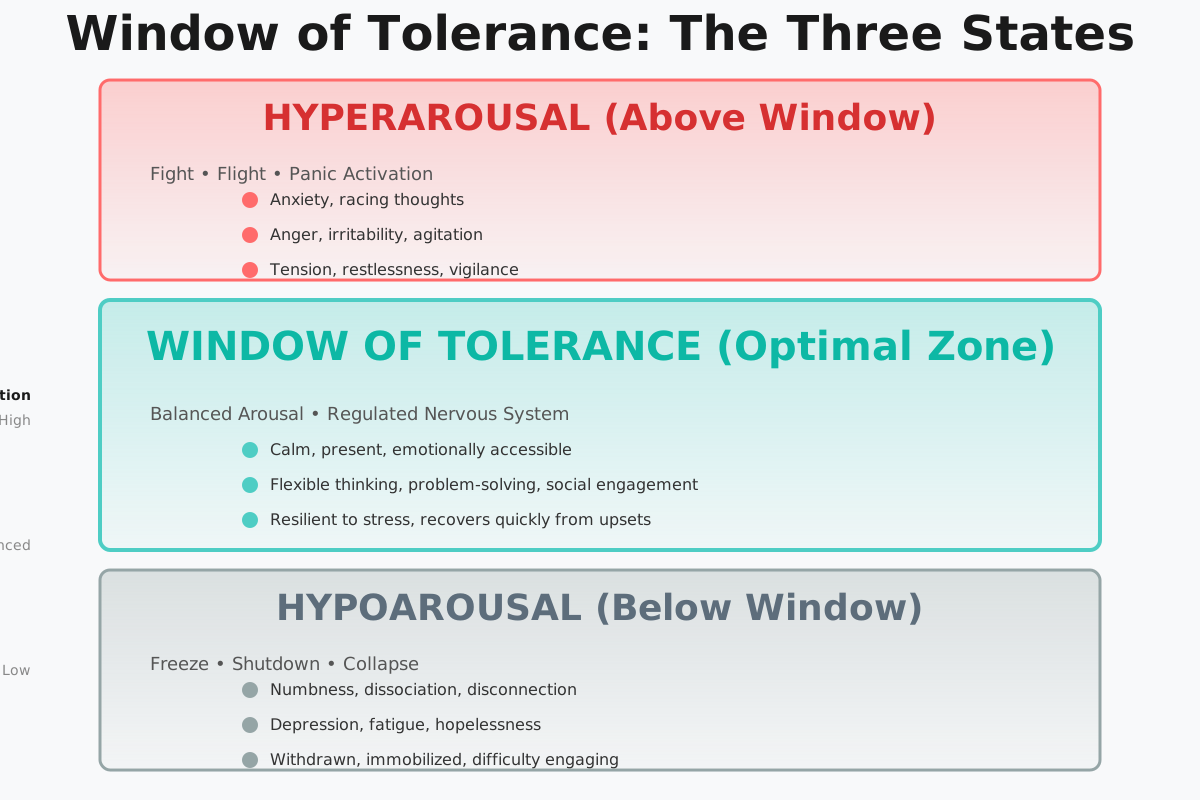
Visual representation of window of tolerance showing optimal zone between hyperarousal (fight/flight) and hypoarousal (freeze/shutdown)
🔍 Click to enlarge
Why Window of Tolerance Matters in 2026
In 2026, we face unprecedented levels of stimulation, information overload, and uncertainty. Social media, work pressure, climate anxiety, and global change constantly push our nervous systems outside the window. Understanding your window isn't a luxury—it's essential self-care. When you know your limits and recognize dysregulation early, you can return to balance before emotions spiral into crisis.
Mental health professionals now recognize window of tolerance as a cornerstone of trauma recovery, anxiety management, depression treatment, and relationship health. It explains why someone with good intentions can still react with rage, or why you sometimes feel inexplicably numb. It's neurobiology, not weakness.
Most importantly, understanding your window gives you agency. You're no longer at the mercy of your reactions—you're developing real, measurable skills to expand your capacity and live with greater stability, joy, and resilience.
The Science Behind Window of Tolerance
Your nervous system has three branches: the ventral vagal system (social engagement, calm alertness), the sympathetic system (activation, fight/flight), and the dorsal vagal system (shutdown, freeze/collapse). This model comes from Polyvagal Theory, developed by neuroscientist Stephen Porges, which explains how your vagus nerve controls these states. When you feel safe, your ventral vagal system dominates—you're in your window. When threatened, your sympathetic system kicks in (hyperarousal). When overwhelmed, your dorsal vagal system engages (hypoarousal).
Neuroimaging shows that within the window, your prefrontal cortex (executive function) and amygdala (threat detection) communicate well. Outside the window, this connection breaks down. Under hyperarousal, your amygdala hijacks your brain—you react without thinking. Under hypoarousal, your prefrontal cortex shuts down—you can't access memory, emotion, or motivation. The window is where wisdom, creativity, and emotional intelligence live.
Brain Activity in Window vs. Dysregulation
Comparison of neural pathways showing prefrontal cortex-amygdala communication within window versus breakdown during hyperarousal and hypoarousal
🔍 Click to enlarge
Key Components of Window of Tolerance
Hyperarousal (Above the Window)
When your nervous system gets too much stimulation, you enter hyperarousal. Your sympathetic system fires up—heart races, breathing quickens, muscles tense. You feel anxious, angry, panicked, or overwhelmed. Your thoughts race, you're hypervigilant (scanning for danger), and you might lash out or freeze. Common triggers include loud noises, tight deadlines, confrontation, or reminders of past trauma. In hyperarousal, your body believes danger is present—even if logically you know you're safe.
Hypoarousal (Below the Window)
When your nervous system becomes overloaded and can't cope, it collapses into hypoarousal. Your dorsal vagal system dominates—your body shuts down, heart rate drops, energy plummets. You feel numb, empty, disconnected, depressed, or dissociated. You might struggle to engage socially, access emotions, or complete basic tasks. Hypoarousal is your nervous system's last-resort survival mechanism—if you can't fight or flee, you freeze. Many people with depression or chronic trauma live in this zone.
Window of Tolerance (Optimal Activation)
Within the window, your nervous system is in balance. You feel present, calm but alert, emotionally accessible, and socially engaged. Your thinking brain is online—you can problem-solve, learn, connect with others, and respond flexibly to challenges. You can feel a range of emotions without being overwhelmed. You're resilient. This is the zone where healing, growth, learning, and genuine connection happen.
Nervous System Regulation Capacity
Your capacity to stay in or return to your window depends on nervous system strength—which is trainable. Regular practice with breathing, movement, mindfulness, and social connection builds vagal tone (how efficiently your vagus nerve manages arousal). Higher vagal tone means a wider window and faster recovery from stress. Think of it like a muscle: the more you exercise your nervous system, the stronger and more resilient it becomes.
| State | Activation Level | Common Feelings & Behaviors | Brain Activity |
|---|---|---|---|
| Hyperarousal | Too High | Anxiety, anger, panic, impulsivity, hypervigilance, restlessness | Amygdala dominant, prefrontal cortex offline |
| Window of Tolerance | Balanced | Calm, engaged, flexible, emotionally balanced, socially present | Prefrontal cortex and amygdala communicating well |
| Hypoarousal | Too Low | Numbness, dissociation, depression, disconnection, fatigue | Dorsal vagal dominant, disconnection from emotion and memory |
How to Apply Window of Tolerance: Step by Step
- Step 1: Learn the three states: Start by memorizing hyperarousal (too much activation), hypoarousal (too little), and window (optimal). Understand that dysregulation isn't a moral failure—it's neurobiology.
- Step 2: Notice your body signals: When anxious, do you feel tension, racing thoughts, restlessness? When numb, do you feel disconnection, fatigue, heaviness? These are your nervous system's signals.
- Step 3: Identify your personal triggers: What situations push you into hyperarousal? What situations push you into hypoarousal? Creating awareness is step one.
- Step 4: Practice grounding for hyperarousal: When anxious, use 4-7-8 breathing (inhale 4, hold 7, exhale 8) or cold water on your face to activate the parasympathetic nervous system.
- Step 5: Use movement for hypoarousal: When numb or disconnected, do dynamic movement—shaking, dancing, jumping—to increase arousal and return to the window.
- Step 6: Build a regulation toolbox: Collect 5-10 techniques that work for you (breathing, movement, music, social connection, cold/warm exposure, meditation).
- Step 7: Practice daily: Use your toolbox for 5-10 minutes daily, not just in crisis. Building vagal tone requires consistent practice.
- Step 8: Recognize early dysregulation: Before you're fully panicked or numb, notice the beginning signs and intervene early using your tools.
- Step 9: Use safe relationships: Healthy relationships help regulate nervous systems. Physical presence, eye contact, listening, and validation activate your social engagement system.
- Step 10: Celebrate small expansions: Each time you stay in the window longer or recover faster, you're literally rewiring your nervous system. Track these wins.
Window of Tolerance Across Life Stages
Young Adulthood (18-35)
Your window is still developing—the prefrontal cortex doesn't fully mature until around 25. You might experience intense emotional swings, impulsivity, or overwhelming anxiety. Your nervous system is more reactive. Focus on building foundational regulation skills: exercise, sleep, social connection, and early intervention when dysregulated. This is the ideal time to learn these skills before chronic patterns solidify.
Middle Adulthood (35-55)
Many people's windows narrow during this phase due to work stress, family demands, and accumulated stress. You might notice you're more easily triggered than in your 20s. The good news: years of experience give you wisdom about your patterns. Now is the time to actively expand your window through consistent practice, possibly professional support, and prioritizing regulation. Your nervous system is still highly trainable.
Later Adulthood (55+)
Your nervous system can be more fragile—sleep quality changes, energy shifts, life transitions trigger dysregulation. However, decades of experience mean you likely have good self-awareness. Focus on consistency with your regulation practices, maintain strong social connections, and don't dismiss anxiety or numbness as just 'part of aging'—these are treatable nervous system states. Many people find their widest, most resilient windows in later life.
Profiles: Your Window of Tolerance Approach
The Anxious Overthinker
- Grounding techniques to slow racing thoughts
- Permission to feel scared without judgment
- Reassurance from trusted people when dysregulated
Common pitfall: Trying to think your way out of anxiety—your nervous system needs body-based techniques, not logic.
Best move: Use 5 minutes of cold water exposure, breathwork, or shaking to discharge the activation before trying to think.
The Numb Shutdown Person
- Permission to be tired, numb, or disconnected sometimes
- Gentle invitation to engagement—not pressure
- Celebration of small moments of connection
Common pitfall: Pushing yourself harder, which deepens shutdown. Your nervous system needs safety and gentleness.
Best move: Start with tiny movements—stretching, walking, humming—before attempting complex social interactions.
The Sensitive High-Reactor
- Quiet, predictable environments when possible
- Advanced notice of changes or challenges
- Regular nervous system calming—it's not weakness, it's maintenance
Common pitfall: Shame about being 'too sensitive'—you're not broken, your nervous system is wired differently and needs different tools.
Best move: Build longer lead times into regulation practice—don't wait until crisis. Daily meditation, yoga, or breathing work is non-negotiable.
The Trauma Survivor
- Specialized support (trauma-informed therapy, somatic experiencing, EMDR)
- Acknowledgment that your window narrowness isn't laziness—it's neurobiology
- Patience with yourself as you gradually expand capacity
Common pitfall: Expecting quick results or pushing too hard, which re-traumatizes your nervous system. Recovery is gradual.
Best move: Work with a trauma-informed therapist trained in nervous system regulation. Professional support accelerates healing.
Common Window of Tolerance Mistakes
Mistake #1: Believing your dysregulation is a character flaw. When you get angry or numb, you shame yourself for 'not controlling your emotions.' In reality, you're experiencing nervous system dysregulation—it's neurobiology, not moral failure. Shame actually makes dysregulation worse. Replace judgment with curiosity: 'My nervous system is outside the window right now—what does it need?'
Mistake #2: Trying to logic your way out of dysregulation. Your thinking brain (prefrontal cortex) is literally offline during dysregulation. Telling yourself to 'calm down' or 'think positive' won't work. You need body-based techniques—breathing, movement, cold exposure—that speak your nervous system's language.
Mistake #3: Only practicing regulation during crises. By then, your nervous system is already hijacked. Build regulation capacity during calm times through daily practice. Think of it like muscle-building: a few intense workout sessions don't make you fit. Consistency matters.
Path from Dysregulation to Window of Tolerance
Journey showing how regular practice and self-compassion lead to expanded window and resilience
🔍 Click to enlarge
Science and Studies
The window of tolerance framework is backed by neuroscience research spanning three decades. Studies using fMRI imaging confirm that trauma narrows the window and that targeted interventions (trauma-focused therapy, somatic experiencing, neurofeedback) expand it. Research on vagal tone shows that practices like slow breathing and cold exposure increase parasympathetic activation, expanding window capacity.
- Siegel, D. J. (1999). The Developing Mind: How Relationships and the Brain Interact to Shape Who We Are. Guilford Press. Foundational work defining window of tolerance in interpersonal neurobiology.
- Porges, S. W. (2011). The Polyvagal Theory: Neurophysiological foundations of emotions, attachment, communication, and self-regulation. W.W. Norton & Company. Explains the vagal pathways underlying window states.
- Van der Kolk, B. (2014). The Body Keeps the Score: Brain, Mind, and Body in the Healing of Trauma. Penguin Books. Clinical application of window concept in trauma recovery.
- Porges, S. P., & Dana, D. (2018). Clinical Applications of the Polyvagal Theory: The Ladder Model. W.W. Norton & Company. Practical framework for expanding window using polyvagal techniques.
- Levine, P. A. (1997). Waking the Tiger: Healing Trauma. North Atlantic Books. Somatic experiencing approach to releasing traumatic activation and expanding window.
Your First Micro Habit
Start Small Today
Today's action: For 2 minutes today, practice 4-7-8 breathing: inhale for 4 counts, hold for 7, exhale for 8. The long exhale activates your parasympathetic nervous system. Notice if your body feels calmer.
This single technique has been shown in hundreds of studies to quickly shift your nervous system from activation to calm. It's portable, free, and works in 2 minutes. When practiced daily for 30 days, it measurably expands your window of tolerance.
Keep quitting habit apps after a missed day? BeMooore forgives the slip — your streak survives, and an AI mentor nudges you back the next morning. Free on iOS.
Quick Assessment
When you face stress or conflict, which response is most familiar?
Your answer reveals your typical nervous system pattern. Most people have one default response. Knowing yours is the first step to expanding your window.
How long does it typically take you to recover from emotional upset?
Recovery time indicates your nervous system's resilience. Faster recovery usually means a wider, more developed window of tolerance.
Which practice feels most accessible to you right now?
We all have different nervous system 'languages.' Start with techniques that feel natural to you. Your preference is a clue to what your system responds to best.
Take our full assessment to get personalized recommendations.
Discover Your Style →Next Steps
Understanding your window of tolerance is the map; expanding it is the journey. Start by becoming aware of your patterns. For the next week, notice when you feel anxious or numb. Don't judge it—just observe. Which state is more familiar? What triggers each? Building this awareness is the foundation for everything else.
Choose one regulation technique from the steps above and practice it daily for 30 days. Consistency matters more than intensity. A 5-minute practice every day outperforms a 60-minute practice once a week. Track your practice, celebrate small wins, and notice how your window slowly, steadily expands. This is real neuroscience, and you have more power to shape your nervous system than you might believe.
Get personalized guidance with AI coaching.
Start Your Journey →Research Sources
This article is based on peer-reviewed research and authoritative sources. Below are the key references we consulted:
Related Glossary Articles
Frequently Asked Questions
Is my window of tolerance fixed, or can it really expand?
Your window absolutely expands with practice. It's like building a muscle. Neuroplasticity research shows that consistent nervous system regulation practices literally rewire your brain and expand your capacity. Someone who couldn't tolerate any stress can learn, with practice, to handle significant challenges while staying calm. Change takes time—typically 30-90 days of consistent practice—but it's absolutely possible.
Why do I shut down (hypoarousal) instead of getting anxious (hyperarousal) like most people?
Your default nervous system response depends on your wiring, early experiences, and learned patterns. Some people are wired more toward activation, others toward shutdown. Neither is 'worse'—they just need different tools. If you hypoarouse, you need activating techniques (movement, cold water, sound). If you hyperarouse, you need calming techniques (breathing, gentle movement, warmth). Work with your nervous system, not against it.
Can trauma permanently narrow my window, or can I recover?
Trauma does narrow the window, sometimes severely. But recovery is possible at any age. Trauma-informed therapy (like EMDR, somatic experiencing, or trauma-focused CBT) combined with nervous system regulation practices can significantly expand your window. Many trauma survivors develop the widest, most resilient windows because they've done the deepest work. Professional support often accelerates the process, especially for severe trauma.
Is my anxiety a permanent part of my personality, or just dysregulation?
If you're consistently anxious, your nervous system is likely spending most time in hyperarousal (above the window). This is trainable. With consistent practice, your baseline arousal level drops. You're not fundamentally anxious—your nervous system learned to perceive threat easily. With retraining, it learns to perceive safety. You might always be more sensitive than others, but the constant anxiety can shift significantly.
How do I help someone I love who's dysregulated?
The most important thing you can do is stay regulated yourself. Your calm nervous system is contagious—through a process called co-regulation, your presence can help their nervous system return to window. Make eye contact, speak calmly, use a warm tone. Avoid logic or advice during dysregulation (their thinking brain is offline). If they're hyperaroused, offer grounding. If hypoaroused, gently encourage movement or engagement. Your patient, non-judgmental presence is the most powerful regulation tool.
Take the Next Step
Ready to improve your wellbeing? Take our free assessment to get personalized recommendations based on your unique situation.
- Discover your strengths and gaps
- Get personalized quick wins
- Track your progress over time
- Evidence-based strategies