Emotional Availability
Have you ever felt truly seen and understood by someone? That feeling of being fully present with another person, emotions and all, is the result of emotional availability. It's not just about being physically present—it's about showing up authentically, responding to your partner's needs with compassion, and creating space for genuine connection. When both people in a relationship practice emotional availability, something profound happens: trust deepens, intimacy flourishes, and both individuals feel genuinely valued. This article explores what emotional availability truly means, why it matters more than ever in our distracted world, and how you can cultivate it starting today.
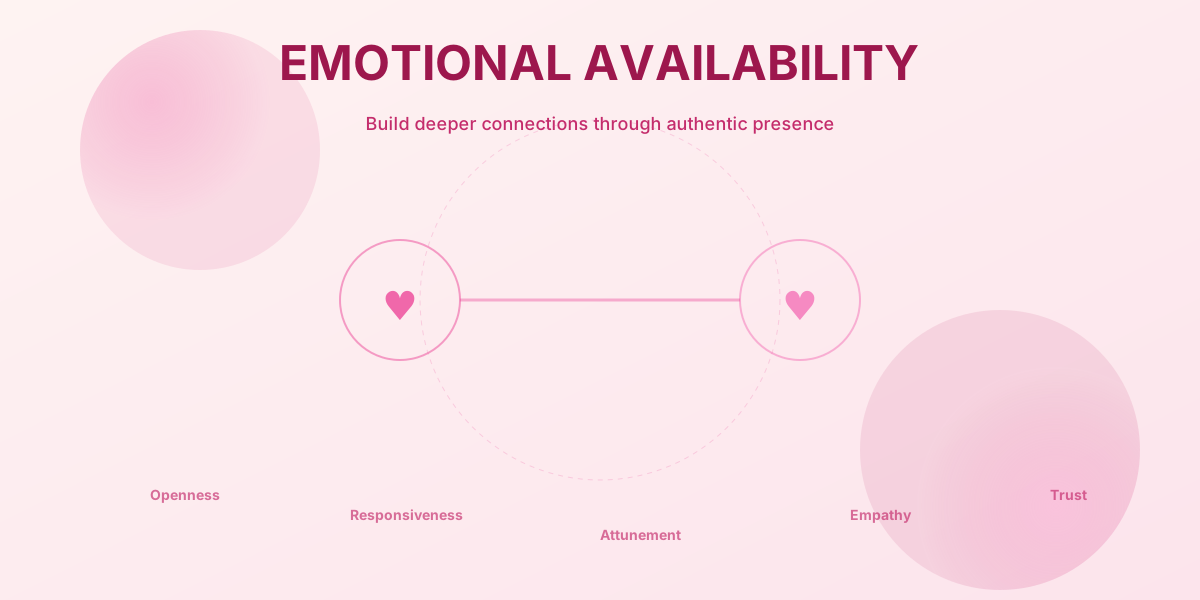
Emotional availability is one of the strongest predictors of relationship satisfaction and long-term partnership success.
In a world of constant digital distraction, the ability to be emotionally present has become a rare and precious gift—and couples who master this skill experience significantly higher relationship satisfaction.
What Is Emotional Availability?
Emotional availability is the capacity and willingness to engage in genuine emotional exchanges with another person. It means being present with your whole self—your thoughts, feelings, and authentic responses—rather than just your physical body. It involves actively listening, showing genuine interest, and responding to your partner's emotional signals with sensitivity and care. Emotional availability is built on three core pillars: openness (sharing your true self), responsiveness (attending to your partner's emotional needs), and attunement (understanding and validating their experience).
Not medical advice.
Emotional availability differs from emotional expression—you can express emotions without being available. For example, someone might share their feelings in a complaint or dramatic outburst but not genuinely invite connection. True emotional availability invites reciprocal sharing and creates a safe space where both people feel heard and understood. Research shows that securely attached individuals naturally demonstrate higher emotional availability, while those with avoidant or anxious attachment patterns may struggle with genuine emotional presence.
Surprising Insight: Surprising Insight: Studies show that men with high emotional intelligence demonstrate greater emotional availability than their peers, resulting in significantly higher relationship satisfaction—proving that emotional presence is a learnable skill, not an innate trait.
Three Pillars of Emotional Availability
The foundational components that create genuine emotional presence in relationships
🔍 Click to enlarge
Why Emotional Availability Matters in 2026
In an age where we're constantly connected yet deeply isolated, emotional availability has become the antidote to relational distance. Technology keeps us in touch but often prevents genuine presence. Couples who prioritize emotional availability report significantly better conflict resolution, more satisfying intimacy, and greater overall life satisfaction. Beyond romantic relationships, emotional availability strengthens friendships, improves parent-child bonds, and creates communities where people feel genuinely valued.
Research from 2024-2025 demonstrates that emotional availability directly impacts mental health outcomes. People in emotionally available relationships experience lower anxiety and depression rates, better stress management, and stronger resilience during difficult times. The reciprocal nature of emotional availability creates a protective factor against loneliness—a critical public health issue affecting millions globally. When you're emotionally available to others, you receive emotional availability in return, creating a virtuous cycle of connection and wellbeing.
As parenting stress increases, researchers found that parents who don't value their children's emotions reduce their emotional availability to them. This creates a significant wellbeing gap in families. Organizations and therapists worldwide are now emphasizing emotional availability training as a preventive intervention for relationship problems, making this a skill worth investing in now.
The Science Behind Emotional Availability
Attachment theory, developed by John Bowlby and expanded by Mary Ainsworth, shows that early caregiving relationships shape our capacity for emotional availability throughout life. Securely attached individuals—those who experienced consistent, emotionally responsive caregiving—naturally engage in more adaptive emotion regulation strategies and demonstrate greater ease with emotional availability. Their nervous systems learned to trust that emotional needs would be met, creating an internal blueprint for healthy relational presence.
Neuroscience reveals that emotional availability activates the parasympathetic nervous system—your body's calming response. When someone is emotionally available to you, your brain perceives safety, which allows your stress response to downregulate. This physiological shift enables clearer thinking, better decision-making, and genuine vulnerability. Conversely, emotional unavailability triggers the sympathetic nervous system, putting people in a defensive or protective mode where true connection becomes impossible. The neurobiological implications of parent-child emotional availability show measurable differences in child development, including better emotion regulation, stronger social skills, and improved academic performance.
Attachment Styles and Emotional Availability Patterns
How different attachment styles shape emotional availability in relationships
🔍 Click to enlarge
Key Components of Emotional Availability
Adult Sensitivity
Adult sensitivity is the caregiver's ability to attentively perceive and respond to another person's emotional and behavioral cues. It involves being attuned to both verbal and nonverbal signals—the tone of voice, facial expressions, body language, and the unspoken needs beneath words. Sensitive parents and partners notice when someone is struggling before they ask for help. They recognize that sometimes a hug communicates more than a hundred words. This sensitivity requires genuine curiosity about the other person's inner world and a willingness to adjust your response based on what you perceive.
Adult Structuring
Structuring refers to the ability to provide support while respecting autonomy—creating a container where people feel held but not controlled. In parenting, it means offering guidance and scaffolding while allowing children to develop independence. In romantic relationships, it's about being supportive of your partner's goals while maintaining healthy boundaries. Effective structuring requires knowing when to step in with advice and when to step back and trust the person's capability. It's not about having all the answers but creating an environment where growth becomes possible.
Adult Non-Intrusiveness
Non-intrusiveness means avoiding over-direction, over-stimulation, or over-protection that would undermine the other person's sense of agency. It's recognizing that sometimes the most loving thing you can do is get out of the way. An intrusive person might solve problems their partner could solve, make decisions for them, or hover anxiously. Non-intrusiveness respects the other person's capacity to navigate their own experience while remaining available if they ask for help. This component is especially important for secure attachment development in children and for maintaining healthy adult relationships.
Emotional Regulation
Emotional availability requires managing your own emotional state so you can be present with others. If you're dysregulated—overwhelmed, defensive, or reactive—you cannot genuinely attune to another person. Emotional regulation doesn't mean suppressing feelings; it means experiencing them while maintaining enough internal stability to respond skillfully. People with strong emotional regulation can stay calm during conflict, access empathy even when triggered, and communicate clearly about difficult topics. This is a skill that can be developed through practices like mindfulness, therapy, and conscious relationship work.
| Relationship Type | Primary Need | Key Indicator of Availability |
|---|---|---|
| Parent-Child | Safety and secure attachment | Consistent, responsive caregiving even under stress |
| Romantic Partners | Intimacy and mutual understanding | Genuine vulnerability and reciprocal support |
| Friendships | Belonging and authenticity | Time and attention when together |
| Professional/Colleagues | Respect and collaboration | Attentiveness during interactions |
How to Apply Emotional Availability: Step by Step
- Step 1: Assess your attachment history. Reflect on your early caregiving experiences and how they shaped your capacity for emotional availability. Understanding your patterns is the first step to change.
- Step 2: Practice presence. When with others, put away devices and give them your full attention. Presence is the foundation of availability.
- Step 3: Listen actively. Focus on truly understanding rather than planning your response. Ask clarifying questions and reflect back what you hear.
- Step 4: Validate emotions. When someone shares a feeling, acknowledge it: 'I hear you' or 'That makes sense' before offering advice or solutions.
- Step 5: Share vulnerably. Model emotional availability by occasionally sharing your own feelings and struggles. Vulnerability invites reciprocal openness.
- Step 6: Manage your triggers. Notice what activates your defensive responses and develop strategies to stay regulated when triggered.
- Step 7: Set healthy boundaries. Emotional availability doesn't mean enabling unhealthy behavior. It's about being present while maintaining respect for yourself.
- Step 8: Develop emotional vocabulary. Learn to name emotions with precision. Instead of 'fine,' try 'I feel anxious about that' or 'I'm feeling grateful right now.'
- Step 9: Create safe spaces for dialogue. Establish times and places where difficult conversations can happen without judgment or interruption.
- Step 10: Seek support when needed. Therapy, coaching, or skilled relationship counseling can accelerate your development of emotional availability skills.
Emotional Availability Across Life Stages
Young Adulthood (18-35)
Young adults are often navigating early romantic relationships while still developing their emotional regulation capacity. This stage is marked by idealism and possibility but also vulnerability to mismatched emotional availability. Many young adults haven't yet examined their attachment history or developed strong emotional literacy. The challenge is to cultivate emotional availability while maintaining individual identity development. Young adults benefit from relationships with people who model secure attachment and from opportunities to practice emotional communication in low-stakes situations.
Middle Adulthood (35-55)
Middle-aged adults often face competing demands—career, parenting, caring for aging parents—that can significantly reduce emotional availability. This stage requires conscious effort to maintain presence in relationships while managing multiple responsibilities. Many report that their relationships deepen during this stage as they overcome early-adulthood insecurities and develop greater self-knowledge. Partners who prioritize emotional availability during this demanding life phase often experience renewed intimacy and partnership satisfaction.
Later Adulthood (55+)
Later adulthood often brings increased emotional availability as external pressures decrease and people develop wisdom about what truly matters. Many report that long-term partnerships reach their deepest emotional intimacy during this stage. The challenge is maintaining emotional presence while navigating health changes and loss. Research shows that emotionally available couples in later life experience better health outcomes, including lower mortality rates and greater life satisfaction.
Profiles: Your Emotional Availability Approach
The Secure Connector
- Consistent practice to maintain emotional availability
- Mutual partners who reciprocate emotional engagement
- Continued self-awareness about blind spots
Common pitfall: Assuming everyone has the same capacity for emotional availability and getting frustrated with less available partners
Best move: Lead by example, communicate your needs clearly, and gently invite others to deeper connection without forcing it
The Avoidant Protector
- Understanding that emotional distance served a protective purpose
- Safe environments to practice vulnerability gradually
- Patience with the process of learning to trust
Common pitfall: Using busyness or logic to avoid emotional conversations, creating increasing distance from partners
Best move: Start small with one trusted person, practice naming emotions, and schedule dedicated connection time
The Anxious Seeker
- Reassurance balanced with independence development
- Clear communication from partners about availability
- Work on self-soothing and self-worth independent of relationships
Common pitfall: Over-functioning in relationships to secure connection, leading to exhaustion and resentment
Best move: Set healthy boundaries, develop solo interests, and practice being emotionally available to yourself first
The Disorganized Survivor
- Professional therapeutic support to heal past relational trauma
- Slow-paced relationship building with consistent, safe people
- Self-compassion for the time the healing process takes
Common pitfall: Alternating between pursuing connection and withdrawing in fear, confusing partners
Best move: Work with a trauma-informed therapist, develop grounding techniques, and communicate about your needs clearly
Common Emotional Availability Mistakes
One common mistake is confusing emotional availability with emotional dependency. Being available doesn't mean sacrificing your own needs or enabling unhealthy behavior. It means being present while maintaining healthy boundaries. Another mistake is assuming emotional availability is a fixed trait. People can develop greater emotional availability through conscious effort and practice, regardless of their attachment history.
Many people make the mistake of being emotionally available only when it's convenient or when they feel good. True emotional availability means showing up even when you're tired, frustrated, or struggling. It means maintaining presence during conflict rather than withdrawing or attacking. This doesn't mean you have unlimited capacity—self-care and boundaries are important—but it does require consistent effort over time.
Perhaps the biggest mistake is failing to develop emotional availability with yourself first. People often expect to be available to others while ignoring their own emotional needs. Self-abandonment makes genuine availability to others impossible. When you practice emotional availability with yourself—acknowledging your feelings, meeting your needs, and treating yourself with compassion—you naturally become more available to others.
The Emotional Availability Cycle
How emotional availability creates a reciprocal cycle of connection and wellbeing
🔍 Click to enlarge
Science and Studies
Recent research from NIH, APA, and leading psychology departments confirms what people intuitively know: emotional availability is foundational to healthy relationships and wellbeing. Meta-analyses consistently show that the quality of relational connection is one of the strongest predictors of longevity, mental health, and life satisfaction. Studies on parental responsiveness show that emotionally available caregiving produces children with better emotion regulation, stronger social skills, and improved academic performance. Research on adult relationships demonstrates that emotionally available couples experience higher satisfaction, better conflict resolution, and greater resilience during stress.
- Neurobiological Implications of Parent-Child Emotional Availability (NIH, 2023): Documents measurable brain development differences in children who experience consistent emotional availability
- Emotional Availability in Adult Relationships (Frontiers in Psychology, 2025): Shows how attachment styles predict emotional availability patterns and relationship outcomes
- The Impact of Emotional Intelligence on Relationship Satisfaction (IJournal of Family and Marital Relations, 2025): Demonstrates that emotional availability mediates the relationship between emotional intelligence and partnership satisfaction
- Parental Stress and Emotional Availability (PMC, 2025): Examines how parental stress reduces emotional availability and the protective factors that maintain it
- Interpersonal Psychotherapy and Emotional Availability (APA Clinical Psychology, 2025): Shows how improving emotional availability through therapy resolves mental health issues
Your First Micro Habit
Start Small Today
Today's action: During your next conversation, silence your phone and ask one follow-up question about what the other person shared. Practice really listening to their answer.
This simple habit breaks the pattern of distracted listening and signals to the other person that they matter. Small moments of genuine presence accumulate into deeper connection over time.
Keep quitting habit apps after a missed day? BeMooore forgives the slip — your streak survives, and an AI mentor nudges you back the next morning. Free on iOS.
Quick Assessment
How would you describe your current emotional availability in close relationships?
Your answer reveals your starting point. Secure patterns suggest you have a strong foundation to deepen further. Struggling patterns suggest growth opportunities through intentional practice and perhaps professional support.
What feels most challenging about emotional availability for you?
This reveals your specific growth edge. Each challenge has evidence-based solutions—emotional regulation techniques, communication frameworks, boundary-setting strategies, or trauma-informed therapy approaches.
Which relationship type would benefit most from increased emotional availability right now?
Focusing your initial effort on one relationship type allows for deeper change. Each context has unique dynamics and benefits from specific strategies.
Take our full assessment to get personalized recommendations.
Discover Your Style →Next Steps
The path to greater emotional availability begins with self-awareness. Reflect on your attachment history, notice your patterns in relationships, and identify one specific area where you'd like to develop greater presence. Maybe it's being less distracted during conversations, sharing more vulnerably with your partner, or managing your triggers more skillfully. Choose one focused intention rather than trying to change everything at once.
Connect with someone who models emotional availability—a mentor, therapist, or trusted friend—who can support your growth. Emotional availability develops in relationship with others. When you experience being genuinely seen and understood by someone, you internalize what that feels like and become more capable of offering it to others. Consider our app for daily coaching and micro habit tracking as you develop this essential life skill.
Get personalized guidance with AI coaching.
Start Your Journey →Research Sources
This article is based on peer-reviewed research and authoritative sources. Below are the key references we consulted:
Related Glossary Articles
Frequently Asked Questions
Can emotional availability be learned, or is it something you're born with?
Emotional availability is absolutely learnable. While early attachment experiences shape initial patterns, research shows people of any age can develop greater emotional availability through conscious practice, therapy, and supportive relationships. Your attachment history is not your destiny.
What if my partner isn't emotionally available? Can I change that?
You can't change someone else, but you can change the relational dynamic. By consistently practicing emotional availability, you create a safer environment that invites reciprocity. However, if someone is unwilling to work on their availability despite your efforts, you may need to consider whether the relationship meets your needs.
Is emotional availability the same as being nice or people-pleasing?
Not at all. Genuine emotional availability includes healthy boundaries and honest communication. People-pleasing often involves suppressing your own needs and avoiding authentic expression—the opposite of true availability. Real availability means being authentically you.
How do I balance emotional availability with protecting myself?
These aren't opposites. You can be emotionally open while maintaining healthy boundaries. Emotional availability means being present with your authentic feelings, not ignoring your own needs or tolerating mistreatment. Set clear boundaries about what behavior you will and won't accept.
Can therapy help me improve emotional availability?
Absolutely. Therapy—especially approaches focused on attachment, emotion regulation, or trauma-informed care—can significantly accelerate your development of emotional availability. A skilled therapist can help you understand your patterns and practice new ways of relating.
Take the Next Step
Ready to improve your wellbeing? Take our free assessment to get personalized recommendations based on your unique situation.
- Discover your strengths and gaps
- Get personalized quick wins
- Track your progress over time
- Evidence-based strategies