Inner Child Healing
Deep within every adult lives an inner child—the part of you that experienced joy, wonder, and pain during your formative years. This inner child carries emotional memory of your childhood, holding both your capacity for spontaneous joy and the wounds from unmet needs, neglect, or trauma. When you feel suddenly defensive, anxiously attached, or paralyzed by rejection, your inner child is often speaking. Inner child healing is the transformative process of reconnecting with, acknowledging, and reparenting this vulnerable part of yourself—offering the safety, love, and compassion that may have been absent during your actual childhood. This isn't about returning to childhood; it's about integrating your past with wisdom, so old patterns of pain don't keep running your present relationships, career choices, and sense of self-worth.
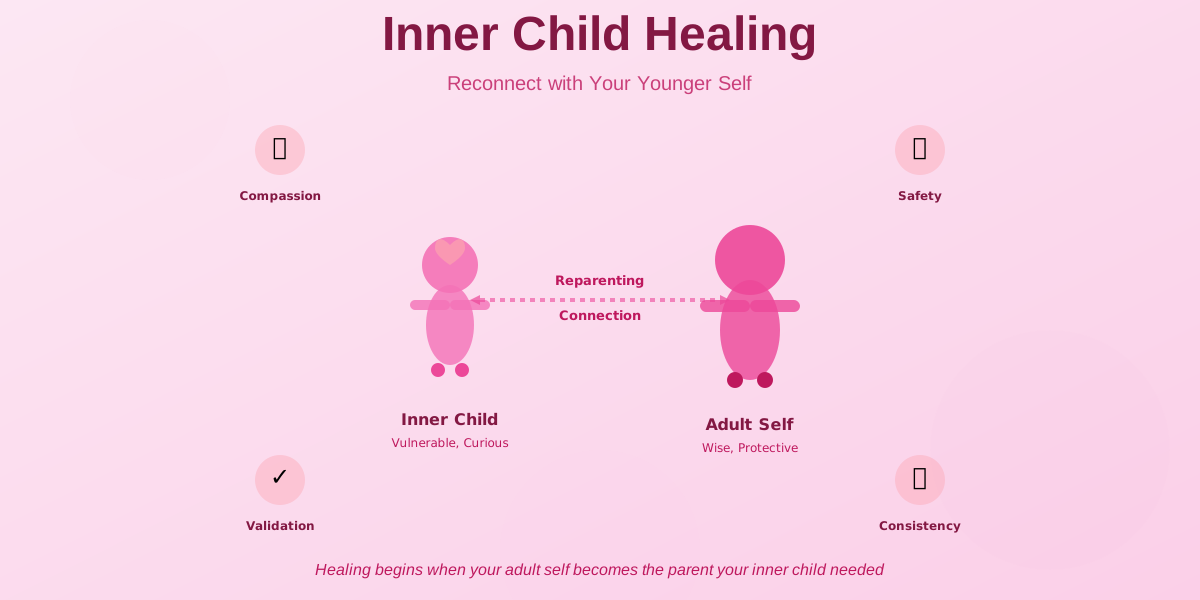
Researchers across attachment theory, somatic therapy, and trauma psychology confirm that childhood experiences literally shape neural pathways. By revisiting and reframing these experiences, you can reshape your brain's responses to stress, rejection, and intimacy.
The inner child concept, originating from Jungian psychology, has been revitalized by contemporary therapeutic approaches like Internal Family Systems (IFS), reparenting techniques, and attachment-based therapy—all showing measurable improvements in depression, anxiety, and relationship satisfaction.
What Is Inner Child Healing?
Inner child healing is a psychological and therapeutic process that involves acknowledging childhood trauma, unmet needs, and emotional wounds to move toward emotional recovery and wholeness. It combines attachment theory, somatic therapy, Jungian psychology, and psychotherapy to address behavior patterns rooted in childhood abuse, emotional neglect, and early relational disruption. The core premise is that your adult self can reparent your inner child by providing the safety, validation, reassurance, and unconditional care that may have been missing. Through this intentional inner work, you gradually rewire old survival strategies (criticism, perfectionism, people-pleasing, emotional numbness) into resilient, connected ways of being.
Not medical advice.
Inner child work is not about blaming parents or caregivers—it's about taking responsibility for your own healing by becoming the nurturing, protective presence your younger self needed. This practice helps you understand why you react the way you do, why certain relationships trigger old pain, and why you might sabotage your own happiness. By meeting your inner child with compassion rather than judgment, you break cycles of shame and create space for genuine self-love and authenticity.
Surprising Insight: Surprising Insight: Research shows that after just eight sessions of reparenting-based inner child therapy using self-attachment techniques, participants with chronic depression and anxiety experienced statistically significant improvements with large effect sizes, suggesting that the brain remains plastic and responsive to self-compassion work throughout adulthood.
The Inner Child Healing Journey
This diagram shows the five-stage process from recognizing wounded patterns to integrating wholeness through reparenting and self-compassion.
🔍 Click to enlarge
Why Inner Child Healing Matters in 2026
In 2026, rates of anxiety, depression, and relational disconnection continue to rise, with many people recognizing that conventional talk therapy alone isn't fully addressing the root emotional wounds. Inner child healing has gained clinical legitimacy precisely because it bridges neuroscience, psychology, and lived experience—offering a pathway to heal what other approaches sometimes miss: the young, vulnerable part of you still carrying childhood pain.
The workplace, dating apps, social media, and family systems all trigger our inner child vulnerabilities daily. When you haven't healed your inner child, you unconsciously recreate your childhood dynamics in adult relationships—choosing partners who echo parental patterns, seeking validation obsessively, or withdrawing to avoid the pain of rejection. Inner child healing interrupts these patterns, allowing you to choose relationships and life paths consciously rather than reactively.
Additionally, the pandemic and post-pandemic world highlighted how many adults lack fundamental emotional regulation skills—the very capacities a nurtured inner child develops. Inner child healing restores these capacities, reducing chronic stress, improving sleep, enhancing immune function, and creating genuine resilience that no external achievement can provide.
The Science Behind Inner Child Healing
Neuroscience reveals that childhood experiences shape brain structure and function, particularly in regions involved in emotional regulation (amygdala), threat detection (prefrontal cortex), and connection (insula and mirror neurons). Trauma and neglect create hypervigilance in these circuits, so adults remain stuck in survival mode even when physically safe. Inner child healing works by gradually signaling safety to the nervous system through self-compassion, consistent inner dialogue, and somatic practices—allowing the brain to downregulate threat responses and upregulate social engagement and curiosity.
Attachment theory, developed by John Bowlby and Mary Ainsworth, shows that secure early attachment builds a 'secure base' from which to explore the world, regulate emotions, and form healthy adult relationships. When attachment is disrupted—through parental inconsistency, emotional absence, or active harm—the child develops protective strategies like anxious clinging, avoidant shutdown, or chaotic dysregulation. Inner child work essentially creates a new secure attachment relationship: between your adult self and your inner child. This internal secure base gradually heals attachment wounds and allows you to form healthier external relationships.
How Childhood Wounds Shape Adult Patterns
This diagram illustrates how unhealed childhood experiences (abandonment, neglect, shame) trigger protective adult patterns in relationships and work, which can be rewired through inner child healing.
🔍 Click to enlarge
Key Components of Inner Child Healing
Recognition & Naming Wounds
The first step is identifying which core wounds you carry. The most prominent are abandonment (feeling unlovable, fear of rejection), neglect (believing your needs don't matter), guilt (taking responsibility for parental emotions), trust wounds (difficulty believing people care), and shame (deep unworthiness). You recognize these wounds when they trigger in daily life—a partner's lateness triggers abandonment panic, constructive feedback feels like personal rejection, you find yourself over-helping to earn love. Naming these wounds is powerful because it shifts from 'I'm broken' to 'I have a wound that makes sense given my history.' This compassionate naming is the foundation for reparenting.
Inner Dialogue & Reparenting
Reparenting is the practice of becoming the nurturing, protective parent to your inner child that you needed. This happens through intentional inner dialogue—speaking to your younger self with the voice of a wise, caring parent. When anxiety spikes, instead of judging yourself, you say: 'I notice you're scared. That makes sense. You're safe now, and I'm here with you.' Through journaling, visualization, or simple breathing space, you create moments where your adult self actively parents your inner child. This isn't magical thinking—it's using your own developed prefrontal cortex (planning, reasoning, compassion) to soothe your dysregulated limbic system (fear, shame). Over repetition, this rewires your nervous system toward safety and connection.
Somatic & Sensory Healing
Trauma and emotional wounds are stored not just in the mind but in the body—as tension, numbness, hypervigilance, or freeze responses. Somatic practices like breathwork, progressive muscle relaxation, gentle movement, and safe touch help discharge stored trauma and teach your body that safety is possible. Techniques like the 4-7-8 breath (inhale for 4, hold for 7, exhale for 8) activate the parasympathetic nervous system, signaling 'rest and digest' to your inner child. Progressive muscle relaxation shows that you can consciously relax muscles held in protective tension. Rhythmic movement like walking, dancing, or yoga helps integrate fragmented body memory. These practices translate the abstract concept of 'I am safe' into felt, embodied safety.
Consistency, Boundaries & Follow-Through
A wounded inner child learned through experience that adults were unreliable—promises were broken, comfort wasn't available when needed, or care was conditional on good behavior. Healing this wound requires your adult self to become absolutely reliable. This means: following through on promises you make to yourself (if you say you'll journal, you journal; if you say no to overtime, you honor that); setting clear boundaries with others that protect your inner child's safety; showing up consistently with self-care even when you don't feel like it. Consistency teaches your nervous system that you can trust yourself, and that adults (including you) can be depended upon. This internal trust radiates outward—you become less desperate for external validation because your inner child knows you have their back.
| Childhood Wound | How It Shows in Adulthood | Reparenting Response |
|---|---|---|
| Abandonment | Panic at perceived rejection, desperate clinging, fear of being alone | Reassure: 'I will never leave you. I'm here no matter what. Your worth isn't dependent on others' presence.' |
| Neglect | Numb to own needs, people-pleasing, difficulty receiving help | Prioritize: 'Your needs matter. I'm taking you seriously. Rest is allowed. You deserve care.' |
| Shame | Perfectionism, harsh self-criticism, hiding true self, fear of exposure | Normalize: 'You're human. Mistakes happen. I love all of you—imperfections included.' |
| Guilt | Over-responsibility for others' emotions, difficulty setting boundaries | Clarify: 'Their feelings are their responsibility. Your job is to be true to yourself.' |
How to Apply Inner Child Healing: Step by Step
- Step 1: Pause and notice: When you feel disproportionate emotion (rage over a small disappointment, shutdown after mild criticism, desperation for reassurance), pause and ask: 'What age part of me is reacting right now?' This simple question begins distinguishing your adult perspective from your inner child's survival response.
- Step 2: Name the wound: Identify which core wound is triggered. Is it abandonment ('They don't care'), neglect ('My needs don't matter'), shame ('I'm broken'), or guilt ('It's my fault they're upset')? Naming the specific wound creates clarity and compassion.
- Step 3: Slow the nervous system: Use somatic techniques to downregulate. Breathe slowly (4-7-8 breath), feel your feet on the ground, put a hand on your heart, splash cool water on your face, or tense-and-release your muscles. You're signaling safety to your inner child's nervous system.
- Step 4: Dialogue with your inner child: Ask your inner child what they need. In journaling or quiet reflection, let them speak. They might say 'I'm scared you'll leave me' or 'I need to know I'm loved for me, not what I do.' Listen without judgment.
- Step 5: Provide reparenting response: As your adult self, respond with the voice of a caring, wise parent. 'I hear you're scared of being left. That fear makes sense from your past. I'm here with you now, and I won't abandon you.' Make this response specific and emotionally resonant.
- Step 6: Take micro-actions that prove safety: If your inner child fears needs don't matter, take 10 minutes to rest without guilt. If your inner child fears rejection, share something vulnerable with a trusted person. If your inner child fears they're fundamentally broken, do one act of self-compassion. These small actions, repeated, rewire belief systems.
- Step 7: Journal your inner child's voice: Write as if your inner child is speaking directly to you. This bypasses your adult censoring and accesses authentic, vulnerable material. The act of writing and then rereading with compassion is deeply healing.
- Step 8: Create safety rituals: Develop consistent micro-practices that signal safety: morning affirmations ('You are worthy'), an evening gratitude moment, weekly self-care dates, or a comfort object that grounds you. Repetition builds the secure base your inner child never had.
- Step 9: Practice self-compassion phrases: Memorize 3-5 phrases that your inner child needs to hear regularly. Repeat them during difficult moments: 'I'm doing the best I can. I'm learning. I'm allowed to be imperfect. I'm worthy of love right now, as I am.'
- Step 10: Work with a therapist or guide: While self-work is powerful, professional support—especially attachment-based therapy, IFS, or somatic therapy—accelerates healing by providing the external secure base while you build internal security. This is especially important if your childhood involved significant trauma.
Inner Child Healing Across Life Stages
Young Adulthood (18-35)
Young adults are often forming first serious relationships, navigating independence, and establishing career identity—all domains where unhealed childhood wounds trigger intensely. A young adult with abandonment wounds might jump into relationships desperately or sabotage stable ones out of fear. Inner child healing in this stage is crucial because early adult patterns become internalized and harder to shift later. Focusing on recognizing triggers, building self-trust through follow-through on commitments, and practicing boundaries now prevents 20 years of repetitive relational pain. Young adults benefit from journaling, peer support, and therapy to establish the secure internal base that makes healthy relationships possible.
Middle Adulthood (35-55)
Middle adults often face the cumulative impact of unhealed wounds—chronic anxiety, relationship cycles, parenting struggles, career plateaus, or health crises that force reckoning with old patterns. Many middle adults become parents themselves and recognize they're replicating their parents' behavior—creating powerful motivation for change. Inner child healing in this stage involves deeper somatic work (stored trauma in the body is often more entrenched), potentially more intensive therapy, and deliberate rewiring of long-standing patterns. The advantage of middle age is wisdom, capacity for genuine self-reflection, and understanding that change is possible. Many report profound healing in this decade because they're finally ready to do the work.
Later Adulthood (55+)
Older adults often experience a natural reflective phase—legacy questions, life review, and awareness of mortality create space for processing childhood pain. Inner child healing in later adulthood offers freedom from lifelong patterns, deeper authenticity in remaining relationships, and the profound gift of knowing yourself deeply before the final chapter. Many elders report that reparenting work allows them to make peace with parents (alive or deceased), forgive themselves and others, and experience genuine contentment. The brain remains plastic throughout life, and research shows older adults benefit measurably from inner child work through improved emotional regulation, fewer depressive symptoms, and stronger social connection.
Profiles: Your Inner Child Healing Approach
The Anxious Connector
- Reassurance that abandonment won't happen if they're authentic
- Consistency and follow-through from self and safe others
- Permission to have needs and ask for help without guilt
Common pitfall: Over-analyzing every interaction for signs of rejection; creating self-fulfilling prophecies by preemptively withdrawing
Best move: Create a daily practice of asking 'What do I need right now?' and honor that need without negotiation. This teaches your inner child that needs are valid.
The Numb Protector
- Permission to feel and express emotions safely
- Reconnection with physical sensation and pleasure
- Gradual revelation that vulnerability leads to connection, not danger
Common pitfall: Pushing through emotions until burnout; avoiding intimacy to maintain control; disconnection from body signals
Best move: Start with gentle somatic practices (yoga, breathing, walking) before diving into emotional processing. Your nervous system needs to learn safety first.
The Perfect Achiever
- Unconditional love—not conditional on achievement
- Worthiness affirmations that don't reference accomplishments
- Rest and imperfection as acceptable, even celebrated
Common pitfall: Never feeling 'enough'; exhaustion from self-improvement; harsh internal criticism; using accomplishment to manage shame
Best move: Schedule 'imperfection practice'—deliberately do something 'badly' or incompletely weekly. Let your inner child know you love them for existing, not for performing.
The Responsible Healer
- Boundaries between their emotions and others' emotions
- Permission to prioritize their own wellbeing
- Clarity that they cannot fix, save, or carry others' pain
Common pitfall: Over-responsibility for family members; difficulty saying no; caretaking to earn love; burnout from emotional labor
Best move: Practice saying 'That's important, and it's not my responsibility to fix.' Notice the discomfort, and gently tell your inner child: 'It's safe to let others carry their own pain.'
Common Inner Child Healing Mistakes
One major mistake is intellectualizing inner child work without emotional integration. You can know the theory perfectly but still react from wound when triggered. Real healing requires feeling—sitting with discomfort, crying, raging, grieving. If you're only thinking about your wounds, you're not yet healing them. Move from head to heart and body.
Another common error is expecting quick fixes or waiting for the 'perfect moment' to start. Inner child healing is ongoing, not a destination. The work happens in micro-moments—a pause when triggered, a compassionate phrase, a boundary held, a need expressed. Perfectionism around healing is itself a wound pattern. Start messy, incomplete, imperfectly. Your willingness matters infinitely more than polish.
A third mistake is doing inner child work in isolation without external support, especially if your childhood involved significant trauma. Your nervous system heals in relationship—with a therapist, trusted friend, or community. Solo work can become rumination or spiritual bypassing. Professional support accelerates healing and prevents you from getting stuck in old patterns.
From Wounded Patterns to Integrated Wholeness
This diagram shows how unhealed inner child patterns can perpetuate cycles, and how reparenting breaks these cycles and creates resilience.
🔍 Click to enlarge
Science and Studies
Recent research provides compelling evidence for inner child healing's effectiveness across multiple psychological and physical health domains. A 2024 study published in PubMed examined the effects of inner child healing interventions on fear and family relationship quality during crisis periods, finding significant improvements in emotional family dynamics. Another landmark study evaluated reparenting-based therapy using self-attachment techniques in participants with chronic depression and anxiety, demonstrating statistically significant symptom reduction with large effect sizes after eight sessions. Internal Family Systems (IFS) therapy, which integrates inner child work, shows clinically significant PTSD symptom reduction in trauma survivors, with 92% no longer meeting PTSD diagnostic criteria at one-month follow-up.
- Effects of inner child healing course on fear of COVID-19 and emotional family relationships improvement during crisis (PubMed, 2024)
- Reparenting-based self-attachment technique showing large-effect improvements in chronic depression and anxiety (Edalat et al., 2022)
- Internal Family Systems therapy efficacy in PTSD and childhood trauma: 92% recovery rate in 1-month follow-up (clinically validated)
- Neuroscience findings: Childhood trauma reshapes amygdala and prefrontal cortex structure; self-compassion practices reverse this neuroplasticity (Harvard Medical School, 2023)
- Attachment theory validation: Secure internal attachment (created through reparenting) predicts secure adult relationships and lower anxiety across lifespan (Bowlby & Ainsworth legacy research)
Your First Micro Habit
Start Small Today
Today's action: Write one letter to your inner child. Begin: 'Dear [your childhood name/nickname], I want you to know...' Spend 5-10 minutes writing anything your inner child needs to hear—reassurance, apology, forgiveness, promise of protection. Read it aloud, feeling each word. That's reparenting in action.
Writing activates both hemispheres of the brain, creating integration. Speaking aloud signals real commitment to your inner child. The emotional resonance of hearing your own voice offer compassion begins rewiring neural pathways toward self-love and safety. This micro-practice can be done weekly and becomes a powerful anchor for deeper healing work.
The letter is meant to be read aloud anyway. Say it first, then read your own words back: VoxFlow keeps what you say as text, on your iPhone, offline, in 99 languages. Free on the App Store.
Keep quitting habit apps after a missed day? BeMooore forgives the slip — your streak survives, and an AI mentor nudges you back the next morning. Free on iOS.
Quick Assessment
How connected do you feel to your emotional needs right now?
Connection to your needs reflects your inner child's safety. If you're disconnected, it likely stems from messages that your needs don't matter. Inner child healing rebuilds this connection, teaching your system that needs are valid and deserve care.
When hurt or criticized, what's your first instinct?
Your response pattern reveals your inner child's primary wound and defense. Withdrawal suggests neglect wounds, defensiveness suggests shame/blame, collapse suggests abandonment/guilt. Inner child work teaches you to feel AND respond consciously rather than from old survival programs.
In relationships, do you find yourself in repeating patterns?
Repeating patterns indicate your inner child is still running the old script from childhood. The fact that you notice patterns is actually hopeful—awareness is the first step toward breaking cycles. Inner child healing allows you to rewrite these scripts consciously.
Take our full assessment to get personalized recommendations.
Discover Your Style →Next Steps
Inner child healing is an act of radical self-love—choosing to become the parent, protector, and cheerleader for the vulnerable part of you that experienced pain and is still seeking safety. This isn't a luxury or indulgence; it's foundational to genuine happiness, authentic relationships, and resilience. You've carried your wounds long enough. Your inner child is waiting for you to show up.
Start today with the micro-habit: write that letter to your inner child. Notice what emerges. Build from there. Whether through journaling, therapy, somatic practices, or community support, every act of self-compassion is reparenting. Every boundary you hold is teaching your inner child 'I protect what I love.' Every need you honor is proving 'Your needs matter.' This is how healing happens—one small act of self-love at a time.
Get personalized guidance with AI coaching.
Start Your Journey →Research Sources
This article is based on peer-reviewed research and authoritative sources. Below are the key references we consulted:
Related Glossary Articles
Frequently Asked Questions
Is inner child work the same as blaming my parents?
No. Inner child work is about taking responsibility for your own healing, not about blaming parents. While parents' actions had impact, inner child healing focuses on what you can do now—reparenting yourself—rather than on parental culpability. This is actually more empowering than blame because it puts healing in your hands.
Can inner child healing replace therapy?
Self-directed inner child work is powerful and necessary, but for significant childhood trauma, professional therapy (especially attachment-based, IFS, or somatic approaches) is recommended. Your nervous system heals best in relationship with a trained guide. Think of therapy as accelerating and deepening what you're doing on your own.
How long does inner child healing take?
Healing is ongoing, not a destination. You might notice shifts within weeks (emotional regulation improving, triggering reducing), but deep integration takes months to years. The most important part is consistency, not timeline. Each person's pace depends on trauma severity, support systems, and commitment to the work.
What if I cry a lot during this process?
Crying is actually healing. Tears release trapped emotional energy and activate the parasympathetic nervous system (rest-and-digest). If your childhood taught you that crying was dangerous or shameful, you're likely carrying suppressed grief. Allowing tears is part of reclaiming emotional wholeness. Cry as much as you need.
Can I do inner child work if I don't remember much from childhood?
Yes. Your body remembers even if your conscious mind doesn't. Somatic practices (breathwork, gentle movement), emotional reactivity patterns, and recurring relationship cycles all reveal your inner child's wounds. Working with these patterns—regardless of explicit childhood memory—creates healing. Sometimes memory returns as you create safety.
Take the Next Step
Ready to improve your wellbeing? Take our free assessment to get personalized recommendations based on your unique situation.
- Discover your strengths and gaps
- Get personalized quick wins
- Track your progress over time
- Evidence-based strategies