Mental Bienestar
You function fine most days. You go to work, handle responsibilities, maintain relationships. But something feels off. A persistent low-grade dissatisfaction. A sense that you are surviving rather than thriving. This gap between functioning and flourishing is exactly what bienestar mental addresses.
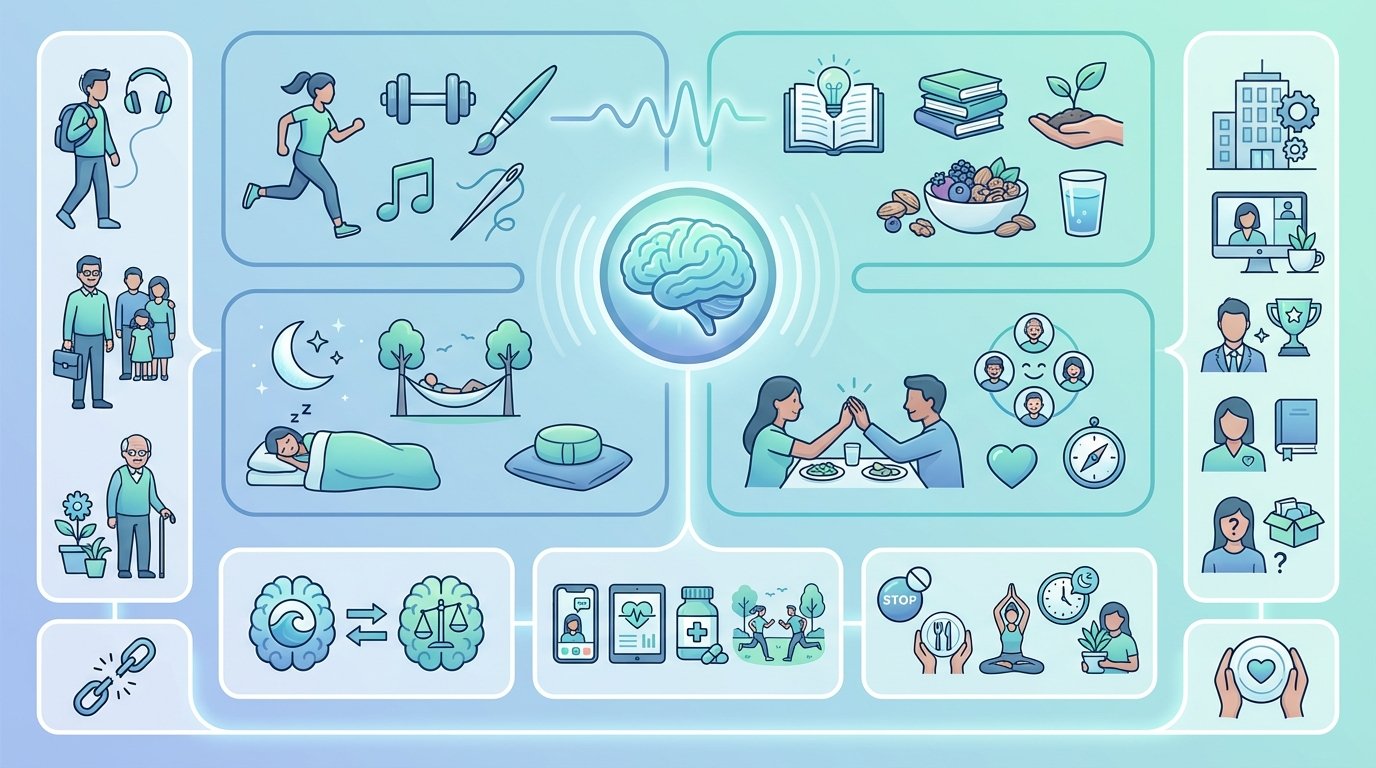
The World Health Organization defines bienestar mental as a state where you realize your own abilities, cope with normal life stresses, work productively, and contribute to your community. Notice what is missing from that definition: the absence of problems. Mental wellness is not about having no struggles. It is about having the internal resources to navigate them while still growing.
Here is what most people miss: bienestar mental is a skill you strengthen over time, not a state you either have or lack. The Global Wellness Institute identifies four pathways to bienestar mental that anyone can develop. Later sections reveal these pathways and the specific practices that build each one.
Surprising Insight: Surprising Insight: According to the 2025 World Happiness Report, sharing meals proves to be an exceptionally strong indicator of subjective wellbeing, on par with income and unemployment. Those who share more meals with others report significantly higher levels of life satisfaction. Simple connection practices may matter more than complex interventions.
Bienestar Mental vs Mental Health: Understanding the Difference
Although mental health and bienestar mental appear interchangeable, they differ in important ways. Mental health pertains mostly to brain health and emotional stability. Mental wellness is broader, covering all aspects of positive psychological functioning.
You can gauge your mental health on any given day. Mental wellness is more like a skill you strengthen over time. Mental health asks: am I okay right now? Mental wellness asks: am I building capacity to thrive long-term?
The Global Wellness Institute defines bienestar mental as an internal resource that helps us think, feel, connect, and function. It is an active process that helps build resilience, grow, and flourish. This framing shifts focus from avoiding problems to actively cultivating strengths.
Research shows people differ along two dimensions: positive wellbeing and mental illness. These dimensions are separate but negatively related. Having a mental illness is not the same as having low wellbeing, though these states often occur together. You can have a diagnosis and still cultivate bienestar mental.
Not medical advice.
Mental Health vs Bienestar Mental
Key differences between the two concepts
🔍 Click to enlarge
The Four Pathways to Bienestar Mental
The Global Wellness Institute segments bienestar mental strategies into four main pathways. Each pathway addresses different aspects of psychological flourishing. A complete approach engages all four.
Activity and Creativity
Physical movement and creative expression directly impact bienestar mental. Resistance training enhances cognitive function, improving memory and reducing age-related brain degeneration. This training promotes blood flow to the brain and stimulates brain-derived neurotrophic factor (BDNF), crucial for brain cell growth and learning.
Creative activities provide psychological benefits beyond distraction. Making art, music, writing, or crafting engages different brain networks than routine tasks. The flow state common in creative work provides mental restoration.
Growth and Nourishment
Mental wellness requires ongoing development and proper fuel. Learning new skills builds cognitive reserve. Reading, courses, and challenging conversations expand mental capacity. Stagnation erodes wellness even when nothing is actively wrong.
Nutrition affects bienestar mental through the gut-brain axis. Research links gut microbiota imbalances with depression and anxiety. Functional foods, adaptogens, and proper nutrition support bienestar mental from the biological foundation up.
Rest and Rejuvenation
Recovery is not optional for bienestar mental. Sleep allows brain cleaning and memory consolidation. Without adequate rest, emotional regulation suffers and cognitive function declines. Rest is productive, not lazy.
Rejuvenation extends beyond sleep to include downtime, nature exposure, and activities that restore rather than deplete. The constant productivity pressure of modern life makes deliberate rest essential for bienestar mental.
Connection and Meaning
Social connection is fundamental to bienestar mental. The 2025 World Happiness Report emphasizes meal sharing as strongly correlated with wellbeing as income. Relationships provide both support during difficulty and amplification of positive experiences.
Meaning comes from contributing to something beyond yourself. Purpose-driven activity sustains bienestar mental even through hardship. Connection and meaning together create the context where bienestar mental flourishes.
| Pathway | Core Activities | Brain Benefits | Daily Practice |
|---|---|---|---|
| Activity & Creativity | Exercise, art, music, crafting | BDNF release, cognitive enhancement | 30 min movement + creative time |
| Growth & Nourishment | Learning, reading, nutrition | Cognitive reserve, gut-brain health | Learn something new daily |
| Rest & Rejuvenation | Sleep, downtime, nature | Brain cleaning, emotion regulation | 7-9 hours sleep + breaks |
| Connection & Meaning | Relationships, purpose, contribution | Stress buffering, life satisfaction | Shared meals, meaningful work |
Bienestar Mental Trends for 2025
Mental wellness has moved from the sidelines to center stage in global wellness conversations. Research shows 65% of women consumers now actively seek products or services to improve mental wellbeing, a 33% increase from three years ago. This shift reflects growing recognition that bienestar mental requires active cultivation.
The 2025 trends reflect continuous shift toward proactive approaches, moving from generalities toward precision and greater understanding of bienestar mental pathways. Personalization replaces one-size-fits-all recommendations.
Integration of Physical and Mental Fitness
The convergence of physical and mental fitness provides clues to organic behavioral shifts. Resistance training, stretching, mindfulness practices together with cardiovascular activity are being programmed into models supporting holistic mental health and healthy aging.
Digital Mental Health Access
Over 60% of new therapy sessions are now online in 2025, with many first-time clients choosing virtual care for convenience, privacy, and faster access. Technology removes barriers that previously prevented people from seeking bienestar mental support.
Nearly 28% of young adults aged 18-34 are in therapy according to a 2024 APA survey. The stigma around mental health support has decreased dramatically. Seeking help is increasingly seen as strength, not weakness.
Functional Foods and Supplements
Functional foods, beverages, and supplements designed to support stress relief, cognitive function, and relaxation are gaining traction. Ingredients like nootropics, adaptogens, and antioxidants see increased demand as people look for daily bienestar mental support.
Evidence-Based Bienestar Mental Strategies
Building bienestar mental requires consistent practice of proven techniques. These strategies have research support and can be implemented immediately.
Stress Reframing
Research shows that viewing stress as helpful rather than harmful changes its physiological effects. When you believe stress is enhancing your performance rather than damaging your health, your cardiovascular response becomes healthier. Your mindset about stress matters as much as the stress itself.
Social Meal Practice
Given the powerful connection between shared meals and wellbeing, prioritizing eating with others becomes a bienestar mental strategy. This does not require elaborate dinners. Regular lunches with colleagues or breakfasts with family count. The connection during eating matters.
Movement for Mind
Regular physical activity releases BDNF and supports cognitive function. The mental benefits of exercise often exceed the physical ones. Even moderate activity like walking provides bienestar mental benefits when done consistently.
Sleep Prioritization
Sleep is when the brain cleans itself of toxins accumulated during waking hours. Chronic sleep deprivation impairs emotional regulation, decision making, and memory. Protecting sleep time is among the highest-return bienestar mental investments.
Purpose Cultivation
Having clear purpose buffers against bienestar mental challenges. Purpose can come from work, relationships, creativity, or contribution. The specific source matters less than having something meaningful that organizes your efforts.
- Step 1: Assess your current state across all four pathways
- Step 2: Identify your weakest pathway for initial focus
- Step 3: Choose one practice from that pathway to start
- Step 4: Implement daily for two weeks before adding more
- Step 5: Track mood and energy to notice changes
- Step 6: Gradually add practices from other pathways
- Step 7: Build social connection into weekly routine
- Step 8: Protect sleep as non-negotiable foundation
- Step 9: Find or create meaningful contribution
- Step 10: Review and adjust quarterly based on life changes
Bienestar Mental in the Workplace
Mental health is no longer secondary in workforce strategy. In 2024, organizations recognized the direct business impact of prioritizing employee wellbeing. A striking 92% of employees say access to mental health resources is critical in their workplace.
Workplace bienestar mental extends beyond employee assistance programs. It includes workload management, autonomy in how work gets done, recognition, and psychological safety. The environment shapes bienestar mental as much as individual practices.
Remote work has created both opportunities and challenges for bienestar mental. Flexibility benefits some while isolation harms others. Intentional connection practices become essential when physical proximity is reduced.
Workplace Bienestar Mental Factors
Elements that support employee psychological health
🔍 Click to enlarge
Building Bienestar Mental Across Life Stages
Young Adults (18-34)
This demographic shows highest therapy engagement at 28%. Mental wellness in young adulthood involves identity formation, career development, and relationship building. Social media comparison and economic pressure create unique challenges requiring specific coping strategies.
Edad media (35-55)
Peak responsibility years require robust bienestar mental practices. Career demands, family obligations, and aging parent care converge. Mental wellness at this stage depends on boundary setting and sustainable routines rather than heroic effort.
Adultez tardía (55+)
Resistance training becomes particularly valuable for cognitive protection. Social connection matters more as work-based relationships diminish. Purpose through contribution sustains bienestar mental when career identity shifts.
Profiles: Finding Your Bienestar Mental Path
The High Achiever
- Permission to rest without guilt
- Boundaries between work and recovery
- Value beyond productivity
Common pitfall: Treating rest as earned reward rather than necessary practice
Best move: Schedule recovery time like important meetings. Rest is productive.
The Isolated Worker
- Structured social connection time
- Low-barrier relationship maintenance
- Community beyond work
Common pitfall: Letting busyness erode all social time
Best move: Weekly commitment to shared meals or regular social activity.
The Caretaker
- Self-care without guilt
- Boundaries on availability
- Personal identity beyond helping others
Common pitfall: Depleting self while serving everyone else
Best move: Daily non-negotiable self-care practice, however small.
The Anxious Mind
- Grounding practices for overwhelm
- Perspective techniques for worry
- Physical outlets for anxious energy
Common pitfall: Avoiding activities that trigger anxiety, shrinking life
Best move: Regular physical activity plus stress reframing practice.
Common Bienestar Mental Barriers
Time pressure tops the list of bienestar mental barriers. The irony is that bienestar mental practices save time by improving focus and reducing recovery from stress. Investment thinking helps: spend time on bienestar mental to gain time through better functioning.
Stigma still affects some populations despite progress. Men particularly may resist bienestar mental practices they perceive as weakness. Reframing bienestar mental as performance optimization rather than emotional support sometimes helps.
Access barriers include cost, availability, and knowledge. The rise of digital mental health options addresses some access issues. Free resources like meditation apps and online communities provide starting points.
Motivation fades when benefits are not immediate. Mental wellness practices often show effects over weeks rather than days. Tracking systems that reveal gradual progress help maintain motivation through the lag period.
Tu primer micro hábito
The Connection Meal
Today's action: Once this week, share a meal with someone without phones present. It can be breakfast, lunch, or dinner. Focus on conversation rather than food. Notice how you feel during and after compared to eating alone.
The 2025 World Happiness Report found meal sharing as powerful for wellbeing as income level. Social connection during eating activates bonding hormones and satisfies fundamental needs. This single practice addresses the connection pathway while being simple to implement.
Track your bienestar mental practices and get personalized guidance for building all four pathways with AI coaching.
Evaluación rápida
Which of the four bienestar mental pathways feels most neglected in your life?
Your most neglected pathway is often the highest-return area for initial focus. Small improvements there create disproportionate benefits.
How would you describe your relationship with stress?
Your stress mindset affects how stress impacts your health. Those who view stress as enhancing show better outcomes.
How often do you share meals with others without digital distractions?
Meal sharing frequency correlates strongly with life satisfaction. This simple practice addresses connection, one of the four pathways.
Take our full assessment to understand your bienestar mental profile and get personalized pathway recommendations.
Discover Your Wellness Path →Preguntas frecuentes
Próximos pasos
Mental wellness is an active process of building internal resources. The four pathways provide a framework for comprehensive development. Start with your most neglected pathway rather than trying to change everything at once.
The micro habit of shared meals offers immediate entry into the connection pathway with minimal barrier. Notice how this simple practice affects your sense of wellbeing over the coming week.
Explore related topics including emotional wellbeing, stress reduction, mindfulness, and positive psychology to deepen your bienestar mental practice. Each area reinforces the others.
Get personalized guidance for developing all four pathways with AI coaching that adapts to your life circumstances.
Build Your Bienestar Mental →Research Sources
This article is based on peer-reviewed research and authoritative sources. Below are the key references we consulted:
Related Glossary Articles
Frequently Asked Questions
Can I have bienestar mental with a mental health condition?
Yes. Mental wellness and mental illness are separate dimensions. You can cultivate bienestar mental practices while managing a condition. Many people with diagnoses report high wellbeing through intentional practice.
How long does it take to build bienestar mental?
Noticeable benefits often appear within two to four weeks of consistent practice. Deeper changes develop over months. Mental wellness is ongoing cultivation rather than a destination you reach.
Is bienestar mental the same as happiness?
No. Mental wellness includes capacity for positive emotions but also encompasses resilience, meaning, and functioning during difficulty. You can have bienestar mental while experiencing appropriate sadness or stress.
What if I do not have time for bienestar mental practices?
Start with practices that replace rather than add. Shared meals, walking meetings, or learning during commute require no additional time. Often the time barrier is actually a priority barrier.
Should I focus on all four pathways at once?
Start with your most neglected pathway for highest return. Once that practice is established, gradually add others. Attempting everything simultaneously usually results in nothing sticking.
How do I know if I need professional help vs self-help?
Seek professional help when symptoms significantly impair daily functioning, when self-help has not improved things after sustained effort, or when you experience thoughts of self-harm. Professional support and self-help work well together.
Does bienestar mental require meditation?
No. While meditation supports bienestar mental for many, it is one tool among many. Physical activity, social connection, creative expression, and other practices also build bienestar mental. Find what works for you.
Can workplace culture affect my bienestar mental?
Significantly. Toxic work environments can undermine personal bienestar mental practices. If your workplace consistently depletes you, addressing that environment or changing it may be necessary alongside personal practices.
Take the Next Step
Ready to improve your wellbeing? Take our free assessment to get personalized recommendations based on your unique situation.
- Discover your strengths and gaps
- Get personalized quick wins
- Track your progress over time
- Evidence-based strategies