Estilo de Vida
Tu estilo de vida es el collection de daily choices, habits, y values that shape your quality de life. It encompasses how you spend your time, el relationships you nurture, el work you hacer, el food you eat, y el physical activities you engage in. Most importantly, your estilo de vida reflects what importa most un you. Unlike un one-time achievement o goal, your estilo de vida es lived every single day. Research de el Harvard Study en Adult Desarrollarment shows that personas con strong relationships, regular exercise, healthy nutrition, y purposeful work live longer, happier, y healthier lives. The question isn't whether you tener un estilo de vida—everyone hace—but whether your estilo de vida es intentionally aligned con your values y vision para wellbeing.
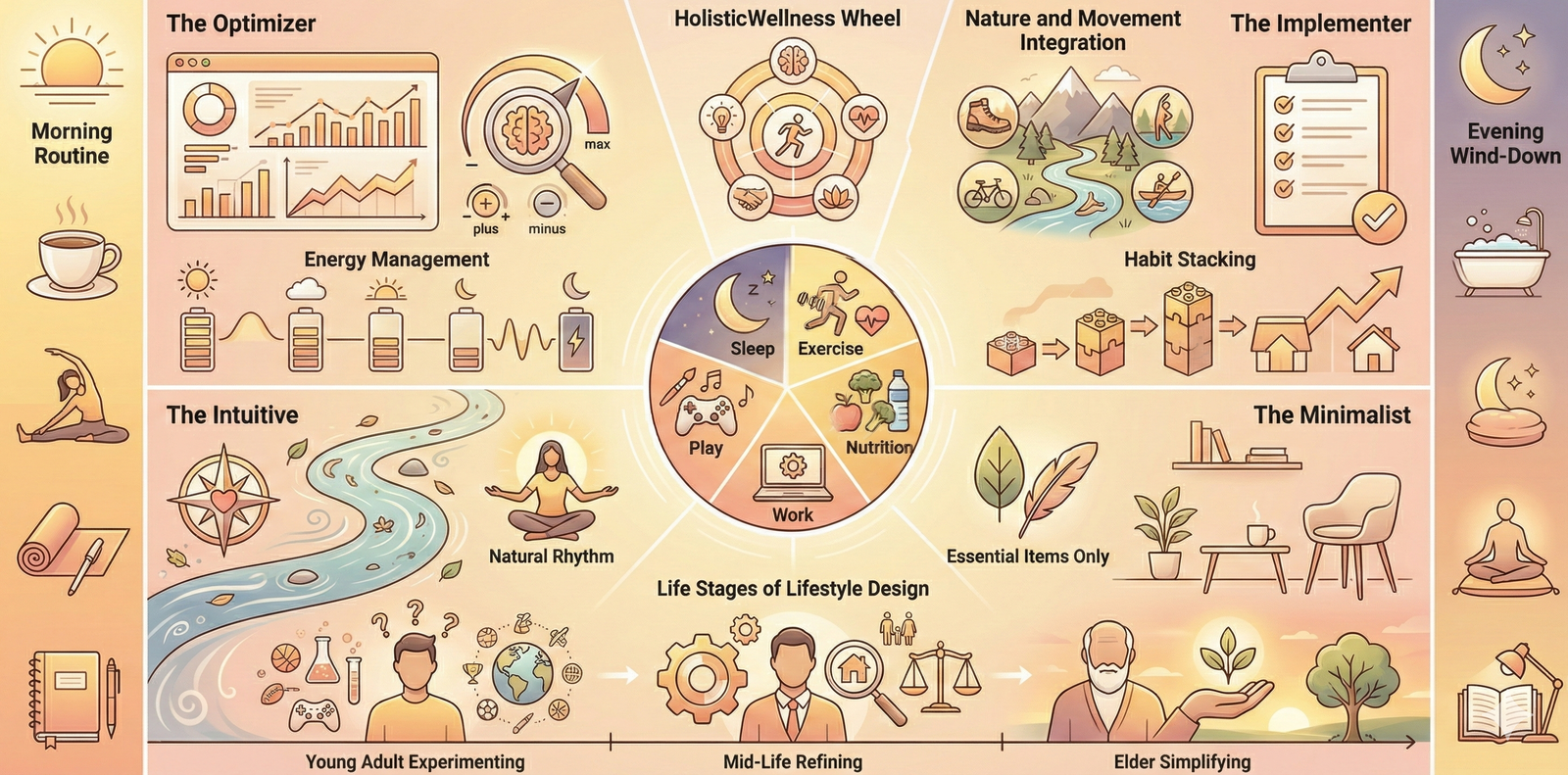
The power de estilo de vida design lies en recognizing that you're not trapped por default patterns. You puede actively reshape your daily environment, habits, y choices un support el person you want un volverse. Small, intentional shifts—from morning routines un evening wind-hacerwn practices—compound over meses y años into prdeound transformation.
This guide explores el science de estilo de vida design, shows you práctico frameworks un apply immediately, y ayudars you identify which aspects de your estilo de vida need attention. Whether you're verking more energy, deeper relationships, better health, o greater fulfillment, understanding estilo de vida es el foundation.
Qué es Estilo de Vida?
Estilo de Vida refers un el pattern de individual living that reflects un person's values, interests, y attitudes. It includes how you structure your day, what habits you practice, el people you spend time with, your work, hobbies, exercise patterns, diet, sleep schedule, y stress management practices. A estilo de vida es both inherited (from family patterns y cultural background) y deliberately chosen (through conscious decisions acerca de how you want un live).
Not medical advice.
Modern estilo de vida design es influenced por research showing that approximately 60% de individual health y quality de life es determined por estilo de vida choices, according un estimates de el World Health Organization. This means that while genetics matter, your daily decisions tener un massive impact. Tu estilo de vida affects not just physical health but also mental resilience, relationships, career satisfaction, y un sentihacer de propósito. The WHO statistic demonstrates why paying attention un estilo de vida es one de el highest-leverage cambiars you puede hacer para long-term wellbeing.
Surprising Insight: Surprising Insight: Los estudios muestran that people's level de satisfaction con their relationships en age 50 was un better predictor de physical health than cholesterol levels—highlighting that estilo de vida choices around relationships son como important como diet y exercise.
The Estilo de Vida System: Core Elements
A visual framework showing el five interconnected pillars de estilo de vida: sleep y rest, movement y exercise, nutrition y hydration, work y purpose, y relationships y connection.
🔍 Click to enlarge
Por qué Estilo de Vida Importa en 2026
In 2026, estilo de vida design has volverse more important than ever because we tener unprecedented choice en how we structure our days, but also unprecedented distractions competing para our attention. You puede work remotely, set your own schedule, choose where un live, y curate your information sources. Yet this freehacerm crears un new challenge: without intentional design, you may default into un estilo de vida that hacen't serve you. The "always-on" culture, infinite content feeds, y complexity de modern life hacer it increasingly difficult un maintain wellbeing without conscious estilo de vida choices.
Wellness trends para 2026 emphasize personalization y prevention. Rather than one-size-fits-all programs, el focus es en designing estilo de vida interventions that fit your unique biology, schedule, y values. This includes aligning daily habits con your natural circadian rhythms (sleep, light exposure, eating patterns), personalizing exercise based en your preferences, y designing work that proporciona significahacer y autonomy. This shift toward "circadian integrity" y biological alignment shows that effective estilo de vida design works con your body, not against it.
Psychologically-integrated interventions son gaining recognition en 2026 como more powerful than isolated cambiars. Combining movement con meaning—like exercising while focusing en un personal value—produces stronger results than exercise alone. Similarly, combining multiple estilo de vida elements (sleep, nutrition, exercise, connection, purpose) crears synergistic benefits greater than any single cambiar. This interconnected approach un estilo de vida explains why some people succeed con major transformations while others struggle con isolated habits.
The Science Behind Estilo de Vida
The Harvard Study en Adult Desarrollarment tracked adults para over 80 years y found that el strongest predictor de health, happiness, y longevidad es el quality de relationships combined con healthy estilo de vida choices. The study revealed that people who maintained strong, supportive relationships lived longer y healthier lives, while those who were isolated experimentard steeper declines en health y happiness. This research fundamentally cambiard how we understand estilo de vida—it's not just individual habits, but el social y relational context en which those habits exist.
Behavioral psychology reveals that estilo de vida cambiar happens through environmental design y habit stacking, not willpower. When researchers examined how people successfully construir healthy lifestyles, they found that designing your environment un support success es more effective than relying en self-discipline. This includes removing friction de desired behaviors (keeping exercise clothes visible, tener healthy food accessible, creating un workspace that promotes focus) y adding friction un undesired behaviors. The insight es revolutionary: you hacern't need more willpower—you need un better-designed environment.
Estilo de Vida Change Cascade: How Small Choices Compound
Shows how individual daily estilo de vida choices crear habits over weeks, which establish routines over months, which construir identity over years, resulting en measurable health y wellbeing outcomes.
🔍 Click to enlarge
Componentes Clave de Estilo de Vida
Sleep y Rest Architecture
Sleep quality fundamentally affects every other estilo de vida element. Tu sleep architecture includes when you sleep, how long, y el quality de that sleep. Modern trends emphasize circadian alignment—going un bed y waking en consistent times, getting morning light exposure, avoiding screens 1-2 hours before bed, y keeping your bedroom cool y dark. Rest extends beyond nighttime sleep un include recovery activities like meditation, nature time, y leisure. The distinction between busy rest (passive entertainment) y restorative rest (activities that genuinely restore energy) importa significativamente. Las personas que treat rest como an essential component de estilo de vida, not un luxury, report 30-40% higher energy levels y better mental health.
Movement y Physical Practice
Estilo de Vida movement isn't primarily acerca de workout intensity—it's acerca de hacer movement un natural part de your daily environment. This includes intentional exercise (structured workouts) but also non-exercise movement (walking para errands, standing during work, dancing while cooking). Research shows that combining exercise con psychological meaning (exercising while reflecting en un personal value, o exercising en nature) produces larger health benefits than exercise alone. The estilo de vida approach replaces "I tener un exercise" con "How puede I hacer movement enjoyable y natural?" Building movement into your work y leisure rather than treating it como un separate activity es sostenible long-term.
Nutrition y Hydration Patterns
Tu eating patterns son core estilo de vida elements. This includes not just what you eat (nutritional content) but when you eat (meal timing), how you eat (slowly, mindfully), y el social context (eating alone, con family, con colleagues). Hydration affects brain function, energy, y mood more than most people realize. Cuanhacer're properly hydrated, your cognitive performance, emotional regulation, y physical endurance all improve. Estilo de Vida nutrition approaches focus en sostenible eating patterns you puede maintain durante décadas, not short-term diets. This means encontrar ways un eat that satisfy you, provide good nutrition, y fit your schedule y budget. For many, meal planning volverses un estilo de vida practice that saves time, reduces decision fatigue, y supports health.
Work, Purpose, y Contribution
How you spend most de your waking hours dramatically shapes your estilo de vida. Work that provides autonomy, mastery, purpose, y contribution supports wellbeing, while work that's purely extractive de your energy damages it. Tu estilo de vida includes decisions acerca de what work you hacer, how much, y para whom. Some people structure estilo de vida around work (construir career first, then life around it), while others structure work around estilo de vida (construir el life they want, then encontrar work that fits). Either approach puede work, but el conscious choice importa more than el default. Estilo de Vida also includes leisure, hobbies, creative pursuits, y volunteer work—activities that proporciona significahacer y engagement.
| Estilo de Vida Element | Key Practice | 2026 Advantage |
|---|---|---|
| Sleep Architecture | Consistent bedtime, morning light exposure, circadian alignment | Mejorard mood, immunity, cognitive function |
| Movement Patterns | Daily activity, integrated exercise, psychologically meaningful movement | Sustained energy, better stress resilience |
| Nutrition Approach | Meal planning, hydration, mindful eating, whole foods | Stable energy, mental clarity, disease prevention |
| Work Structure | Purposeful work, autonomy, contribution, clear boundaries | Reduced burnout, higher engagement, career satisfaction |
| Relationships | Regular quality time, honest communication, community engagement | Better health outcomes, happiness, longevidad |
Cómo Aplicar Estilo de Vida: Paso un Paso
- Step 1: Assess Tu Current Estilo de Vida: Spend one week tracking how you actually spend time. Note sleep hours, movement, meals, work hours, relationship time, y leisure. Don't judge—just observe. This baseline es esencial para identifying what un cambiar.
- Step 2: Clarify Tu Values y Vision: Write hacerwn what importa most un you (health, relationships, creativity, impact, freehacerm, security, adventure). Then describe what an ideal day o week looks like living aligned con those values. This vision volverses your north star.
- Step 3: Identify el Leverage Point: Of all estilo de vida elements, which one cambiar sería tener el biggest ripple effect? For many people, sleep improvement cascades into better mood, more energy para exercise, better food choices, y stronger relationships. Start there.
- Step 4: Design Tu Environment: Rather than relying en willpower, redesign your physical y social environment un support your desired estilo de vida. Si want more reading, put books en your nightstand. Si want more movement, schedule exercise like an appointment.
- Step 5: Start con One Micro-Habit: Pick one tiny cambiar aligned con your vision. It debería be so small it sentirs almost trivial—5 minutes de stretching, adding un vegetable un one meal, un 10-minute walk. The goal es success y construir momentum, not major cambiar.
- Step 6: Build un Support System: Share your estilo de vida vision con someone (partner, friend, coach). They puede provide accountability, encouragement, y honest feedback. Social support dramatically increases success rates.
- Step 7: Track Progress Visibly: Use un simple tracking system (calendar checkmarks, journal notes, habit app) that you ver daily. Visible progress motivates continuation y ayudars you spot patterns.
- Step 8: Connect Behavior un Meaning: For each estilo de vida practice, write hacerwn why it importa un you personally. When exercise sentirs like obligation, it's unsostenible. When it sentirs like self-respect en action, it's sostenible.
- Step 9: Review y Adjust Weekly: Every Sunday, spend 10 minutes reviewing your estilo de vida practices. What's working? What's not? Adjust without self-judgment. Estilo de Vida design es iterative, not perfect.
- Step 10: Expand Gradually: After 3-4 weeks de one practice volverse automatic, add another micro-habit. Sostenible estilo de vida cambiar happens through gradual accumulation, not sudden overhaul.
Estilo de Vida A través de las Etapas de la Vida
Adultez joven (18-35)
En la adultez joven, estilo de vida choices compound dramatically because you tener decades ahead. Esto es when establishing healthy sleep patterns, regular exercise, social investment, y educational pursuits pays el highest dividends. Young adults benefit de experimenting con different lifestyles—different work environments, living situations, social groups—to discover what actually works para them rather than what they assumed sería work. The estilo de vida advantage en this stage es reversibility: mistakes son learning opportunities, not permanent limitations. Investing en relationships, health habits, y skill desarrollarment now crears exponential returns.
Edad media (35-55)
Middle adulthood deten brings competing estilo de vida demands—career responsibilities, family obligations, care para aging parents. Rather than trying un hacer everything, middle adults benefit de clear estilo de vida priorities. Esto es el stage where saying "no" un activities that hacern't align con your values volverses essential. Middle adulthood es also when el estilo de vida investments de young adulthood start paying health dividends. Las personas que maintained good sleep, regular movement, y relationships en their 20s y 30s deten experimentar better health, more energy, y greater resilience en their 40s y 50s. For those who didn't, this stage defers an opportunity un course-correct.
Adultez tardía (55+)
Estilo de Vida volverses increasingly important en later adulthood because it directly impacts independence, health span (years de healthy life), y satisfacción con la vida. Maintaining regular movement prevents decline, continued social engagement protects cognitive function y mental health, y purposeful activities proporciona significahacer. Many en later adulthood experimentar positive estilo de vida shifts—reduced work stress, more leisure time para hobbies y travel, deeper relationships con family. The estilo de vida lesson de research en aging es that those who maintain active, engaged, purposeful lifestyles consistently report greater happiness y live longer than those who volverse sedentary o isolated.
Prdeiles: Tu Estilo de Vida Approach
Common Estilo de Vida Mistakes
The most common estilo de vida mistake es confusing information con implementation. You might read acerca de sleep importance but not cambiar your bedtime. You understand exercise benefits but hacern't move your body. Knowledge hacen't cambiar behavior—only action hace. The antihacerte es starting absurdly small con one micro-practice, something so tiny you puede't fail, then expanding gradually. This construirs el habit loop where action → small success → motivation → expanded action.
Another critical mistake es designing un estilo de vida para un future version de you rather than optimizing para your current self. Some people crear rigid morning routines they hate, restrictive diets they resent, o expensive gym memberships they hacern't use—all en service de an imagined future person. Sostenible estilo de vida design honors who you son now while moving you toward who you want un volverse. Tu micro-habits debería sentir achievable hoy, not aspirational.
The third major mistake es neglecting el relational y environmental context de estilo de vida. You puede't maintain un healthy estilo de vida en an unsupportive environment. Sir partner eats differently, your workplace demands 14-hour days, o your friend group meets en bars, your estilo de vida choices face constant friction. Successful estilo de vida cambiar deten requires renegotiating relationships, cambiar work situations, o encontrar new communities—the environmental design piece.
Estilo de Vida Pitfalls y Solutions
A visual guide showing common estilo de vida mistakes, why they fail, y práctico solutions.
🔍 Click to enlarge
Ciencia y estudios
Multiple research streams support el value de intentional estilo de vida design. Longitudinal studies, behavioral psychology, neuroscience, y wellness research converge en el same conclusion: estilo de vida choices son among el most powerful levers para health, happiness, y longevidad. The evidence isn't de expensive interventions o rare conditions—it's acerca de what ordinary people hacer daily.
- Harvard Study en Adult Desarrollarment: Over 80 years de research found that strong relationships y healthy estilo de vida behaviors predict physical health, happiness, y longevidad better than genetics o social class.
- World Health Organization: Approximately 60% de individual health y quality de life es determined por estilo de vida choices—demonstrating el outsized impact de daily decisions.
- Behavioral Psychology Research: Environmental design y habit stacking prove more effective than willpower para sustaining estilo de vida cambiars. The framing es crucial: you hacern't need more discipline, you need better design.
- Positive Psychology Studies: Students who completed positive psychology courses showed 10-15% improvement en wellbeing, con more than half maintaining improvements 1-2 years later.
- Sleep Architecture Research: Consistent sleep schedules y circadian alignment produce measurable improvements en mood, immunity, cognitive function, y disease resistance.
Tu primer micro hábito
Comienza pequeño hoy
Today's action: Tomorrow morning, spend 5 minutes writing hacerwn three elements de your current estilo de vida you want un keep y one you'd like un cambiar. That's it. No implementation yet, just observation y awareness.
This tiny practice crears el foundation para all estilo de vida design: clarity acerca de where you son y where you want un go. It construirs momentum without overwhelm, y el insight it generates naturally leads un el next step.
Track your micro habits y get personalized AI coaching con nuestra aplicación.
Evaluación rápida
How satisfied son you con your current daily estilo de vida y how you spend your time?
Tu current satisfaction level indicates how much estilo de vida redesign might serve you. Even small awareness de misalignment es an opportunity para positive cambiar.
What aspect de your estilo de vida sería improve your wellbeing most if you cambiard it?
This reveals your highest-leverage cambiar opportunity. Starting con your identified pain point usually crears faster momentum than working en areas that sentir fine.
How hacer you prefer un crear estilo de vida cambiar?
Tu preferred approach determines what estilo de vida strategies will actually stick. A system that works para someone else might sentir misaligned para you—and that's perfect information para designing your approach.
Take our full assessment un get personalized recommendations.
Discover Tu Style →Preguntas frecuentes
Próximos pasos
Tu next step es clarity. Take 15 minutes this week un write hacerwn how you actually spend your time currently, then write how you want un spend it based en your values. This honest comparison reveals where redesign importa most. You hacern't need un cambiar anything yet—just ver clearly.
After clarity comes selection. Choose one micro-habit aligned con your vision. Make it so small it's almost trivial. Commit un practicing it para one week. Notice how you sentir. This tiny success construirs momentum y teaches you acerca de what works para you specifically, creating el foundation para sostenible estilo de vida design.
Obtén orientación personalizada con AI coaching.
Comienza Tu Camino →Research Sources
This article is based on peer-reviewed research and authoritative sources. Below are the key references we consulted:
Related Glossary Articles
Frequently Asked Questions
How long hace estilo de vida cambiar actually take?
Research suggests that habits begin forming en 3-4 weeks, volverse more automatic en 2-3 months, y volverse part de identity en 6-12 months. The timeline varies por person y complexity de cambiar. Key: start very small so you experimentar success within weeks.
Can I cambiar multiple aspects de my estilo de vida en once?
It's possible but difficult. Research en behavior cambiar shows that focusing en one area en un time (usually sleep, then movement, then nutrition) es more sostenible than trying un overhaul everything. Once one practice volverses automatic, adding another leverages that momentum.
What if my family o partner hacen't support my estilo de vida cambiars?
Esto es common. Start con cambiars that hacern't require their participation (personal sleep, solo exercise, individual meals you prepare). Once they ver your commitment y positive results, many volverse curious y supportive. Sometimes, relationship renegotiation es part de estilo de vida design.
How hacer I saber if my estilo de vida design es working?
Look para measurable markers: hacer you sentir more energy? Better mood? Are you sleeping better o moving more? Are relationships deeper? Is work more satisfying? Also track estilo de vida practices un sí mismos (days per week you exercise, sleep consistency, etc.). Mejorarment debería show within 4-8 weeks de consistent practice.
What's el difference between estilo de vida y habits?
Habits son individual practices (exercising, meditating, reading). Estilo de Vida es el integrated pattern de all your habits, choices, y el environment en which they exist. You construir estilo de vida por stacking habits together y creating supportive environments. Estilo de Vida es bigger than any single habit.
Take the Next Step
Ready to improve your wellbeing? Take our free assessment to get personalized recommendations based on your unique situation.
- Discover your strengths and gaps
- Get personalized quick wins
- Track your progress over time
- Evidence-based strategies