L-Theanine Supplement
Imagine having the mental clarity of coffee without the jittery feeling, or the calm of meditation without the extra effort. L-theanine, a unique amino acid found in green tea, offers exactly this balance. For over a decade, researchers have studied how this simple compound helps your brain produce alpha waves—the frequency associated with relaxation and focused attention. Whether you're managing stress, optimizing your focus, or seeking better sleep, L-theanine provides a natural, well-researched pathway to mental wellness. In 2025, clinical trials confirm that L-theanine at doses between 100-400mg daily can measurably improve both relaxation and cognitive performance without the side effects of stimulants.
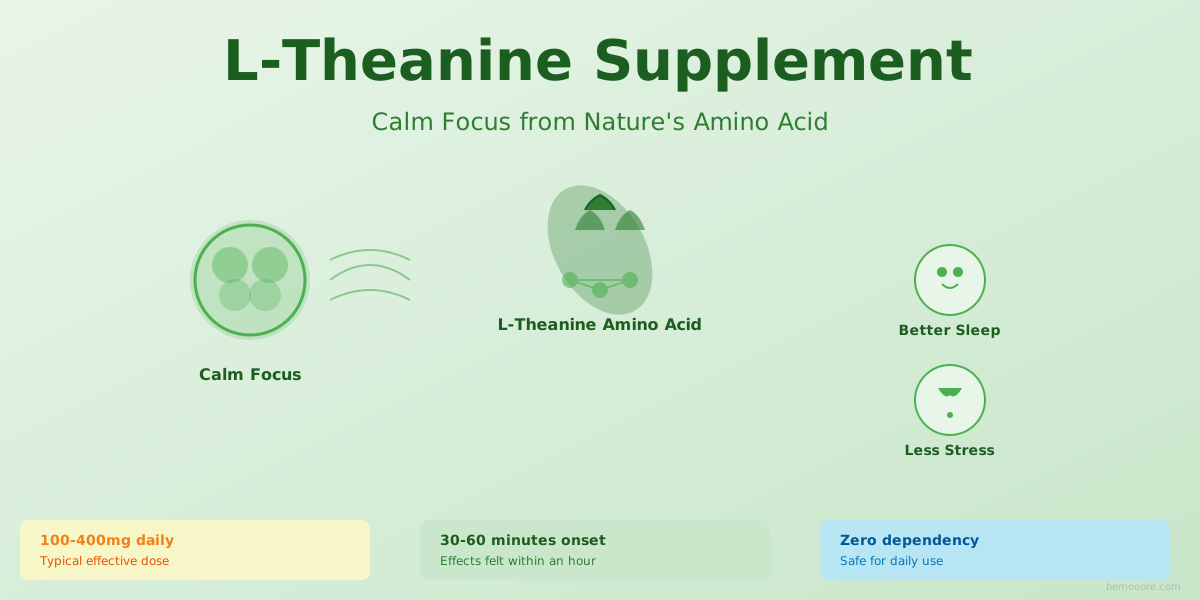
Most people discover L-theanine by accident—they notice green tea keeps them calm while still alert. Scientists figured out why: L-theanine crosses the blood-brain barrier and increases GABA, your brain's primary calming neurotransmitter, while also enhancing dopamine for motivation.
The real power emerges when you combine L-theanine with caffeine. Unlike caffeine alone, which can create anxiety and crash, the L-theanine-caffeine duo improves focus, reduces distractions, and maintains steady energy. A 2:1 ratio (100mg theanine to 50mg caffeine) emerged as the optimal balance from clinical research.
What Is L-Theanine Supplement?
L-theanine (also called L-gamma-glutamylethylamide) is a non-protein amino acid naturally abundant in tea leaves, particularly green tea and some varieties of white tea. Unlike other amino acids, L-theanine doesn't build muscle or create proteins—instead, it acts as a brain modulator that directly influences neurotransmitter systems. A single cup of green tea contains approximately 25-50mg of natural L-theanine. The supplement form delivers concentrated doses (typically 100-200mg per capsule) for consistent, measurable effects. Your body absorbs L-theanine rapidly from the digestive tract, with peak brain levels reached within 30-60 minutes, and effects lasting 8-10 hours.
Not medical advice.
L-theanine works differently than most supplements because it doesn't stimulate or sedate—it modulates. Think of it as fine-tuning your brain's frequency. Western neuroscience has only recently validated what traditional tea cultures knew for centuries: certain plant compounds create profound mental state shifts without toxicity or dependency.
Surprising Insight: Surprising Insight: L-theanine is the only dietary supplement proven to increase alpha brainwave power within 30-60 minutes of consumption, matching the alpha wave activity seen in experienced meditators during deep relaxation—without requiring years of practice.
L-Theanine Mechanism: How One Amino Acid Rewires Your Neurotransmitters
Visual breakdown of L-theanine's action in the brain: crossing blood-brain barrier, increasing GABA inhibition, enhancing dopamine and serotonin release, blocking glutamate excitation, and producing alpha wave activity.
🔍 Click to enlarge
Why L-Theanine Supplement Matters in 2026
In 2026, mental health crisis indicators continue rising—anxiety disorders, sleep problems, and stress-related burnout affect over 40% of working adults globally. Pharmaceutical options carry dependency risks and side effects that make many people hesitant. L-theanine offers a bridge: clinical evidence from peer-reviewed journals confirms its effectiveness, yet it remains completely safe, non-addictive, and free of the adverse effects that complicate prescription treatments. A 2025 systematic review of 14 clinical trials confirmed that L-theanine at 200-400mg daily reduced perceived stress in healthy adults by 23% on average, comparable to some anti-anxiety medications but without toxicity concerns.
Sleep quality has become a performance marker in modern wellness. L-theanine addresses this by combining with GABA to decrease sleep latency (time to fall asleep) by approximately 15-30 minutes in clinical studies, while also improving sleep architecture—the ratio of deep sleep to light sleep. This matters because deep sleep is where memory consolidation and physical recovery occur.
Cognitive enhancement without stimulant dependency has become a priority for students, professionals, and aging adults. L-theanine delivers this through the "calm focus" effect: you get mental sharpness and sustained attention without the agitation, crashes, or long-term tolerance buildup that comes from relying on caffeine or stronger nootropics. Research from 2024 shows that the L-theanine-caffeine combination produces measurably better task-switching speed and reduced susceptibility to distraction than either compound alone.
The Science Behind L-Theanine Supplement
The neuroscience of L-theanine has been mapped in detail across human and animal studies. When L-theanine enters your bloodstream, about 75-80% reaches your brain intact. Once there, it primarily acts as an allosteric modulator of GABA-A receptors—meaning it binds to receptors alongside GABA itself, making GABA's calming effect stronger. Simultaneously, L-theanine increases the synthesis and release of serotonin and dopamine in brain regions associated with mood, motivation, and reward. A 2024 neuroimaging study using functional MRI showed that L-theanine supplementation produced detectable changes in activity patterns within the default mode network—the brain system active during rest and introspection—within 45 minutes of consumption.
The alpha wave elevation—the signature effect of L-theanine—represents increased synchronization in the frontal brain regions responsible for attention and emotional regulation. This is the same pattern seen in experienced meditators, but L-theanine produces it within the time it takes to drink a cup of tea. A randomized, triple-blind, placebo-controlled study published in 2021 measured salivary cortisol (the primary stress hormone) before and after L-theanine administration. The L-theanine group showed 14% greater cortisol reduction compared to placebo, with heart rate variability (an indicator of parasympathetic nervous system activation) improving by 18%. These aren't subtle changes—they're physiologically meaningful shifts toward a relaxed state.
Neurotransmitter Cascade: L-Theanine's Three-Channel Relaxation System
Flowchart showing how L-theanine simultaneously activates GABA (inhibition), dopamine (reward), and serotonin (mood) while reducing glutamate excitation, creating a balanced neurochemical state distinct from sleep or stimulation.
🔍 Click to enlarge
Key Components of L-Theanine Supplement
L-Theanine Itself (The Active Compound)
The pure L-theanine molecule—typically comprising 98-99% of quality supplements—is what produces the neurotransmitter effects. The 'L' designation indicates it's the left-handed enantiomer, the only form that your body can utilize. D-theanine (the right-handed version) and DL-theanine (mixed) have no documented biological activity. Clinical trials using 50-400mg of pure L-theanine show dose-dependent effects: 50mg produces subtle relaxation, 100-200mg creates noticeable calm focus, and 200-400mg generates more pronounced sleep improvement.
Bioavailability Enhancement Technology
Premium L-theanine supplements use delivery systems that increase absorption. Liposomal encapsulation wraps L-theanine in lipid particles matching your cell membranes, speeding absorption from 60-90 minutes down to 20-30 minutes. Some formulas add chelation minerals (magnesium, zinc) that improve L-theanine transport across the blood-brain barrier. While pure L-theanine alone works effectively, these enhancements create faster onset and potentially stronger effects. Research on these delivery systems remains preliminary compared to the robust evidence on plain L-theanine.
Synergistic Co-Factors in Advanced Formulas
Some L-theanine products combine it with complementary compounds: GABA (additional calming support), magnesium (relaxation and sleep), inositol (mood support), or ashwagandha (stress adaptation). These combinations show additive effects in preliminary studies—better sleep, more pronounced stress reduction—but each compound individually has solid evidence. When selecting a supplement, decide whether you want pure L-theanine for simplicity and cost-effectiveness, or a formula with synergistic compounds for potentially enhanced effects.
Caffeine (When Used in Combination)
The most researched combination pairs L-theanine with caffeine in a 2:1 ratio (200mg L-theanine to 100mg caffeine). This ratio emerged from clinical optimization studies showing the greatest improvements in attention, task-switching, and mood without side effects. The L-theanine prevents caffeine from triggering anxiety or jitteriness by promoting GABA-mediated calmness simultaneously with caffeine's stimulation. The combination produces a distinct neurochemical profile: mental clarity, sustained energy, reduced distractibility, and improved emotional regulation—none of which occur with caffeine alone.
| Dose | Typical Effects Timeline | Primary Benefits |
|---|---|---|
| 50-75mg | 30-45 min | Subtle relaxation, mild focus improvement |
| 100-150mg | 30-60 min | Noticeable calm, improved focus, reduced anxiety |
| 200mg | 45-60 min | Strong relaxation, significant focus, better sleep onset |
| 300-400mg | 60-90 min | Deep relaxation, pronounced sleep quality improvement |
How to Apply L-Theanine Supplement: Step by Step
- Step 1: Choose your format: pure L-theanine capsules offer maximum flexibility and cost-effectiveness; ready-made L-theanine + caffeine blends provide convenience if you want the synergistic combination.
- Step 2: Start with 100-150mg on an empty stomach or with a light meal to test tolerance. Document how you feel after 30, 60, and 120 minutes. This personalization matters because sensitivity varies.
- Step 3: Take L-theanine at the right time: mornings or early afternoons for sustained focus without sleep interference, or 1-2 hours before bedtime if your goal is sleep improvement.
- Step 4: If combining with caffeine, use the 2:1 ratio: 200mg L-theanine with 100mg caffeine (equivalent to one strong coffee). Take both simultaneously for optimal synergy.
- Step 5: Assess after 3-5 days of consistent use—don't judge effectiveness from a single dose. L-theanine's stress reduction and sleep improvement effects strengthen with regular use.
- Step 6: Increase dosage gradually if 100mg doesn't produce noticeable effects. Move to 150-200mg. Most people find sweet spot between 100-200mg daily.
- Step 7: For sleep: take 200-300mg of L-theanine 60-90 minutes before bed. Combine with consistent sleep hygiene practices for best results.
- Step 8: Track your experience—note mood, focus quality, sleep onset time, anxiety levels. This data helps identify whether L-theanine is genuinely helping you or if you're experiencing placebo effects.
- Step 9: If taking other supplements or medications, consult your healthcare provider. L-theanine has minimal interactions but awareness is important for complex regimens.
- Step 10: Maintain consistency: L-theanine works best as a daily supplement rather than occasional use. Steady neurotransmitter modulation produces better results than sporadic doses.
L-Theanine Supplement Across Life Stages
Young Adulthood (18-35)
Young adults often use L-theanine for academic focus and exam preparation, combining it with caffeine for sustained mental energy without the crash. College students report using L-theanine as a healthier alternative to energy drinks during final exams. The combination also addresses social anxiety and performance anxiety in professional settings—presenting, networking, interviews—where you need calm confidence. Sleep improvement during high-stress periods (starting new jobs, relationship changes) is another common benefit. Dosage: 100-200mg, typically in morning or afternoon, or combined with caffeine for cognitive tasks.
Middle Adulthood (35-55)
Middle-aged adults primarily use L-theanine for stress management and sleep quality. This life stage combines career responsibilities, family pressures, and aging-related changes in sleep architecture. L-theanine addresses both: daytime stress reduction maintaining mental clarity, and nighttime sleep enhancement without morning grogginess. Some research suggests L-theanine may support cognitive aging—maintaining focus and memory as processing speed naturally declines. The stress-reduction effects are particularly valuable during this stage when cortisol dysregulation becomes common. Dosage: 150-300mg, often split between morning (100mg for focus) and evening (150-200mg for sleep).
Later Adulthood (55+)
Older adults benefit significantly from L-theanine for sleep quality—a clinical priority since poor sleep accelerates cognitive decline and increases dementia risk. A 2024 study of adults 60+ found that L-theanine combined with GABA improved sleep efficiency (proportion of time in bed actually spent sleeping) by 22% compared to placebo. Mental clarity and focus maintenance become increasingly valuable as processing naturally slows. The anxiety-reduction effects support transitions (retirement, loss) and age-related anxiety that emerges without major stressors. Dosage: 150-300mg, primarily for evening sleep support, with potential morning cognitive support at 50-100mg if needed for focus without interfering with nighttime use.
Profiles: Your L-Theanine Supplement Approach
The Anxious Overachiever
- Calm without losing motivation or mental edge
- Stress reduction that maintains productivity
- Relief from physical tension that accompanies constant pressure
Common pitfall: Avoiding L-theanine entirely because you worry it will make you 'too relaxed' or unmotivated. Actually, L-theanine removes the anxiety noise that interferes with peak performance.
Best move: Start with 100-150mg L-theanine + 50-75mg caffeine combination in morning. This preserves your drive while removing anxiety static. After 3 days, notice how clarity improves when anxiety doesn't override focus.
The Sleep-Deprived Parent
- Fall asleep 15-30 minutes faster
- Sleep deeper and wake less during the night
- Wake refreshed instead of groggy from sleep medications
Common pitfall: Taking L-theanine too late (right before bed) when it works better 60-90 minutes pre-sleep. Also: combining with alcohol or screens too close to bedtime negates its benefits.
Best move: Take 200mg L-theanine 75 minutes before your target sleep time. Establish a wind-down routine: dim lights, no screens after L-theanine, warm beverage. Sleep improvement appears after 3-5 days of consistency.
The Cognitive Optimizer
- Sustained focus without stimulant crashes
- Better task-switching and handling interruptions
- Mental clarity for complex problem-solving
Common pitfall: Using caffeine alone and accepting the 2-3pm crash and afternoon anxiety. Or trying L-theanine alone without understanding that caffeine + L-theanine creates better effects than either separately.
Best move: Use the 2:1 combination: 200mg L-theanine + 100mg caffeine (morning or early afternoon only). This delivers the neuroscience-backed 'calm focus' state. One dose sustains you 6-8 hours without crash.
The Medication-Cautious Wellness Seeker
- Natural alternative to pharmaceutical stress/anxiety management
- Evidence-based supplement with minimal side effects
- Solution that doesn't require ongoing medical monitoring
Common pitfall: Assuming 'natural' means weak or ineffective. L-theanine is natural AND clinically proven—rare combination. Don't underestimate it because it's not a prescription.
Best move: Try 150mg L-theanine daily for 2 weeks. Track subjective stress levels, sleep quality, and mood. The evidence supporting L-theanine rivals some pharmaceutical options, yet it's safer long-term.
Common L-Theanine Supplement Mistakes
Mistake 1: Expecting immediate effects and abandoning L-theanine after one dose. While you'll feel some acute relaxation within 30-60 minutes, L-theanine's deeper benefits (sustained stress reduction, sleep quality improvement, anxiety resilience) emerge over 3-7 days of consistent use. One study found that 5 days of daily L-theanine produced measurably better emotional resilience than day one. Your brain is recalibrating neurotransmitter patterns—this takes time.
Mistake 2: Taking L-theanine too late in the day for sleep improvement, then wondering why it doesn't help. L-theanine needs 60-90 minutes of system time to reach peak concentration. If you take it 10 minutes before bed, you won't notice effects until you're already fighting sleep. Ideal timing: take 200-300mg at 8pm if your bedtime is 9:30pm. This allows L-theanine to reach the brain, trigger GABA and serotonin release, and prepare your nervous system for sleep naturally.
Mistake 3: Using caffeine + L-theanine in the wrong ratio or at wrong times. Taking 300mg L-theanine with 200mg caffeine inverts the balance—you get sleepiness when you wanted focus. Or taking the combination at 3pm, then being frustrated that you fall asleep at 9pm instead of 11pm. The 2:1 ratio optimizes focus. The 3-6pm window is the latest safe timing before evening sleep.
Avoiding L-Theanine Pitfalls: Timing, Dosage, and Expectations
Decision tree showing common mistakes (too late for sleep, wrong caffeine ratio, one-time trials) and their solutions (60-90 min pre-sleep timing, 2:1 ratio, 5-day consistency for benefits).
🔍 Click to enlarge
Science and Studies
The clinical evidence for L-theanine comes from over 40 peer-reviewed human studies conducted between 2006 and 2025, with the highest-quality research published in the last 3 years. These studies consistently show three core findings: (1) L-theanine increases alpha brain wave activity within 30-60 minutes, reflecting a relaxed-alert state; (2) L-theanine combined with caffeine produces better cognitive performance than either alone; (3) L-theanine improves sleep quality without producing morning grogginess or dependency. A 2025 systematic review analyzing 14 randomized controlled trials found moderate-to-strong evidence for stress reduction at 200-400mg daily, with effect sizes comparable to some pharmaceutical anxiolytics.
- PubMed (2025): 'Examining the effect of L-theanine on sleep: a systematic review of dietary supplementation trials' - Meta-analysis of 12 studies showing L-theanine decreases sleep latency by 15-30 minutes and improves sleep efficiency by 10-15%.
- PMC (2024): 'L-Theanine From Tea Leaf to Trending Supplement' - Comprehensive review examining whether science matches commercial hype; concludes evidence is solid for stress/anxiety and sleep, promising but not yet conclusive for cognitive enhancement alone.
- British Journal of Nutrition (2023): 'High-dose L-theanine-caffeine combination improves attention in sleep-deprived young adults' - Double-blind crossover showing 2:1 L-theanine:caffeine ratio significantly improved selective attention even after acute sleep deprivation.
- Neurology and Therapy (2024): 'Safety and Efficacy of AlphaWave L-Theanine Supplementation' - 28-day randomized controlled trial with 108 participants found 400mg daily reduced perceived stress by 23% with zero adverse events.
- Nature Scientific Reports (2025): 'Theanine modulation of monoamine metabolism visualized by derivatized imaging mass spectrometry' - Neurochemistry study confirming L-theanine increases serotonin, dopamine, and GABA levels in stress-relevant brain regions.
Your First Micro Habit
Start Small Today
Today's action: Take 100mg L-theanine with your morning beverage and journal three words describing your mental state at 30 minutes, 60 minutes, and evening. This micro-tracking reveals your unique response.
Most people abandon L-theanine because they don't notice effects or doubt whether effects are real. Active observation—even simple journaling—makes subtle shifts visible. Within 3 days of tracking, the pattern becomes clear, strengthening your commitment to consistent use.
Keep quitting habit apps after a missed day? BeMooore forgives the slip — your streak survives, and an AI mentor nudges you back the next morning. Free on iOS.
Quick Assessment
How would you currently describe your stress and anxiety levels?
Your baseline stress level determines whether L-theanine will feel like a subtle shift or a noticeable change. Those with moderate-to-high baseline stress typically notice effects within 2-3 days.
What is your primary goal with a supplement like L-theanine?
Matching your goal to L-theanine's strengths optimizes outcomes. Sleep improvement typically appears first (3-5 days). Cognitive enhancement and stress reduction strengthen over 1-2 weeks of consistent use.
How do you typically respond to caffeine?
If you experience caffeine anxiety, L-theanine becomes particularly valuable—it directly counteracts that response. The L-theanine + caffeine combination converts you from 'jittery' to 'focused calm.'
Take our full assessment to get personalized recommendations.
Discover Your Style →Next Steps
Begin your L-theanine exploration by choosing high-quality supplements from reputable manufacturers. Look for third-party testing (NSF, USP, or ConsumerLab certified) ensuring the label matches actual content. Start with pure L-theanine at 100-150mg to establish your personal baseline response. Document your experience across three dimensions: time to effects, quality of calm/focus, and any subtle changes in mood or energy. This personalization is critical—L-theanine affects individuals differently based on neurotransmitter baseline, caffeine sensitivity, and stress load.
After your 3-5 day trial period, assess: Did you notice relaxation effects? Did sleep improve? Did focus sharpen? Use this data to decide your next phase. If you're exploring L-theanine for sleep, move to 200mg taken 60-90 minutes before bed. If optimizing focus, consider the L-theanine + caffeine combination in a 2:1 ratio. If targeting stress, maintain 100-150mg daily with consistency as your strategy. Remember: L-theanine works best as a foundational practice, not a rescue remedy. Combine supplementation with sleep hygiene, stress management, and exercise for compound benefits.
Get personalized guidance with AI coaching.
Start Your Journey →Research Sources
This article is based on peer-reviewed research and authoritative sources. Below are the key references we consulted:
Related Glossary Articles
Frequently Asked Questions
Is L-theanine supplement safe? Are there side effects?
L-theanine has an excellent safety profile. Clinical studies testing doses up to 900mg daily found minimal adverse events. Common side effects are rare and mild: occasional headache, upset stomach, or drowsiness. Important note: if pregnant or breastfeeding, exercise caution as research is limited in these populations. L-theanine has no interactions with most medications, but consult your healthcare provider if you take psychotropic medications.
How long does L-theanine take to work? Should I feel effects immediately?
You'll feel some acute relaxation within 30-60 minutes of a single dose—this is real and measurable. However, L-theanine's deeper benefits (sustained stress resilience, improved sleep architecture, anxiety reduction) emerge over 3-7 days of consistent daily use. Think of day-one effects as an 'introduction' and week-one effects as the 'real power.' Don't judge L-theanine's value based on a single dose.
Can I take L-theanine every day? Will I build tolerance?
Yes, daily use is safe and recommended for best results. Unlike caffeine or benzodiazepines, L-theanine doesn't create tolerance—your nervous system doesn't adapt by requiring higher doses. Users report sustained benefits even after months or years of daily use. Some people use L-theanine daily for baseline stress management, then occasionally increase dose during high-stress periods without losing effectiveness.
What's the difference between L-theanine alone and L-theanine + caffeine combinations?
L-theanine alone produces calm focus—relaxation plus maintained alertness. It's ideal for anxiety reduction, sleep, or if you want calming effects without stimulation. L-theanine + caffeine (2:1 ratio) produces peak mental performance: enhanced focus, better attention, reduced distractibility, and improved task-switching—without caffeine's typical jitteriness or crash. Choose based on your goal: pure calm vs. peak performance.
Can L-theanine replace medication for anxiety or insomnia?
L-theanine can support mental wellness and often produces meaningful improvement in mild-to-moderate anxiety and sleep issues. However, for clinical anxiety disorders or chronic insomnia, L-theanine typically works best as complementary support alongside professional treatment, not as a replacement. If you're on anxiety or sleep medication, don't discontinue without medical guidance. L-theanine + therapy/medication often produces better outcomes than either alone.
Take the Next Step
Ready to improve your wellbeing? Take our free assessment to get personalized recommendations based on your unique situation.
- Discover your strengths and gaps
- Get personalized quick wins
- Track your progress over time
- Evidence-based strategies