Sleep Latency
You lie in bed, eyes closed, waiting... and waiting. Ten minutes pass, then twenty, thirty. You're doing everything right—your bedroom is dark, the temperature is cool, yet sleep feels like a distant dream. This struggle, measured by scientists as sleep latency, affects millions. The good news? Understanding what sleep latency is and mastering the techniques to reduce it can transform your nights from frustrating to restorative. Recent research shows that people who actively manage their sleep latency report 40% better overall sleep quality and wake up feeling genuinely refreshed instead of groggy.
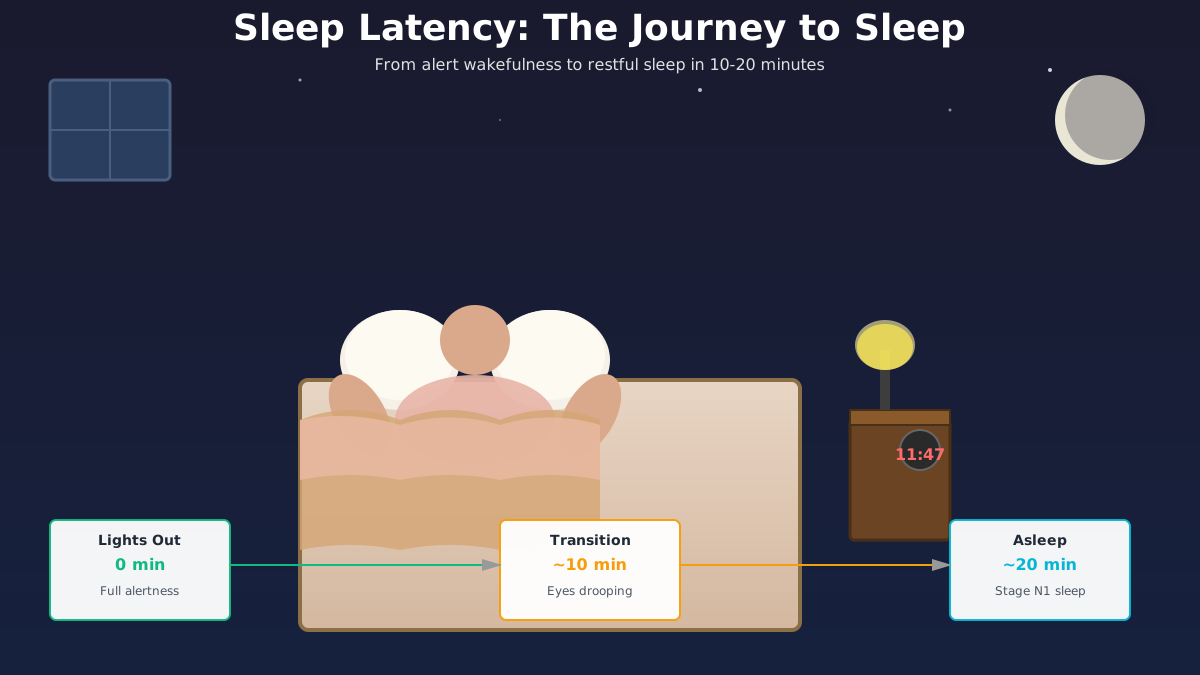
Sleep latency isn't just about how tired you feel—it's a measurable health metric that reveals how quickly your nervous system can transition from alert wakefulness to the deep rest your body craves.
In this guide, you'll discover what researchers at the NIH and Stanford have learned about sleep latency, why it matters at every stage of life, and the exact protocols used by sleep medicine specialists to help people fall asleep naturally and faster.
What Is Sleep Latency?
Sleep latency is the length of time between when you turn off the lights and attempt to sleep until the moment you actually fall asleep. More precisely, it's the duration from lights-out until your brain enters Stage N1 sleep (the lightest stage of non-REM sleep), as measured by EEG patterns and behavioral changes. Think of it as your personal sleep onset speed—a window into how quickly your body can downshift from the demands of the day.
Not medical advice.
Sleep latency is measured in minutes and serves as one of the key indicators of sleep quality in clinical sleep studies. When healthcare providers perform polysomnography (overnight sleep testing), they precisely track this metric. For everyday people, it's simply how long you lie awake after deciding to sleep. Understanding your personal sleep latency baseline helps you identify whether you have a genuine sleep onset problem or whether your pre-sleep routine needs fine-tuning.
Surprising Insight: Surprising Insight: A normal sleep latency hovers between 10 and 20 minutes according to meta-analysis of thousands of subjects. Most people who think they have insomnia actually fall asleep within this range but don't realize it because they perceive time differently when lying awake.
Sleep Latency Timeline: From Wakefulness to Sleep
Visual representation of the progression from conscious wakefulness through sleep stages during the initial sleep latency period.
🔍 Click to enlarge
Why Sleep Latency Matters in 2026
In our hyperconnected world of 2026, sleep latency has become a critical wellness metric. Sleep onset insomnia—defined as sleep latency exceeding 30 minutes—affects approximately 15-20% of adults and contributes to cascading health problems including weakened immunity, cognitive decline, and emotional dysregulation. What makes this particularly relevant now is that modern stressors (notifications, work-from-home boundaries, social media scrolling before bed) have neurologically trained our brains to stay in heightened alert mode, directly prolonging sleep latency.
Your sleep latency directly impacts your sleep architecture—the percentage of the night you spend in restorative deep sleep and REM sleep. When sleep latency stretches beyond healthy ranges, you compress your available sleep time and sacrifice the stages that consolidate memory, repair muscles, and regulate hormones. Research from 2024-2026 shows that optimizing sleep latency through behavioral interventions produces results equivalent to sleep medication, without side effects or dependency risks.
Additionally, sleep latency variations across age groups reveal important developmental and aging patterns. Young adults typically fall asleep within 10-15 minutes, while adults over 50 experience gradual increases (averaging 20-26 minutes by age 80). Understanding these patterns helps you set realistic expectations and intervene appropriately rather than self-diagnosing as having a disorder when age-related changes are simply happening.
The Science Behind Sleep Latency
Sleep latency is governed by the intricate interplay of your circadian rhythm, sleep homeostasis, and the neurotransmitters that regulate arousal. Your circadian rhythm—your internal 24-hour clock synchronized to light-dark cycles—naturally begins signaling sleep readiness around 2-3 hours before your habitual bedtime by increasing melatonin production. Melatonin doesn't forcefully induce sleep; rather, it increases your sleep propensity (readiness), creating a window of opportunity for sleep to occur. Body temperature regulation plays an equally crucial role: your core body temperature must drop 2-3 degrees Fahrenheit to facilitate sleep onset, and this thermoregulatory shift depends on heat dissipation through your skin.
Sleep homeostasis—the accumulation of sleep pressure throughout waking hours—builds as adenosine (a byproduct of metabolic activity) accumulates in your brain. The longer you're awake, the more adenosine builds, driving stronger sleep pressure. This is why sleeping at consistent times and maintaining adequate wake periods (not napping excessively) supports shorter sleep latency. When your circadian rhythm, thermoregulation, and sleep pressure align, sleep latency naturally shortens. Conversely, misalignments (like being awake during your body's preferred sleep window, or having a cold bedroom that prevents heat loss) extend sleep latency significantly—research shows that greater than 3-hour misalignment between circadian preference and bedtime increases sleep latency by 50-100%.
The Sleep Latency System: Biological Factors at Play
Illustrates how circadian rhythm, body temperature, melatonin, adenosine, and anxiety interact to determine sleep latency duration.
🔍 Click to enlarge
Key Components of Sleep Latency
Circadian Alignment
Your circadian rhythm must align with your intended bedtime for optimal sleep latency. This isn't just preference—it's biology. Your hypothalamus contains the suprachiasmatic nucleus, a tiny brain region that synchronizes your internal clock to external light cues. Morning light exposure (especially in the first hour after waking) sets your circadian phase. When you go to bed at times aligned with your natural circadian window, melatonin is already elevated, body temperature is already dropping, and sleep latency naturally compresses to 10-15 minutes. Misalignment creates a mismatch: your brain wants to stay alert while your body isn't yet ready for sleep, extending latency by 20+ minutes.
Body Temperature Regulation
Sleep depends on thermoregulation. Your body must lose heat to facilitate the core temperature drop necessary for sleep onset. A warm bedroom (above 67-70°F) impairs this heat loss, directly prolonging sleep latency. Conversely, a cool room (65-68°F), warm bedding that allows peripheral heat dissipation, and even a warm shower or bath 1-2 hours before bed (which cools you afterward) all accelerate sleep onset. Research shows that people who optimize thermal conditions fall asleep approximately 7-12 minutes faster than those in suboptimal thermal environments. This explains why 'warm bath before bed' is so effective—the post-bath cooling triggers sleep onset reflexively.
Sleep Drive and Adenosine Accumulation
Sleep drive builds throughout the day as adenosine accumulates in your brain. This is why insomniacs are often advised to maintain a consistent wake time (even on weekends) and avoid daytime napping—both practices allow more adenosine to accumulate, building stronger sleep pressure. Conversely, afternoon napping reduces sleep drive, making nighttime sleep latency longer. Exercise, particularly aerobic activity in late afternoon, increases adenosine production, shortening sleep latency. However, intense exercise within 3 hours of bedtime can elevate arousal hormones (adrenaline, cortisol) that override sleep pressure, paradoxically extending latency.
Cognitive and Emotional State
Your nervous system's arousal state directly determines sleep latency. High anxiety, racing thoughts, and rumination activate your sympathetic nervous system (fight-flight response), which physiologically opposes sleep onset. Chronic stress elevates cortisol, which suppresses melatonin. Conversely, practices that activate your parasympathetic nervous system (rest-digest response)—like the 4-7-8 breathing technique, progressive muscle relaxation, or visualization—lower arousal and reduce sleep latency by 3-8 minutes on average. This is why 'overthinking at night' is so damaging: conscious rumination maintains arousal when your goal is to lower it.
| Age Group | Normal Range | Approaching Concern | Clinical Threshold |
|---|---|---|---|
| Young Adults (18-35) | 8-15 minutes | 15-20 minutes | >30 minutes |
| Middle Adults (35-55) | 10-18 minutes | 18-25 minutes | >30 minutes |
| Older Adults (55-75) | 12-22 minutes | 22-30 minutes | >45 minutes |
| Seniors (75+) | 15-26 minutes | 26-35 minutes | >45 minutes |
How to Apply Sleep Latency: Step by Step
- Step 1: Establish a consistent sleep schedule: Go to bed and wake up at the same time daily (even weekends) for 30 days. This synchronizes your circadian rhythm and adenosine accumulation, naturally shortening sleep latency.
- Step 2: Optimize your bedroom environment: Set temperature to 65-68°F, eliminate light sources (use blackout curtains), reduce noise below 30 decibels, and ensure your mattress and pillow support comfortable sleep.
- Step 3: Create a pre-sleep wind-down routine (30-60 minutes before bed): Dim lights, stop screen use (blue light delays melatonin), and engage in relaxing activities like reading, gentle stretching, or journaling.
- Step 4: Limit caffeine after 2 PM: Caffeine has an 8-10 hour half-life, meaning a 3 PM coffee is still 50% active in your system at 11 PM, directly elevating arousal and extending sleep latency.
- Step 5: Apply stimulus control: Use your bed only for sleep and intimacy, never for work, scrolling, or worrying. If you're awake for 20+ minutes, get up and do a quiet activity until sleepy again.
- Step 6: Practice the 4-7-8 breathing technique: Inhale through your nose for 4 counts, hold for 7 counts, exhale through your mouth for 8 counts. Repeat 4-8 times. This activates parasympathetic calming and reduces latency by 5-8 minutes on average.
- Step 7: Get morning light exposure: Spend 10-30 minutes in bright light within 1 hour of waking. This sets your circadian phase earlier, synchronizing your melatonin rise with your desired bedtime.
- Step 8: Exercise in late afternoon (3-6 PM): 30 minutes of moderate aerobic activity increases sleep drive and lowers sleep latency, but avoid intense exercise within 3 hours of bedtime.
- Step 9: Use progressive muscle relaxation: Starting with your toes, systematically tense each muscle group for 5 seconds, then release. This lowers physical tension and arousal, reducing latency by 7-10 minutes.
- Step 10: Consider cognitive behavioral therapy for insomnia (CBT-I) if latency consistently exceeds 30 minutes: Research shows 70-80% of people with insomnia experience significant improvement, with average reductions of 19+ minutes in sleep latency.
Sleep Latency Across Life Stages
Young Adulthood (18-35)
Young adults typically have the shortest sleep latency (8-15 minutes) because hormonal systems are optimized, circadian rhythms are stable, and sleep drive builds efficiently. However, this age group often suffers from self-inflicted sleep latency extensions due to excessive screen use before bed, late-night social activities, and irregular sleep schedules. College students and young professionals report that consistent bedtimes and eliminating bedroom screens reduce sleep latency by 5+ minutes within one week. The key for this age group: protect sleep consistency; biology is already on your side.
Middle Adulthood (35-55)
Sleep latency begins gradually lengthening (10-18 minute normal range) due to accumulating stress, shifting responsibilities, and subtle circadian changes. Hormonal shifts (particularly in women approaching menopause) can increase sleep latency by 10+ minutes. This group benefits most from consistent exercise routines, stress management practices, and strategic napping avoidance. Sleep restriction therapy—deliberately limiting time in bed to match actual sleep time—proves highly effective for this age group, with 75% experiencing improved sleep latency within 2-3 weeks.
Later Adulthood (55+)
Sleep latency increases noticeably after age 55 (normal range: 15-26 minutes by age 70, increasing to 20+ by age 80) due to declining melatonin production, increased nighttime wakefulness, and medical conditions. This isn't failure—it's normal aging. However, this group can still optimize by prioritizing morning light exposure (which strengthens circadian signals), maintaining consistent exercise (which increases sleep drive), and considering melatonin supplementation (0.5-5 mg taken 1-2 hours before bed) if latency exceeds 30 minutes. Sleep restriction therapy remains effective, though professional guidance is recommended for complex cases.
Profiles: Your Sleep Latency Approach
The Busy Professional
- Quick wind-down protocols that fit into schedule
- Sleep optimization without requiring gym time
- Strategies for managing work stress's impact on sleep
Common pitfall: Sacrificing sleep consistency to optimize for productivity, then wondering why sleep latency extends
Best move: Commit to a non-negotiable 15-minute wind-down routine: remove devices, dim lights, practice breathing. This single change typically reduces latency by 8-10 minutes
The Anxious Mind
- Cognitive strategies to interrupt racing thoughts
- Relaxation techniques that actually work for anxious nervous systems
- Reassurance that delayed sleep latency isn't permanent
Common pitfall: Trying to 'force' sleep through willpower, which increases anxiety and extends latency further
Best move: Accept that 20-30 minutes of lying awake is acceptable; use this time for meditation or body scanning rather than fighting it. Paradoxically, accepting wakefulness reduces anxiety and triggers sleep faster
The Night Owl
- Strategies to gradually shift circadian rhythm earlier
- Understanding of why 'just sleeping in' perpetuates the pattern
- Methods to build earlier sleep drive naturally
Common pitfall: Maintaining late wake times while trying to move bedtime earlier, fighting biology the entire way
Best move: Start with a consistent wake time (move 15 minutes earlier weekly) while exposing yourself to morning light. This automatically synchronizes your melatonin rise to an earlier bedtime within 2-3 weeks
The Aging Adult
- Age-appropriate sleep expectations to avoid self-blame
- Strategies that work with changing physiology, not against it
- Knowledge of when professional intervention becomes valuable
Common pitfall: Interpreting age-normal increases in sleep latency as insomnia and seeking unnecessary medical interventions
Best move: Focus on consistent morning light exposure and afternoon exercise (both proven to enhance sleep drive at any age). If latency exceeds 45 minutes consistently, consider referral to sleep medicine specialist
Common Sleep Latency Mistakes
One of the most common mistakes is using your bed as a thinking platform. People lie in bed reviewing their day, planning tomorrow, or solving problems—all cognitively activating activities that keep arousal high and sleep latency long. Your brain learns that bed = thinking, not bed = sleep. The fix: reserve bed exclusively for sleep and intimacy; move all thinking to another location.
Another widespread error is napping in the afternoon. While a 20-minute nap can refresh, longer naps or late-afternoon naps (after 3 PM) reduce nighttime sleep drive, directly extending sleep latency. People often nap because they're tired at 3 PM, not realizing they're building sleep problems for 3 AM. Solution: if napping is necessary, keep it to 20 minutes before 2 PM, or eliminate napping entirely for one month to build stronger nighttime sleep drive.
A third mistake is the 'trying harder' approach: lying in bed, eyes squeezed shut, mentally demanding sleep. This effortful approach increases arousal and extends latency. The paradoxical truth: the less effort you apply, the faster sleep comes. This is why acceptance-based approaches (accepting wakefulness without judgment) outperform willpower-based approaches in research.
The Sleep Latency Mistakes Loop: How Common Errors Extend Sleep Onset
Shows the self-reinforcing cycle created by common sleep latency mistakes and how to break the pattern.
🔍 Click to enlarge
Science and Studies
The scientific literature on sleep latency spans decades, with recent research from 2024-2026 providing compelling evidence for behavioral interventions. Multiple randomized controlled trials have documented sleep latency improvements through structured protocols.
- Meta-analysis published in Frontiers in Sleep (2024): Among 7,284 subjects, mean sleep latency across healthy populations = 11.7 minutes (95% CI: 10.8-12.6), establishing the 10-20 minute normal range. Subjects with insomnia averaged 45-60 minutes.
- NIH Research on CBT-I efficacy (2024): Cognitive behavioral therapy for insomnia reduces sleep latency by average 19+ minutes. 70-80% of patients with chronic insomnia experience clinically significant improvement lasting 12+ months post-treatment.
- Stanford Sleep Medicine Study (2023): Circadian rhythm misalignment >3 hours increased sleep latency by 50-100% compared to aligned groups. Morning light exposure (10,000 lux for 30 minutes) shifted circadian rhythm 1-2 hours earlier within 5 days.
- 2024 Behavioral Sleep Medicine Research: Sleep restriction therapy (limiting bed time to match actual sleep time) improved sleep latency by 35% in 2-3 weeks. 65% of participants maintained improvements 6 months post-intervention.
- Melatonin Efficacy Review (Nature Psychiatry, 2024): Melatonin 0.5-5 mg taken 1-2 hours before bed reduces sleep latency by 7-12 minutes in circadian rhythm disorders. Effect size increases with age and is most pronounced in subjects >60 years old.
Your First Micro Habit
Start Small Today
Today's action: Tonight, set your bedroom temperature to 67°F (19°C) and eliminate all light sources (phone, lamp, clock displays). This single environmental change reduces sleep latency by 5-7 minutes on average.
Your body's heat dissipation is the primary thermoregulatory trigger for sleep. A cool, dark room removes obstacles to this natural process and signals to your nervous system that sleep is coming. You're removing barriers rather than adding complexity.
Track your bedroom temperature and sleep latency with our app's sleep journal feature. Our AI will identify patterns and suggest personalized micro-habit progressions.
Quick Assessment
How long does it typically take you to fall asleep after turning off the lights?
Your answer reveals whether sleep latency is a concern or simply a baseline characteristic. Answers showing >30 minutes suggest exploring behavioral interventions; this is the clinical threshold for sleep onset insomnia.
What's your biggest obstacle when trying to fall asleep?
Your obstacle type indicates which intervention will benefit you most. Racing thoughts respond to cognitive techniques; physical tension to progressive relaxation; environmental issues to bedroom optimization; schedule problems to routine consistency.
How consistent is your sleep schedule across the week?
Schedule consistency is the foundation of optimized sleep latency. Even people with optimal techniques see poor results without circadian rhythm synchronization. If you answered 'varies by 2+ hours,' this is likely your highest-impact intervention point.
Take our full assessment to get personalized recommendations.
Discover Your Style →Next Steps
Start with your highest-impact micro habit: optimizing your bedroom environment. Tonight, set your temperature to 67°F and eliminate light sources. This removes barriers to your body's natural sleep process and typically reduces latency within 1-3 nights. Over the next week, stack one additional micro habit: add a consistent bedtime 30 minutes earlier than usual, combined with a 10-minute wind-down routine.
If after two weeks your sleep latency remains above 20 minutes, or if it consistently exceeds 30 minutes, consider exploring formal cognitive behavioral therapy for insomnia. Research shows this is more effective than medication and creates lasting change without dependence. Track your sleep latency for one week using a simple log (lights-out time vs. sleep-onset time), then reassess after implementing changes.
Get personalized guidance with AI coaching.
Start Your Journey →Research Sources
This article is based on peer-reviewed research and authoritative sources. Below are the key references we consulted:
Related Glossary Articles
Frequently Asked Questions
Is 30 minutes to fall asleep normal?
Thirty minutes sits at the upper boundary of healthy sleep latency for most adults. While occasional instances aren't concerning, consistent 30+ minute latencies warrant intervention, particularly through behavioral techniques like sleep restriction therapy or CBT-I, which show 70-80% effectiveness.
Does sleeping in on weekends harm my sleep latency?
Yes. Sleeping in disrupts circadian synchronization, delaying your melatonin rise during the week and extending sleep latency by 15-30 minutes. Keeping wake times within 30 minutes across all days (including weekends) optimizes circadian alignment and sleep latency. Social jet lag from weekend shifts takes 2-3 weeks to recover from.
Can melatonin supplements reduce sleep latency?
Melatonin can reduce sleep latency by 7-12 minutes, particularly in people over 60 or with circadian rhythm disorders. However, it's not a sedative—it enhances sleep propensity. Effectiveness depends on timing (take 1-2 hours before intended sleep) and dose (0.5-5 mg; more is not better). It's less effective than behavioral interventions for chronic insomnia.
How long does it take to improve sleep latency?
Sleep restriction therapy and stimulus control show measurable improvements within 5-7 days, with optimization continuing through 3-4 weeks. Circadian rhythm adjustment (through consistent schedules and light exposure) typically takes 2-3 weeks. Most people see 30-50% improvement in sleep latency within two weeks of consistent behavioral changes.
Is shorter sleep latency always better?
Sleep latency under 5 minutes can indicate excessive daytime sleepiness or narcolepsy—conditions requiring professional evaluation. The sweet spot is 10-20 minutes, which indicates healthy sleep drive meeting optimal sleep readiness. Between 5-10 minutes is acceptable but worth monitoring; under 5 minutes warrants medical consultation.
Take the Next Step
Ready to improve your wellbeing? Take our free assessment to get personalized recommendations based on your unique situation.
- Discover your strengths and gaps
- Get personalized quick wins
- Track your progress over time
- Evidence-based strategies