Emotional Dysregulation
Have you ever felt emotions so intense they seemed out of control? Your heart racing, face flushed, words sharp before your mind caught up? Emotional dysregulation is more common than you think. It affects up to one-third of people seeking mental health support. But here's the hopeful part: it's not something you're stuck with. Your ability to manage emotions isn't fixed—it's a skill you can strengthen. Whether you struggle with sudden anger, overwhelming sadness, or anxiety that won't quit, understanding emotional dysregulation is the first step toward reclaiming emotional freedom.
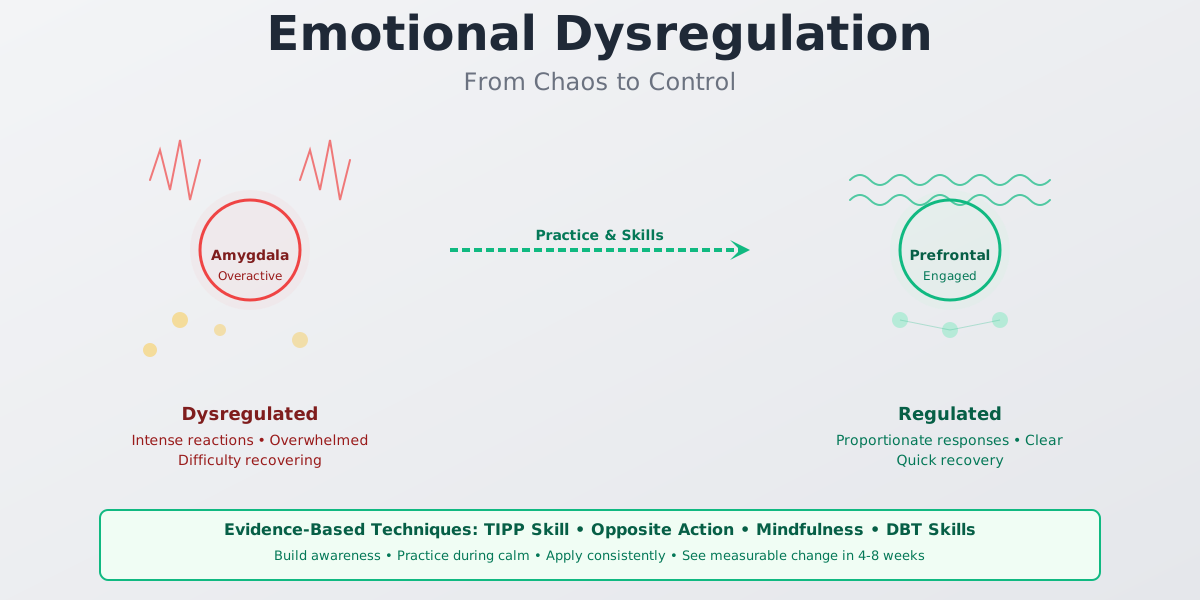
In this guide, you'll discover what emotional dysregulation actually is, why it happens in your brain, and which proven techniques—like DBT skills and breathing strategies—genuinely work to help you regain control.
The science behind emotion regulation reveals that it's not about suppressing feelings or being 'stronger'—it's about flexible, intelligent response to your emotions. This distinction changes everything.
What Is Emotional Dysregulation?
Emotional dysregulation is the difficulty in managing and responding to emotional experiences in socially acceptable and adaptive ways. In simpler terms, it means your emotions feel too big, too intense, or last too long compared to the situation. When you're emotionally dysregulated, your emotional responses seem excessive to what's happening around you. You might feel overwhelmed by minor frustrations or struggle to 'come down' from emotional intensity even when the trigger has passed. Research shows this isn't weakness—it reflects differences in how your brain processes and responds to emotional information.
Not medical advice.
Emotional dysregulation exists on a spectrum. Some people experience sudden mood swings, while others feel persistently low-grade emotional tension. Some react with explosive outbursts; others withdraw completely. The common thread: the intensity or duration of your emotional response doesn't match the trigger, and your regulation strategies aren't working well. Recent research from 2024-2025 has refined our understanding significantly. Experts now distinguish between three specific patterns: emotion regulation failure (failing to regulate when it would help), emotion misregulation (regulating in ways that don't match the situation), and emotion regulation misexecution (knowing the right strategy but failing to execute it properly).
Surprising Insight: Surprising Insight: About 30% of people seeking mental health care experience emotional dysregulation, yet most don't realize it's a learnable skill—not a character flaw. Your amygdala and prefrontal cortex can be retrained through consistent practice with proven techniques.
The Emotional Dysregulation Cycle
Shows how a trigger leads to amygdala activation, misinterpretation, emotional intensification, and unhelpful responses, creating a reinforcing cycle.
🔍 Click to enlarge
Why Emotional Dysregulation Matters in 2026
In today's fast-paced world, emotional regulation has become essential. We're exposed to constant stimulation, information overload, and unprecedented social pressure. When you can't regulate emotions effectively, everything becomes harder—relationships suffer, work performance declines, and your physical health deteriorates. High cortisol from chronic dysregulation contributes to inflammation, poor sleep, and weakened immunity. People with emotional dysregulation report higher rates of anxiety, depression, relationship conflict, and risky behaviors.
But the real impact is deeper. Unmanaged emotional dysregulation often becomes a barrier to achieving your other goals. You can't focus on careers, creativity, or personal growth when you're constantly managing emotional crises. Learning to regulate emotions isn't about becoming emotionless—it's about having genuine choice in how you respond. This skill directly impacts your capacity for connection, resilience, and life satisfaction.
The good news: neuroscience shows that emotional regulation abilities are trainable. The brain exhibits neuroplasticity—your patterns can change. Studies consistently show that people who practice DBT, mindfulness, and regulation skills develop stronger connections between their prefrontal cortex and amygdala, literally rewiring their emotional responses over time.
The Science Behind Emotional Dysregulation
Your brain has a powerful emotion center called the amygdala. This almond-shaped region detects threats, processes emotions, and triggers the fight-flight-freeze response. For good evolutionary reasons—this system kept our ancestors alive. However, modern threats (emails, social media, work deadlines) trigger the same ancient response as physical danger. Your prefrontal cortex—the rational decision-making region—should moderate this response, but it often can't keep up. This creates a mismatch: intense amygdala activation without sufficient prefrontal regulation.
Recent neuroscience research (2024-2025) shows that emotionally dysregulated individuals have less efficient communication between their amygdala and prefrontal cortex. This isn't permanent. When people practice emotional regulation skills consistently, functional connectivity between these regions strengthens. The dorsolateral prefrontal cortex (DLPFC) develops stronger control, while the ventrolateral prefrontal cortex (VLPFC) improves at suppressing unnecessary emotional responses. This biological rewiring explains why practice works—you're literally strengthening neural pathways.
Brain Regions in Emotional Regulation
Illustrates the prefrontal cortex moderating amygdala responses, with successful regulation showing clear top-down control.
🔍 Click to enlarge
Key Components of Emotional Dysregulation
Hyperarousal and Sensitivity
People with emotional dysregulation often have lower thresholds for emotional activation. Your nervous system is primed for threat detection. You might startle easily, feel anxious in neutral situations, or notice your heart racing during minor stress. This hyperarousal isn't something you choose—it reflects how your nervous system is calibrated. The good news: calming techniques like slow breathing and progressive relaxation can reset this threshold over time.
Mood Instability and Rapid Shifts
Emotional dysregulation often involves rapid mood changes. You might feel fine one moment and intensely frustrated the next, seemingly without warning. These shifts can feel chaotic and confusing. The internal experience is that emotions arrive suddenly and overwhelm your thinking. From a neuroscience perspective, your amygdala is firing intensely before conscious awareness kicks in. Learning to notice the early warning signs helps you intervene earlier in the emotional escalation process.
Difficulty Returning to Baseline
Even after the triggering situation passes, people with dysregulation struggle to 'come down.' You might replay the event mentally, feel residual anger hours later, or experience that tight chest or racing thoughts long after the immediate cause is gone. This prolonged activation reflects that your nervous system takes longer to return to calm. Specific techniques like the TIPP skill (Temperature, Intense exercise, Paced breathing, Progressive muscle relaxation) activate your parasympathetic nervous system and help reset this prolonged activation quickly.
Impulsive or Aggressive Responses
When emotions overwhelm your prefrontal cortex, you're more likely to react without thinking. You might say things you regret, make impulsive decisions, or respond aggressively to minor provocations. This isn't character weakness—it's what happens when your emotional brain hijacks your rational brain. The STOP skill (Stop, Take a breath, Observe, Proceed mindfully) interrupts this process and creates space for thoughtful response instead of automatic reaction.
| Pattern | What It Looks Like | Underlying Process |
|---|---|---|
| Explosive outbursts | Sudden intense anger disproportionate to trigger; yelling, slamming, harsh words | Amygdala overwhelms prefrontal cortex; fight response activation |
| Emotional withdrawal | Going silent, shutting down emotionally, difficulty engaging; can last hours or days | Freeze response activation; nervous system overload leading to dissociation |
| Rumination | Replaying situations, obsessive thinking about what happened, can't let it go | Anterior insula hyperactivity; difficulty disengaging from threat-related thoughts |
| Rapid cycling | Mood shifts multiple times daily; crying then laughing, then irritable | Unstable amygdala firing patterns; insufficient prefrontal modulation |
How to Apply Emotional Dysregulation: Step by Step
- Step 1: Develop emotional awareness by noticing your emotional state multiple times daily. Check in: What emotion am I experiencing right now (0-100 intensity)? This builds the foundation for all regulation.
- Step 2: Learn your personal warning signs—early signals before dysregulation peaks. These might include physical sensations (jaw tightening, stomach butterflies), thoughts (catastrophizing, blame), or behaviors (pacing, checking phone constantly).
- Step 3: Practice the TIPP skill when emotions start rising: Temperature (splash cold water on your face), Intense exercise (10 jumping jacks), Paced breathing (slow exhale-focused breathing), Progressive muscle relaxation.
- Step 4: Use opposite action: Act in a way opposite to your emotional urge. If anger makes you want to yell, speak softly. If sadness makes you want to isolate, reach out to someone. This interrupts the emotion-behavior feedback loop.
- Step 5: Build distress tolerance skills for acute emotional crises: name your emotion, think of one specific thing you can do right now (call a friend, take a walk, play music), and commit to doing it for 15 minutes.
- Step 6: Practice mindfulness: Observe your emotions without judgment or attempts to change them. Notice: 'I'm having the thought that I'm a failure,' rather than 'I am a failure.' This creates psychological distance.
- Step 7: Develop emotion regulation skills through consistency: practice daily even when you're calm. Your brain needs to encode these pathways when not under emotional stress.
- Step 8: Improve physical self-care basics: sleep, nutrition, and movement directly affect emotional regulation capacity. Poor sleep makes dysregulation 3-4x more likely.
- Step 9: Identify your values and practice living according to them during regulated moments. When dysregulated, reconnect with these values as an anchor.
- Step 10: Consider professional support: therapy (especially DBT), medication if appropriate, or coaching can accelerate learning these skills and address underlying factors like trauma.
Emotional Dysregulation Across Life Stages
Young Adulthood (18-35)
Young adults often experience dysregulation triggered by social and academic pressures, romantic relationships, and identity formation. Your amygdala is fully developed while your prefrontal cortex is still maturing (not fully developed until mid-20s). This creates a neurobiological tendency toward reactive emotions. Combined with high stress (exams, relationships, career starts), dysregulation is common. The advantage: young brains are highly neuroplastic. Skills learned now create lasting patterns. Focus on recognizing triggers in relationships and academic settings, and building your regulation toolkit early.
Middle Adulthood (35-55)
Middle adults often experience dysregulation related to work stress, relationship maintenance, parenting demands, and life transitions. You may notice that your capacity for emotional flexibility decreases when stretched thin across multiple roles. The stakes feel higher—consequences of emotional reactions affect family and career more directly. However, you also have the advantage of experience and often greater self-awareness. The challenge becomes managing dysregulation during high-demand periods (demanding projects, teenage children, aging parents) while maintaining relationships and work quality. Implementing structured regulation practices prevents burnout.
Later Adulthood (55+)
Older adults may experience dysregulation related to life transitions (retirement, loss of friends/partners, changing identity), health challenges, or medication interactions. Interestingly, older adults often show better emotion regulation overall—more experience and perspective help. However, grief-related dysregulation, frustration about health changes, or depression can emerge. The focus shifts toward maintaining emotional resilience during significant losses and changes. Social connection becomes increasingly protective against dysregulation in this stage.
Profiles: Your Emotional Dysregulation Approach
The Explosive Type
- Immediate de-escalation strategies (TIPP skill, cold water on face)
- Safe ways to express intensity (punching bag, intense exercise, angry music)
- Recognizing early warning signs before explosion happens
Common pitfall: Using avoidance or suppression, which builds pressure until explosion; apologizing excessively then repeating the pattern
Best move: Practice intense exercise or cold water immersion when anger rises. Plan what you'll do differently 48 hours after an incident—don't make plans in the moment.
The Withdrawn Type
- Permission to take breaks without guilt
- Ways to gently re-engage (start small: text one person, take one action)
- Understanding that shutdown is your nervous system's freeze response, not judgment of others
Common pitfall: Withdrawing too long, which confirms negative thoughts and isolates during the time you need support most
Best move: Set a timer: withdraw for 30 minutes, then engage in one small connection. Use 'opposite action': reach out even if you want to hide.
The Ruminator
- Cognitive reframing practice (challenge catastrophic thoughts)
- Behavioral activation (doing things breaks the rumination cycle better than thinking does)
- Acceptance: acknowledge the thought without fighting it or believing it completely
Common pitfall: Trying to think your way out of rumination, which paradoxically strengthens the mental loops
Best move: When stuck ruminating, physically move: walk, dance, do chores. After 20 minutes of action, the mental loop often naturally breaks.
The Anxiety-Dominant Type
- Grounding techniques that engage your senses (5 things you see, 4 you hear, 3 you touch)
- Understanding that anxiety is future-focused—practice coming back to what's actually happening now
- Exposure to anxiety rather than avoidance; the more you avoid, the more powerful the anxiety becomes
Common pitfall: Seeking reassurance repeatedly, which provides short relief but strengthens anxiety patterns long-term
Best move: Practice paced breathing (4-second inhale, 6-second exhale) and acknowledge: 'This is anxiety, not danger. I can feel this and still take action.'
Common Emotional Dysregulation Mistakes
Mistake #1: Trying to suppress or ignore emotions. Many people believe they should control their feelings by pushing them down. This backfires. Suppressed emotions intensify and emerge as physical tension, outbursts, or unhealthy coping behaviors. Instead: acknowledge and feel your emotions while choosing your response behaviors. Emotions are data—they contain important information about your needs and values.
Mistake #2: Blaming yourself for having emotions. You didn't choose your amygdala sensitivity or brain chemistry. While you can't always control the emotion, you can develop skills to respond differently. Self-compassion accelerates learning far better than self-criticism. When dysregulated, talk to yourself like you'd talk to a struggling friend: 'This is hard. I'm learning. It's okay that this is difficult right now.'
Mistake #3: Implementing strategies only during crises. Regulation skills are like muscles—they strengthen through consistent practice, especially during calm times. Trying to learn breathing techniques for the first time while panicking is like trying to learn to swim in an earthquake. Practice when you're regulated so that when dysregulation arrives, the skills are automatic.
Path from Dysregulation to Resilience
Shows the progression from reactive patterns through awareness-building and skill practice to sustainable emotional resilience.
🔍 Click to enlarge
Science and Studies
Extensive neuroscience research shows that emotional dysregulation involves specific brain patterns and that these patterns are changeable. Studies using fMRI demonstrate clear differences in amygdala-prefrontal connectivity between dysregulated and well-regulated individuals. The exciting finding: therapy, particularly DBT and mindfulness-based approaches, creates measurable changes in these brain regions. People who complete DBT show increased DLPFC activation and stronger amygdala-prefrontal communication on follow-up brain scans.
- Blader et al. (2025) in Journal of Child Psychology and Psychiatry provide a comprehensive systematic review of emotion dysregulation processes in youth, distinguishing between regulation failure, misregulation, and misexecution patterns.
- Research from Oxford Academic's Social Cognitive and Affective Neuroscience demonstrates that amygdala-prefrontal connectivity predicts individual differences in successful emotion regulation capacity.
- PMC studies on behavioral dysregulation trajectories show that prefrontal-amygdala function patterns in childhood predict emotional regulation capacity in adulthood.
- APA Monitor (2024) coverage of ADHD and emotion dysregulation highlights that emotional regulation difficulties are core features, not just secondary symptoms, requiring specific intervention.
- Frontiers in Psychiatry (2025) research on emotional dysregulation in bipolar disorder identifies underlying biological mechanisms involving HPA axis dysfunction and neurotransmitter dysregulation.
Your First Micro Habit
Start Small Today
Today's action: Set phone reminders at 9am, 1pm, and 5pm to pause for 30 seconds and notice: What emotion am I experiencing right now (scale 0-100)? Write it down in your phone or a notebook. That's it. This builds emotional awareness—the foundation of all regulation.
Emotional dysregulation often involves feeling blindsided by emotions. Building awareness through frequent check-ins trains your brain to notice emotional shifts earlier, when they're easier to influence. This simple practice rewires your prefrontal-amygdala communication.
Keep quitting habit apps after a missed day? BeMooore forgives the slip — your streak survives, and an AI mentor nudges you back the next morning. Free on iOS.
Quick Assessment
How often do you experience emotions that feel out of proportion to what's happening?
If you chose 'frequently' or 'almost constantly,' emotional dysregulation is likely a pattern worth addressing. The good news: consistency practice with regulation skills shows measurable improvement within 4-6 weeks.
When emotions are intense, which happens most?
Your answer reveals your dysregulation pattern. Explosive types benefit most from TIPP skills. Withdrawn types need opposite action practice. Knowing your pattern lets you practice the most relevant skills.
What's your biggest barrier to managing emotions better?
If you chose 'I forget to use strategies,' the solution is practice during calm moments—your brain needs to encode these pathways. If 'strategies work temporarily,' the issue is consistency and addressing underlying factors like sleep or stress. If 'not possible to change,' that thought itself is the barrier—neuroscience shows change is possible with consistent practice.
Take our full assessment to get personalized recommendations.
Discover Your Style →Next Steps
Start with the micro habit today: set phone reminders for emotional check-ins three times daily. This single practice builds awareness and begins rewiring your brain toward emotional intelligence. No complicated techniques required—just notice and write down.
Then choose one regulation skill to practice during calm moments: the TIPP skill, opposite action, or mindful breathing. Commit to practicing this skill daily for one week, even when you're perfectly calm. When dysregulation arrives, the skill will be accessible to your automatic nervous system, not buried in your conscious mind.
Get personalized guidance with AI coaching.
Start Your Journey →Research Sources
This article is based on peer-reviewed research and authoritative sources. Below are the key references we consulted:
Related Glossary Articles
Frequently Asked Questions
Is emotional dysregulation the same as having a mental illness?
No. Emotional dysregulation is a symptom that appears in many conditions (ADHD, anxiety, depression, trauma, bipolar disorder, borderline personality disorder, autism), but it also occurs in people without diagnosed mental illness. It's better understood as a skill deficit rather than an illness. The good news: skills can be learned.
Can medication help with emotional dysregulation?
For some people, yes. Medications like SSRIs or mood stabilizers can reduce the intensity of emotional responses, making it easier to practice regulation skills. However, medication alone usually isn't sufficient—combining medication with skill practice produces the best results. Work with a psychiatrist to determine what's right for you.
How long does it take to see improvement?
Most people notice changes within 2-3 weeks of consistent daily practice. Significant patterns typically shift within 4-8 weeks. Your brain is neuroplastic and responsive to practice, but it requires consistency. Think of it like physical training—you don't develop fitness from one workout, but regular training produces measurable changes.
What's the difference between emotions I should regulate and emotions I should express?
All emotions are valid and deserve to be felt. The question isn't whether to feel emotions (feel them all), but how to respond behaviorally. You can feel intense anger AND choose not to yell. You can feel sadness AND continue showing up for your life. Regulation means choosing your responses while fully experiencing your emotions.
Is DBT the only therapy that works for emotional dysregulation?
DBT is particularly effective and well-researched for dysregulation, but other approaches also work: CBT, mindfulness-based therapy, somatic therapy, and trauma-informed approaches. The best approach is the one you'll actually practice consistently. If DBT doesn't resonate, explore other options.
Take the Next Step
Ready to improve your wellbeing? Take our free assessment to get personalized recommendations based on your unique situation.
- Discover your strengths and gaps
- Get personalized quick wins
- Track your progress over time
- Evidence-based strategies