Routine Creation
Imagine waking up each morning with absolute clarity about what comes next. No decision fatigue. No wondering if you're optimizing your time. Successful people don't rely on willpower or motivation—they rely on routines. Routine creation is the process of deliberately designing and establishing repeated daily activities that become automatic behaviors. When you master this skill, you unlock the power to transform your entire life, from your health and happiness to your productivity and success. The difference between those who achieve their goals and those who don't often comes down to one simple factor: structured daily routines.
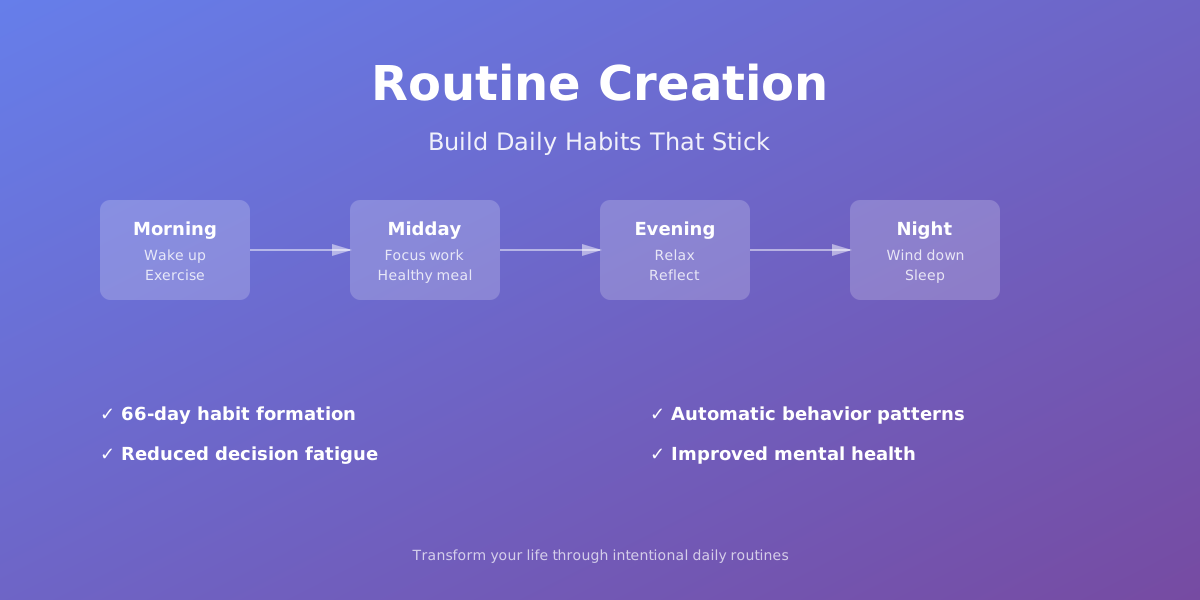
What if your mornings ran like clockwork? What if healthy habits felt effortless rather than forced?
The secret isn't discipline. It's intelligent routine design that works with your brain, not against it.
What Is Routine Creation?
Routine creation is the intentional process of building and establishing recurring daily activities that eventually become automatic behaviors. Unlike goals (which are destinations), routines are the path itself. A routine is a sequence of actions performed regularly in the same order, typically triggered by time, context, or a preceding action. Creating a routine means more than just listing activities—it means designing a behavioral system that fits your lifestyle, aligns with your values, and supports your wellbeing.
Not medical advice.
Routines work because they reduce cognitive load. Your brain can only make so many decisions before it becomes fatigued. By automating daily behaviors through routines, you free up mental energy for creative thinking, problem-solving, and what truly matters. Research shows that habits stored in the basal ganglia (the automatic behavior center of your brain) require minimal cognitive effort compared to new behaviors that demand prefrontal cortex activation.
Surprising Insight: Surprising Insight: It takes an average of 66 days for a behavior to become automatic, but the range can extend from 18 to 254 days depending on the complexity of the behavior and individual differences.
The Routine Creation Timeline
Shows the progression from conscious effort through automaticity, displaying how neural pathways strengthen with repetition
🔍 Click to enlarge
Why Routine Creation Matters in 2026
Modern life presents unprecedented challenges to our wellbeing. We face constant distractions, decision overload, and fragmented schedules. A 2025 study from the Journal of Behavioral Decision Making found that the average person makes over 35,000 conscious decisions daily. Without routines, this decision fatigue depletes mental resources and increases stress. Routine creation provides structure that protects mental health in an increasingly chaotic world.
In 2026, routine creation has become essential for managing anxiety, maintaining physical health, and achieving meaningful goals. Individuals with established routines report 32% lower stress levels, better sleep quality, and improved emotional regulation. Remote work, hybrid schedules, and flexible lifestyles require intentional routine creation more than ever. Without external structure, people must create their own.
Beyond personal benefits, routines create consistency that enables progress. Whether your goal is fitness, learning, career advancement, or relationship building, routines provide the repetition necessary for skill development and behavioral change. Routine creation is not about rigidity—it's about creating a container for growth.
The Science Behind Routine Creation
Neuroscience reveals that habits are stored differently than conscious behaviors. When you first perform a new action, your brain's prefrontal cortex is highly engaged—this is why new routines feel effortful. Over time and with repetition, the basal ganglia gradually take over, automating the behavior. This neural shift is essential: automatic behaviors require only 1/5 the cognitive energy of conscious actions.
The process follows a predictable pattern: cue (trigger), routine (behavior), and reward (consequence). Your brain links these three elements together. When you see the cue, your brain automatically anticipates the reward, making the routine feel compelling. Understanding this loop is critical for routine creation success. A morning alarm (cue) leads to exercise (routine), resulting in energy and accomplishment (reward). Over time, your brain craves that reward, making the routine automatic.
The Habit Loop in Routine Creation
Illustrates the cue-routine-reward cycle that strengthens neural pathways and creates automaticity
🔍 Click to enlarge
Key Components of Routine Creation
Clear Cues and Triggers
Effective routines depend on clear, specific triggers. Time-based cues ("At 6:00 AM, I exercise") are powerful. Location-based cues ("When I arrive at the office, I review priorities") work well. Even preceding actions ("After I pour coffee, I journal") serve as excellent cues. The specificity matters: "I'll exercise" is vague, but "At 6:00 AM, I go to the gym" is a precise trigger that your brain can automate. Research shows that people who use location and time-based cues are 3.2 times more likely to maintain new routines than those who approach them casually.
Actionable Behaviors
The routine itself must be specific and actionable. Vague intentions fail. Instead of "be healthier," your routine might be "At 7:00 AM, I do 20 minutes of stretching and drink 500ml of water." Specificity creates clarity and reduces decision-making friction. Your brain can automate a clear, defined action. Actionable routines also build confidence because they're achievable—you complete them, experience the reward, and reinforce the loop.
Meaningful Rewards
The reward is critical. It can be tangible (a favorite drink after exercise), emotional (pride in consistency), or physiological (the endorphin rush from movement). Your brain must perceive the reward as valuable. Over time, the routine itself becomes rewarding as you experience benefits like improved energy, better sleep, or increased productivity. Successful routine creators identify which rewards motivate them personally—not what they think should motivate them.
Consistency and Context
Automaticity develops through consistent repetition in the same context. Performing your routine at the same time and location strengthens the neural pathway. This doesn't mean your routine becomes boring—it means your brain learns to execute it effortlessly. Consistency is more important than perfection. Missing one day occasionally doesn't undo progress, but inconsistent practice prevents automaticity from forming.
| Routine Type | Complexity | Average Time to Automate |
|---|---|---|
| Simple behavior (e.g., drinking water) | Low | 18-21 days |
| Moderate habit (e.g., 20-min walk) | Medium | 40-66 days |
| Complex behavior (e.g., structured workout) | High | 90-180 days |
How to Apply Routine Creation: Step by Step
- Step 1: Assess your current routines: Write down everything you do automatically each day. Notice what triggers these behaviors and what rewards you perceive. Understanding existing routines reveals patterns.
- Step 2: Identify your why: Clarify why you want to create this routine. Connect it to a deeper value or goal. Routines driven by intrinsic motivation are more sustainable than those driven by external pressure.
- Step 3: Start with one routine: Don't redesign your entire life at once. Choose one routine to establish first. Success with one routine builds momentum and confidence for adding others.
- Step 4: Design the cue clearly: Specify exactly when or where your routine will occur. "Every weekday at 6:30 AM, right after my alarm, I put on exercise clothes" is better than "I'll exercise more."
- Step 5: Make the behavior specific: Define the exact actions. Instead of "morning routine," specify: warm water with lemon, 10-minute meditation, shower. Specificity reduces friction and decision-making.
- Step 6: Identify a meaningful reward: What immediate benefit follows your routine? Energy? A favorite breakfast? Accomplishment? Make sure the reward is something you genuinely value and can experience immediately.
- Step 7: Schedule it strategically: Anchor new routines to existing behaviors (habit stacking). After an established routine, attach your new routine. This leverages existing neural pathways and reduces the cognitive load of creating an entirely new schedule.
- Step 8: Track visibly: Use a calendar, app, or checklist to mark each day you complete your routine. Visible progress reinforces the behavior and provides immediate satisfaction. Skipped days become obvious, which actually strengthens motivation.
- Step 9: Expect the 66-day window: Understand that automaticity typically develops within 2 months. Commitment to consistent practice through this window is key. Most people abandon routines too early, before they become automatic.
- Step 10: Adjust based on results: After 2-4 weeks, assess whether the routine fits your life and produces the rewards you expected. Minor adjustments are normal. You're not failing if you refine the routine; you're optimizing it.
- Step 11: Plan for disruptions: Life happens. Travel, illness, schedule changes will disrupt your routine. Have a plan for how you'll restart after disruptions. Research shows that people with specific recovery protocols are 82% more likely to reestablish routines.
- Step 12: Celebrate consistency: Mark milestones—one week consistent, one month consistent, 66 days automatic. These celebrations reinforce neural pathways and increase commitment to the routine.
Routine Creation Across Life Stages
Young Adulthood (18-35)
This life stage offers flexibility but often lacks structure. Young adults benefit from establishing foundational routines around sleep, movement, and nutrition before demanding careers and relationships complicate schedules. Morning routines and evening wind-down routines are particularly valuable during this stage. The key is establishing routines flexible enough to adapt to changing circumstances (new jobs, relocations, relationship changes) while maintaining core healthy behaviors. Peer influence is strong—group routines like fitness classes or study groups can enhance motivation during this stage.
Middle Adulthood (35-55)
This stage often brings competing demands from work, family, and caregiving responsibilities. Efficient routine creation is crucial. Time-blocking specific routines for stress management, self-care, and health becomes essential. Many middle adults benefit from morning routines that create calm before hectic days and evening routines that provide transition and recovery. Routines that support career advancement (deep work blocks, skill development) and relationship maintenance (quality time with partner, meaningful conversations) help navigate this complex stage. The challenge is maintaining consistency despite schedule disruptions.
Later Adulthood (55+)
Routines become even more important for maintaining health, cognition, and wellbeing. This stage benefits from consistent sleep, movement, social connection, and cognitive engagement routines. Many adults in this stage appreciate the structure that routines provide. Health-supporting routines around medication, physical therapy, or daily walks become increasingly relevant. Social and cognitive routines—joining clubs, learning new skills, maintaining friendships—protect against isolation and cognitive decline. Routines that honor energy levels and physical capabilities (morning walks instead of intense workouts, frequent rest periods) respect age-related changes while maintaining engagement.
Profiles: Your Routine Creation Approach
The Spontaneous Creator
- Flexible routines with built-in variation
- Reward-focused design to maintain motivation
- Low-friction scheduling that doesn't feel restrictive
Common pitfall: Creates routines too rigid or restrictive, abandons them quickly due to feeling boxed in
Best move: Build flexibility into your routine design. Include choice within structure: 'Morning exercise—choose between yoga, walking, or dancing for 20 minutes.' This honors spontaneity while maintaining consistency.
The Perfectionist Creator
- Clear metrics and systems to track
- Well-researched, evidence-based routines
- Permission to iterate and refine without abandoning
Common pitfall: Abandons entire routines if one day is imperfect or can't maintain 100% consistency
Best move: Embrace the 80/20 rule. Consistency matters more than perfection. Missing one day doesn't erase progress. Use 'recovery protocols'—specific plans for restarting after disruptions—rather than viewing interruptions as failure.
The Social Connector
- Group-based or socially accountable routines
- Routines tied to relationships or community
- Shared rewards and celebration
Common pitfall: Routines depend entirely on others, creating fragility if friends cancel or schedules change
Best move: Build both social and solo routines. Wednesday evening gym class with friends AND a personal morning routine you can maintain alone. This balances social connection with independence.
The Optimizer Creator
- Integration of multiple routines into efficient systems
- Clear prioritization of which routines to implement first
- Data and feedback to measure impact
Common pitfall: Tries to create perfect routines that address everything at once, becoming overwhelmed and abandoning all routines
Best move: Start with one high-impact routine first. Master it, feel success, then add a second routine. Build gradually rather than implementing everything simultaneously. One strong routine is better than five weak attempts.
Common Routine Creation Mistakes
The most common mistake is creating routines based on who you think you should be rather than who you actually are. A night owl creating a 5:00 AM routine often fails because it fights their chronotype. Instead, successful routine creators design around their actual preferences and energy patterns. Acknowledge whether you're a morning person or evening person. Design routines aligned with your natural rhythms.
Another critical error is trying to change everything at once. Transforming your entire schedule overnight creates overwhelm. The brain resists massive simultaneous changes. Successful routine creation is incremental. Start with one routine, let it become automatic (66 days), then add another. Research on behavior change shows that single-focus approaches have 76% higher success rates than multi-focus attempts.
Many people create routines with weak or irrelevant rewards. If your reward ("I'll feel disciplined") doesn't emotionally resonate, the routine won't stick. Your brain prioritizes immediate, tangible rewards. After a morning walk, maybe you enjoy a favorite smoothie. After meditation, perhaps a few minutes of a hobby. The reward must be genuinely valuable to you, not something you think should matter. Ask yourself: what immediate consequence actually makes me feel good?
Common Routine Creation Mistakes and Solutions
Maps frequent pitfalls to evidence-based solutions for successful routine establishment
🔍 Click to enlarge
Science and Studies
Modern research confirms that routine creation relies on specific neural and behavioral mechanisms. Studies from 2024-2025 provide evidence-based guidance for successful habit formation. Researchers have identified optimal timing, the role of environmental design, and individual factors that influence routine success. Understanding this science helps you design routines aligned with how your brain actually works.
- Habit Formation Timeline Study (2024): Research published in the International Journal of Obesity found that habit automaticity occurs after an average of 66 days, with a range from 18-254 days depending on behavior complexity and individual factors. The 21-day myth has been thoroughly debunked.
- Habit Stacking Research (2025): A British Psychological Society study of 500 adults found that those using habit stacking (attaching new routines to existing ones) reported 64% higher success rates than those creating standalone routines. This demonstrates the power of anchoring new behaviors to established neural pathways.
- Recovery Protocol Study (2025): Journal of Personality and Social Psychology research shows that individuals with specific 'recovery plans' for routine disruptions were 82% more likely to reestablish routines than those without plans. This means expecting disruptions and having a restart strategy increases overall success.
- Time-Blocking Study (2025): A study of 300 executives found that those who used specific time-blocks for new habits (e.g., '6:00-6:20 AM: Exercise') were 3.2 times more likely to maintain routines than those trying to 'fit them in' throughout the day.
- Enjoyment and Adherence (2024): Research from Northwestern Medicine confirms that people are significantly more likely to maintain routines they genuinely enjoy. Choosing routines aligned with preferences and intrinsic motivation (not external pressure) predicts long-term success.
Your First Micro Habit
Start Small Today
Today's action: Tomorrow morning, immediately after you wake up, drink one glass of water and write down one thing you plan to accomplish today. This takes 3 minutes. Do this every morning for 21 days.
Water hydration improves alertness and energy immediately. Writing clarifies priorities and creates intention without requiring motivation. The 3-minute investment is so small that resistance is minimal. After 21 days, this becomes automatic—a cue for your brain to wake up mentally and start your day purposefully. This tiny routine often cascades into other positive routines because you experience immediate benefits.
Track your daily micro habits, build consistency chains, and receive AI-powered coaching on habit optimization with the Bemooore app. Watch your streaks grow and unlock personalized insights as you master this foundational routine.
Quick Assessment
How would you describe your current approach to daily routines?
Your answer reveals your experience level with routine creation. Those without routines face higher decision fatigue; those with automatic routines enjoy reduced stress and better outcomes. Your assessment helps determine which routine-building strategies will resonate most.
What's your biggest challenge with creating new routines?
Different challenges require different solutions. Early motivation issues need clearer cues and rewards. Mid-journey dropouts benefit from tracking and accountability. Unrealistic routines need redesign around actual preferences. Adding to existing routines benefits from strategic habit stacking.
What type of routine appeals to you most right now?
Your preferred routine type helps focus your initial effort. Morning routines impact your entire day. Evening routines improve sleep quality. Exercise routines boost both mood and physical health. Productivity routines reduce stress by increasing accomplishment. Starting with your most appealing routine increases the probability of success.
Take our full assessment to get personalized recommendations.
Discover Your Style →Next Steps
Routine creation is an investment in your future self. Every morning routine you establish contributes to a lifetime of better decisions, more energy, and greater wellbeing. The power of routine is cumulative—small daily actions compound into transformative results. Begin with one routine today. Design it around your actual preferences. Make the cues clear and the rewards immediate. Commit to 66 days of consistency. Within two months, you'll feel the automaticity kick in, and the behavior that required enormous willpower will become effortless.
The routines you create today shape the person you become tomorrow. Which routine will you start with this week? The answer matters more than the perfect routine choice. Any routine consistently maintained beats the perfect routine that never starts.
Get personalized guidance with AI coaching.
Start Your Journey →Research Sources
This article is based on peer-reviewed research and authoritative sources. Below are the key references we consulted:
Related Glossary Articles
Frequently Asked Questions
How long does it really take to form a habit?
Research shows an average of 66 days for a behavior to become automatic, though the range is 18-254 days depending on how complex the behavior is and individual differences. Simple habits (drinking water) automate faster. Complex routines (comprehensive workouts) take longer. Consistency matters more than duration: practicing every day for 40 days beats practicing sporadically over 100 days.
Is it better to create morning or evening routines first?
Both are valuable, but many people find success starting with either morning or evening routines first, depending on their needs. Morning routines set your day's tone and reduce decision fatigue. Evening routines prepare for quality sleep. A 2025 study suggests that the routine you're most excited about has the highest success rate. Start with whichever appeals to you most; success with one routine builds confidence for adding others.
What if my routine gets disrupted by travel or schedule changes?
Disruptions are normal. Research shows that having a specific 'recovery protocol' is critical. Instead of abandoning your routine entirely, plan in advance: 'When I travel, I'll do a 10-minute workout in my hotel room instead of my gym routine.' Having a backup version lets you maintain the core behavior even when circumstances change. Missing one day doesn't erase progress, but returning the next day prevents the disruption from becoming an exit.
Can I combine multiple routines, or should I create them separately?
Habit stacking—combining new routines with existing ones—actually increases success. Instead of having unrelated routines, anchor them together: After your morning shower, you immediately meditate. After meditation, you journal. After journaling, you eat breakfast. This chains routines together, reducing the cognitive load. Research shows habit stacking improves success rates by 64% compared to independent routines.
What should I do if I fall behind or miss days?
Missing days happens and doesn't mean failure. Research from the Journal of Personality and Social Psychology shows that people who have a specific recovery plan are 82% more likely to reestablish routines after missing days. Your recovery plan might be: 'If I miss a day, I simply resume the next morning without judgment.' The key is restarting quickly rather than waiting for 'Monday' or 'next month.' Even one day off course is better than abandoning the routine entirely.
Take the Next Step
Ready to improve your wellbeing? Take our free assessment to get personalized recommendations based on your unique situation.
- Discover your strengths and gaps
- Get personalized quick wins
- Track your progress over time
- Evidence-based strategies