Integration Alignment
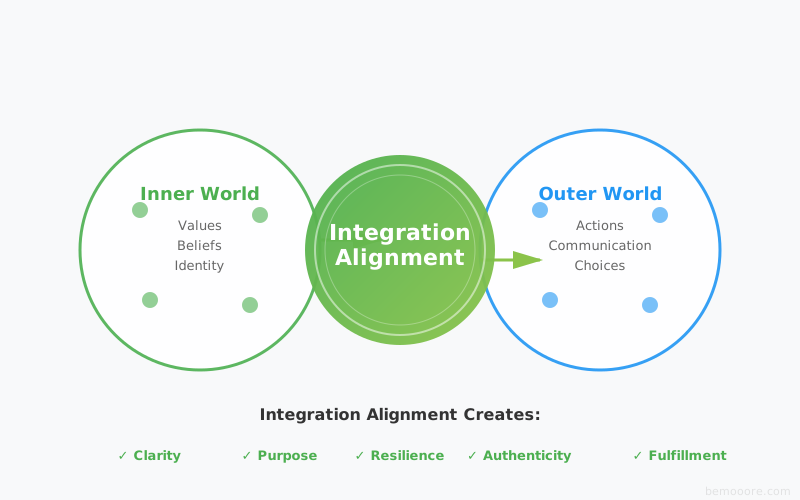
Integration alignment is the experience of bringing your whole self together—aligning your deepest values, authentic identity, and daily actions into one coherent expression. When you live in integration alignment, your inner world (what you believe, feel, and value) matches your outer world (what you do, say, and communicate). This alignment creates psychological wholeness, reduces internal conflict, and opens the door to lasting happiness and fulfillment that comes from living authentically.
Most people experience gaps between their values and their actions, creating a quiet psychological tension that erodes wellbeing over time. Integration alignment heals this gap.
When you achieve integration alignment, you experience clarity, purpose, resilience, and a sense of coherence that makes life feel more meaningful and satisfying.
What Is Integration Alignment?
Integration alignment refers to the psychological process of unifying different parts of yourself into a cohesive whole where your values, beliefs, identity, and behaviors work together seamlessly. It's about achieving congruence—when your inner experience matches your outer expression, and your actions flow naturally from your authentic self rather than from external pressure or internal contradiction.
Not medical advice.
Integration alignment draws from decades of psychological research, particularly Carl Rogers' concept of congruence and modern positive psychology. Rogers observed that psychological distress arises when there's a gap between your real self (who you actually are) and your ideal self (who you believe you should be). Integration alignment is the process of closing that gap by bringing your authentic self into conscious awareness and expressing it in your daily life.
Surprising Insight: Surprising Insight: Studies show that people living in alignment with their values experience significantly higher wellbeing, life satisfaction, and mental health, even when facing challenges. The alignment itself becomes a source of resilience.
The Integration Alignment Framework
This diagram shows how integration alignment brings together inner experience (values, beliefs, identity) with outer expression (actions, communication, choices) to create psychological wholeness and coherence.
🔍 Click to enlarge
Why Integration Alignment Matters in 2026
In 2026, we face unprecedented demands on our attention and identity. Social media creates pressure to present curated versions of ourselves. Work culture often demands we suppress parts of our authentic selves. Rapid social change leaves many people uncertain about their core values. In this environment, integration alignment has become essential for psychological survival and thriving.
Integration alignment directly addresses the mental health crisis by reducing the internal conflict that drives anxiety, depression, and burnout. When your actions consistently conflict with your core values, you experience chronic cognitive dissonance—a subtle but persistent psychological discomfort that quietly erodes wellbeing. Integration alignment eliminates this erosion by creating internal coherence.
Additionally, integration alignment strengthens relationships. When you're congruent—when your inner and outer worlds match—people experience you as authentic, trustworthy, and present. This authenticity creates deeper connection, stronger emotional bonds, and more fulfilling relationships across all areas of life.
The Science Behind Integration Alignment
Neuroscience reveals that when your actions align with your values, your brain's reward system activates, releasing dopamine and reinforcing positive behavior through intrinsic motivation. This isn't about willpower or discipline—it's about your brain naturally rewarding alignment. Conversely, when your actions conflict with your values, your brain experiences heightened stress response, releasing cortisol and creating psychological tension that interferes with sleep, focus, and emotional regulation.
Carl Rogers' theory of congruence shows that psychological health results from alignment between your real self and ideal self. Modern research extends this by showing that integration—the unification of different parts of yourself into a coherent whole—is a key marker of psychological maturity and emotional resilience. When you've integrated your experiences, emotions, and identity, you're more adaptable, emotionally regulated, and capable of navigating life's challenges.
How Values Alignment Affects Your Brain and Body
This diagram illustrates the neurobiological pathways that explain why integration alignment creates better psychological and physical health outcomes.
🔍 Click to enlarge
Key Components of Integration Alignment
Self-Awareness
Integration alignment begins with deep self-awareness—knowing your core values, authentic motivations, emotional patterns, and genuine desires without distortion or denial. This means understanding not just what you think you should value, but what you actually value. Many people discover through honest reflection that their stated values differ from their lived values, creating the misalignment that drives psychological tension.
Authentic Expression
Authentic expression is the ability to communicate and express your true self in your relationships, work, and daily interactions. This doesn't mean impulsively saying everything you think; it means expressing your genuine thoughts, feelings, and values in ways that are honest while remaining respectful and contextually appropriate. Authentic expression creates the conditions for real connection and reduces the exhaustion that comes from maintaining false personas.
Values-Aligned Action
Values-aligned action means your daily choices, behaviors, and commitments flow from your core values rather than from external pressure, habit, or attempts to please others. When you make decisions based on your values, you experience greater satisfaction and resilience, even when the decisions are difficult. Values-aligned action creates coherence between what you say matters and how you actually spend your time and energy.
Psychological Coherence
Psychological coherence is the experience of your life making sense as a unified narrative rather than a fragmented collection of contradictory experiences. When you achieve integration alignment, you can see how your values, experiences, identity, and goals form a coherent whole. This coherence itself becomes a source of meaning, purpose, and emotional stability that sustains wellbeing even during difficult times.
| Aspect | Integration Alignment | Misalignment |
|---|---|---|
| Internal Experience | Coherence, authenticity, wholeness | Fragmentation, inauthenticity, internal conflict |
| Mental Health | Lower anxiety, depression; higher wellbeing | Higher anxiety, depression; reduced wellbeing |
| Decision-Making | Values-based, clear, purposeful | Conflicted, unclear, driven by external pressure |
| Relationships | Authentic connection, trust, deeper bonds | Surface-level, guarded, reduced intimacy |
| Energy Level | Sustained motivation, resilience | Chronic fatigue, depletion, burnout risk |
| Sense of Purpose | Clear, meaningful, self-directed | Unclear, externally-defined, unfulfilling |
How to Apply Integration Alignment: Step by Step
- Step 1: Identify your core values: Spend time reflecting on what truly matters to you—not what you think should matter, but what actually drives your choices, brings you alive, and gives your life meaning. Write these down without judgment.
- Step 2: Examine your current life: Look honestly at how you currently spend your time, energy, and resources. What does this reveal about your actual lived values? Where are the gaps between your stated values and lived values?
- Step 3: Notice the discomfort: Become aware of areas where your actions conflict with your values. This cognitive dissonance might feel like guilt, anxiety, exhaustion, or a sense that something is 'off' about your life.
- Step 4: Identify one area of misalignment: Choose one specific area where your life doesn't align with your values—perhaps your career, a relationship, how you spend your free time, or how you communicate.
- Step 5: Get clear on what alignment would look like: Describe specifically what it would mean to bring this area of life into alignment with your values. What would change? What would you do differently?
- Step 6: Start with one small values-aligned action: Choose one small, concrete action you can take this week that moves you toward alignment in this area. Make it specific and achievable.
- Step 7: Take the action: Do it. Notice how it feels. Pay attention to the shift in your internal experience, even if it's subtle.
- Step 8: Reflect on the experience: After taking your values-aligned action, reflect: How did it feel? What did you notice about your mood, energy, clarity, or sense of coherence? This reflection builds awareness of how alignment affects your wellbeing.
- Step 9: Build momentum: Use what you learned from this first action to identify the next small step. Integration alignment develops gradually through consistent small actions that reinforce coherence.
- Step 10: Revisit your values regularly: Your values may evolve as you grow and change. Periodically reassess what matters to you and whether your life still reflects your authentic values.
Integration Alignment Across Life Stages
Young Adulthood (18-35)
In young adulthood, integration alignment often involves discovering your authentic values and identity separate from family or cultural expectations. This is the stage where many people first become aware of conflicts between what they've been taught to value and what they actually value. Young adults benefit from actively exploring their values, experimenting with different life paths, and building the self-awareness foundation that enables future alignment.
Middle Adulthood (35-55)
In middle adulthood, integration alignment often involves reconciling the life you've built with your authentic values. Many people realize they've spent years pursuing external goals (career status, financial security, family obligations) at the expense of deeper values (creativity, meaningful relationships, personal growth). Middle adulthood offers an opportunity to consciously realign your life with what actually matters to you, often resulting in significant life changes that paradoxically feel more authentic and fulfilling.
Later Adulthood (55+)
In later adulthood, integration alignment often involves integrating all your life experiences into a coherent narrative that gives your life meaning and purpose. This stage offers the opportunity to mentor others, to focus on relationships and experiences that matter most, and to leave a legacy that reflects your deepest values. Integration alignment in this stage contributes to life satisfaction, sense of meaning, and psychological peace.
Profiles: Your Integration Alignment Approach
The Value Discoverer
- Space for honest self-reflection without judgment
- Permission to challenge inherited values and beliefs
- Support exploring who they are beneath social expectations
Common pitfall: Getting stuck in self-analysis without taking action toward alignment
Best move: Take one small action this week that expresses your emerging authentic values, then reflect on how it felt
The Life Realigner
- Courage to make significant life changes despite fear and uncertainty
- Support grieving the life they thought they would live
- Community that validates the authenticity of their emerging choices
Common pitfall: Making hasty dramatic changes without careful planning, then experiencing regret
Best move: Start with one area of life to realign; make incremental changes that test alignment before committing to major shifts
The Incremental Integrator
- Permission to move slowly and steadily toward alignment
- Recognition that small consistent values-aligned actions create big shifts over time
- Practical strategies for bringing alignment into existing commitments
Common pitfall: Postponing alignment indefinitely through perfectionism or excessive planning
Best move: Commit to one small values-aligned action per week and track how your coherence and wellbeing gradually increase
The Integration Maintainer
- Ways to deepen existing alignment and prevent slow drift
- Strategies to adapt alignment as values evolve with life changes
- Practices that keep them connected to their authentic self and core values
Common pitfall: Becoming complacent and gradually losing alignment without noticing until tension returns
Best move: Create a quarterly values check-in practice to continuously assess and adjust alignment
Common Integration Alignment Mistakes
The most common mistake is confusing values alignment with happiness about your current life. You might align your life perfectly with your values and still face challenges, setbacks, or difficult emotions. Integration alignment creates the conditions for meaningful wellbeing, not the elimination of all difficulty. Real happiness comes from knowing your struggles are in service of what matters to you.
Another frequent mistake is assuming that alignment requires dramatic life changes. Most people can achieve significant integration alignment through small consistent adjustments to how they spend their time, energy, and emotional resources. You don't need to quit your job or leave your relationships; you need to find ways to express your authentic values within your existing commitments.
A third mistake is believing that alignment is a destination rather than an ongoing process. Your values evolve as you grow and as your life circumstances change. Integration alignment is not a state you achieve once and then maintain; it's a continuous practice of checking in with yourself, noticing where alignment has drifted, and making adjustments. This ongoing attention is what sustains the wellbeing and coherence that alignment creates.
From Misalignment to Integration Alignment
This diagram shows the journey from unconscious misalignment through awakening to conscious alignment and the ongoing process of maintaining coherence.
🔍 Click to enlarge
Science and Studies
Research on integration alignment draws from multiple fields including positive psychology, Rogers' person-centered therapy, neuroscience, and contemporary wellbeing studies. These studies consistently demonstrate that congruence between values and actions creates better mental health outcomes, higher life satisfaction, and greater resilience.
- Frontiers in Psychology (2024) research shows that individuals pursuing values-congruent goals experience significantly higher wellbeing and lower depression symptoms compared to those pursuing externally-motivated goals.
- Academy of Management Annals (2025) presents an integrative theoretical framework showing how personal development that aligns internal awareness with external action creates sustainable psychological growth in professional and personal contexts.
- Psychology Today research on Carl Rogers' congruence theory demonstrates that alignment between real self and ideal self is a core marker of psychological health and predicts better mental health outcomes across the lifespan.
- Sandstone Psychology research confirms that living in alignment with one's values creates a protective effect against anxiety and depression, even during challenging life periods.
- Self-Determination Theory research shows that autonomy, competence, and relatedness—all enhanced by integration alignment—are fundamental psychological needs whose satisfaction is essential for wellbeing.
Your First Micro Habit
Start Small Today
Today's action: This week, identify one area where your life doesn't align with your values, then take one small action (15 minutes or less) that moves you toward alignment in that area. Notice how it feels.
Small values-aligned actions activate your brain's reward system, create immediate psychological coherence, and build momentum toward bigger alignment. The key is doing it and noticing the shift in your internal experience—this awareness motivates continued alignment.
Keep quitting habit apps after a missed day? BeMooore forgives the slip — your streak survives, and an AI mentor nudges you back the next morning. Free on iOS.
Quick Assessment
How much of your current life reflects your authentic values and deepest sense of what matters?
Your answer reveals your starting point for integration alignment. If you chose 'not sure,' self-discovery comes first. If you chose 'some' or 'very little,' you have clear opportunities to increase alignment and wellbeing.
When you imagine living in perfect alignment with your values, what's the first thing that would need to change?
Your answer points to your highest-leverage area for creating alignment. Start there, because alignment in that area will ripple into other parts of your life.
What's your biggest barrier to creating more alignment in your life right now?
Identifying your barrier helps you address the real obstacle. If it's fear, focus on small low-risk alignment experiments. If it's unclear values, invest in self-discovery first. If it's obligations, look for ways to realign within existing commitments.
Take our full assessment to get personalized recommendations.
Discover Your Style →Next Steps
Integration alignment is the foundation for sustainable happiness and fulfillment. Start by bringing consciousness to where your life currently aligns with your values and where gaps exist. This awareness itself is powerful—it reveals your path forward and connects you with the motivation to move toward alignment.
Remember that alignment develops through small consistent actions, not dramatic overhauls. This week, choose one small way to express your authentic values more fully in your life, then notice how that shift feels. Build momentum from there. Your future self will thank you for choosing coherence and authenticity now.
Get personalized guidance with AI coaching.
Start Your Journey →Research Sources
This article is based on peer-reviewed research and authoritative sources. Below are the key references we consulted:
Related Glossary Articles
Frequently Asked Questions
How do I know what my authentic values are?
Your authentic values are revealed through what brings you alive, what you naturally prioritize when you're not under pressure, and what gives your life meaning and purpose. Notice moments when you feel authentic, engaged, and fulfilled—those moments point to your values. You can also journal about what angers you about the world (values gap), what you admire in others (values reflected), and what you'd regret not doing with your life (core values).
Can I be in alignment even if my life isn't perfect?
Absolutely. Integration alignment isn't about having a perfect life; it's about living authentically according to your values. You can be perfectly aligned while facing challenges, setbacks, grief, or difficult circumstances. The difference is that your struggles feel meaningful because they're in service of what matters to you, and this meaning sustains resilience and wellbeing.
Does achieving alignment require big life changes?
Not necessarily. While some people do make significant changes, many find that alignment is possible through small consistent adjustments to how they spend time, communicate, make decisions, and prioritize. You can find alignment within your current career, relationships, and circumstances by bringing your authentic self more fully into those contexts.
What if my values conflict with others' expectations?
This is common and often necessary. Alignment frequently requires gentle but firm boundary-setting with others whose expectations don't match your authentic values. This can feel uncomfortable, but the alternative—living inauthentically to please others—creates the cognitive dissonance that erodes wellbeing. You can honor others while being true to yourself by communicating your values clearly and respectfully.
How do I maintain alignment as my life circumstances change?
Integration alignment is an ongoing practice, not a destination. As you grow, your values may evolve, and your life circumstances will change. The practice is to check in regularly (monthly, quarterly, or annually) with yourself: Do my current commitments and choices still reflect my authentic values? Where have I drifted? What small adjustment would bring me back into alignment? This regular reflection prevents slow drift back into misalignment.
Take the Next Step
Ready to improve your wellbeing? Take our free assessment to get personalized recommendations based on your unique situation.
- Discover your strengths and gaps
- Get personalized quick wins
- Track your progress over time
- Evidence-based strategies