What Is Amor
Love is one of the most powerful forces in human life. Yet most of us never really understand what it is. Is it a choice? A chemical reaction? A spiritual bond? The truth is love involves all three. It's not just poetry or psychology - it's neuroscience. When you fall in love, your brain becomes a chemistry lab. Dopamine floods your reward centers. Oxytocin deepens your bond. Your neural circuits literally rewire. Love is not something that happens to you. It's something your brain is wired to create.
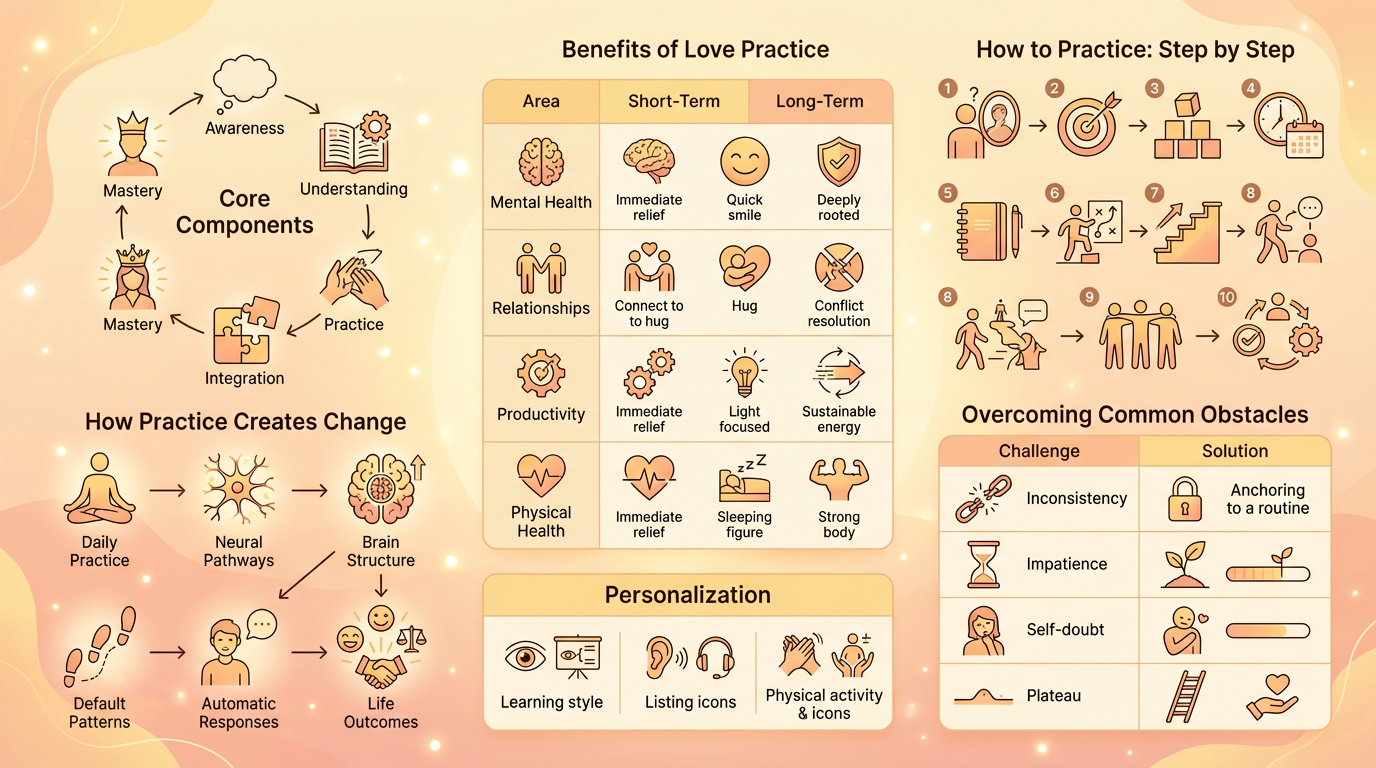
For centuries, philosophers debated love's nature. Today, scientists can show you exactly what love looks like inside the human brain.
Understanding love truly understanding it changes how you approach relationships. It helps you recognize real connection when it appears. It explains why some relationships thrive while others fade. And it gives you practical tools to nurture the bonds that matter most.
What Is Love?
Love is a basic human drive distinct from sex or attraction. It's a drive to focus your energy on one person, to bond with them, and to build something meaningful together. Neuroscientist Helen Fisher describes romantic love as a motivation and emotion. It's your brain using a specific neurochemical system to create the feeling of being in love.
No es consejo médico.
Love operates on three main levels. First, there's the brain chemistry level. Dopamine, oxytocin, and vasopressin shape how you experience love. Second, there's the psychological level. Your attachment style, past experiences, and emotional patterns influence who and how you love. Third, there's the relational level. Love is an action. It's how you show up, communicate, and commit to another person over time.
Surprising Insight: Surprising Insight: Love is actually stronger than the sex drive. Fisher's research shows romantic love activates reward and motivation systems in the brain so powerfully that people report love is stronger than hunger, thirst, or even the will to live.
The Three Systems of Love
Romantic love operates through three overlapping brain systems
🔍 Click to enlarge
Why Love Matters in 2026
In a world of endless digital connections and shallow interactions, real love has become rare and more valuable than ever. We're lonelier despite being more connected than any generation in history. Understanding love what it really is helps you cut through the noise and build genuine relationships.
Love is also fundamental to wellbeing. Research shows people in secure, loving relationships live longer, handle stress better, and report higher life satisfaction. Love is not a luxury. It's a basic human need as essential as food or shelter.
In 2026, many people struggle with attachment anxiety, commitment fears, or the aftermath of broken relationships. By understanding the neuroscience and psychology behind love, you can heal past wounds and build healthier patterns moving forward.
The Science Behind Love
When you fall in love, your brain experiences measurable changes. Functional MRI studies show that people in love have activation in the ventral tegmental area (VTA), a region rich in dopamine. This same area lights up when drug addicts use their drug of choice. Love, neurologically, is as powerful as addiction but constructive.
The three neurochemicals of love work together. Dopamine creates the drive and reward feeling. Oxytocin deepens bonding and trust. Vasopressin helps maintain long-term attachment. When these chemicals are in balance, you experience secure, sustainable love. When they are imbalanced, you might feel anxious, avoidant, or unstable in relationships.
Love Brain Chemistry Over Time
How brain chemicals shift through the stages of relationship
🔍 Click to enlarge
Key Components of Love
Intimacy
Intimacy is the foundation of love. It is not just physical it is emotional, intellectual, and spiritual closeness. Intimacy means being known. It means vulnerability, trust, and feeling safe to be yourself. When you share your real thoughts, fears, and dreams with another person and they accept you, that's intimacy. It is the antidote to loneliness.
Passion
Passion is the spark. It is physical attraction, desire, and excitement. It is what makes your heart race when you see your person. Passion is not shallow it is how your body communicates love. The touch of a hand, a kiss, sexual intimacy. Passion keeps relationships alive and energized. Without it, love can become friendship. With only passion, love is unsustainable.
Commitment
Commitment is the choice to stay. It is the decision to keep showing up, even when passion dims and life gets hard. Commitment is what transforms temporary attraction into lasting love. It is the willingness to work through conflict, to grow together, and to build a future with another person.
Attachment
Attachment is how you bond with others based on early experiences. Secure attachment means you trust others, communicate openly, and feel comfortable being both independent and dependent. Anxious attachment means you seek reassurance and fear abandonment. Avoidant attachment means you value independence and may struggle with vulnerability. Your attachment style is not fixed you can develop earned security through conscious relationship work.
| Type of Love | Components | Description |
|---|---|---|
| Liking | Intimacy only | Close friendship without passion or commitment |
| Infatuation | Passion only | Physical attraction and excitement but no depth or commitment |
| Empty Love | Commitment only | Staying together out of duty or history, passion and intimacy faded |
| Romantic Love | Intimacy + Passion | Deep connection with strong attraction but may lack long-term commitment |
| Companionate Love | Intimacy + Commitment | Deep friendship and commitment but without passionate desire |
| Fatuous Love | Passion + Commitment | Intense desire and fast commitment but shallow emotional connection |
| Consummate Love | Intimacy + Passion + Commitment | Complete love balancing emotional closeness, attraction, and sustained choice |
How to Apply Love: Step by Step
- Step 1: Identify your attachment style honestly by noticing your patterns in relationships. Do you pursue reassurance? Avoid intimacy? Feel secure? Understanding your baseline helps you see growth opportunities.
- Step 2: Develop self-awareness about your triggers. When do you feel anxious, avoidant, or withdrawn? Journal about moments when you felt defensive or unsafe in relationships.
- Step 3: Practice vulnerable communication. Share a small truth with someone you trust. Start small do not expect to be completely open overnight. Build trust gradually.
- Step 4: Engage in active listening with your partner or loved ones. Listen to understand, not to respond. Notice what you are feeling as they speak.
- Step 5: Create shared rituals. Regular coffee dates, weekly check-ins, date nights, or even simple morning greetings. Repetition builds attachment.
- Step 6: Show physical affection in ways that feel authentic. Hold hands, hug, touch. Physical closeness releases oxytocin, the bonding chemical.
- Step 7: Have honest conversations about needs. What do you need to feel safe? What does your partner need? Vulnerability is not weakness it is the foundation of trust.
- Step 8: Take time for shared goals. Plan something together. Build something. Work toward something as a team. Shared purpose deepens love.
- Step 9: Manage conflict with curiosity, not criticism. When disagreement comes, ask what are you really feeling instead of attacking. Conflict handled well strengthens bonds.
- Step 10: Practice gratitude and appreciation. Notice what you love about the person. Say it out loud. When you look for the good, your brain releases dopamine, reinforcing attachment.
Love Across Life Stages
Adultez joven (18-35)
In young adulthood, love is often intense, passionate, and idealistic. You are discovering who you are and what you want in partnership. Passion is typically high. The challenge is often sustaining commitment through difficult moments and learning to balance independence with togetherness. Many young adults confuse intensity with compatibility. Real love requires choosing someone whose values align with yours, not just someone who makes you feel alive.
Edad media (35-55)
In middle adulthood, love often matures from passion to deep intimacy and commitment. You have weathered seasons together. The initial dopamine rush has settled into steady attachment. Many couples report this as the most satisfying phase you know each other deeply. The challenge is maintaining passion and novelty. Reigniting physical affection, pursuing shared interests, and continuing to grow together prevents relationships from becoming stale.
Adultez tardía (55+)
In later adulthood, love becomes more about companionship, shared history, and mutual support. Long-term partners develop an almost psychic understanding of each other. Many couples report this phase as deeply fulfilling. The focus shifts from building a future to savoring the present together. New challenges emerge around health, loss, and mortality. Love deepens as you show up for each other through life's final chapters.
Profiles: Your Love Approach
The Passionate Pursuer
- Reassurance that they are loved
- Regular physical and emotional affection
- Clear communication about your feelings
Common pitfall: Pushing too hard, too fast. Seeking constant reassurance. Becoming clingy or jealous.
Best move: Build self-worth independent of your partner. Practice secure self-soothing. Ask directly for what you need instead of testing your partner.
The Independent Avoider
- Space and autonomy in relationships
- Time to process emotions before talking
- Partners who respect boundaries
Common pitfall: Withdrawing when hurt. Avoiding difficult conversations. Using distance as a defense.
Best move: Practice staying present even when uncomfortable. Schedule conversations instead of avoiding them. Remember: vulnerability strengthens bonds.
The Secure Connector
- Ongoing growth and novelty
- Balanced intimacy and independence
- Shared values and goals
Common pitfall: Taking the relationship for granted. Assuming maintenance is not needed. Losing passion over time.
Best move: Keep dating your partner. Pursue new experiences together. Continue personal growth and encourage theirs.
The Uncertain Searcher
- Self-discovery first
- Time to understand your own attachment patterns
- Clarity about what you actually want in love
Common pitfall: Staying in relationships that do not fit. Changing yourself to please others. Not recognizing your own worth.
Best move: Invest in self-work before committing. Journal about your values. Understand your patterns. Then choose consciously.
Common Love Mistakes
The first mistake is confusing attraction with love. Physical chemistry and intensity feel amazing, but they are not the same as real love. Real love includes knowledge. You know each other's flaws, fears, and dreams. You choose to stay anyway. Attraction alone fades. Love grows.
The second mistake is staying in relationships out of fear of being alone. Staying just because you are afraid of the alternative is a version of slow death for both people. Real love requires choosing to stay because the other person makes your life better, not just fuller.
The third mistake is losing yourself in love. You cannot merge into another person and expect love to work. You need your own identity, interests, and friendships. Healthy love is two whole people choosing to build a life together, not two halves trying to make one whole.
Common Love Patterns: Secure vs. Insecure
How attachment patterns show up differently in relationships
🔍 Click to enlarge
Ciencia y estudios
Research on love spans neuroscience, psychology, and anthropology. Helen Fisher's neuroimaging studies using fMRI scans show specific brain activation patterns in people who report being in love. Attachment theory, pioneered by John Bowlby and Mary Ainsworth, explains how early relationships shape our adult love patterns. Sternberg's Triangular Theory of Love identifies three components (intimacy, passion, commitment) that combine to create different types of love. Together, these frameworks give us a comprehensive understanding of what love actually is.
- Fisher, H., Aron, A., & Brown, L. (2006). Romantic Love: A Mammalian Brain System for Mate Choice. In The New Psychology of Love, showing how the brain reward system activates during romantic love.
- Bowlby, J. (1988). A Secure Base: Parent-Child Attachment and Healthy Human Development exploring how early attachment patterns shape lifelong relationship capacity.
- Sternberg, R. J. (1986). A Triangular Theory of Love in Psychological Review, establishing the three-component model of intimate relationships.
- Hatfield, E., & Sprecher, S. (1986). Mirror, Mirror: The Importance of Looks in Everyday Life examining how physical attraction initiates romantic connections.
- Neff, L. A., & Karney, B. R. (2005). To Know You Is to Love You: The Implications of Global Adoration and Specific Accuracy for Marital Relationships showing how knowing your partner deeply sustains love.
Tu primer micro hábito
Comienza pequeño hoy
Today's action: Ask one person you care about a real question and listen for five minutes without planning your response. Really listen.
Most conversations are really just waiting for your turn to talk. Real listening creates intimacy. Your person feels heard, which releases oxytocin in both of you. Connection deepens.
Track your micro habits and get personalized AI coaching with our app.
Evaluación rápida
When you think about your current close relationships, what feels most true?
Your answer reveals your attachment pattern. Secure people navigate love with calm confidence. Anxious people seek reassurance. Avoidant people value independence. Uncertainty suggests you are still discovering your pattern, that is valuable self-awareness.
What draws you most in a potential romantic connection?
Some people are drawn to intimacy (emotional closeness), others to passion (attraction and excitement), others to commitment (shared direction). Real love combines all three, but your lead tells you where to focus first.
How do you typically handle conflict or disappointment in relationships?
Your conflict pattern shows your attachment in action. Direct engagement suggests secure attachment. Seeking reassurance suggests anxious attachment. Withdrawing suggests avoidant attachment. Confusion suggests you need to learn your own patterns first.
Take our full assessment to get personalized recommendations based on your love approach.
Descubre Tu Estilo →Preguntas frecuentes
Próximos pasos
Understanding what love is the brain science, the psychology, the components is the first step. But love is an action. It is something you practice, strengthen, and choose every day. Start with the micro habit today. Then take the assessment to understand your unique love pattern.
Whether you are building a new relationship, deepening an existing one, or healing from heartbreak, you now have a framework. You understand the neuroscience. You know the components. You see the patterns. Use this knowledge. Apply it. Watch how your relationships transform.
Get personalized guidance based on your unique love style and relationship goals.
Comienza Tu Viaje →Research Sources
This article is based on peer-reviewed research and authoritative sources. Below are the key references we consulted:
Related Glossary Articles
Frequently Asked Questions
Is love a choice or a feeling?
Both. The initial feeling of falling in love happens in your brain. You do not choose it. But real love, lasting love, is a choice. It is choosing to show up, to communicate, to work through hard times, to keep the spark alive. Feelings fade. Choice sustains love.
Can you change your attachment style?
Yes. Your attachment style develops early, but it is not fixed. Through conscious relationship work, therapy, and practice, you can develop earned security. You can become more secure by learning to trust, communicate openly, and be vulnerable. Change takes time, but it is absolutely possible.
How long does it take to really know if you love someone?
Initial attraction and infatuation happen quickly within weeks or months. But real love takes time. You need to know someone through different seasons, challenges, and situations. Most relationship experts suggest two to three years of consistent experience before claiming you truly know someone. Real love deepens over time.
What is the difference between love and lust?
Lust is desire and physical attraction. It is driven by testosterone and estrogen. Love is attachment and commitment. It is driven by dopamine (reward), oxytocin (bonding), and vasopressin (long-term attachment). Lust can happen instantly. Love develops through repeated positive interactions and emotional knowing.
Can love last forever?
The intense, euphoric phase of being in love typically lasts 3 to 24 months. But the deeper attachment love the mature, chosen love can last a lifetime. Many long-term couples report that later-stage love is more satisfying than early-stage love because it is deeper, more honest, and less dependent on novelty.
Take the Next Step
Ready to improve your wellbeing? Take our free assessment to get personalized recommendations based on your unique situation.
- Discover your strengths and gaps
- Get personalized quick wins
- Track your progress over time
- Evidence-based strategies