Intentional Living
Are you drifting through life on autopilot, making decisions based on what others expect rather than what truly matters to you? Intentional living offers a powerful alternative: building your life deliberately around your core values, beliefs, and purpose. Instead of reacting to circumstances, you become the architect of your own life, making mindful choices that create alignment between your daily actions and deepest aspirations. This approach transforms how you spend your time, energy, and resources, leading to greater fulfillment, reduced stress, and a profound sense of meaning. Whether you're seeking career clarity, deeper relationships, or simple everyday peace, intentional living provides the framework to design the life you actually want rather than the one you defaulted into.
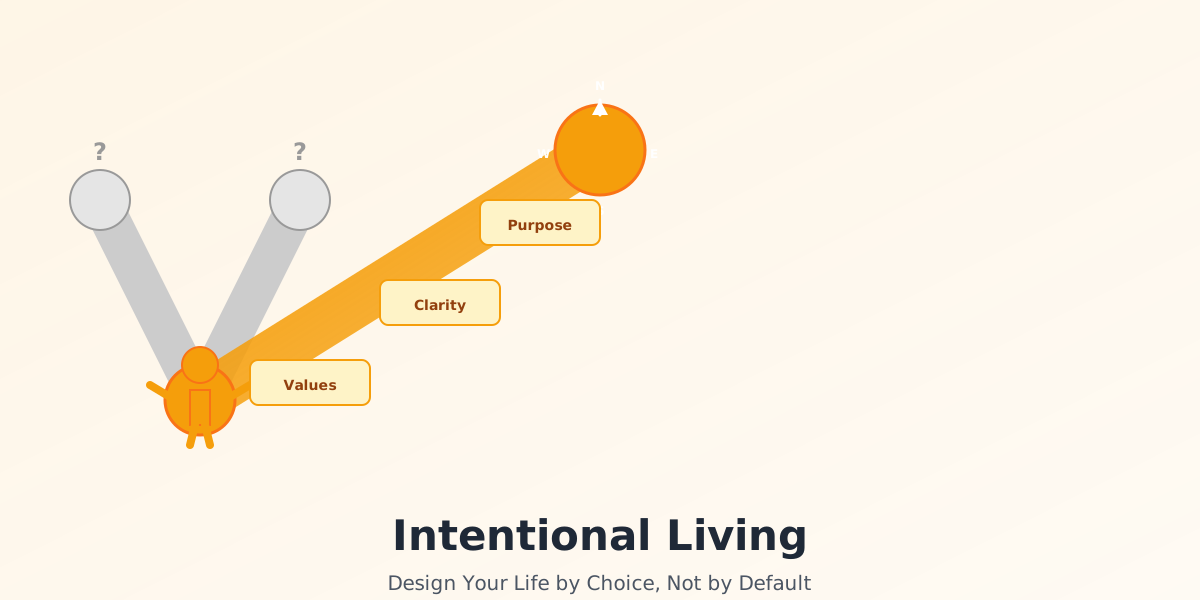
Discover how to identify your core values and use them as a compass for every decision you make.
Learn practical daily practices that anchor you to your intention and protect your time from distraction.
What Is Intentional Living?
Intentional living means consciously designing your life around your authentic values and beliefs rather than drifting through decisions based on habit, societal pressure, or circumstance. It's about understanding what truly matters to you at a deep level—your core values, passions, and purpose—and then actively structuring your daily choices, routines, and priorities to reflect those principles. Intentional living transforms you from a passive observer reacting to life's demands into an active architect deliberately building the life you want. This doesn't mean having everything perfectly planned; rather, it means approaching each decision with awareness of how it aligns with who you are and who you want to become. It combines mindfulness with purposeful action, creating a bridge between your deepest values and your lived experience.
Not medical advice.
Intentional living has become increasingly important in our complex modern world where distractions compete constantly for our attention. From social media notifications to workplace demands to cultural messaging about what we should want, external forces constantly try to dictate our choices. Intentional living is the antidote—it's the practice of pausing, checking in with yourself, and asking: 'Is this choice aligned with my values? Does this serve my purpose? Am I choosing this, or is something choosing me?' This mindful approach prevents you from wasting decades pursuing goals that never truly belonged to you. It helps you say no to opportunities that don't align with your values, say yes to the relationships and projects that matter most, and create space for what brings genuine joy and meaning.
Surprising Insight: Surprising Insight: Research by psychologists shows that values-based actions are linked to lower daily distress and greater daily well-being—meaning people who live in alignment with their values experience measurable improvements in mental health and life satisfaction.
The Intentional Living Framework
A visual representation of how values drive decisions, which shape habits, which create outcomes, forming a continuous cycle of intentional living.
🔍 Click to enlarge
Why Intentional Living Matters in 2026
In 2026, we face unprecedented levels of distraction and pressure. Technology offers infinite options competing for our limited time. Work cultures expect constant availability. Social media presents curated versions of others' lives that trigger comparison and doubt. Amid this noise, intentional living has become essential for mental health and well-being. People who practice intentional living report significantly lower stress levels because they stop spending energy on decisions that don't align with their values. Instead of constantly weighing pros and cons of every opportunity, they have a clear framework—their values—that makes decisions easier and faster. This clarity reduces decision fatigue and anxiety.
Intentional living also directly addresses loneliness and disconnection, which have reached epidemic levels. When you live intentionally, you're selective about relationships, choosing to invest deeply in connections that are genuine and reciprocal. You create time and space for the people who matter most. You have conversations that matter. You show up authentically rather than performing for an audience. This intentionality transforms relationships from obligatory to deeply nourishing. Additionally, research shows that people with a clear sense of purpose and intention experience longer lifespans, better sleep quality, more happiness, and reduced anxiety—measurable health benefits that make this practice worth cultivating.
For many, intentional living represents a rebellion against the default script: go to school, get a job, climb the ladder, accumulate possessions, retire, repeat. In 2026, more people are questioning this path and asking deeper questions: What do I actually want? What brings me alive? What legacy do I want to create? Intentional living provides the framework for these conversations with yourself and others, enabling you to design a life that feels authentic and meaningful rather than hollow and obligatory.
The Science Behind Intentional Living
The psychology of intentional living is grounded in decades of research about values, purpose, and well-being. A landmark 2021 study found that when people set clear, achievable intentions—such as committing to a few good deeds per day—they engage motivated reasoning that heightens their sense of satisfaction when they exceed those goals. In other words, intentionality itself creates a feedback loop of positive emotion. Another significant research finding comes from work on values-based living: when individuals take more actions aligned with their personal values, they experience lower daily distress and greater daily well-being. This suggests that the match between your actions and your values is a primary driver of emotional health. Neuroscience research shows that having a clear sense of purpose and intention activates reward centers in the brain and supports emotional regulation—meaning intentional living literally rewires your brain toward greater calm and satisfaction.
Mindfulness research specifically demonstrates that regular contemplative practice helps people tune into the present moment and make choices from an intentional place rather than reactive autopilot. When you slow down your decision-making through meditation or reflection, you create space for curiosity and observation. You notice your impulses rather than automatically acting on them. Over time, this neurological shift increases your agency—your sense of control over your life. Additionally, research on purpose has consistently shown that people with a clear sense of direction experience better sleep quality, longer lifespans, more happiness, and reduced feelings of loneliness. These aren't minor benefits; they're fundamental markers of health and well-being that demonstrate intentional living isn't just philosophically appealing but physiologically beneficial.
Brain Changes From Intentional Living
How regular practice of intention-setting and values-aligned decisions strengthens neural pathways for purpose, clarity, and emotional regulation.
🔍 Click to enlarge
Key Components of Intentional Living
Values Identification and Clarity
The foundation of intentional living is knowing your core values. These are the principles that matter most to you—perhaps integrity, creativity, family, contribution, growth, adventure, or tranquility. Many people live entire lives without explicitly naming their values, which means they're often unknowingly following values inherited from family, culture, or society rather than truly their own. Values clarification is the crucial first step: you reflect deeply on what truly matters to you independent of external approval. Ask yourself: When do I feel most alive? What activities make me lose track of time? What injustices anger me? What do I want to be remembered for? Your answers reveal your authentic values. Once identified, these values become your north star—they inform which opportunities you pursue, which relationships you prioritize, how you spend your money, and what risks you take.
Mindfulness and Present-Moment Awareness
Intentional living requires being present and aware rather than operating on autopilot. Mindfulness is the capacity to notice your thoughts, feelings, and actions without judgment, creating the gap between impulse and response where choice happens. A regular meditation practice, even just 10-15 minutes daily, trains this skill powerfully. But mindfulness isn't limited to sitting meditation; it extends to everyday activities. When you eat, truly taste your food using all five senses. When you work, give full attention to the task. When you're with loved ones, put away devices and be genuinely present. When you're about to make a decision, pause and notice whether you're choosing or defaulting. This quality of awareness is what separates intentional action from habitual reaction. It's what allows you to catch yourself when about to say something you don't mean or spend money on something you don't value.
Deliberate Boundary Setting
Intentional living requires protecting your time, attention, and energy through clear boundaries. Technology creates particular challenges here—notifications interrupt focus, social media steals hours, email demands constant response. Living intentionally means being deliberate about technology use: perhaps you establish times when devices are off-limits, specific hours when you don't check email, or designated technology-free spaces in your home. Boundaries extend to relationships and commitments too. You learn to say no to obligations that don't align with your values, even if they seem important to others. You protect time for what matters most—whether that's creative work, relationships, rest, or personal development. Boundaries aren't selfish; they're protective. They're what enable you to say yes with genuine enthusiasm to things you truly want rather than spreading yourself thin across everything others ask.
Regular Reflection and Intentional Planning
Intentional living isn't a one-time decision but an ongoing practice requiring regular reflection. Weekly or monthly, pause to review: Did I spend my time on what matters most? Were my decisions aligned with my values? What pulled me off track? What supported my intentions? This reflection might happen through journaling, meditation, conversation with a trusted person, or simple quiet thinking. Beyond reflection, intentional planning means setting clear, values-aligned intentions for days, weeks, months, and years ahead. Rather than letting circumstances dictate your life, you proactively decide where you want to invest your energy. You identify 2-3 priority areas for the year, you plan your time around what matters, you make decisions from your values rather than in reaction to what feels urgent. This doesn't mean rigid planning that leaves no room for spontaneity; rather, it means having a framework that helps you stay oriented toward what truly matters.
| Component | Function | Daily Practice |
|---|---|---|
| Values Identification | Creates internal compass guiding decisions | Reflect on what truly matters to you |
| Mindfulness | Builds awareness enabling conscious choice | Meditate 10-15 minutes; stay present in activities |
| Boundary Setting | Protects time and energy for priorities | Say no to misaligned requests; limit digital interruptions |
| Reflection & Planning | Maintains alignment and enables course correction | Weekly review of time spent; monthly intention-setting |
How to Apply Intentional Living: Step by Step
- Step 1: Reflect on your values by writing down 5-10 principles that matter most to you. Consider moments when you felt proud, alive, or aligned; these often point to core values. Look beyond societal expectations to what genuinely resonates.
- Step 2: Audit how you currently spend time. Track for one week where your hours actually go—work, scrolling, relationships, hobbies, rest. Compare this to your stated values. Discrepancies reveal where you're living on autopilot rather than intentionally.
- Step 3: Identify your biggest distractions and energy drains. What pulls you away from priorities? Social media? Unclear boundaries with others? Decision fatigue from too many choices? Name them specifically so you can address them deliberately.
- Step 4: Create a morning intention practice. Before checking your phone, spend 5-10 minutes in meditation, journaling, or reflection. Ask: What matters today? How do I want to show up? What decisions might I face? Set an intention for how you'll navigate them.
- Step 5: Practice saying no to misaligned opportunities, even good ones. Every yes to something that doesn't match your values is a no to something that does. Protecting your energy requires compassionate boundaries. Start small with one area.
- Step 6: Design your environment to support intentional living. Put your phone in another room during focus time. Create a meditation space. Remove visual clutter. Small environmental changes reduce the willpower required to stay intentional.
- Step 7: Establish technology boundaries. Designate times when you don't check email or social media. Have device-free meals. Create phone-free bedrooms. These boundaries protect your attention from being constantly hijacked by notifications.
- Step 8: Schedule weekly reflection time. Every Sunday evening or Friday afternoon, spend 15-30 minutes reviewing the week: Where did I spend time? Were my choices aligned? What will I do differently next week? This practice closes the feedback loop and enables continuous refinement.
- Step 9: Build accountability through connection. Share your values and intentions with a trusted person—a friend, mentor, therapist, or group. Regular conversations about your intentions make them more likely to stick because you're naming them aloud.
- Step 10: Start with one area of life, not everything at once. Perhaps you implement intentional living first in how you spend weekends, or how you approach your work, or how you spend money. Small successes build momentum and confidence for broader change.
Intentional Living Across Life Stages
Young Adulthood (18-35)
Young adulthood is when intentional living creates the most leverage, as your choices now shape decades ahead. This is the stage to clarify your core values independent of family expectations. Many young adults inherit values from parents, culture, or peer groups without examining whether they're truly their own. Intentional living during this phase means experimenting with different lifestyles, values, and paths to discover what resonates authentically. It's about resisting pressure to follow the default script—immediate marriage, immediate career focus, immediate status-seeking—and instead asking deeper questions about what you actually want. This stage is also ideal for building foundational habits: establishing a meditation practice, learning to set boundaries, developing reflection skills. The habits you build now compound over decades. Additionally, your 20s and 30s are when you likely make major decisions about education, career, location, and relationships. Making these intentionally—from your values rather than reactive pressure—sets a trajectory toward alignment and fulfillment.
Middle Adulthood (35-55)
Middle adulthood often brings a collision between your authentic values and the path you've followed, sometimes creating crisis but also opportunity for intentional redirection. This stage frequently involves reassessing: Did I make my major life choices intentionally or by default? Are my relationships aligned with how I want to live? Is my work meaningful or just paying bills? Am I raising my children intentionally or repeating patterns I inherited? For many, the 40s or 50s bring conscious reevaluation that leads to meaningful change—a career pivot, relationship transformation, or geographic move. Intentional living during this phase is about honest assessment without self-judgment, and then making conscious choices about what you want the next decades to look like. This is also when many people experience more financial stability, enabling more choice about how they spend time. It's when relationships often shift as children grow or parents age, requiring intentional decisions about priorities. Middle adulthood is when you have enough life experience to know what doesn't work for you, positioning you to consciously choose what does.
Later Adulthood (55+)
In later adulthood, intentional living focuses on legacy, meaning, and alignment in whatever time remains. Many people in this stage experience surprising freedom because they care less about others' approval and more about authentic expression. This is when intentional living becomes primarily about how you want to spend your time, what matters most, and what you want to be remembered for. Research shows that older adults with a clear sense of purpose experience better health outcomes, including longevity and cognitive function. Intentional living in this stage might mean mentoring younger people, creative expression, deeper relationships, service to your community, or spiritual development. It's about being selective—saying no to obligations and yes to what genuinely fills you. Paradoxically, as options narrow with age, intentional living becomes simpler because you're more clear about what matters. Your time is visibly finite, which focuses priorities beautifully. This stage is ideal for reflecting on your life's arc and consciously writing the final chapter in a way that feels true to who you are.
Profiles: Your Intentional Living Approach
The Values Explorer
- Permission to experiment and change direction without judgment
- Frameworks for clarifying values independent of external pressure
- Space to try different lifestyles and philosophies before committing
Common pitfall: Endless searching without committing to any direction; decision paralysis masquerading as exploration.
Best move: Set a timeframe for exploration (e.g., two years), then make a committed choice based on what you've learned. Commitment isn't forever; you can reassess, but you need some direction to move forward.
The Default Path Follower
- Permission to question the script without feeling ungrateful
- Clear frameworks for assessing whether choices are truly yours
- Support for making significant changes if needed
Common pitfall: Waking up at 50 realizing you built a life that doesn't fit; deep resentment toward those who set expectations.
Best move: Start small—examine one area (work, relationships, finances, hobbies) and ask if it's truly yours. Make one intentional change that feels important, even if small. This builds momentum and confidence for larger changes.
The Passionate Dreamer
- Help translating dreams into concrete action plans
- Accountability structures that prevent endless planning without execution
- Permission to start small rather than waiting for perfect conditions
Common pitfall: Perpetual visioning without actually moving forward; ideas remain ideas rather than becoming lived reality.
Best move: Pick one aspect of your dream and commit to one concrete action this week—no matter how small. Repeat weekly. Action, not perfection, builds momentum.
The Boundary Setter
- Validation that protecting time for priorities isn't selfish
- Frameworks for communicating boundaries compassionately
- Strategies for maintaining boundaries when others push back
Common pitfall: Rigid boundaries that isolate rather than protect; creating distance rather than alignment.
Best move: Pair boundaries with clear communication about what you're protecting time for. Make boundaries about your yes, not just your no. People respect commitment to something more than simple refusal.
Common Intentional Living Mistakes
One widespread mistake is making intentional living another form of perfectionism. People set ambitious values, create elaborate plans, and then judge themselves harshly when life gets messy and they fall off track. Intentional living isn't about perfect adherence to a plan; it's about returning to alignment when you drift. You will get pulled into reactive mode—that's human. The practice is noticing it and gently returning to your values. This requires self-compassion, not self-judgment. Another common mistake is adopting values that sound good without examining whether they're truly yours. You might choose values like 'success' or 'family' or 'minimalism' because they're currently trendy or because you think you should value them, not because they genuinely resonate. This creates tension—you're still living someone else's values, just more consciously. Take time to explore what's authentically yours rather than borrowing values from self-help books or social media.
A third mistake is setting intentions without examining obstacles and planning for how you'll navigate them. You decide you'll meditate daily but don't address the belief that you don't have time or aren't spiritual enough. You commit to saying no but don't anticipate guilt or the fear of disappointing others. Effective intentional living requires getting honest about what might pull you off track and creating systems to handle it. Finally, many people treat intentional living as an individual project rather than a relational one. But we're deeply social beings. Living intentionally in isolation is harder than living intentionally in community. Share your values with others. Find accountability partners. Build relationships around what matters. Intentional living is more sustainable when others know what you're committed to and support your choices.
Many people also make the mistake of thinking intentional living requires dramatic change or leaving everything behind. In reality, you can live intentionally in your current life. You might love your job, relationships, and location but live more intentionally within them by being more present, making decisions more consciously, and aligning actions with values. Intentional living isn't necessarily about changing your external life; it's about changing your relationship to your life. You might decide your current path is exactly what you want—and make that choice consciously rather than defaulting into it. That conscious choice fundamentally transforms the experience.
Common Pitfalls and How to Navigate Them
Visual representation of frequent obstacles in intentional living and the mindset shifts that help you move through them.
🔍 Click to enlarge
Science and Studies
Research consistently validates that intentional living and values-aligned action produce measurable improvements in mental health, well-being, and longevity. The evidence spans psychology, neuroscience, and medical research, providing strong scientific support for practices that feel intuitive but are often abandoned for reactive living. Key research areas include purpose-driven living, mindfulness practices, values-based action, and the neurobiology of intentional behavior.
- Kim et al. (2021): Individuals with a clear sense of purpose experience better sleep quality, greater happiness, reduced loneliness, and longer lifespans—measurable health benefits from purpose orientation.
- Daily values-based action study (2021): Participants recorded distress, well-being, and values-aligned actions daily for 21 days. More values-based actions directly correlated with lower daily distress and greater well-being.
- Intention-setting research: Clear, achievable intentions increase satisfaction through motivated reasoning—when you set intentions and exceed them, the accomplishment feels more satisfying than unexpected success.
- Mindfulness and brain plasticity: Regular meditation practice strengthens the prefrontal cortex (decision-making) while reducing amygdala reactivity (fear/stress), literally rewiring the brain toward intentional choice and emotional regulation.
- Purpose and resilience: People with a clear sense of purpose show greater resilience to adversity and lower rates of depression, suggesting that living with intention creates psychological protection against life's inevitable challenges.
Your First Micro Habit
Start Small Today
Today's action: This morning, before checking your phone, pause for 5 minutes. Sit quietly and ask yourself: What matters most today? What's one choice I want to make consciously rather than by default? Just notice the answer without judgment. That's it. You're building awareness, which is the foundation of intentional living.
This micro habit requires only 5 minutes but creates a crucial pause between waking and reactivity. It gradually trains your brain to access your values before making decisions. Over time, this becomes automatic—you naturally check in with yourself before important choices. The beauty is that it's so small you can do it even on chaos mornings, building momentum that makes larger changes possible.
Keep quitting habit apps after a missed day? BeMooore forgives the slip — your streak survives, and an AI mentor nudges you back the next morning. Free on iOS.
Quick Assessment
When you reflect on how you currently spend your time, does it align with what you say matters most to you?
This question reveals whether your life has natural alignment or whether intentional redesign might create more fulfillment. Both answers are starting points; what matters is honest awareness.
How would you describe your relationship with boundaries around time and attention?
Boundaries are the practical mechanism that makes intentional living possible. Strong awareness here helps you identify where to start building.
Which aspect of intentional living appeals to you most right now?
Your answer suggests where to focus first. Start with what most excites you; momentum from early wins makes other areas easier to address.
Take our full assessment to get personalized recommendations for implementing intentional living.
Discover Your Style →Next Steps
Start your intentional living practice this week by investing 30 minutes in values clarification. Find a quiet space, grab paper or your journal, and complete this prompt: 'The five principles that matter most to me are...' Don't overthink it. What comes to mind? Write them down. Once you have your values named, you've begun the practice. Everything else—boundaries, mindfulness, planning—follows from this foundation. You now have a compass, and compasses make navigation possible.
Next, implement the micro habit: a 5-minute morning pause where you check in with yourself before the day's demands take over. Add this to your existing morning routine—you're not creating something new, just protecting 5 minutes of awareness. These 5 minutes are your foundation for gradually expanding intentional living into all areas. You might also consider finding an accountability partner—someone who shares your interest in intentional living, someone you can check in with weekly about your values and how you're living them. This converts an individual project into a shared one, making it more sustainable and rewarding.
Get personalized guidance with AI coaching in the bemooore app.
Start Your Journey →Research Sources
This article is based on peer-reviewed research and authoritative sources. Below are the key references we consulted:
Related Glossary Articles
Frequently Asked Questions
Does intentional living mean I have to change my job, relationships, or location?
Not necessarily. Intentional living is about bringing consciousness and alignment to whatever life you're living. Some people realize their current path is exactly right—when chosen consciously rather than by default, the same life feels completely different. Others discover they want to change one or more things. The key is making that choice consciously rather than defaulting into or out of anything.
How do I know if my values are truly mine or if I'm just following what I think I should value?
Notice what energizes you versus what drains you. Values that are truly yours create energy and motivation; borrowed values feel obligatory. Also examine moments when you felt most proud or alive—these often point to authentic values. Finally, consider how you'd spend your time if no one would ever know—the gap between what you do and what you'd truly want often reveals borrowed values.
I keep slipping back into autopilot and reactive mode. Is my practice failing?
No. Slipping into reactivity is completely normal and human. The practice isn't perfect adherence; it's noticing when you've drifted and gently returning to intentionality. Each return is a successful practice, not a failure. The goal isn't perfection but gradually expanding the percentage of your choices that are conscious rather than reactive.
How long does it take to see benefits from intentional living?
You can feel benefits almost immediately—that first morning pause creates a sense of agency and calm. Deeper changes typically require weeks to months of consistent practice. The good news is that benefits compound; the longer you practice, the more natural and effortless intentional living becomes. Within a few months of regular practice, many people report significantly greater clarity, peace, and fulfillment.
What if my values conflict with others' expectations or needs?
Conflicts between your authentic values and others' expectations are common and important. This is where boundary-setting and compassionate communication matter. You can honor others' needs while prioritizing your own values. Often this creates initial friction but ultimately leads to healthier relationships because you're showing up authentically rather than performing what others expect. You might disappoint some people, and that's part of living truthfully.
Take the Next Step
Ready to improve your wellbeing? Take our free assessment to get personalized recommendations based on your unique situation.
- Discover your strengths and gaps
- Get personalized quick wins
- Track your progress over time
- Evidence-based strategies