Stress Tolerance
Imagine facing your biggest challenge and feeling calm instead of overwhelmed. That's what stress tolerance feels like. It's not about avoiding stress entirely—stress is inevitable in modern life—but rather developing the mental, emotional, and physical capacity to handle pressure without breaking down. In 2026, with work demands increasing, relationship complexities multiplying, and information overload constant, your ability to tolerate stress has become one of the most valuable skills you can develop. This guide reveals how stress tolerance works neurologically, why it matters more than ever, and exactly how to build it using personality-based approaches tailored to your natural style.
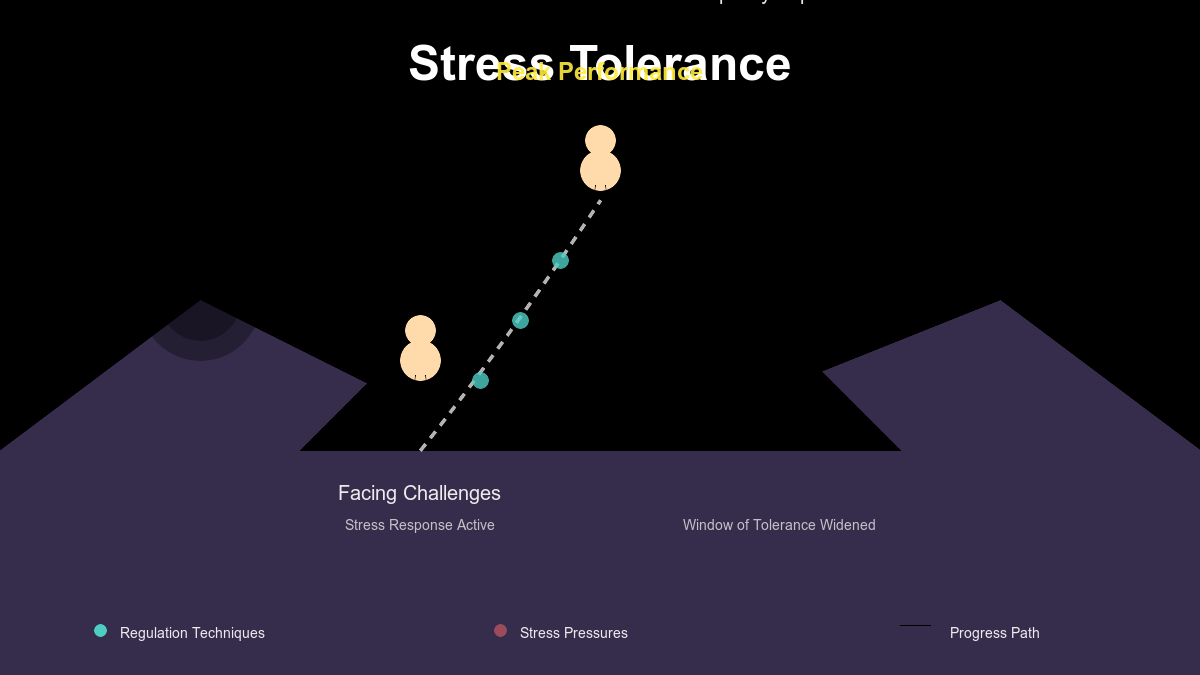
High stress tolerance isn't about being tough or emotionless. It's about having a wide window of tolerance—the zone where you can process challenges, make good decisions, and maintain your wellbeing even when things get difficult.
The most resilient people aren't those who avoid stress; they're the ones who've learned to regulate their nervous system under pressure, maintain perspective during chaos, and bounce back faster after setbacks.
What Is Stress Tolerance?
Stress tolerance is your capacity to withstand pressure, adverse events, and difficult emotions without becoming overwhelmed or losing functioning. It's the psychological and physiological ability to maintain performance, emotional regulation, and wellbeing when facing challenges. Unlike stress resistance (which is genetic and relatively fixed), stress tolerance is a skill you can actively develop and strengthen over time. It includes three interconnected dimensions: physiological tolerance (how your body handles stress hormones), emotional tolerance (your ability to feel difficult emotions without being controlled by them), and cognitive tolerance (your capacity to think clearly and solve problems under pressure).
Not medical advice.
Research distinguishes stress tolerance from resilience: stress tolerance is about managing stress in the moment, while resilience is about recovering and growing after difficult experiences. Together, they form a complete picture of psychological strength. Your stress tolerance develops through repeated exposure to manageable challenges, consistent practice of regulation techniques, and gradually expanding your window of tolerance. This isn't about becoming invulnerable—it's about becoming capable.
Surprising Insight: Surprising Insight: The most stressed individuals aren't those with the most challenges—they're those with the lowest stress tolerance. Two people facing identical pressures can experience completely different outcomes based on their ability to regulate their nervous system.
The Window of Tolerance Model
How stress tolerance exists as a zone where optimal functioning occurs, with dysregulation occurring above (hyperarousal) and below (hypoarousal) this window.
🔍 Click to enlarge
Why Stress Tolerance Matters in 2026
In 2026, stress tolerance has become essential for thriving rather than just surviving. The modern world presents unique stressors our ancestors never encountered: constant digital connectivity, information overload, rapid economic change, climate anxiety, and unprecedented access to others' problems and successes. Approximately 65% of U.S. workers report work as a significant source of stress, and work-related stress costs companies more than $300 billion annually in lost productivity and health expenses. People with high stress tolerance experience better physical health, mental health, relationships, and career success.
Developing stress tolerance provides immediate and long-term benefits. In the moment, it prevents stress from triggering unhealthy coping mechanisms like substance abuse, aggression, or avoidance. Over time, it reduces chronic stress-related diseases including heart disease, diabetes, depression, and anxiety disorders. In relationships, stress tolerance enables you to communicate effectively during conflicts rather than becoming defensive or withdrawn. At work, it allows you to maintain productivity, creativity, and leadership presence under pressure—qualities that directly correlate with advancement and satisfaction.
Beyond individual benefits, stress tolerance contributes to family stability, workplace culture, and community resilience. Parents with high stress tolerance model emotional regulation for their children, breaking cycles of dysregulation. Leaders with strong stress tolerance create psychologically safe workplaces. Communities benefit when members can handle challenges constructively rather than reactively. In this sense, building your stress tolerance is both deeply personal and genuinely altruistic.
The Science Behind Stress Tolerance
Understanding the neurobiology of stress is fundamental to building stress tolerance. When you perceive a threat—real or imagined—your brain triggers the hypothalamic-pituitary-adrenocortical (HPA) axis, your body's main stress response system. The hypothalamus releases corticotropin-releasing hormone (CRH), which signals your pituitary gland to release adrenocorticotropic hormone (ACTH), which then triggers your adrenal glands to release cortisol and adrenaline. These hormones prepare your body for fight, flight, or freeze by increasing heart rate, redirecting blood to muscles, sharpening focus, and suppressing non-essential functions like digestion and reproduction.
This acute stress response, when properly regulated, is highly adaptive. It mobilizes resources to handle challenges. However, chronic activation of the HPA axis leads to elevated resting cortisol levels, which damage the hippocampus (crucial for memory and learning), suppress immune function, increase inflammation, and contribute to depression, anxiety, and burnout. Chronic stress also narrows your window of tolerance, meaning smaller triggers activate your stress response. Building stress tolerance involves training your nervous system to activate appropriately for the actual threat level (not catastrophizing), recover quickly after the stressor passes, and maintain baseline calm between challenges. This training literally strengthens neural pathways related to emotional regulation, perspective-taking, and problem-solving.
HPA Axis Stress Response & Recovery
How the hypothalamic-pituitary-adrenocortical axis activates during stress and should return to baseline with adequate recovery and regulation.
🔍 Click to enlarge
Key Components of Stress Tolerance
Nervous System Regulation
Your autonomic nervous system has two branches: the sympathetic nervous system (responsible for fight-flight-freeze activation) and the parasympathetic nervous system (responsible for rest-digest-recover). Stress tolerance depends on flexibility between these states. When you can activate your sympathetic system appropriately to handle challenges and then efficiently engage your parasympathetic system to recover, you develop genuine stress tolerance. Techniques like deep breathing, progressive muscle relaxation, cold water exposure, and grounding exercises all activate your parasympathetic nervous system, expanding your capacity to recover from stress. Regular practice of these techniques literally trains your vagus nerve—the main parasympathetic pathway—to function more efficiently, making recovery faster and baseline stress lower.
Cognitive Reappraisal
Cognitive reappraisal is the ability to interpret a stressful situation in a less threatening way while acknowledging its reality. Rather than denying the problem (avoidance) or catastrophizing (amplification), reappraisal involves finding alternative perspectives that are both truthful and less stressful. For example, reinterpreting a difficult presentation as "an opportunity to demonstrate my expertise" instead of "a chance to humiliate myself" activates different neural pathways and produces different stress hormones. Research shows that people who naturally use reappraisal have stronger emotional regulation, better health outcomes, and higher life satisfaction. This skill can be learned and strengthened through practice.
Emotional Awareness
The ability to identify and name your emotions—called emotional granularity—significantly improves stress tolerance. People who can distinguish between anxiety, frustration, sadness, and overwhelm respond more effectively than those who experience all difficult emotions as undifferentiated stress. When you label an emotion specifically, you engage your prefrontal cortex (rational brain) rather than being dominated by your amygdala (fear center). This shift alone reduces the intensity of the emotional experience and creates space for conscious choice about how to respond. Developing emotional awareness involves regular check-ins with your internal state, journaling about feelings, and sometimes working with a therapist to name and understand patterns.
Physical Resilience
Your body's baseline state dramatically affects your capacity to tolerate stress. Regular exercise, adequate sleep (7-9 hours nightly), balanced nutrition, and hydration all increase your physiological stress resilience. Exercise is particularly powerful because it metabolizes stress hormones, builds vagal tone, and produces endorphins. Sleep is essential because stress regulation happens during sleep—chronic sleep deprivation directly lowers your stress tolerance and increases emotional reactivity. Nutrition affects stress tolerance through mechanisms including blood sugar stability, neurotransmitter production, and inflammation reduction. These aren't separate from psychological resilience; they form its foundation.
| Component | Primary Function | Key Practices |
|---|---|---|
| Nervous System Regulation | Activate appropriately & recover efficiently | Breathing exercises, meditation, cold water exposure, movement |
| Cognitive Reappraisal | Interpret situations realistically but less threateningly | Thought records, perspective-taking, journaling, therapy |
| Emotional Awareness | Identify & understand your internal state | Emotional check-ins, journaling, somatic practices, coaching |
| Physical Resilience | Maintain baseline capacity through lifestyle | Exercise, sleep, nutrition, hydration, stress recovery |
How to Apply Stress Tolerance: Step by Step
- Step 1: Assess your current window of tolerance by noticing when you become hyperaroused (anxious, reactive) or hypoaroused (numb, withdrawn) in everyday situations.
- Step 2: Establish a daily nervous system regulation practice: choose one technique (breathing, meditation, or movement) and practice for 10 minutes daily to build parasympathetic tone.
- Step 3: Develop your personal stress signature by identifying your early warning signs of dysregulation—the first small indicators that you're moving out of your window of tolerance.
- Step 4: Create a grounding toolkit with 3-5 techniques you can use in high-stress moments: these might include 4-7-8 breathing, the 5-4-3-2-1 sensory technique, progressive muscle relaxation, or cold water exposure.
- Step 5: Practice cognitive reappraisal by identifying one recurring stressful situation and writing down three alternative perspectives that are realistic but less threatening.
- Step 6: Build physical resilience by committing to 150 minutes of moderate exercise weekly, prioritizing 7-9 hours of sleep nightly, and addressing any significant nutrition or hydration issues.
- Step 7: Develop emotional awareness through daily emotion logging or regular check-ins with a coach, therapist, or trusted person about your internal state.
- Step 8: Implement the "pause, process, reflect, respond" framework when facing stress: pause the automatic reaction, process what you're experiencing, reflect on your values, and respond intentionally.
- Step 9: Gradually expose yourself to manageable stressors in controlled ways to expand your window of tolerance—this process is called stress inoculation and works like physical exercise for your resilience.
- Step 10: Regularly review your progress by assessing how much larger your window of tolerance has become and celebrating small victories in handling stress more skillfully.
Stress Tolerance Across Life Stages
Edad adulta joven (18-35)
Young adults face unique stressors: establishing independence, navigating early career decisions, managing student debt, and forming primary relationships. Stress tolerance is often underdeveloped at this stage because the prefrontal cortex (responsible for emotional regulation) is still developing until age 25. However, this is the ideal time to build strong stress tolerance habits because neuroplasticity is high. Young adults benefit from establishing consistent exercise, sleep, and meditation practices; experiencing managed challenges that build confidence; developing mentoring relationships; and learning to identify and communicate about emotions. The stress tolerance developed in these years provides foundation for handling bigger challenges ahead.
Edad adulta media (35-55)
Middle adulthood typically brings accumulated responsibilities: career advancement pressure, parenting demands, aging parents, financial obligations, and sometimes relationship challenges. Stress tolerance becomes essential for managing competing demands without burnout. At this stage, people often experience a wake-up call about health when stress-related issues emerge. The good news is that stress tolerance built earlier pays dividends, but those who neglected these skills face significant challenges. Middle adults benefit from periodic reassessment of their stress tolerance level, potentially addressing new stressors (like menopause-related changes affecting sleep and emotion regulation), deepening practices like meditation, and sometimes working with therapists to process accumulated stress. Workplace stress tolerance directly affects career trajectory and satisfaction at this stage.
Edad adulta tardía (55+)
Later adulthood brings different stressors: health changes, retirement transitions, grief and loss, shifting identity, and sometimes loneliness. Interestingly, people often report greater overall stress tolerance at this stage because perspective deepens and priorities clarify. Those who maintained physical fitness earlier find it easier to manage stress because exercise capacity protects nervous system function. Cognitive practices like reappraisal become more sophisticated as people have decades of experience to draw from. Later adults benefit from social connection (critical for stress tolerance), continued physical activity adapted to capacity, engaging activities and purpose, and wisdom-sharing roles. The stress tolerance developed throughout life becomes either a source of resilience or a source of regret depending on whether habits were established earlier.
Profiles: Your Stress Tolerance Approach
The Planner (Anxious anticipator)
- Predictability & control when possible
- Permission to tolerate uncertainty in things outside your control
- Worry-time boundaries (set specific time to plan, then let it go)
Common pitfall: Trying to prevent all stress through excessive planning and control, which increases anxiety rather than reducing it
Best move: Balance planning for what you can control with accepting and reframing what you cannot—practice the serenity prayer approach of distinguishing these categories
The Stuffer (Avoidant suppressor)
- Permission to feel emotions without judgment
- Safe outlets for emotional processing
- Gradual exposure to tolerance of emotion itself
Common pitfall: Chronic avoidance of emotions, which leads to emotional explosion later or silent resentment that damages relationships
Best move: Start small by identifying one emotion you typically suppress and deliberately allow yourself to feel it fully in a safe context—journaling, therapy, or talking with a trusted person
The Reactor (Explosive responder)
- Immediate grounding techniques for rapid de-escalation
- Time and space between trigger and response when possible
- Accountability and reflection after reactions
Common pitfall: Impulsive responses that create secondary stressors and damage important relationships
Best move: Invest in fast-acting nervous system tools (cold water face splash, intense breathing, brief movement) that work quickly enough to interrupt automatic reactions
The Coper (Active manager)
- Sustainable practices (not pushing through indefinitely)
- Balanced action and acceptance
- Meaning-making and purpose to sustain effort
Common pitfall: Overextending through constant action until burnout occurs, or avoiding deeper emotional work by staying busy
Best move: Introduce practices that build the inner foundation under your active coping—meditation, emotional processing, sleep—so your action comes from capacity rather than desperation
Common Stress Tolerance Mistakes
The most common mistake is confusing stress avoidance with stress tolerance. People often try to eliminate stress rather than developing capacity to handle it. This approach fails because stress is unavoidable—the goal is always to expand your capacity, not to achieve a stress-free life. Another mistake is relying on single coping strategies that work for immediate relief but don't build actual tolerance. For example, using alcohol or shopping for temporary stress relief may feel helpful momentarily but doesn't strengthen your nervous system and often creates secondary problems.
People also frequently neglect the physical foundation of stress tolerance. Building only psychological techniques while ignoring sleep, exercise, and nutrition is like building a house on poor foundation—everything you build collapses under real stress. Similarly, many people know what they should do but don't actually practice consistently. Stress tolerance is developed through repeated practice, not through intellectual understanding. Finally, people often ignore their early warning signs until dysregulation is severe. Learning to notice small indicators that you're moving out of your window of tolerance—slight tension, irritability, racing thoughts—allows intervention before full dysregulation occurs.
Stress Tolerance Development vs. Common Obstacles
How genuine stress tolerance develops through consistent practice and component building, versus how avoidance, inconsistency, and neglecting foundations create false progress.
🔍 Click to enlarge
Ciencia e Investigación
Research on stress tolerance and resilience has expanded dramatically in recent years, providing clear evidence for what builds genuine capacity. Key findings show that stress tolerance is trainable and can be significantly improved through consistent practice. Studies using functional MRI demonstrate that meditation and mindfulness literally change brain structure, strengthening areas associated with emotion regulation and weakening areas associated with threat detection. Research on the window of tolerance model shows that people with narrow windows of tolerance experience more chronic stress symptoms, while those with expanded windows handle challenges more effectively. Studies of HPA axis dysregulation in chronic stress reveal the physical mechanisms by which stress tolerance protects health.
- Gross & John (2003) found that cognitive reappraisal is significantly more effective for emotion regulation than suppression, and reappraisers show better psychological health and social functioning
- Tang et al. (2015) demonstrated that just four weeks of mindfulness training measurably improved attentional control and reduced stress reactivity in college students
- McEwen (2017) showed that chronic stress dysregulation contributes to disease through multiple biological pathways, but stress tolerance interventions reduce these risks significantly
- Southwick et al. (2016) identified that resilience factors including social support, cognitive flexibility, and meaning-making are consistently correlated with better stress tolerance and mental health outcomes
- Porges (2011) developed polyvagal theory explaining how vagal tone (strengthened through specific practices) directly affects stress tolerance capacity and recovery ability
Tu Primer Micro Hábito
Comienza Pequeño Hoy
Today's action: One minute of breathing practice: Breathe in for 4 counts, hold for 4 counts, exhale for 6 counts. Repeat 5-10 times. Notice how your body feels different.
This simple technique immediately activates your parasympathetic nervous system, expanding your window of tolerance in the moment. The longer exhale triggers a relaxation response. One minute is sustainable, building to longer practices over time.
Track your micro habits and get personalized AI coaching with our app.
Evaluación Rápida
When facing unexpected challenges, what's your natural first response?
Your stress response style reveals your current pattern—none are "wrong", but understanding your style helps you develop more effective stress tolerance. Planners benefit from acceptance practices, Stuffers from emotional permission, Reactors from rapid de-escalation tools, and Copers from sustainable foundation-building.
What area of your life currently feels most stressful?
Your primary stressor reveals where to focus your stress tolerance building. Each domain may require slightly different approaches—work stress often needs time management and boundary-setting, relationship stress often needs communication skills and emotional expression, financial stress often needs planning and perspective, and health stress often needs acceptance and meaning-making.
How often do you currently practice stress management (exercise, meditation, etc.)?
Consistency is the foundation of stress tolerance development. Research shows that daily practice, even for just 10 minutes, produces measurable improvements in stress tolerance and nervous system regulation. If you're not practicing regularly, that's your first target—not because you're doing something wrong, but because you're at the beginning of building this skill.
Take our full assessment to get personalized recommendations.
Descubre Tu Estilo →Preguntas Frecuentes
Próximos Pasos
Building stress tolerance is one of the most valuable investments you can make in your wellbeing. The practices outlined here work—but only if you actually do them. Start with the one-minute breathing micro habit today. Notice what happens to your body and mind. Then choose one or two other practices from the full workflow that resonate with your personal style and commit to 30 days of consistent practice. Most people report noticeable improvements within this timeframe. Keep a simple journal noting what stressors you faced and how you responded—this awareness itself is transformative.
Remember that stress tolerance building isn't about achieving perfection or never feeling stressed. It's about expanding your capacity so that stress doesn't control you. It's about developing the skills to handle life's inevitable challenges with more grace, resilience, and clarity. The window of tolerance you're building today becomes the foundation for handling whatever tomorrow brings. You're not just managing today's stress—you're developing the capacity to thrive even when things get difficult. That's the real promise of stress tolerance.
Obtén orientación personalizada con entrenamiento de IA.
Comienza Tu Viaje →Research Sources
This article is based on peer-reviewed research and authoritative sources. Below are the key references we consulted:
Related Glossary Articles
Frequently Asked Questions
Can you actually build stress tolerance or is it just your personality?
Stress tolerance is primarily a trainable skill rather than a fixed personality trait. While people differ in baseline temperament (partly genetic), extensive research shows that everyone can significantly expand their stress tolerance through consistent practice of regulation techniques, cognitive skills, and lifestyle foundations. Brain imaging studies demonstrate actual structural changes in areas associated with emotion regulation after training. Think of it like physical fitness—genetics set a baseline, but everyone can improve significantly through training.
How long before you notice improvements in stress tolerance?
You can notice immediate improvements in a single stressful moment by using specific grounding techniques—these provide relief within minutes. Measurable changes in baseline stress reactivity typically appear after 2-4 weeks of daily practice. Significant expansion of your window of tolerance usually takes 8-12 weeks of consistent practice. Real transformation—where stressors that used to dysregulate you no longer do—often takes several months. The timeline varies based on how consistently you practice, the severity of your starting point, and the specific techniques that work best for you.
Is it normal to feel more stressed while building stress tolerance?
Yes, this is actually a normal and important part of the process. When you begin deliberately facing stressors or releasing suppressed emotions, stress can temporarily increase. This is different from harmful stress—it's the productive discomfort of growth. The key is that you're developing capacity to tolerate this stress rather than avoiding it. If stress feels overwhelming, slow down, work with a therapist, and build your foundation more gradually. Stress tolerance building should feel challenging but not traumatic.
What if you have anxiety or depression? Does stress tolerance building still work?
Yes, but the approach often needs to be adapted. Anxiety and depression can lower your baseline stress tolerance, making practices that work for others feel overwhelming. With anxiety, starting with shorter practice sessions, grounding techniques that engage the senses, and sometimes working with a therapist is important. With depression, focusing on physical practices (exercise, sleep) often jumpstarts the process because cognitive practices can feel impossible when motivation is low. Professional mental health support combined with stress tolerance building is often the most effective approach.
Can you have too much stress tolerance?
The goal isn't absolute maximum stress tolerance but rather appropriate stress tolerance—being able to handle challenges without becoming overwhelmed while still maintaining sensitivity to genuine danger and emotional needs. If you've become so tolerant of stress that you ignore warning signs, avoid dealing with serious problems, or suppress important emotions, that's actually suppression or dissociation rather than genuine tolerance. Genuine stress tolerance includes knowing when to seek help, when to rest, and when to make changes rather than just enduring everything.
Take the Next Step
Ready to improve your wellbeing? Take our free assessment to get personalized recommendations based on your unique situation.
- Discover your strengths and gaps
- Get personalized quick wins
- Track your progress over time
- Evidence-based strategies